
The Cell Membrane 1 Where are the integral
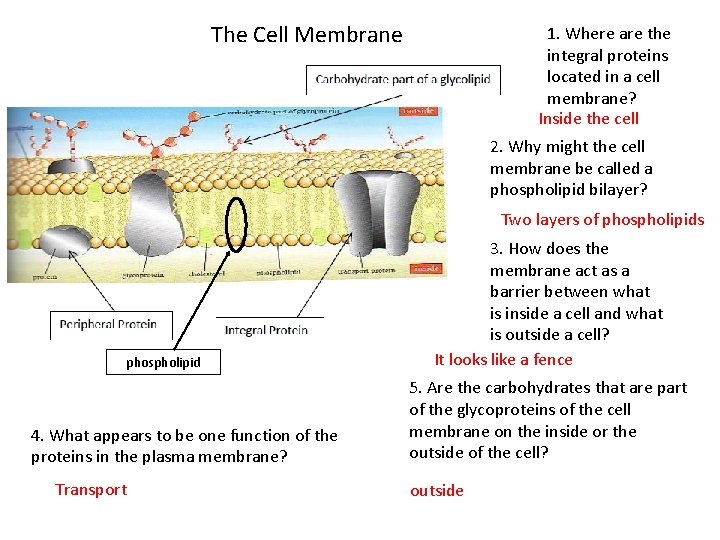
The Cell Membrane 1. Where are the integral proteins located in a cell membrane? Inside the cell 2. Why might the cell membrane be called a phospholipid bilayer? Two layers of phospholipids phospholipid 4. What appears to be one function of the proteins in the plasma membrane? Transport 3. How does the membrane act as a barrier between what is inside a cell and what is outside a cell? It looks like a fence 5. Are the carbohydrates that are part of the glycoproteins of the cell membrane on the inside or the outside of the cell? outside
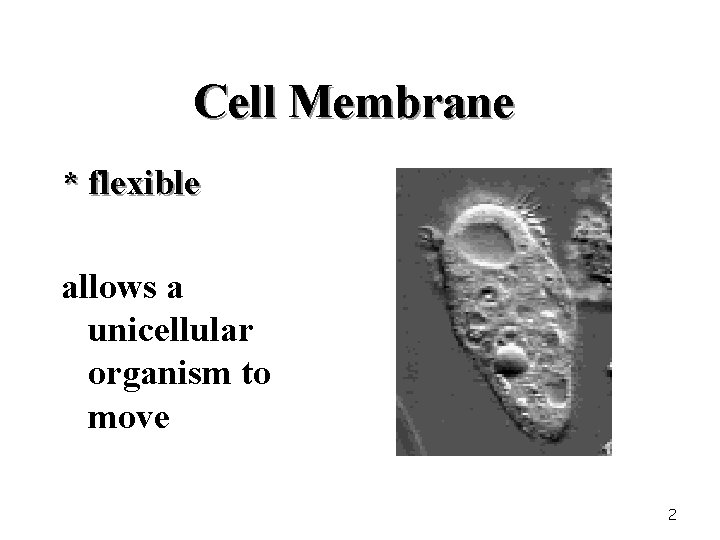
Cell Membrane * flexible allows a unicellular organism to move 2
Homeostasis • Internal balance (constant condition inside the cell) • Also called equilibrium • plasma membrane controls what enters & leaves the cell
Functions of Plasma Membrane 1. Protective barrier 2. Regulate transport in & out of cell (selectively permeable) 3. Allow cell recognition 4. Provide anchoring sites for filaments of cytoskeleton 5. Provide a binding site for enzymes 6. Interlocking surfaces bind cells together (junctions) 7. Contains the cytoplasm (fluid in cell)
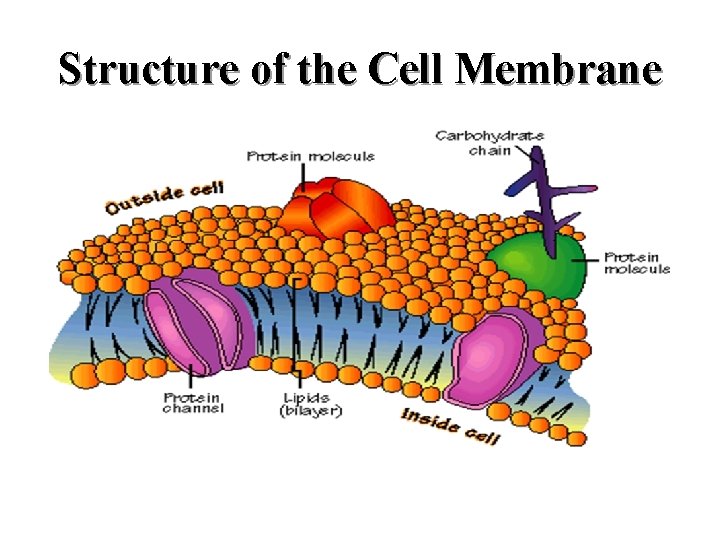
Structure of the Cell Membrane
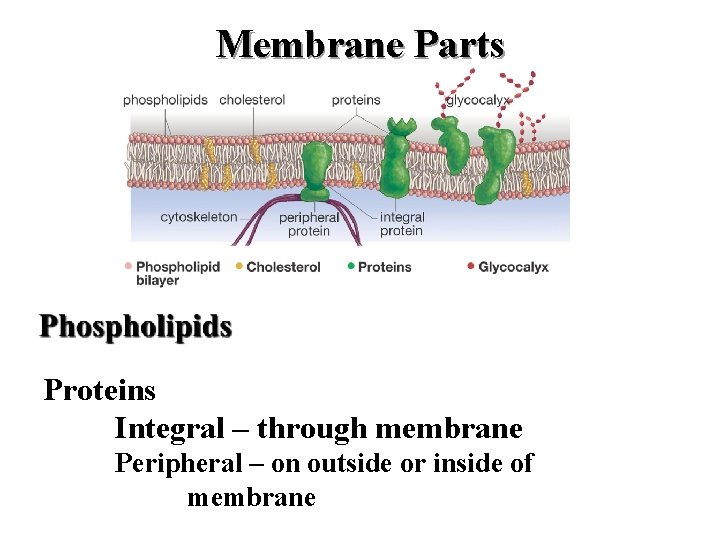
Membrane Parts Proteins Integral – through membrane Peripheral – on outside or inside of membrane
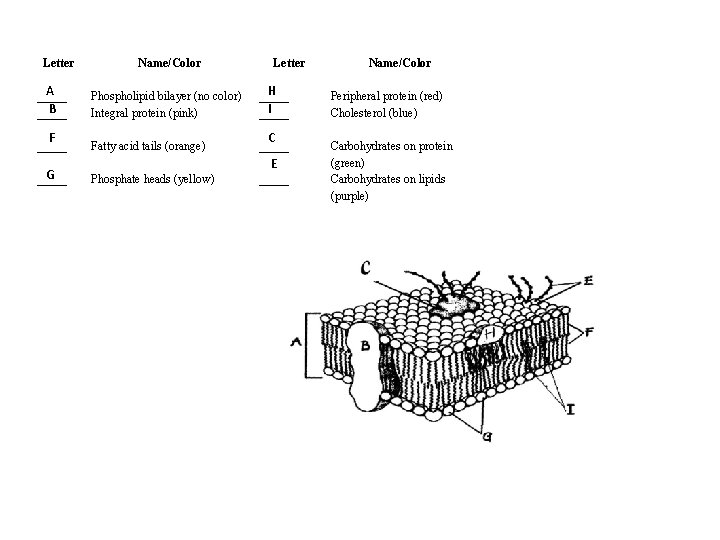
Letter A _____ B _____ F _____ G _____ Name/Color Letter Phospholipid bilayer (no color) Integral protein (pink) H _____ I _____ Fatty acid tails (orange) _____ C E Phosphate heads (yellow) _____ Name/Color Peripheral protein (red) Cholesterol (blue) Carbohydrates on protein (green) Carbohydrates on lipids (purple)
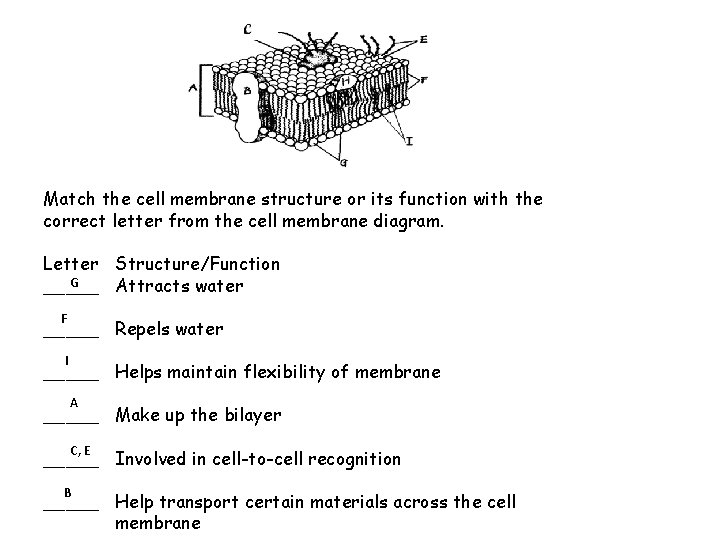
Match the cell membrane structure or its function with the correct letter from the cell membrane diagram. Letter Structure/Function G _____ Attracts water F _____ Repels water I _____ Helps maintain flexibility of membrane A _____ Make up the bilayer C, E _____ Involved in cell-to-cell recognition B _____ Help transport certain materials across the cell membrane
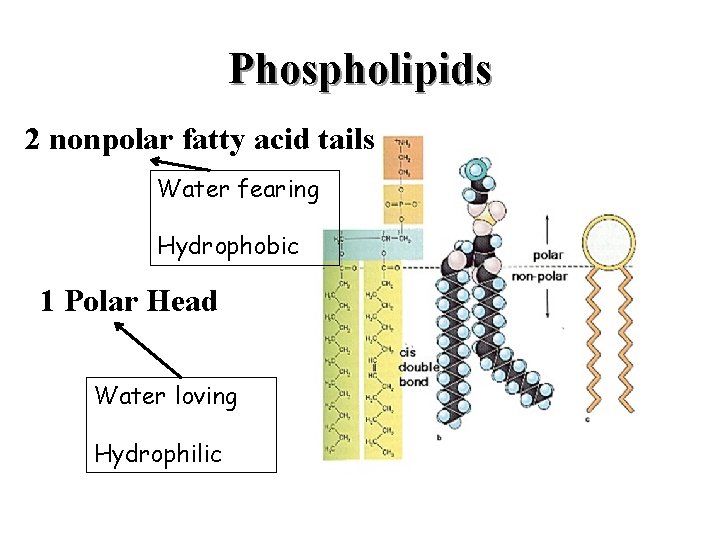
Phospholipids 2 nonpolar fatty acid tails Water fearing Hydrophobic 1 Polar Head Water loving Hydrophilic
Selectively Permeable • Only some molecules can pass through small and non polar can Large and polar cannot polar means has a charge (+ or -)
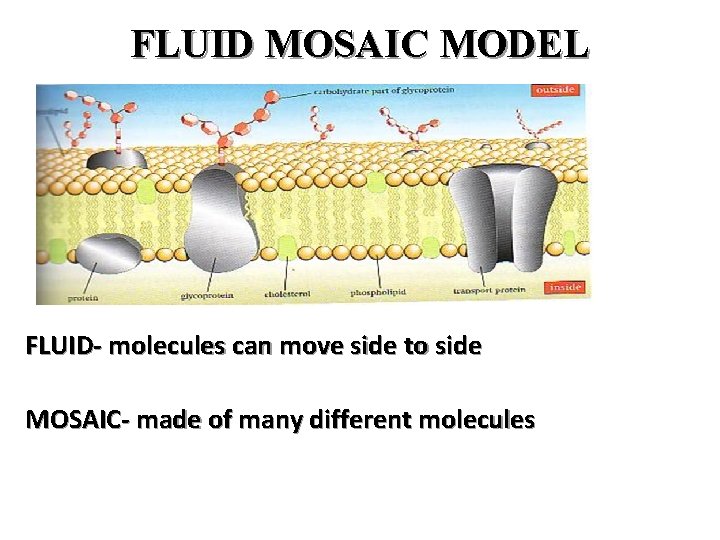
FLUID MOSAIC MODEL FLUID- molecules can move side to side MOSAIC- made of many different molecules
Questions: 1. Can fats pass through the plasma membrane? yes 2. Can nonpolar substances pass through the plasma membrane? yes 3. Can large polar molecules pass through the plasma membrane? 4. 5. no What is another name for the plasma membrane? the phospholipid bilayer How is the plasma membrane involved in excretion? Metabolic wastes must pass through the membrane to be released
- Slides: 12