
The Cell Lecture NO 1 st MBBS Dr
The Cell Lecture NO: 1 st MBBS Dr Muhammad Ramzan
Cell- the definition • Cell is the basic structural, functional and biological unit of all known living organisms except viruses • Enclosed by a semi permeable membrane and includes nucleus/organelle • Human body have 100 trillion cells • www. wikipedia. com – www. merriam webster. com
Cell – the background • Have genetic information and can replicate itself • Is covered by a semi permeable membrane enclosing cytoplasm and cell organelle • Can utilize nutrients for energy production • Excretes waste products • The study of cells is called cell biology. • www. biology - online. org - www. ghr. nlm. nih. gov.
Parts of a Cell • • • Cells have 4 different parts, each with a different function These parts are : 1. Cell membrane 2. Cytoplasm 3. Cytoskeleton and 4. Cell organelle • www. ghr. nlm. nih. gov
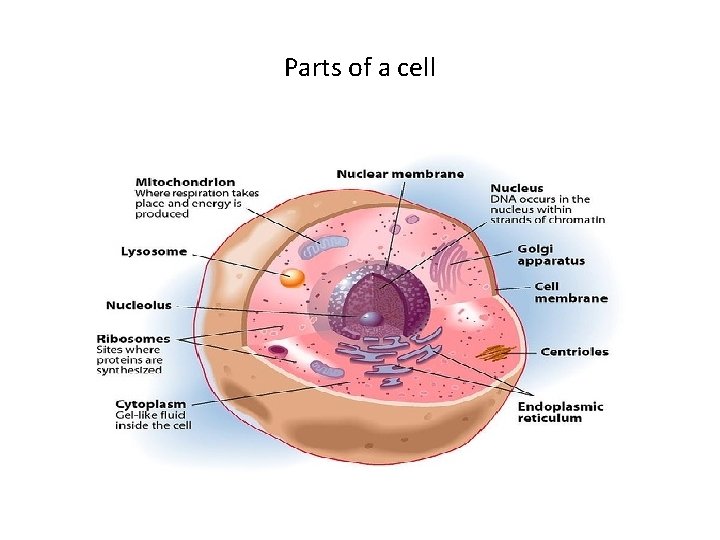
Parts of a cell
Cytoplasm - composition • It is a clear, gel like fluid with in a cell that is external to nuclear and internal to cell membrane • Protoplasm is the Nucleus and cytoplasm • Cytoplasm is composed of : • water(80%); salts, proteins and Nucleic acids • Have cell organelle and cytoskeletal fibers • www. ghr. glm. nih. gov. www. britannica. com- www. biology- online. com
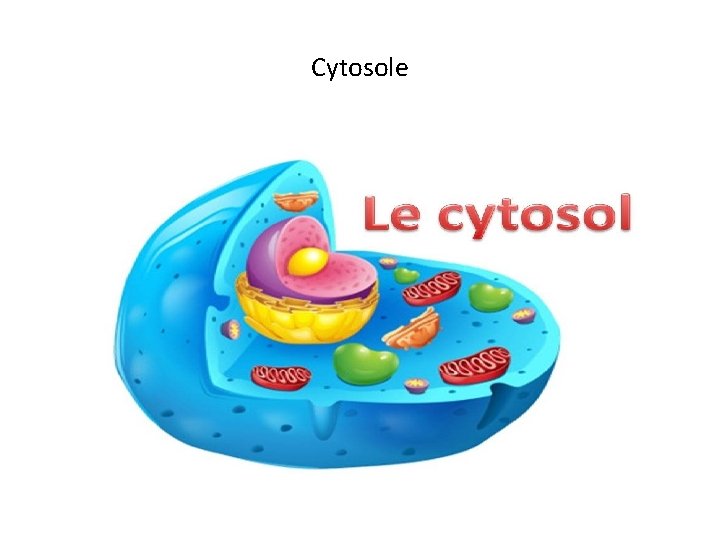
Cytosole or Cytosolic matrix A part of cytoplasm • Cytosole is a gel like fluid found in the cells A part of Cytoplasm • It constitutes the intracellular fluid (ICF) and have mixture of substances dissolved in water • Has elevated level of K+ and low N+ ions. Inside is – ive • Ca is also available • Water soluble proteins make up 25 -30% of the cytosole
Composition of cytosole - significance • K and Na are essential for the generation of action potential in muscles, neurons and endocrine • Both are involved in osmo regulation • Ca is also available for cell signaling and as 2 nd messenger • Is seat for metabolic pathways (Glycolysis) and medium for the transport of metabolites and organelle • www. biology- online. com – www. wikepedia. com
Cytosole
Cytoskeleton – the structure A net work of filaments • It is the collective name given to protein filaments and motor proteins like Myosin in the cell • These protein filaments form an enormous 3 D mesh work • The filaments can be cross linked with other similar filaments through accessory proteins • The cross linkage ↑cell rigidity and maintains its shape • www. british society for cell biology. com
Cytoskeleton - structure cont. Nature of fibers • These filaments extend from plasma membrane to nucleus that act both as muscle and skeleton • These are of 3 types: • Microfilaments • Microtubules and • Intermediate filaments • www. biology project for cell biology. com – www. merrium webster. com
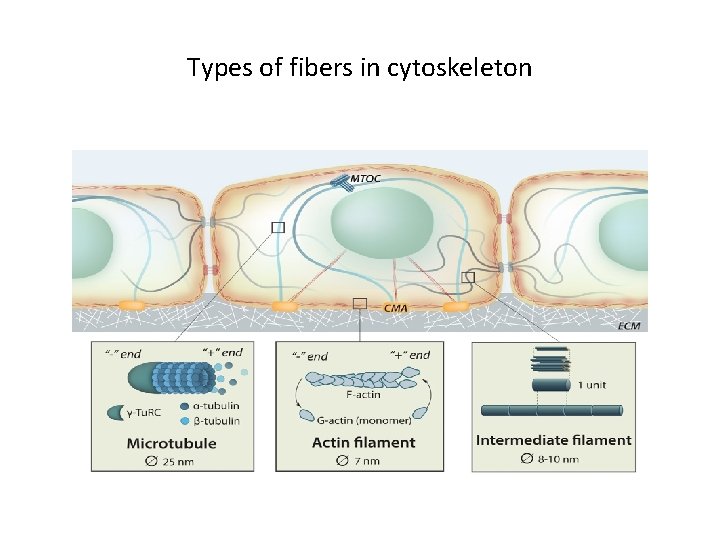
Types of fibers in cytoskeleton
Cytoskeleton – significance movers and shapers • Determining cell shape and allowing the cell to move like: Cilia, flagella and Leukocytes in blood circulation • Provide mechanical strength • Separation of chromosomes in cell division • Provides pathways that directs the movement of organelles and other substances within cells. • Some of the filaments are used to transport cargo- micro tubules • www. british society for cell biology. com
Cell organelle – Endoplasmic reticulum (ER) • • • It is a complex net work of tubules and cisterns in the cell Well connected with the Golgi complex Two types depending upon the appearance Rough Endoplasmic Reticulum, synthesize proteins Smooth Endoplasmic reticulum for Lipids and CHO synthesis Transports products to their destinations like Golgi
Golgi complex • A collection of tubules/cisterns/sacs that are arranged in stacks • Process, modifies and packs the products from ER • Releases finished products for use inside/outside the cell • Synthesizes complex CHO moles that cannot be synthesized in the SER like Chondroitine sulphate and Hyaluronic acid • Adds CHOs to the lipids and proteins – Glycolipids and Glycoproteins
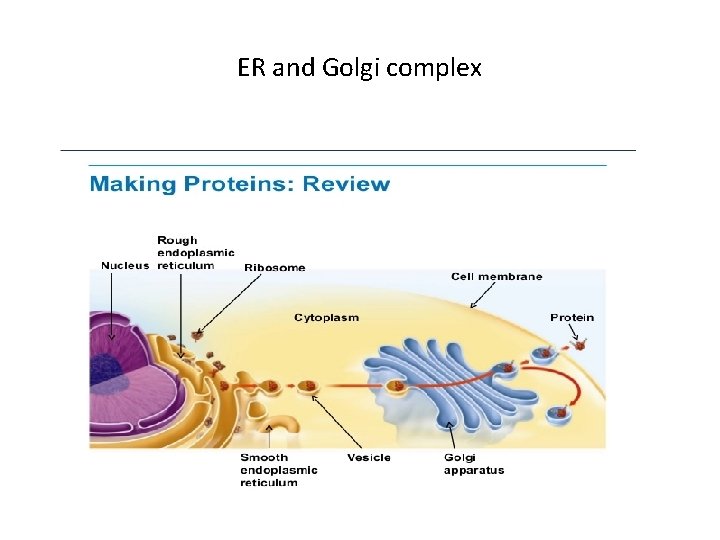
ER and Golgi complex
Lysosome and Peroxisome • These are the recycling centre of the cell • Act as waste box for the cell • Lysosome digest the cell debris/organelle, food particles and bacteria and moles by Endocytosis • Peroxisome oxidize the moles like Fatty acids for energy • Detoxication of H 2 O 2 into O 2 and water
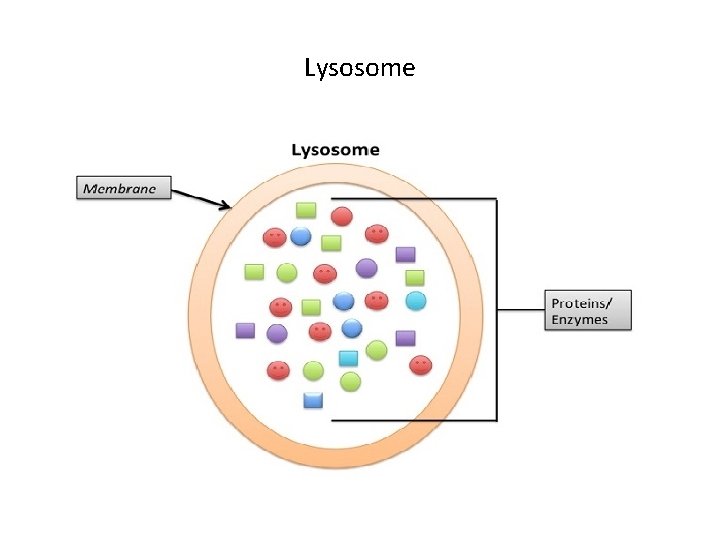
Lysosome
Mitochondria • Are power house for the cell, release energy by oxidation of Fatty acids to produce ATP • Have their own genetic material , separate from the DNA in the nucleus, • Synthesize their own proteins • Have double layered membrane
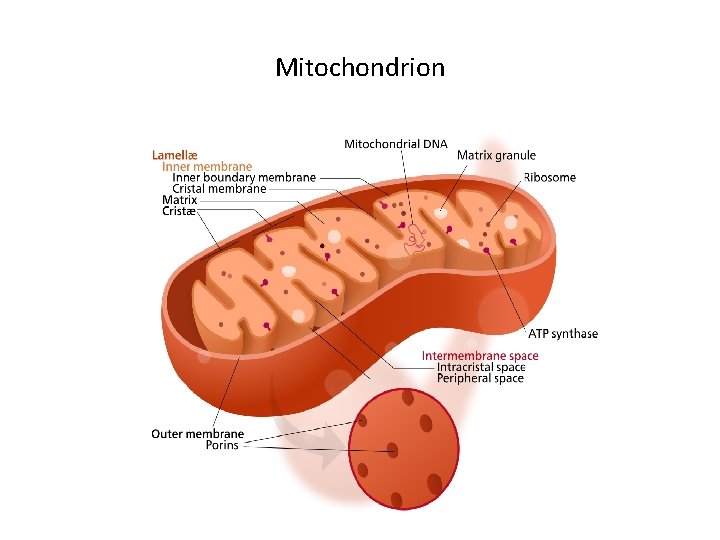
Mitochondrion
Nucleus • It is the house for the storage of genetic material DNA in chromosomes and nucleoproteins • Controls all activities of the cell especially DNA replication, growth, reproduction and metabolism • Contain nucleolus • Covered by a double layered membrane with pores • Give rise to (Transcribe) m. RNA for protein synthesis
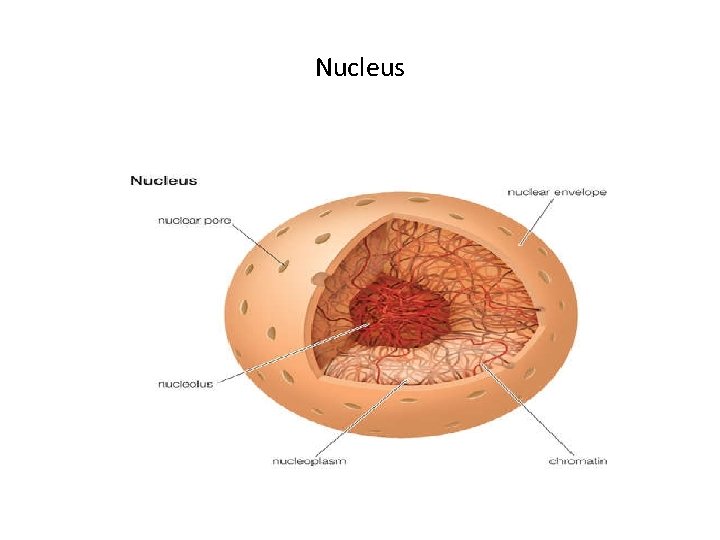
Nucleus
Plasma membrane • It is the phospholpid Bilayer with embedded proteins • It is the outer most covering of a cell that isolates the inside of the cell from exterior • Maintains the shape and integrity of the cell • Allows nutrients to pass in and waste to pass out • Protects the cell
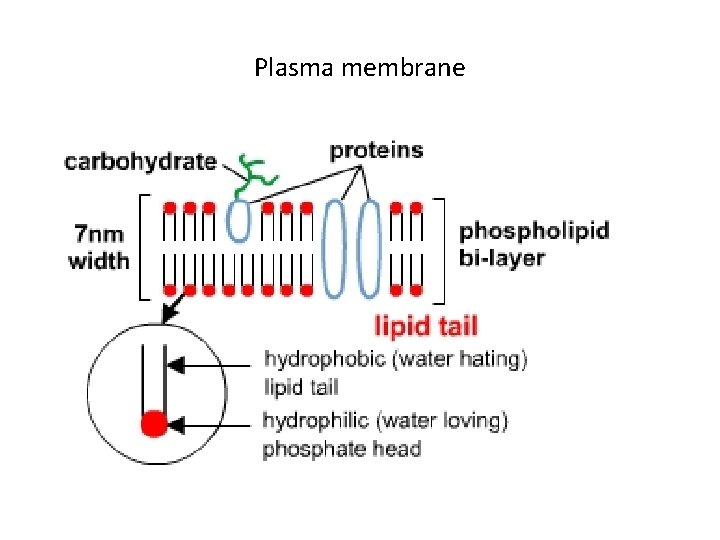
Plasma membrane
Ribosome - structure • Ribosome is the Cytoplasmic organelles that has no membrane • Ribosome decodes the genetic information in m. RNA to produce proteins • Two types: free floating and fixed to the RER in the cytoplasm • Both produce proteins for their use : • inside and out side of the cell
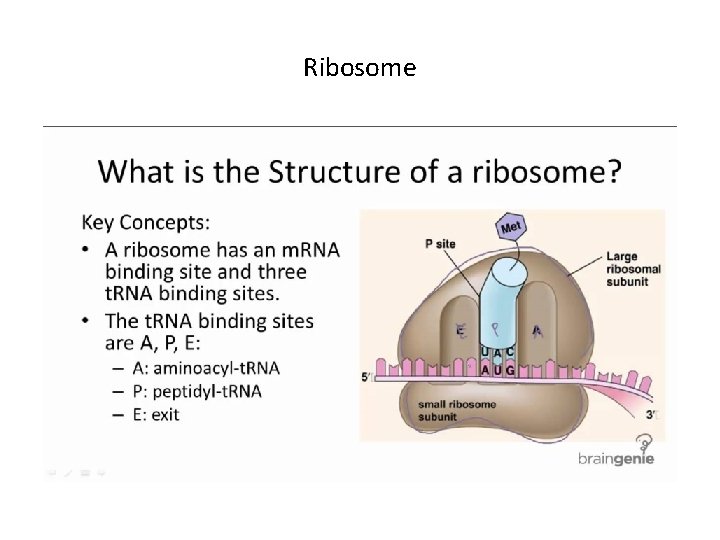
Ribosome
Secretary vesicles • Are the membrane bound rounded structure that are produced and released by the ER and Golgi respectively. • Contain the macro moles in the precursor form as zymogens • Are released in active form as enzyme or hormone • Are stored in the cytoplasm or released out side the cell by the process of Endocytosis • www. biology – on line. com
- Slides: 27