
The Cell First view of cells Robert Hooke
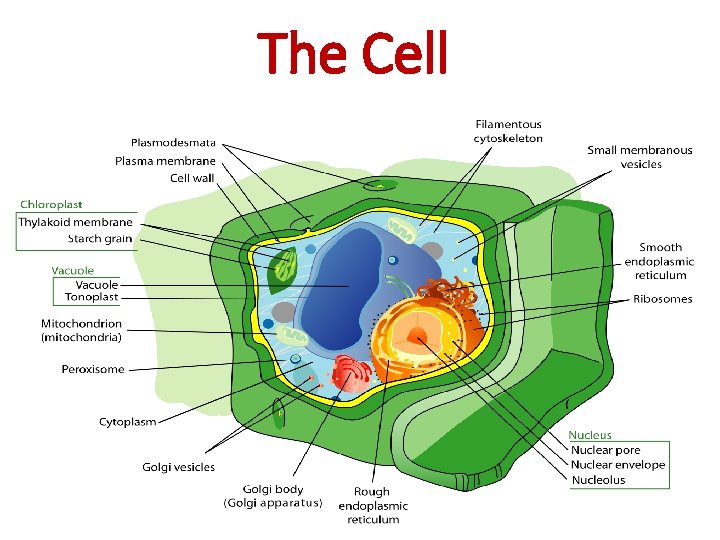
The Cell
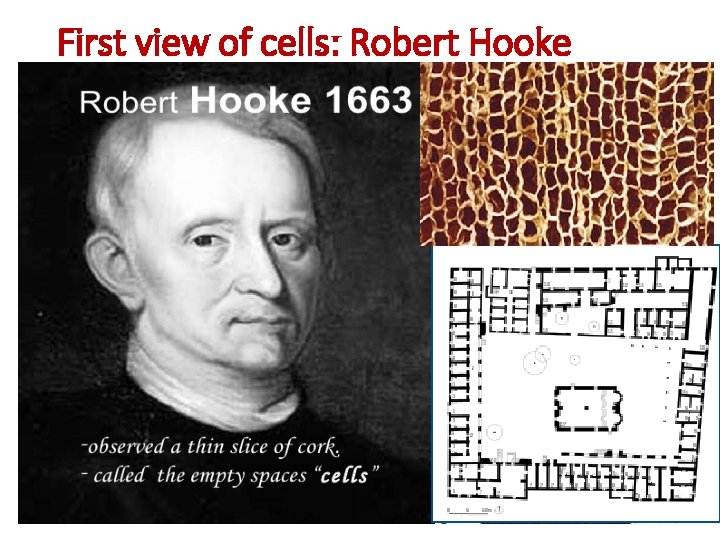
First view of cells: Robert Hooke
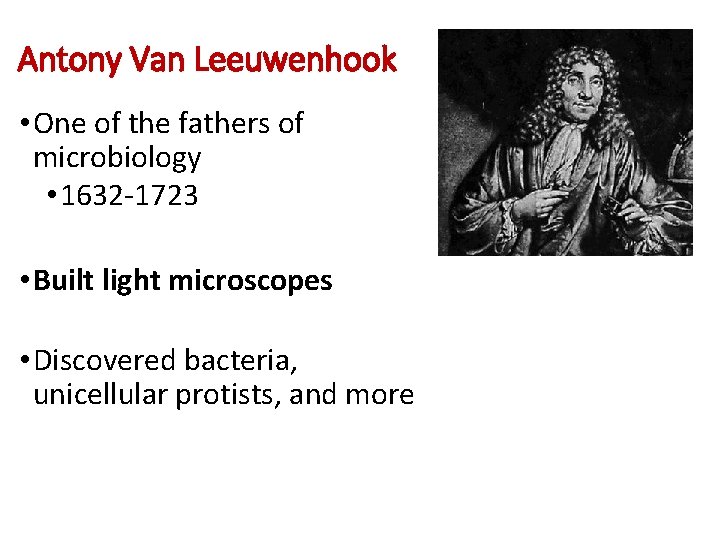
Antony Van Leeuwenhook • One of the fathers of microbiology • 1632 -1723 • Built light microscopes • Discovered bacteria, unicellular protists, and more
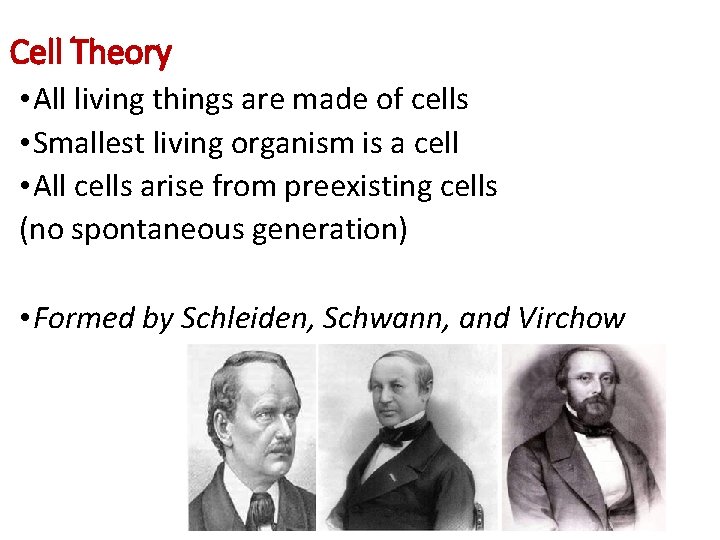
Cell Theory • All living things are made of cells • Smallest living organism is a cell • All cells arise from preexisting cells (no spontaneous generation) • Formed by Schleiden, Schwann, and Virchow
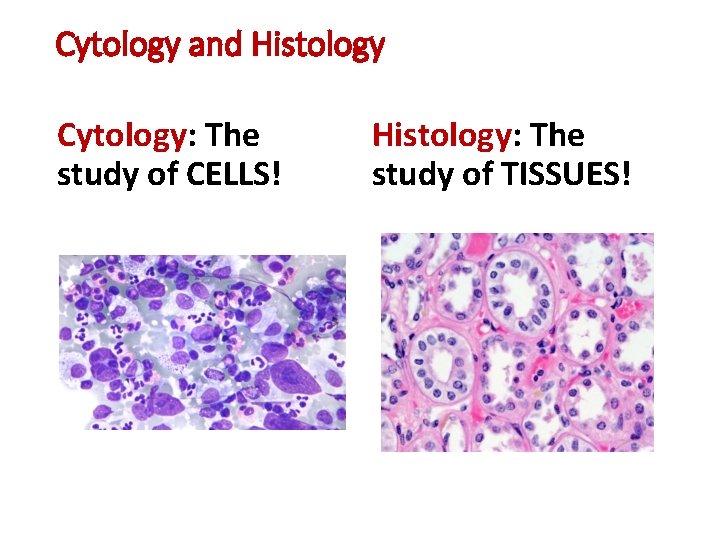
Cytology and Histology Cytology: The study of CELLS! Histology: The study of TISSUES!
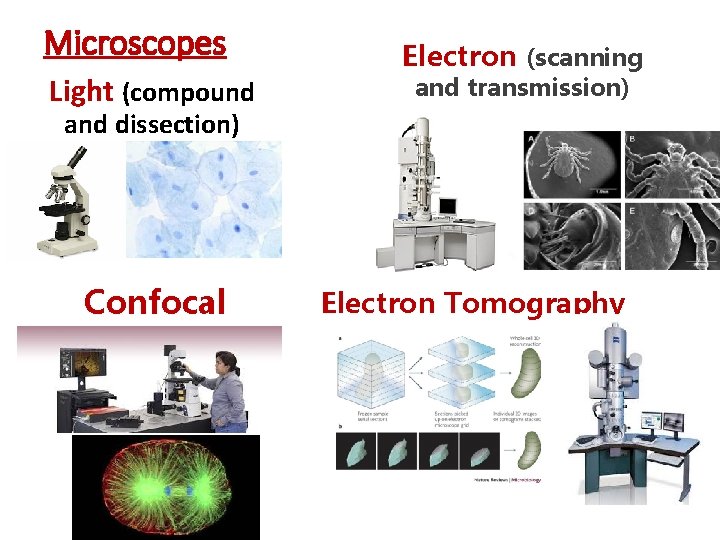
Microscopes Light (compound Electron (scanning and transmission) and dissection) Confocal Electron Tomography
Microscopes • Light microscope- resolves to about. 2 μm magnification • Electron microscope- resolves to about. 2 nm • Scanning (SEM)-cell surfaces • Transmission(TEM)-Internal contents Newer STM, scanning tunneling, enables 3 -D images and can be used w/ living)
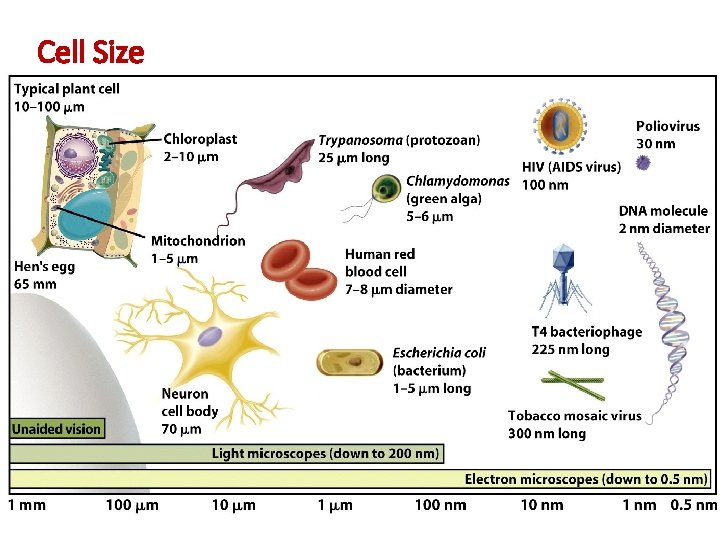
Cell Size
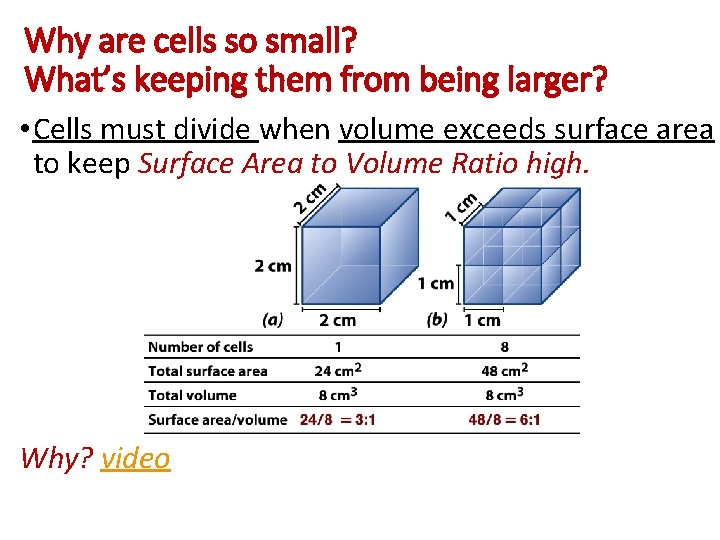
Why are cells so small? What’s keeping them from being larger? • Cells must divide when volume exceeds surface area to keep Surface Area to Volume Ratio high. Why? video
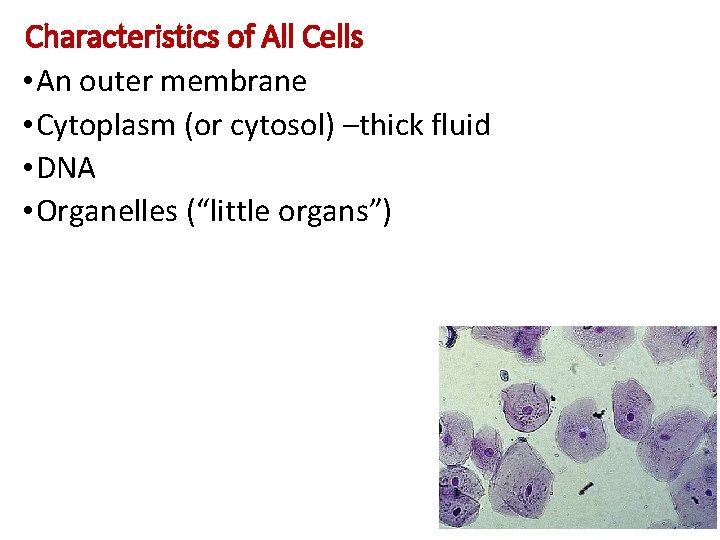
Characteristics of All Cells • An outer membrane • Cytoplasm (or cytosol) –thick fluid • DNA • Organelles (“little organs”)
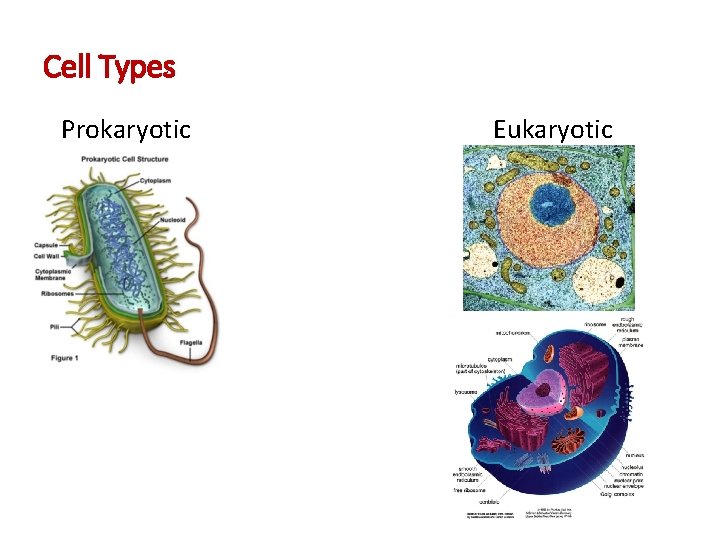
Cell Types Prokaryotic Eukaryotic
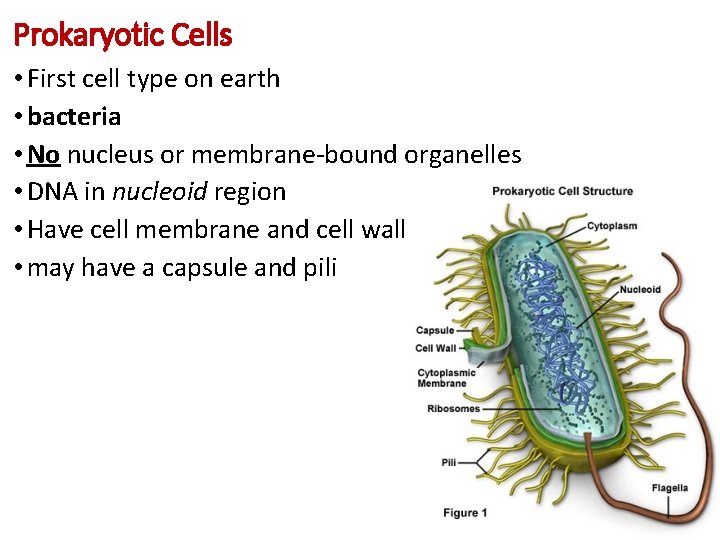
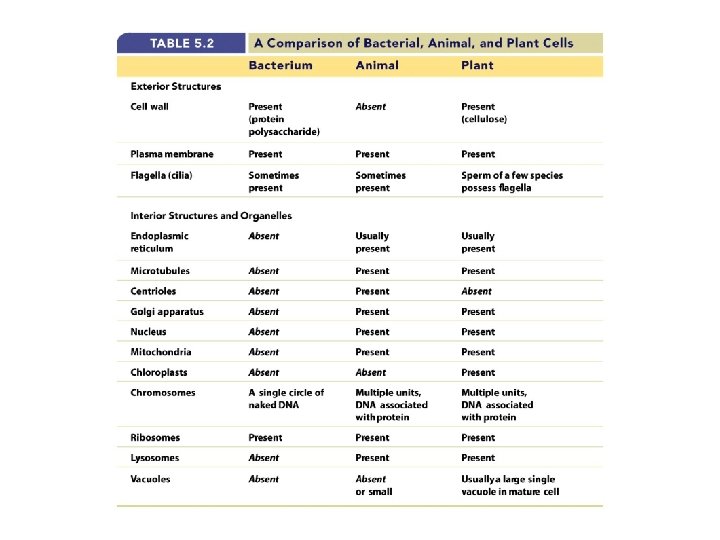
Prokaryotic Cells • First cell type on earth • bacteria • No nucleus or membrane-bound organelles • DNA in nucleoid region • Have cell membrane and cell wall • may have a capsule and pili
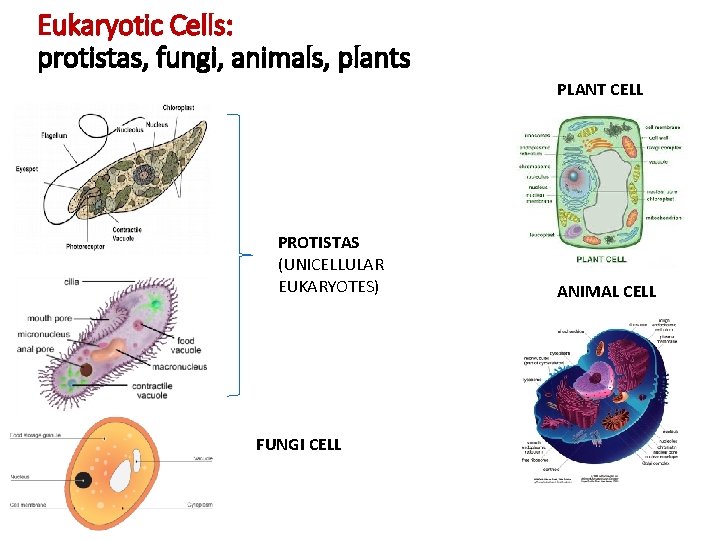
Eukaryotic Cells: protistas, fungi, animals, plants PLANT CELL PROTISTAS (UNICELLULAR EUKARYOTES) FUNGI CELL ANIMAL CELL
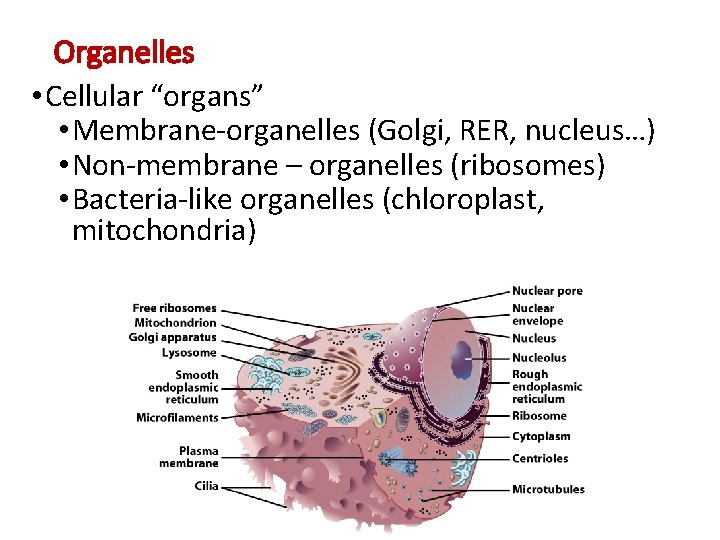
Organelles • Cellular “organs” • Membrane-organelles (Golgi, RER, nucleus…) • Non-membrane – organelles (ribosomes) • Bacteria-like organelles (chloroplast, mitochondria)
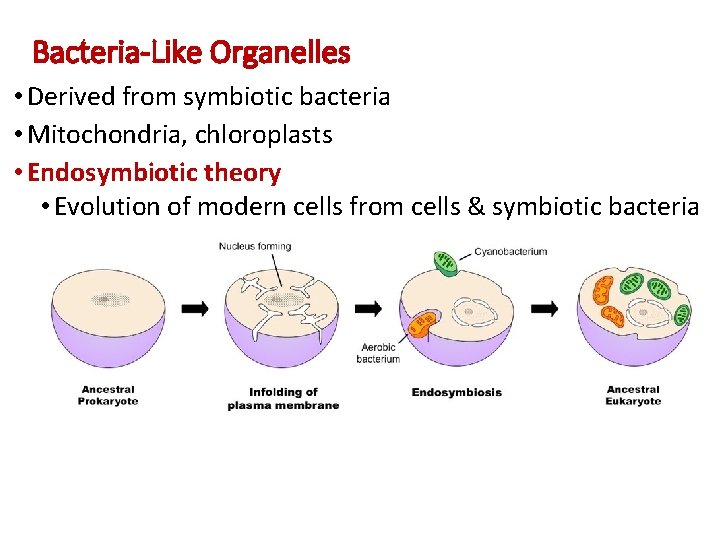
Bacteria-Like Organelles • Derived from symbiotic bacteria • Mitochondria, chloroplasts • Endosymbiotic theory • Evolution of modern cells from cells & symbiotic bacteria
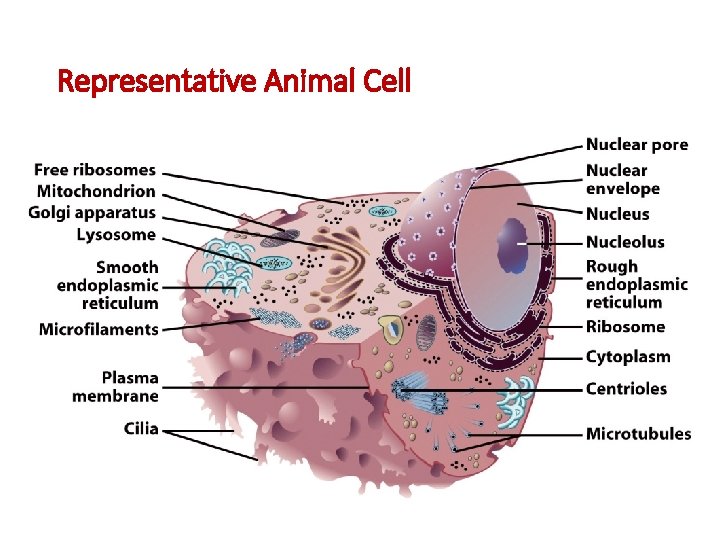
Representative Animal Cell
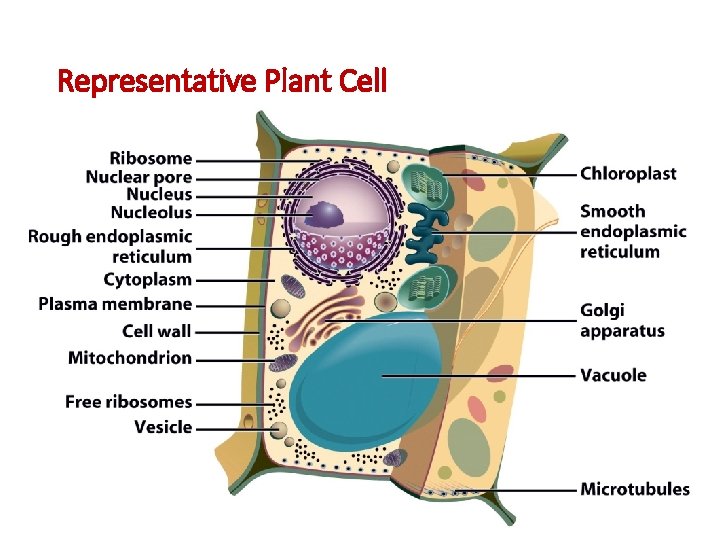
Representative Plant Cell
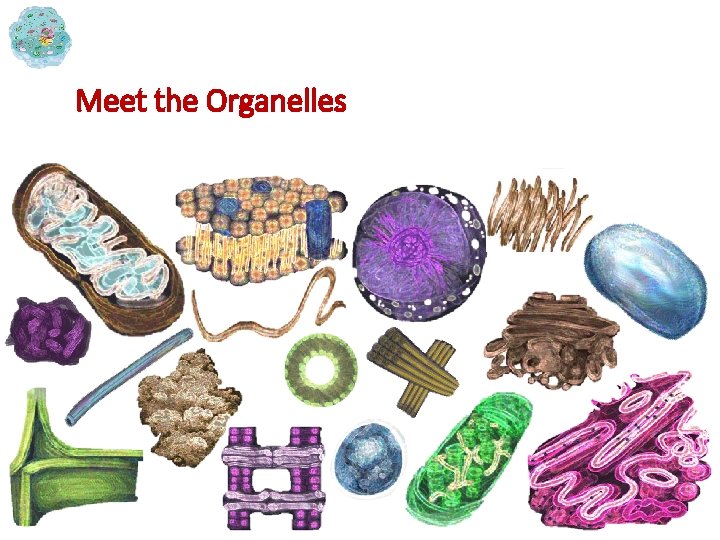
Meet the Organelles
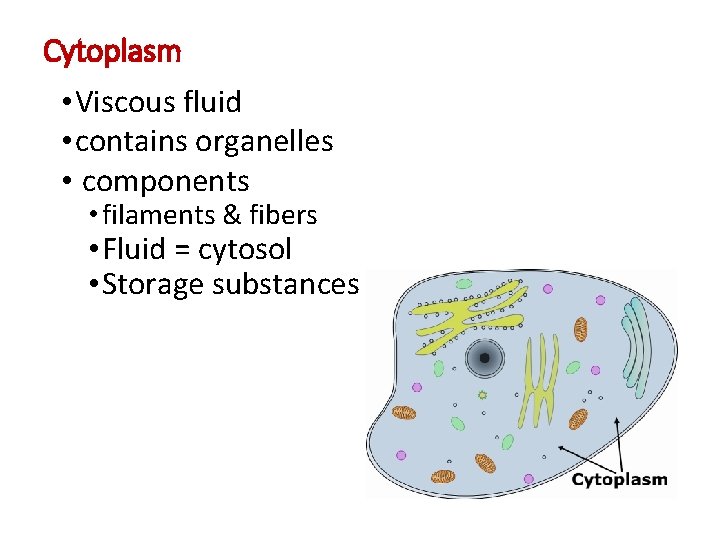
Cytoplasm • Viscous fluid • contains organelles • components • filaments & fibers • Fluid = cytosol • Storage substances
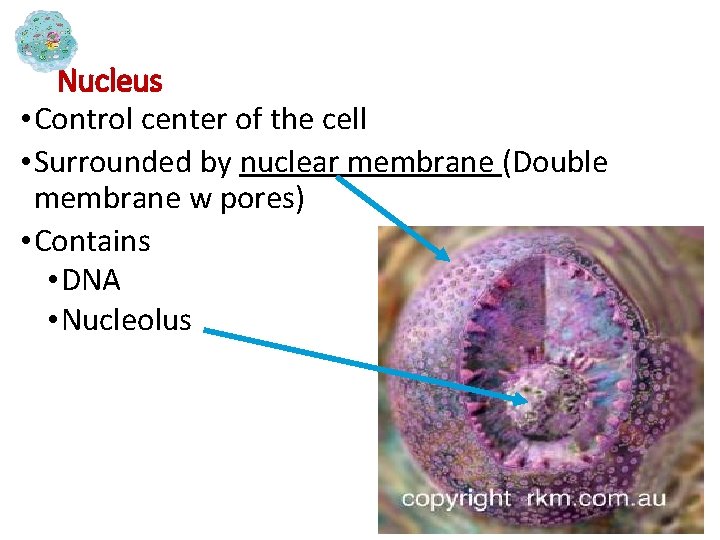
Nucleus • Control center of the cell • Surrounded by nuclear membrane (Double membrane w pores) • Contains • DNA • Nucleolus
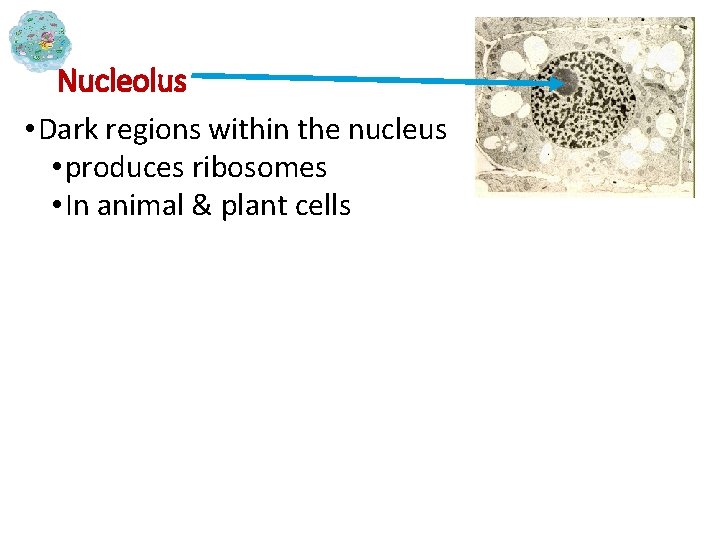
Nucleolus • Dark regions within the nucleus • produces ribosomes • In animal & plant cells
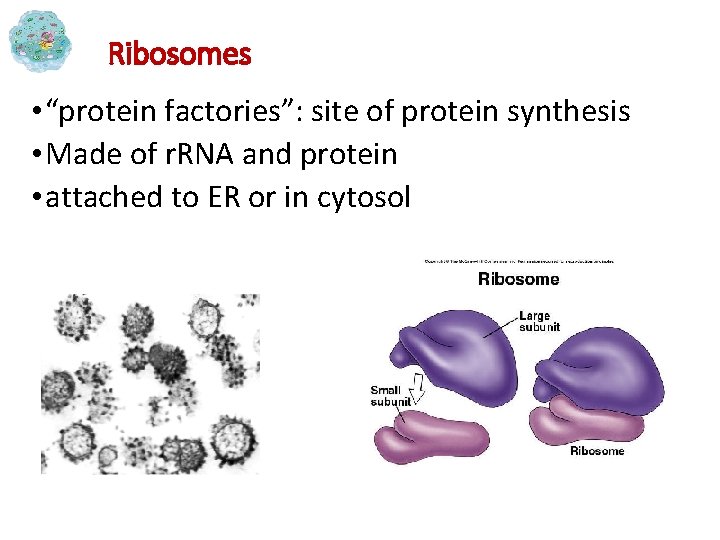
Ribosomes • “protein factories”: site of protein synthesis • Made of r. RNA and protein • attached to ER or in cytosol

Endoplasmic Reticulum • Membranous maze connected to nuclear envelope • Rough ER – Covered in ribosomes • Makes proteins • Smooth ER – no ribosomes • Lipid synthesis • Detoxifies harmful substances (Cells in liver have a lot of smooth ER)
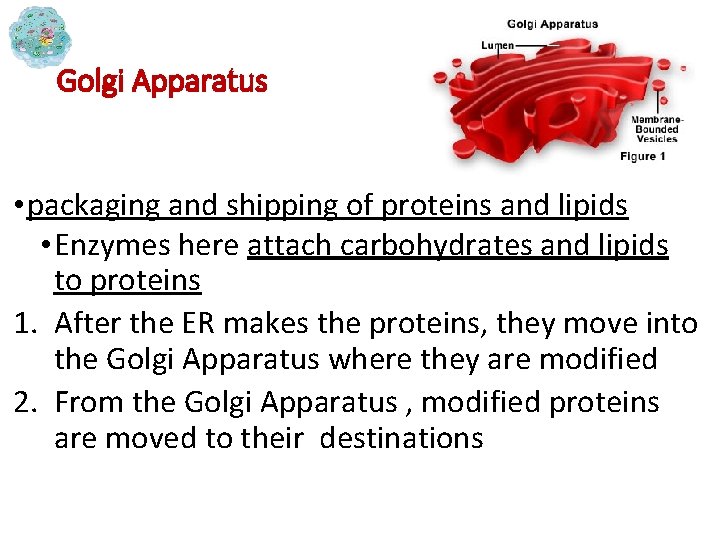
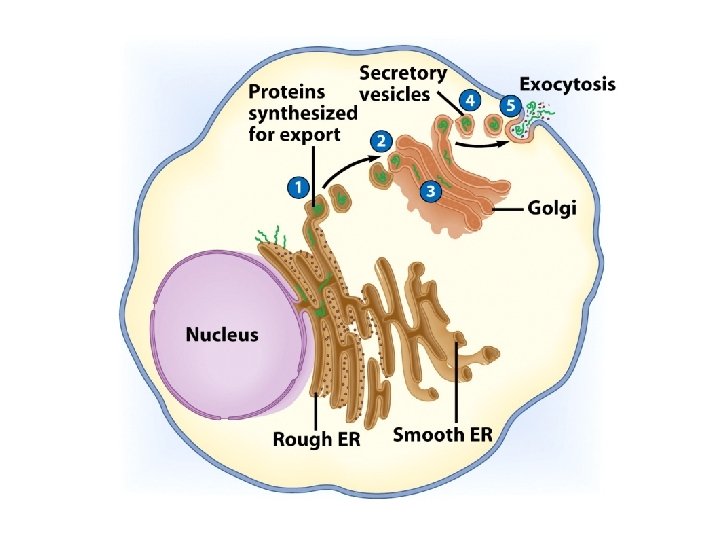
Golgi Apparatus • packaging and shipping of proteins and lipids • Enzymes here attach carbohydrates and lipids to proteins 1. After the ER makes the proteins, they move into the Golgi Apparatus where they are modified 2. From the Golgi Apparatus , modified proteins are moved to their destinations
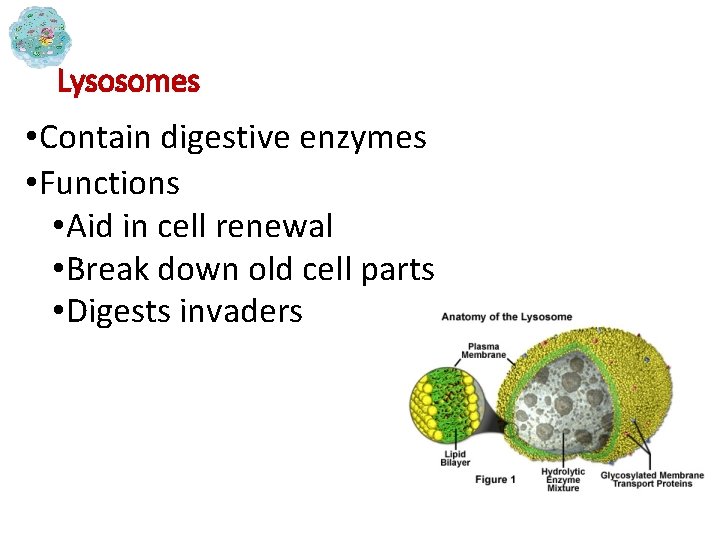
Lysosomes • Contain digestive enzymes • Functions • Aid in cell renewal • Break down old cell parts • Digests invaders

Vacuoles • Membrane bound sacs • Temporary storage areas for food water, enzymes and waste • Special types • Contractile: pumps out excess water in single celled water organisms (protists, protozoans) • Central: large vacuole found in plants used for water storage
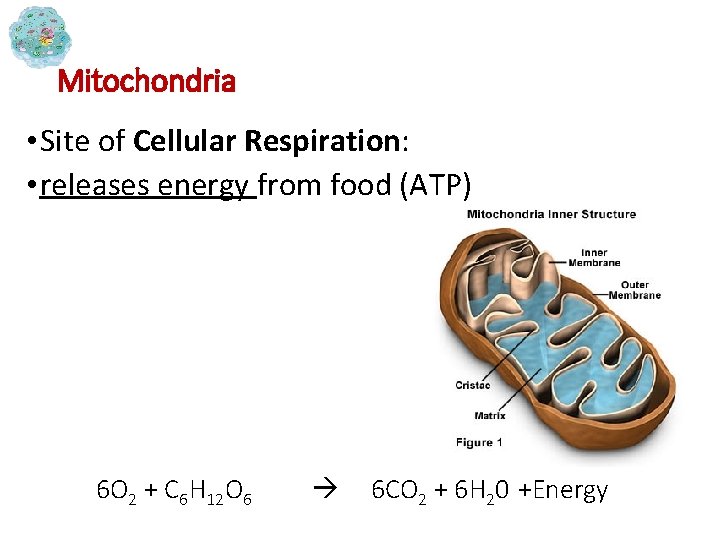
Mitochondria • Site of Cellular Respiration: • releases energy from food (ATP) 6 O 2 + C 6 H 12 O 6 6 CO 2 + 6 H 20 +Energy
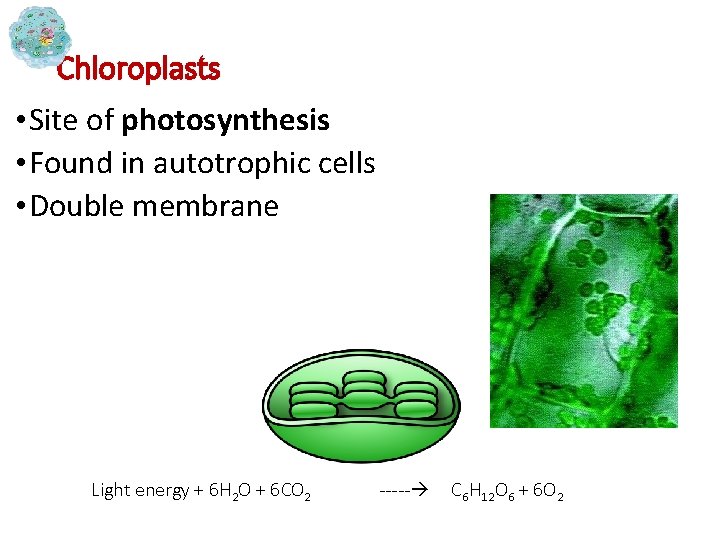
Chloroplasts • Site of photosynthesis • Found in autotrophic cells • Double membrane Light energy + 6 H 2 O + 6 CO 2 ----- C 6 H 12 O 6 + 6 O 2
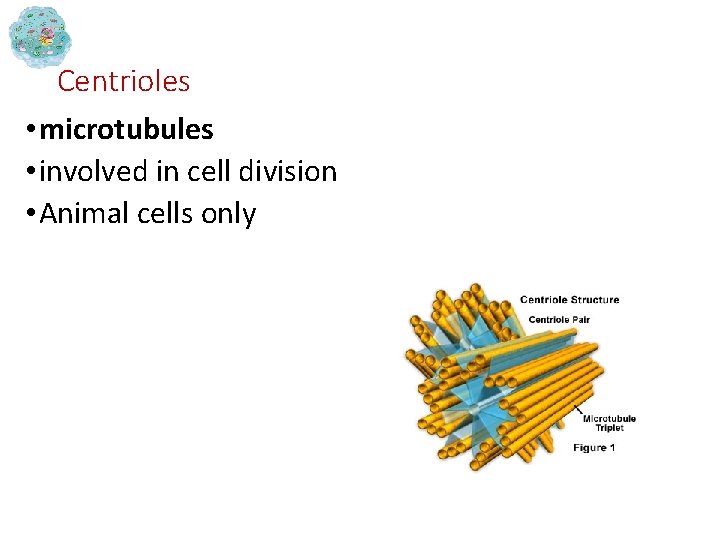
Centrioles • microtubules • involved in cell division • Animal cells only
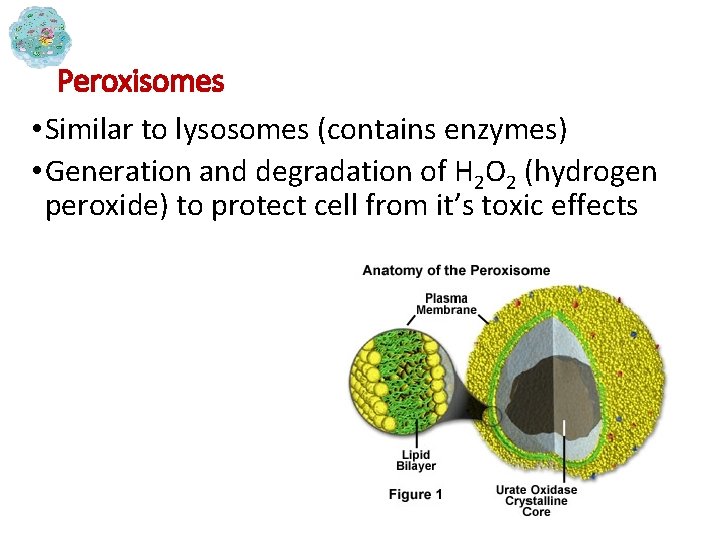
Peroxisomes • Similar to lysosomes (contains enzymes) • Generation and degradation of H 2 O 2 (hydrogen peroxide) to protect cell from it’s toxic effects
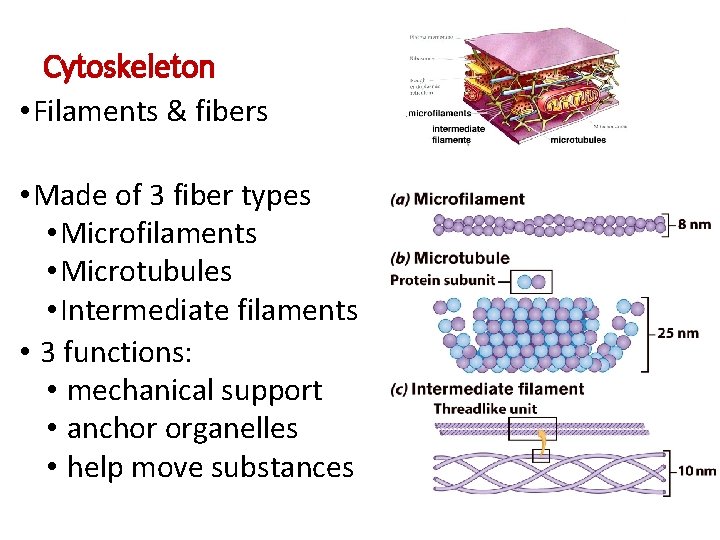
Cytoskeleton • Filaments & fibers • Made of 3 fiber types • Microfilaments • Microtubules • Intermediate filaments • 3 functions: • mechanical support • anchor organelles • help move substances

Cilia & Flagella • Provide motility • Cilia • Short • Used to move substances outside human cells • Flagella • Whip-like extensions • Found on sperm cells • Basal bodies like centrioles
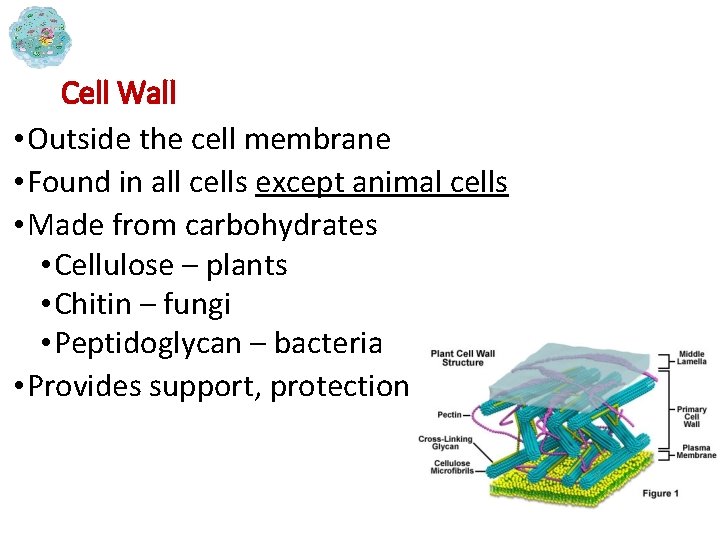
Cell Wall • Outside the cell membrane • Found in all cells except animal cells • Made from carbohydrates • Cellulose – plants • Chitin – fungi • Peptidoglycan – bacteria • Provides support, protection and excessive uptake
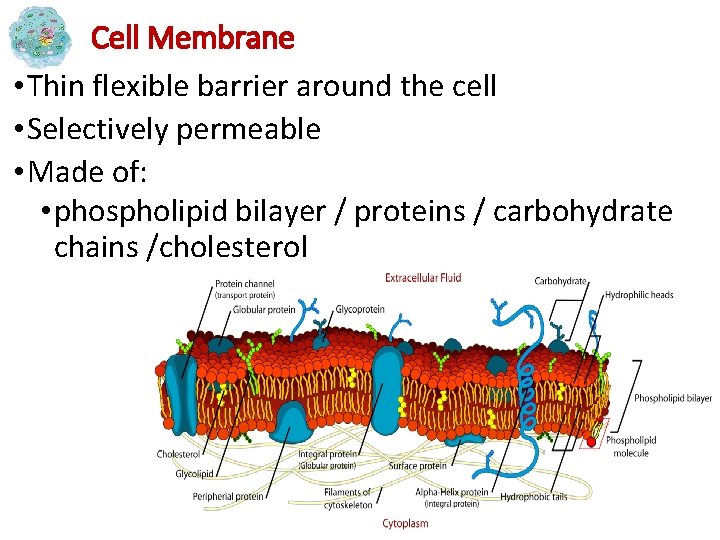
Cell Membrane • Thin flexible barrier around the cell • Selectively permeable • Made of: • phospholipid bilayer / proteins / carbohydrate chains /cholesterol
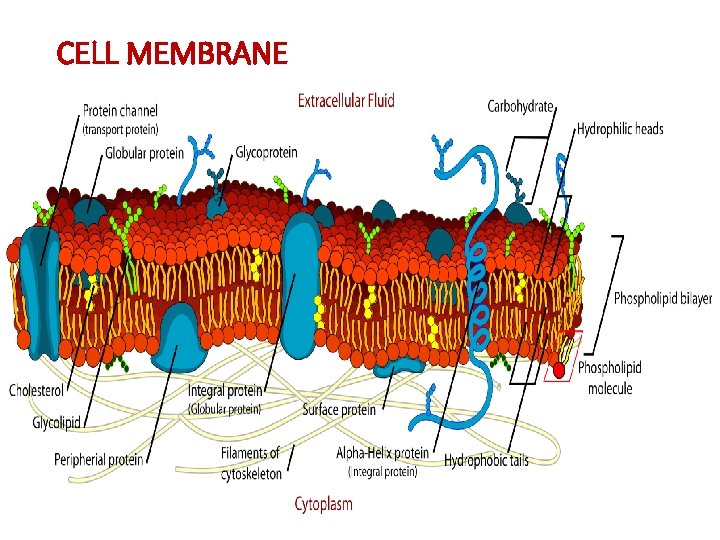
CELL MEMBRANE
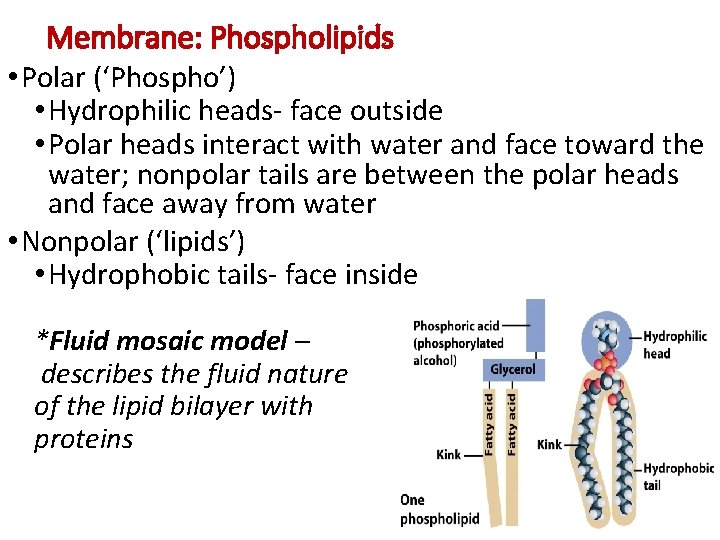
Membrane: Phospholipids • Polar (‘Phospho’) • Hydrophilic heads- face outside • Polar heads interact with water and face toward the water; nonpolar tails are between the polar heads and face away from water • Nonpolar (‘lipids’) • Hydrophobic tails- face inside *Fluid mosaic model – describes the fluid nature of the lipid bilayer with proteins
Membrane Proteins 1. Channels or transporters • Move molecules in one direction (these are like the open doors) 2. Receptors • Recognize certain chemicals
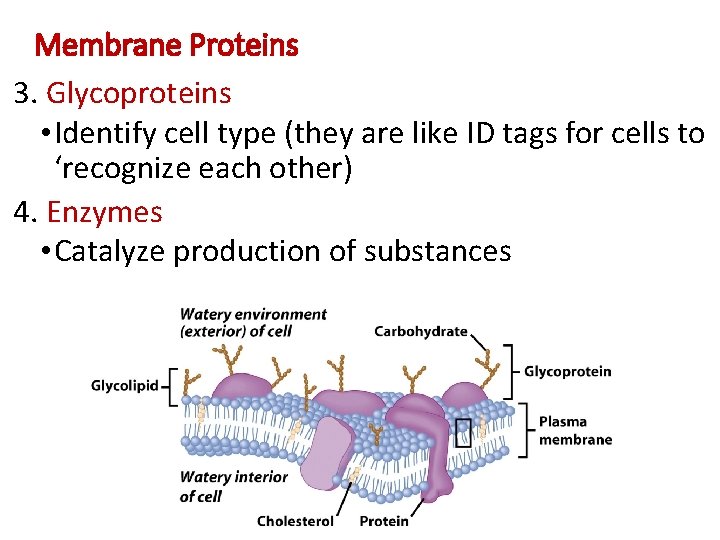
Membrane Proteins 3. Glycoproteins • Identify cell type (they are like ID tags for cells to ‘recognize each other) 4. Enzymes • Catalyze production of substances
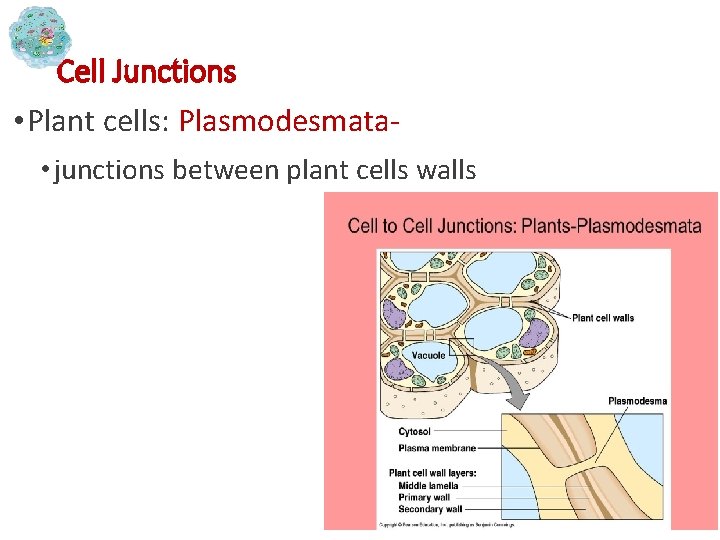
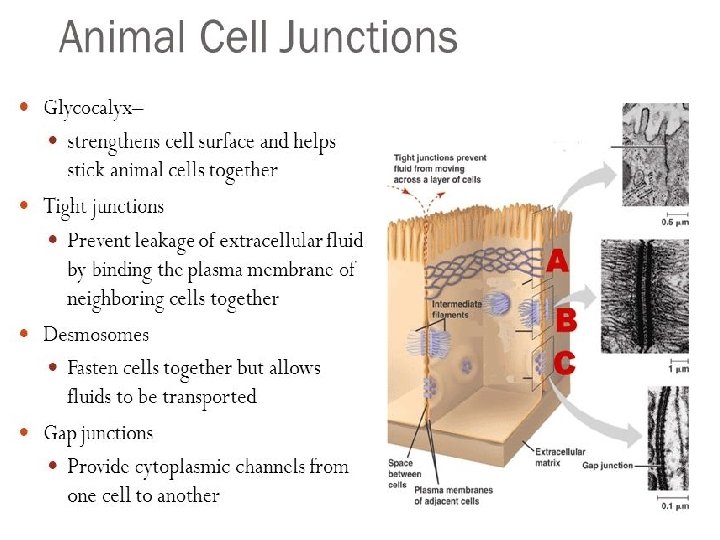
Cell Junctions • Plant cells: Plasmodesmata • junctions between plant cells walls
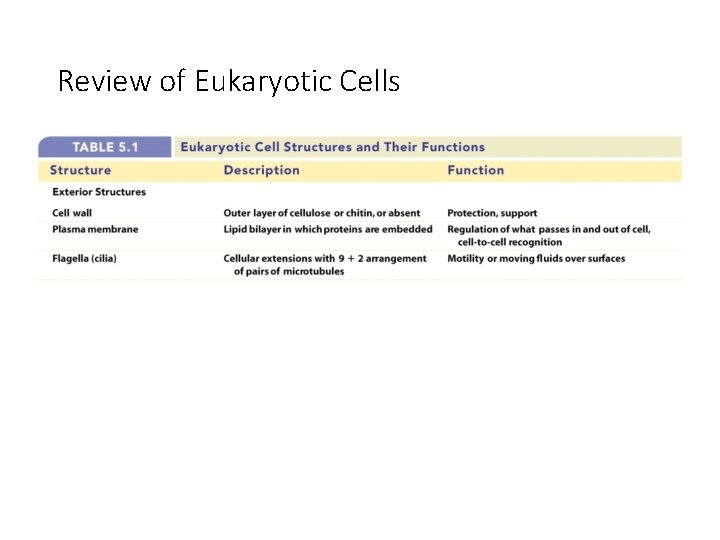
Review of Eukaryotic Cells
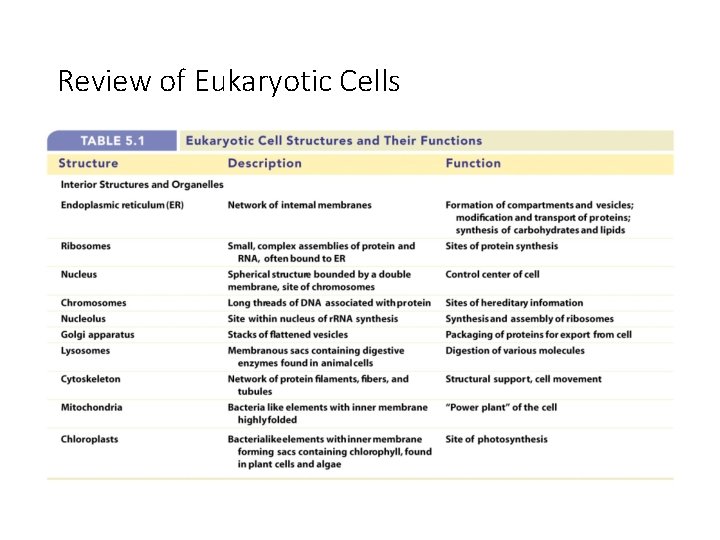
Review of Eukaryotic Cells
- Slides: 44