
The Cell Division in Eukaryotic Cells Describe the
The Cell Division in Eukaryotic Cells Describe the events that occur during the cell cycle Describe the structure of a chromosome
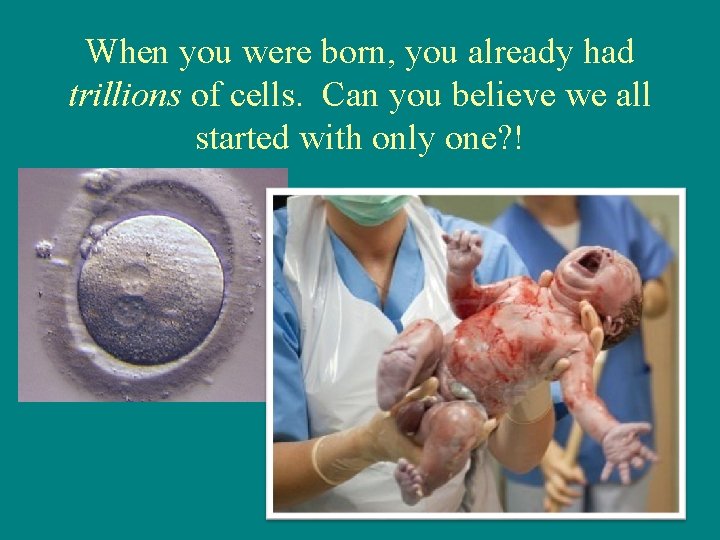
When you were born, you already had trillions of cells. Can you believe we all started with only one? !
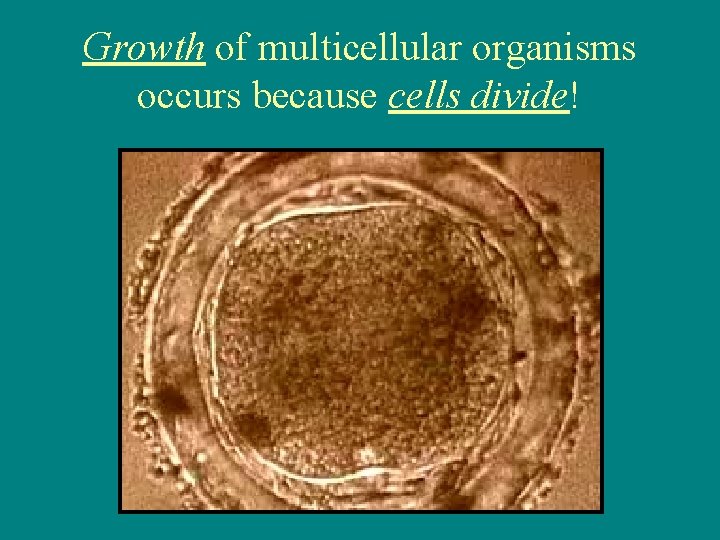
Growth of multicellular organisms occurs because cells divide!

This process is also used for healing, regeneration (replacing lost or dead cells) and asexual reproduction.
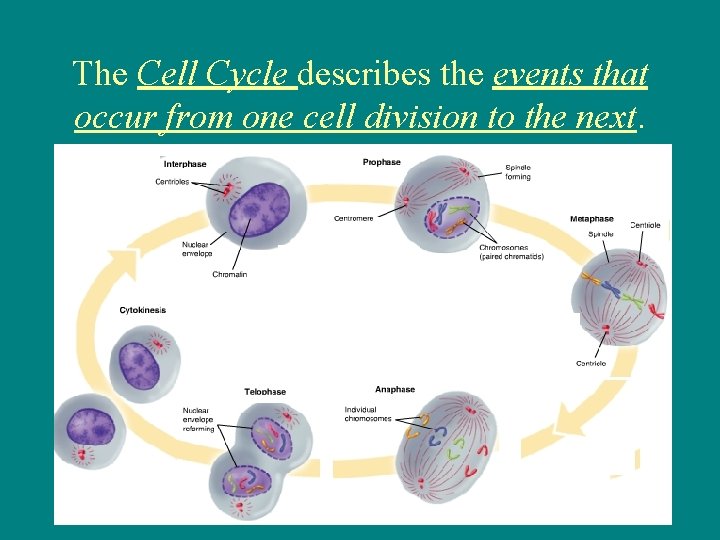
The Cell Cycle describes the events that occur from one cell division to the next.
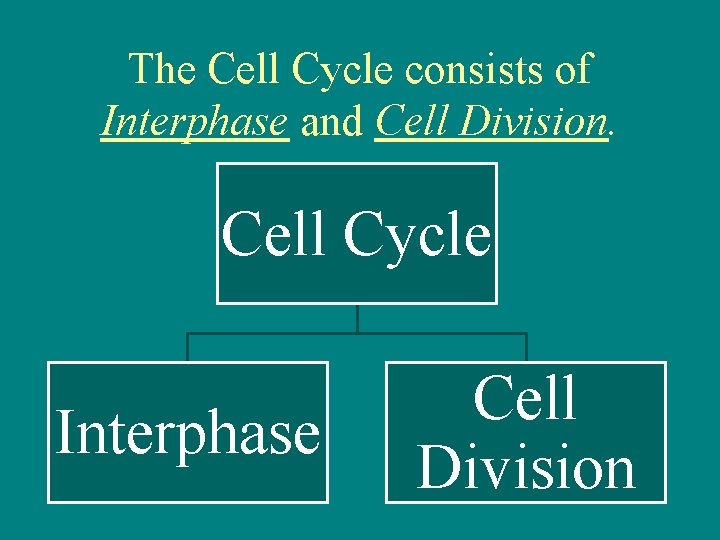
The Cell Cycle consists of Interphase and Cell Division. Cell Cycle Interphase Cell Division
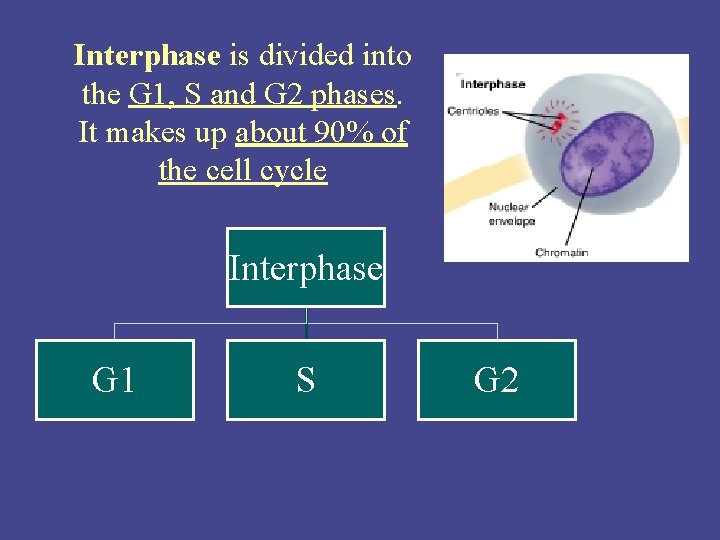
Interphase is divided into the G 1, S and G 2 phases. It makes up about 90% of the cell cycle Interphase G 1 S G 2
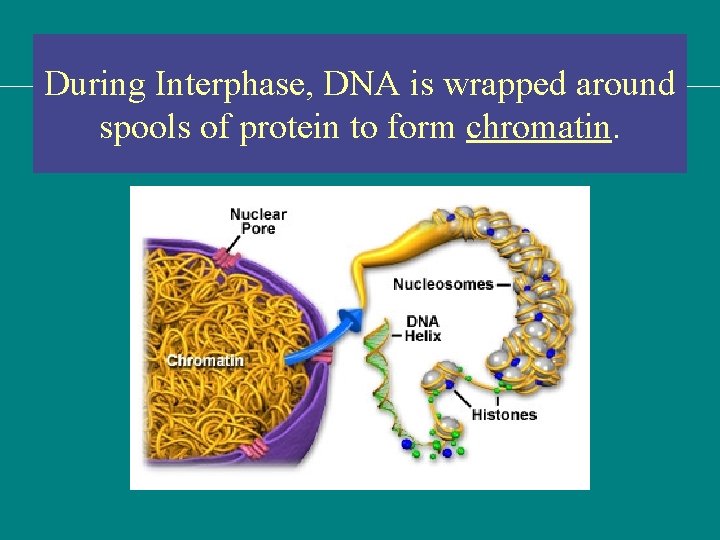
During Interphase, DNA is wrapped around spools of protein to form chromatin.
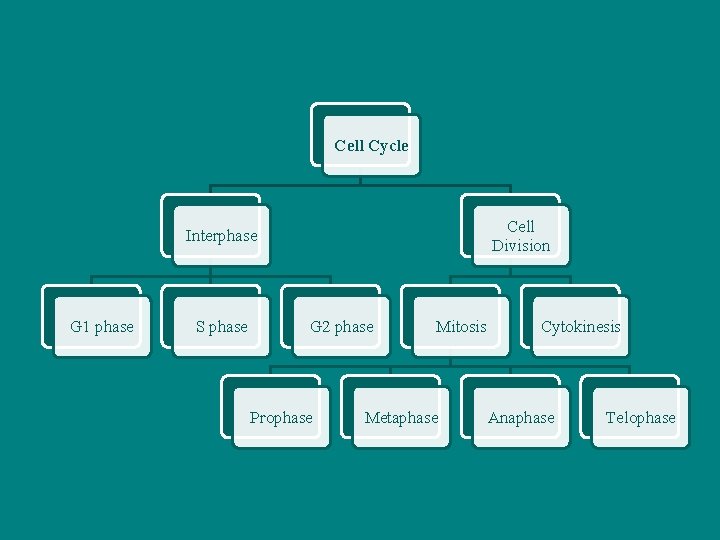
Cell Cycle Cell Division Interphase G 1 phase S phase G 2 phase Prophase Mitosis Metaphase Cytokinesis Anaphase Telophase
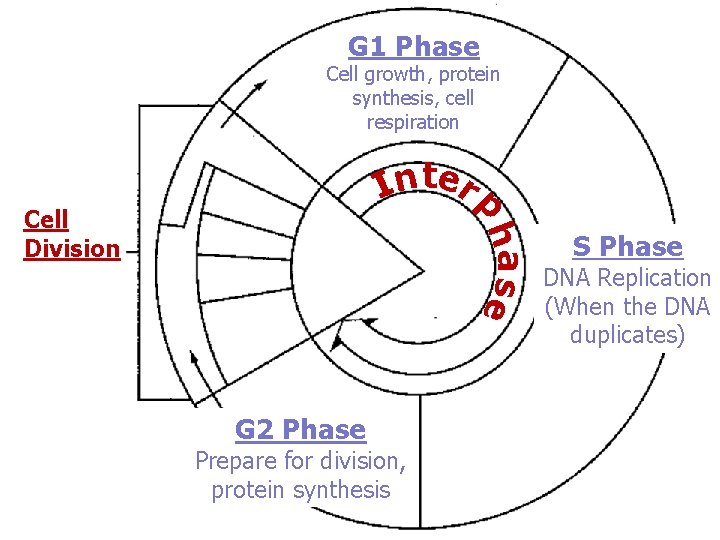
G 1 Phase Cell growth, protein synthesis, cell respiration I n ter p ha s e Cell Division G 2 Phase Prepare for division, protein synthesis S Phase DNA Replication (When the DNA duplicates)
Summarize Purpose for Cell Division • What types of activities occur during interphase? What happens in each phase? • Why would an unicellular organism need to make more cells? • Why would a multicellular organism need to make more cells?
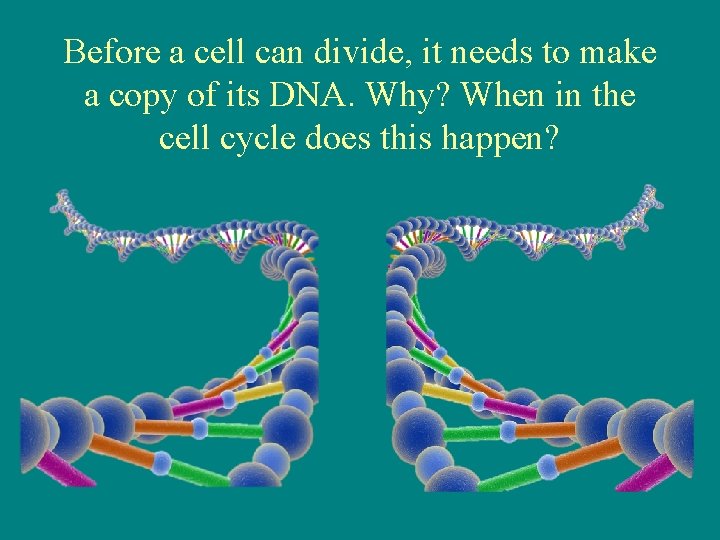
Before a cell can divide, it needs to make a copy of its DNA. Why? When in the cell cycle does this happen?

How Cell are chromatin, chromosomes During Division, chromatin coils even further toand condense chromosomes DNA into related?

A chromosome consists of two identical sister chromatids attached at the centromere. Become separated into daughter cells during cell division
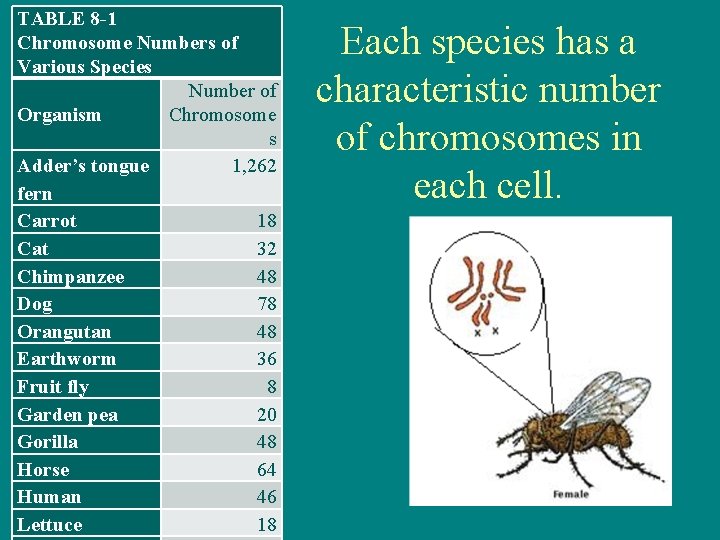
TABLE 8 -1 Chromosome Numbers of Various Species Number of Organism Chromosome s Adder’s tongue 1, 262 fern Carrot 18 Cat 32 Chimpanzee 48 Dog 78 Orangutan 48 Earthworm 36 Fruit fly 8 Garden pea 20 Gorilla 48 Horse 64 Human 46 Lettuce 18 Each species has a characteristic number of chromosomes in each cell.
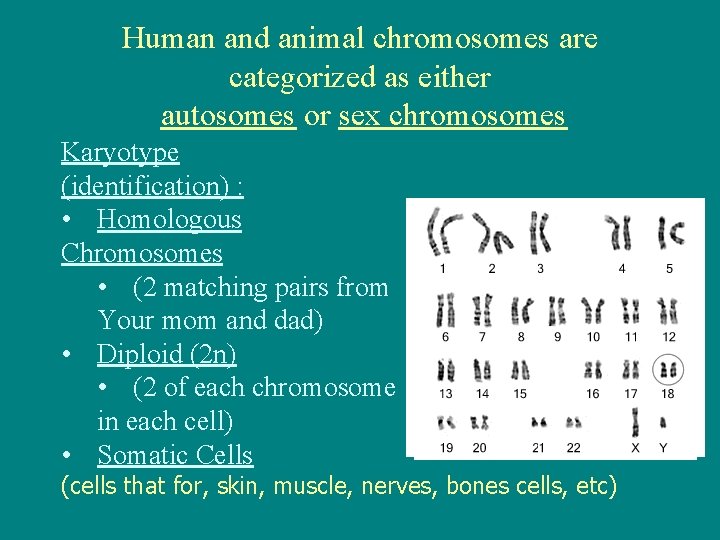
Human and animal chromosomes are categorized as either autosomes or sex chromosomes Karyotype (identification) : • Homologous Chromosomes • (2 matching pairs from Your mom and dad) • Diploid (2 n) • (2 of each chromosome in each cell) • Somatic Cells (cells that for, skin, muscle, nerves, bones cells, etc)
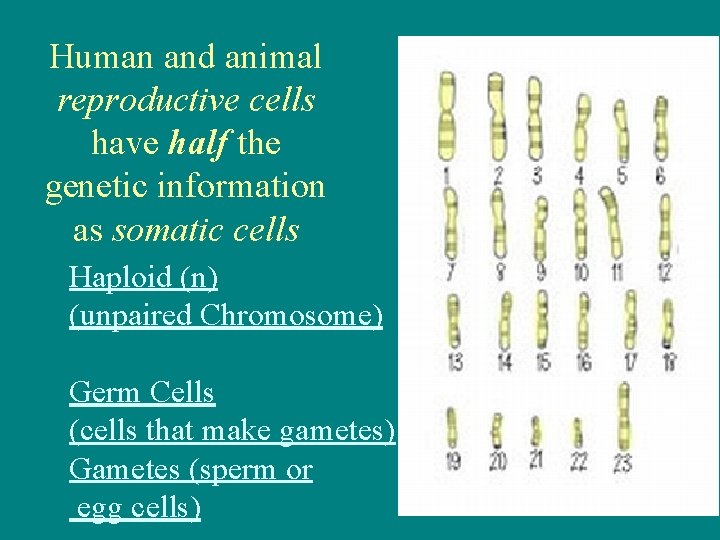
Human and animal reproductive cells have half the genetic information as somatic cells Haploid (n) (unpaired Chromosome) Germ Cells (cells that make gametes) Gametes (sperm or egg cells)
Summarize Chromosomes • Draw a set of homologous chromosomes – Draw & label a rectangle around one chromosome – Draw & label an oval around one sister chromatid – Draw a line and label the centromere • Explain why the resulting daughter cells are identical by the end of cell division
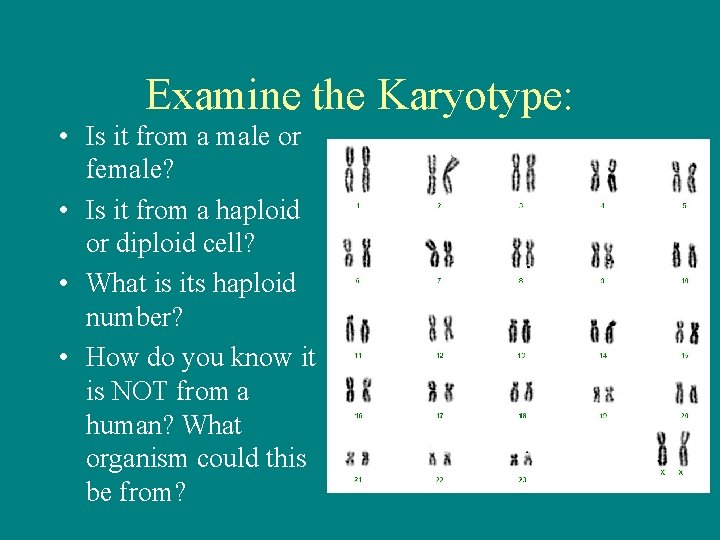
Examine the Karyotype: • Is it from a male or female? • Is it from a haploid or diploid cell? • What is its haploid number? • How do you know it is NOT from a human? What organism could this be from?
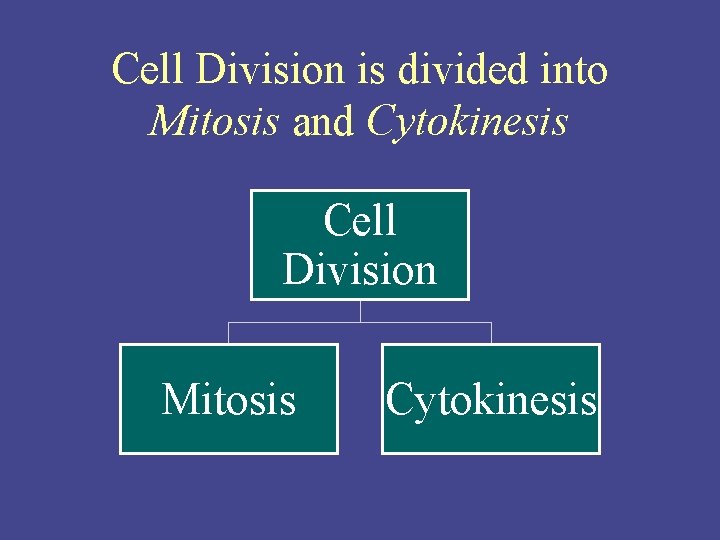
Cell Division is divided into Mitosis and Cytokinesis Cell Division Mitosis Cytokinesis
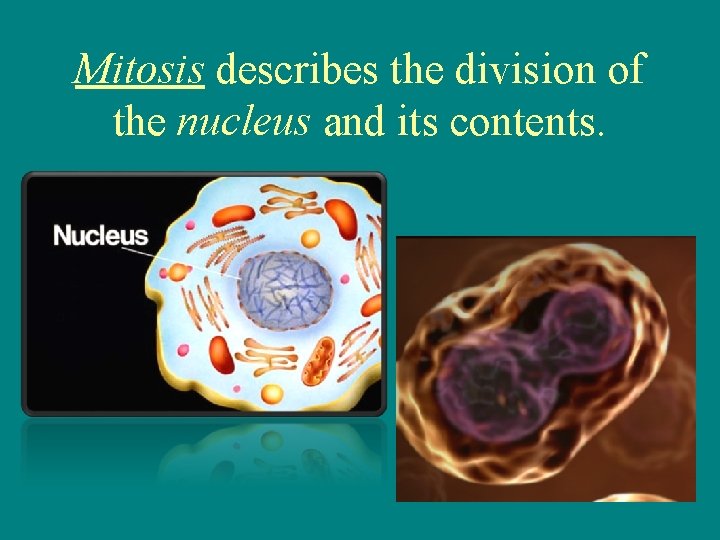
Mitosis describes the division of the nucleus and its contents.
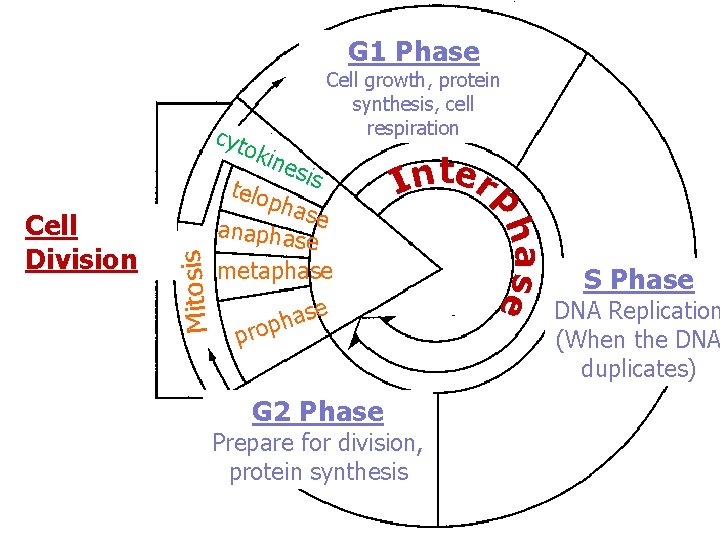
G 1 Phase cyt oki Cell growth, protein synthesis, cell respiration Mitosis is pha se anaphas e metaphase I n ter p se a h rop p G 2 Phase Prepare for division, protein synthesis ha s e Cell Division telo nes S Phase DNA Replication (When the DNA duplicates)
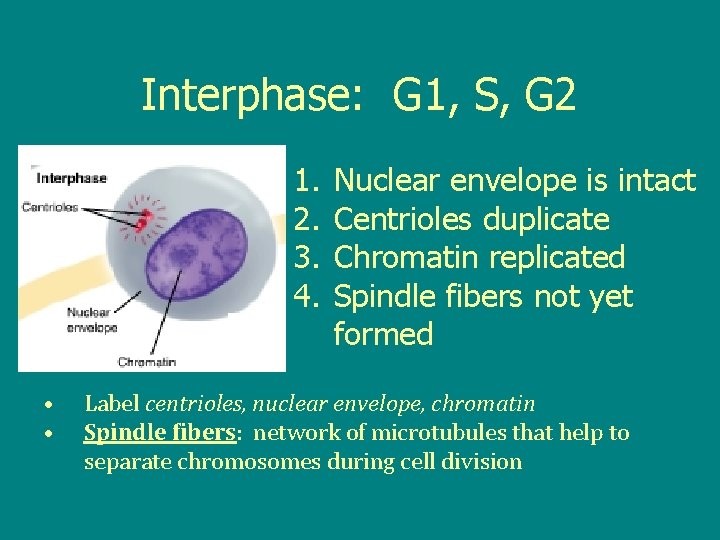
Interphase: G 1, S, G 2 1. 2. 3. 4. • • Nuclear envelope is intact Centrioles duplicate Chromatin replicated Spindle fibers not yet formed Label centrioles, nuclear envelope, chromatin Spindle fibers: network of microtubules that help to separate chromosomes during cell division
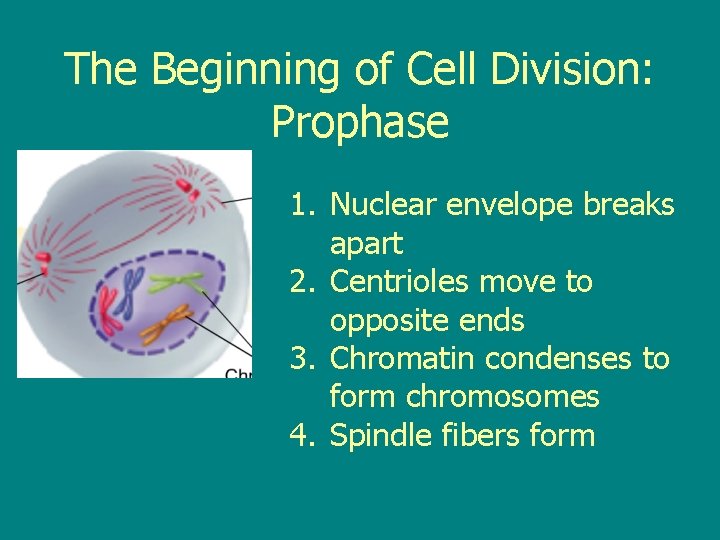
The Beginning of Cell Division: Prophase 1. Nuclear envelope breaks apart 2. Centrioles move to opposite ends 3. Chromatin condenses to form chromosomes 4. Spindle fibers form
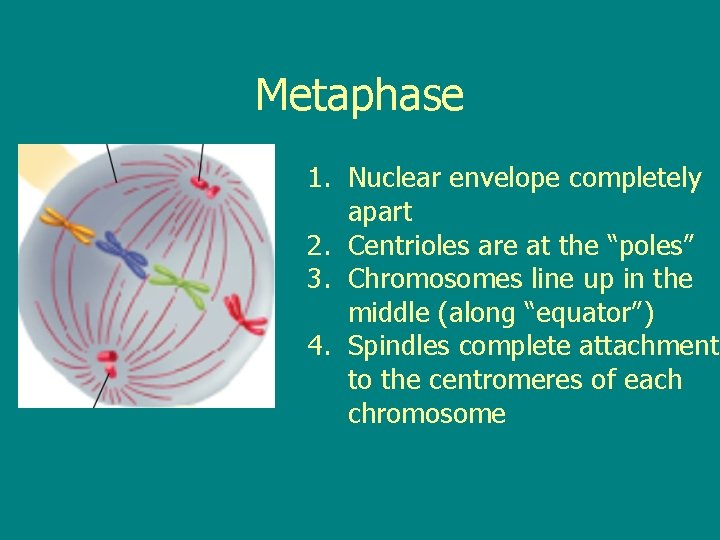
Metaphase 1. Nuclear envelope completely apart 2. Centrioles are at the “poles” 3. Chromosomes line up in the middle (along “equator”) 4. Spindles complete attachment to the centromeres of each chromosome
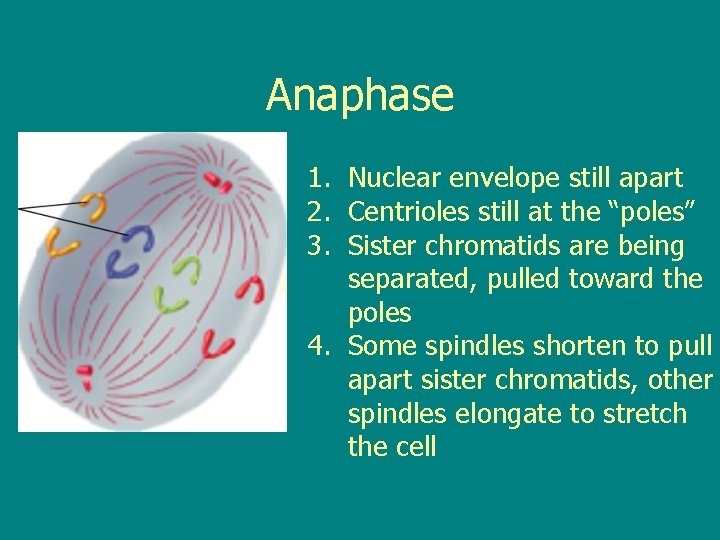
Anaphase 1. Nuclear envelope still apart 2. Centrioles still at the “poles” 3. Sister chromatids are being separated, pulled toward the poles 4. Some spindles shorten to pull apart sister chromatids, other spindles elongate to stretch the cell
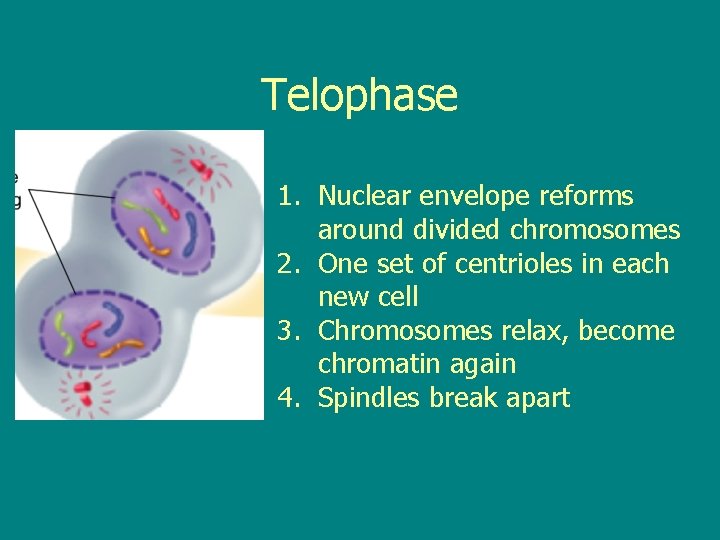
Telophase 1. Nuclear envelope reforms around divided chromosomes 2. One set of centrioles in each new cell 3. Chromosomes relax, become chromatin again 4. Spindles break apart
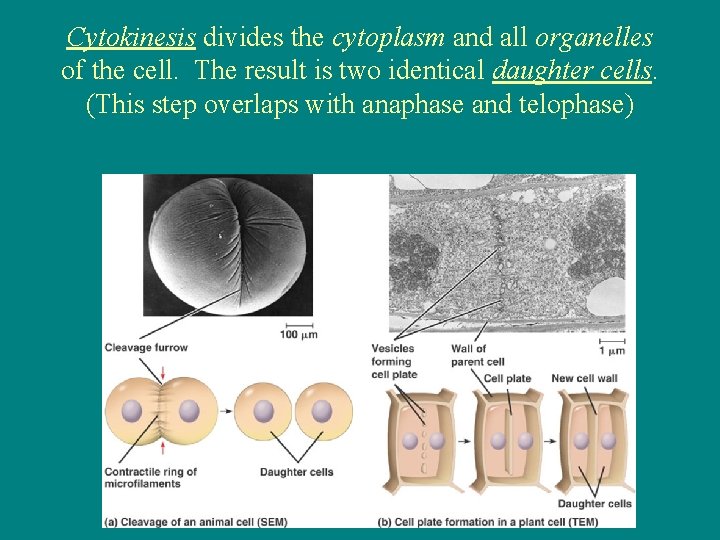
Cytokinesis divides the cytoplasm and all organelles of the cell. The result is two identical daughter cells. (This step overlaps with anaphase and telophase)
Summarize Mitosis • Compare the events that occur in prophase and telophase. What do you notice? • Compare cytokinesis in animal cells and plant cells. • What would happen if one of the sister chromatids did not separate during anaphase? • Which phases of mitosis does cytokinesis overlap?
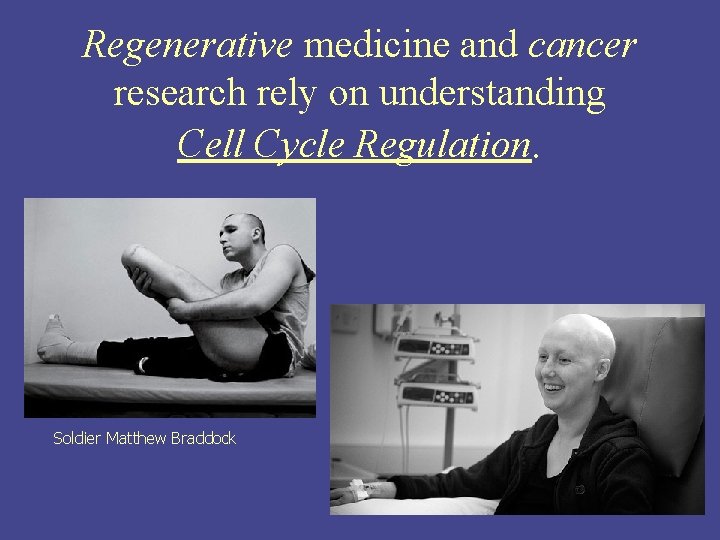
Regenerative medicine and cancer research rely on understanding Cell Cycle Regulation. Soldier Matthew Braddock
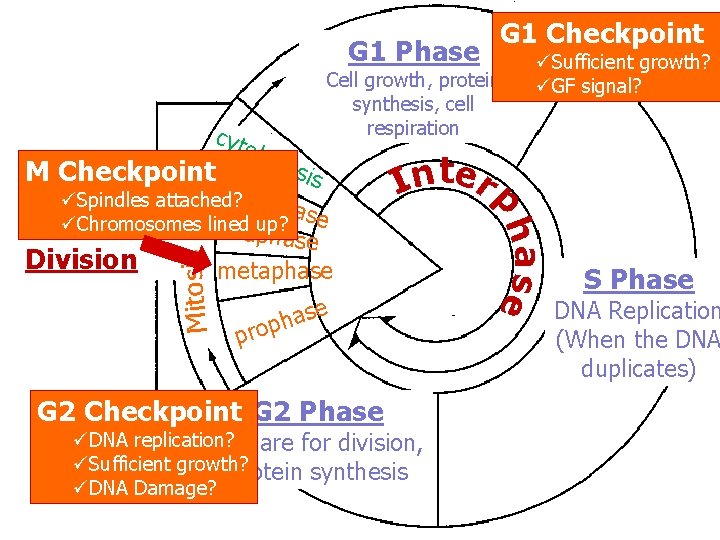
G 1 Phase Cell growth, protein synthesis, cell respiration cyt oki M Checkpoint t üSpindles attached? elo nes is I n ter p se a h rop p G 2 Checkpoint G 2 Phase üSufficient growth? üGF signal? üDNA replication? Prepare for division, üSufficient growth? protein synthesis üDNA Damage? ha s e pha se üChromosomes lined up? Cell anaphas e Division metaphase Mitosis G 1 Checkpoint S Phase DNA Replication (When the DNA duplicates)
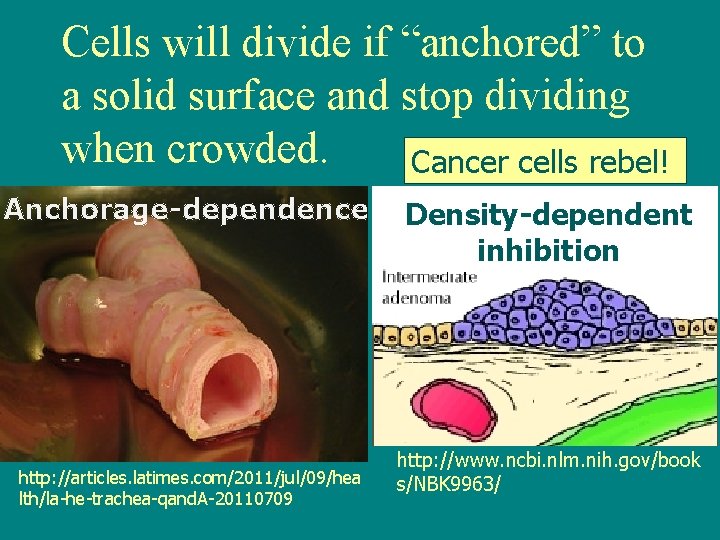
Cells will divide if “anchored” to a solid surface and stop dividing when crowded. Cancer cells rebel! Anchorage-dependence http: //articles. latimes. com/2011/jul/09/hea lth/la-he-trachea-qand. A-20110709 Density-dependent inhibition http: //www. ncbi. nlm. nih. gov/book s/NBK 9963/
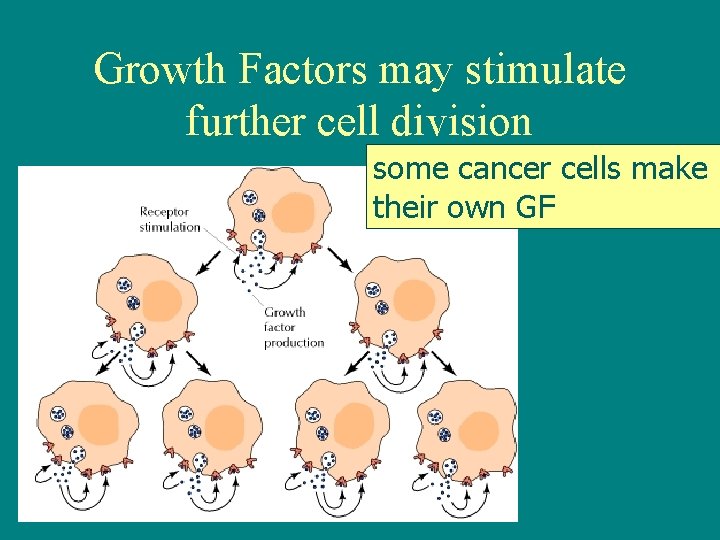
Growth Factors may stimulate further cell division some cancer cells make their own GF
Cancer Treatments disrupt the cell cycle • Chemotherapy: uses drugs to kill cancer cells. – Some halt DNA replication – Some interrupt spindle attachment • Radiation therapy: uses ionizing radiation to kill cancer cells. – Further damages cancer cell DNA
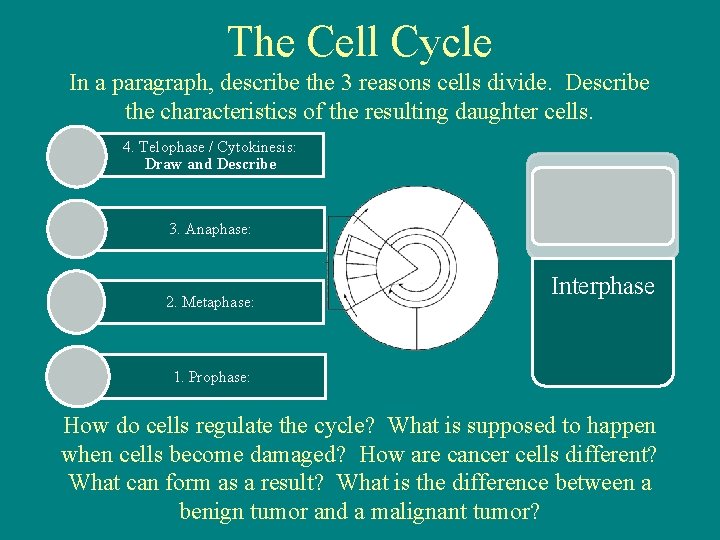
The Cell Cycle In a paragraph, describe the 3 reasons cells divide. Describe the characteristics of the resulting daughter cells. 4. Telophase / Cytokinesis: Draw and Describe 3. Anaphase: 2. Metaphase: Interphase 1. Prophase: How do cells regulate the cycle? What is supposed to happen when cells become damaged? How are cancer cells different? What can form as a result? What is the difference between a benign tumor and a malignant tumor?
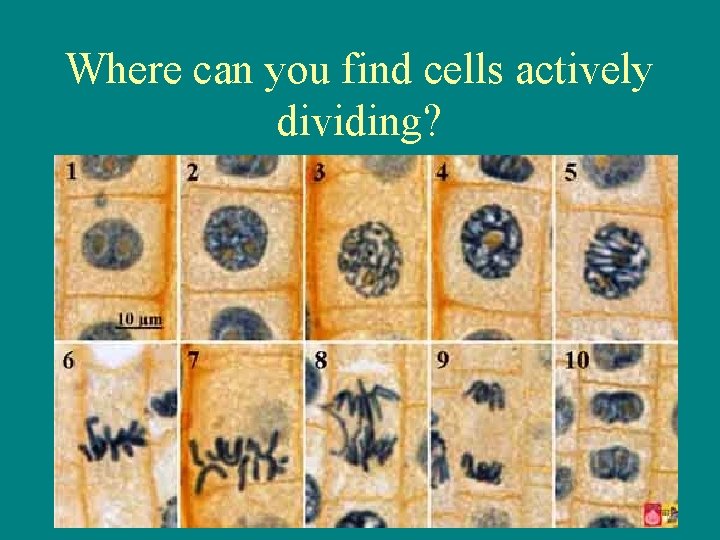
Where can you find cells actively dividing?
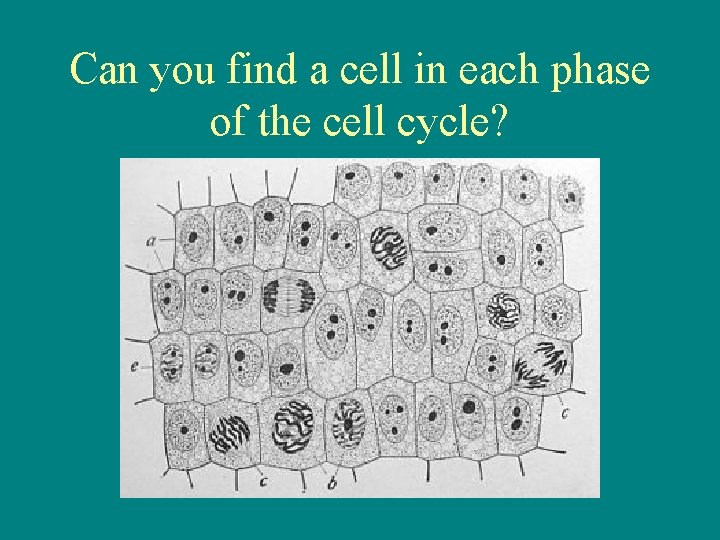
Can you find a cell in each phase of the cell cycle?
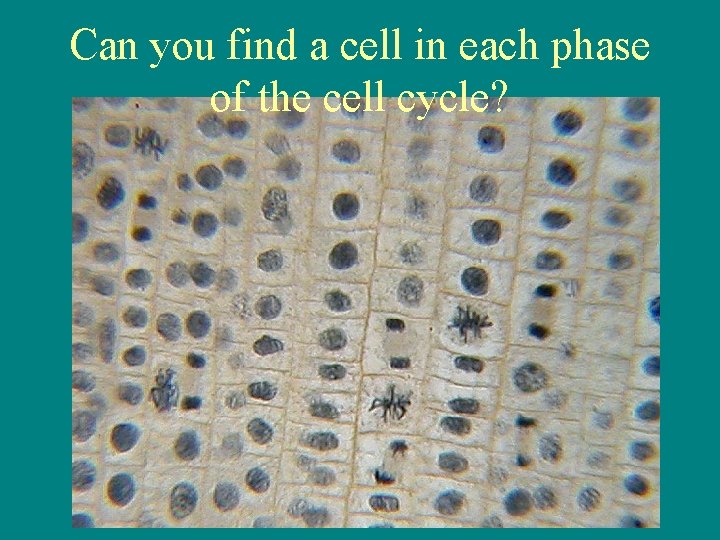
Can you find a cell in each phase of the cell cycle?
- Slides: 39