
The Cell Cycle Stages of growth and division
- Slides: 31
The Cell Cycle – Stages of growth and division of a cell
Where it all began… n n You started as a single cell, smaller than the period at the end of a sentence. And now look at you! How did you get from there to here?
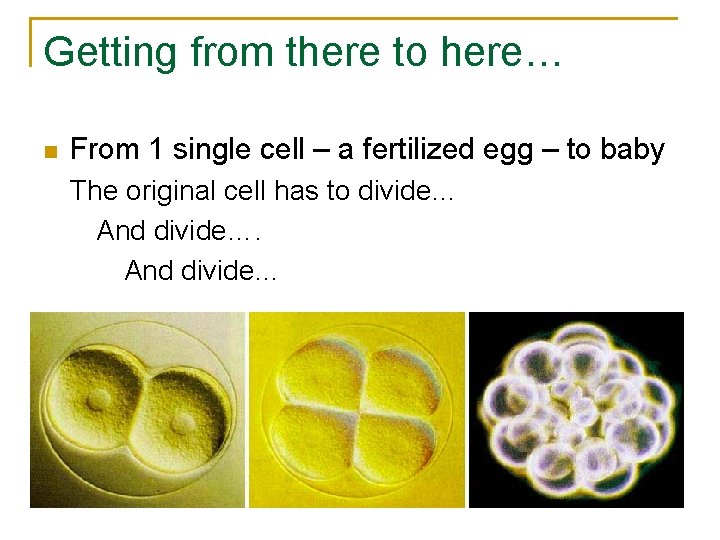
Getting from there to here… n From 1 single cell – a fertilized egg – to baby The original cell has to divide… And divide…
Why do cells divide? n For reproduction q n For growth q n Asexual reproduction – 1 -celled organisms From fertilized egg to multicellular organism – You! For repair & renewal q Replace cells that die from normal wear and tear or from injury
Why do cells divide? n Volume of Cell q Determines the amount of: n n Food needed Waste created q n Bigger cells need more food and create more waste! Surface Area of Cell (cell membrane) q Determine the amount of: n n Food a cell can take in Waste a cell can release
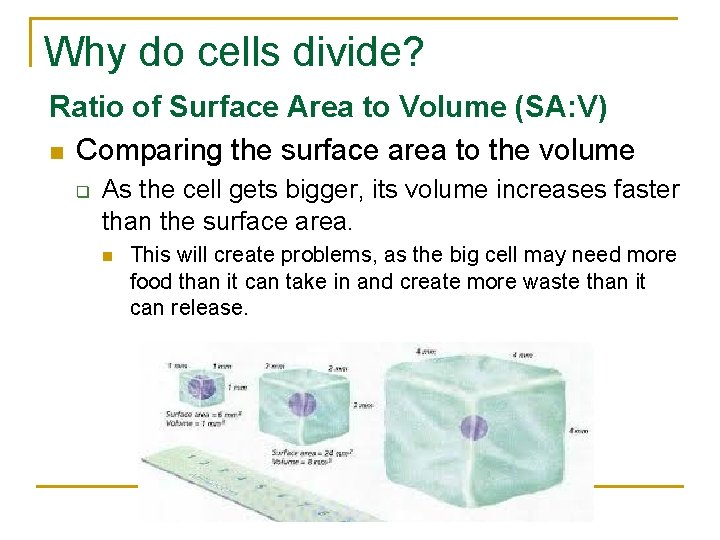
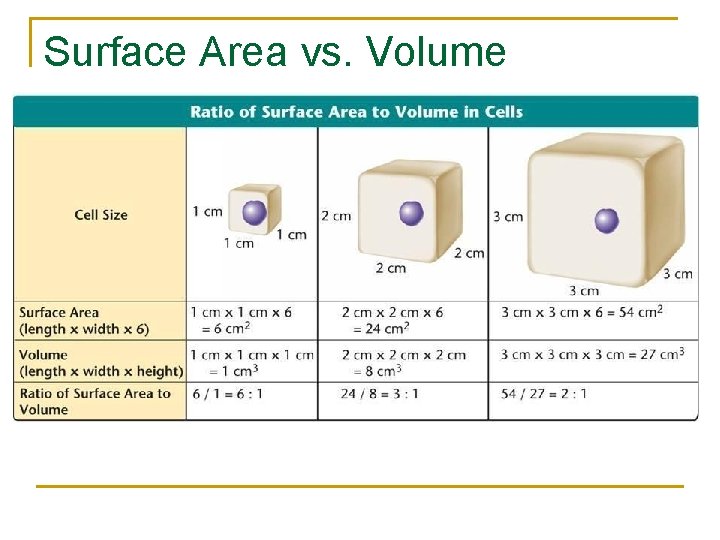
Why do cells divide? Ratio of Surface Area to Volume (SA: V) n Comparing the surface area to the volume q As the cell gets bigger, its volume increases faster than the surface area. n This will create problems, as the big cell may need more food than it can take in and create more waste than it can release.
Surface Area vs. Volume
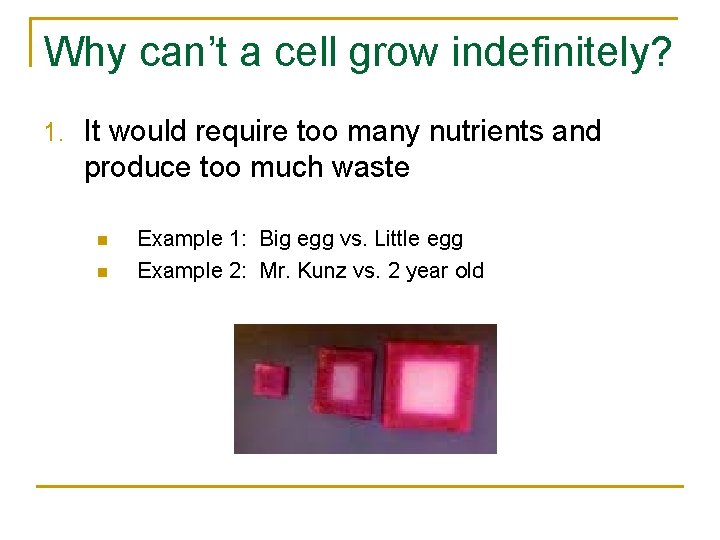
Why can’t a cell grow indefinitely? 1. It would require too many nutrients and produce too much waste n n Example 1: Big egg vs. Little egg Example 2: Mr. Kunz vs. 2 year old
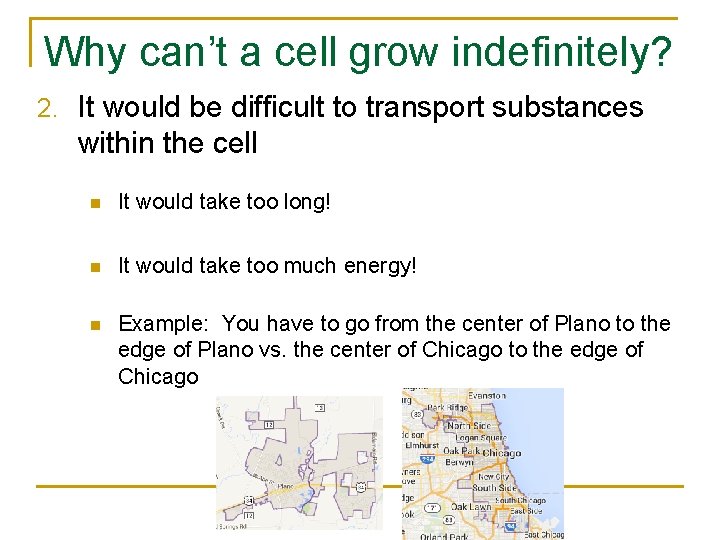
Why can’t a cell grow indefinitely? 2. It would be difficult to transport substances within the cell n It would take too long! n It would take too much energy! n Example: You have to go from the center of Plano to the edge of Plano vs. the center of Chicago to the edge of Chicago
Why can’t a cell grow indefinitely? 3. DNA would be overloaded/overworked q All cells have DNA (deoxyribonucleic acid) n q q The “instructions” for the working cell As a cell gets bigger, it still only has one set of instructions for the entire cell Example: A manager who has to tell 10 workers in one room what to do vs. a manager who was to tell 10 workers throughout an entire building what to do
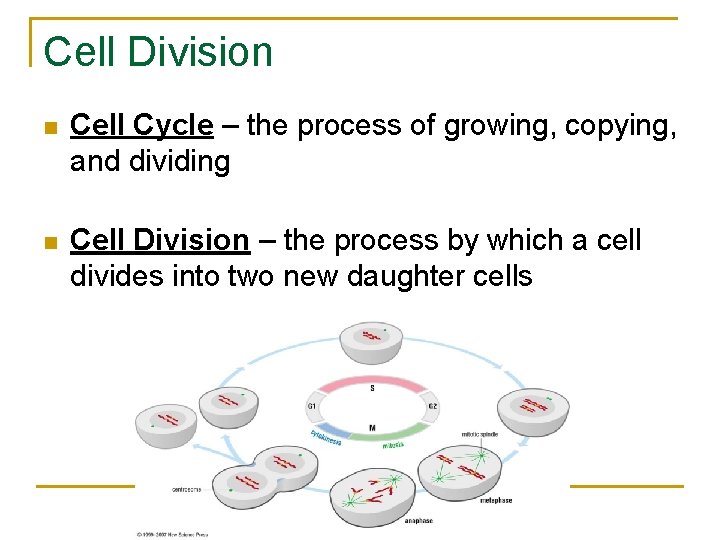
Cell Division n Cell Cycle – the process of growing, copying, and dividing n Cell Division – the process by which a cell divides into two new daughter cells
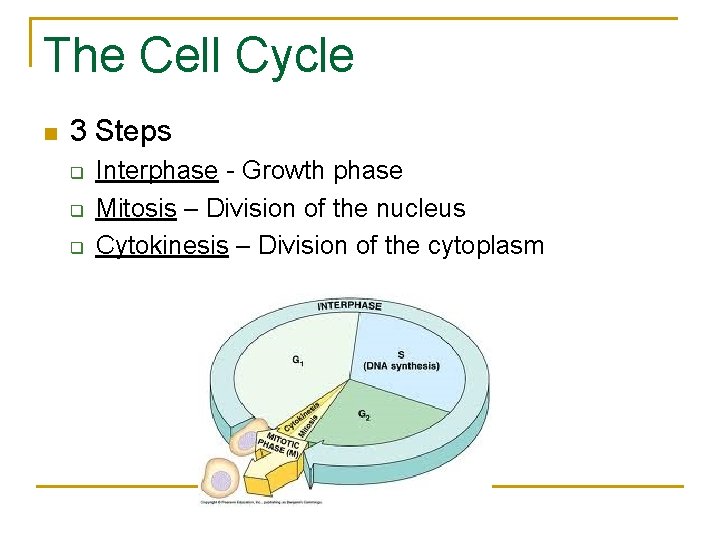
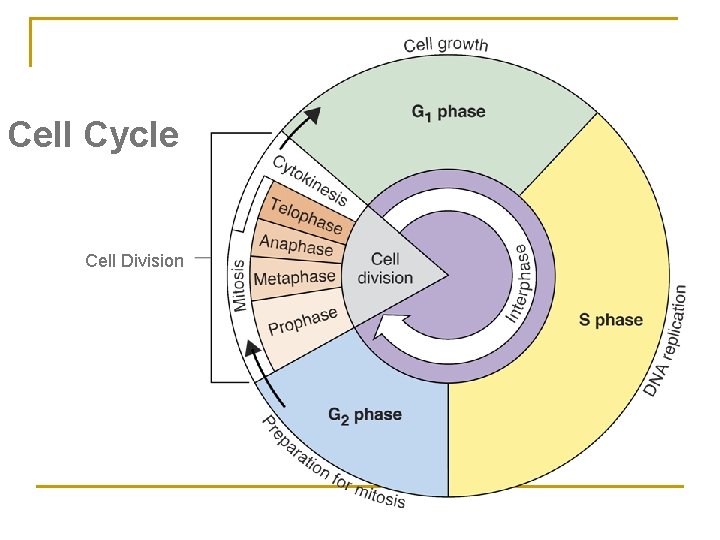
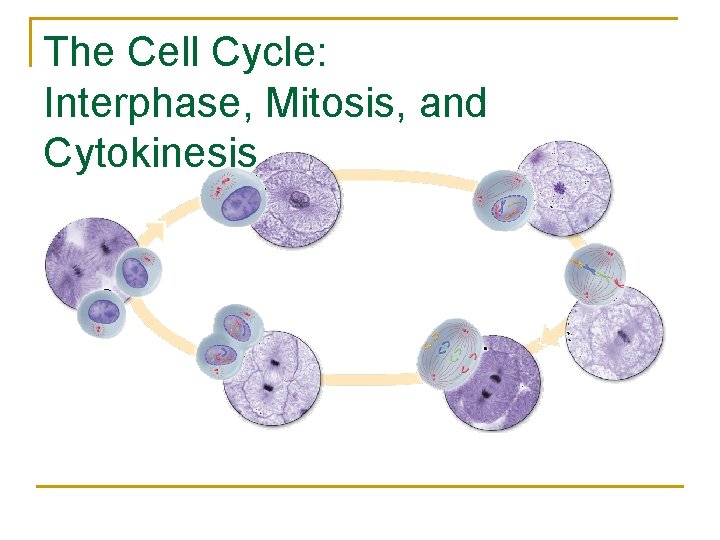
The Cell Cycle n 3 Steps q q q Interphase - Growth phase Mitosis – Division of the nucleus Cytokinesis – Division of the cytoplasm
Cell Cycle Cell Division
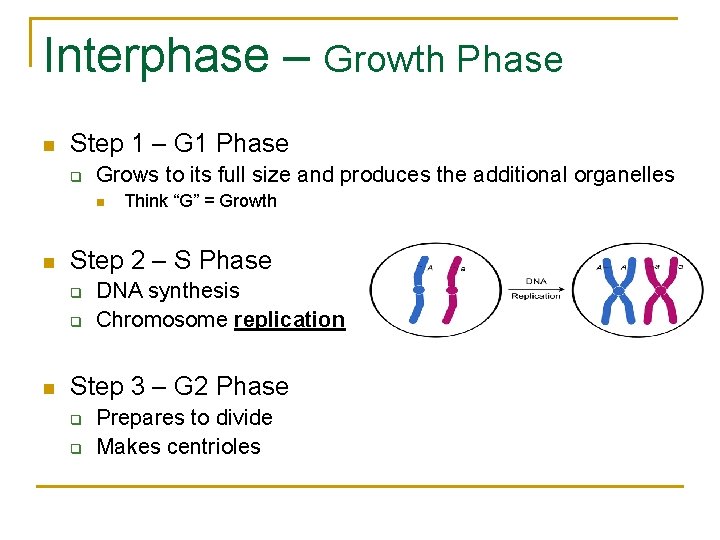
Interphase – Growth Phase n Step 1 – G 1 Phase q Grows to its full size and produces the additional organelles n n Step 2 – S Phase q q n Think “G” = Growth DNA synthesis Chromosome replication Step 3 – G 2 Phase q q Prepares to divide Makes centrioles
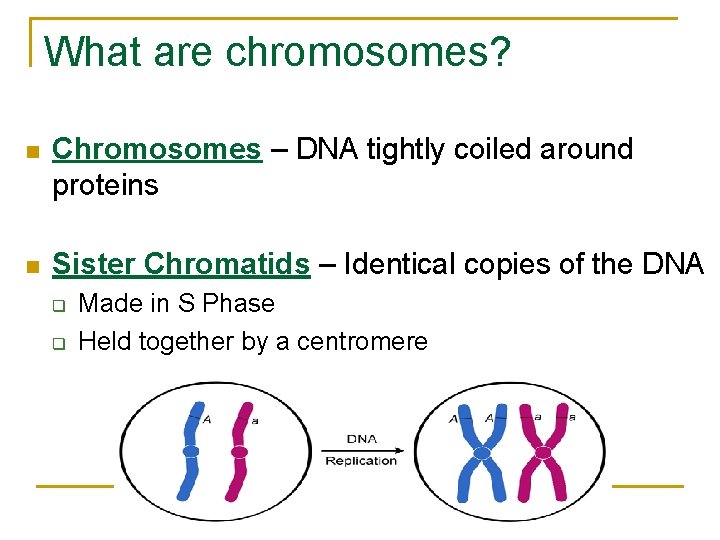
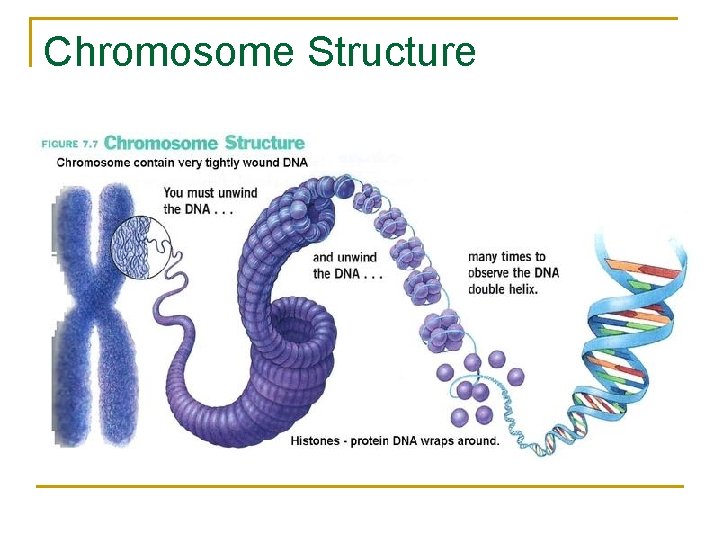
What are chromosomes? n Chromosomes – DNA tightly coiled around proteins n Sister Chromatids – Identical copies of the DNA q q Made in S Phase Held together by a centromere
Chromosome Structure
Mitosis – (PMAT) n Mitosis – Nucleus divides into two new nuclei and a copy of DNA is distributed into each daughter cell q q Prophase Metaphase Anaphase Telophase
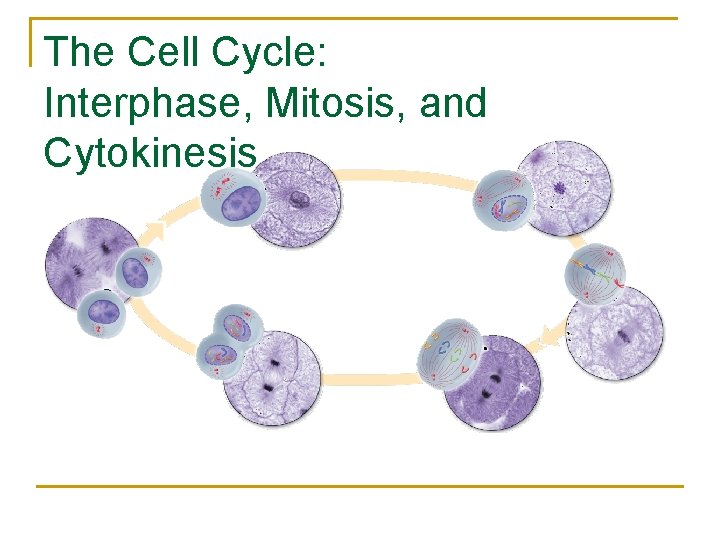
The Cell Cycle: Interphase, Mitosis, and Cytokinesis
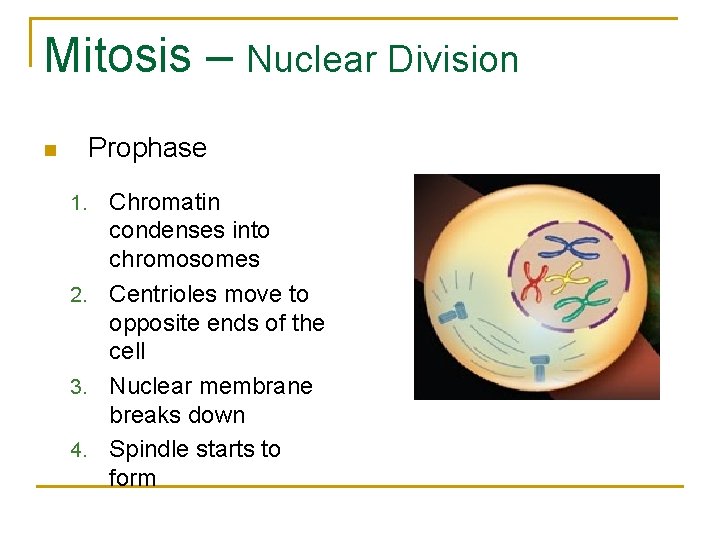
Mitosis – Nuclear Division Prophase n Chromatin condenses into chromosomes 2. Centrioles move to opposite ends of the cell 3. Nuclear membrane breaks down 4. Spindle starts to form 1.
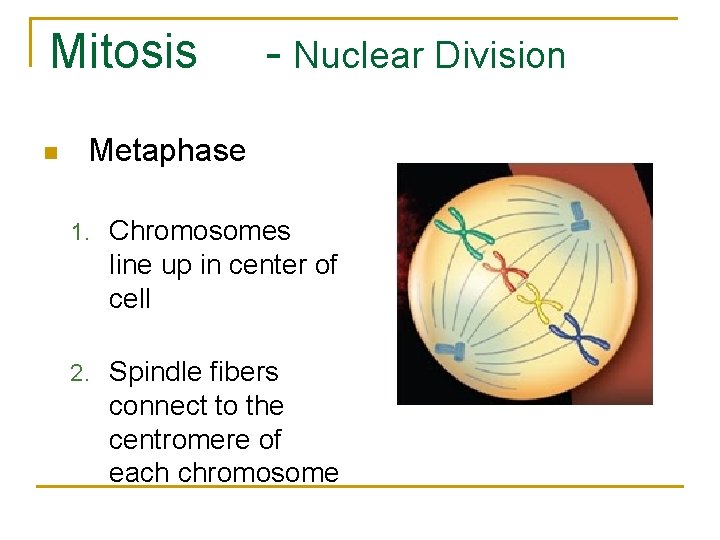
Mitosis n - Nuclear Division Metaphase 1. Chromosomes line up in center of cell 2. Spindle fibers connect to the centromere of each chromosome
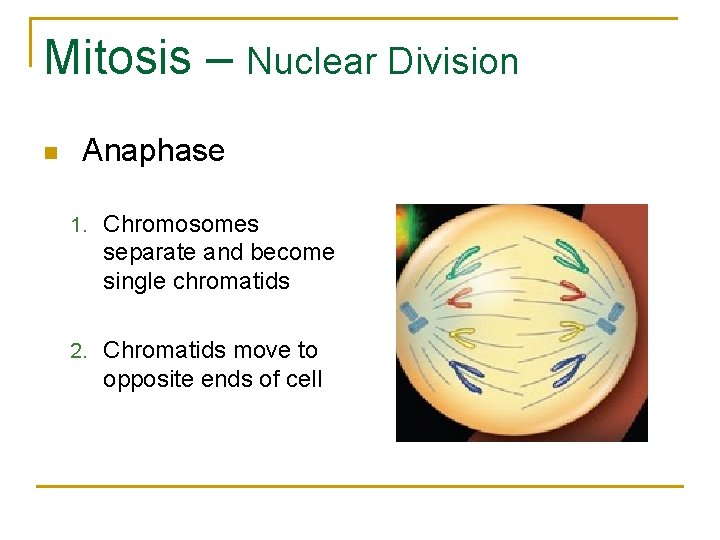
Mitosis – Nuclear Division n Anaphase 1. Chromosomes separate and become single chromatids 2. Chromatids move to opposite ends of cell
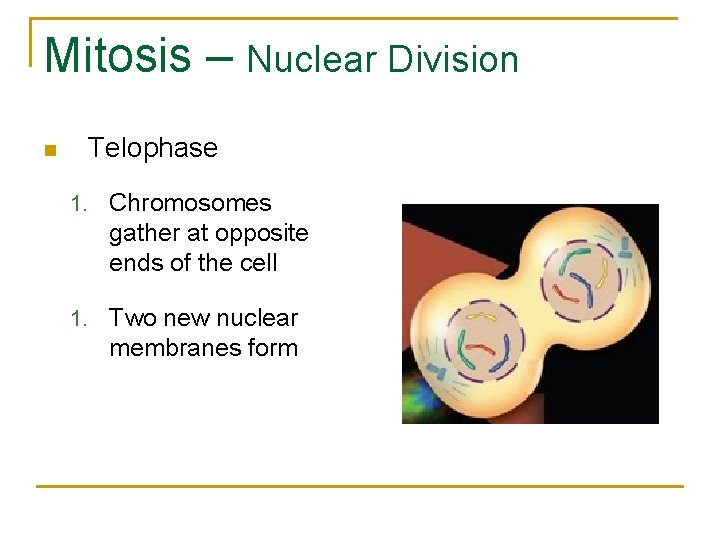
Mitosis – Nuclear Division n Telophase 1. Chromosomes gather at opposite ends of the cell 1. Two new nuclear membranes form
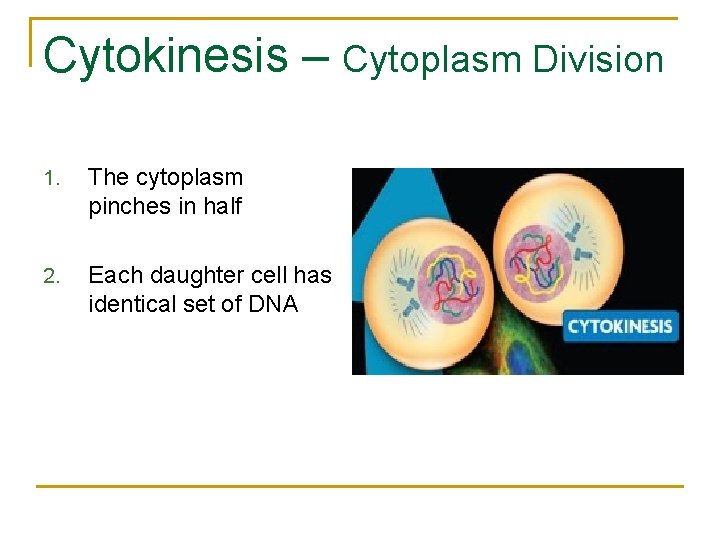
Cytokinesis – Cytoplasm Division 1. The cytoplasm pinches in half 2. Each daughter cell has identical set of DNA
The Cell Cycle: Interphase, Mitosis, and Cytokinesis
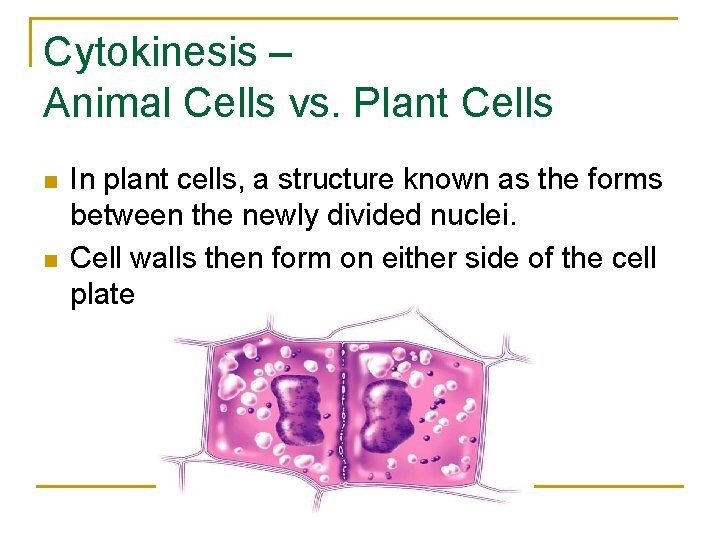
Cytokinesis – Animal Cells vs. Plant Cells n n In plant cells, a structure known as the forms between the newly divided nuclei. Cell walls then form on either side of the cell plate
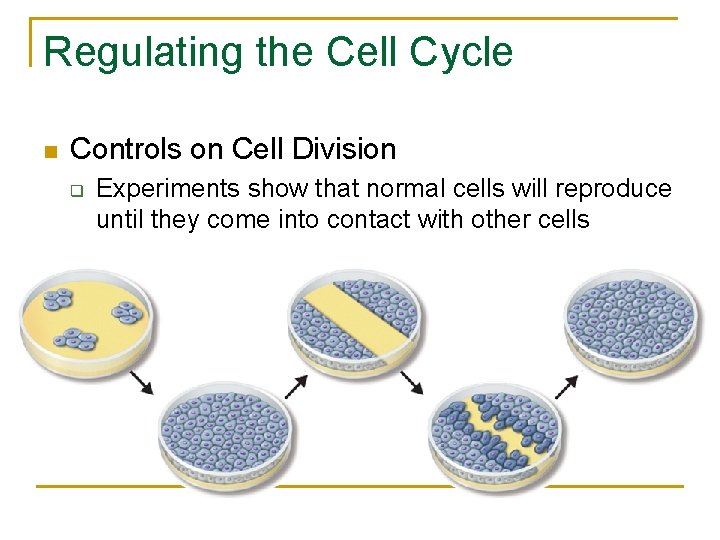
Regulating the Cell Cycle n Controls on Cell Division q Experiments show that normal cells will reproduce until they come into contact with other cells
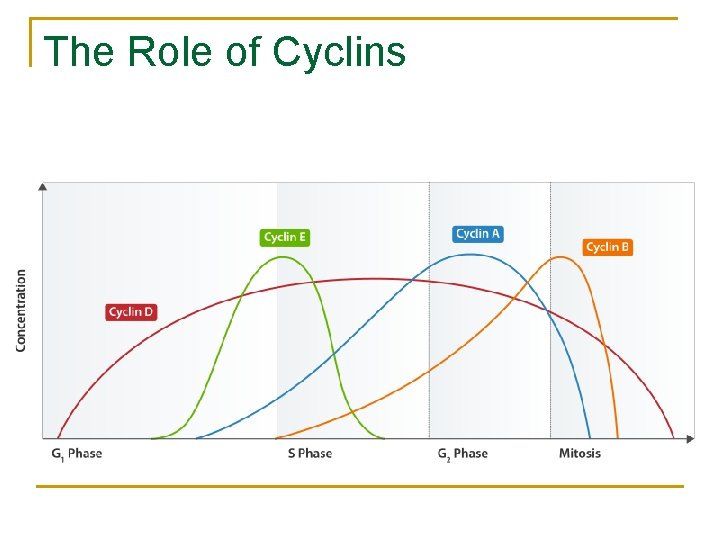
The Role of Cyclins n The cell cycle is controlled by a series of checkpoints n Cyclins – proteins that bind to enzymes during interphase and mitosis, signaling the start of various activities q Start of the cell cycle, DNA replication, division of nucleus, etc.
The Role of Cyclins
The Role of Cyclins n Internal Regulators q q n Respond to events inside the cell Allow the cell cycle to proceed only when certain processes have happened inside the cell External Regulators q q Respond to events outside the cell Tell cells to speed up or slow down the cell cycle
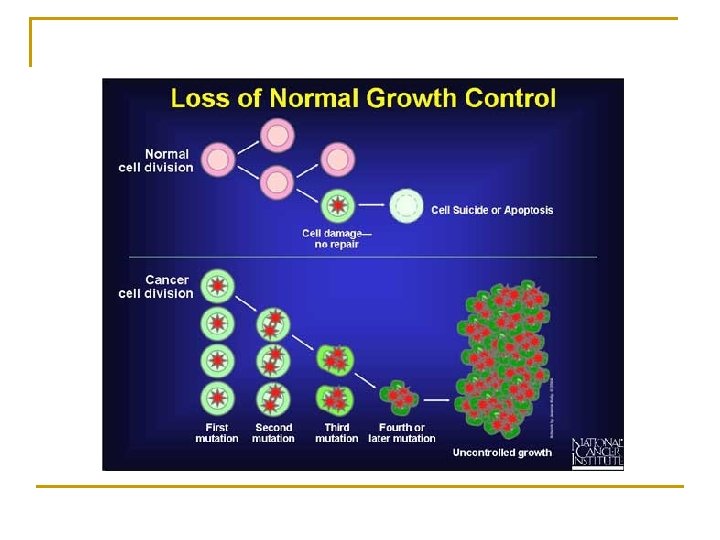
The Role of Cyclins n When cells do not respond to the internal or external regulators, the growth and division of the cell is now uncontrolled (oh no!) n Cancer – uncontrolled growth and division of cells