
The Cell Cycle Mitosis Cytokinesis Unit 2 What
- Slides: 45
The Cell Cycle, Mitosis & Cytokinesis Unit 2
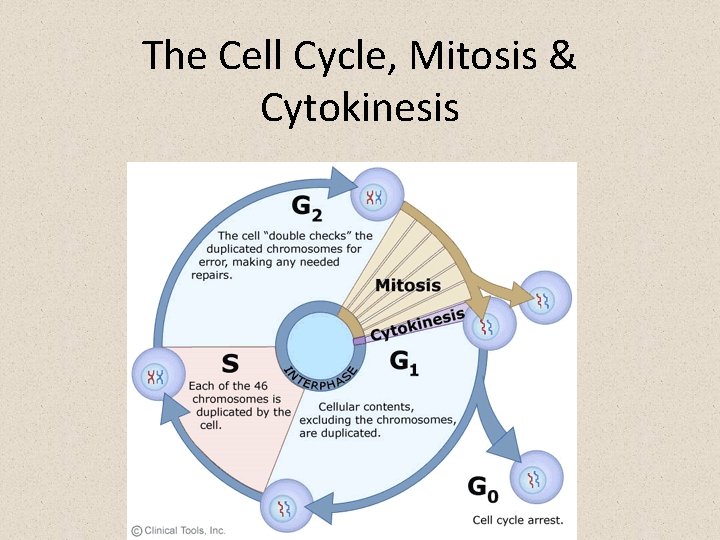
What is the cell cycle? • The cell cycle explains how cells divide. It is a continuous cycle of growth and division, which is necessary to replace broken or worn out cells.
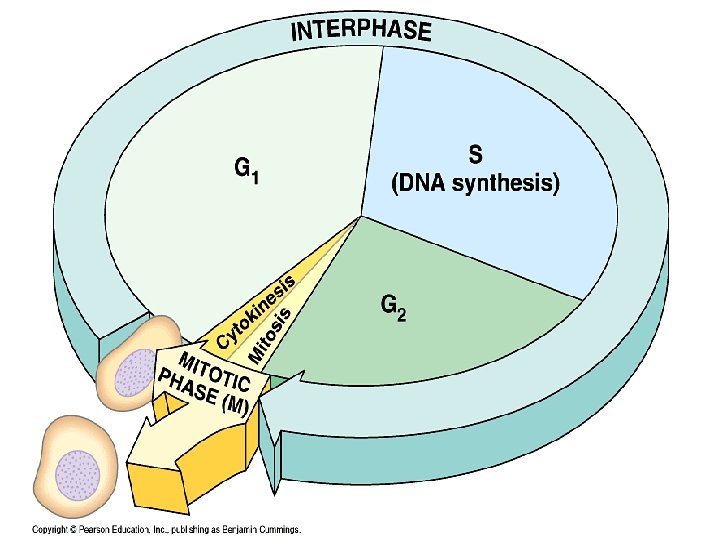
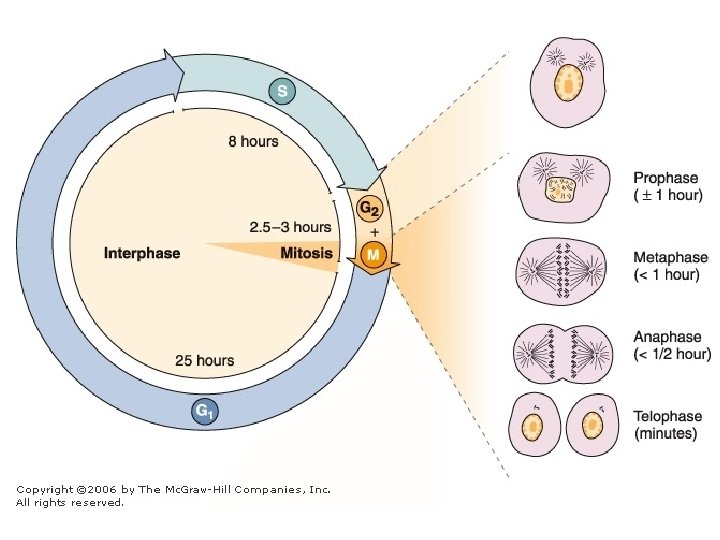
It is divided into two parts: 1) Growth stage - also called Interphase 2) Division stage – this stage includes Mitosis and Cytokinesis
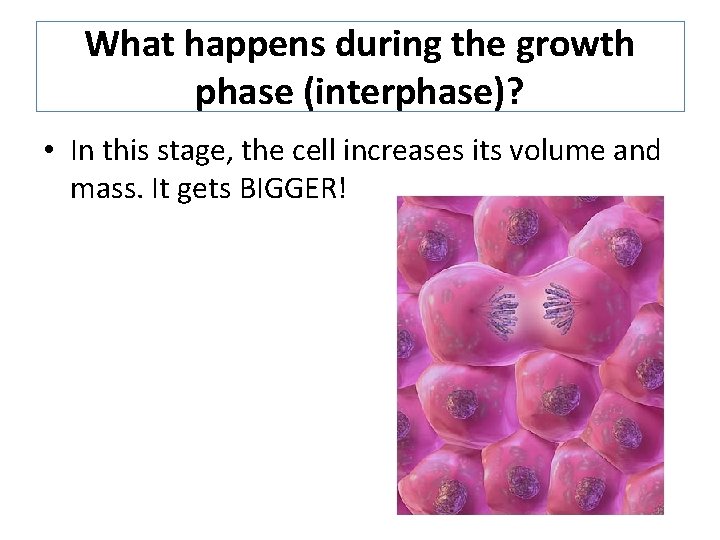
What happens during the growth phase (interphase)? • In this stage, the cell increases its volume and mass. It gets BIGGER!
1. Gap 1 (G 1) – cells carry out metabolic activities to prepare for cell division. Ex: make energy 2. S phase - DNA synthesis and replication occur 3. Gap 2 (G 2) - the cell prepares to divide
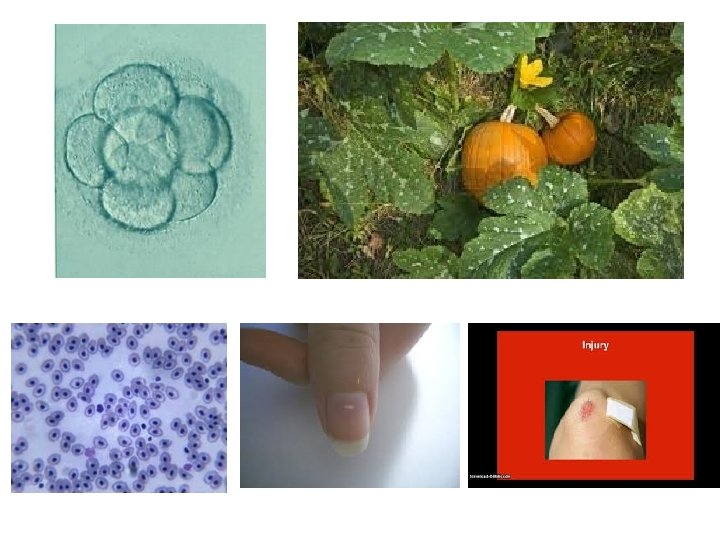
Why do cells need to divide? 1. New cells are needed for growth maintenance and repair 2. Cells must regenerate damaged tissues 3. Cells that do not function properly must be replaced 4. Cells die and need to be replaced (Ex: blood cells) 5. Chromosome number must be maintained (Ex: humans have 46 chromosomes in somatic cells)
What is mitosis? - When the nucleus divides What is Cytokinesis? – When the cytoplasm divides Both must occur for the cell cycle to be complete
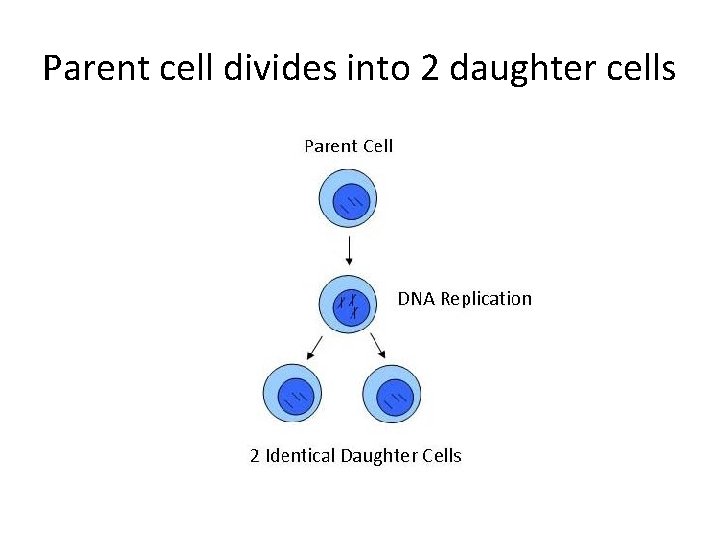
How does Mitosis work? • When human somatic cells undergo mitosis, a parent cell divides to produce two daughter cells. These daughter cells are genetically identical to the original parent cell. In mitosis, new cells are exact copies of previously existing cells.
Parent cell divides into 2 daughter cells
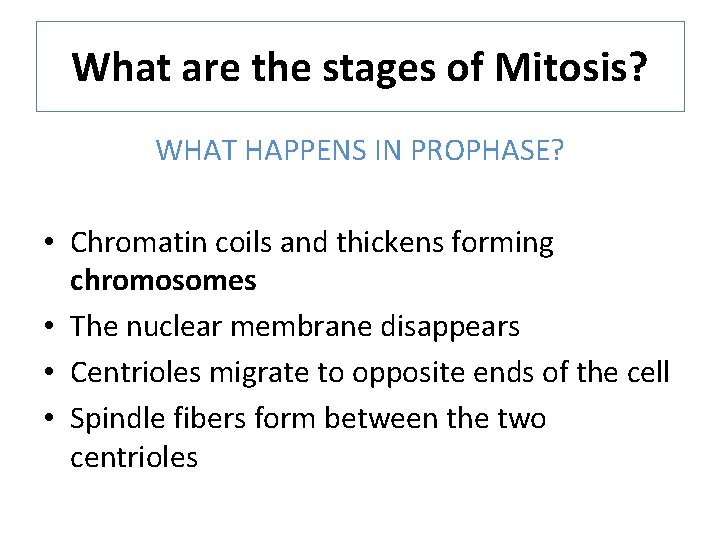
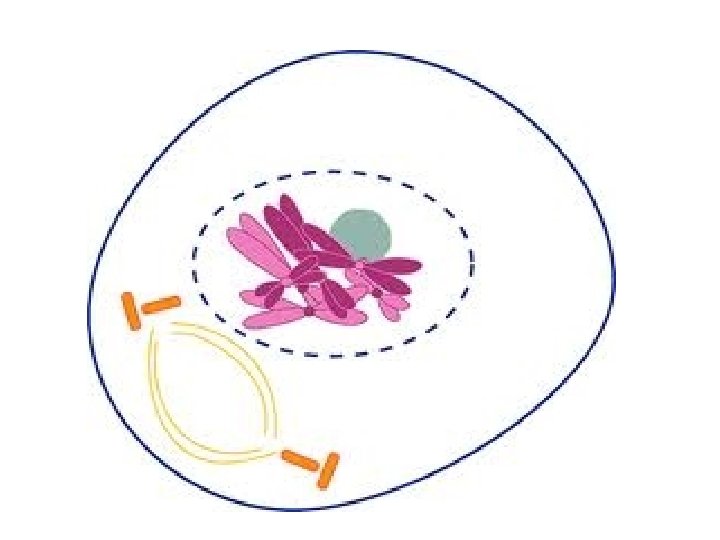
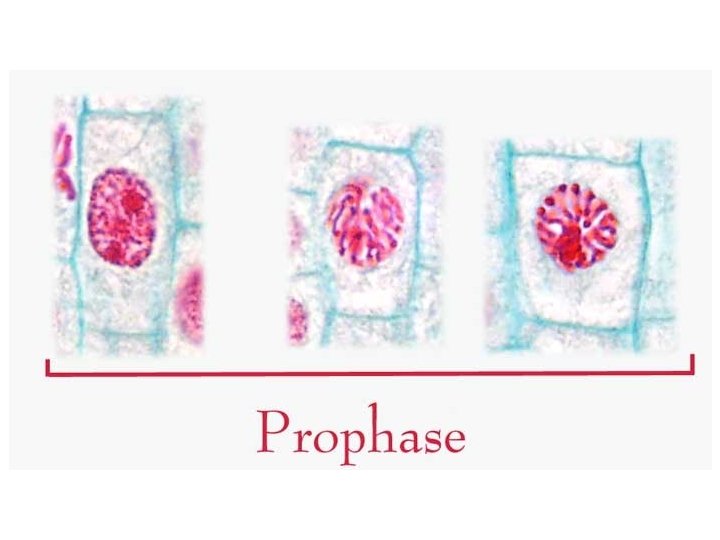
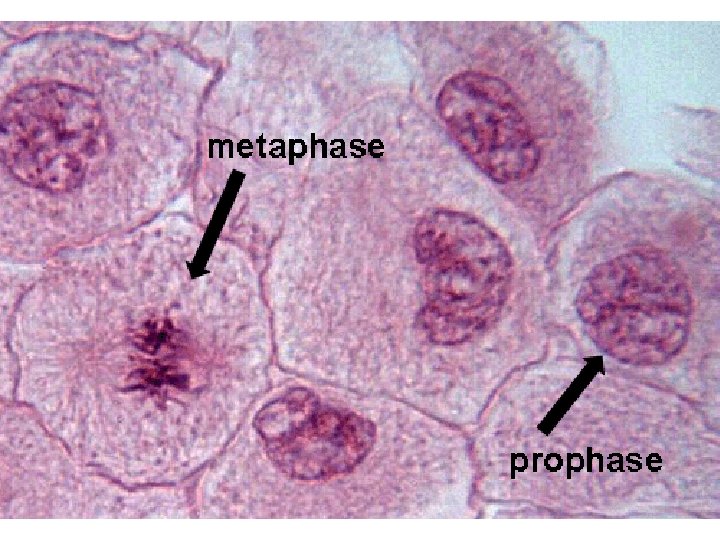
What are the stages of Mitosis? WHAT HAPPENS IN PROPHASE? • Chromatin coils and thickens forming chromosomes • The nuclear membrane disappears • Centrioles migrate to opposite ends of the cell • Spindle fibers form between the two centrioles
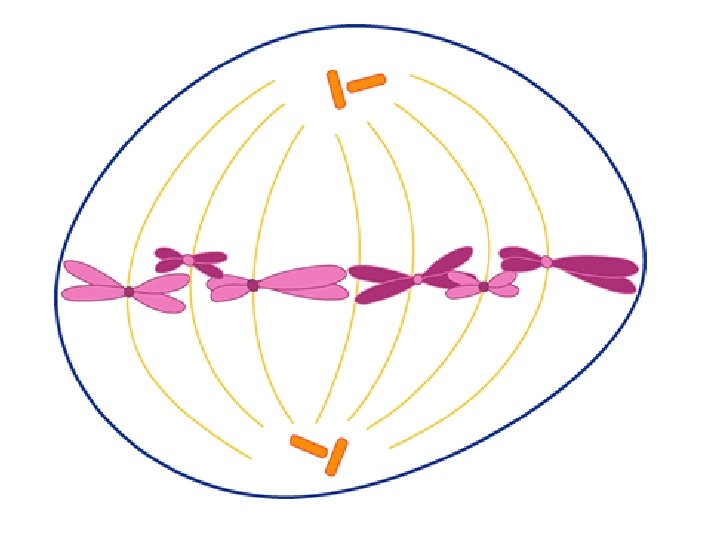
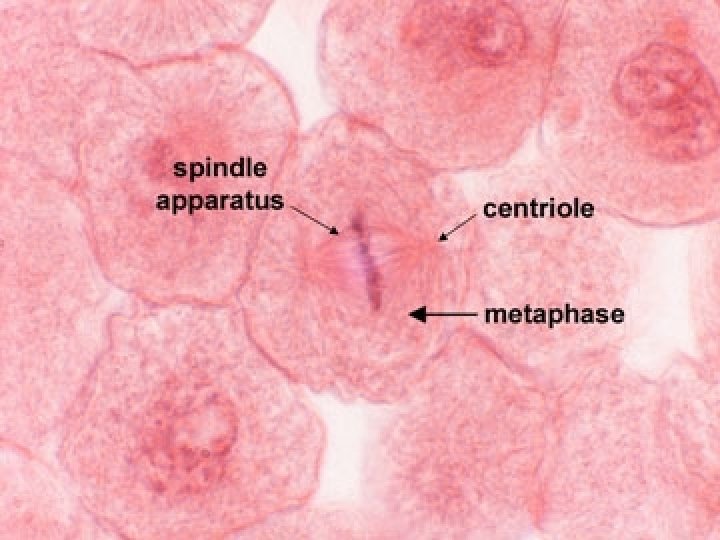
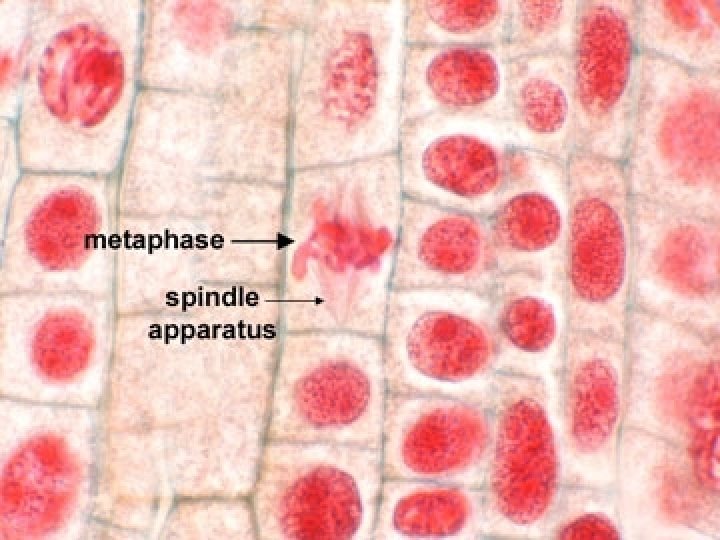
WHAT HAPPENS IN METAPHASE? • Spindle fibers attach to centromere • Spindle fibers from one pole attach to one chromatid and spindle fibers from the other pole attach to the other chromatid • Chromatids are guided to the cell’s equator, called the metaphase plate
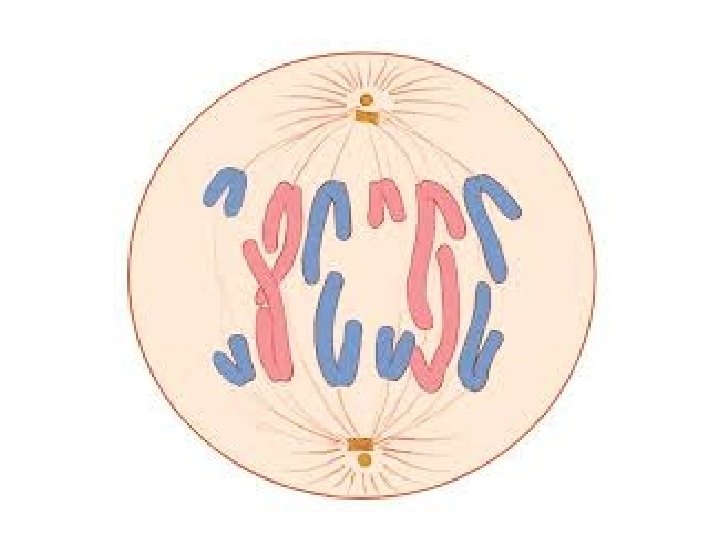
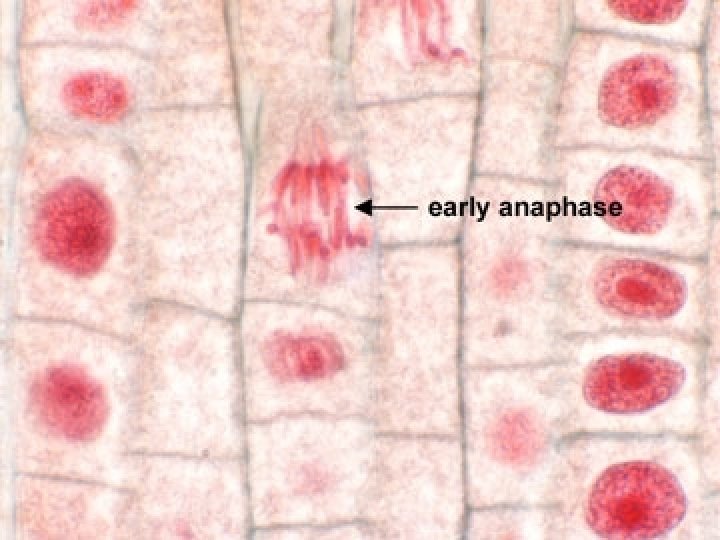
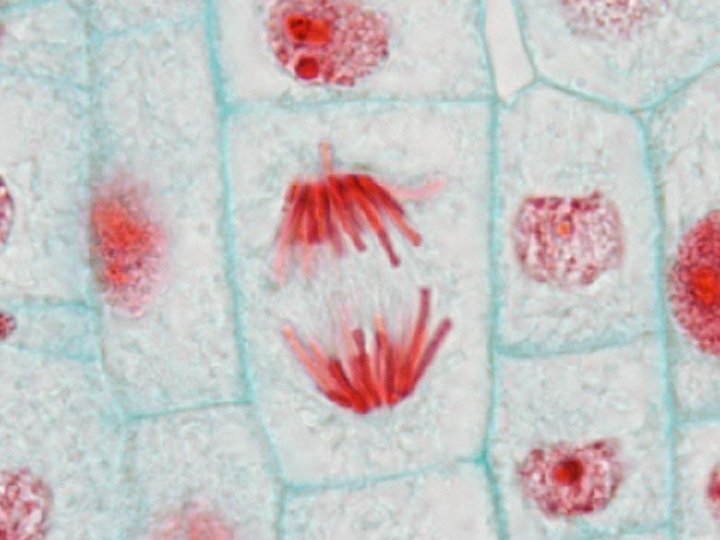
WHAT HAPPENS IN ANAPHASE? • Centromere splits apart and chromatids are pulled to opposite poles of the cell by spindle fibers.
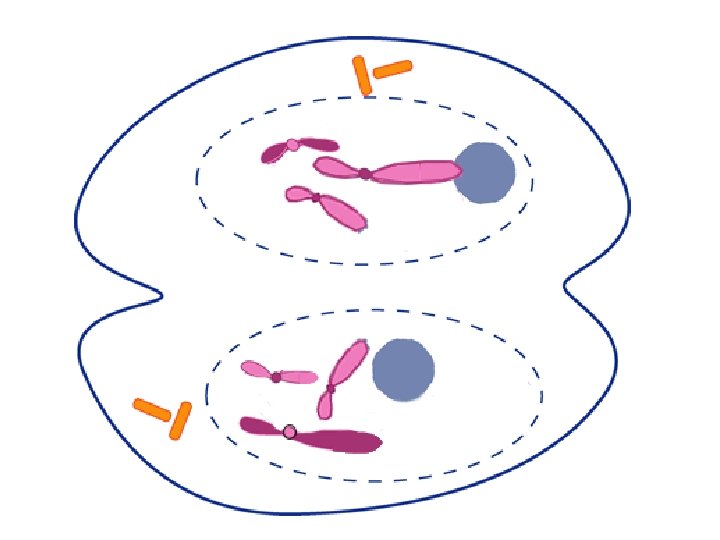
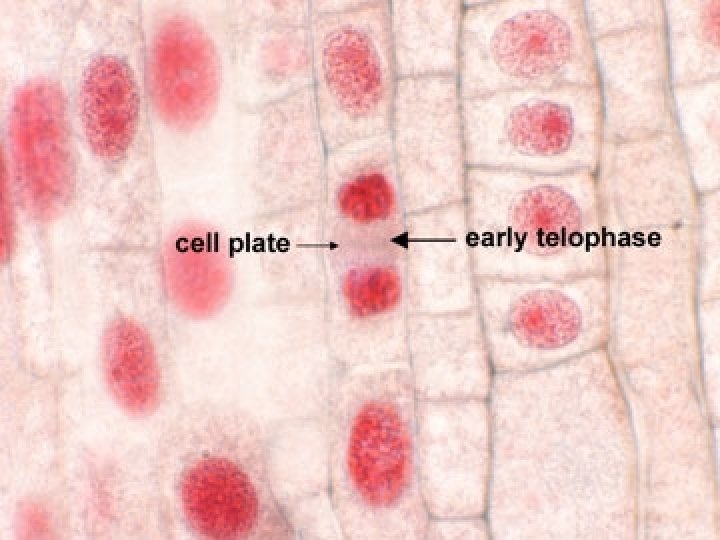
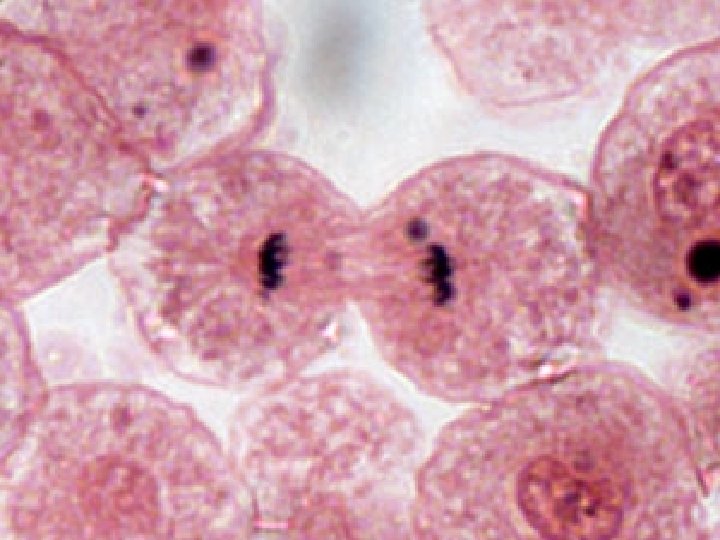
WHAT HAPPENS IN TELOPHASE? • Chromatids have reached opposite poles and are now a single, non-replicated chromosome • Spindle fibers are not needed so they break down and disappear • Nucleolus reappears and the nuclear membrane forms around each new set of chromosomes.
Mitosis Videos • http: //www. cellsalive. com/mitosis. htm • http: //highered. mcgrawhill. com/olcweb/cgi/pluginpop. cgi? it=swf: : 535: : /sites/dl/free/0072437316/120073/bio 14. swf: : Mitosis%20 and%20 Cytokinesis
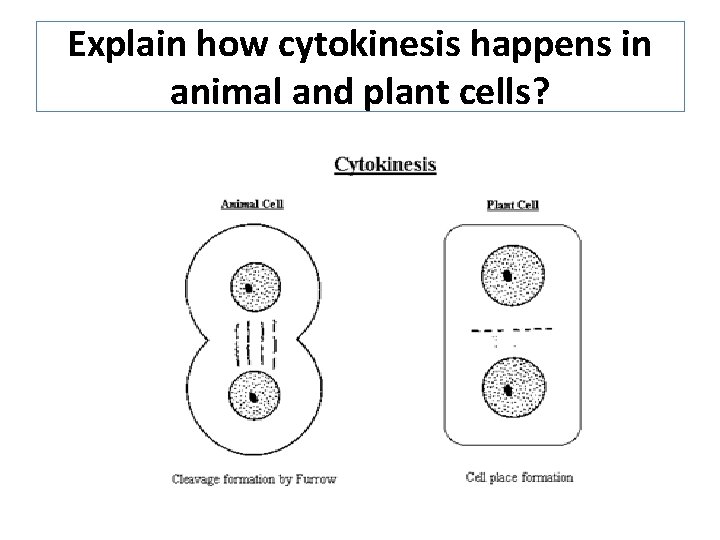
What is Cytokinesis? • This is defined as the separation of the cytoplasm and the formation of two new daughter cells. – In animal cells, the cell membrane becomes indented, pinching off to form two daughter cells. This process is called cleavage. – In plant cells, a cell plate begins to form, which eventually turns into the cell wall, as the cell divides.
Explain how cytokinesis happens in animal and plant cells?
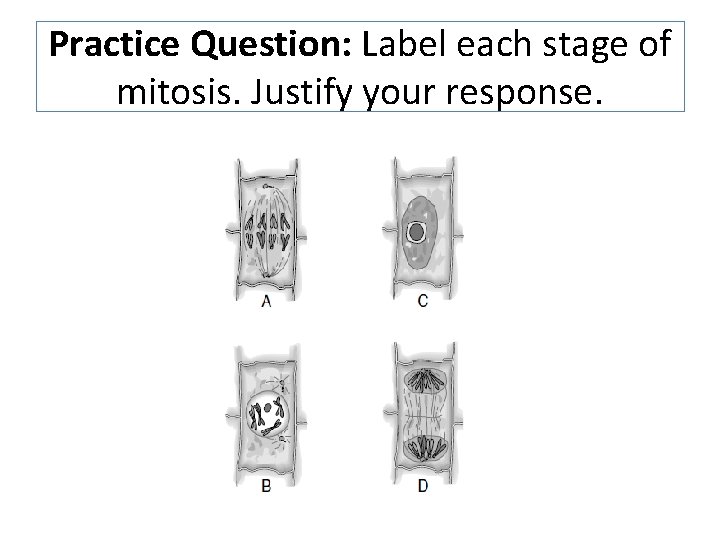
Practice Question: Label each stage of mitosis. Justify your response.
What is cancer? • http: //www. youtube. com/watch? v=SGa. Q 0 W w. Z_0 I&safe=active • http: //www. youtube. com/watch? v=Bm. FEo. CF Di-w&safe=active
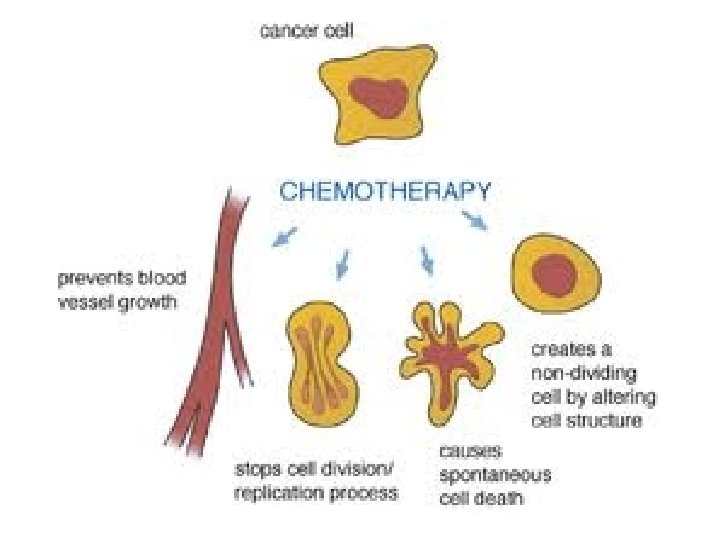
Why do we use radiation and chemotherapy to treat cancer? • Cancer cells divide more rapidly than any other type of body cells. Therefore, anything that interferes with cell division will affect cancer cells more than healthy cells. • This is the basis for radiation and chemotherapy.
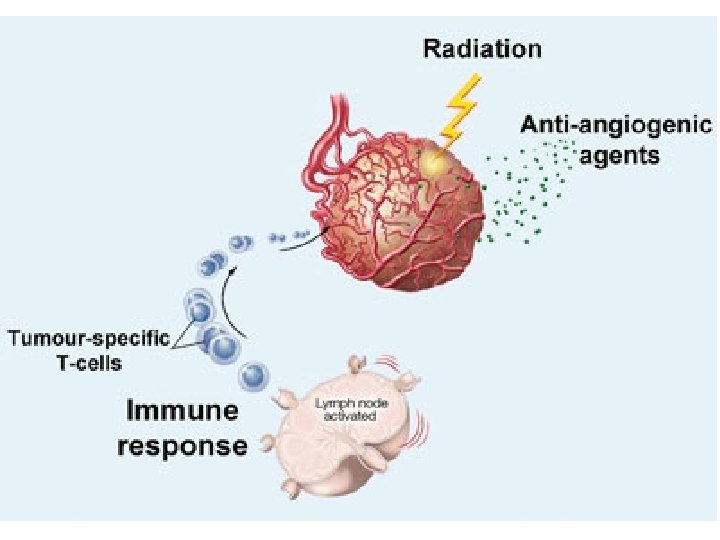
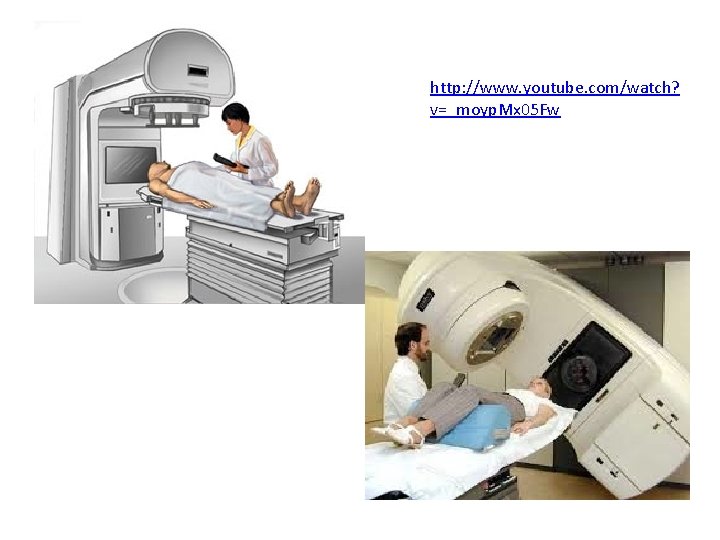
What is radiation therapy? • The goal of radiation therapy is to focus the radiation on the diseased part of the body and avoid affecting healthy tissue. It directs radiation (x-rays & gamma rays) at the cancer. • It works by damaging the chromosomes in a cell. As a result, the cell cannot divide. Unfortunately, healthy cells also get damaged, but most cells can eventually repair themselves.
http: //www. youtube. com/watch? v=_moyp. Mx 05 Fw
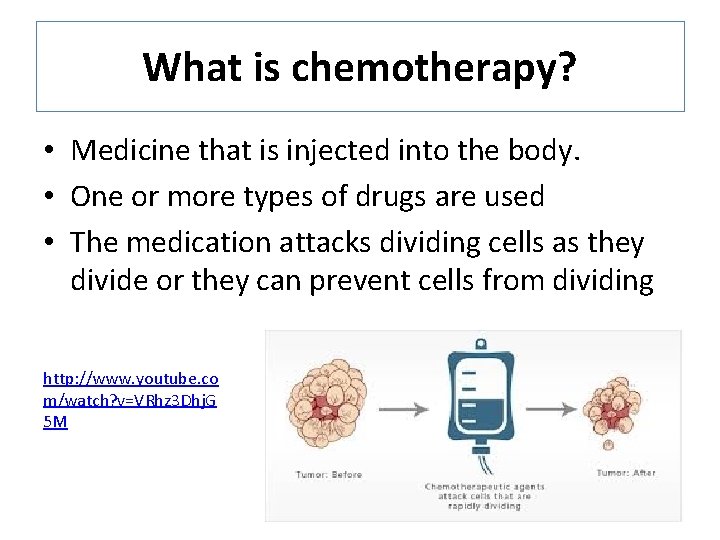
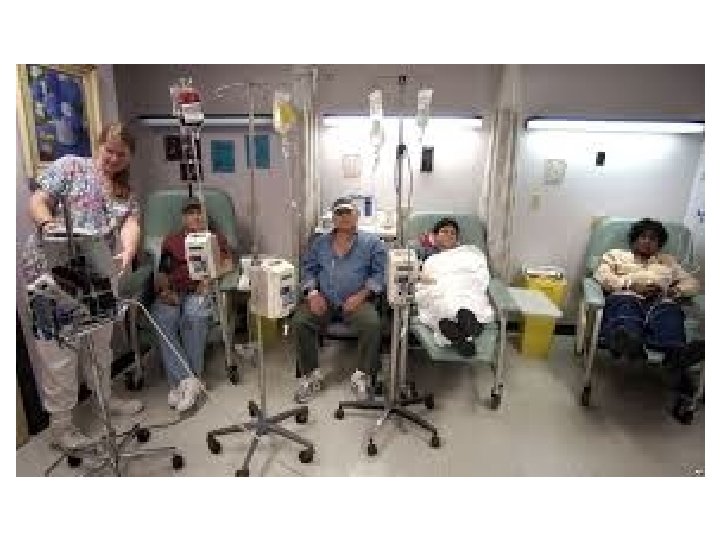
What is chemotherapy? • Medicine that is injected into the body. • One or more types of drugs are used • The medication attacks dividing cells as they divide or they can prevent cells from dividing http: //www. youtube. co m/watch? v=VRhz 3 Dhj. G 5 M
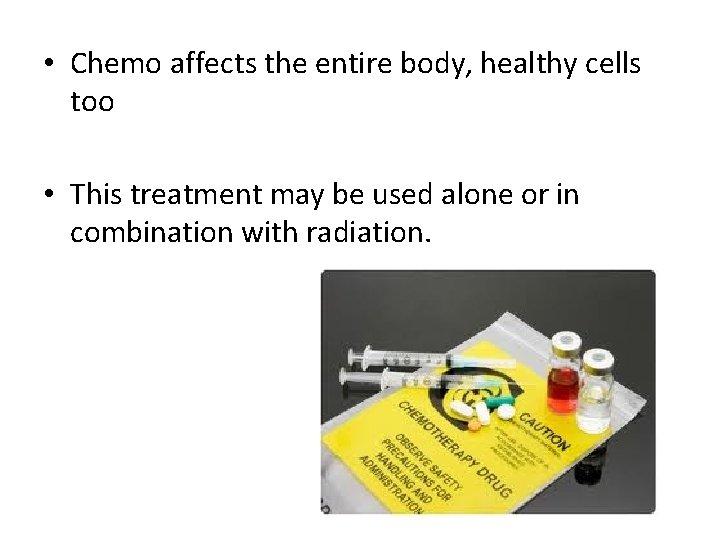
• Chemo affects the entire body, healthy cells too • This treatment may be used alone or in combination with radiation.
What are possible side effects of cancer treatments? Radiation: • Skin inflammation and fatigue • Specific side effects depending on location of treatment (Ex: brain - hair loss; testicular cancer – sterility)
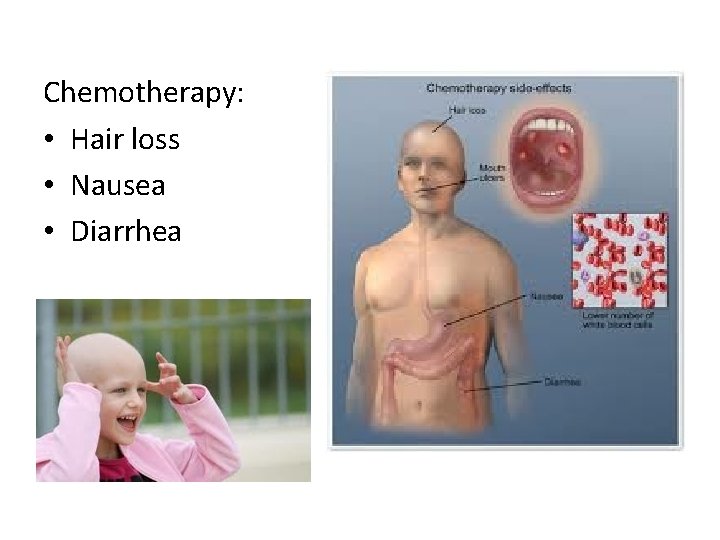
Chemotherapy: • Hair loss • Nausea • Diarrhea
• For both treatments, side effects usually last only for the duration of the treatment. However, sterility can be permanent. • Radiation and Chemotherapy treatments are particularly harmful to body cells that divide quickly, such as bone marrow cells, skin cells, hair cells, cells in the GI (gastrointestinal) tract and cells of the reproductive system.
What are the goals of cancer research? • Prevention • To find out why cells divide uncontrollably • Find treatment that affects cancerous cells and leaves healthy cells unharmed