
The Cell Cycle Mitosis and Cancer Glencoe Biology
The Cell Cycle, Mitosis, and Cancer Glencoe Biology Chapter
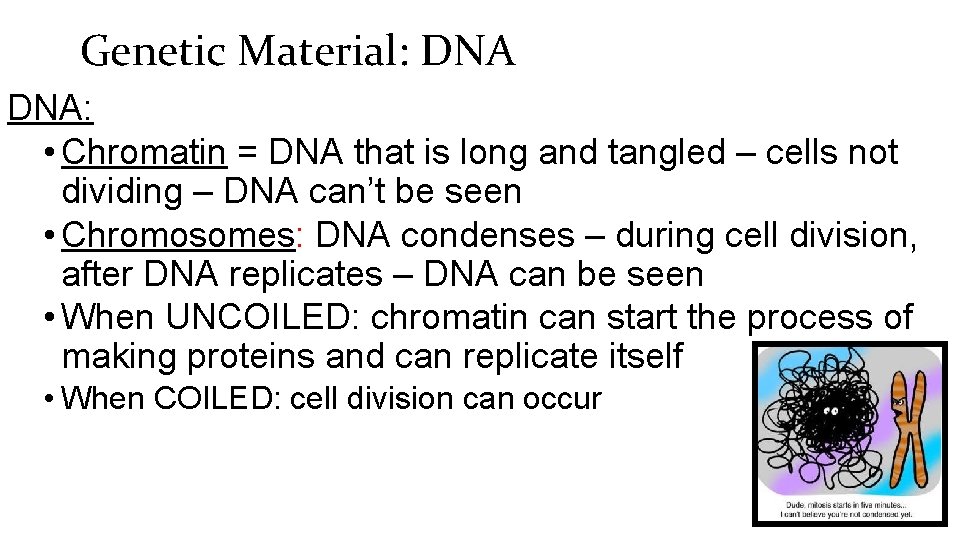
Genetic Material: DNA: • Chromatin = DNA that is long and tangled – cells not dividing – DNA can’t be seen • Chromosomes: DNA condenses – during cell division, after DNA replicates – DNA can be seen • When UNCOILED: chromatin can start the process of making proteins and can replicate itself • When COILED: cell division can occur
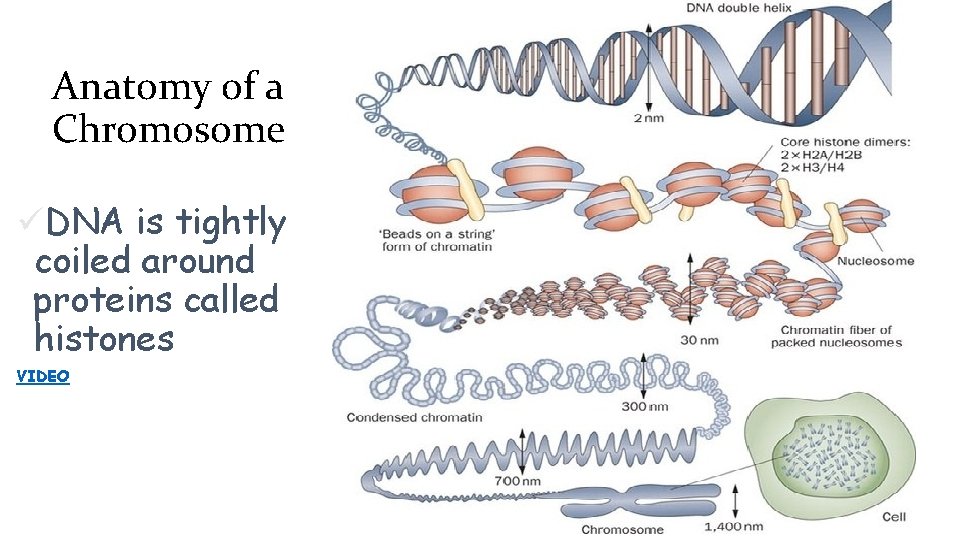
Anatomy of a Chromosome üDNA is tightly coiled around proteins called histones VIDEO
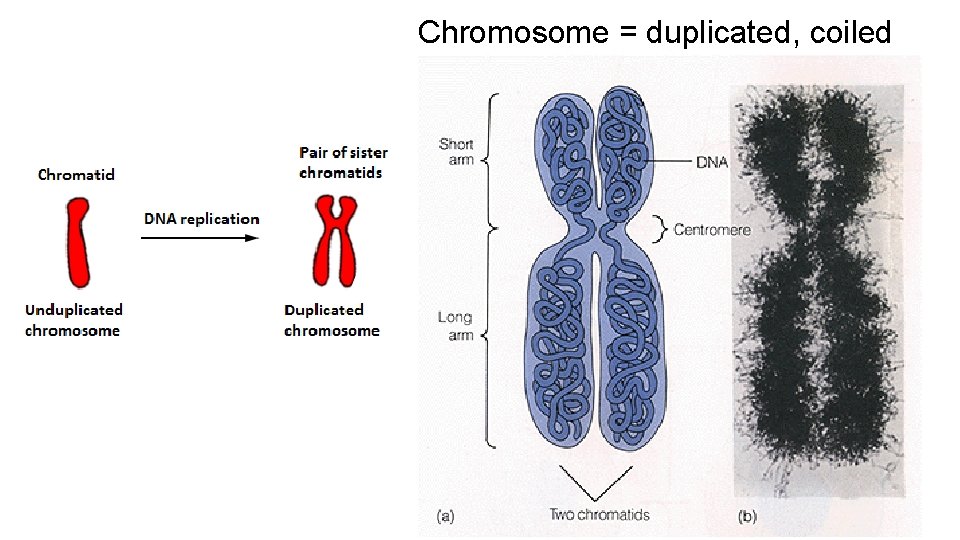
Chromosome = duplicated, coiled DNA CHROMOSOME CENTROMERE CHROMATID
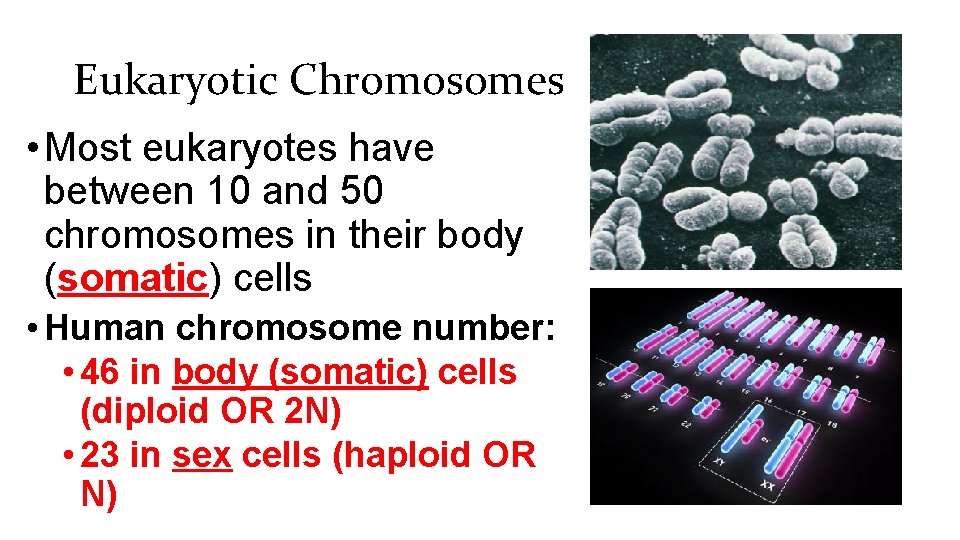
Eukaryotic Chromosomes • Most eukaryotes have between 10 and 50 chromosomes in their body (somatic) cells • Human chromosome number: • 46 in body (somatic) cells (diploid OR 2 N) • 23 in sex cells (haploid OR N)
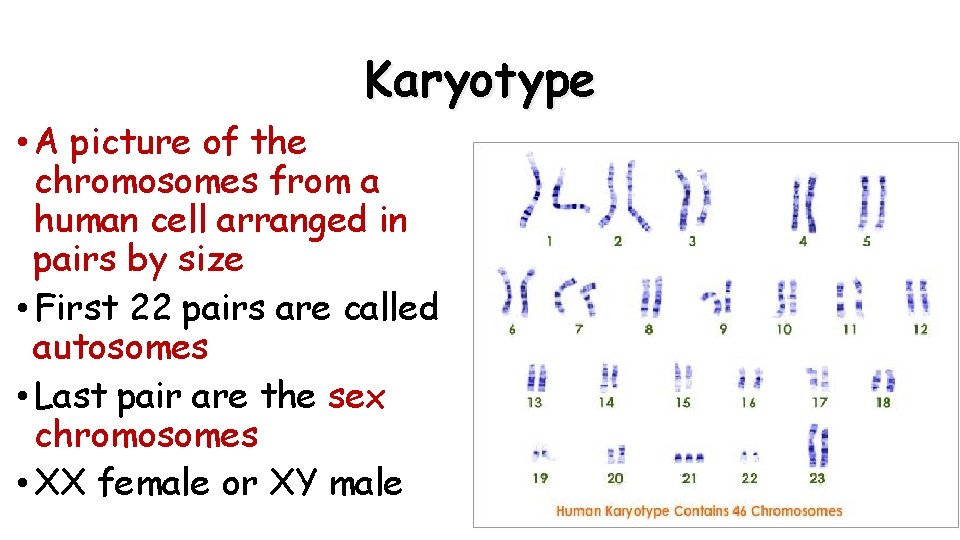
Karyotype • A picture of the chromosomes from a human cell arranged in pairs by size • First 22 pairs are called autosomes • Last pair are the sex chromosomes • XX female or XY male 6
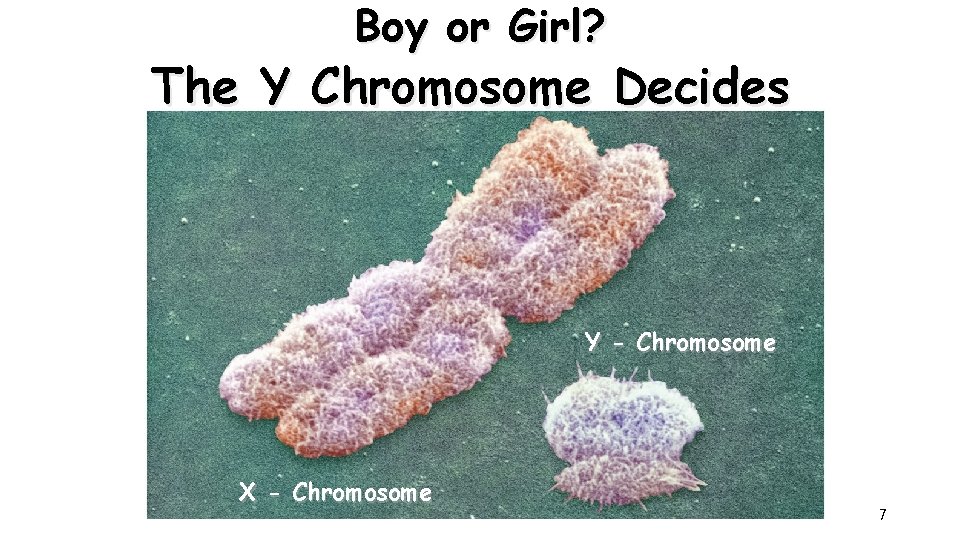
Boy or Girl? The Y Chromosome Decides Y - Chromosome X - Chromosome 7
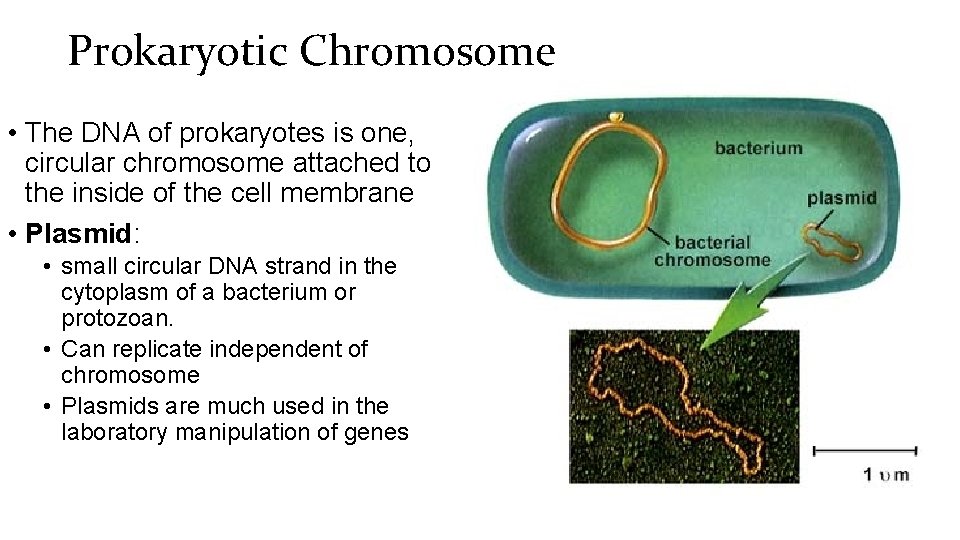
Prokaryotic Chromosome • The DNA of prokaryotes is one, circular chromosome attached to the inside of the cell membrane • Plasmid: • small circular DNA strand in the cytoplasm of a bacterium or protozoan. • Can replicate independent of chromosome • Plasmids are much used in the laboratory manipulation of genes
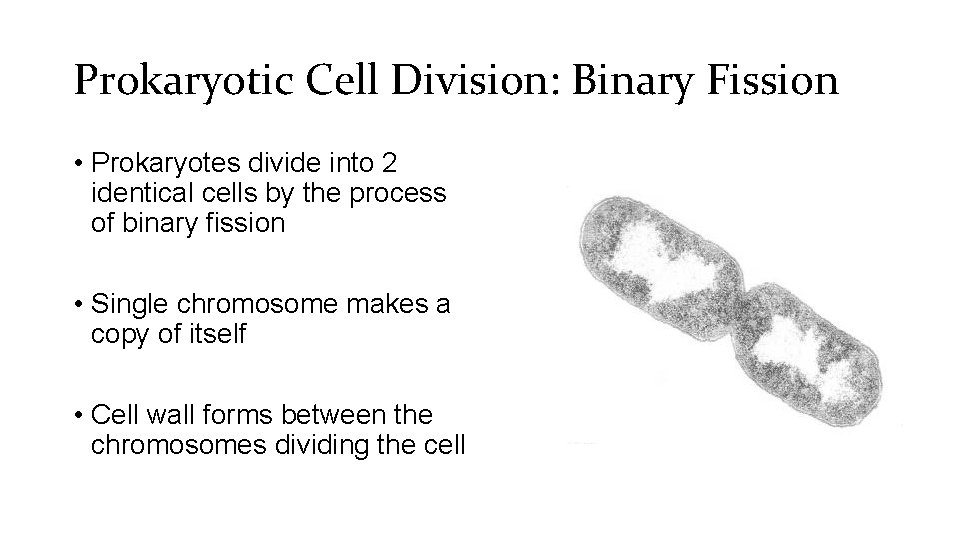
Prokaryotic Cell Division: Binary Fission • Prokaryotes divide into 2 identical cells by the process of binary fission • Single chromosome makes a copy of itself • Cell wall forms between the chromosomes dividing the cell
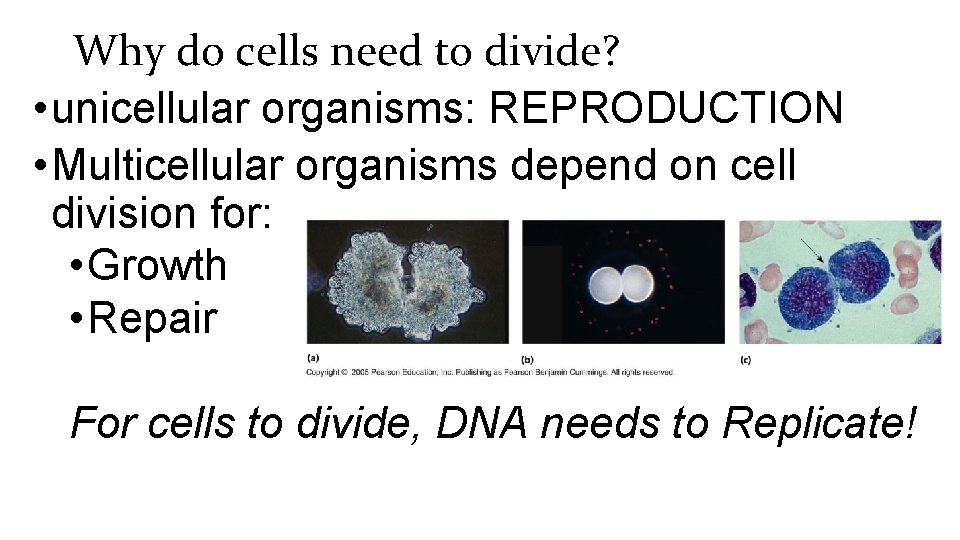
Why do cells need to divide? • unicellular organisms: REPRODUCTION • Multicellular organisms depend on cell division for: • Growth • Repair For cells to divide, DNA needs to Replicate!
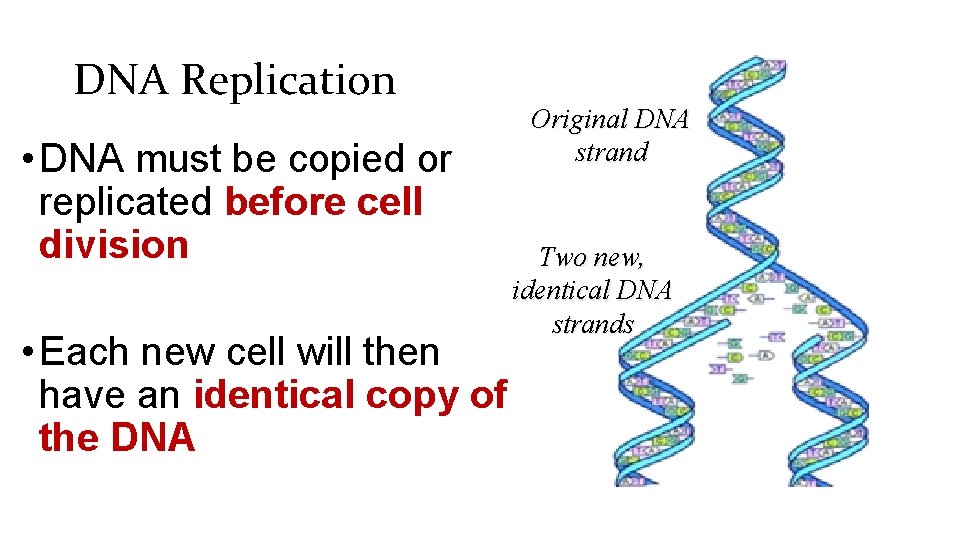
DNA Replication • DNA must be copied or replicated before cell division • Each new cell will then have an identical copy of the DNA Original DNA strand Two new, identical DNA strands
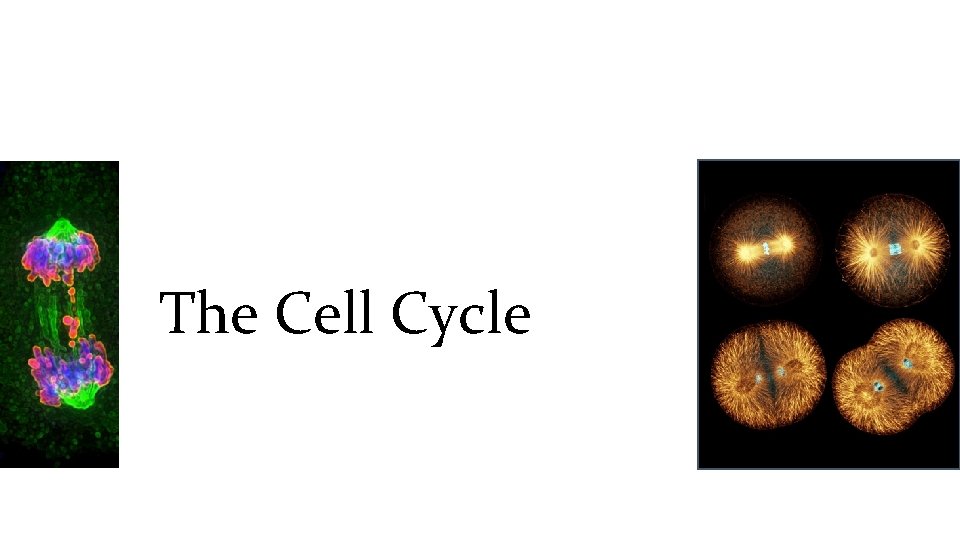
The Cell Cycle

The Cell Cycle Interphase: growth phase: longest phase of cell cycle • G 1 – primary growth phase • S – synthesis; DNA replicated • G 2 – secondary growth phase M-Phase: cell division phase • M - mitosis • C - cytokinesis
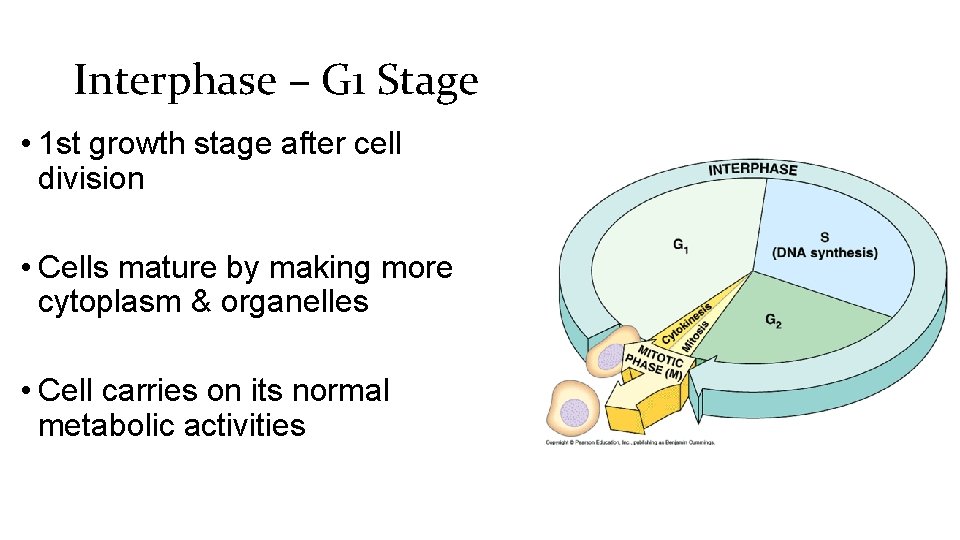
Interphase – G 1 Stage • 1 st growth stage after cell division • Cells mature by making more cytoplasm & organelles • Cell carries on its normal metabolic activities
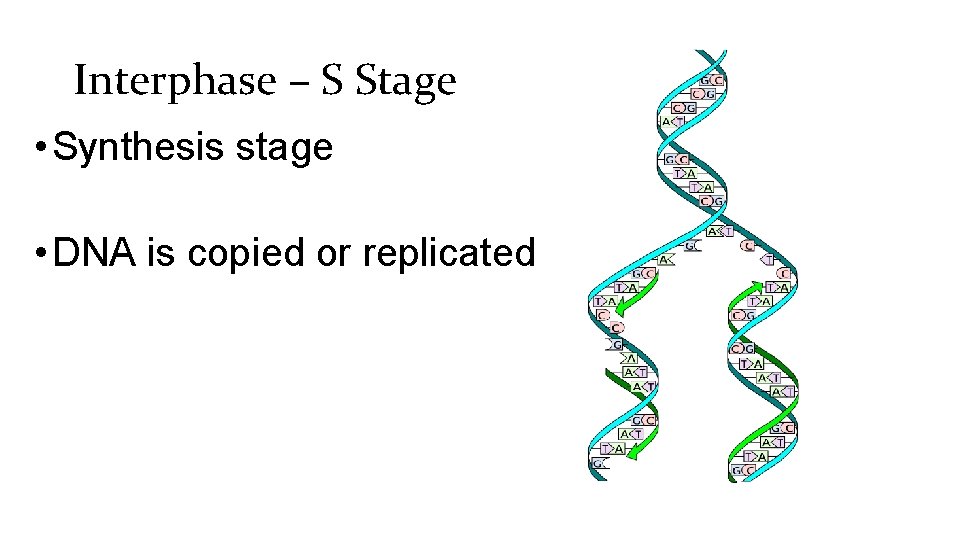
Interphase – S Stage • Synthesis stage • DNA is copied or replicated
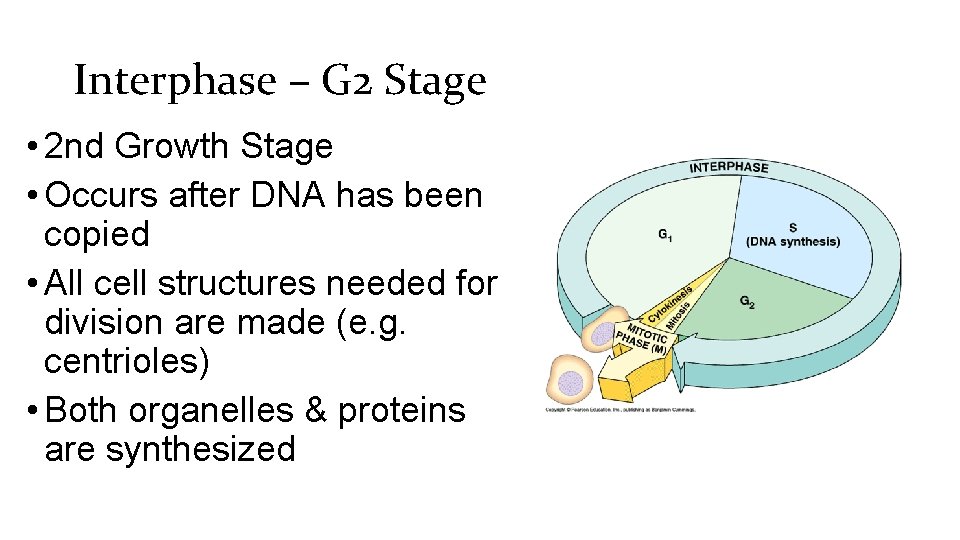
Interphase – G 2 Stage • 2 nd Growth Stage • Occurs after DNA has been copied • All cell structures needed for division are made (e. g. centrioles) • Both organelles & proteins are synthesized
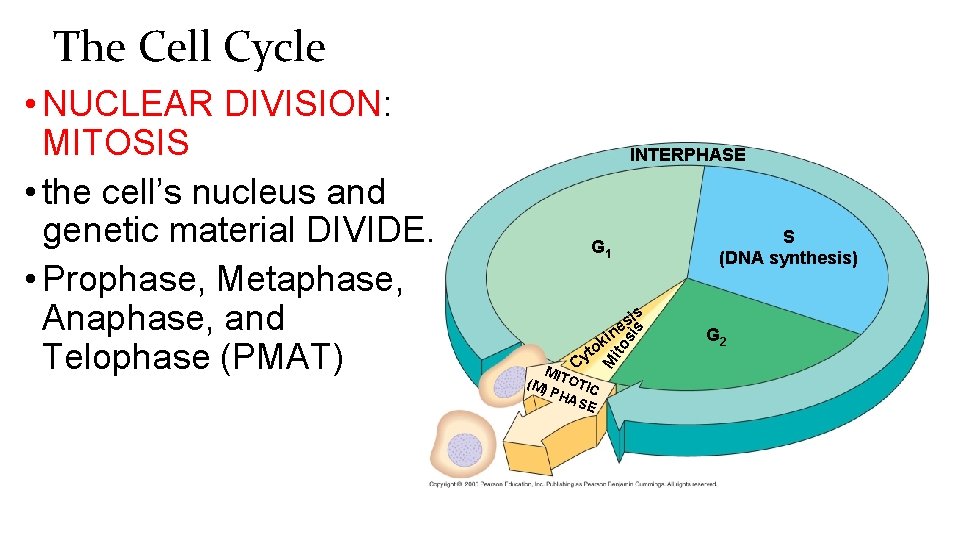
The Cell Cycle INTERPHASE S (DNA synthesis) G 1 s si ito t Cy s i es n i ok M • NUCLEAR DIVISION: MITOSIS • the cell’s nucleus and genetic material DIVIDE. • Prophase, Metaphase, Anaphase, and Telophase (PMAT) MI (M) TOTIC PH AS E G 2
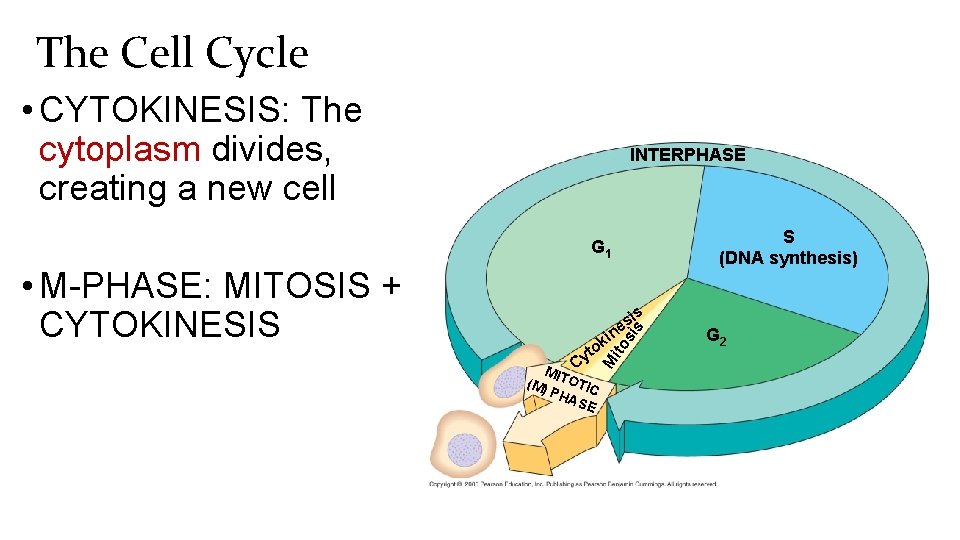
The Cell Cycle • CYTOKINESIS: The cytoplasm divides, creating a new cell INTERPHASE S (DNA synthesis) G 1 s si ito t Cy s i es n i ok M • M-PHASE: MITOSIS + CYTOKINESIS MI (M) TOTIC PH AS E G 2
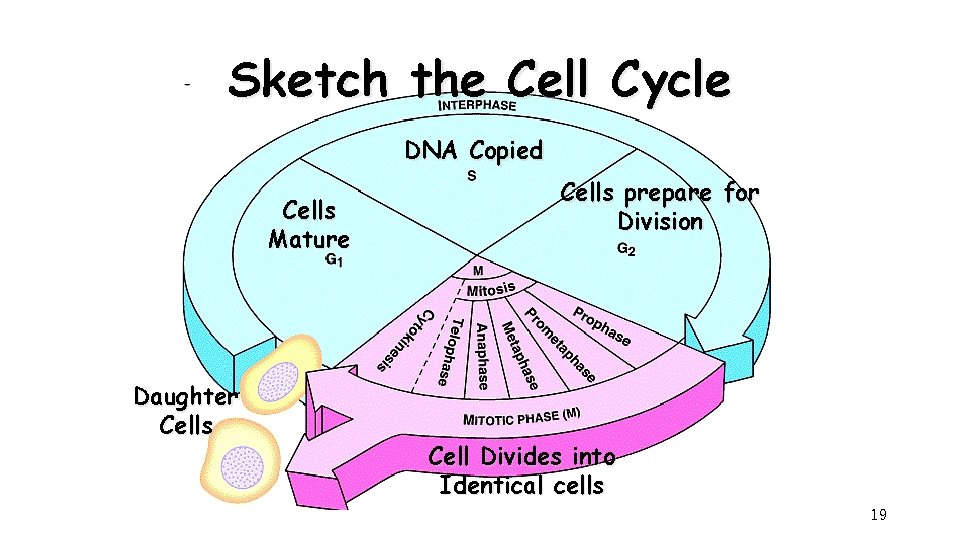
Sketch the Cell Cycle DNA Copied Cells Mature Daughter Cells prepare for Division Cell Divides into Identical cells 19
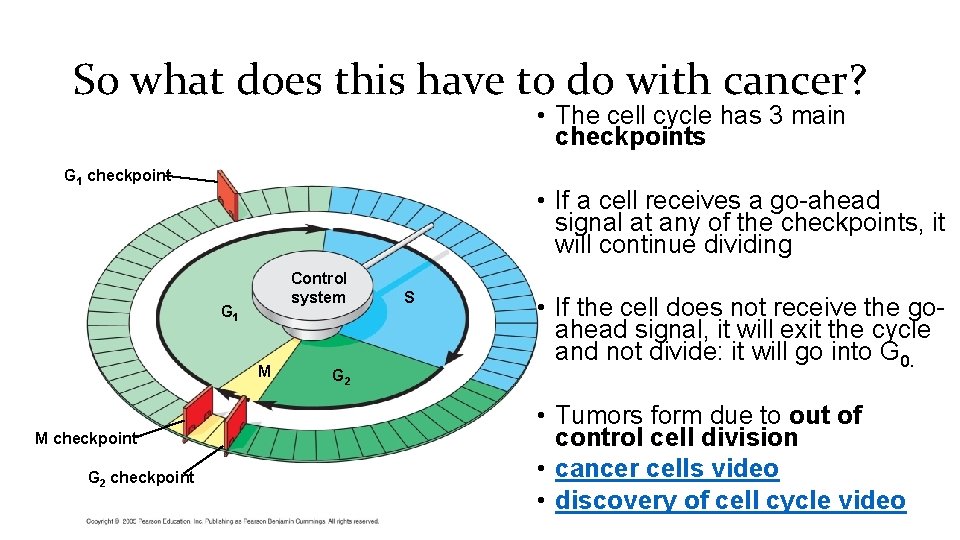
So what does this have to do with cancer? • The cell cycle has 3 main checkpoints G 1 checkpoint • If a cell receives a go-ahead signal at any of the checkpoints, it will continue dividing Control system G 1 M M checkpoint G 2 S • If the cell does not receive the goahead signal, it will exit the cycle and not divide: it will go into G 0. • Tumors form due to out of control cell division • cancer cells video • discovery of cell cycle video
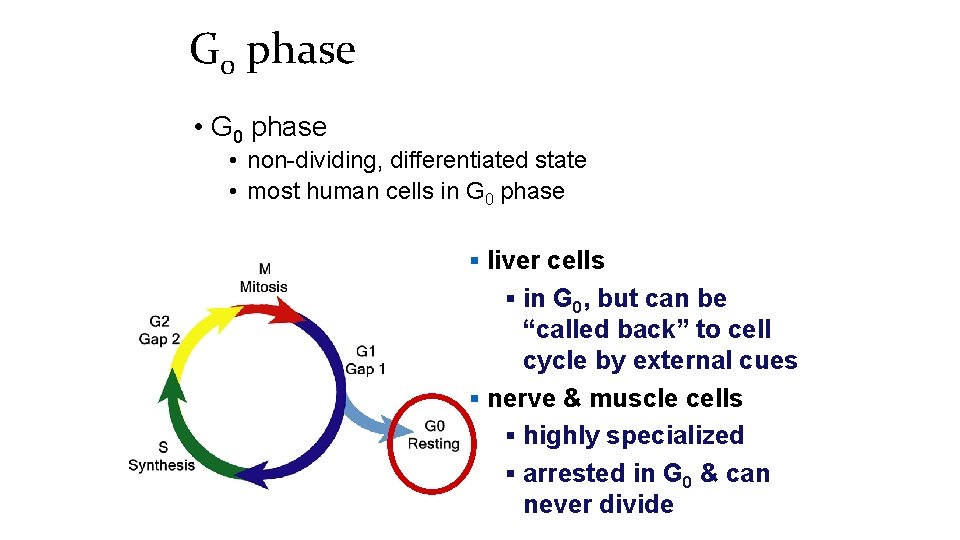
G 0 phase • G 0 phase • non-dividing, differentiated state • most human cells in G 0 phase § liver cells § in G 0, but can be “called back” to cell cycle by external cues § nerve & muscle cells § highly specialized § arrested in G 0 & can never divide
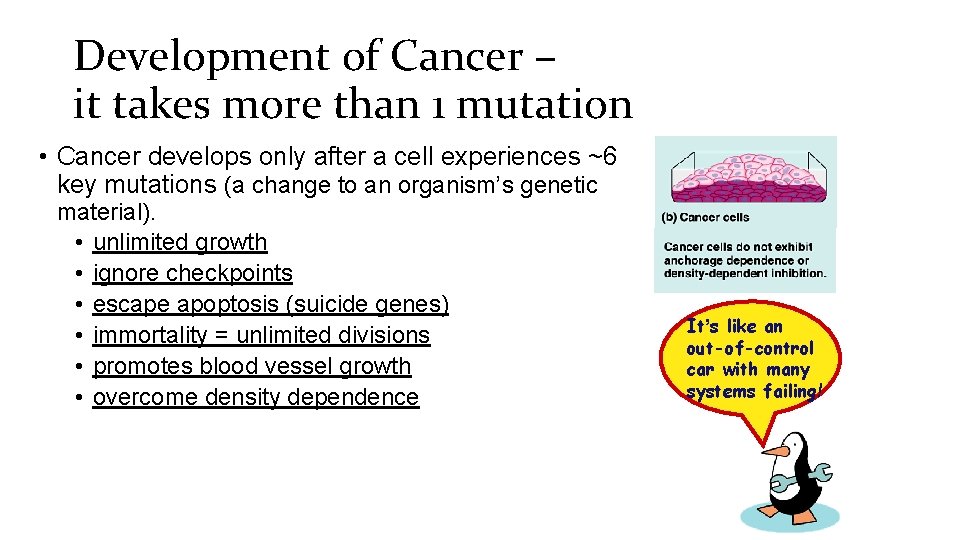
Development of Cancer – it takes more than 1 mutation • Cancer develops only after a cell experiences ~6 key mutations (a change to an organism’s genetic material). • unlimited growth • ignore checkpoints • escape apoptosis (suicide genes) • immortality = unlimited divisions • promotes blood vessel growth • overcome density dependence It’s like an out-of-control car with many systems failing!
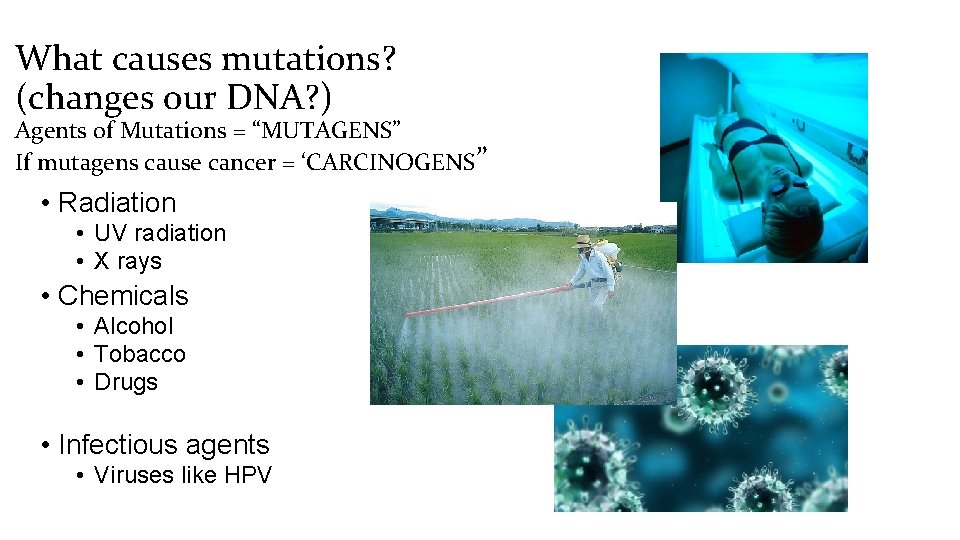
What causes mutations? (changes our DNA? ) Agents of Mutations = “MUTAGENS” If mutagens cause cancer = ‘CARCINOGENS” • Radiation • UV radiation • X rays • Chemicals • Alcohol • Tobacco • Drugs • Infectious agents • Viruses like HPV
- Slides: 23