
The Cell Cycle Mitosis and Cancer Glencoe Biology
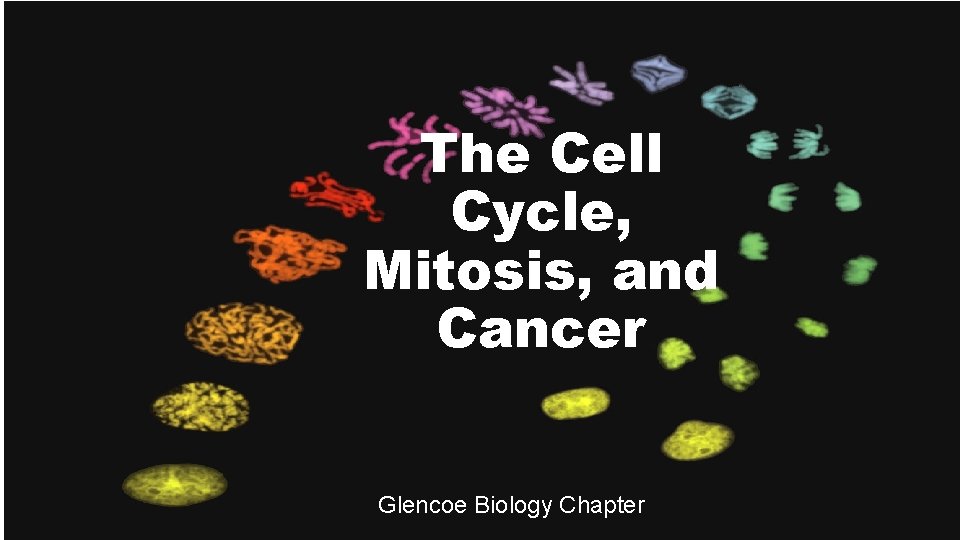
The Cell Cycle, Mitosis, and Cancer Glencoe Biology Chapter
What causes cancer? • Cancer is caused by mutations, which creates abnormal cell growth. • A mutation is a change to an organism’s genetic material. In our case, DNA.
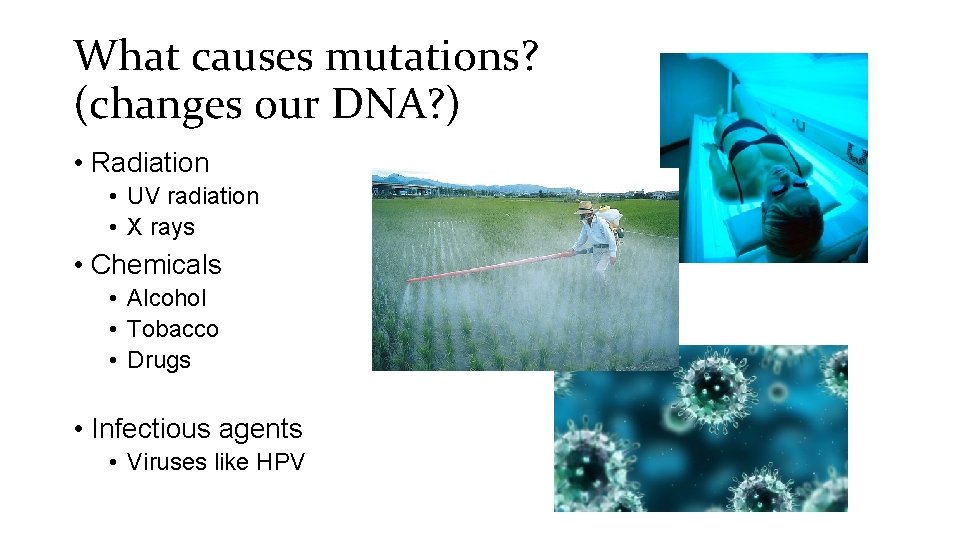
What causes mutations? (changes our DNA? ) • Radiation • UV radiation • X rays • Chemicals • Alcohol • Tobacco • Drugs • Infectious agents • Viruses like HPV
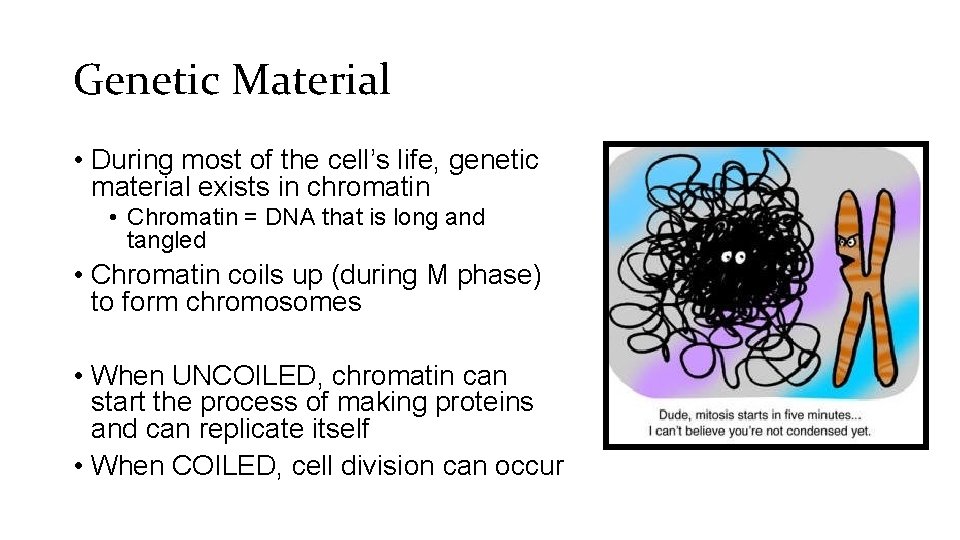
Genetic Material • During most of the cell’s life, genetic material exists in chromatin • Chromatin = DNA that is long and tangled • Chromatin coils up (during M phase) to form chromosomes • When UNCOILED, chromatin can start the process of making proteins and can replicate itself • When COILED, cell division can occur
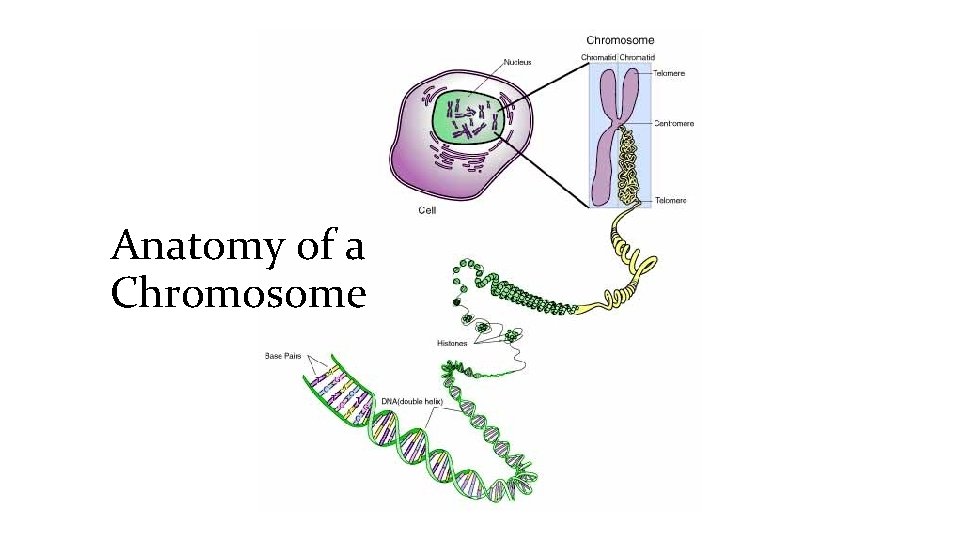
Anatomy of a Chromosome
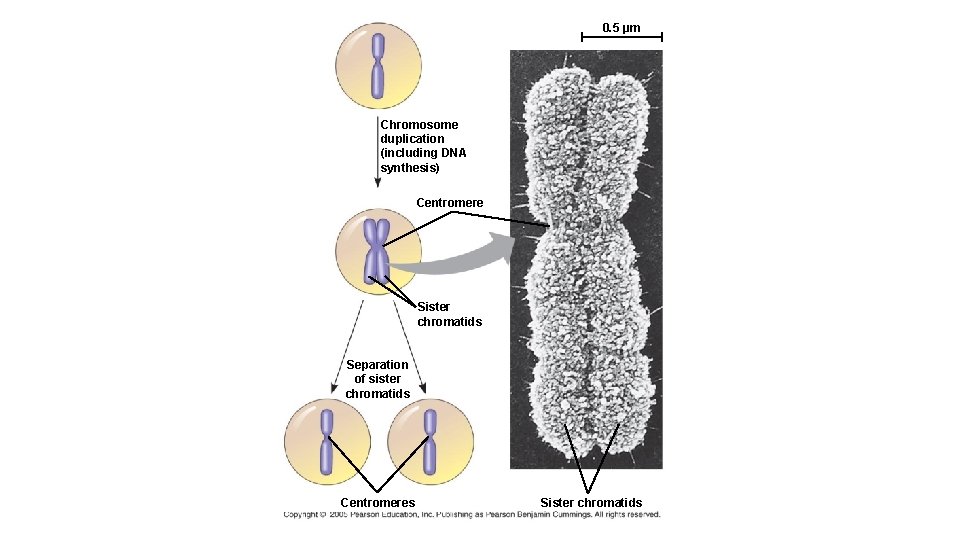
0. 5 µm Chromosome duplication (including DNA synthesis) Centromere Sister chromatids Separation of sister chromatids Centromeres Sister chromatids

The Cell Cycle: The “lifetime” of a cell • What do cells spend their lifetime doing? • Cells go through THREE (3) periods • One of growth and synthesis of DNA • One in which the nucleus divides • One in which the cytoplasm divides
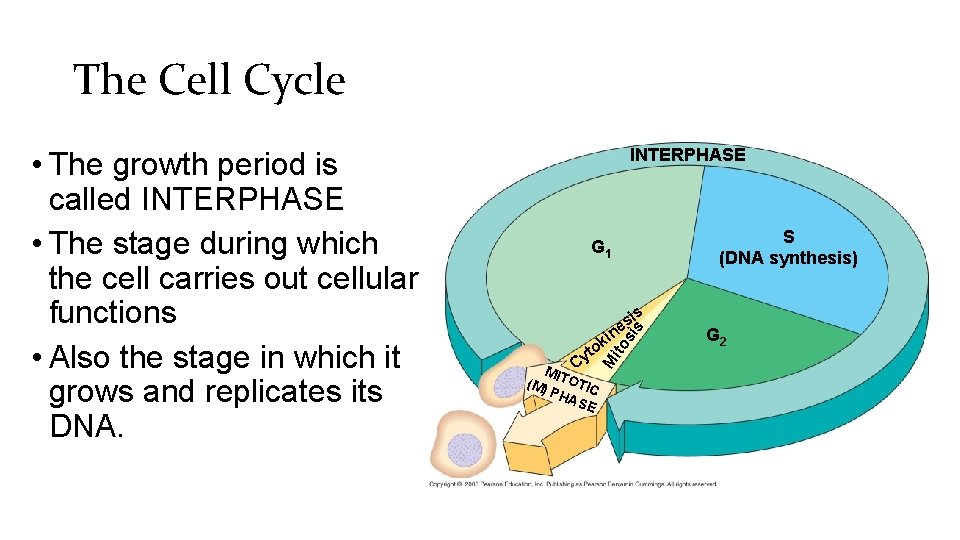
The Cell Cycle INTERPHASE S (DNA synthesis) G 1 s si ito t Cy s i es n i ok M • The growth period is called INTERPHASE • The stage during which the cell carries out cellular functions • Also the stage in which it grows and replicates its DNA. MI (M) TOTIC PH AS E G 2
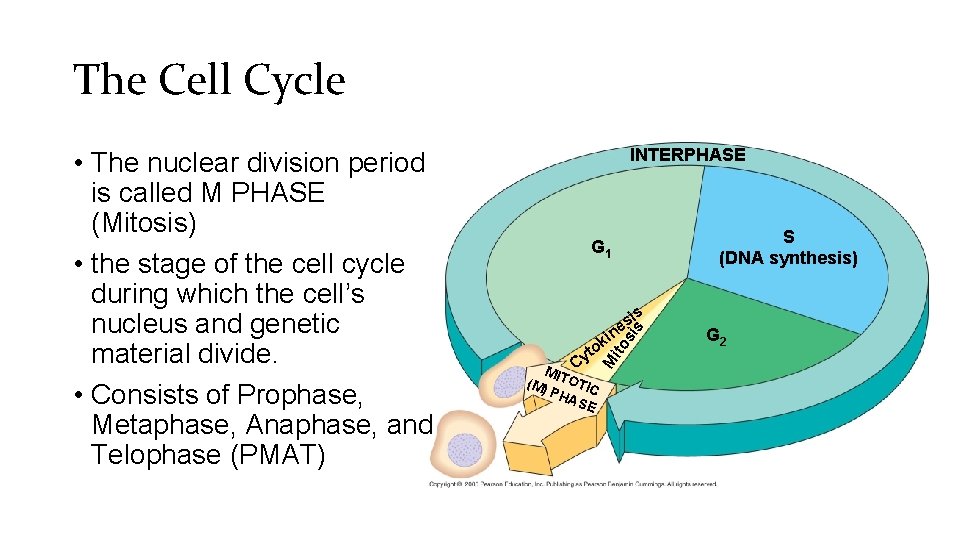
The Cell Cycle INTERPHASE S (DNA synthesis) G 1 s si ito t Cy s i es n i ok M • The nuclear division period is called M PHASE (Mitosis) • the stage of the cell cycle during which the cell’s nucleus and genetic material divide. • Consists of Prophase, Metaphase, Anaphase, and Telophase (PMAT) MI (M) TOTIC PH AS E G 2
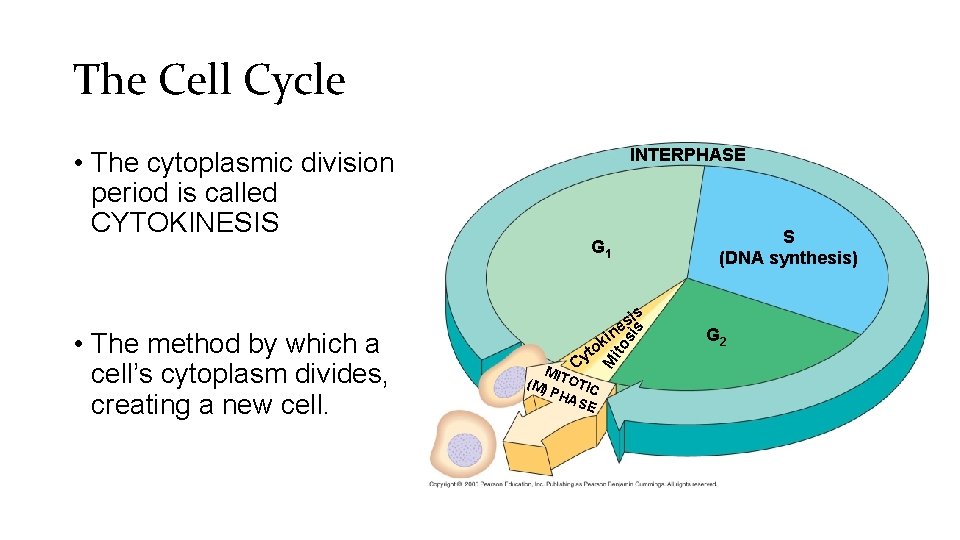
The Cell Cycle • The cytoplasmic division period is called CYTOKINESIS INTERPHASE S (DNA synthesis) G 1 s s si ito t Cy i ok M • The method by which a cell’s cytoplasm divides, creating a new cell. n i es MI (M) TOTIC PH AS E G 2
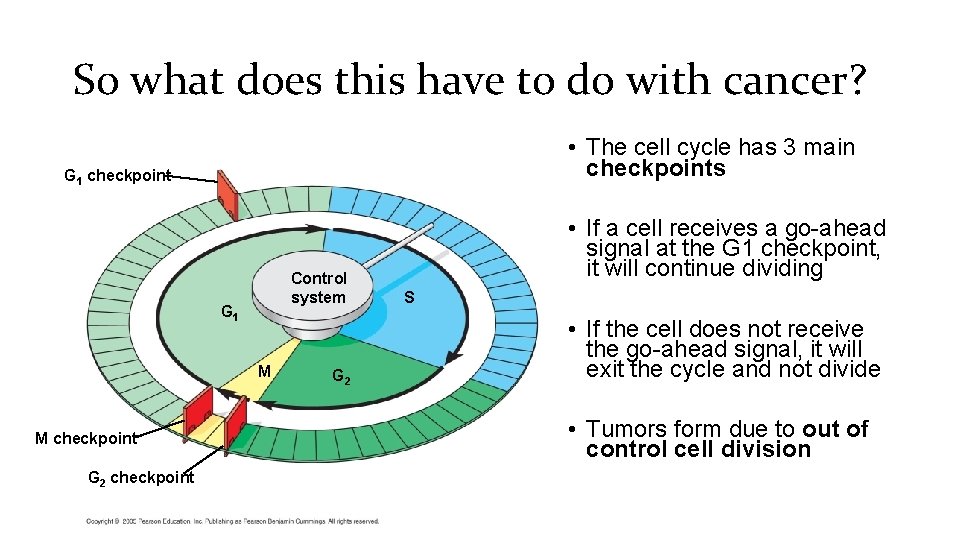
So what does this have to do with cancer? • The cell cycle has 3 main checkpoints G 1 checkpoint Control system G 1 M M checkpoint G 2 • If a cell receives a go-ahead signal at the G 1 checkpoint, it will continue dividing S • If the cell does not receive the go-ahead signal, it will exit the cycle and not divide • Tumors form due to out of control cell division
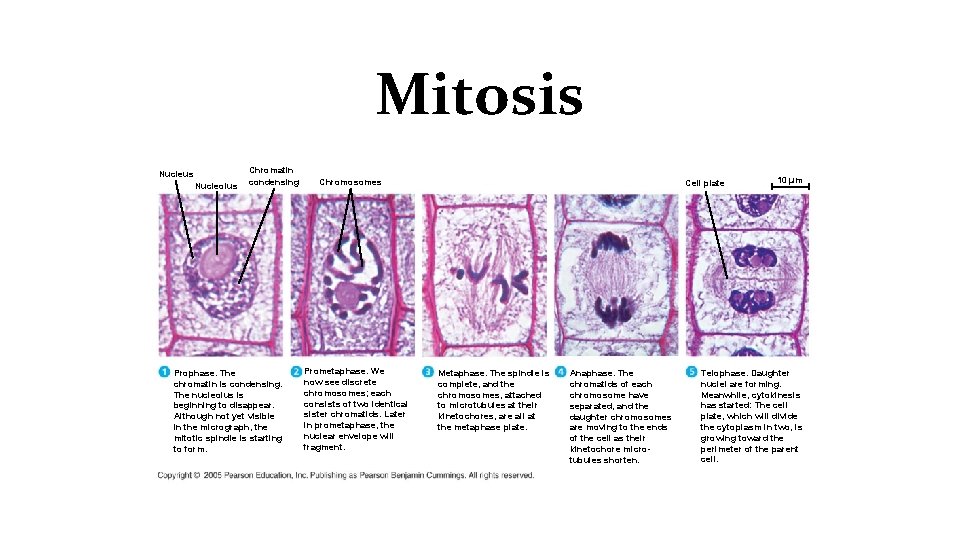
Mitosis Nucleus Nucleolus Chromatin condensing Prophase. The chromatin is condensing. The nucleolus is beginning to disappear. Although not yet visible in the micrograph, the mitotic spindle is starting to form. Chromosomes Prometaphase. We now see discrete chromosomes; each consists of two identical sister chromatids. Later in prometaphase, the nuclear envelope will fragment. Cell plate Metaphase. The spindle is complete, and the chromosomes, attached to microtubules at their kinetochores, are all at the metaphase plate. Anaphase. The chromatids of each chromosome have separated, and the daughter chromosomes are moving to the ends of the cell as their kinetochore microtubules shorten. 10 µm Telophase. Daughter nuclei are forming. Meanwhile, cytokinesis has started: The cell plate, which will divide the cytoplasm in two, is growing toward the perimeter of the parent cell.
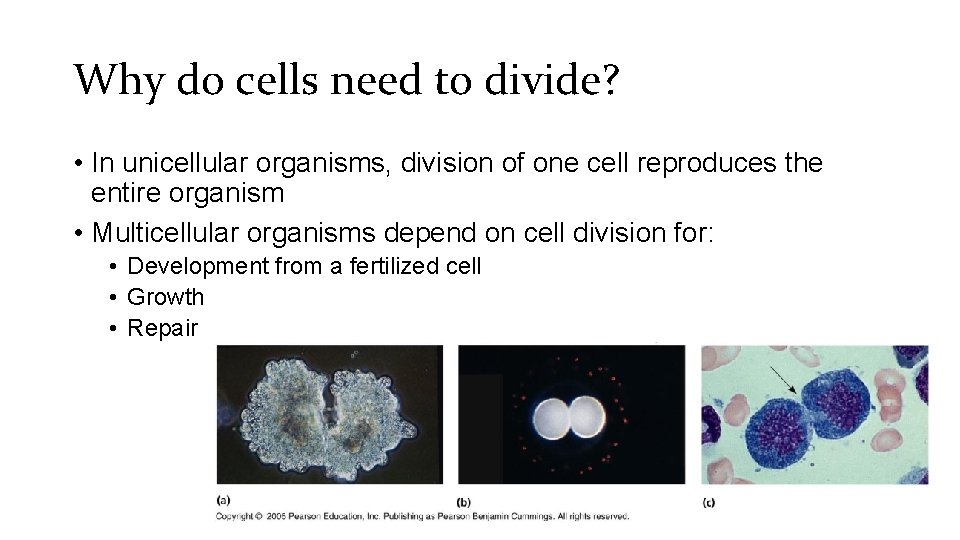
Why do cells need to divide? • In unicellular organisms, division of one cell reproduces the entire organism • Multicellular organisms depend on cell division for: • Development from a fertilized cell • Growth • Repair
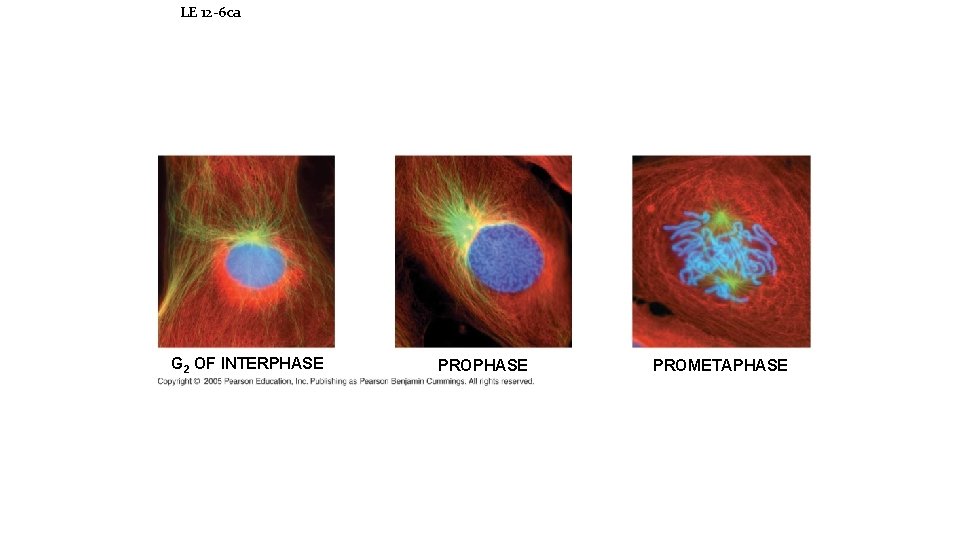
LE 12 -6 ca G 2 OF INTERPHASE PROMETAPHASE
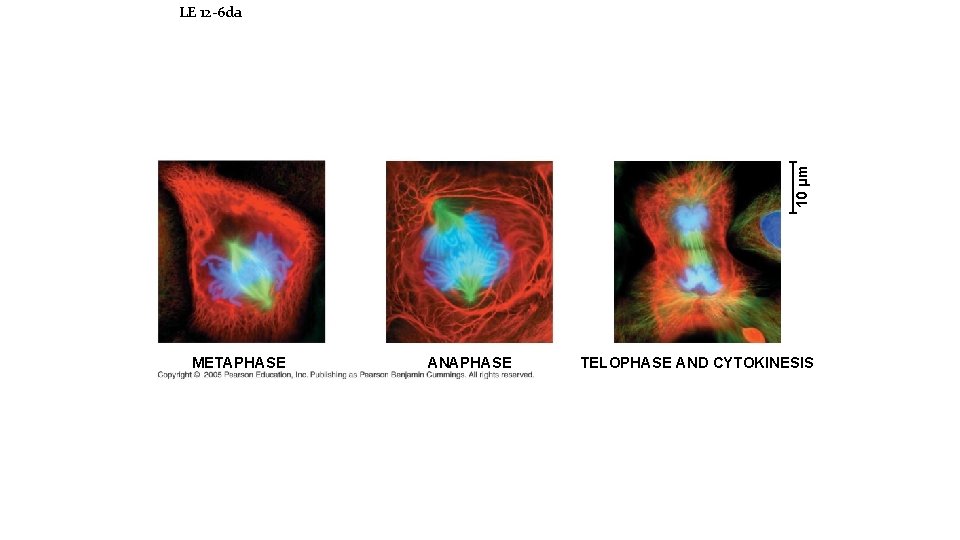
10 µm LE 12 -6 da METAPHASE ANAPHASE TELOPHASE AND CYTOKINESIS
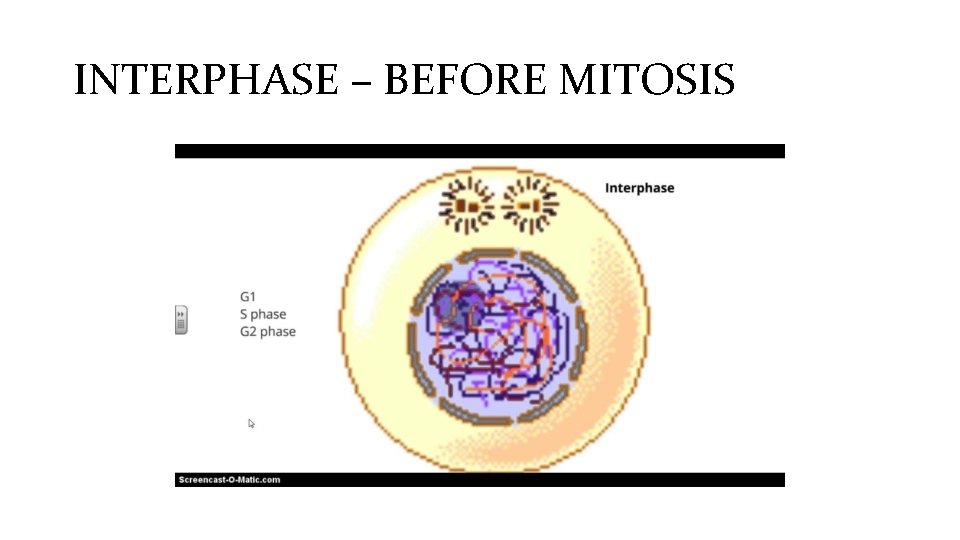
INTERPHASE – BEFORE MITOSIS
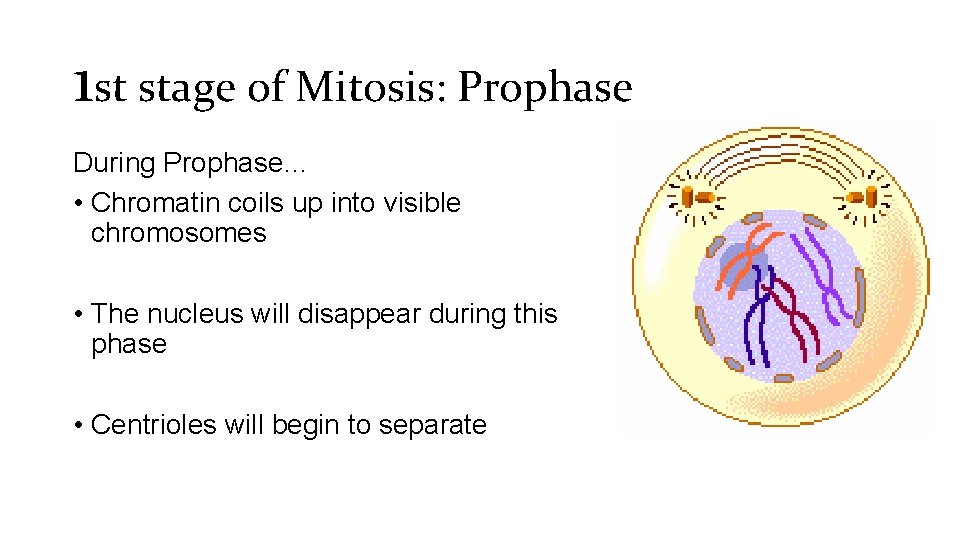
1 st stage of Mitosis: Prophase During Prophase… • Chromatin coils up into visible chromosomes • The nucleus will disappear during this phase • Centrioles will begin to separate
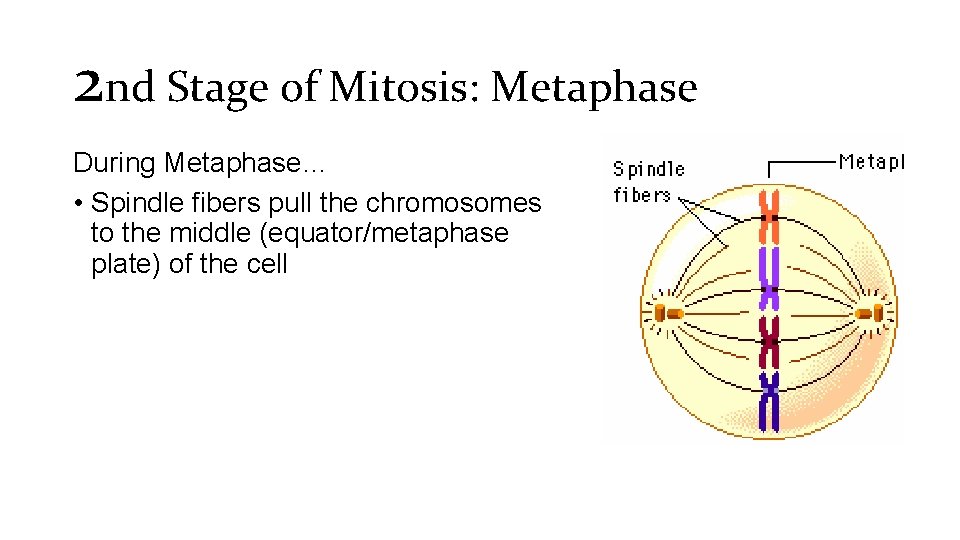
2 nd Stage of Mitosis: Metaphase During Metaphase… • Spindle fibers pull the chromosomes to the middle (equator/metaphase plate) of the cell
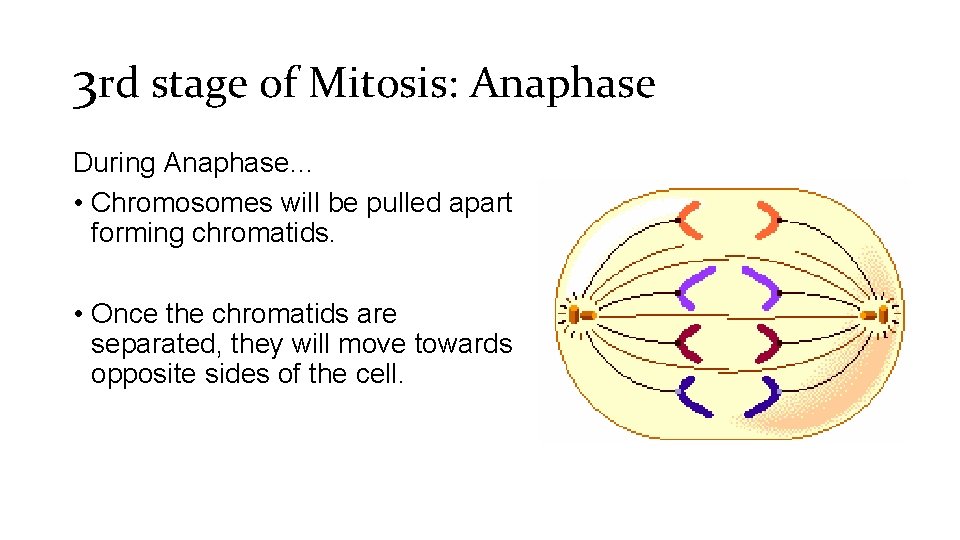
3 rd stage of Mitosis: Anaphase During Anaphase… • Chromosomes will be pulled apart forming chromatids. • Once the chromatids are separated, they will move towards opposite sides of the cell.
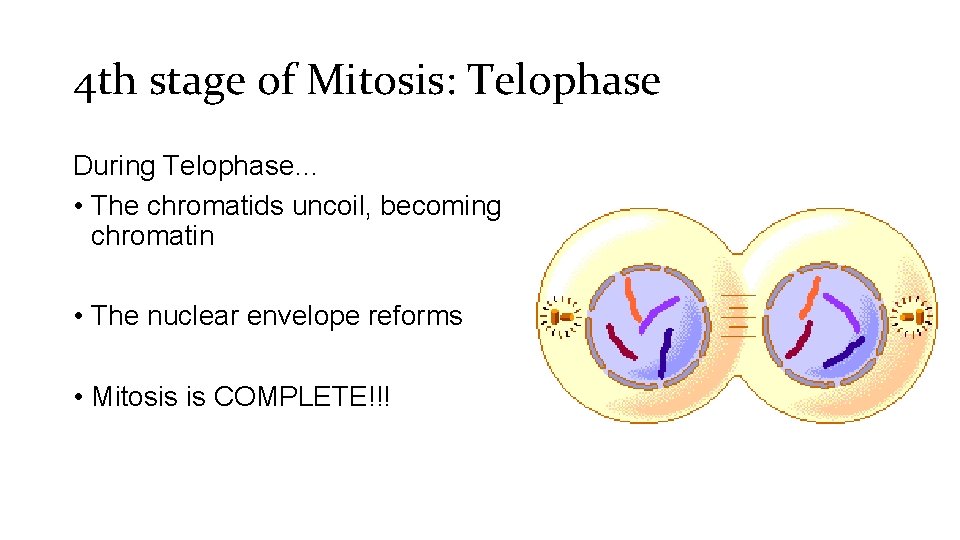
4 th stage of Mitosis: Telophase During Telophase… • The chromatids uncoil, becoming chromatin • The nuclear envelope reforms • Mitosis is COMPLETE!!!
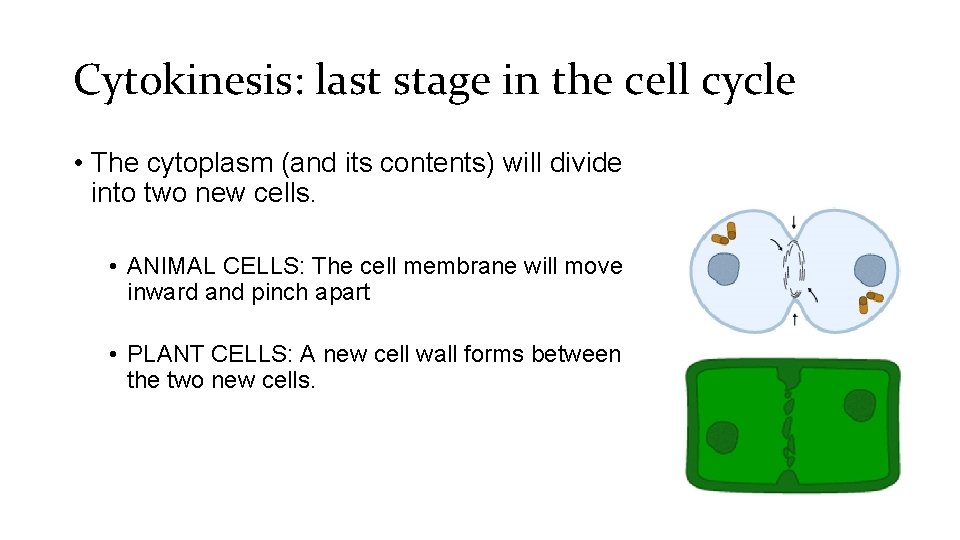
Cytokinesis: last stage in the cell cycle • The cytoplasm (and its contents) will divide into two new cells. • ANIMAL CELLS: The cell membrane will move inward and pinch apart • PLANT CELLS: A new cell wall forms between the two new cells.
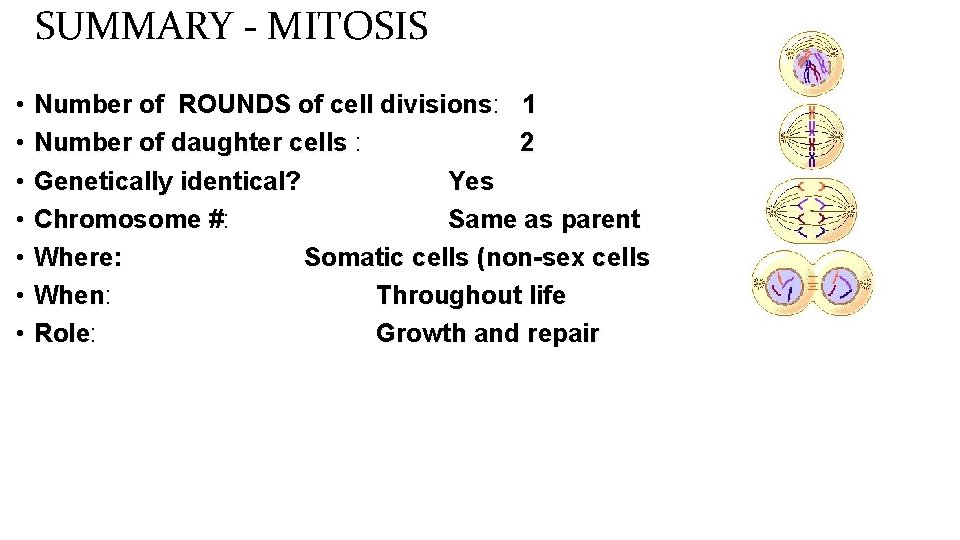
SUMMARY - MITOSIS • Number of ROUNDS of cell divisions: divisions 1 • Number of daughter cells : 2 • Genetically identical? Yes • Chromosome #: Same as parent • Where: Somatic cells (non-sex cells) • When: Throughout life When • Role: Growth and repair Role
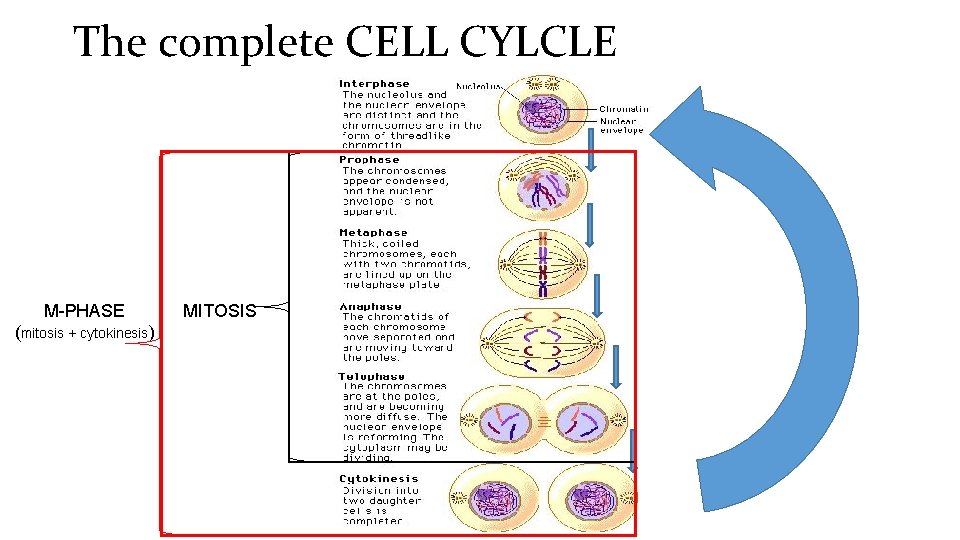
The complete CELL CYLCLE M-PHASE (mitosis + cytokinesis) MITOSIS
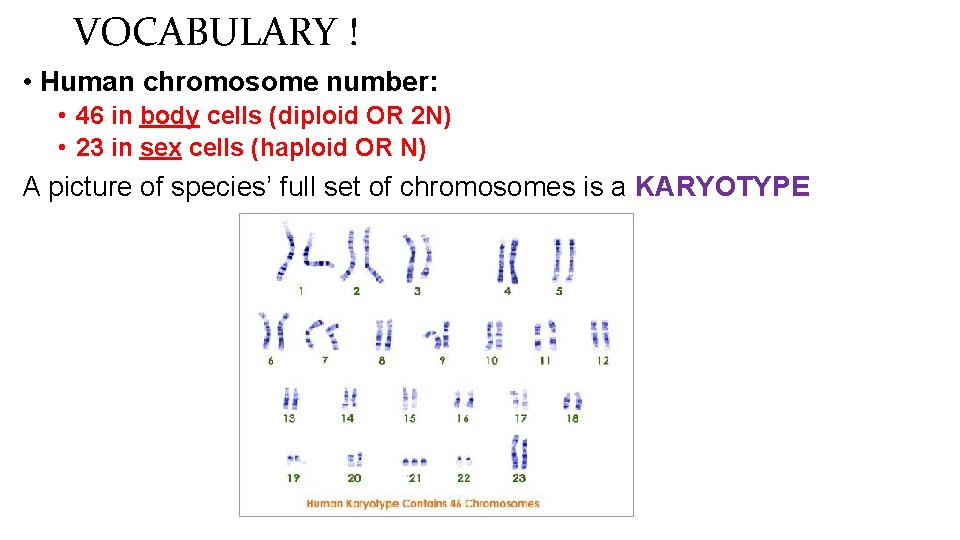
VOCABULARY ! • Human chromosome number: • 46 in body cells (diploid OR 2 N) • 23 in sex cells (haploid OR N) A picture of species’ full set of chromosomes is a KARYOTYPE
- Slides: 24