
The cell cycle has four main stages The
- Slides: 19
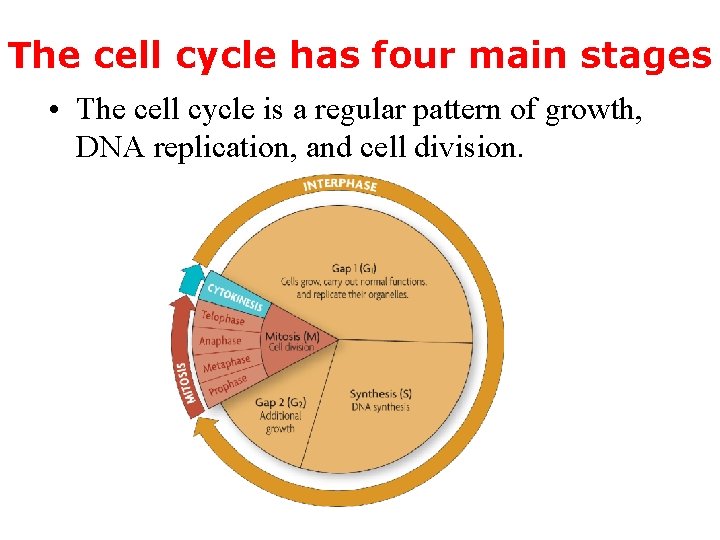
The cell cycle has four main stages • The cell cycle is a regular pattern of growth, DNA replication, and cell division.
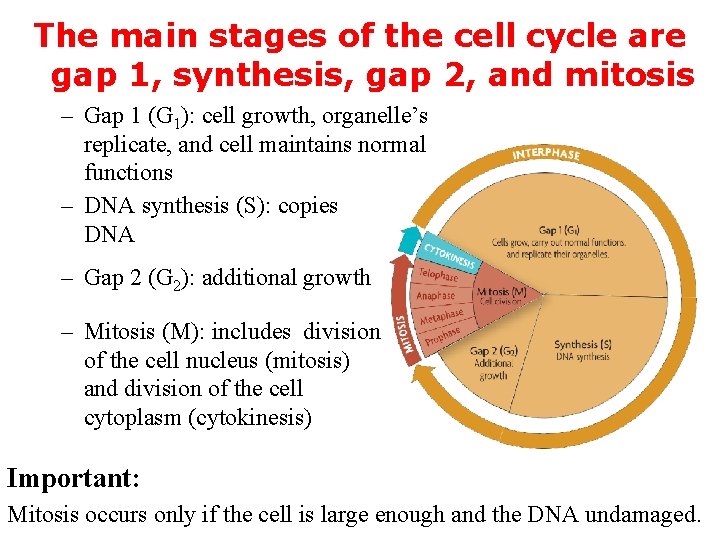
The main stages of the cell cycle are gap 1, synthesis, gap 2, and mitosis – Gap 1 (G 1): cell growth, organelle’s replicate, and cell maintains normal functions – DNA synthesis (S): copies DNA – Gap 2 (G 2): additional growth – Mitosis (M): includes division of the cell nucleus (mitosis) and division of the cell cytoplasm (cytokinesis) Important: Mitosis occurs only if the cell is large enough and the DNA undamaged.
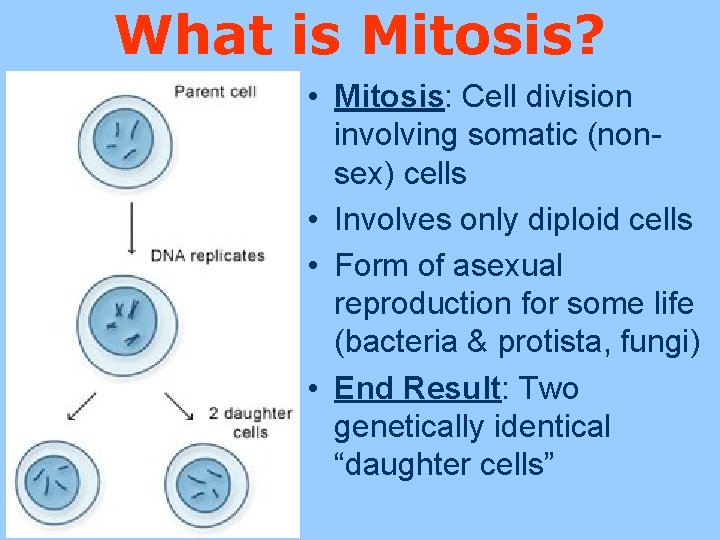
What is Mitosis? • Mitosis: Cell division involving somatic (nonsex) cells • Involves only diploid cells • Form of asexual reproduction for some life (bacteria & protista, fungi) • End Result: Two genetically identical “daughter cells”
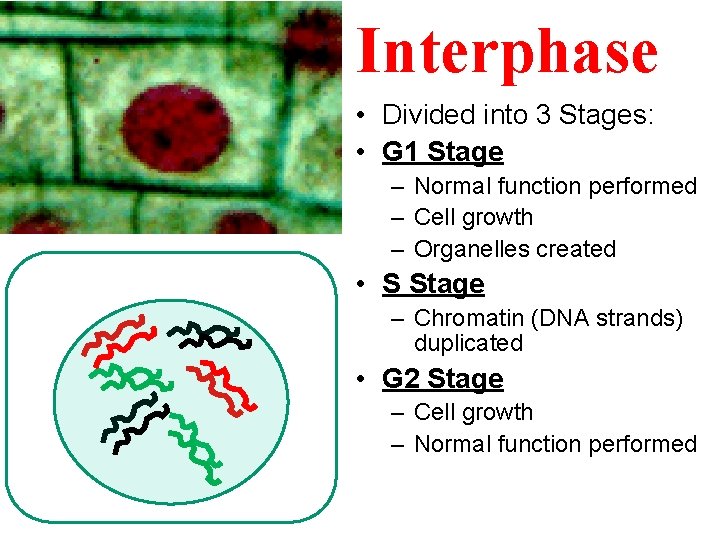
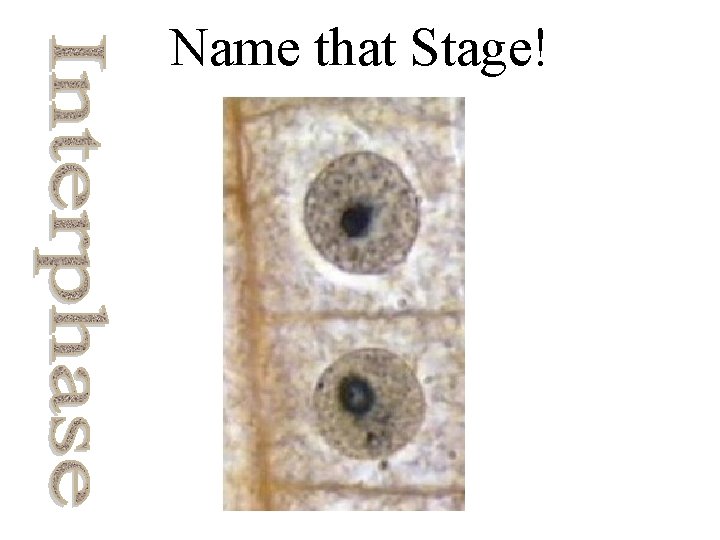
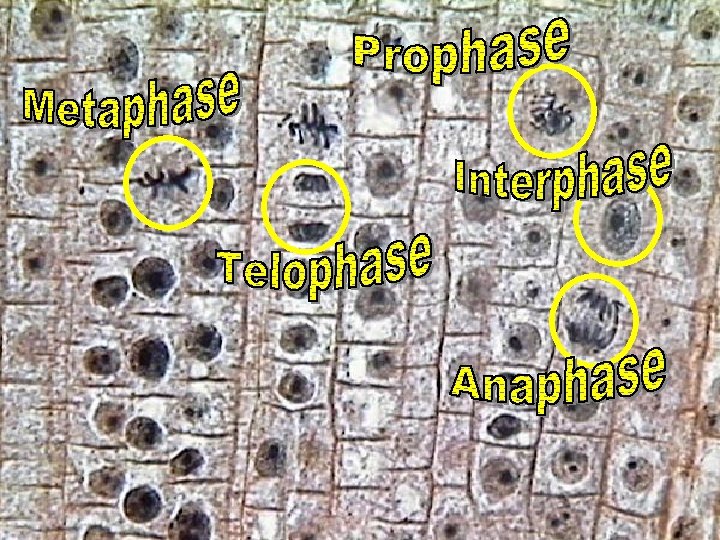
Interphase • Divided into 3 Stages: • G 1 Stage – Normal function performed – Cell growth – Organelles created • S Stage – Chromatin (DNA strands) duplicated • G 2 Stage – Cell growth – Normal function performed
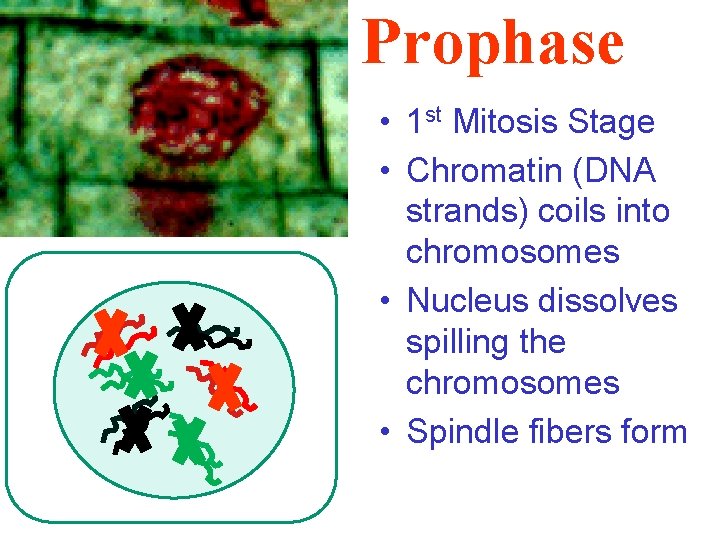
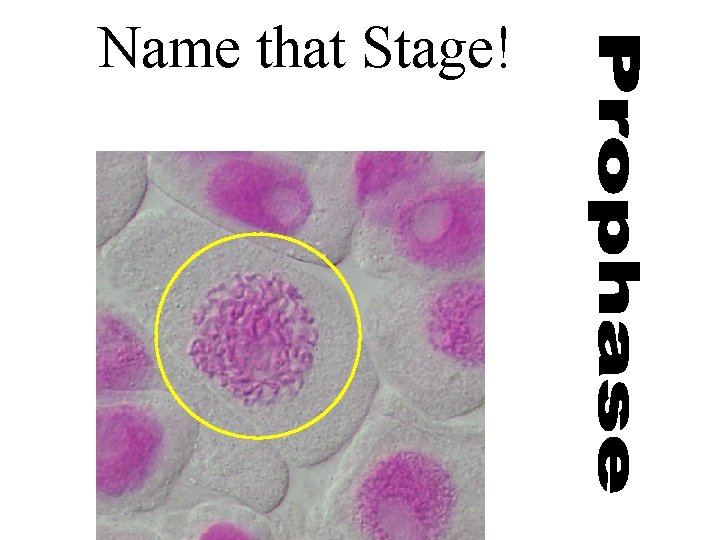
Prophase • 1 st Mitosis Stage • Chromatin (DNA strands) coils into chromosomes • Nucleus dissolves spilling the chromosomes • Spindle fibers form
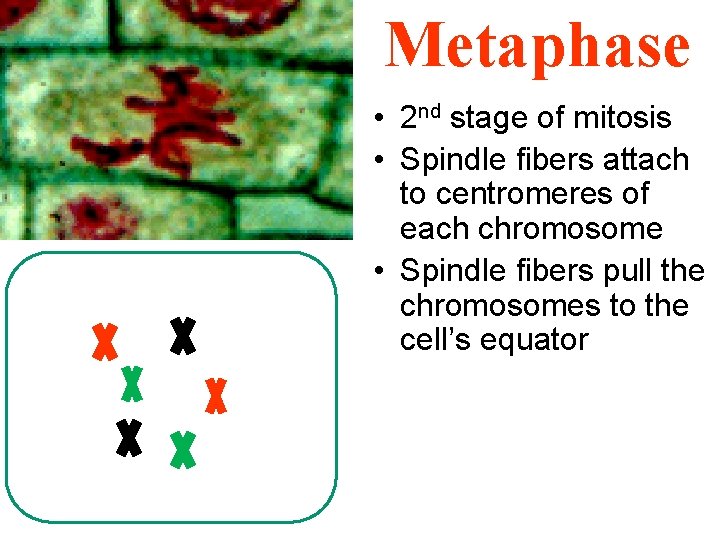
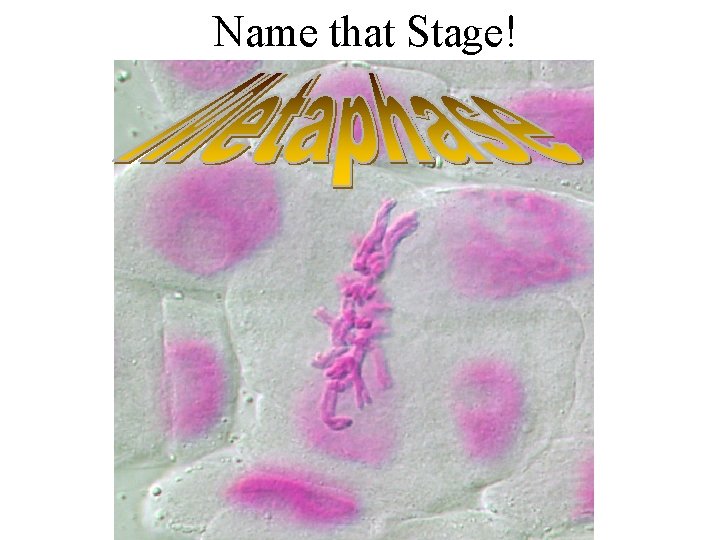
Metaphase • 2 nd stage of mitosis • Spindle fibers attach to centromeres of each chromosome • Spindle fibers pull the chromosomes to the cell’s equator
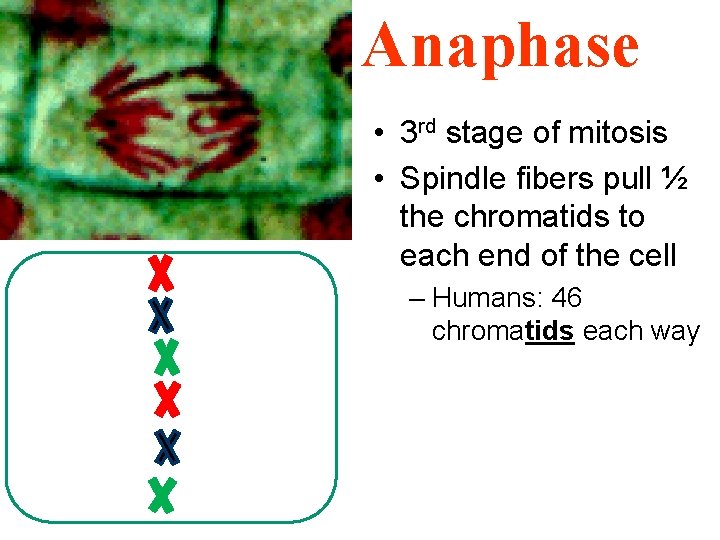
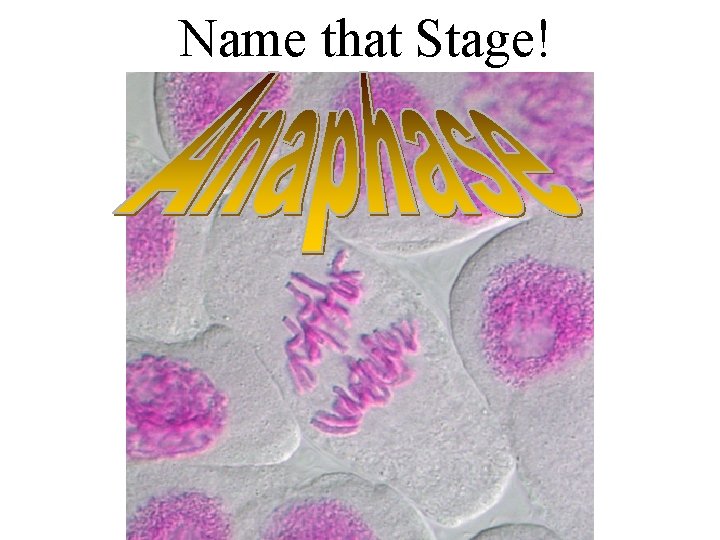
Anaphase • 3 rd stage of mitosis • Spindle fibers pull ½ the chromatids to each end of the cell – Humans: 46 chromatids each way
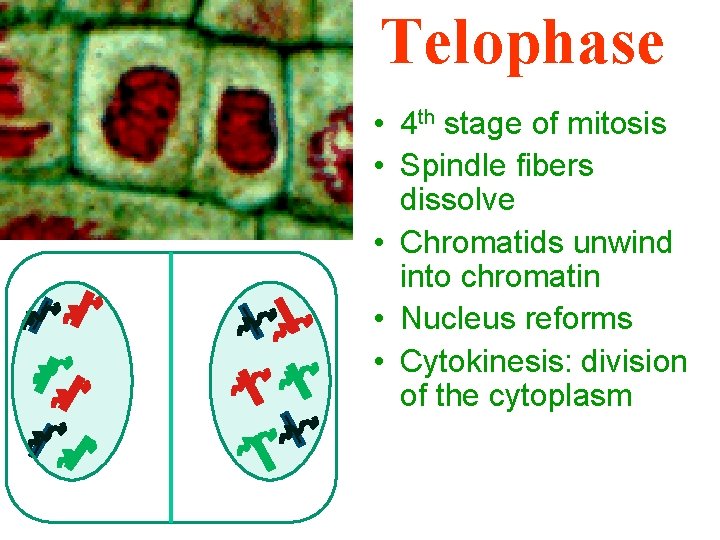
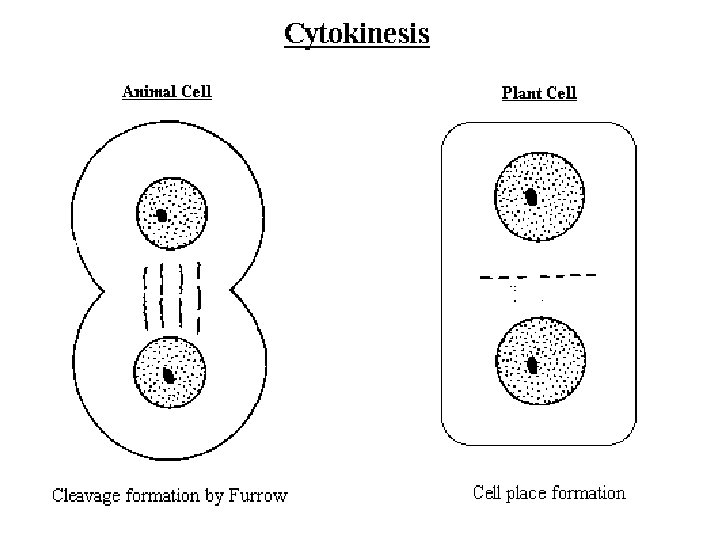
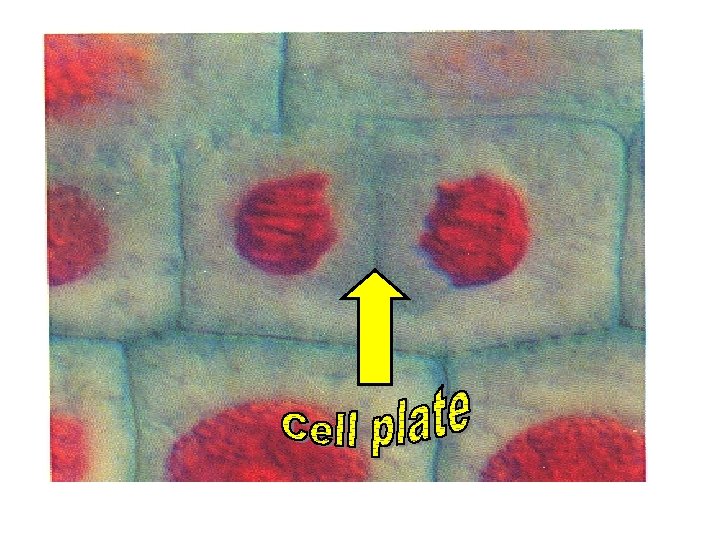
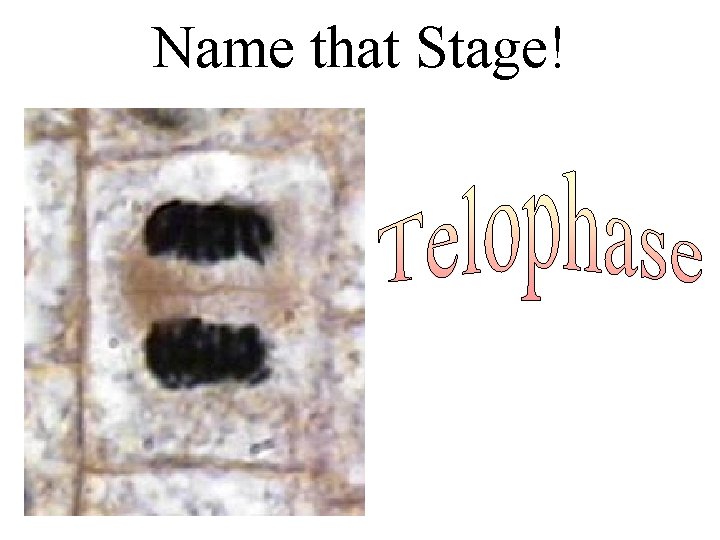
Telophase • 4 th stage of mitosis • Spindle fibers dissolve • Chromatids unwind into chromatin • Nucleus reforms • Cytokinesis: division of the cytoplasm
Name that Stage!
Name that Stage!
Name that Stage!
Name that Stage!
Name that Stage!
Quick Review • Mitosis = the division of somatic (nonsex) cells • Each stage has different characteristics • End Result = Two identical diploid cells