
THE CELL CYCLE Different Types of Reproduction Asexual
- Slides: 24
THE CELL CYCLE
Different Types of Reproduction • • • Asexual one parent simple Types: 1. Binary Fission 2. Budding 3. Vegetative Reproduction 4. Mitosis Sexual • With parents • More complicated • Cell Cycle - Meiosis
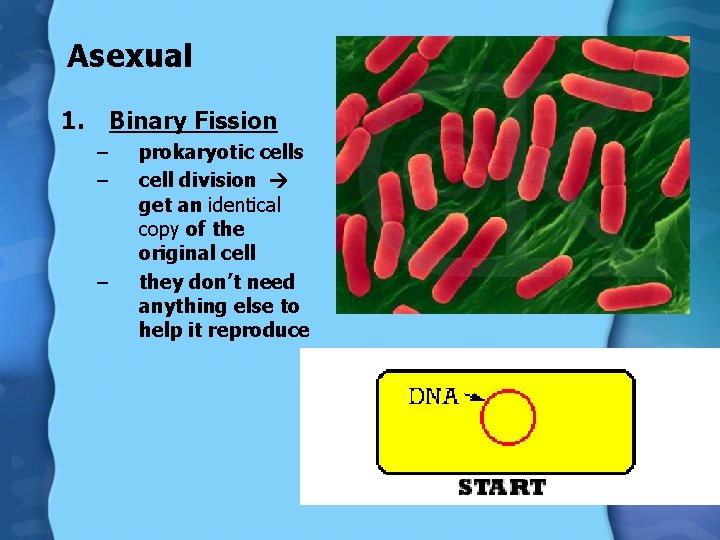
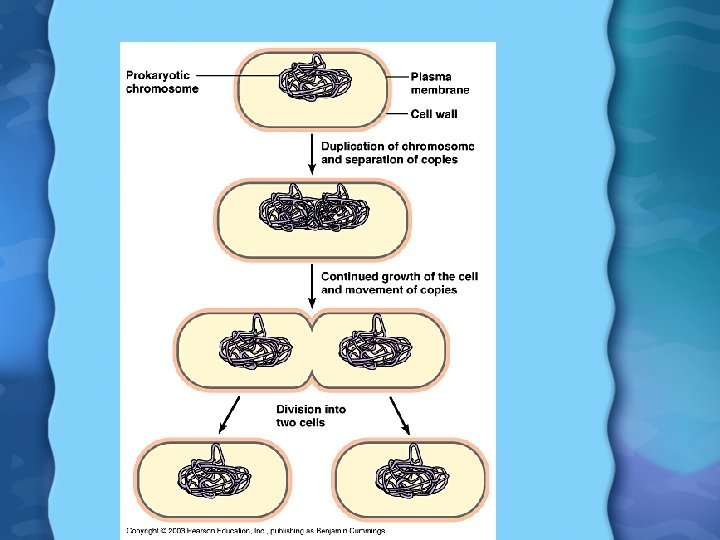
Asexual 1. Binary Fission – – – prokaryotic cells cell division get an identical copy of the original cell they don’t need anything else to help it reproduce
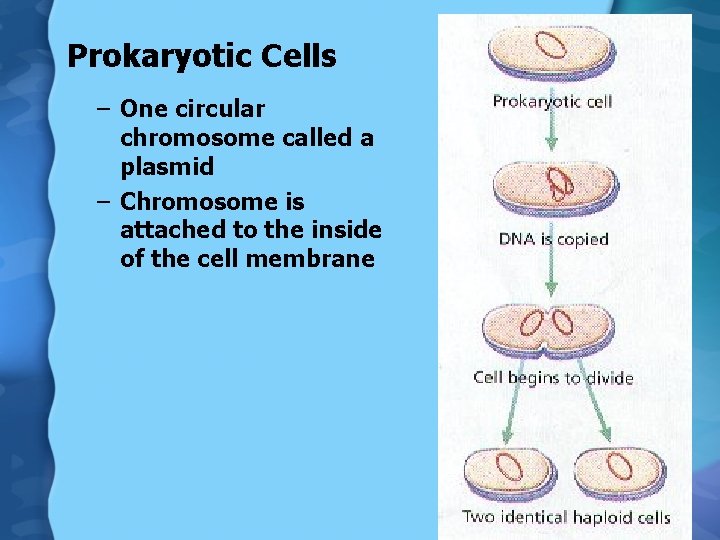
Prokaryotic Cells – One circular chromosome called a plasmid – Chromosome is attached to the inside of the cell membrane
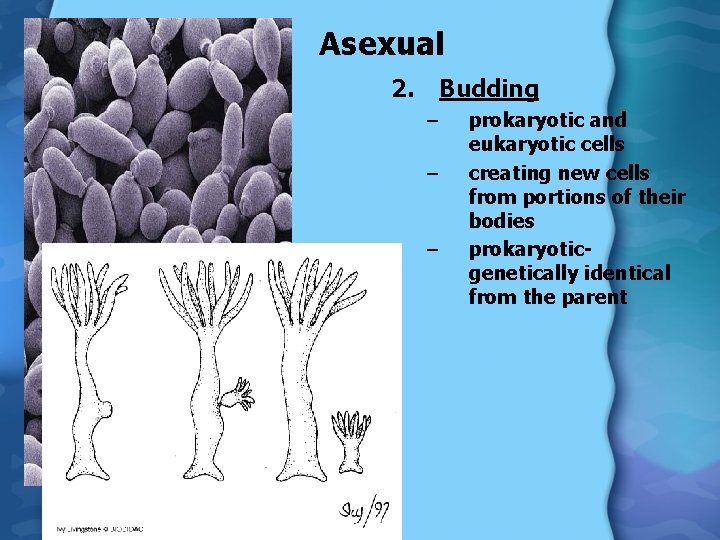
Asexual 2. Budding – – – prokaryotic and eukaryotic cells creating new cells from portions of their bodies prokaryoticgenetically identical from the parent
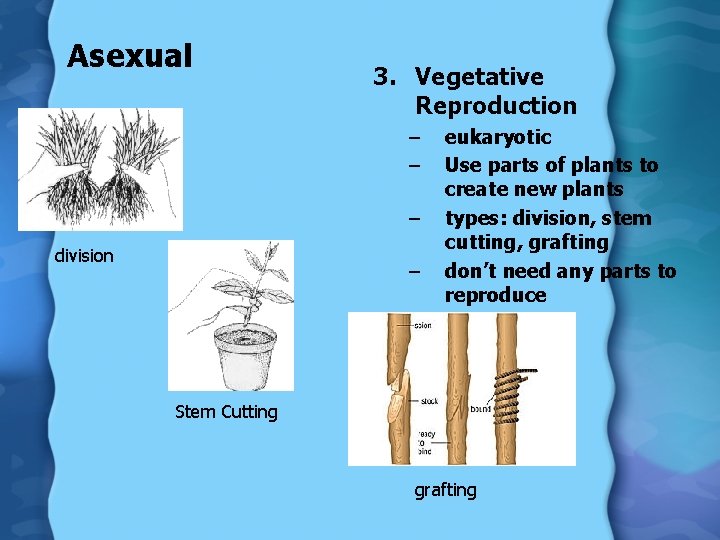
Asexual 3. Vegetative Reproduction – – – division – eukaryotic Use parts of plants to create new plants types: division, stem cutting, grafting don’t need any parts to reproduce Stem Cutting grafting
Asexual 4. Mitosis – genetically identical somatic (body) cells – results in copying of parental cell's DNA and the equal division of chromosomes into two daughter cells – rates = liver cells 1 x/yr epithelial cells 1 x/day
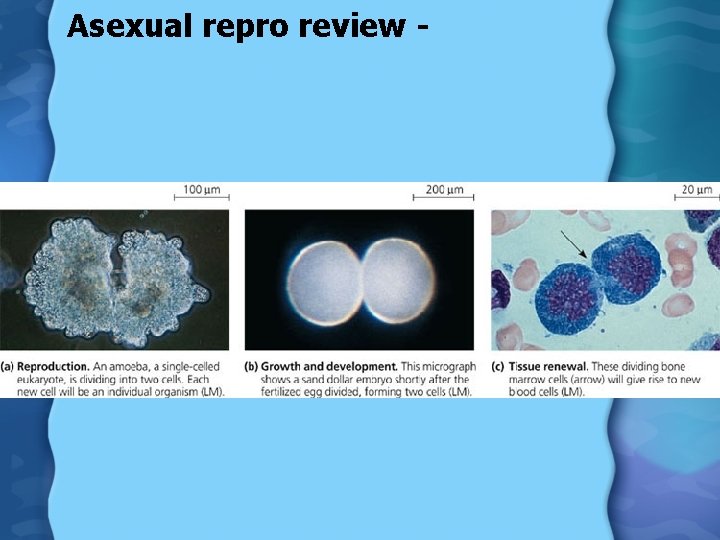
Asexual repro review -
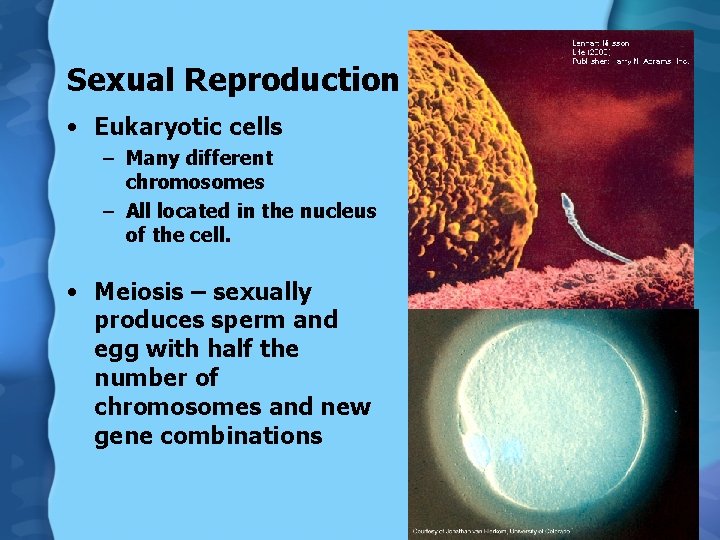
Sexual Reproduction • Eukaryotic cells – Many different chromosomes – All located in the nucleus of the cell. • Meiosis – sexually produces sperm and egg with half the number of chromosomes and new gene combinations
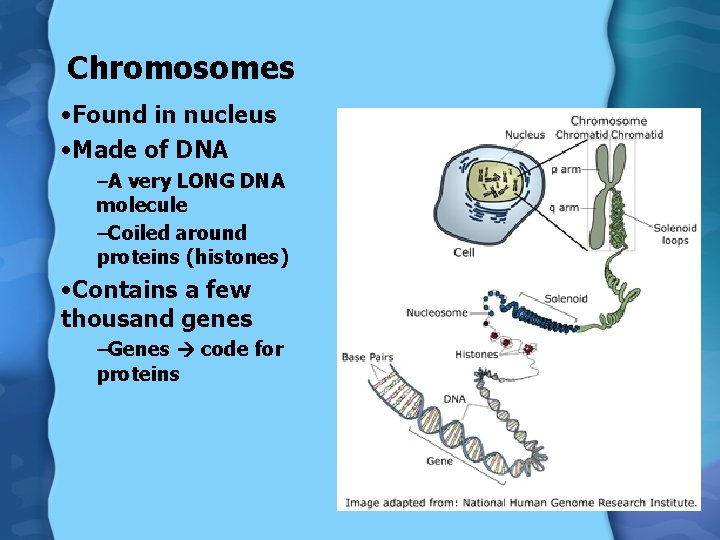
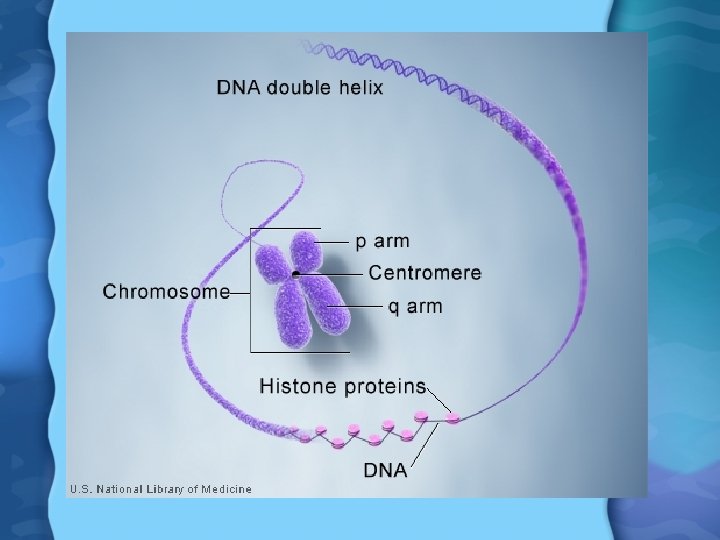
Chromosomes • Found in nucleus • Made of DNA –A very LONG DNA molecule –Coiled around proteins (histones) • Contains a few thousand genes –Genes code for proteins
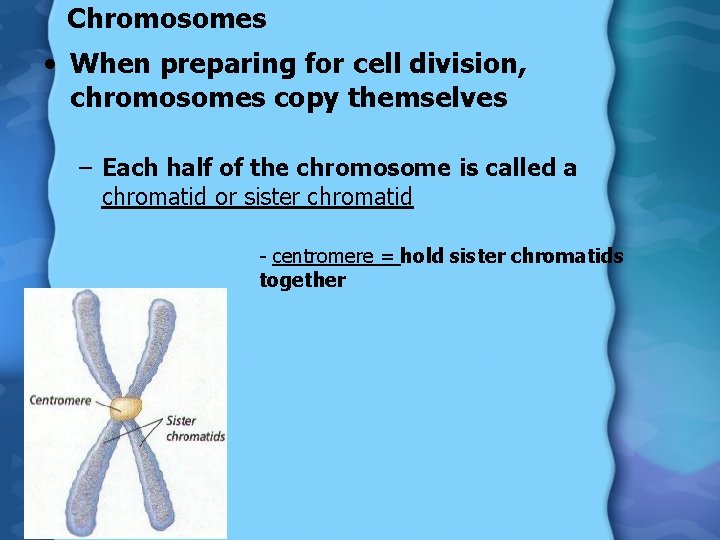
Chromosomes • When preparing for cell division, chromosomes copy themselves – Each half of the chromosome is called a chromatid or sister chromatid - centromere = hold sister chromatids together
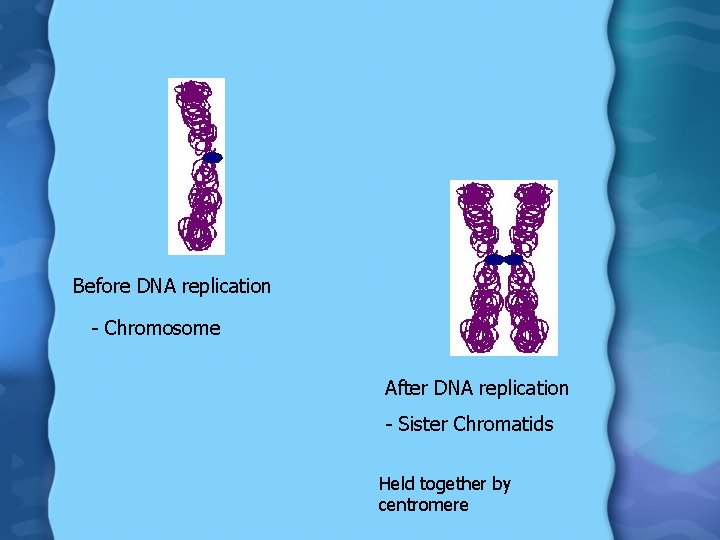
Before DNA replication - Chromosome After DNA replication - Sister Chromatids Held together by centromere
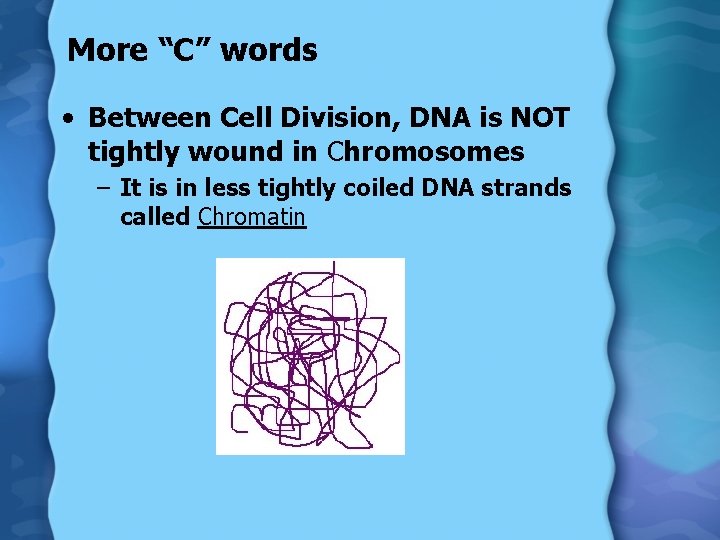
More “C” words • Between Cell Division, DNA is NOT tightly wound in Chromosomes – It is in less tightly coiled DNA strands called Chromatin
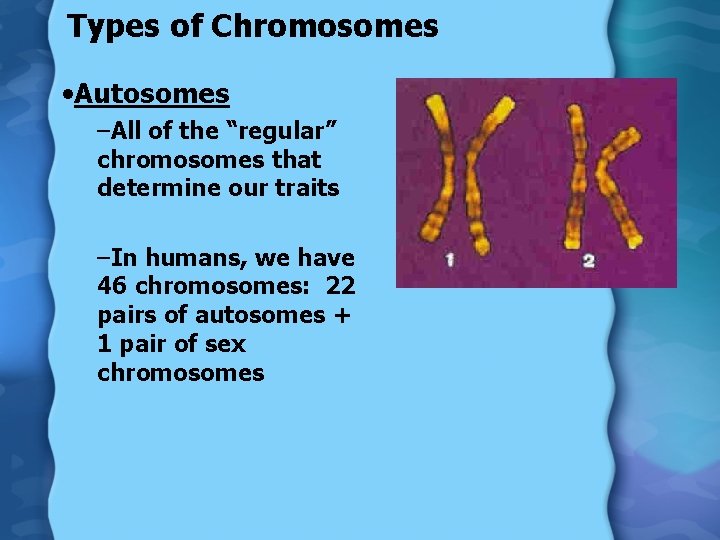
Types of Chromosomes • Autosomes –All of the “regular” chromosomes that determine our traits –In humans, we have 46 chromosomes: 22 pairs of autosomes + 1 pair of sex chromosomes
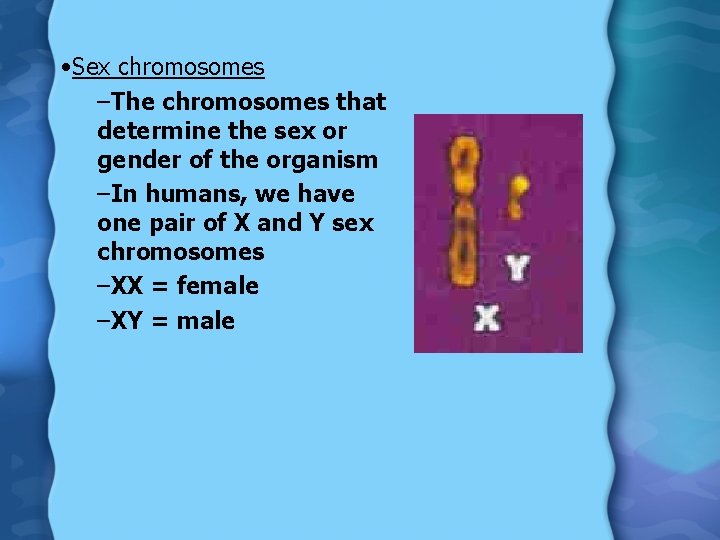
• Sex chromosomes –The chromosomes that determine the sex or gender of the organism –In humans, we have one pair of X and Y sex chromosomes –XX = female –XY = male
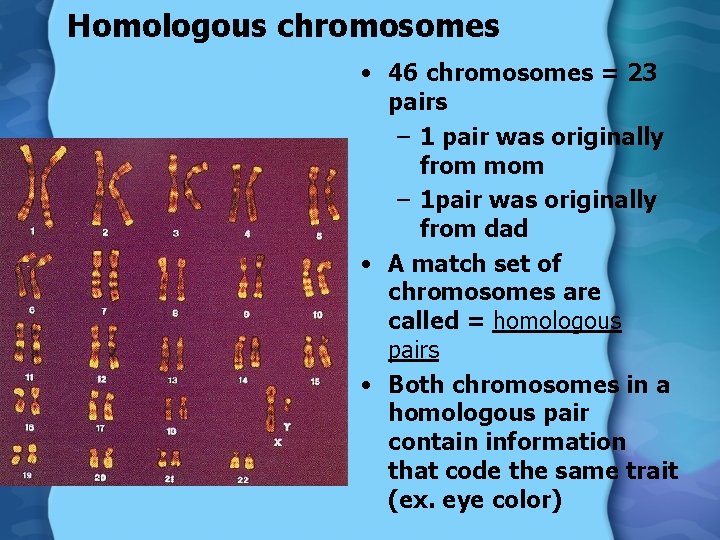
Homologous chromosomes • 46 chromosomes = 23 pairs – 1 pair was originally from mom – 1 pair was originally from dad • A match set of chromosomes are called = homologous pairs • Both chromosomes in a homologous pair contain information that code the same trait (ex. eye color)
Number of Chromosomes • Cells are either haploid or diploid. • Haploid (think “half”) cells, like sex cells, such as sperm and eggs, contain only one copy of each chromosome. In humans, haploid = 23. Haploid = n • Diploid (think “double”) cells, like all the rest of your body’s cells, contain two copies of each chromosome. In humans, diploid = 46. Diploid = 2 n.
Chromosomes • Every time our body cells divide, each NEW cell must also end up with the same 46 (23 pairs of) chromosomes • Preparing for cell division cells MUST copy all its chromosomes through DNA replication
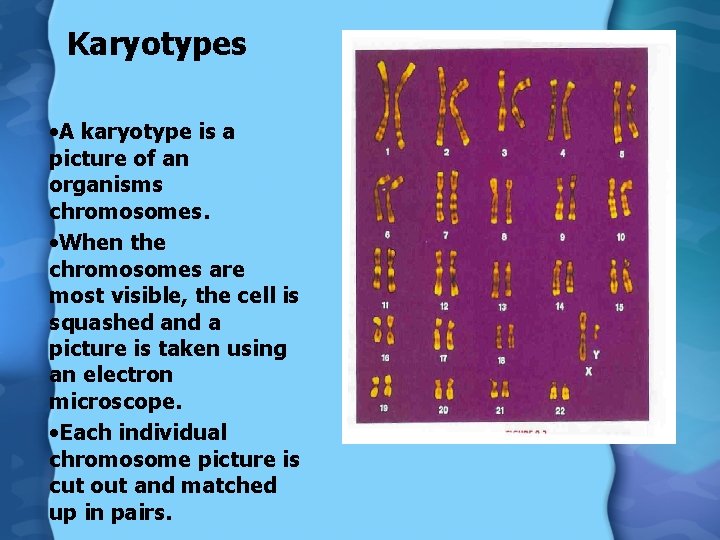
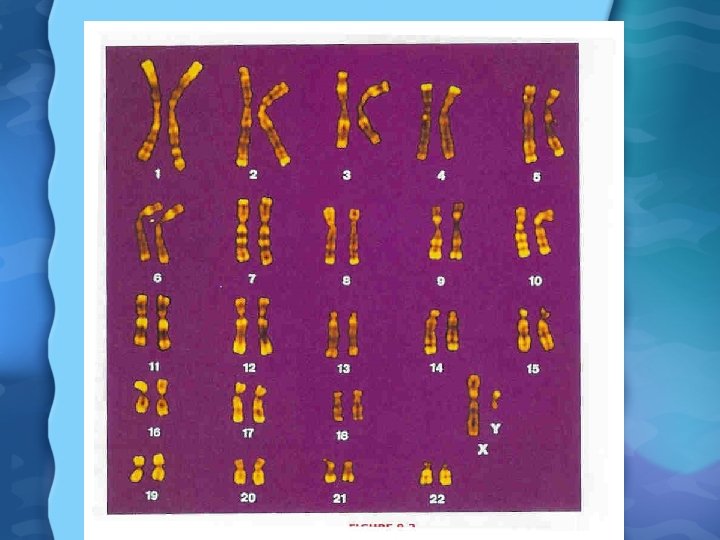
Karyotypes • A karyotype is a picture of an organisms chromosomes. • When the chromosomes are most visible, the cell is squashed and a picture is taken using an electron microscope. • Each individual chromosome picture is cut out and matched up in pairs.
To Cell Cycle! • There is only one way to make cells – From other cells! • What is the goal of the cell cycle? – To produce two genetically identical cells from one original cell
Now to Mitosis!