
The Cell Cycle continued Chapter 5 Chromosomes Structures


- Slides: 14
The Cell Cycle continued Chapter 5
• · Chromosomes – Structures within the nucleus of a cell that carry genetic information (DNA). • o There are 46 (23 pairs) in human body cells. • • o There are 23 (unpaired) in sperm and egg cells.
• · Chromatin – Strands of DNA wrapped around proteins. (Make up chromosomes).
• · Chromatids – A pair of chromosomes that are identical and become attached. Also called “sister chromatids”. • Homologous Chromosomes: Two identical sets. • • · Centromere – Where sister chromatids attach to each other.
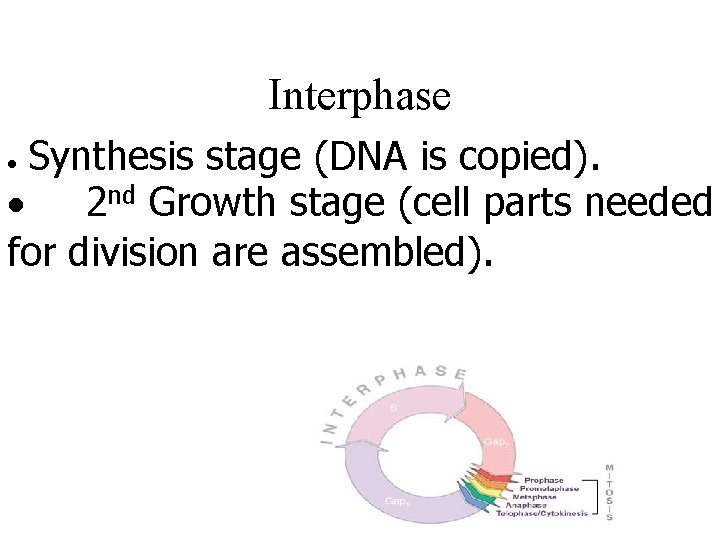
Cell Cycle • · Sequence of growth and division of a cell. • 1. Two periods: • o Interphase – period of growth between cell divisions. • 70 -80% of cell life. • 3 parts: • · 1 st Growth stage (regular cell function and activity).
Interphase Synthesis stage (DNA is copied). · 2 nd Growth stage (cell parts needed for division are assembled). ·
Mitosis • Period of cell division. Nucleus, then cytoplasm divides to form two daughter cells. Both cells are genetically identical to the parent cell. • • • · o o 4 stages of cell division: Prophase Metaphase Anaphase Telophase
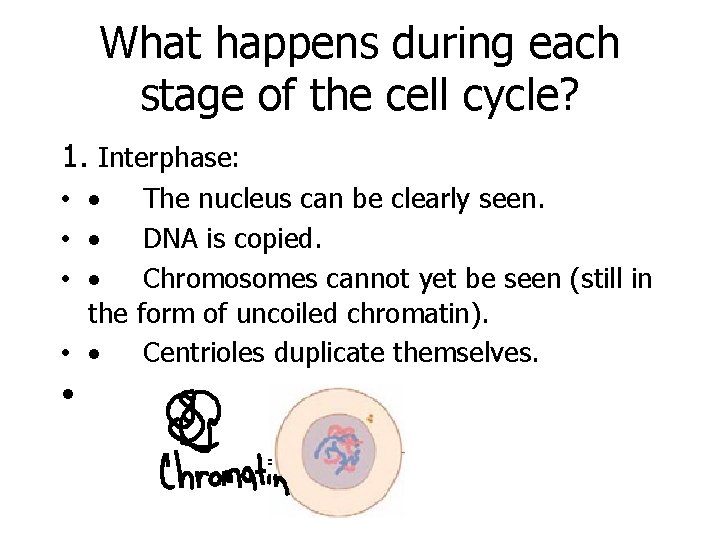
What happens during each stage of the cell cycle? 1. Interphase: • · • · the • · • The nucleus can be clearly seen. DNA is copied. Chromosomes cannot yet be seen (still in form of uncoiled chromatin). Centrioles duplicate themselves.
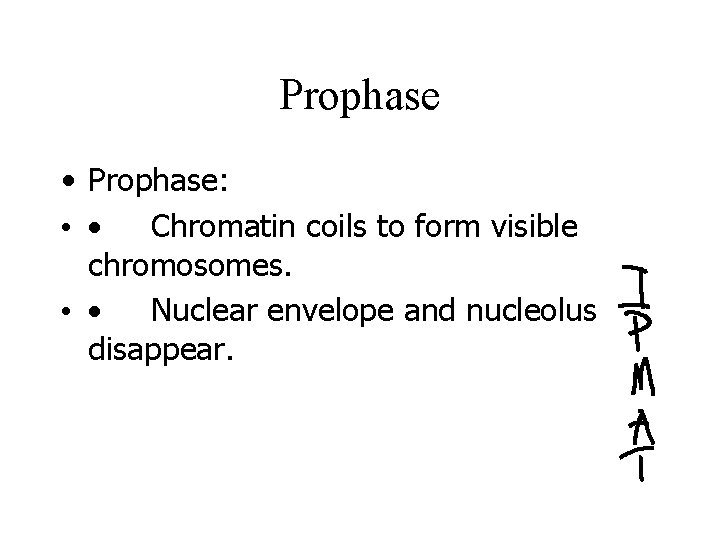
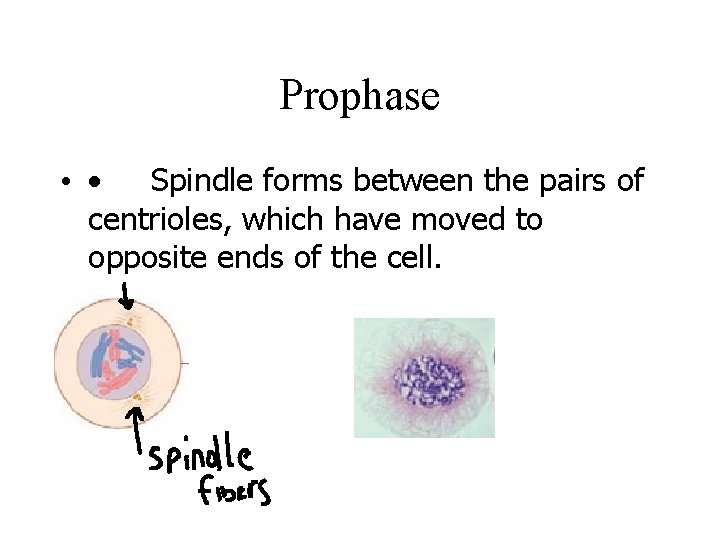
Prophase • Prophase: • · Chromatin coils to form visible chromosomes. • · Nuclear envelope and nucleolus disappear.
Prophase • · Spindle forms between the pairs of centrioles, which have moved to opposite ends of the cell.
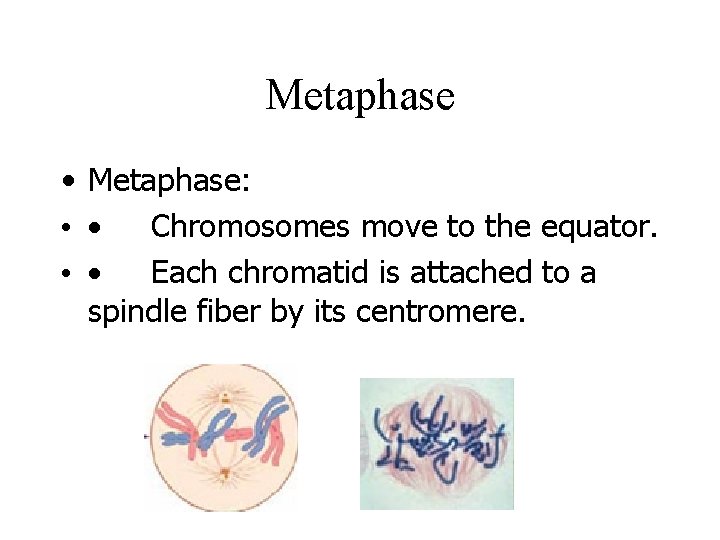
Metaphase • Metaphase: • · Chromosomes move to the equator. • · Each chromatid is attached to a spindle fiber by its centromere.
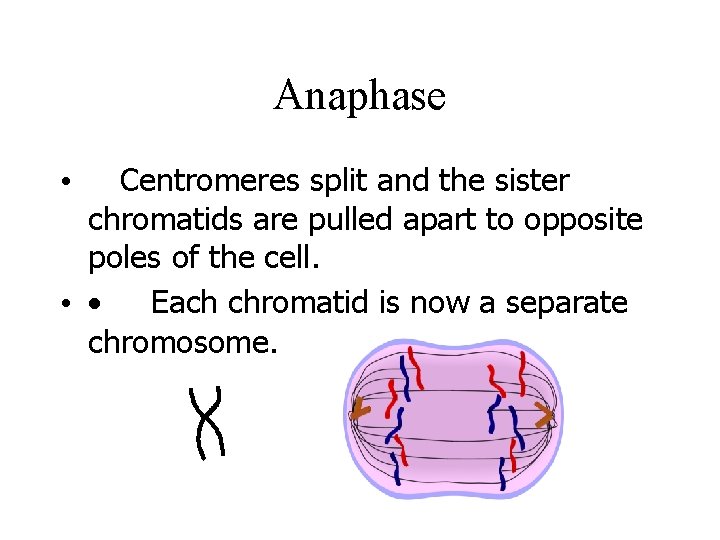
Anaphase Centromeres split and the sister chromatids are pulled apart to opposite poles of the cell. • · Each chromatid is now a separate chromosome. •
Telophase • Final phase of mitosis. • · Two daughter cells are formed. • · Each cell has complete set of chromosomes. • · Cytoplasm divides (cytokinesis). • · Nuclear envelope appears, chromosomes uncoil.
• Cytokinesis: the splitting of the cytoplasm forming separate cells.