
The Cell Cycle Biology Fall 2016 Think About
The Cell Cycle Biology Fall 2016
Think About It…. . • When a living thing grows, what happens to its cells? • What is there about growth that requires cells to divide and reproduce themselves?

Information “Overload” • Living cells store critical information in DNA. • As a cell grows, that information is used to build the molecules needed for cell growth. • As size increases, the demands on that information grow as well. If a cell were to grow without limit, an “information crisis” would occur.
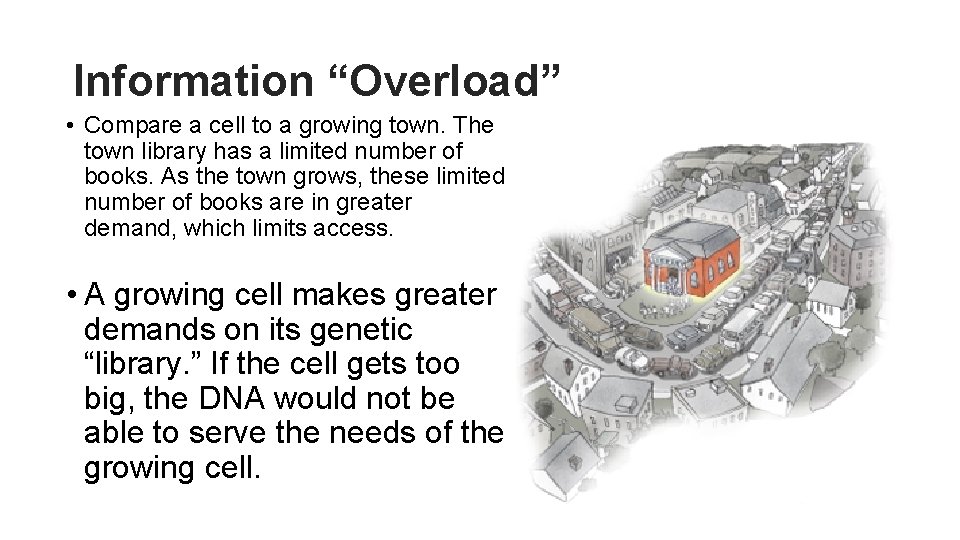
Information “Overload” • Compare a cell to a growing town. The town library has a limited number of books. As the town grows, these limited number of books are in greater demand, which limits access. • A growing cell makes greater demands on its genetic “library. ” If the cell gets too big, the DNA would not be able to serve the needs of the growing cell.
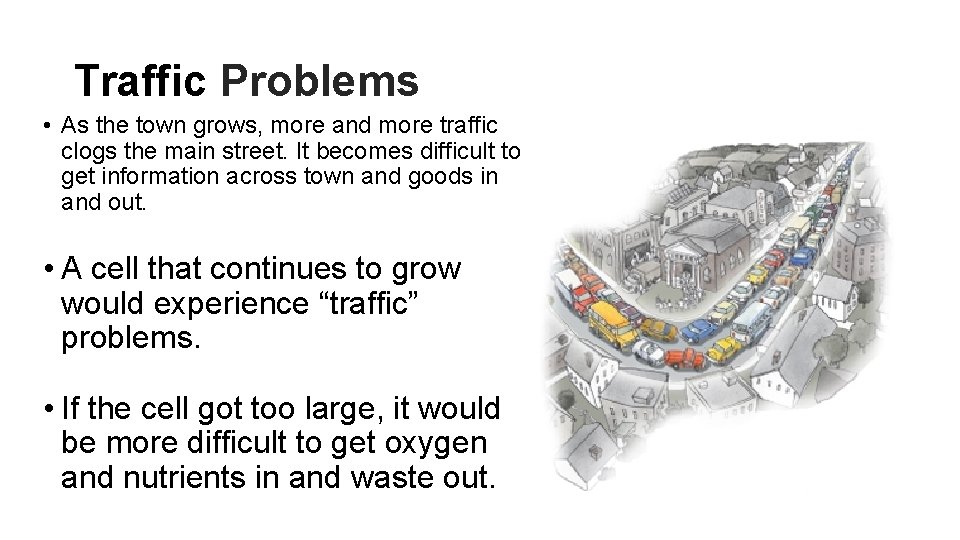
Traffic Problems • As the town grows, more and more traffic clogs the main street. It becomes difficult to get information across town and goods in and out. • A cell that continues to grow would experience “traffic” problems. • If the cell got too large, it would be more difficult to get oxygen and nutrients in and waste out.

The Prokaryotic Cell Cycle • Binary fission is a form of asexual reproduction • Two genetically identical cells are produced • For example, bacteria reproduce by binary fission.
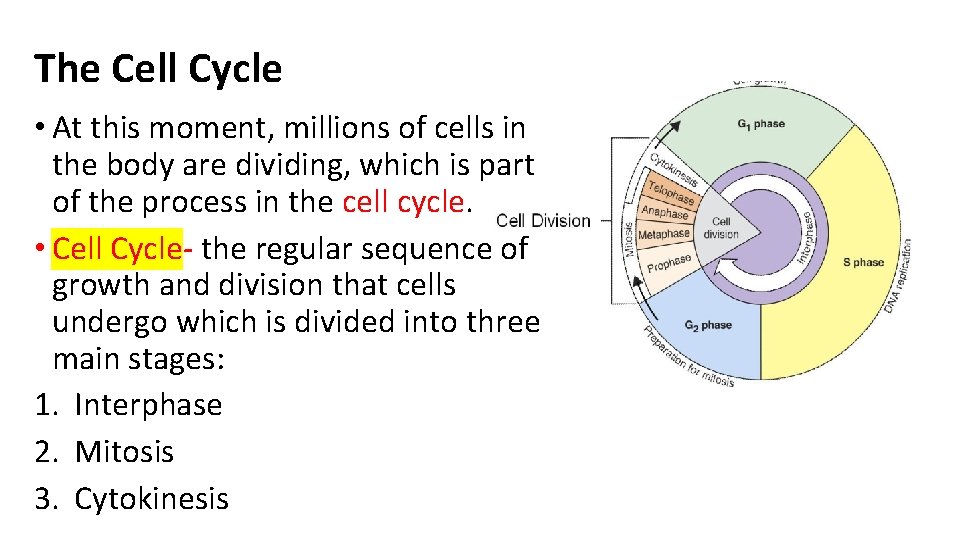
The Cell Cycle • At this moment, millions of cells in the body are dividing, which is part of the process in the cell cycle. • Cell Cycle- the regular sequence of growth and division that cells undergo which is divided into three main stages: 1. Interphase 2. Mitosis 3. Cytokinesis
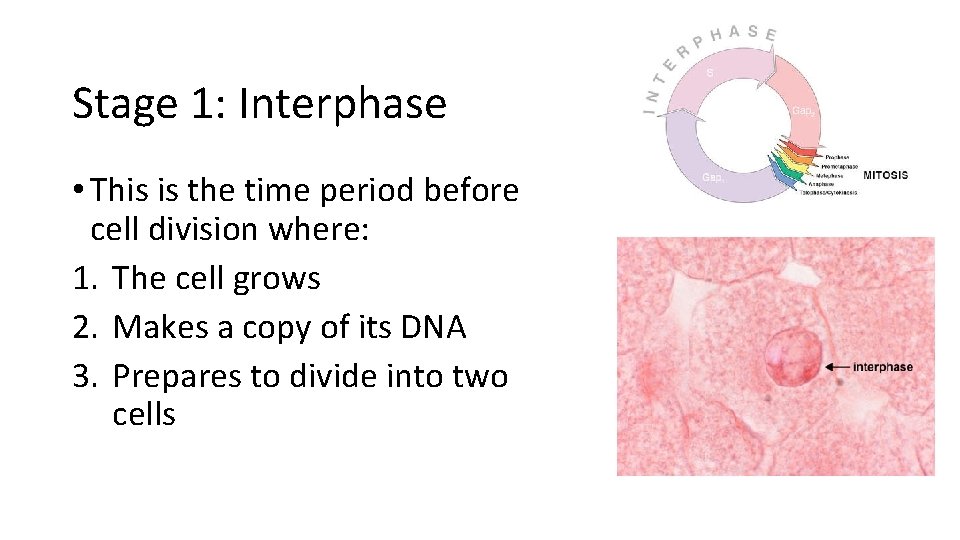
Stage 1: Interphase • This is the time period before cell division where: 1. The cell grows 2. Makes a copy of its DNA 3. Prepares to divide into two cells
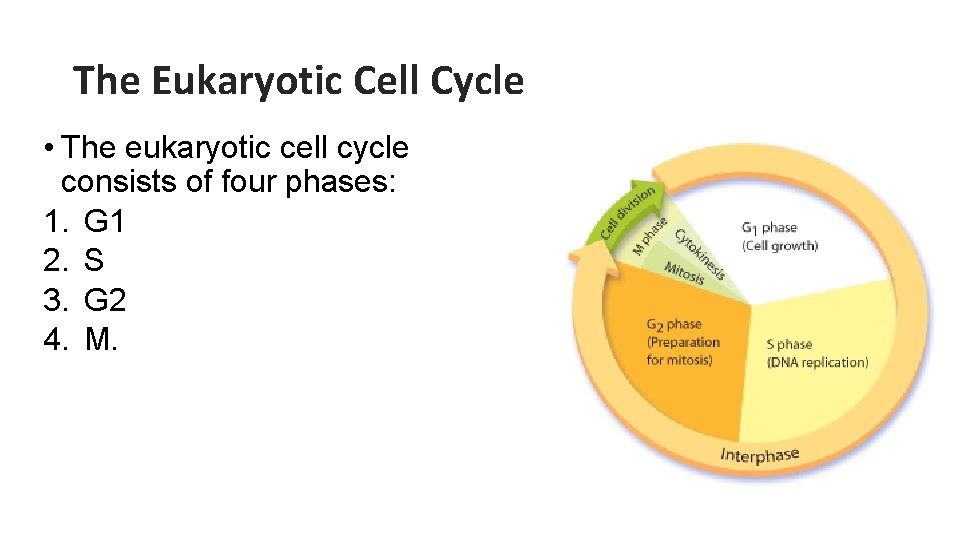
The Eukaryotic Cell Cycle • The eukaryotic cell cycle consists of four phases: 1. G 1 2. S 3. G 2 4. M.
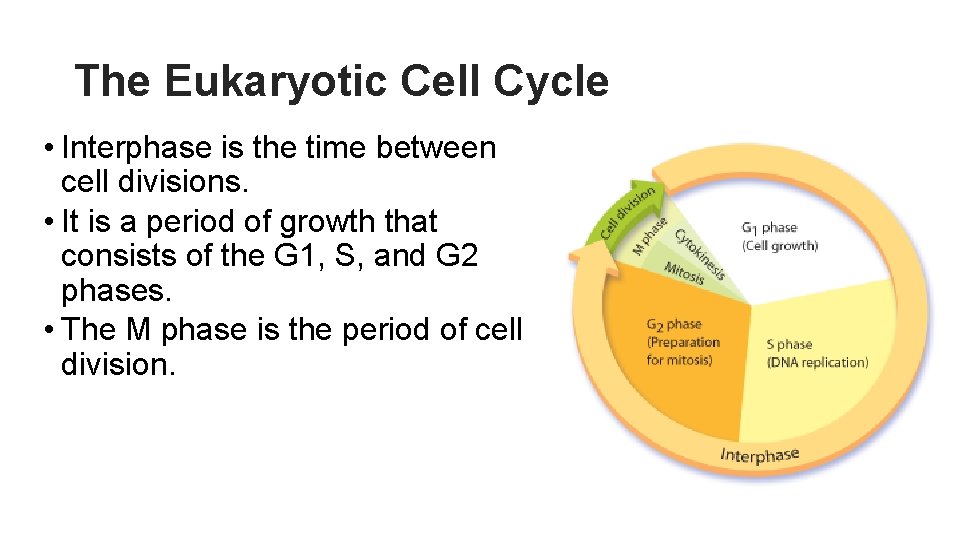
The Eukaryotic Cell Cycle • Interphase is the time between cell divisions. • It is a period of growth that consists of the G 1, S, and G 2 phases. • The M phase is the period of cell division.
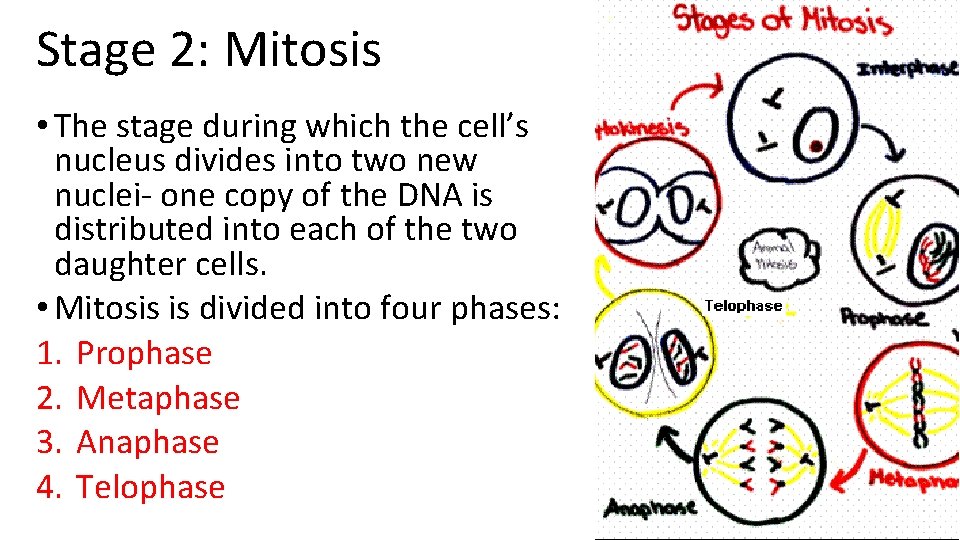
Stage 2: Mitosis • The stage during which the cell’s nucleus divides into two new nuclei- one copy of the DNA is distributed into each of the two daughter cells. • Mitosis is divided into four phases: 1. Prophase 2. Metaphase 3. Anaphase 4. Telophase
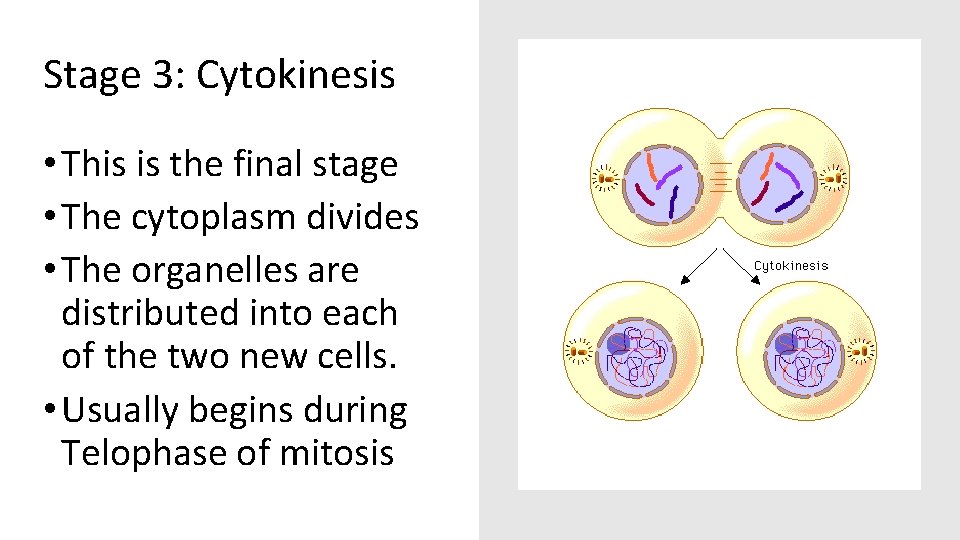
Stage 3: Cytokinesis • This is the final stage • The cytoplasm divides • The organelles are distributed into each of the two new cells. • Usually begins during Telophase of mitosis
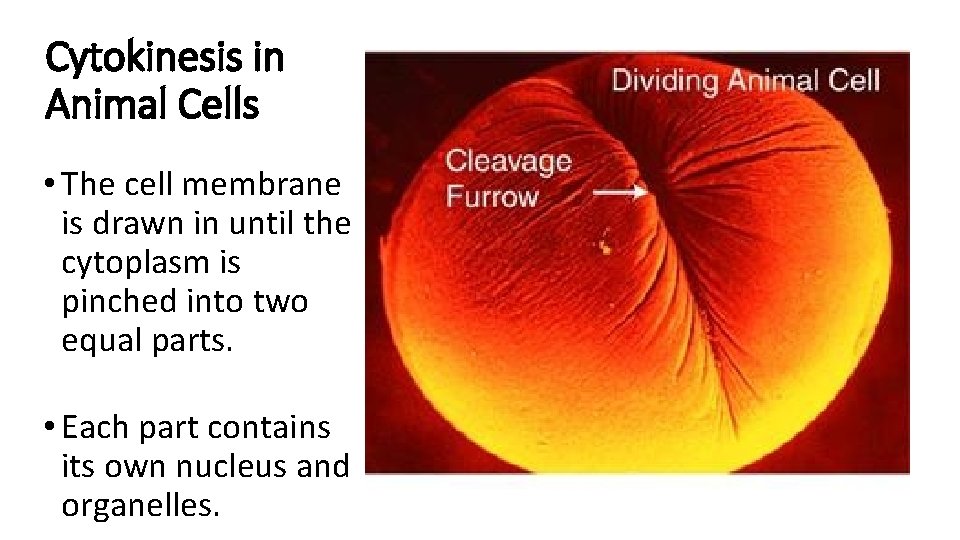
Cytokinesis in Animal Cells • The cell membrane is drawn in until the cytoplasm is pinched into two equal parts. • Each part contains its own nucleus and organelles.
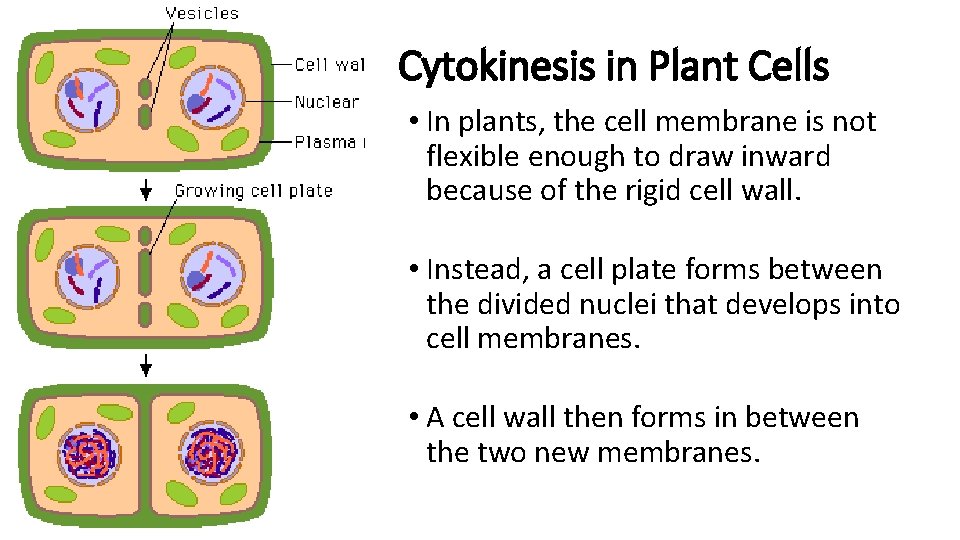
Cytokinesis in Plant Cells • In plants, the cell membrane is not flexible enough to draw inward because of the rigid cell wall. • Instead, a cell plate forms between the divided nuclei that develops into cell membranes. • A cell wall then forms in between the two new membranes.
- Slides: 14