
The Cell Cycle and Mitosis The Cell Cycle
- Slides: 13
The Cell Cycle and Mitosis
The Cell Cycle �Cells reproduce by a cycle of growing and dividing called the cell cycle. • Cell division prevents the cell from becoming too large. • It also is the way the cell reproduces so that you grow and heal certain injuries.
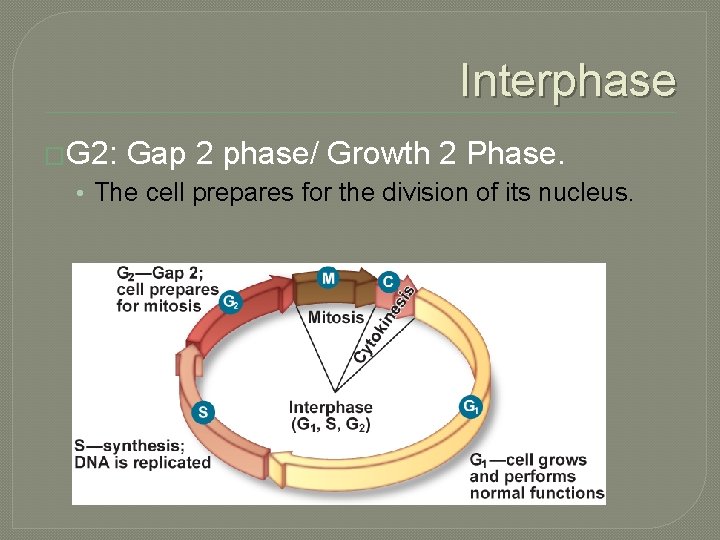
Three Stages �Interphase: the stage during which the cell grows, carries out cellular functions, and replicates. This is the longest stage in healthy cells. �Mitosis: the stage of the cell cycle during which the cell’s nucleus and nuclear material divide. �Cytokinesis: the method by which a cell’s cytoplasm divides, creating a new cell.
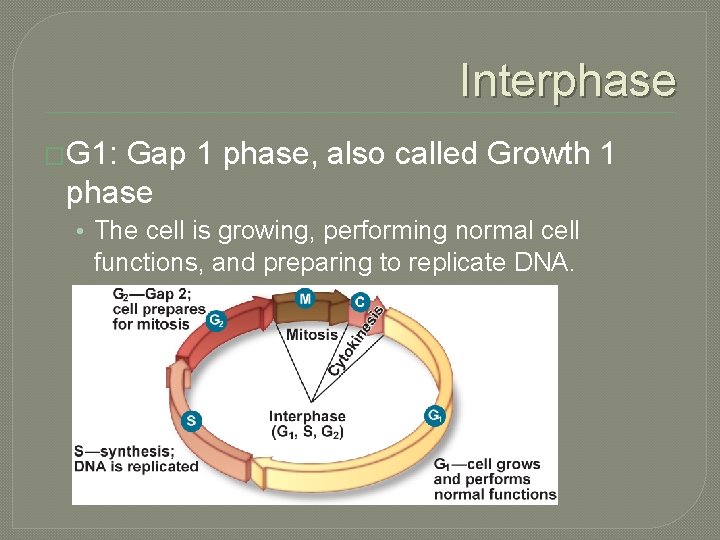
Interphase �G 1: Gap 1 phase, also called Growth 1 phase • The cell is growing, performing normal cell functions, and preparing to replicate DNA.
Interphase �S Phase: Synthesis phase. • The cell copies its DNA in preparation for cell division. • If DNA isn’t copied, cells would have half the number of chromosomes needed. �Ex. 46 human chromosomes: 46/2= 23 chromosomes �So, they duplicate: 46 x 2= 92 92/2= 46
Interphase �G 2: Gap 2 phase/ Growth 2 Phase. • The cell prepares for the division of its nucleus.
Mitosis �Four • • main stages Prophase Metaphase Anaphase Telophase PMAT!
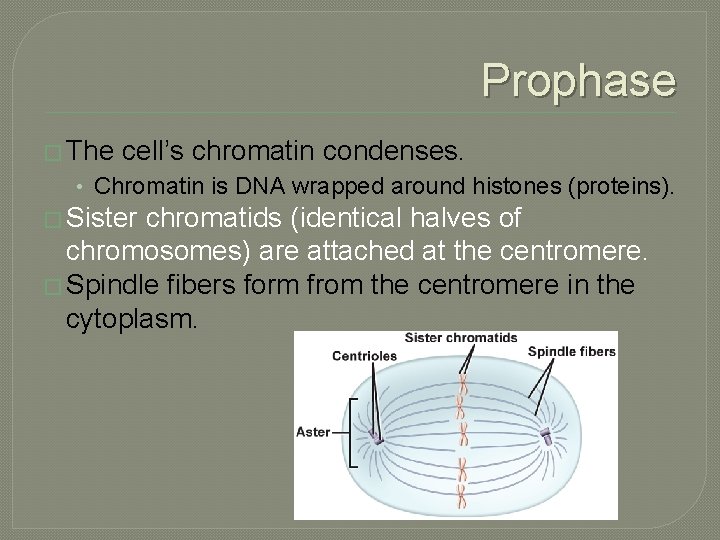
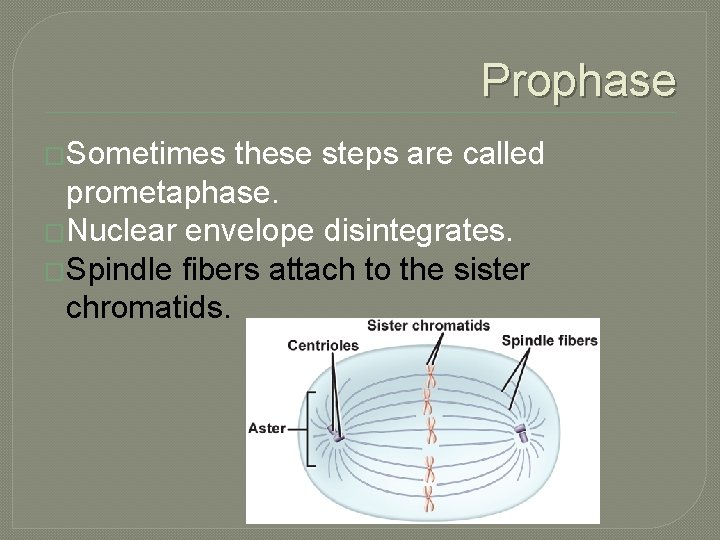
Prophase � The cell’s chromatin condenses. • Chromatin is DNA wrapped around histones (proteins). � Sister chromatids (identical halves of chromosomes) are attached at the centromere. � Spindle fibers form from the centromere in the cytoplasm.
Prophase �Sometimes these steps are called prometaphase. �Nuclear envelope disintegrates. �Spindle fibers attach to the sister chromatids.
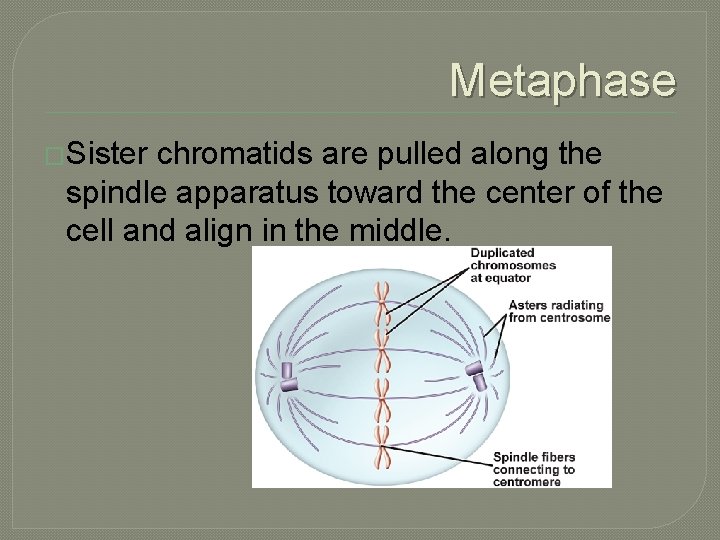
Metaphase �Sister chromatids are pulled along the spindle apparatus toward the center of the cell and align in the middle.
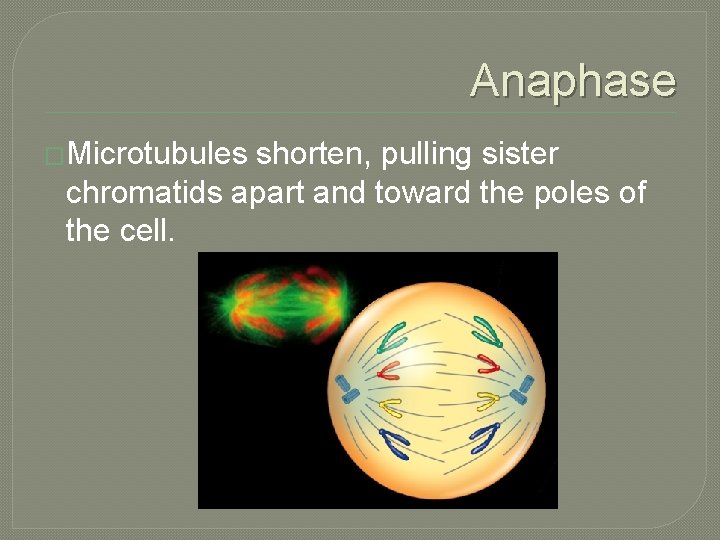
Anaphase �Microtubules shorten, pulling sister chromatids apart and toward the poles of the cell.
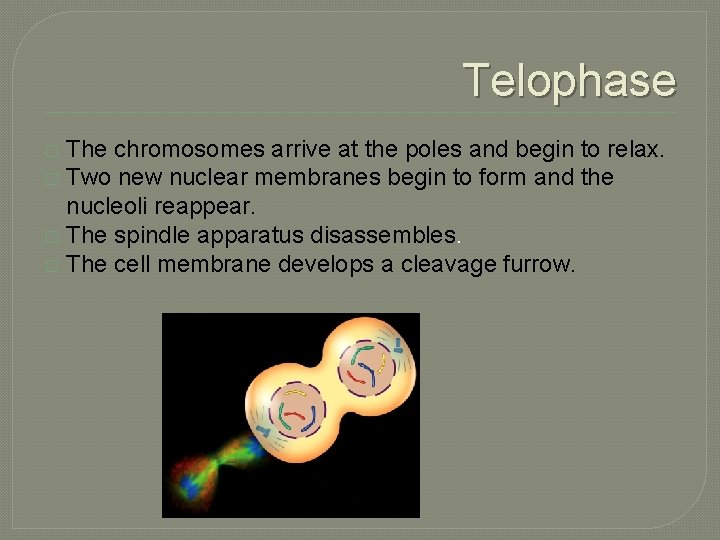
Telophase The chromosomes arrive at the poles and begin to relax. � Two new nuclear membranes begin to form and the nucleoli reappear. � The spindle apparatus disassembles. � The cell membrane develops a cleavage furrow. �
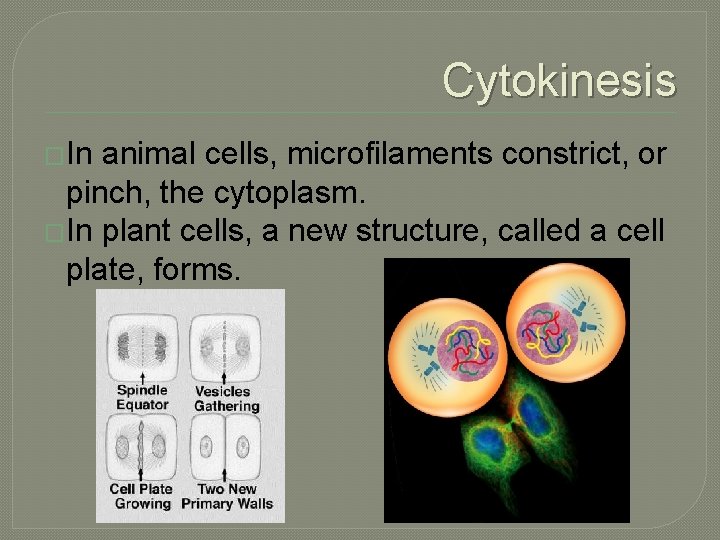
Cytokinesis �In animal cells, microfilaments constrict, or pinch, the cytoplasm. �In plant cells, a new structure, called a cell plate, forms.