
The Cell Cycle and Mitosis The Cell Cycle

- Slides: 31
The Cell Cycle and Mitosis
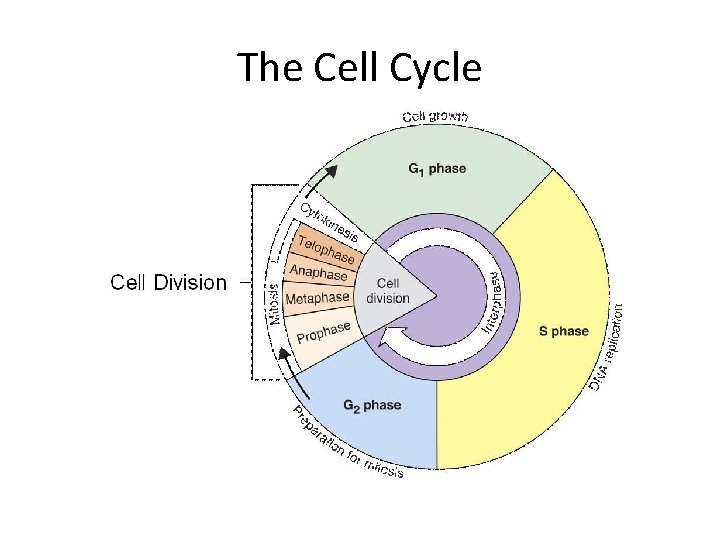
The Cell Cycle
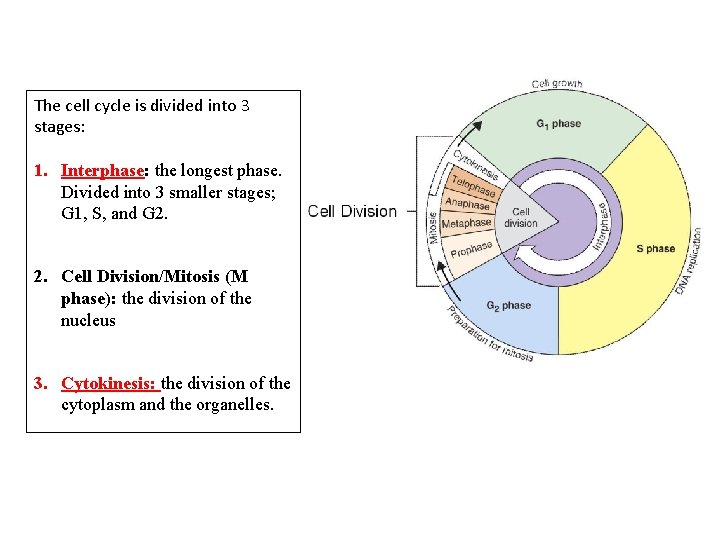
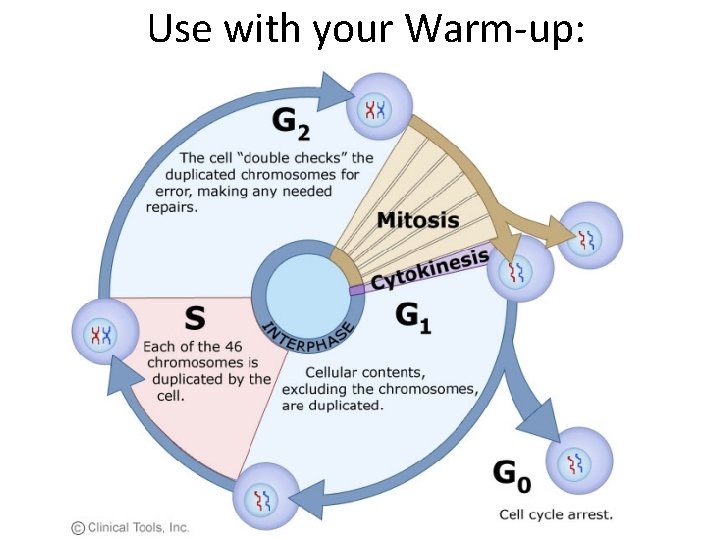
The cell cycle is divided into 3 stages: 1. Interphase: the longest phase. Divided into 3 smaller stages; G 1, S, and G 2. 2. Cell Division/Mitosis (M phase): the division of the nucleus 3. Cytokinesis: the division of the cytoplasm and the organelles.
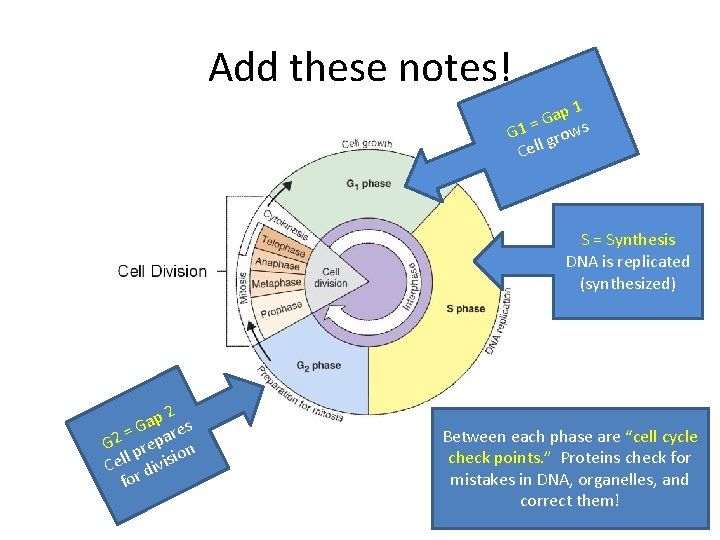
Add these notes! ap 1 G = G 1 grows Cell S = Synthesis DNA is replicated (synthesized) p 2 s a = G pare 2 G pre n o i l l s i Ce div for Between each phase are “cell cycle check points. ” Proteins check for mistakes in DNA, organelles, and correct them!
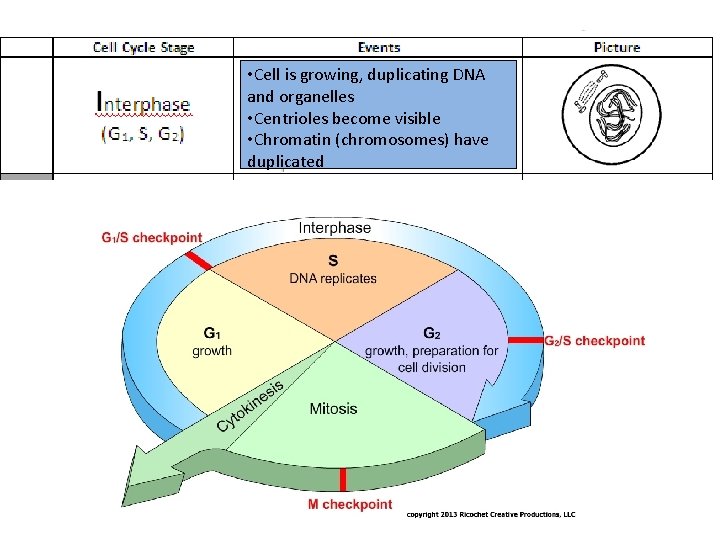
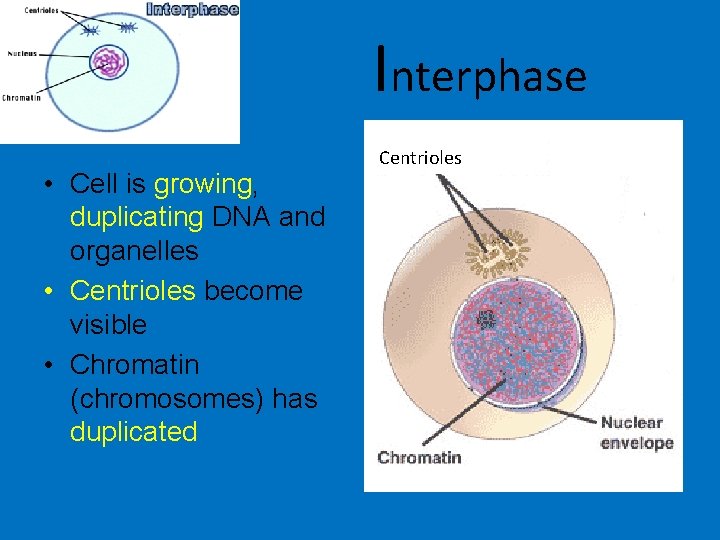
• Cell is growing, duplicating DNA and organelles • Centrioles become visible • Chromatin (chromosomes) have duplicated
Interphase • Cell is growing, duplicating DNA and organelles • Centrioles become visible • Chromatin (chromosomes) has duplicated Centrioles
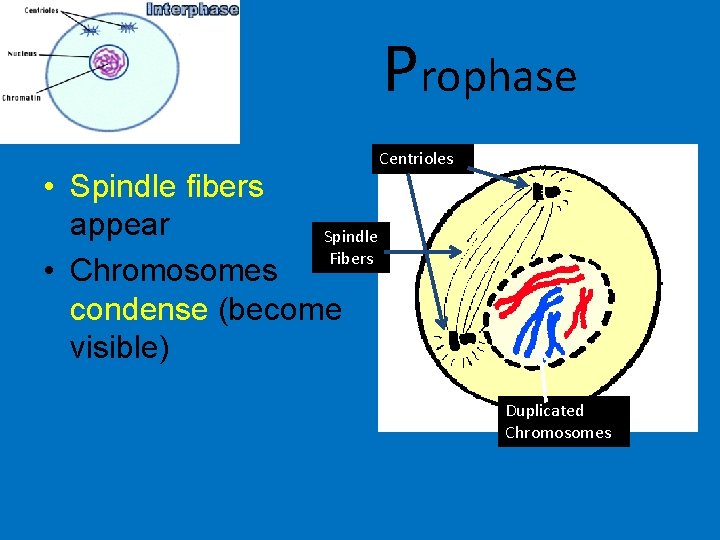
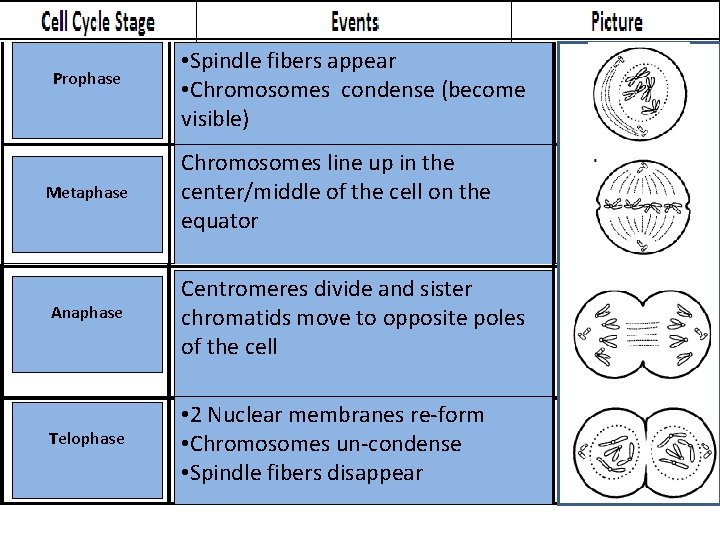
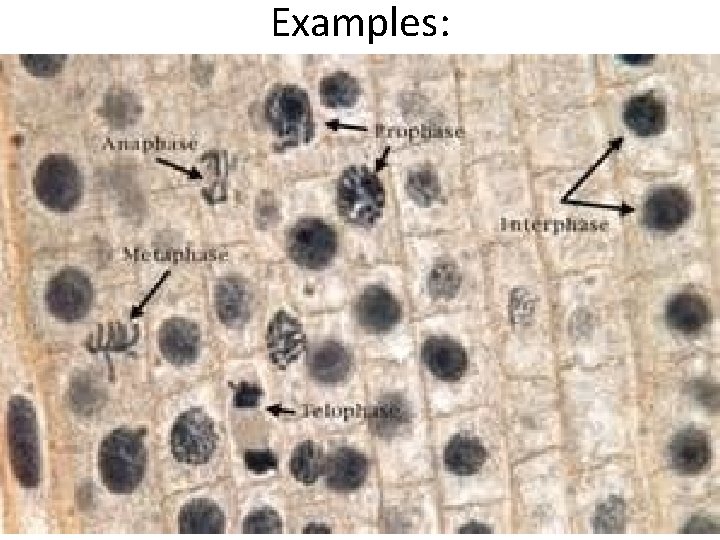
Prophase • Spindle fibers appear Spindle Fibers • Chromosomes condense (become visible) Centrioles Duplicated Chromosomes
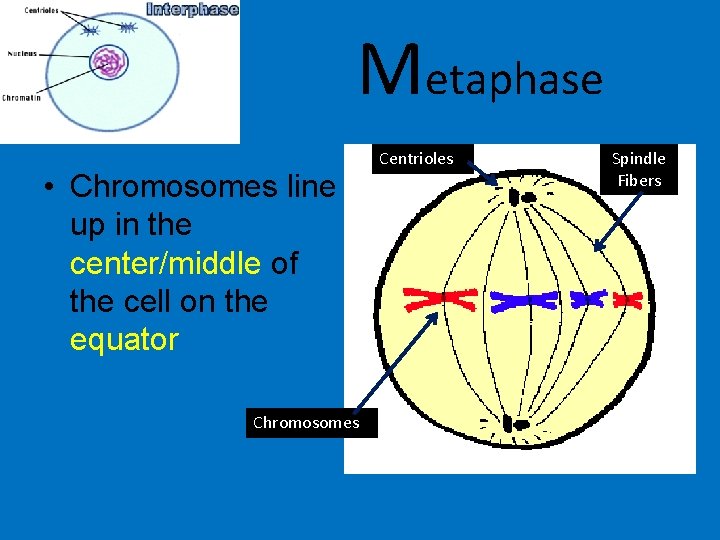
Metaphase • Chromosomes line up in the center/middle of the cell on the equator Chromosomes Centrioles Spindle Fibers
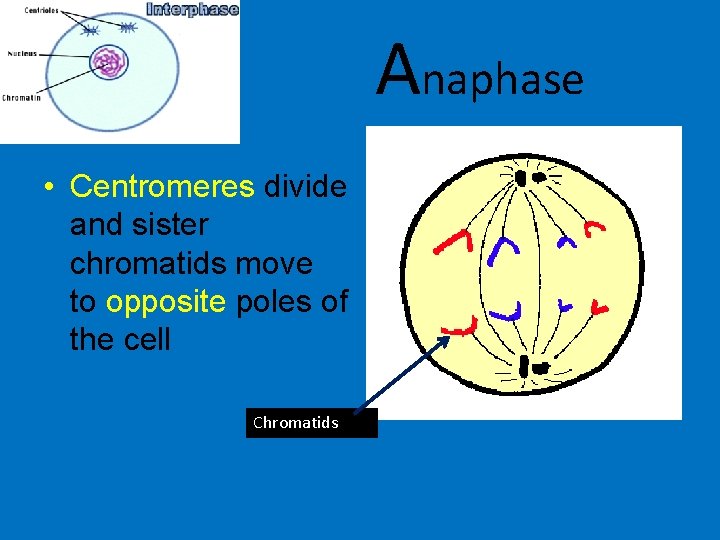
Anaphase • Centromeres divide and sister chromatids move to opposite poles of the cell Chromatids
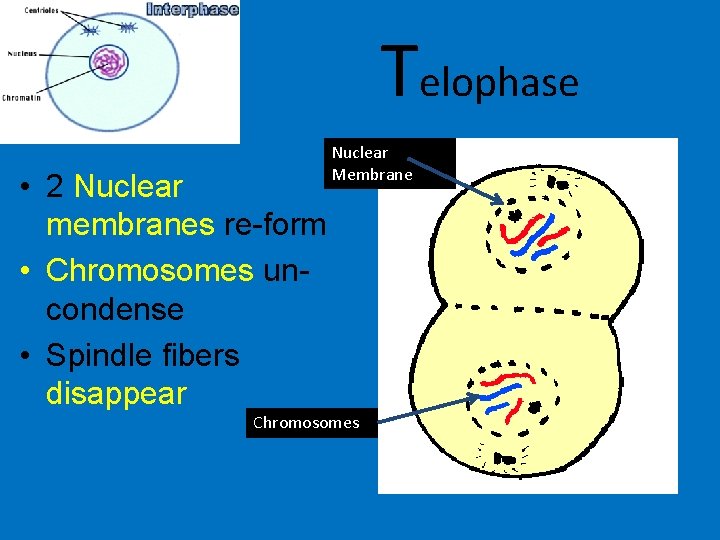
Telophase • 2 Nuclear membranes re-form • Chromosomes uncondense • Spindle fibers disappear Nuclear Membrane Chromosomes
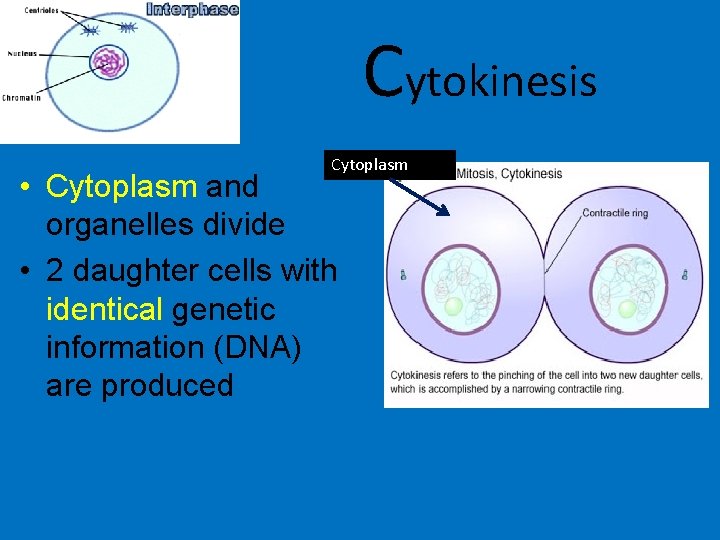
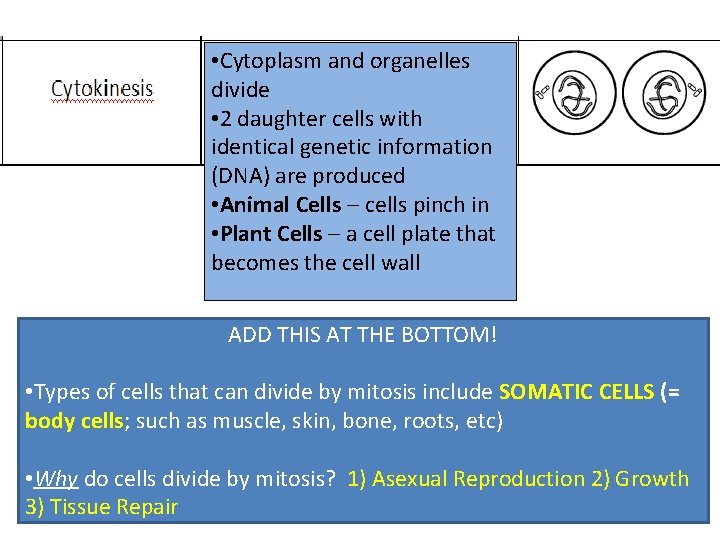
Cytokinesis Cytoplasm • Cytoplasm and organelles divide • 2 daughter cells with identical genetic information (DNA) are produced
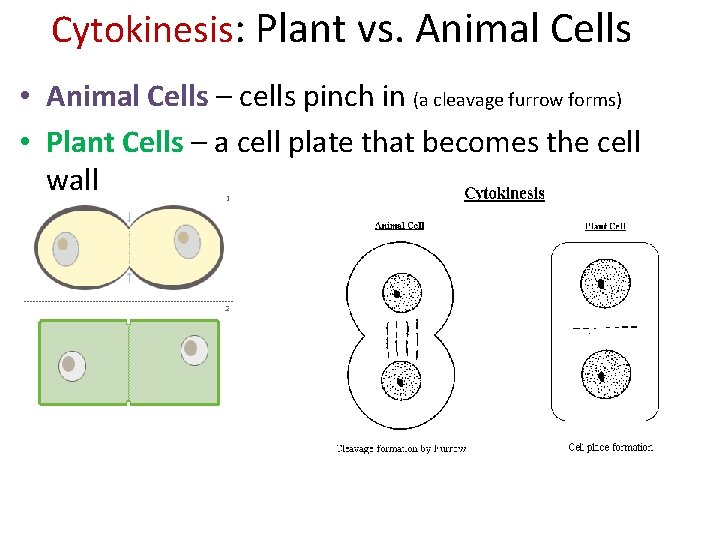
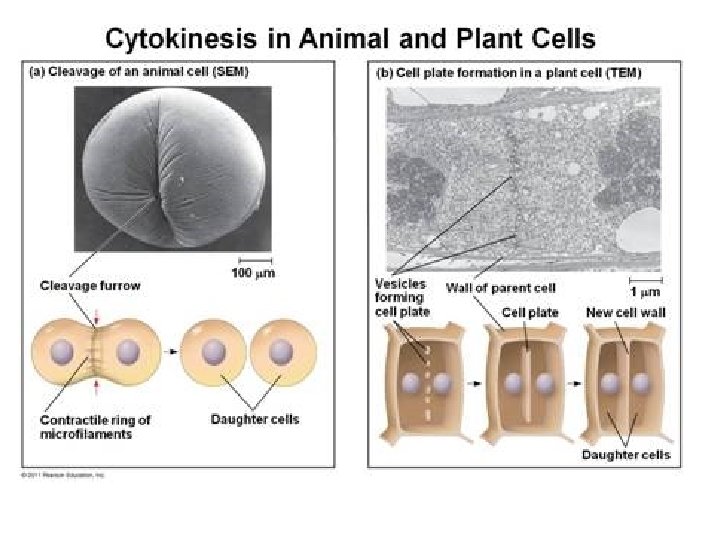
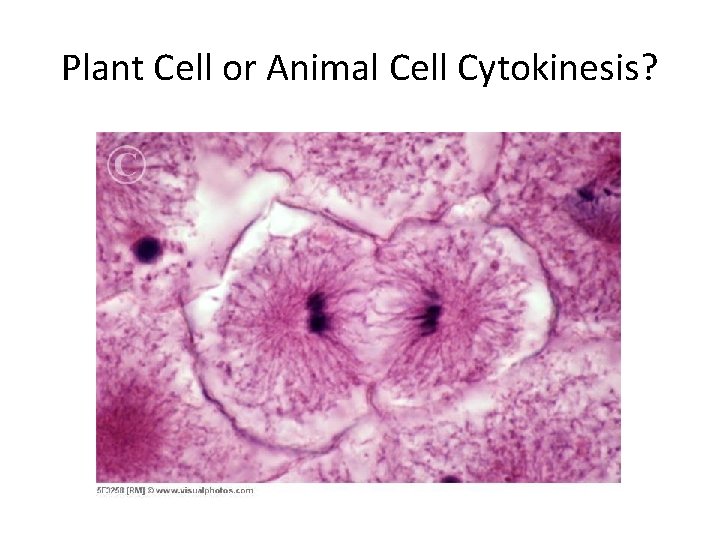
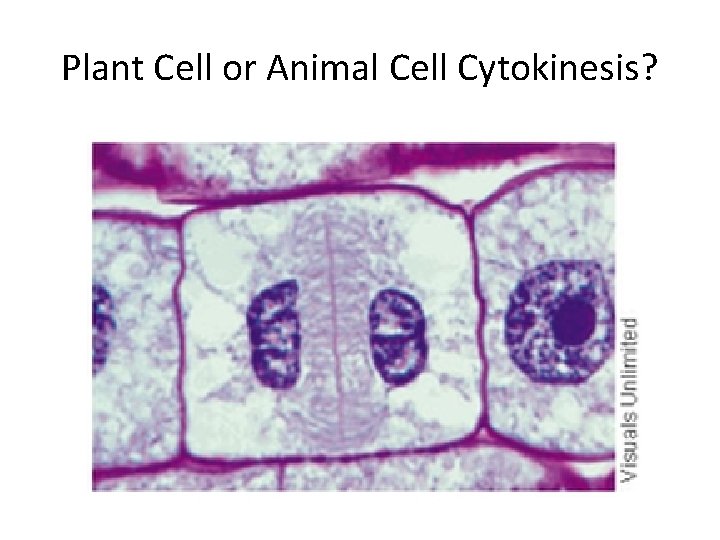
Cytokinesis: Plant vs. Animal Cells • Animal Cells – cells pinch in (a cleavage furrow forms) • Plant Cells – a cell plate that becomes the cell wall
Plant Cell or Animal Cell Cytokinesis?
Plant Cell or Animal Cell Cytokinesis?
Prophase • Spindle fibers appear • Chromosomes condense (become visible) Metaphase Chromosomes line up in the center/middle of the cell on the equator Anaphase Centromeres divide and sister chromatids move to opposite poles of the cell Telophase • 2 Nuclear membranes re-form • Chromosomes un-condense • Spindle fibers disappear
• Cytoplasm and organelles divide • 2 daughter cells with identical genetic information (DNA) are produced • Animal Cells – cells pinch in • Plant Cells – a cell plate that becomes the cell wall ADD THIS AT THE BOTTOM! • Types of cells that can divide by mitosis include SOMATIC CELLS (= body cells; such as muscle, skin, bone, roots, etc) • Why do cells divide by mitosis? 1) Asexual Reproduction 2) Growth 3) Tissue Repair
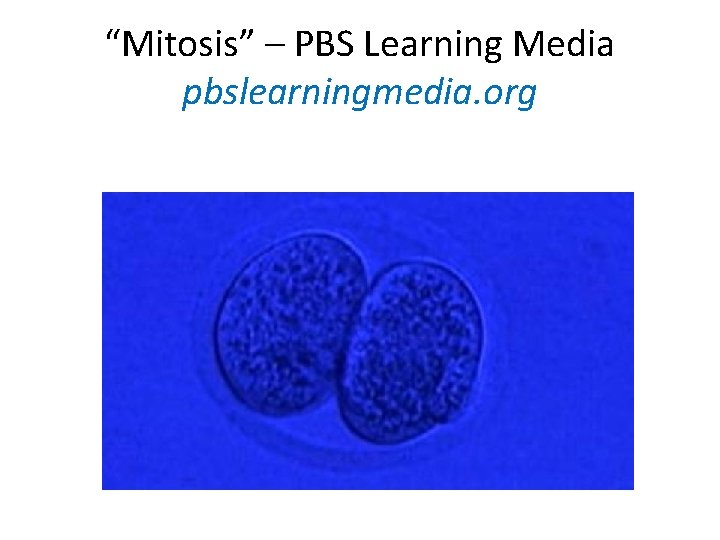
“Mitosis” – PBS Learning Media pbslearningmedia. org
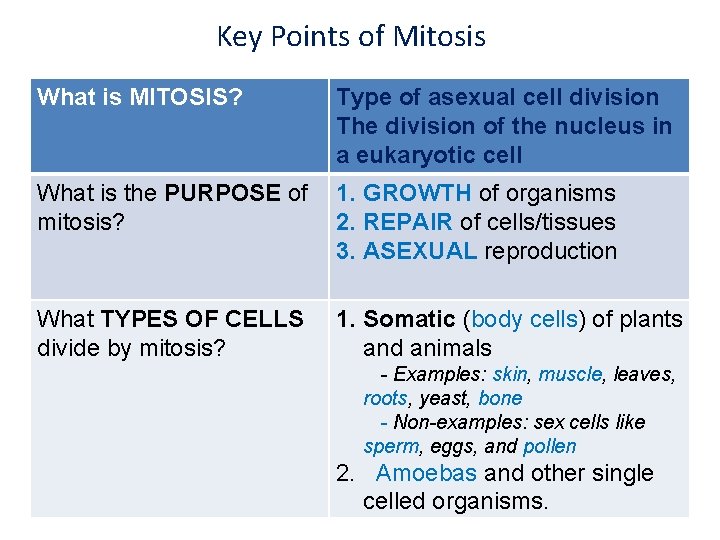
Key Points of Mitosis What is MITOSIS? Type of asexual cell division The division of the nucleus in a eukaryotic cell What is the PURPOSE of mitosis? 1. GROWTH of organisms 2. REPAIR of cells/tissues 3. ASEXUAL reproduction What TYPES OF CELLS divide by mitosis? 1. Somatic (body cells) of plants and animals - Examples: skin, muscle, leaves, roots, yeast, bone - Non-examples: sex cells like sperm, eggs, and pollen 2. Amoebas and other single celled organisms.
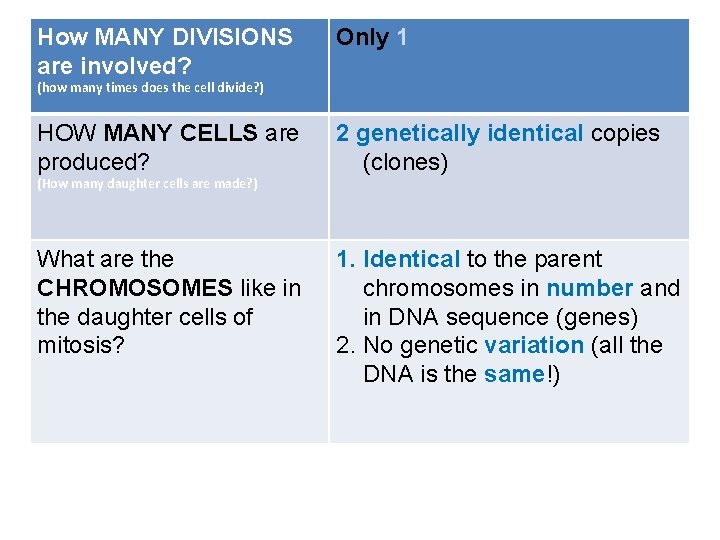
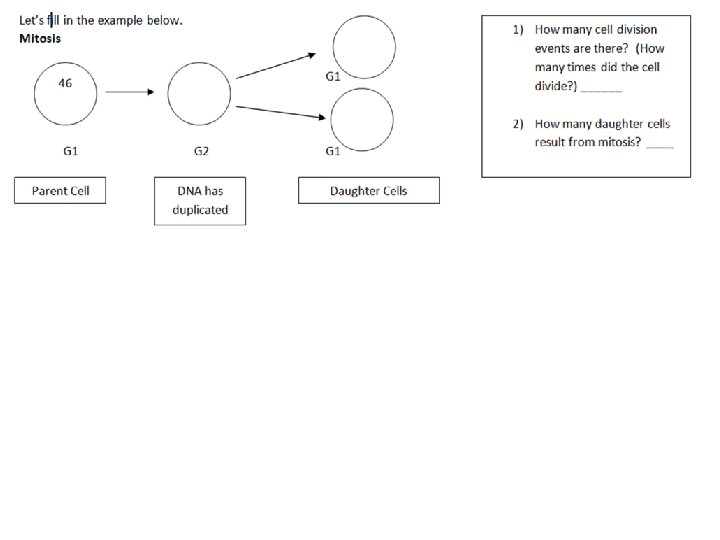
How MANY DIVISIONS are involved? Only 1 (how many times does the cell divide? ) HOW MANY CELLS are produced? 2 genetically identical copies (clones) (How many daughter cells are made? ) What are the CHROMOSOMES like in the daughter cells of mitosis? 1. Identical to the parent chromosomes in number and in DNA sequence (genes) 2. No genetic variation (all the DNA is the same!)
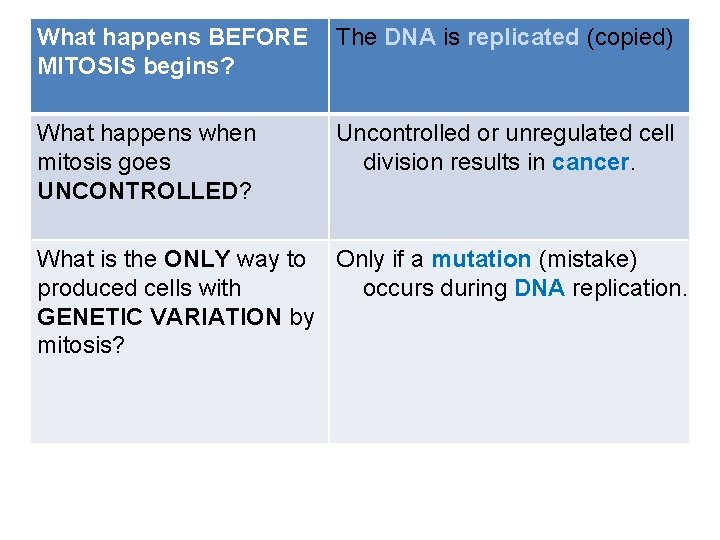
What happens BEFORE MITOSIS begins? The DNA is replicated (copied) What happens when mitosis goes UNCONTROLLED? Uncontrolled or unregulated cell division results in cancer. What is the ONLY way to Only if a mutation (mistake) produced cells with occurs during DNA replication. GENETIC VARIATION by mitosis?
Amoeba Sisters – Cell Cycle and Cancer
Let’s Review with the Amoeba Sisters! • Watch “ Mitosis: the Amazing Cell Process that Uses Division to Multiply” and complete the handout.
Mitosis Math • When a somatic cell (body cell) reproduces asexually by mitosis, the parent cell produces daughter cells with the same number of chromosomes as the parent cell. This number is said to be “diploid” (2 n). In humans, for example, a skin cell has 46 chromosomes. So, the diploid number of chromosomes is 46. When a skin cell divides by mitosis during asexual reproduction (like to repair a cut), how many chromosomes will the 2 new skin cells each have? _____ (Remember, mitosis produces clones! Identical copies!)
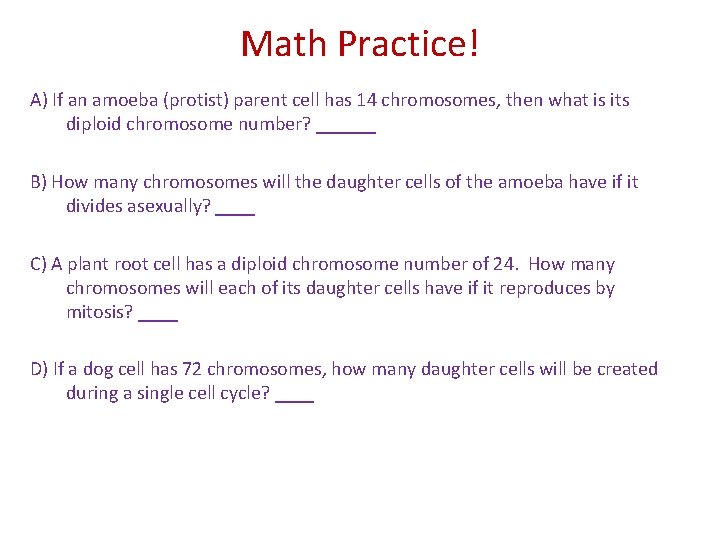
Math Practice! A) If an amoeba (protist) parent cell has 14 chromosomes, then what is its diploid chromosome number? ______ B) How many chromosomes will the daughter cells of the amoeba have if it divides asexually? ____ C) A plant root cell has a diploid chromosome number of 24. How many chromosomes will each of its daughter cells have if it reproduces by mitosis? ____ D) If a dog cell has 72 chromosomes, how many daughter cells will be created during a single cell cycle? ____
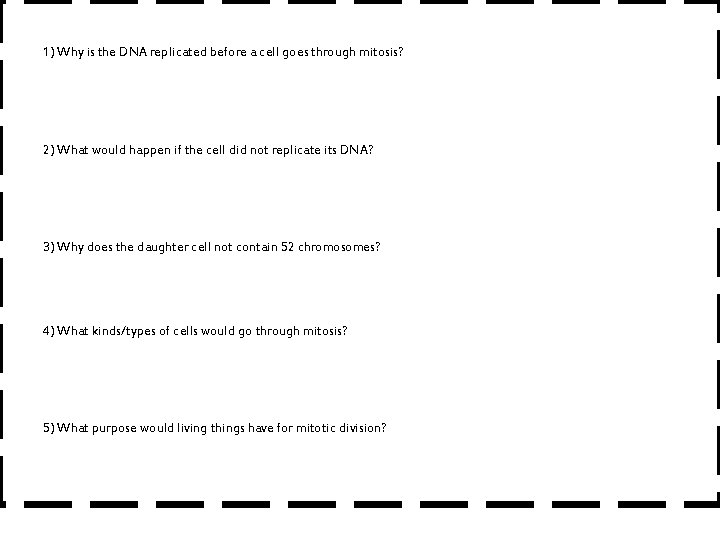
Mitosis Quick Check! 1) Why is the DNA replicated before a cell goes through mitosis? 2) What would happen if the cell did not replicate its DNA? 3) Why does the daughter cell not contain 52 chromosomes? 4) What kinds/types of cells would go through mitosis? 5) What purpose would living things have for mitotic division?
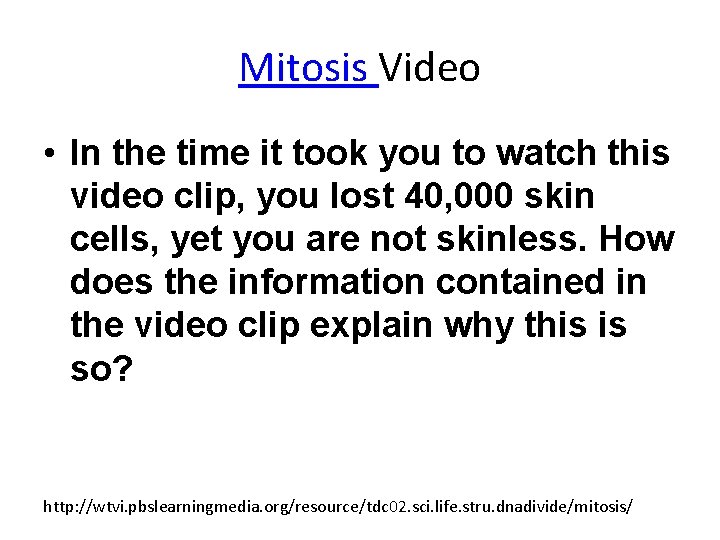
Mitosis Video • In the time it took you to watch this video clip, you lost 40, 000 skin cells, yet you are not skinless. How does the information contained in the video clip explain why this is so? http: //wtvi. pbslearningmedia. org/resource/tdc 02. sci. life. stru. dnadivide/mitosis/
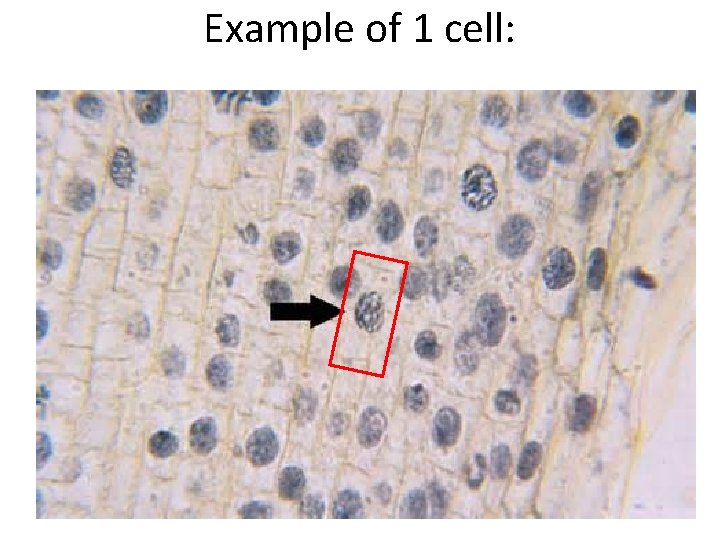
Example of 1 cell:
Examples:
Use with your Warm-up: