
THE CELL CYCLE AND HOW CELLS DIVIDE MITOSIS
- Slides: 15
THE CELL CYCLE AND HOW CELLS DIVIDE - MITOSIS Ms. Dunishiya de Silva
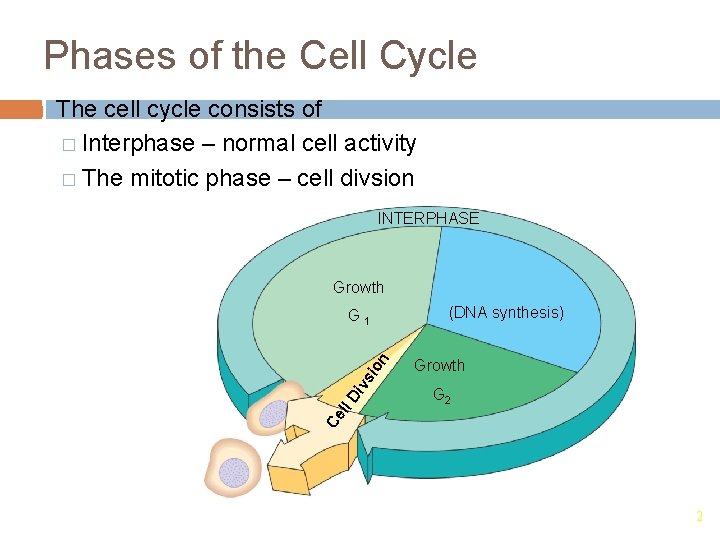
Phases of the Cell Cycle The cell cycle consists of � Interphase – normal cell activity � The mitotic phase – cell divsion INTERPHASE Growth ll D iv si on G 1 (DNA synthesis) Growth G 2 Ce 2
Cell Division An integral part of the cell cycle Results in genetically identical daughter cells Cells duplicate their genetic material � Before they divide, ensuring that each daughter cell receives an exact copy of the genetic material, DNA 3
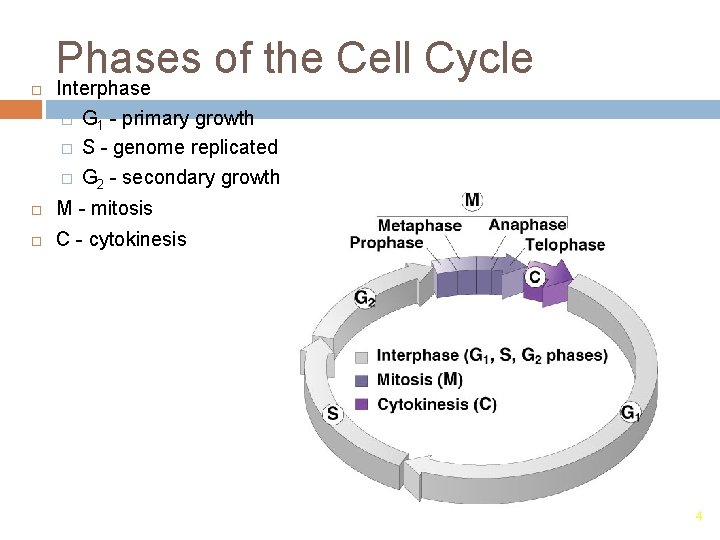
Phases of the Cell Cycle Interphase � � � G 1 - primary growth S - genome replicated G 2 - secondary growth M - mitosis C - cytokinesis 4
Interphase G 1 - Cells undergo majority of growth S - Each chromosome replicates (Synthesizes) to produce sister chromatids � Attached at centromere � Contains attachment site (kinetochore) G 2 - Chromosomes condense - Assemble machinery for division such as centrioles 5
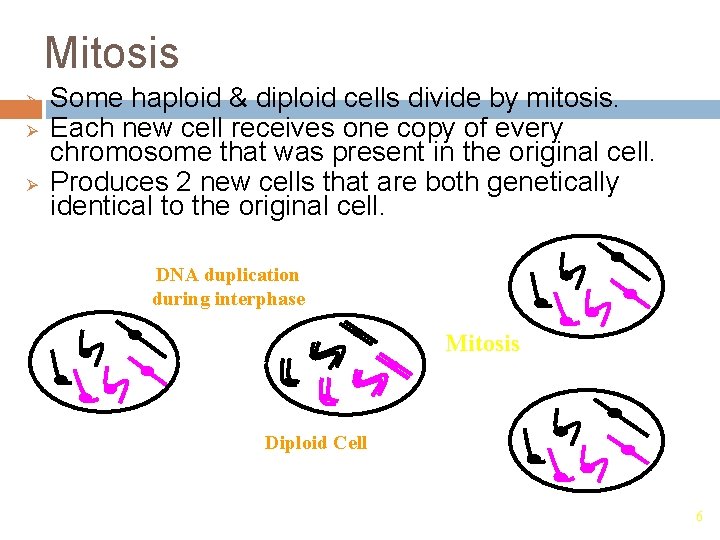
Mitosis Ø Ø Ø Some haploid & diploid cells divide by mitosis. Each new cell receives one copy of every chromosome that was present in the original cell. Produces 2 new cells that are both genetically identical to the original cell. DNA duplication during interphase Mitosis Diploid Cell 6
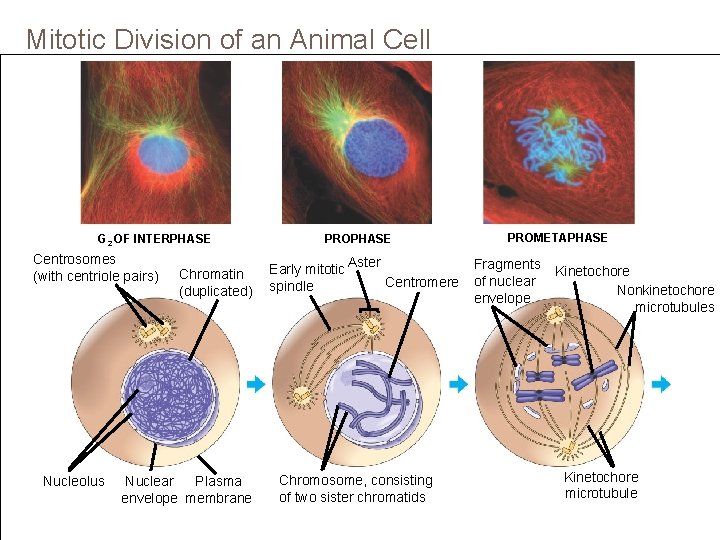
Mitotic Division of an Animal Cell G 2 OF INTERPHASE Centrosomes (with centriole pairs) Nucleolus Chromatin (duplicated) Nuclear Plasma envelope membrane PROPHASE Early mitotic spindle Aster Centromere Chromosome, consisting of two sister chromatids PROMETAPHASE Fragments of nuclear envelope Kinetochore Nonkinetochore microtubules Kinetochore microtubule 7
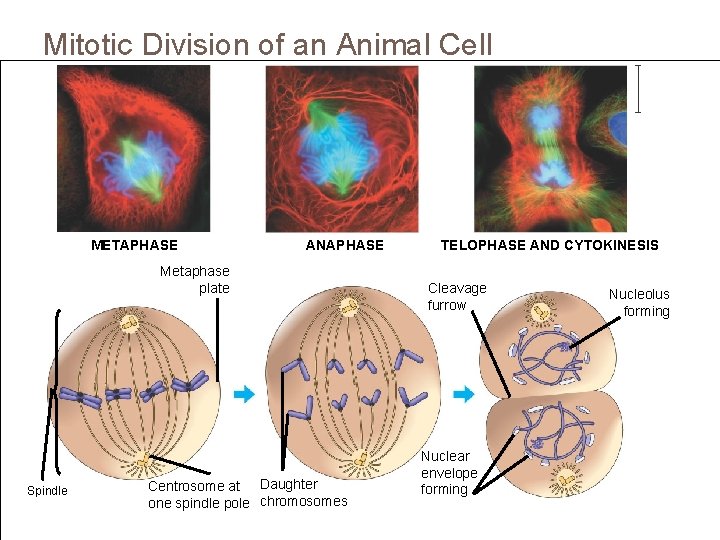
Mitotic Division of an Animal Cell METAPHASE ANAPHASE Metaphase plate Spindle Centrosome at Daughter one spindle pole chromosomes TELOPHASE AND CYTOKINESIS Cleavage furrow Nucleolus forming Nuclear envelope forming 8
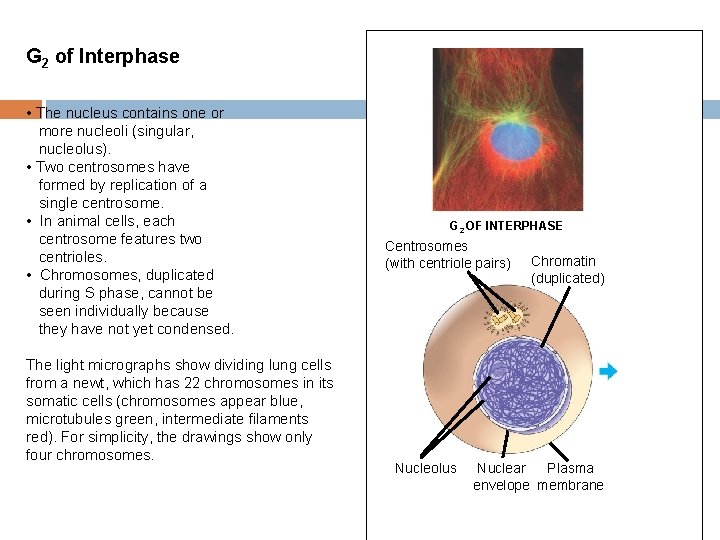
G 2 of Interphase • A nuclear envelope bounds the nucleus. • The nucleus contains one or more nucleoli (singular, nucleolus). • Two centrosomes have formed by replication of a single centrosome. • In animal cells, each centrosome features two centrioles. • Chromosomes, duplicated during S phase, cannot be seen individually because they have not yet condensed. The light micrographs show dividing lung cells from a newt, which has 22 chromosomes in its somatic cells (chromosomes appear blue, microtubules green, intermediate filaments red). For simplicity, the drawings show only four chromosomes. G 2 OF INTERPHASE Centrosomes (with centriole pairs) Nucleolus Chromatin (duplicated) Nuclear Plasma envelope membrane 9
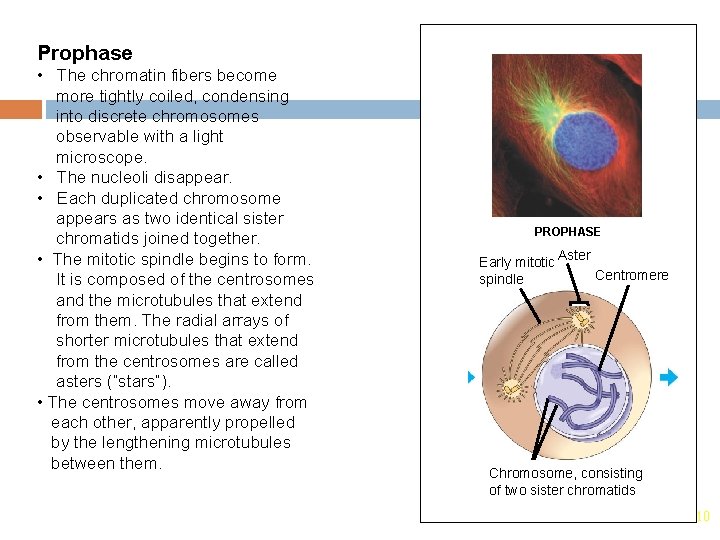
Prophase • The chromatin fibers become more tightly coiled, condensing into discrete chromosomes observable with a light microscope. • The nucleoli disappear. • Each duplicated chromosome appears as two identical sister chromatids joined together. • The mitotic spindle begins to form. It is composed of the centrosomes and the microtubules that extend from them. The radial arrays of shorter microtubules that extend from the centrosomes are called asters (“stars”). • The centrosomes move away from each other, apparently propelled by the lengthening microtubules between them. PROPHASE Early mitotic spindle Aster Centromere Chromosome, consisting of two sister chromatids 10
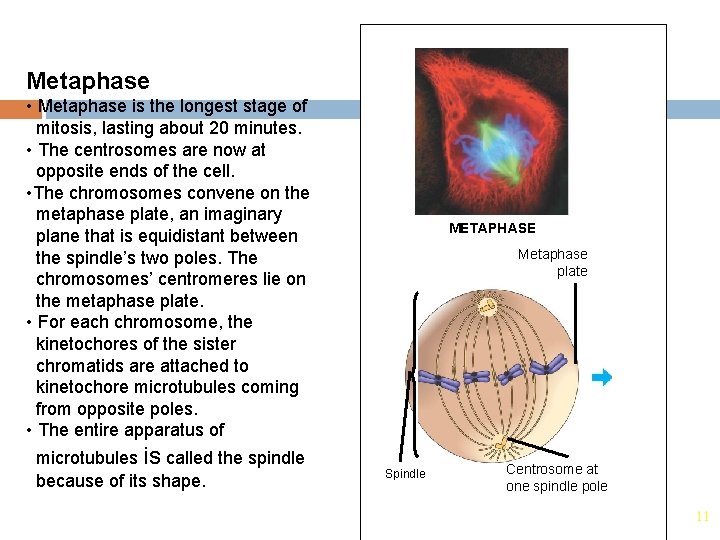
Metaphase • Metaphase is the longest stage of mitosis, lasting about 20 minutes. • The centrosomes are now at opposite ends of the cell. • The chromosomes convene on the metaphase plate, an imaginary plane that is equidistant between the spindle’s two poles. The chromosomes’ centromeres lie on the metaphase plate. • For each chromosome, the kinetochores of the sister chromatids are attached to kinetochore microtubules coming from opposite poles. • The entire apparatus of microtubules is called the spindle because of its shape. METAPHASE Metaphase plate Spindle Centrosome at one spindle pole 11
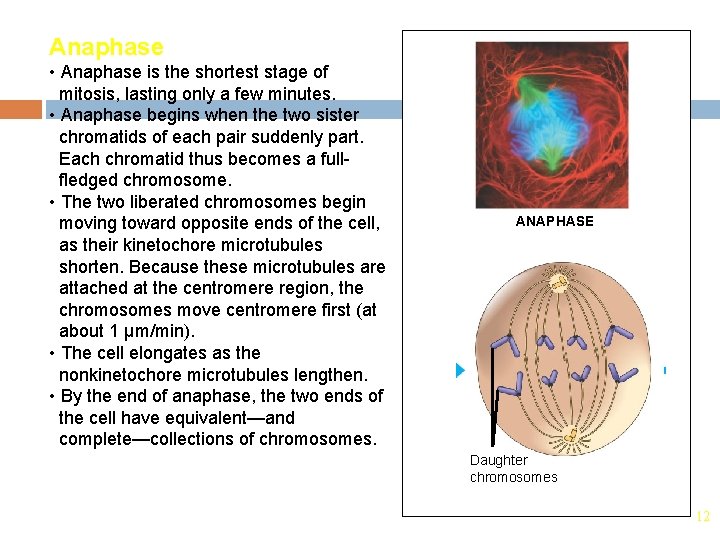
Anaphase • Anaphase is the shortest stage of mitosis, lasting only a few minutes. • Anaphase begins when the two sister chromatids of each pair suddenly part. Each chromatid thus becomes a fullfledged chromosome. • The two liberated chromosomes begin moving toward opposite ends of the cell, as their kinetochore microtubules shorten. Because these microtubules are attached at the centromere region, the chromosomes move centromere first (at about 1 µm/min). • The cell elongates as the nonkinetochore microtubules lengthen. • By the end of anaphase, the two ends of the cell have equivalent—and complete—collections of chromosomes. ANAPHASE Daughter chromosomes 12
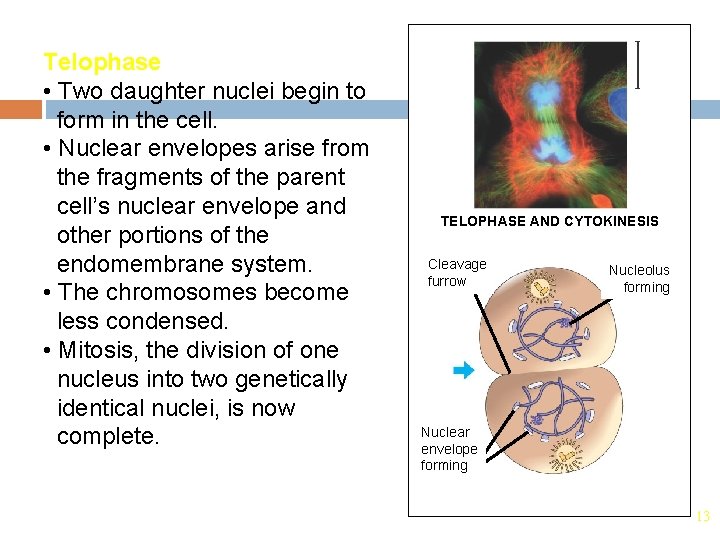
Telophase • Two daughter nuclei begin to form in the cell. • Nuclear envelopes arise from the fragments of the parent cell’s nuclear envelope and other portions of the endomembrane system. • The chromosomes become less condensed. • Mitosis, the division of one nucleus into two genetically identical nuclei, is now complete. TELOPHASE AND CYTOKINESIS Cleavage furrow Nucleolus forming Nuclear envelope forming 13
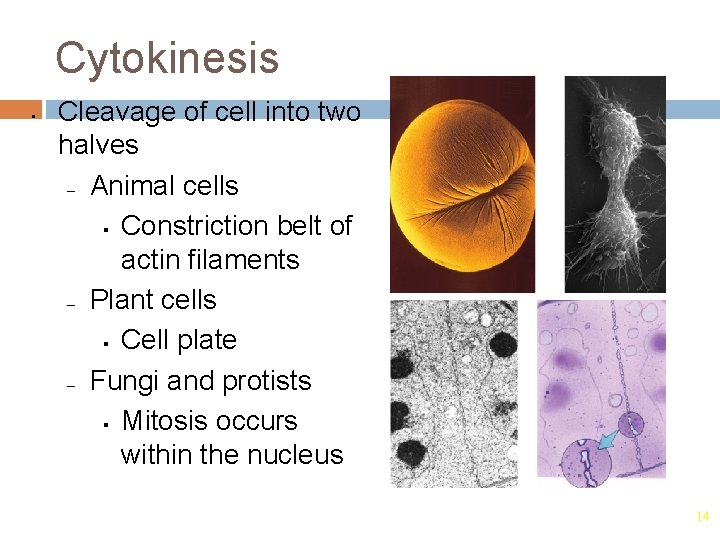
Cytokinesis • Cleavage of cell into two halves – Animal cells § Constriction belt of actin filaments – Plant cells § Cell plate – Fungi and protists § Mitosis occurs within the nucleus 14
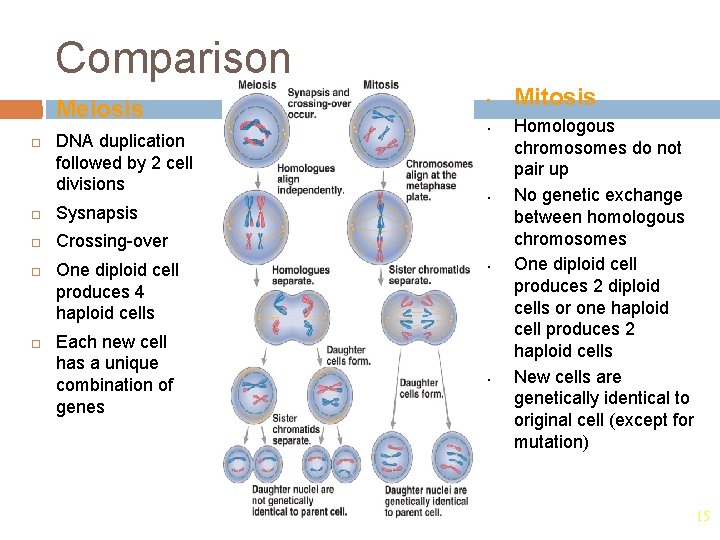
Comparison Meiosis DNA duplication followed by 2 cell divisions Sysnapsis Crossing-over One diploid cell produces 4 haploid cells Each new cell has a unique combination of genes • • • Mitosis Homologous chromosomes do not pair up No genetic exchange between homologous chromosomes One diploid cell produces 2 diploid cells or one haploid cell produces 2 haploid cells New cells are genetically identical to original cell (except for mutation) 15