
The Cell Cycle and How Cells Divide Functions
- Slides: 14
The Cell Cycle and How Cells Divide
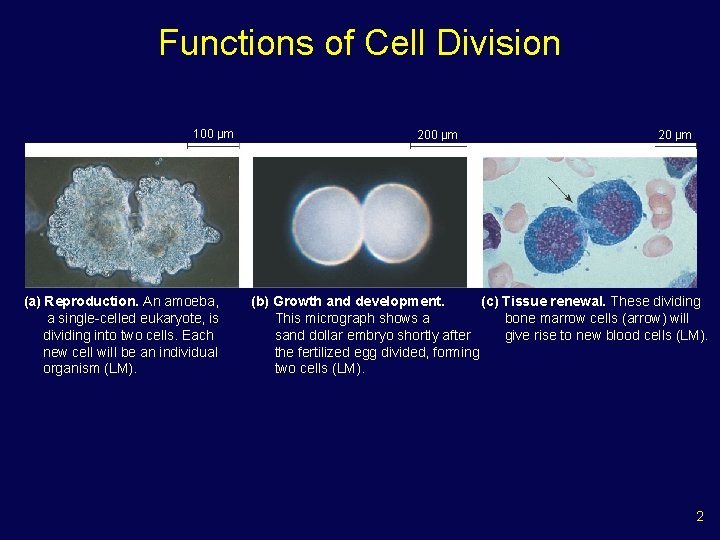
Functions of Cell Division 100 µm (a) Reproduction. An amoeba, a single-celled eukaryote, is dividing into two cells. Each new cell will be an individual organism (LM). 200 µm 20 µm (b) Growth and development. (c) Tissue renewal. These dividing This micrograph shows a bone marrow cells (arrow) will sand dollar embryo shortly after give rise to new blood cells (LM). the fertilized egg divided, forming two cells (LM). 2
Cell Division • • • An integral part of the cell cycle Results in genetically identical daughter cells Cells duplicate their genetic material – Before they divide, ensuring that each daughter cell receives an exact copy of the genetic material, DNA 3
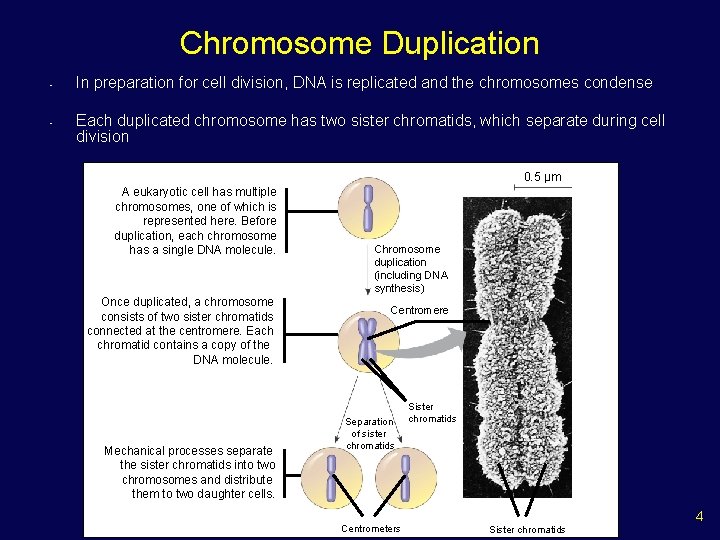
Chromosome Duplication • • In preparation for cell division, DNA is replicated and the chromosomes condense Each duplicated chromosome has two sister chromatids, which separate during cell division 0. 5 µm A eukaryotic cell has multiple chromosomes, one of which is represented here. Before duplication, each chromosome has a single DNA molecule. Once duplicated, a chromosome consists of two sister chromatids connected at the centromere. Each chromatid contains a copy of the DNA molecule. Mechanical processes separate the sister chromatids into two chromosomes and distribute them to two daughter cells. Chromosome duplication (including DNA synthesis) Centromere Separation of sister chromatids Centrometers Sister chromatids 4
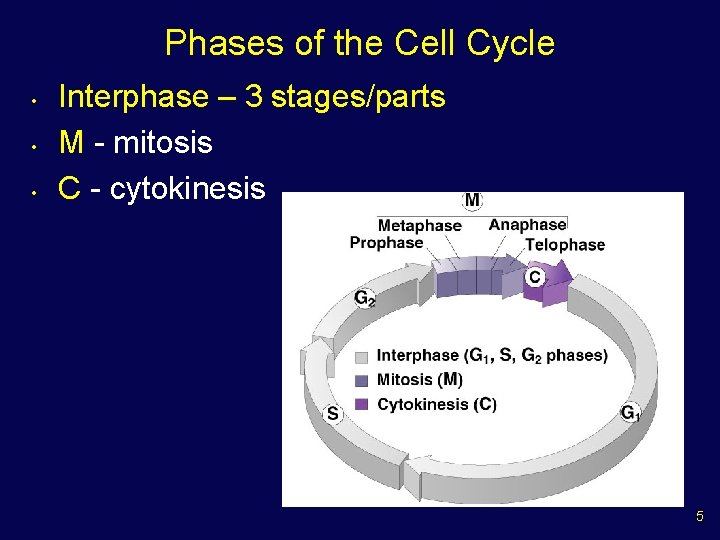
Phases of the Cell Cycle • • • Interphase – 3 stages/parts M - mitosis C - cytokinesis 5
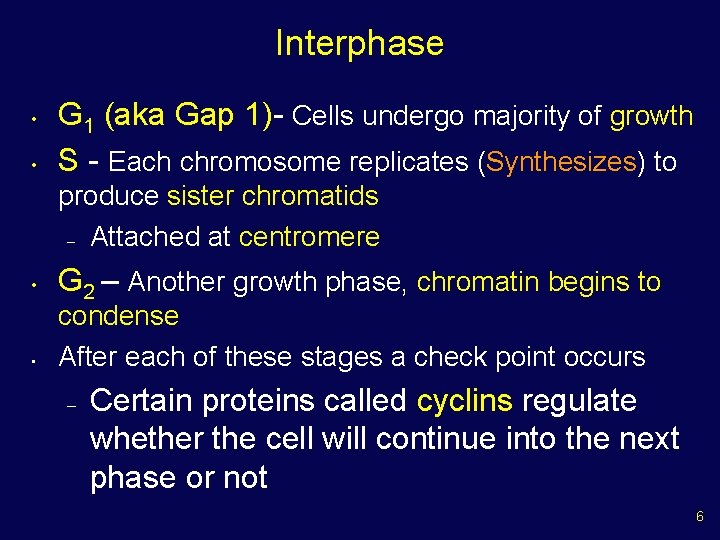
Interphase • • G 1 (aka Gap 1)- Cells undergo majority of growth S - Each chromosome replicates (Synthesizes) to produce sister chromatids – Attached at centromere • • G 2 – Another growth phase, chromatin begins to condense After each of these stages a check point occurs – Certain proteins called cyclins regulate whether the cell will continue into the next phase or not 6
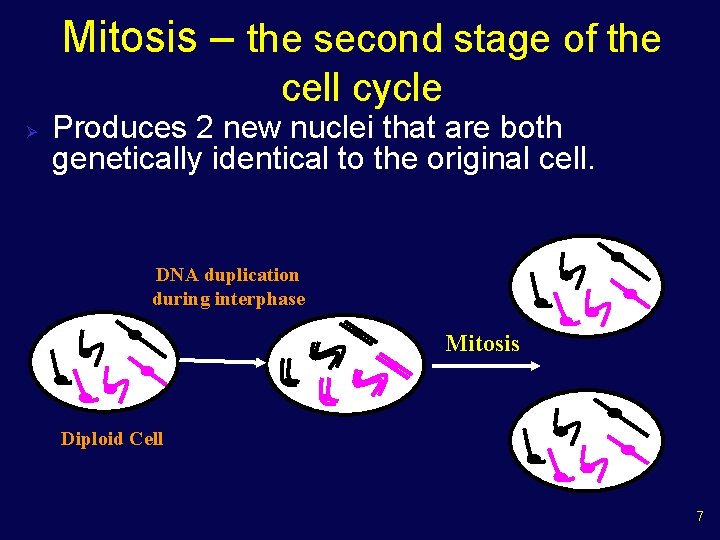
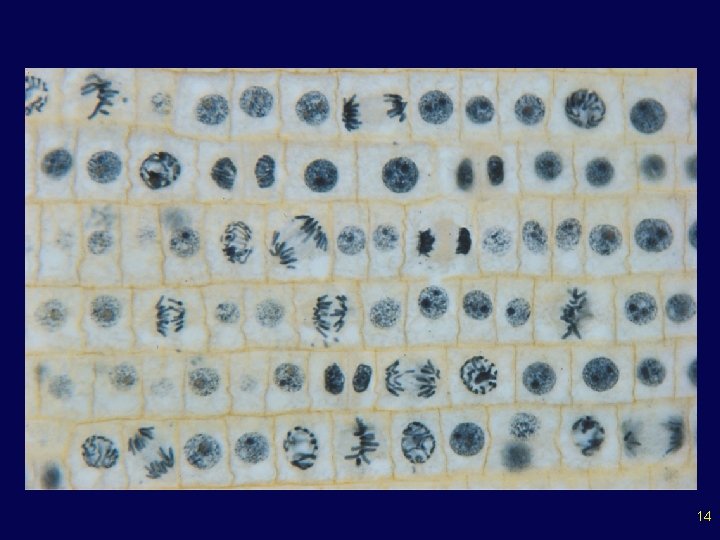
Mitosis – the second stage of the cell cycle Ø Produces 2 new nuclei that are both genetically identical to the original cell. DNA duplication during interphase Mitosis Diploid Cell 7
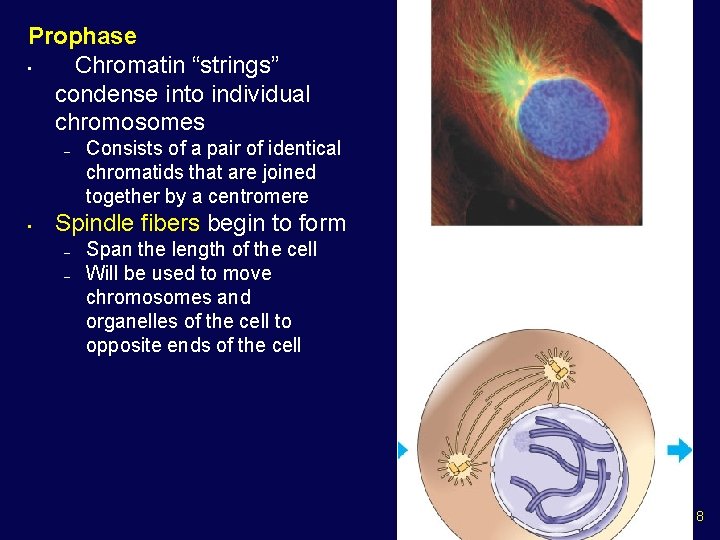
Prophase • Chromatin “strings” condense into individual chromosomes – • Consists of a pair of identical chromatids that are joined together by a centromere Spindle fibers begin to form – – Span the length of the cell Will be used to move chromosomes and organelles of the cell to opposite ends of the cell PROPHASE Early mitotic spindle Aster Centromere Chromosome, consisting of two sister chromatids 8
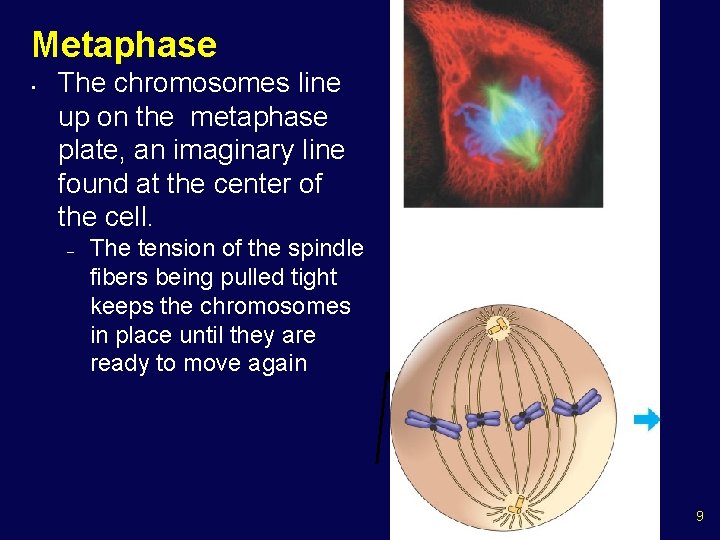
Metaphase • The chromosomes line up on the metaphase plate, an imaginary line found at the center of the cell. – The tension of the spindle fibers being pulled tight keeps the chromosomes in place until they are ready to move again METAPHASE Metaphase plate Centrosome at one spindle pole 9
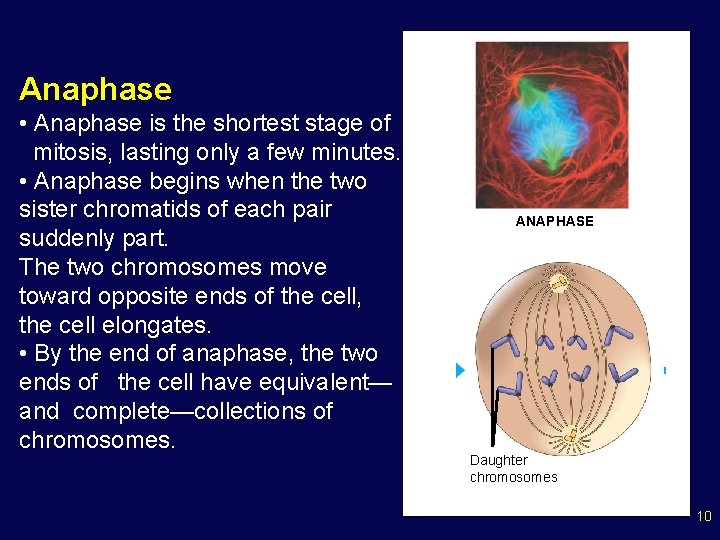
Anaphase • Anaphase is the shortest stage of mitosis, lasting only a few minutes. • Anaphase begins when the two sister chromatids of each pair suddenly part. The two chromosomes move toward opposite ends of the cell, the cell elongates. • By the end of anaphase, the two ends of the cell have equivalent— and complete—collections of chromosomes. ANAPHASE Daughter chromosomes 10
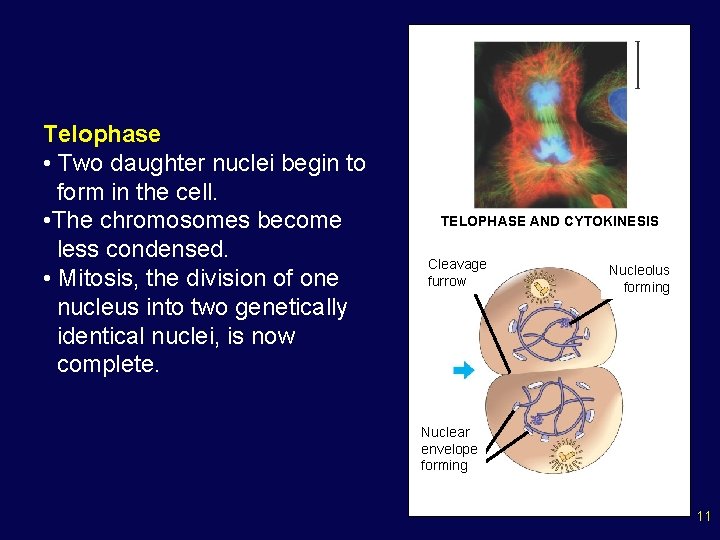
Telophase • Two daughter nuclei begin to form in the cell. • The chromosomes become less condensed. • Mitosis, the division of one nucleus into two genetically identical nuclei, is now complete. TELOPHASE AND CYTOKINESIS Cleavage furrow Nucleolus forming Nuclear envelope forming 11
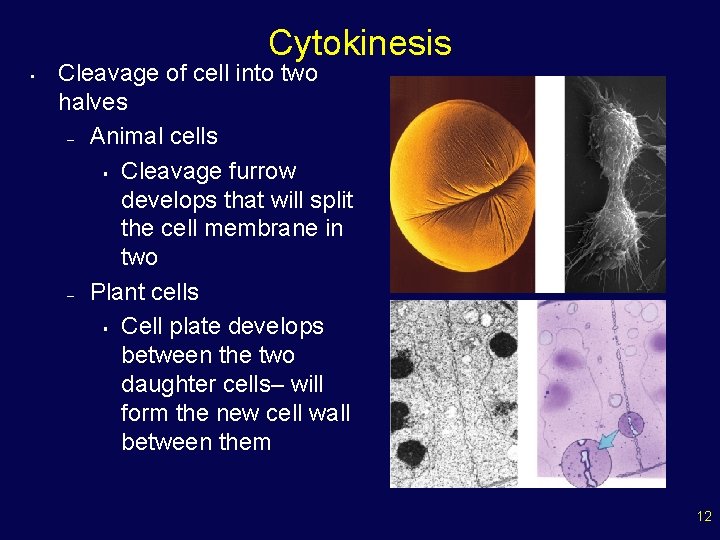
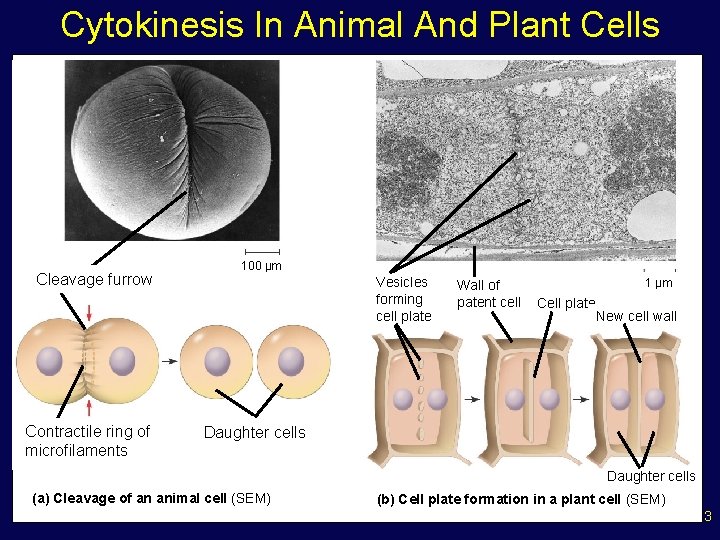
Cytokinesis • Cleavage of cell into two halves – Animal cells § Cleavage furrow develops that will split the cell membrane in two – Plant cells § Cell plate develops between the two daughter cells– will form the new cell wall between them 12
Cytokinesis In Animal And Plant Cells Cleavage furrow Contractile ring of microfilaments 100 µm Vesicles forming cell plate Wall of patent cell 1 µm Cell plate New cell wall Daughter cells (a) Cleavage of an animal cell (SEM) (b) Cell plate formation in a plant cell (SEM) 13
14