
The Cell Cycle and Cancer AP Biology Functions
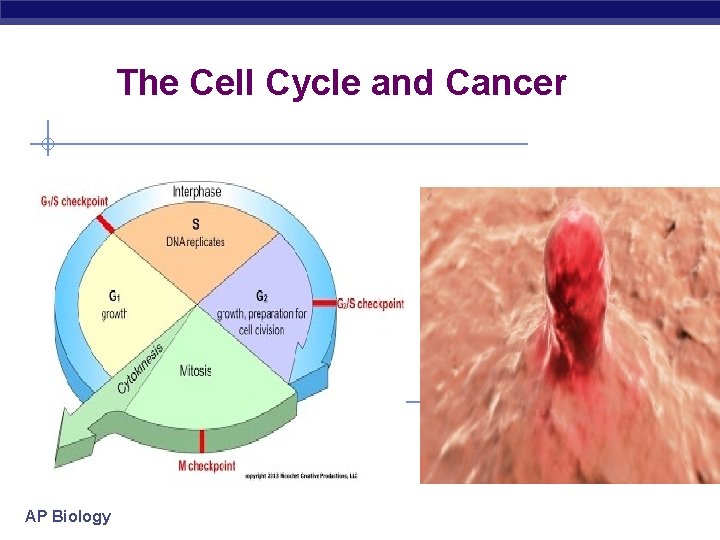
The Cell Cycle and Cancer AP Biology
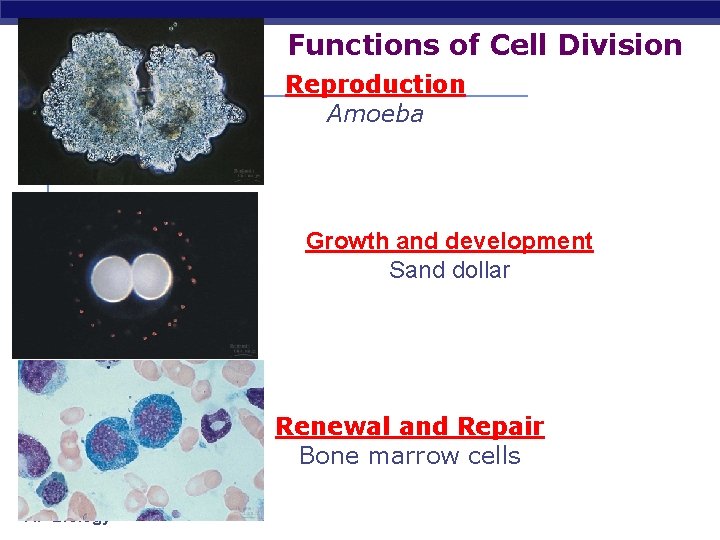
Functions of Cell Division Reproduction Amoeba Growth and development Sand dollar Renewal and Repair Bone marrow cells AP Biology
Cell division / Asexual reproduction Characteristics: Ø produce two diploid cells § daughter cells Ø exact copies § clones Ø Ø AP Biology same information in each cell Same number of chromosomes as parent cell Aaaargh! I’m seeing double!
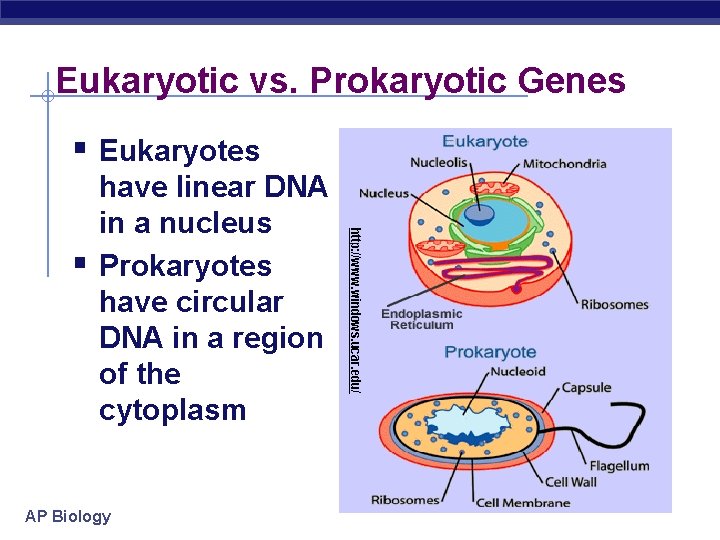
Eukaryotic vs. Prokaryotic Genes § Eukaryotes § have linear DNA in a nucleus Prokaryotes have circular DNA in a region of the cytoplasm AP Biology

Human Chromosomes § Humans have 46 § § § chromosomes in 23 pairs 22 pairs of autosomes 1 pair of sex chromosomes Remember that our DNA spends most of its time as chromatin not chromosomes AP Biology
Evolution of Mitosis § Mitosis in eukaryotes may have evolved from binary fission in bacteria Most bacterial genes are located on a single bacterial chromosome (plasmid) which consists of a circular DNA molecule and associated proteins. AP Biology
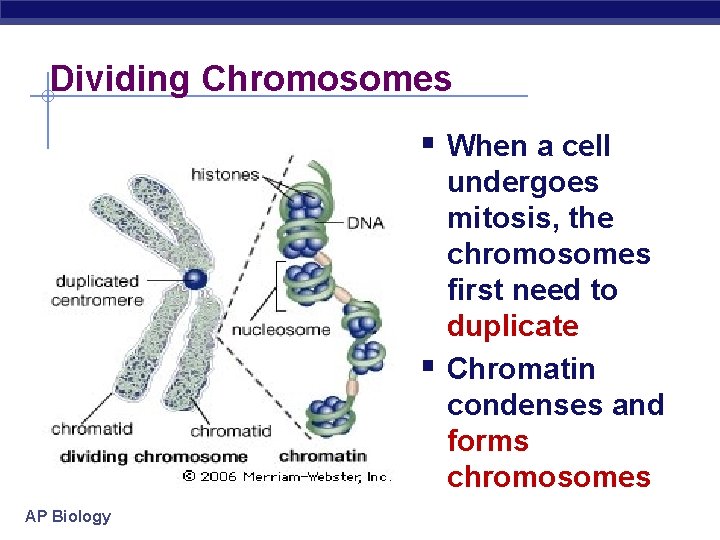
Dividing Chromosomes § When a cell § AP Biology undergoes mitosis, the chromosomes first need to duplicate Chromatin condenses and forms chromosomes
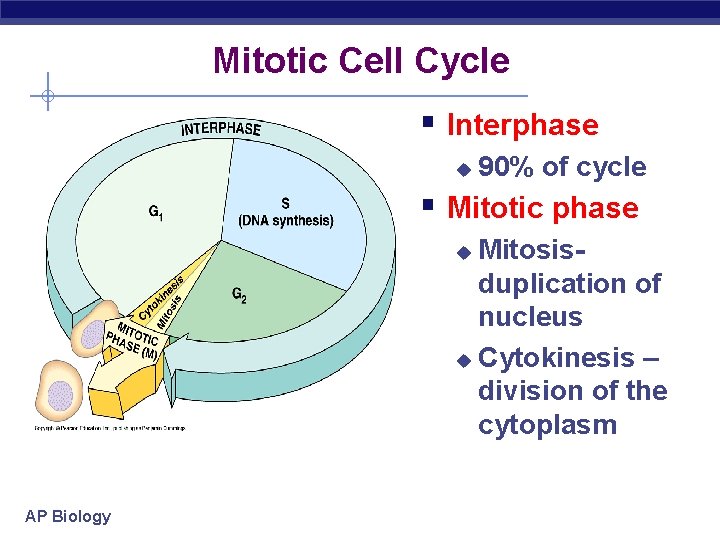
Mitotic Cell Cycle § Interphase u 90% of cycle § Mitotic phase Mitosisduplication of nucleus u Cytokinesis – division of the cytoplasm u AP Biology
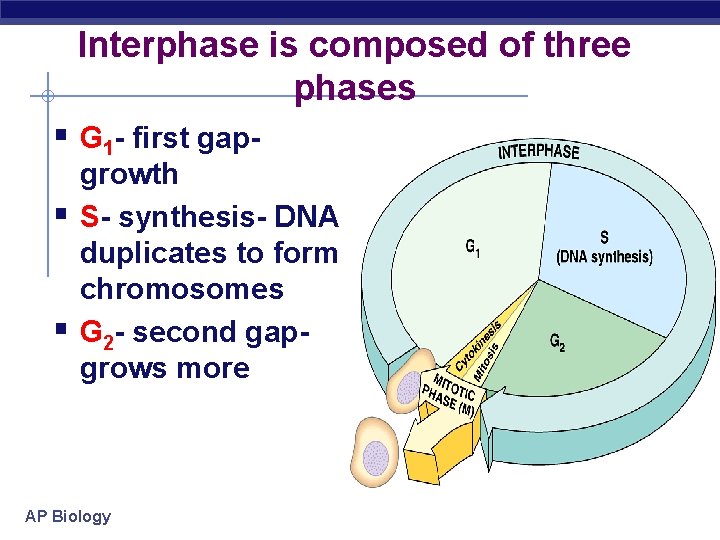
Interphase is composed of three phases § G 1 - first gap§ § growth S- synthesis- DNA duplicates to form chromosomes G 2 - second gapgrows more AP Biology
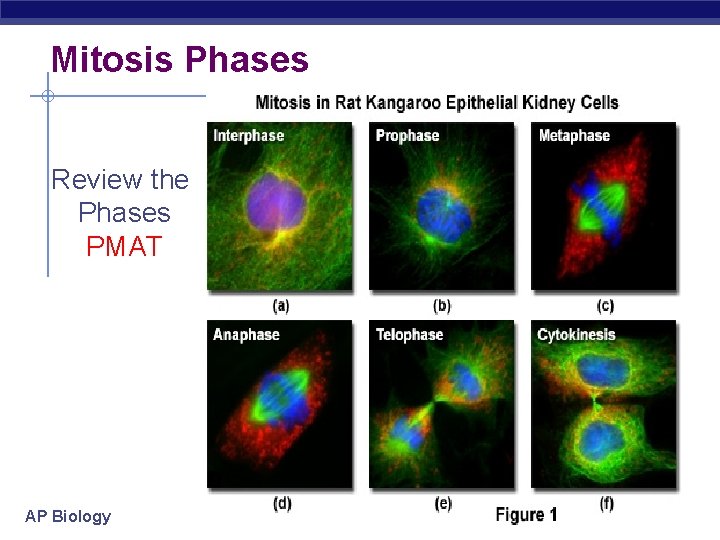
Mitosis Phases Review the Phases PMAT AP Biology
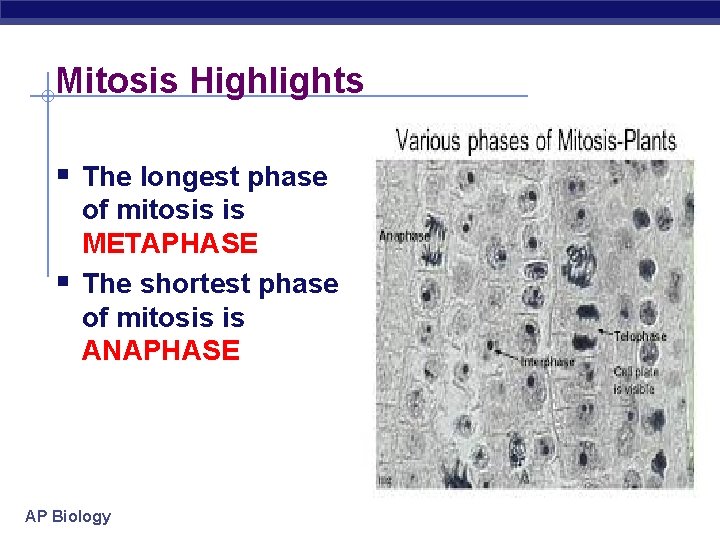
Mitosis Highlights § The longest phase § of mitosis is METAPHASE The shortest phase of mitosis is ANAPHASE AP Biology
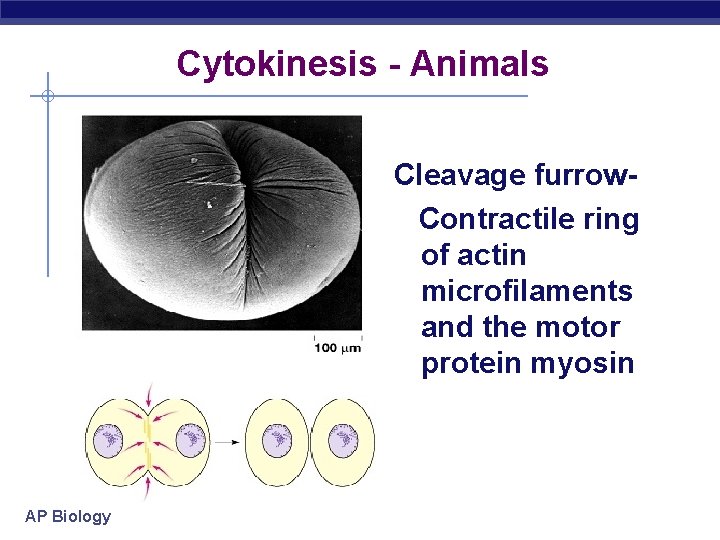
Cytokinesis - Animals Cleavage furrow. Contractile ring of actin microfilaments and the motor protein myosin AP Biology
AP Biology
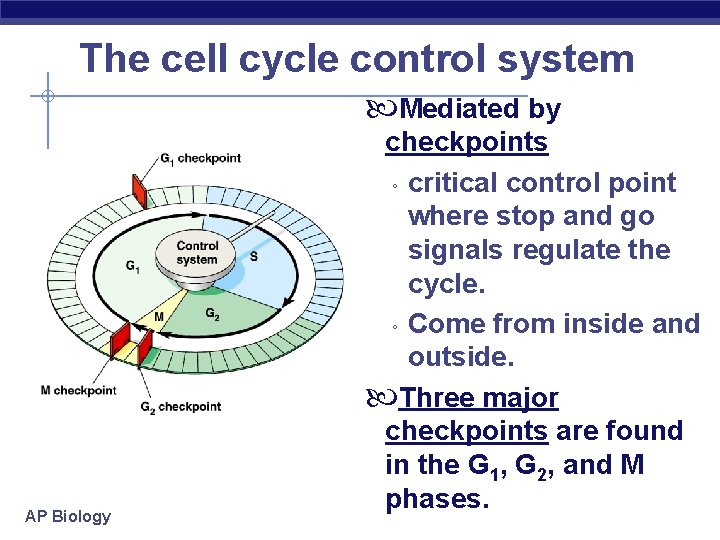
The cell cycle control system Mediated by AP Biology checkpoints ◦ critical control point where stop and go signals regulate the cycle. ◦ Come from inside and outside. Three major checkpoints are found in the G 1, G 2, and M phases.
Biochemical cell cycle control § MPF- mitosis-promoting factor- positive regulator that induces mitosis § Cyclins- proteins that reach their peaks at G 2/S and G 2/M boundaries § Cyclin-dependent kinase (Cdk)- only active if cyclin is present § APC- Anaphase- promoting complex § Growth Factors, nutritional state and DNA integrity AP Biology
External chemical and physical factors can influence cell division § Internal signals: u Kinetochore and regulation of the anaphase promoting complex (APC) § External signals: Mammalian cells – growth factors u Density Dependent Inhibition -crowded cells stop dividing u Anchorage dependence- attachment to surrounding material u AP Biology

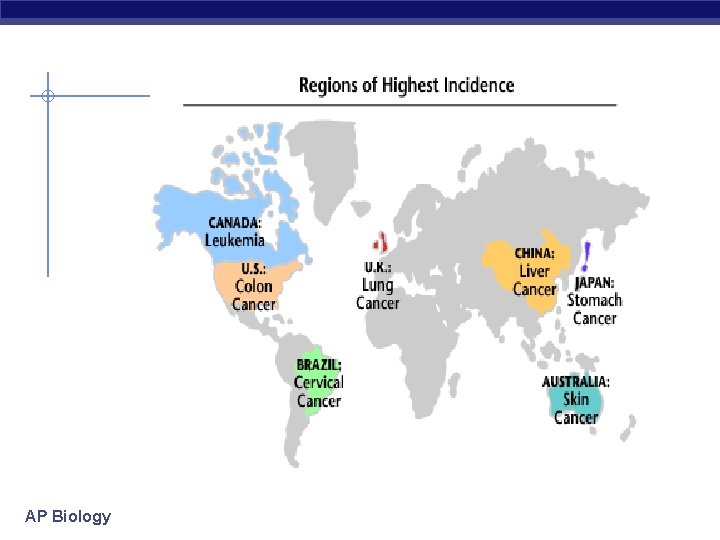
Cancer § Uncontrolled cell growth § Carcinogenscancer causing agents § Can damage surrounding tissue and spread AP Biology
AP Biology
Division – uncontrolled cell division § Oncogenes-accelerator genes (gas pedal) § Tumor suppressor genes – p 53 (brake) § Suicide genes – apoptosis ( cell death) § DNA repair genes AP Biology
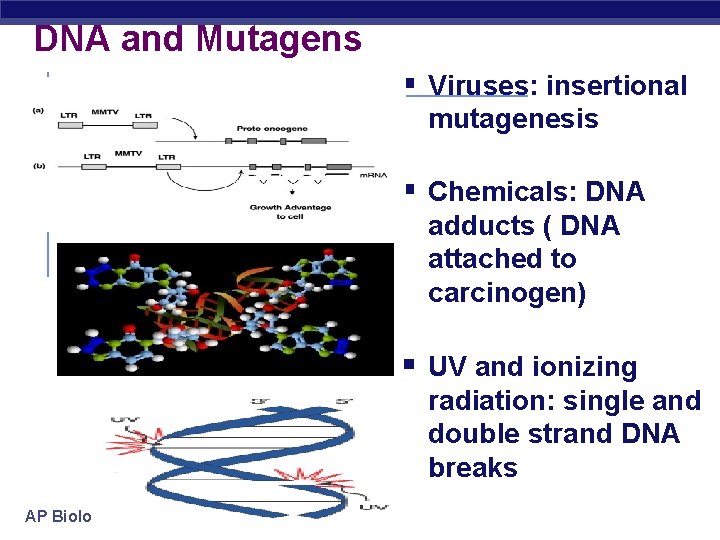
DNA and Mutagens § Viruses: insertional mutagenesis § Chemicals: DNA adducts ( DNA attached to carcinogen) § UV and ionizing radiation: single and double strand DNA breaks AP Biology
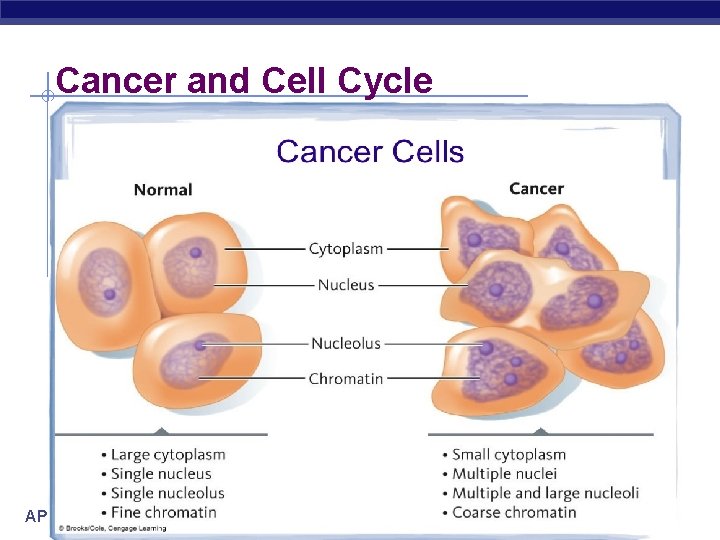
Cancer and Cell Cycle AP Biology
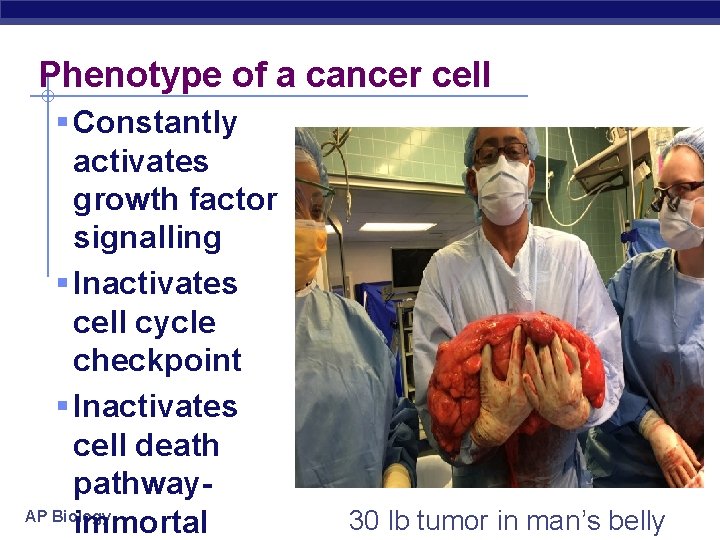
Phenotype of a cancer cell § Constantly activates growth factor signalling § Inactivates cell cycle checkpoint § Inactivates cell death pathway. AP Biology immortal 30 lb tumor in man’s belly
Cancer cells are able to escape cell cycle control § Cancer cells may divide indefinitely (“immortal”) He. La growing since 1951 § In contrast, nearly all mammalian cells divide 20 to 50 times § If the tumor stays at original site – benign § If it moves to other locations – malignant § Enters blood and or lymph system – metastasis AP Biology
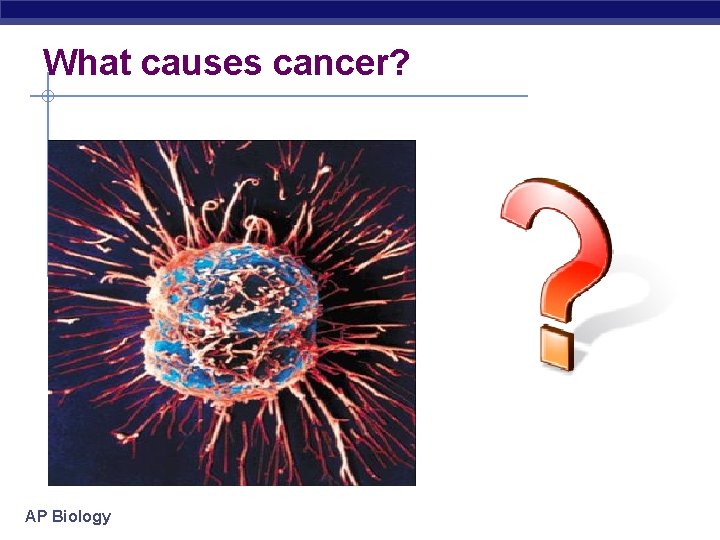
What causes cancer? AP Biology
Heredity § Genes isolated for several classic familial cancer syndromes: u RB 1 (retinoblastoma) u APC (familial polyposis) u Human Non Polyposis Colon Cancer (HNPCC) u u AP Biology BRCA 1&2 (breast cancer) p 53 (many cancers)
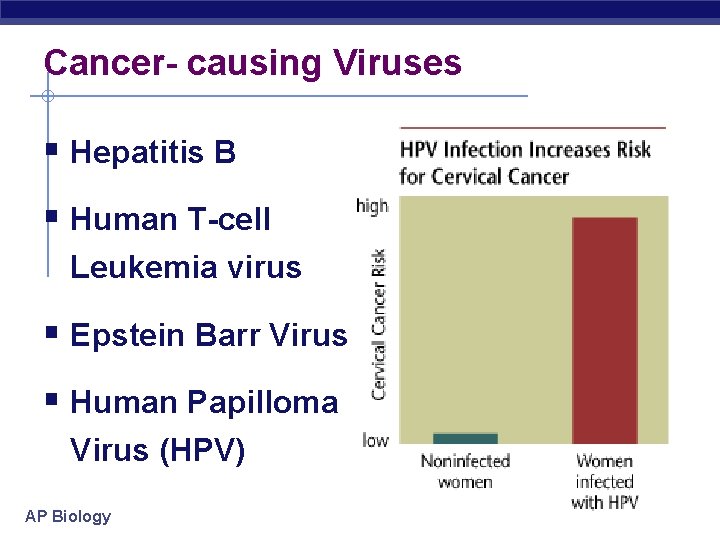
Cancer- causing Viruses § Hepatitis B § Human T-cell Leukemia virus § Epstein Barr Virus § Human Papilloma Virus (HPV) AP Biology
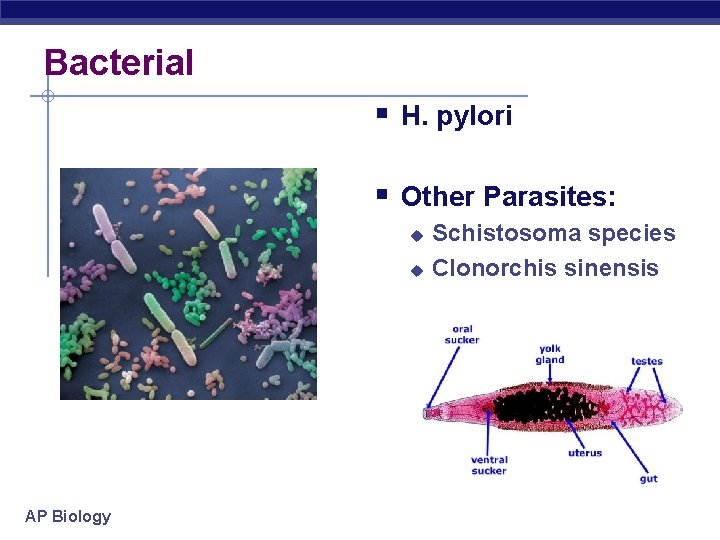
Bacterial § H. pylori § Other Parasites: u u AP Biology Schistosoma species Clonorchis sinensis
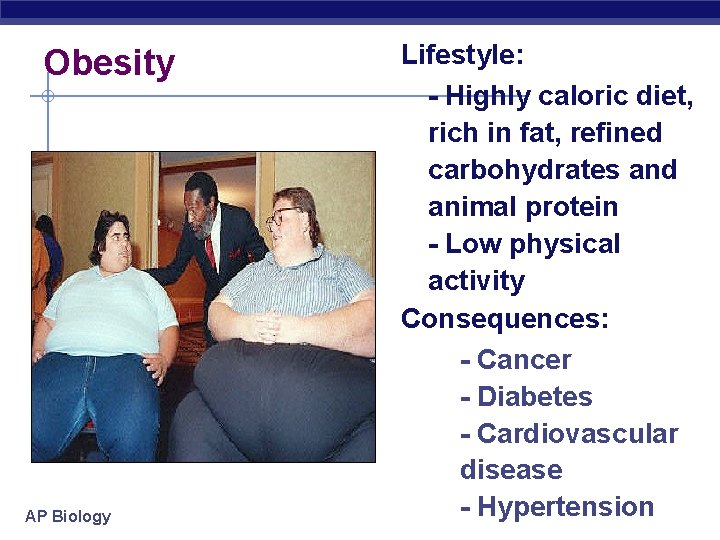
Obesity AP Biology Lifestyle: - Highly caloric diet, rich in fat, refined carbohydrates and animal protein - Low physical activity Consequences: - Cancer - Diabetes - Cardiovascular disease - Hypertension
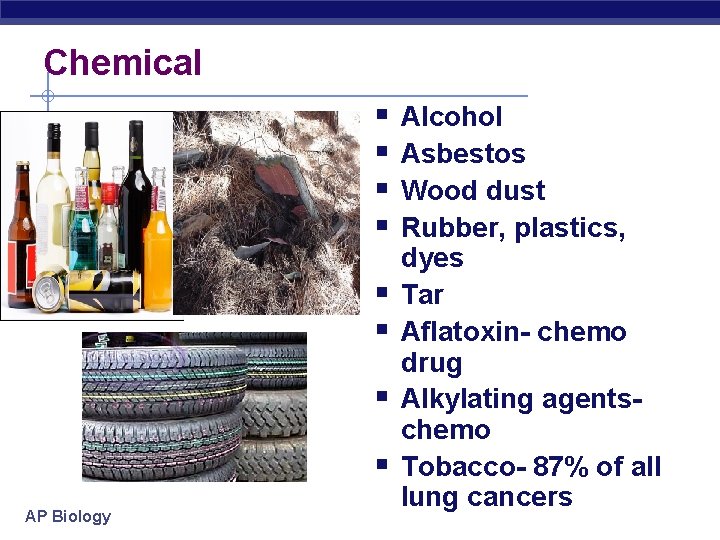
Chemical § § § § AP Biology Alcohol Asbestos Wood dust Rubber, plastics, dyes Tar Aflatoxin- chemo drug Alkylating agentschemo Tobacco- 87% of all lung cancers
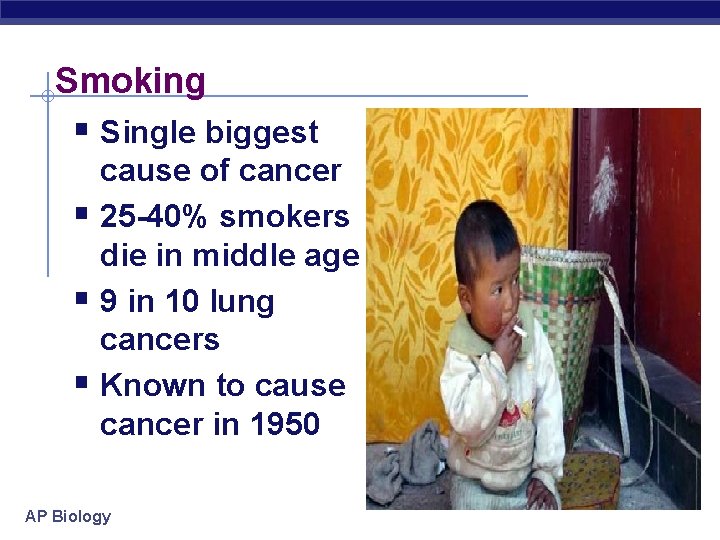
Smoking § Single biggest cause of cancer § 25 -40% smokers die in middle age § 9 in 10 lung cancers § Known to cause cancer in 1950 AP Biology
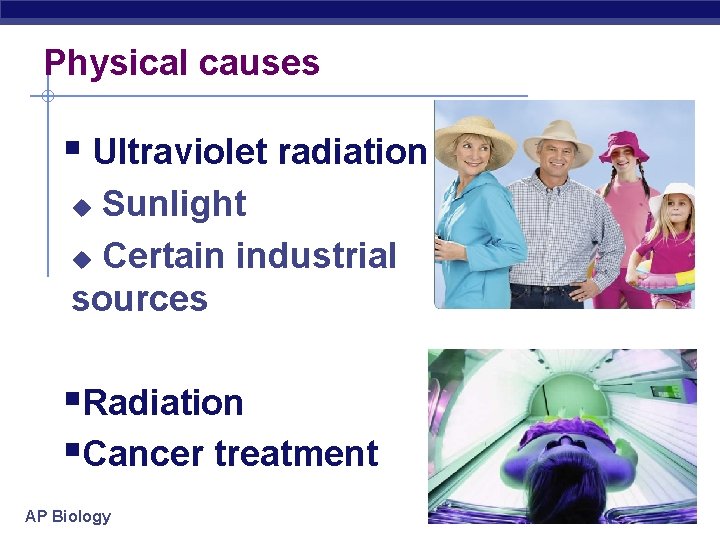
Physical causes § Ultraviolet radiation Sunlight u Certain industrial sources u §Radiation §Cancer treatment AP Biology
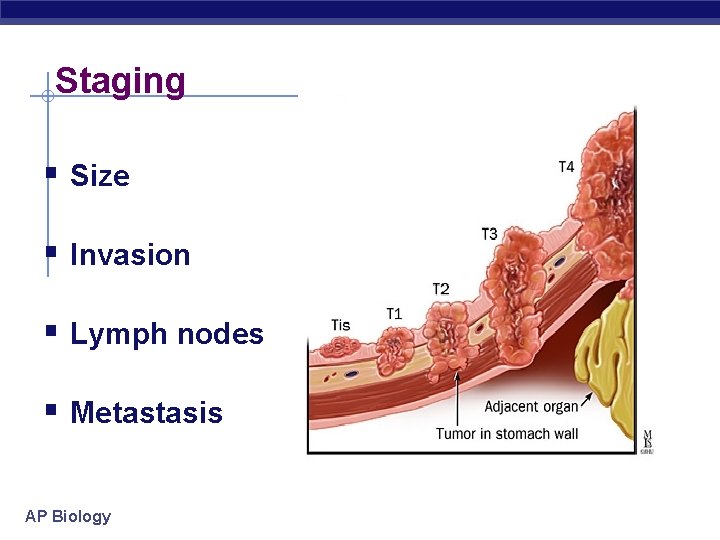
Staging § Size § Invasion § Lymph nodes § Metastasis AP Biology
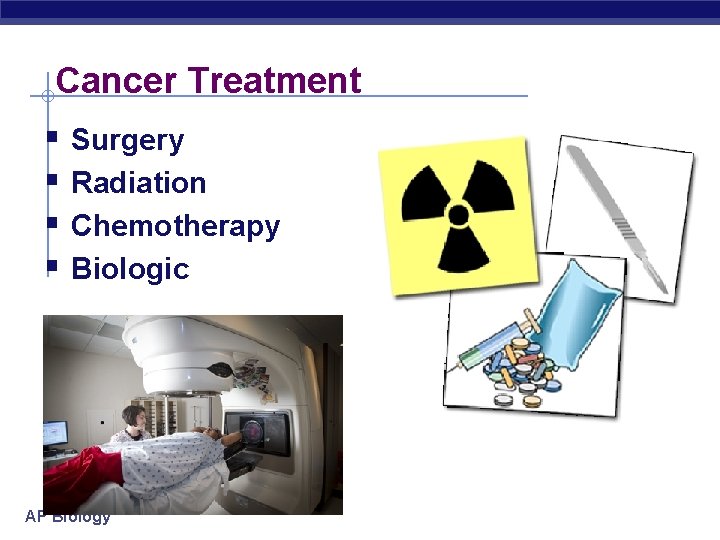
Cancer Treatment § Surgery § Radiation § Chemotherapy § Biologic AP Biology
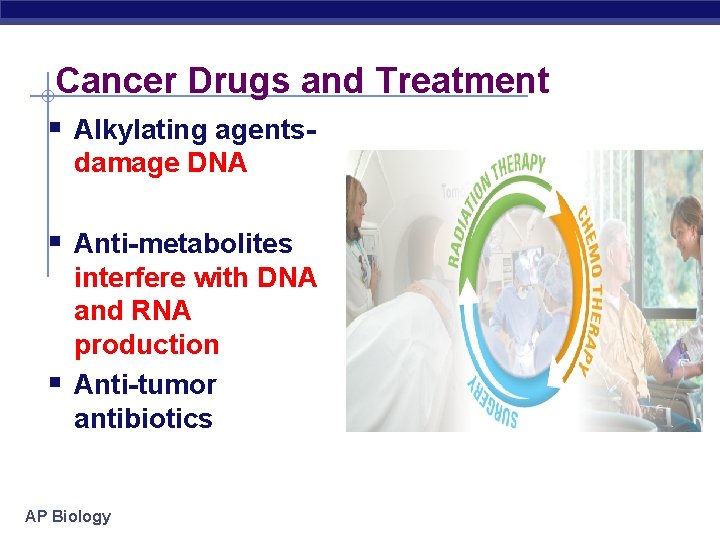
Cancer Drugs and Treatment § Alkylating agentsdamage DNA § Anti-metabolites § interfere with DNA and RNA production Anti-tumor antibiotics AP Biology
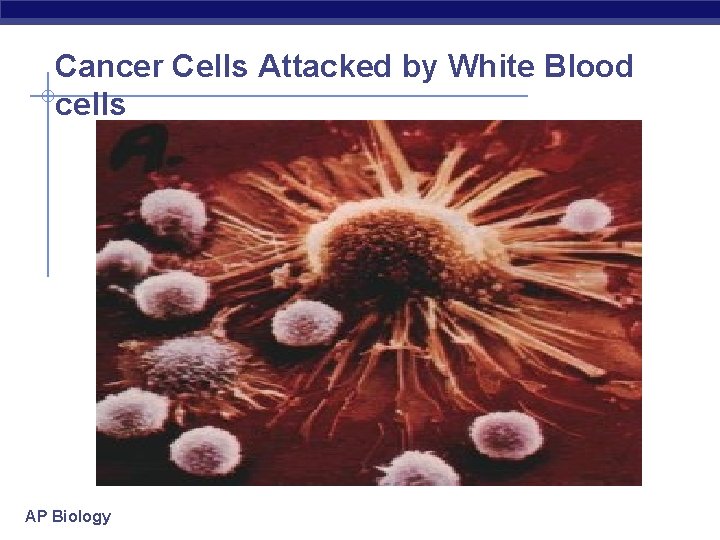
Cancer Cells Attacked by White Blood cells AP Biology
- Slides: 35