
The Cell Cycle All phases except mitosis and
- Slides: 25
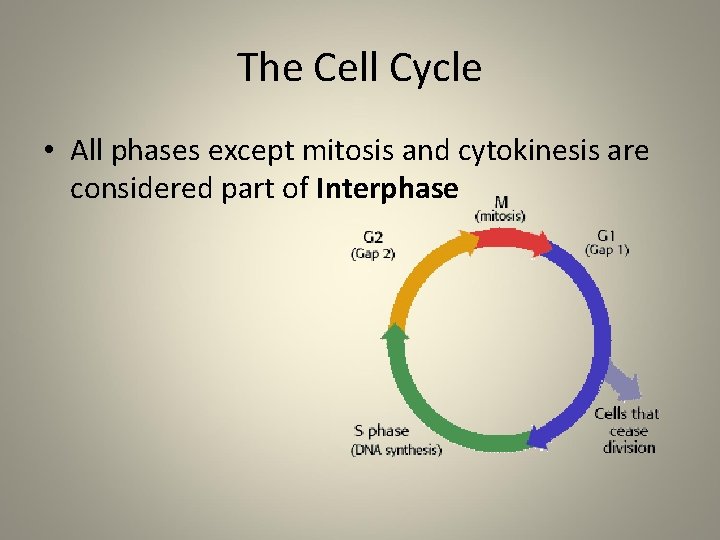
The Cell Cycle • All phases except mitosis and cytokinesis are considered part of Interphase
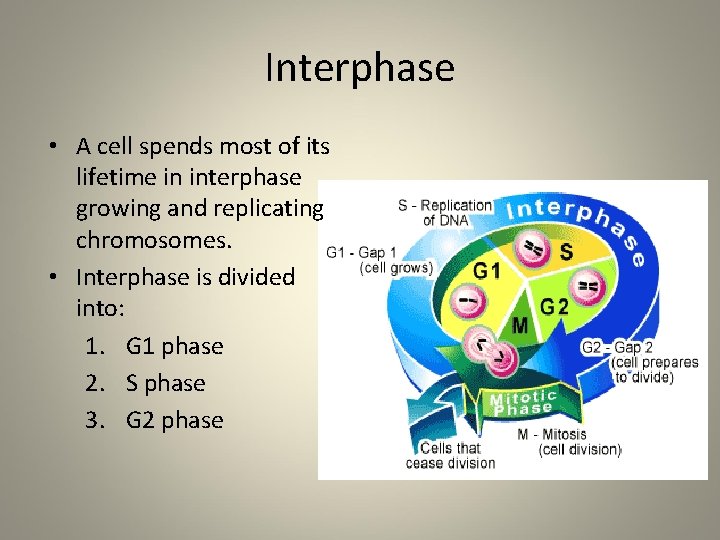
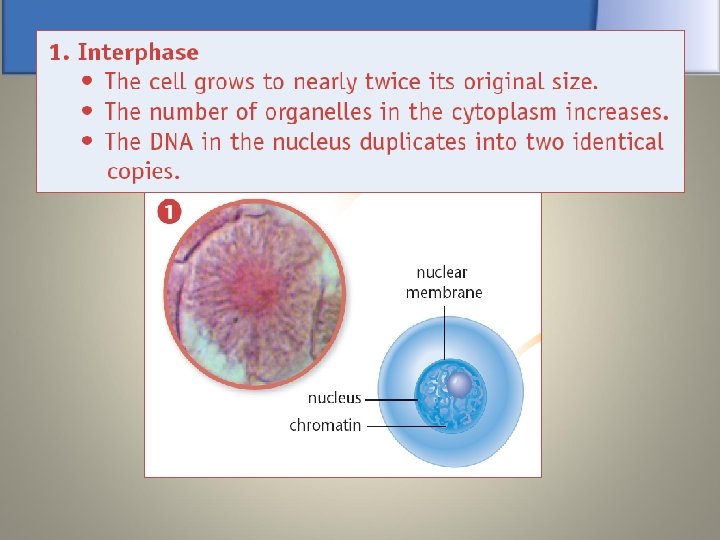
Interphase • A cell spends most of its lifetime in interphase growing and replicating chromosomes. • Interphase is divided into: 1. G 1 phase 2. S phase 3. G 2 phase
Interphase: G 1 phase • During the G 1, or growth 1 phase of interphase, the cell makes new molecules and grows larger. • This phase can be long or short depending on the type of cell and the health of an organism.
Interphase: S phase • S is for synthesis of more DNA. • During the S phase the uncoiled chromosomes, called chromatin, are replicated or duplicated. • During interphase, the nucleus looks like a dark blob (individual chromosomes are not visible).
Interphase: G 2 phase • During the G 2 or growth 2 phase the cell again synthesizes more molecules and grows larger.
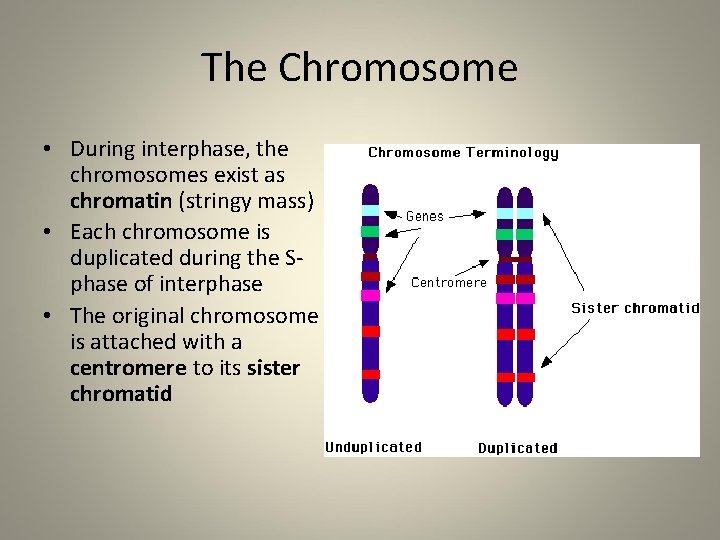
The Chromosome • During interphase, the chromosomes exist as chromatin (stringy mass) • Each chromosome is duplicated during the Sphase of interphase • The original chromosome is attached with a centromere to its sister chromatid
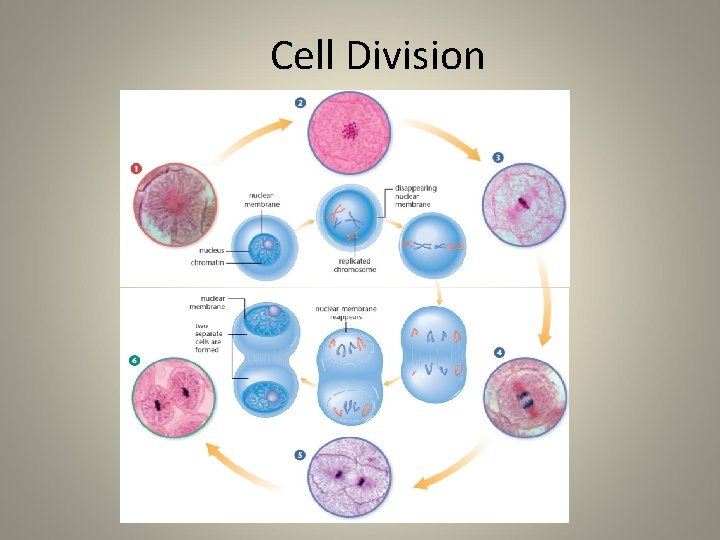
Cell Division
Mitosis Review SBI 3 U
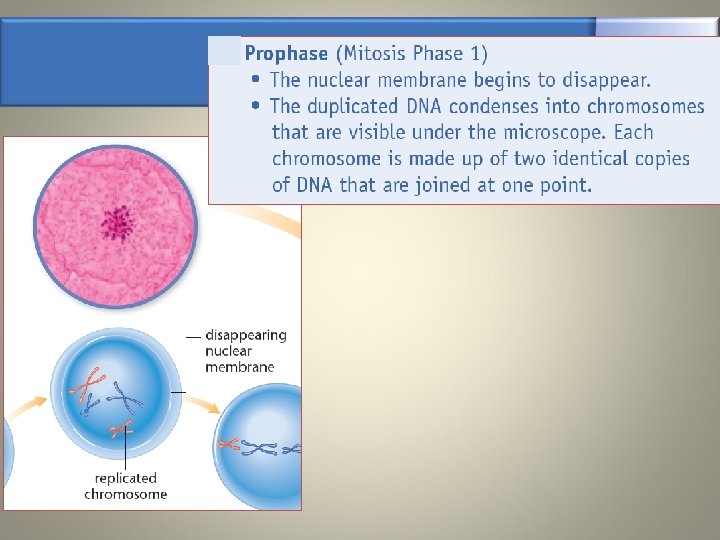
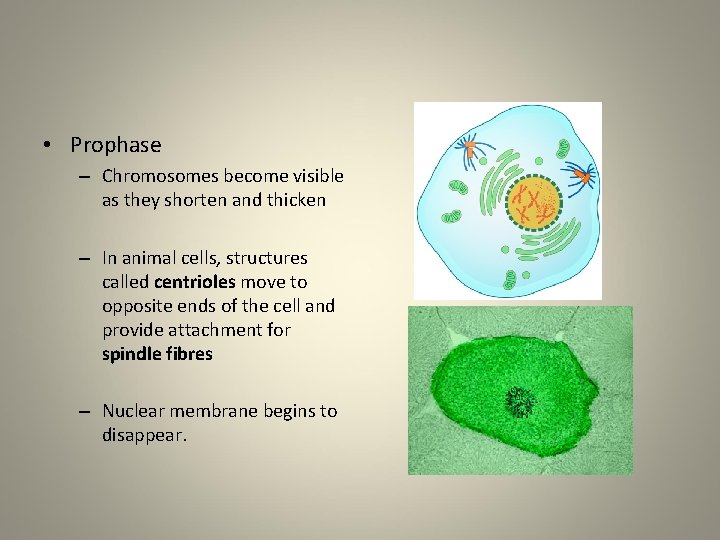
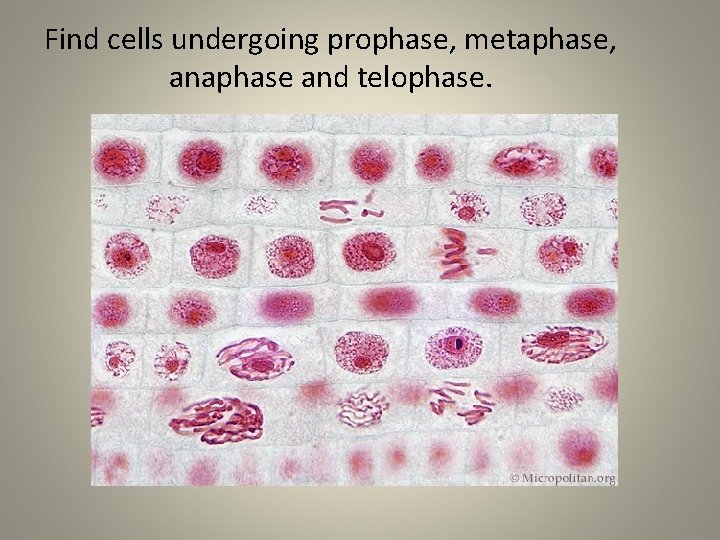
• Prophase – Chromosomes become visible as they shorten and thicken – In animal cells, structures called centrioles move to opposite ends of the cell and provide attachment for spindle fibres – Nuclear membrane begins to disappear.
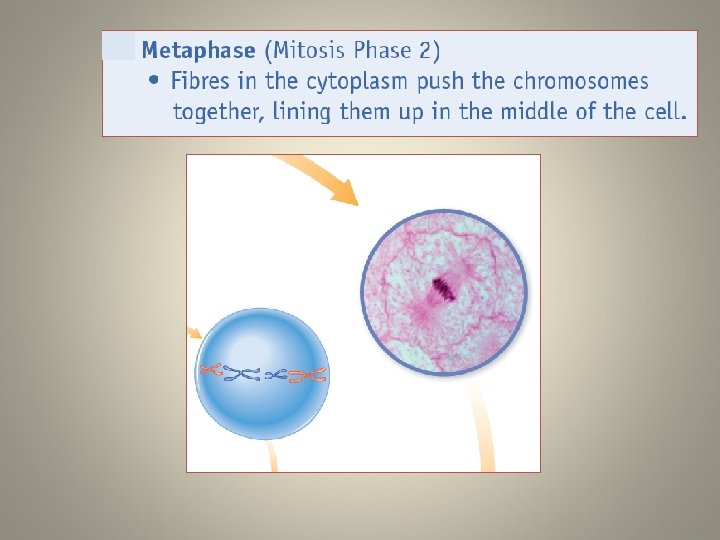
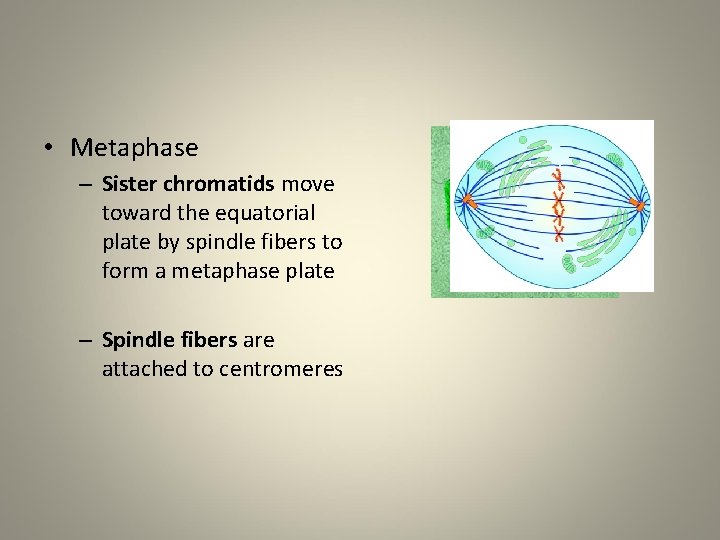
• Metaphase – Sister chromatids move toward the equatorial plate by spindle fibers to form a metaphase plate – Spindle fibers are attached to centromeres
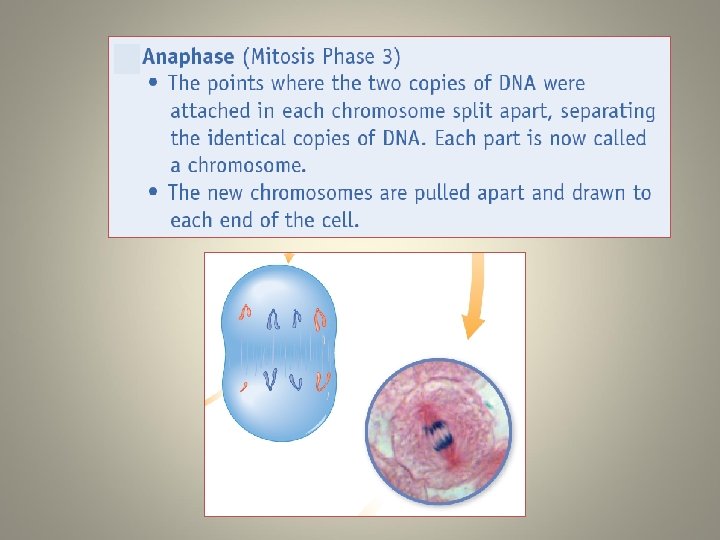
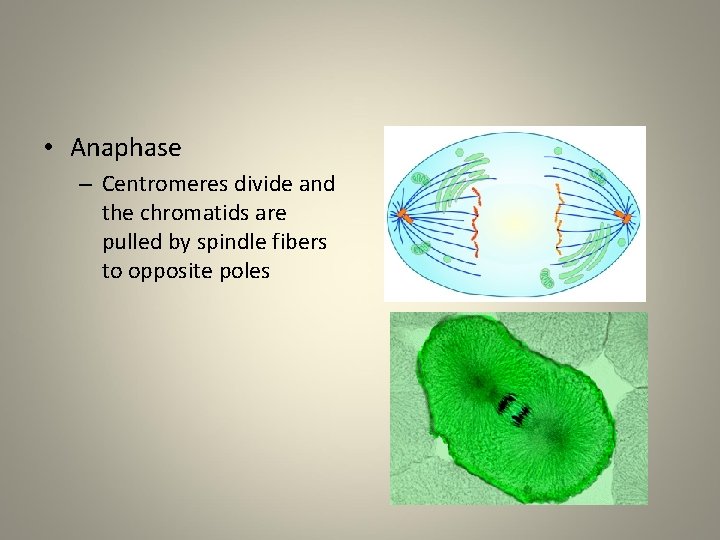
• Anaphase – Centromeres divide and the chromatids are pulled by spindle fibers to opposite poles
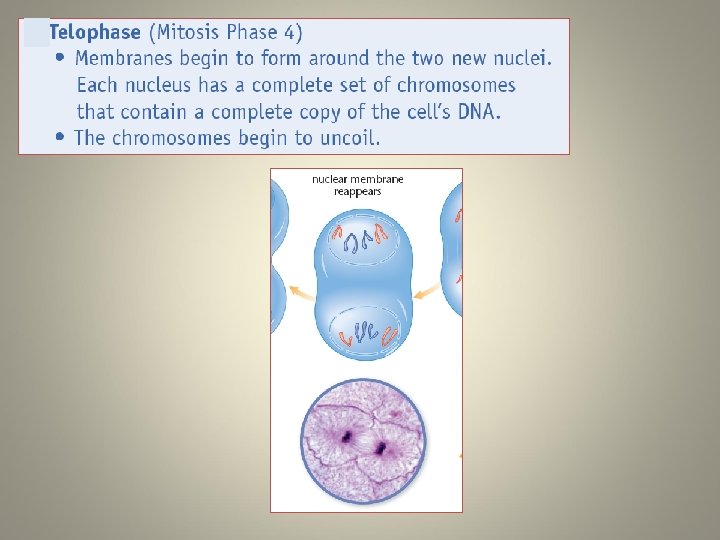
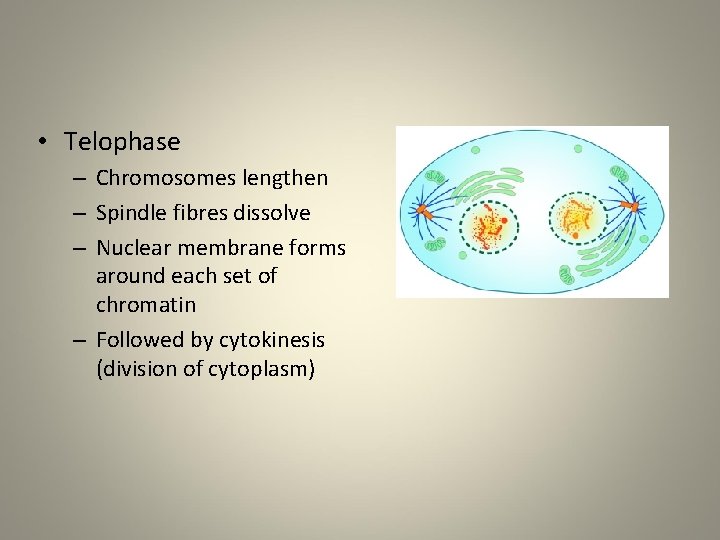
• Telophase – Chromosomes lengthen – Spindle fibres dissolve – Nuclear membrane forms around each set of chromatin – Followed by cytokinesis (division of cytoplasm)
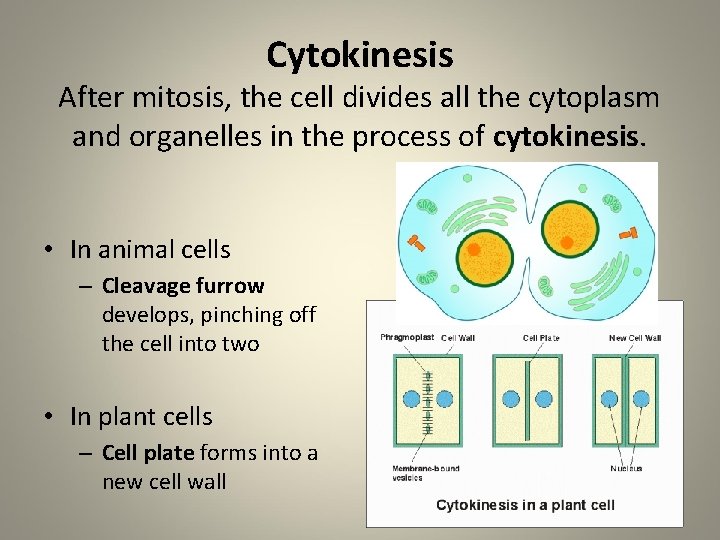
Cytokinesis After mitosis, the cell divides all the cytoplasm and organelles in the process of cytokinesis. • In animal cells – Cleavage furrow develops, pinching off the cell into two • In plant cells – Cell plate forms into a new cell wall
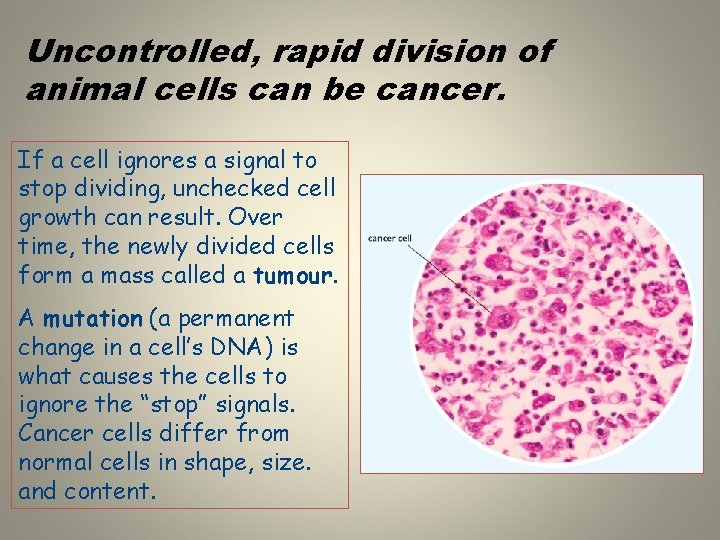
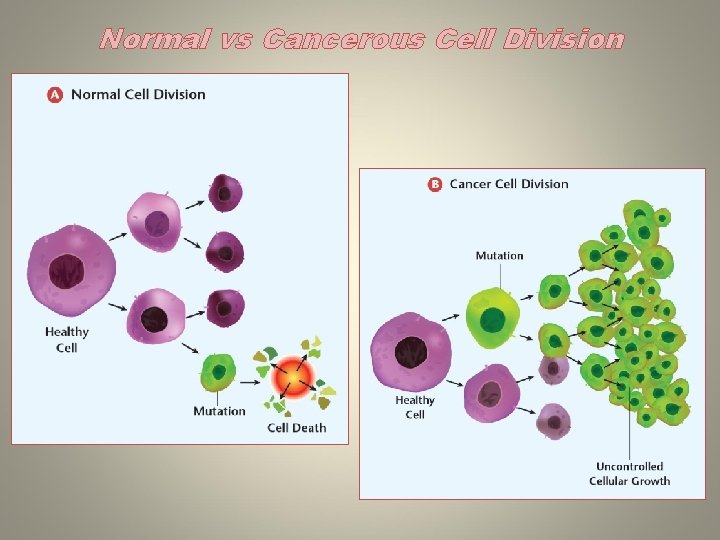
Uncontrolled, rapid division of animal cells can be cancer. If a cell ignores a signal to stop dividing, unchecked cell growth can result. Over time, the newly divided cells form a mass called a tumour. A mutation (a permanent change in a cell’s DNA) is what causes the cells to ignore the “stop” signals. Cancer cells differ from normal cells in shape, size. and content.
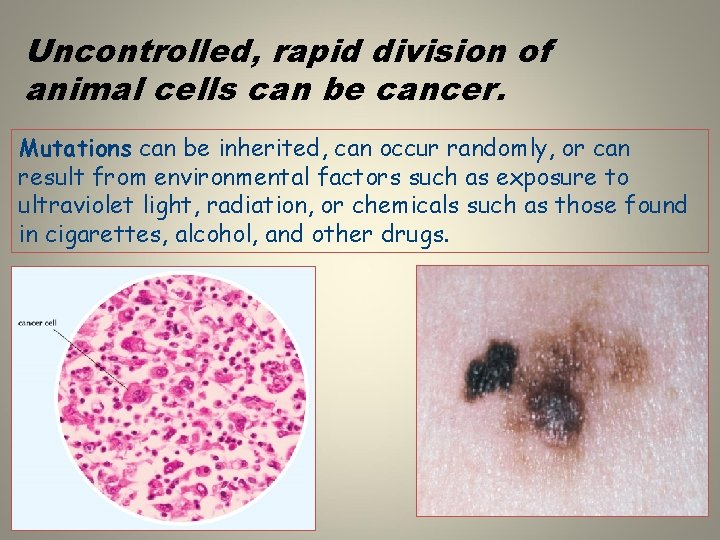
Uncontrolled, rapid division of animal cells can be cancer. Mutations can be inherited, can occur randomly, or can result from environmental factors such as exposure to ultraviolet light, radiation, or chemicals such as those found in cigarettes, alcohol, and other drugs.
Normal vs Cancerous Cell Division
Mitosis Rap https: //www. youtube. com/watch? v=p. Os. Ab. Ti 9 t Hw
Mitosis Question Sheet • Complete Questions 1 -9
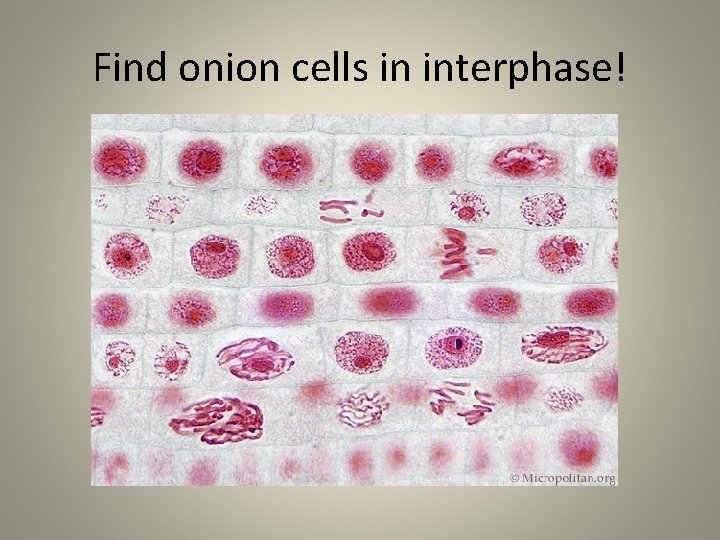
Find onion cells in interphase!
Find cells undergoing prophase, metaphase, anaphase and telophase.