
The Cell Chapter 4 Cells Marks the boundary
The Cell Chapter 4
Cells Marks the boundary between the “living and the dead” p Structural and functional unit of an organism p Smallest structure capable of performing all of the functions necessary for life p
What is a cell? p Why do we care? n n We have TRILLIONS of them!! (@65) Every organism is composed of one or more cells Basic unit of structure and function in organisms All come from pre-existing cells Cell Theory
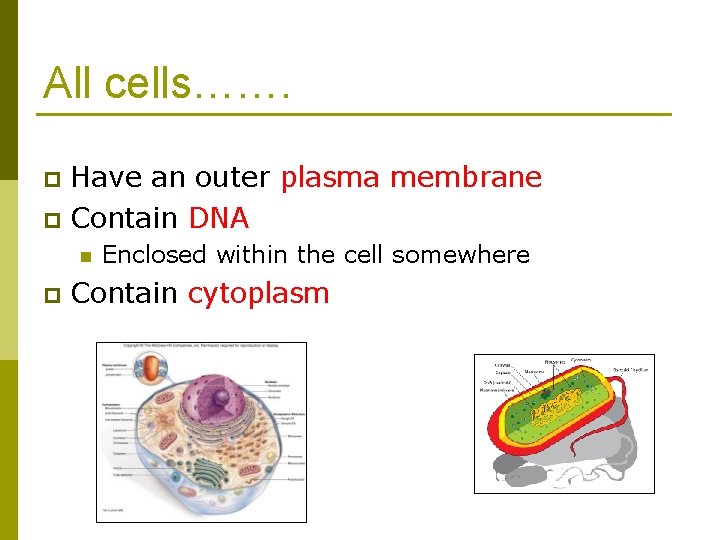
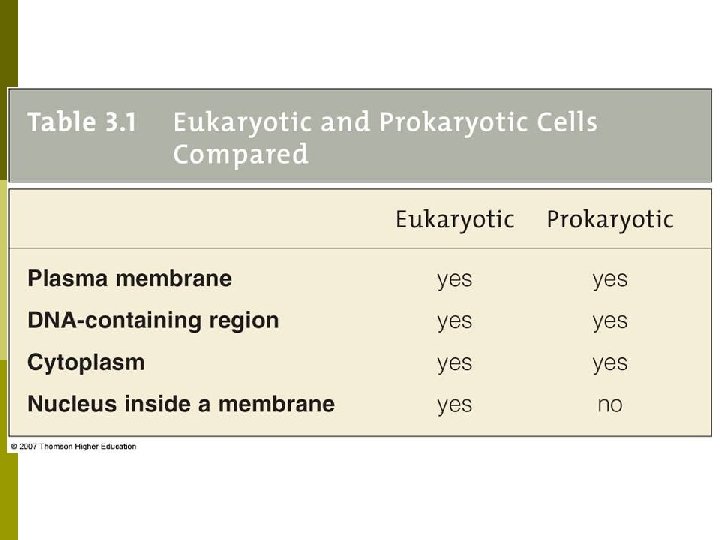
All cells……. Have an outer plasma membrane p Contain DNA p n p Enclosed within the cell somewhere Contain cytoplasm
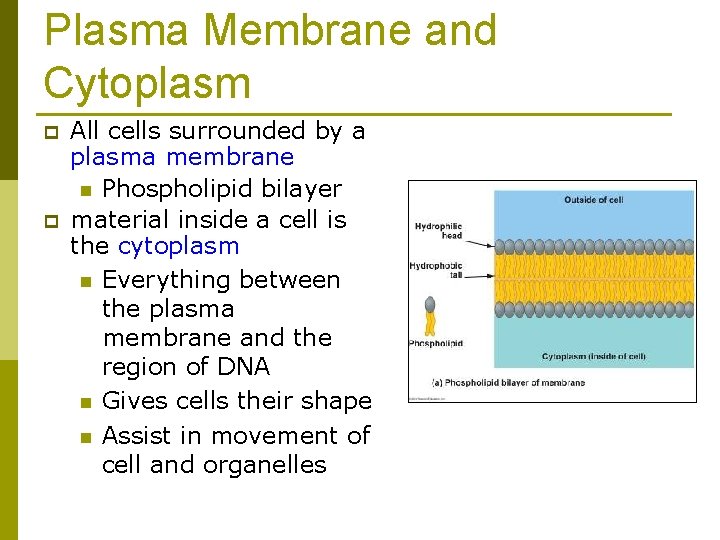
Plasma Membrane and Cytoplasm p p All cells surrounded by a plasma membrane n Phospholipid bilayer material inside a cell is the cytoplasm n Everything between the plasma membrane and the region of DNA n Gives cells their shape n Assist in movement of cell and organelles

Microscopes p Compound light microscope n Multiple lenses increase magnifying power
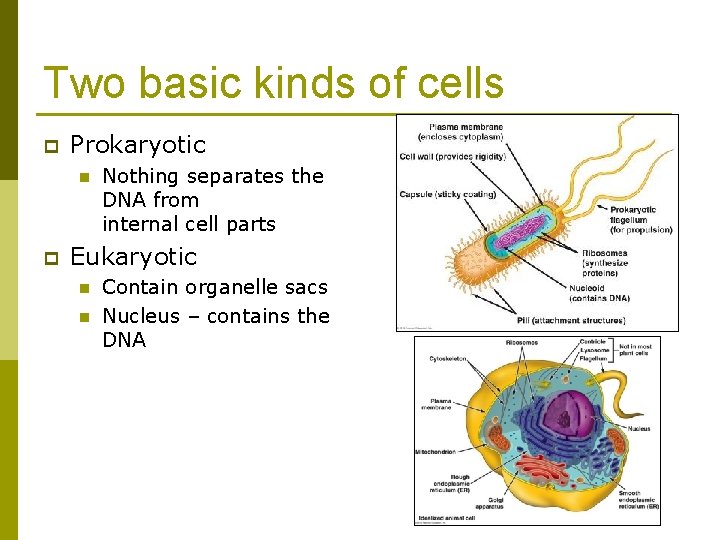
Two basic kinds of cells p Prokaryotic n p Nothing separates the DNA from internal cell parts Eukaryotic n n Contain organelle sacs Nucleus – contains the DNA
Eukaryotic Cells
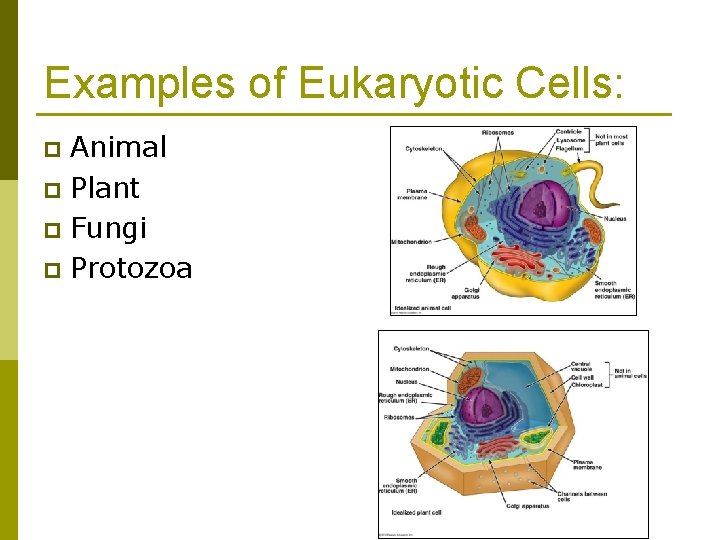
Examples of Eukaryotic Cells: Animal p Plant p Fungi p Protozoa p
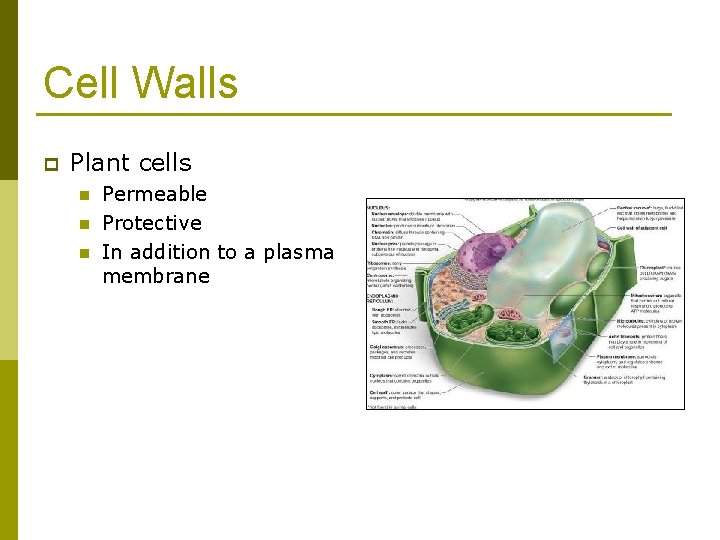
Cell Walls p Plant cells n n n Permeable Protective In addition to a plasma membrane
Organelles p Organelles act as their own separate “organs” n n They physically isolate chemical reactions inside cells Animals and plants will differ in their organelles
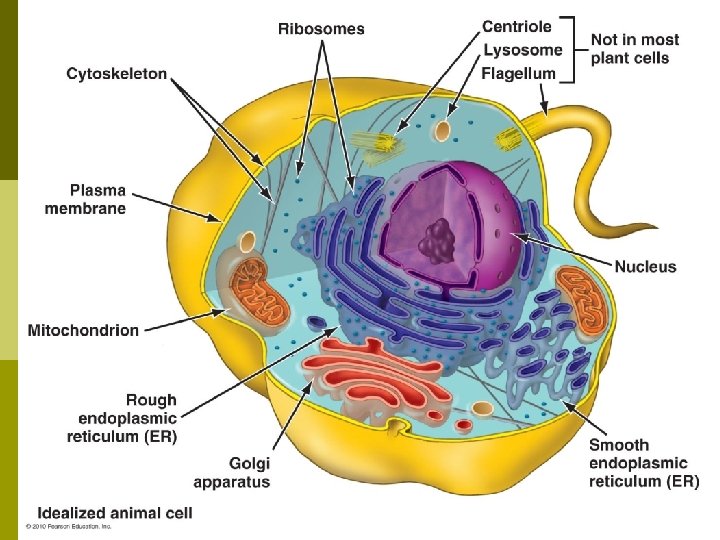
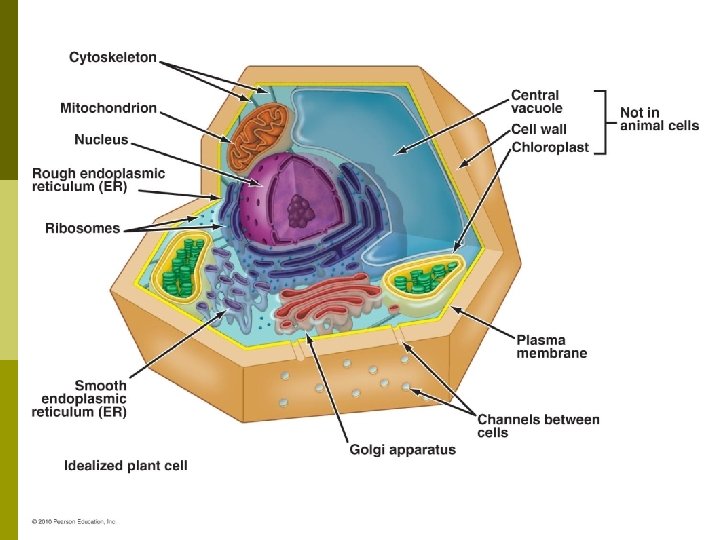
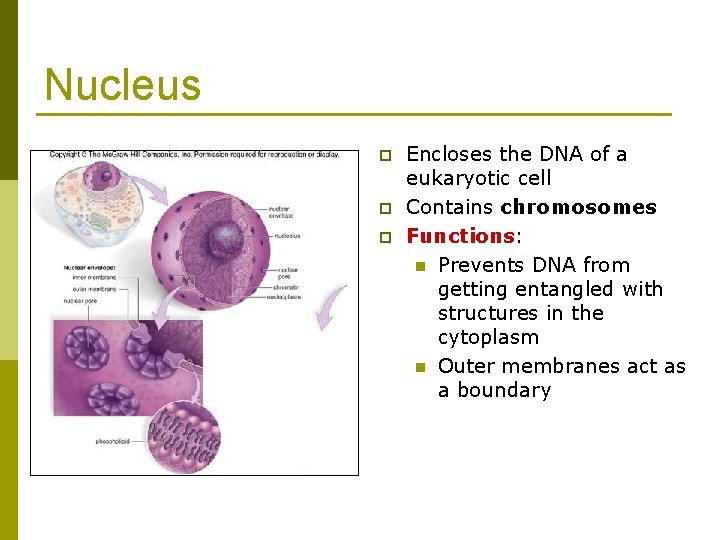
Nucleus p p p Encloses the DNA of a eukaryotic cell Contains chromosomes Functions: n Prevents DNA from getting entangled with structures in the cytoplasm n Outer membranes act as a boundary
Components of the nucleus Nuclear pores p Nuclear envelope p Nucleolus p Nucleoplasm p DNA p n n Chromosomes Chromatin
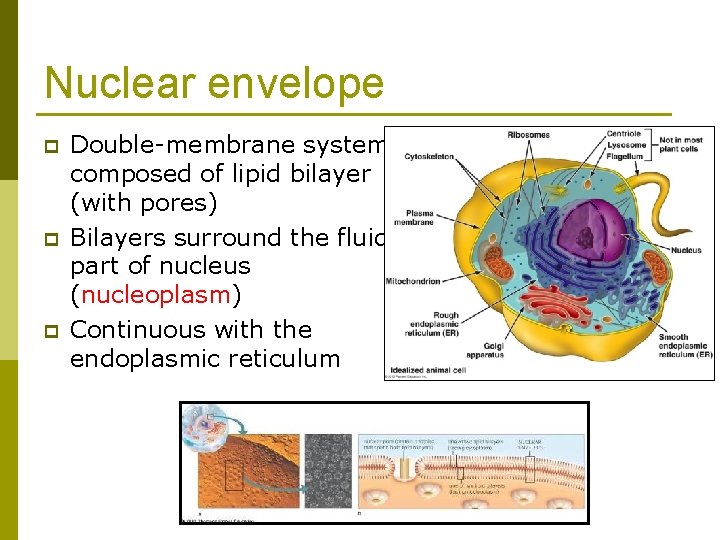
Nuclear envelope p p p Double-membrane system composed of lipid bilayer (with pores) Bilayers surround the fluid part of nucleus (nucleoplasm) Continuous with the endoplasmic reticulum
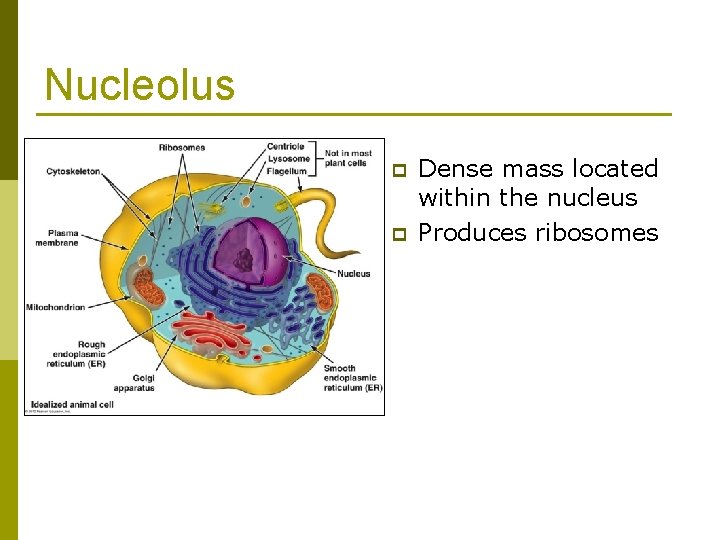
Nucleolus p p Dense mass located within the nucleus Produces ribosomes
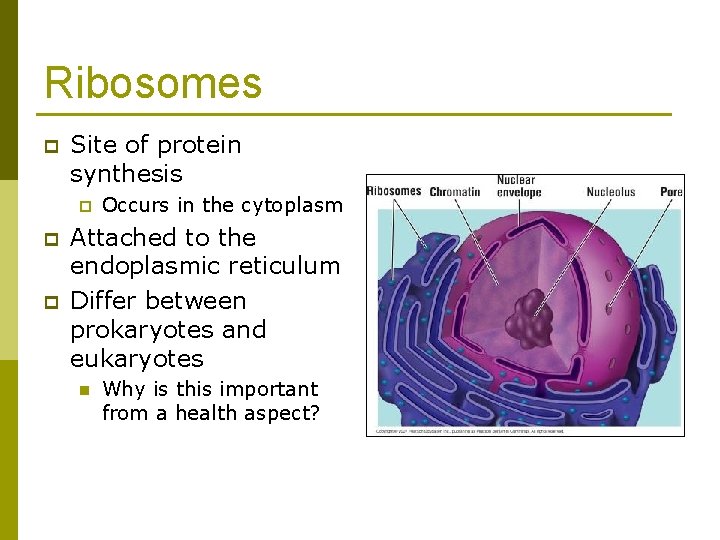
Ribosomes p Site of protein synthesis p p p Occurs in the cytoplasm Attached to the endoplasmic reticulum Differ between prokaryotes and eukaryotes n Why is this important from a health aspect?

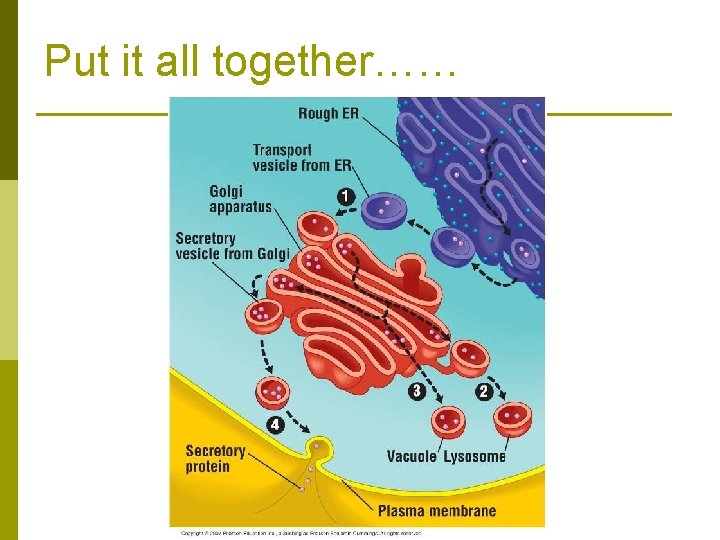
Endomembrane System p Helps modify proteins into final form n Lipids are assembled Compartmentalizes the cell p Main components: p n n 1. 2. 3. 4. Nuclear envelope Endoplasmic reticulum (ER) Golgi body Various vesicles (transport)
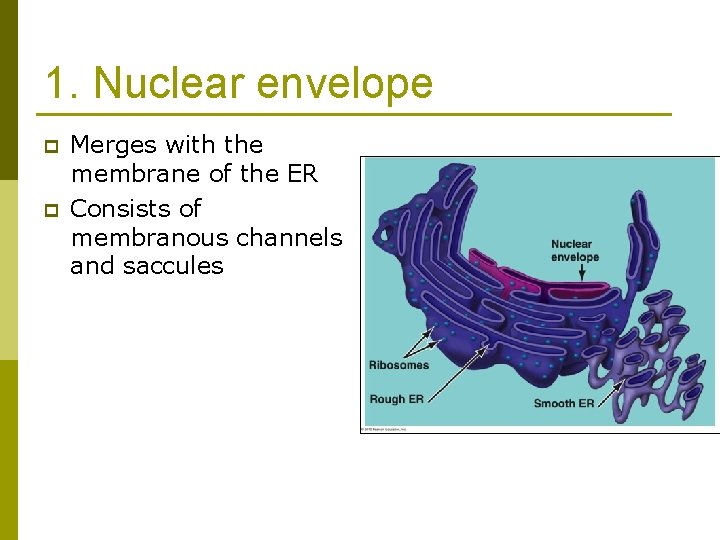
1. Nuclear envelope p p Merges with the membrane of the ER Consists of membranous channels and saccules
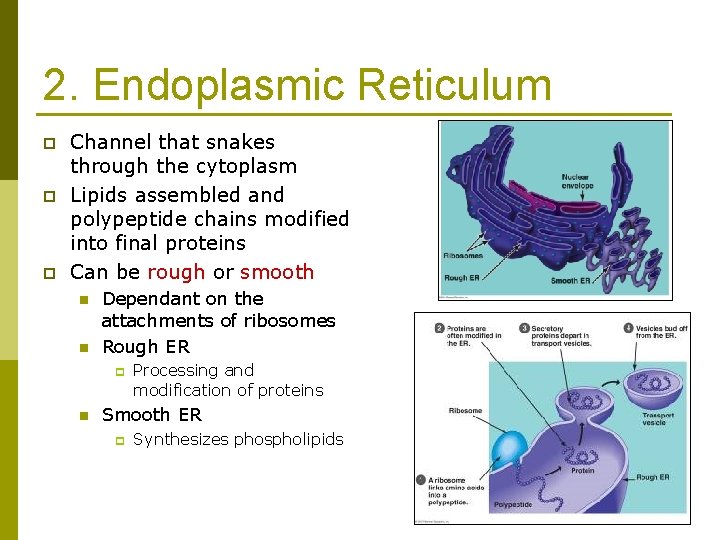
2. Endoplasmic Reticulum p p p Channel that snakes through the cytoplasm Lipids assembled and polypeptide chains modified into final proteins Can be rough or smooth n n Dependant on the attachments of ribosomes Rough ER p n Processing and modification of proteins Smooth ER p Synthesizes phospholipids
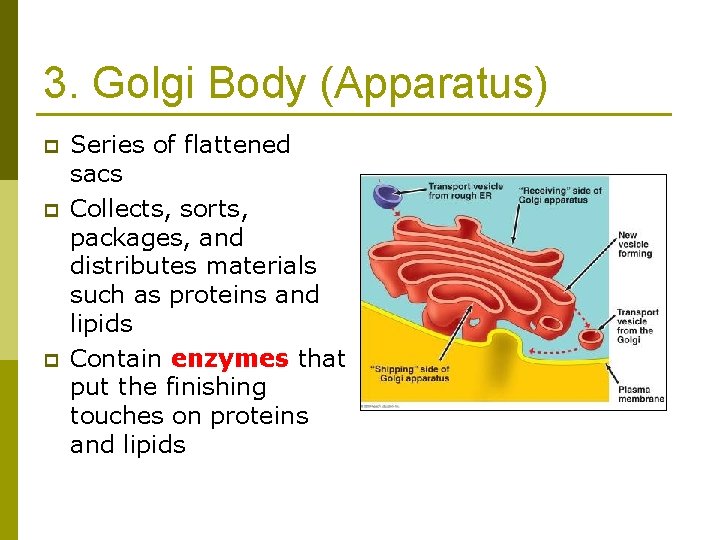
3. Golgi Body (Apparatus) p p p Series of flattened sacs Collects, sorts, packages, and distributes materials such as proteins and lipids Contain enzymes that put the finishing touches on proteins and lipids
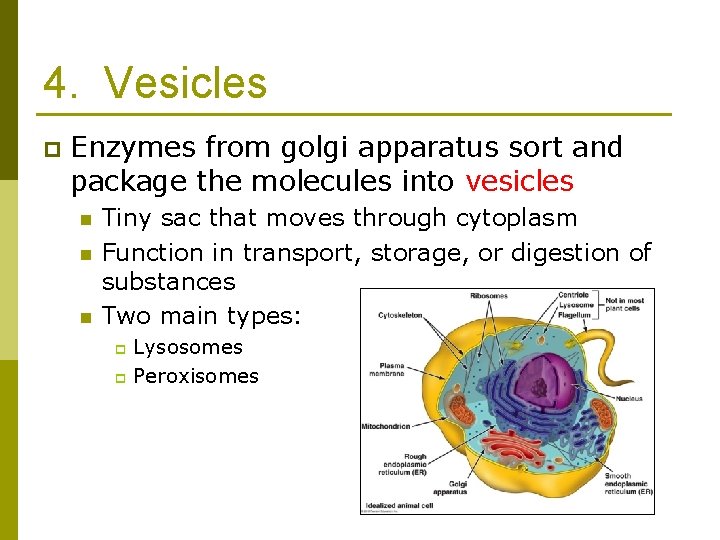
4. Vesicles p Enzymes from golgi apparatus sort and package the molecules into vesicles n n n Tiny sac that moves through cytoplasm Function in transport, storage, or digestion of substances Two main types: Lysosomes p Peroxisomes p
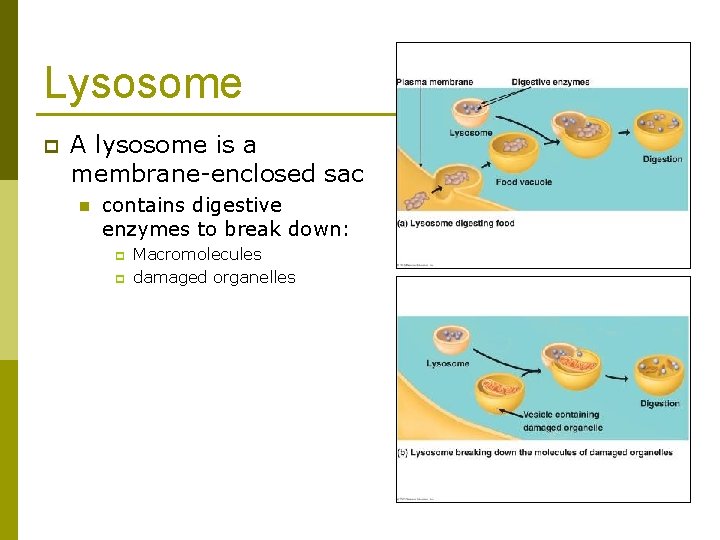
Lysosome p A lysosome is a membrane-enclosed sac n contains digestive enzymes to break down: p p Macromolecules damaged organelles
Put it all together……
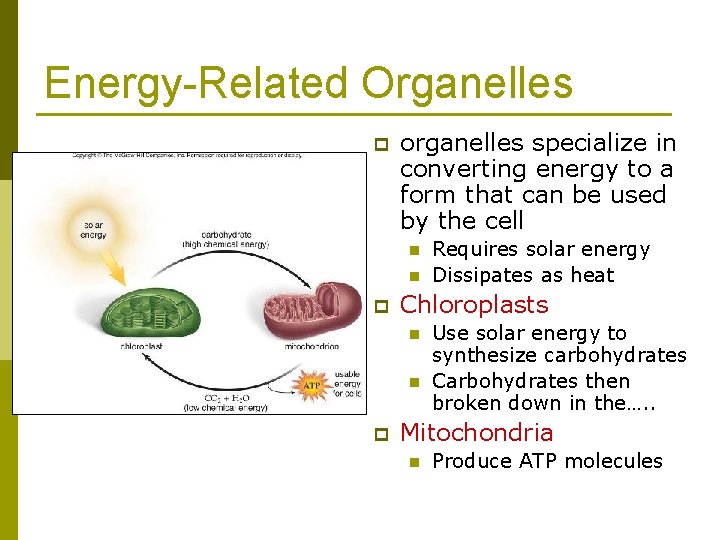
Energy-Related Organelles p organelles specialize in converting energy to a form that can be used by the cell n n p Chloroplasts n n p Requires solar energy Dissipates as heat Use solar energy to synthesize carbohydrates Carbohydrates then broken down in the…. . Mitochondria n Produce ATP molecules

Energy-Related Organelles q Photosynthesis p Cellular Respiration n The chemical energy of carbohydrates is converted at ATP
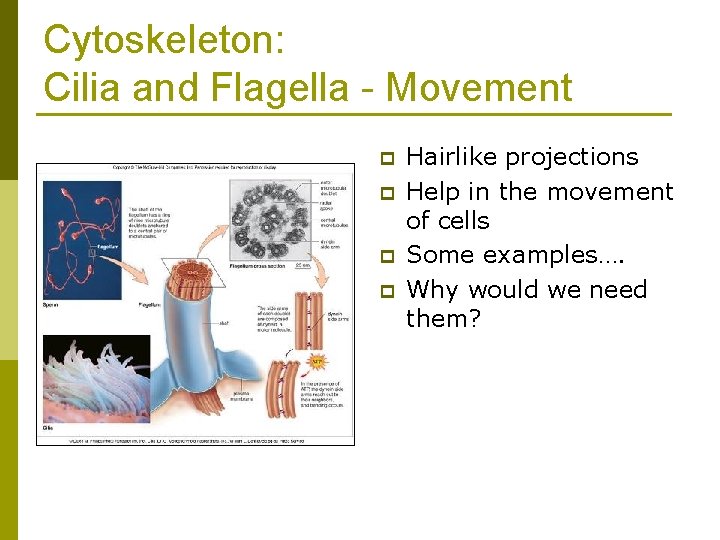
Cytoskeleton: Cilia and Flagella - Movement p p Hairlike projections Help in the movement of cells Some examples…. Why would we need them?

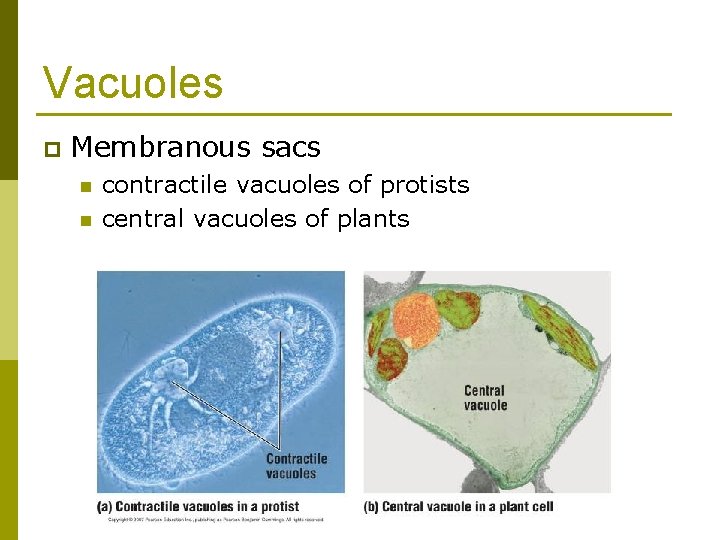
Vacuoles p Membranous sacs n n contractile vacuoles of protists central vacuoles of plants
Prokaryotes Archae Bacteria
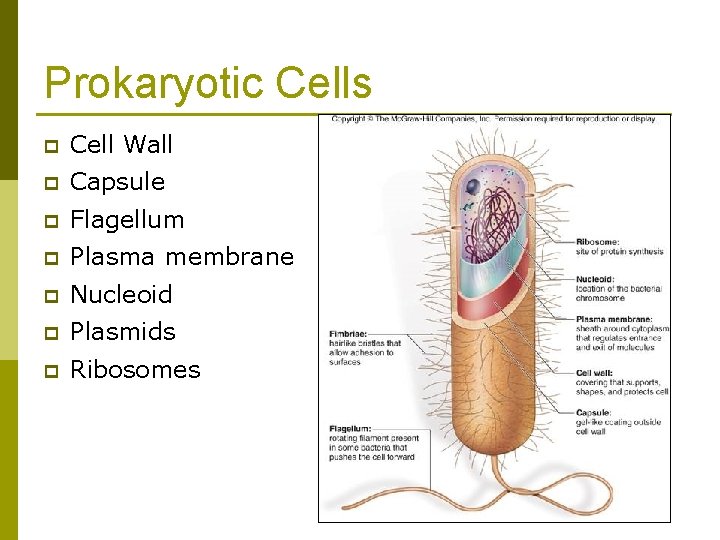
Prokaryotic Cells p Cell Wall p Capsule p Flagellum p Plasma membrane p Nucleoid p Plasmids p Ribosomes
- Slides: 33