
THE CELL Cell Diagram Cell Membrane 7 5
THE CELL
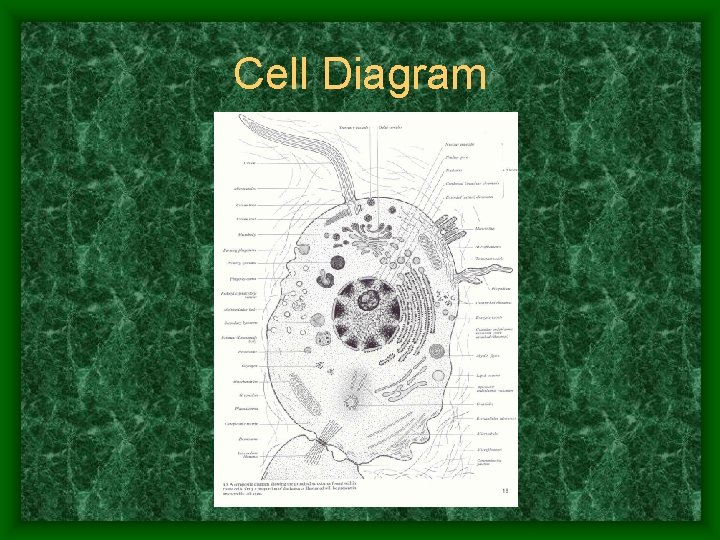
Cell Diagram
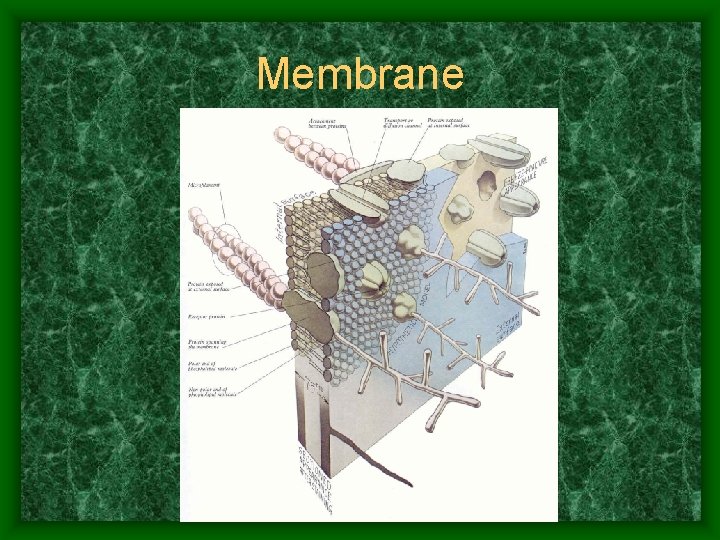
Cell Membrane • 7. 5 nm thick • Phospholipids: proteins = 3: 2 • Bilayer – Hydrophobic tails point inwards – Hydrophilic heads outwards
Fluid Mosaic Model FLUID Particles eg proteins, glycolipids can move about laterally ie they are flexible MOSAIC Particles arranged in random fashion, varying in shape and size

CHEMISTRY • Proteins – Intrinsic (transmembrane) – Extrinsic (peripheral) • Glycoproteins • Glycolipids • Cholesterol
GLYCOCALYX Glycoproteins • Recognition sites – Hormones – Neurotransmitters Glycolipids • CHO part extends into water outside cell • Recognition site – Eg ABO blood system
CHOLESTEROL • Occur throughout membrane • Hydrophobic – Prevent leakage of water + ions out of cell • Pull together fatty acid tails of phospholipid molecules
MEMBRANE Functions • Limit diffusion forming compartments within cell • Control passage of ions and small organic • • molecules Generate electric potentials Provide surfaces for attachment of enzymes Receptors for hormones and other chemicals Points of attachment of eg flagella - motility
MEMBRANE Synthesis • By RER – In collaboration with Golgi
Receptors • Stimulation of receptor activation of second messenger (adenylate cyclase) changes in levels of c. AMP alterations in DNA synthesis, gene expression + protein synthesis • c. GMP has opposite effects
Membrane
CELL CONTACTS • Desmosomes – Glycoprotein – desmoglea – Strength eg stratum spinosum of epidermis • Tight junctions – Barrier to diffusion • Gap junction – Free passage of substances – Eg liver, cardiac muscle
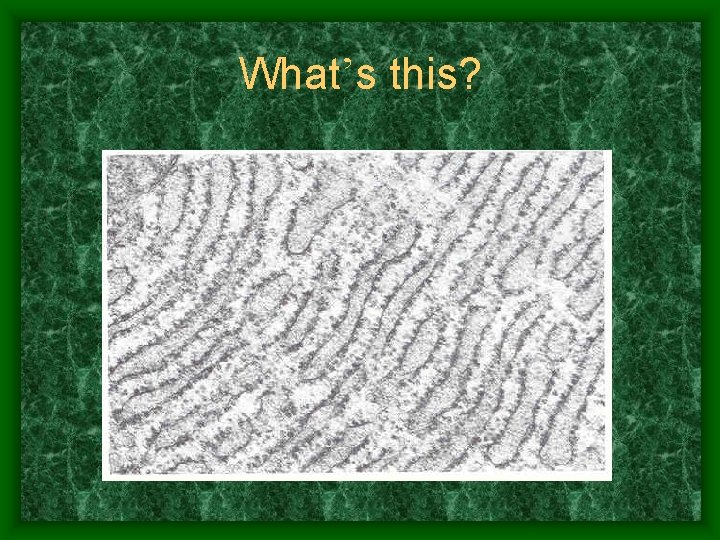
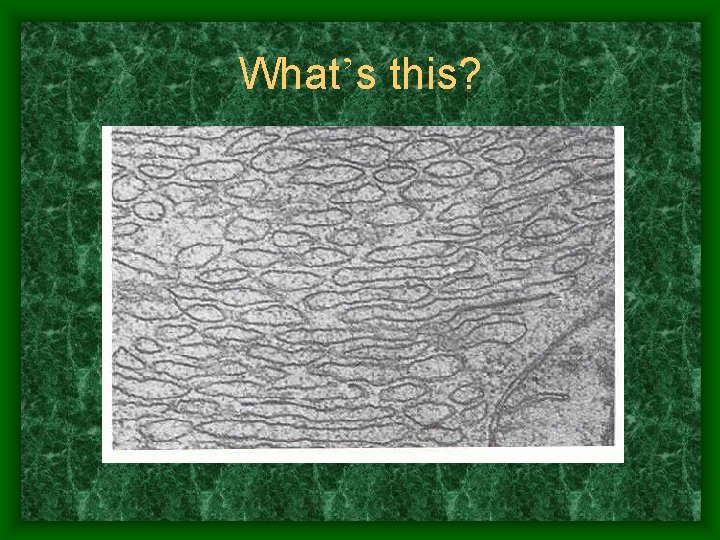
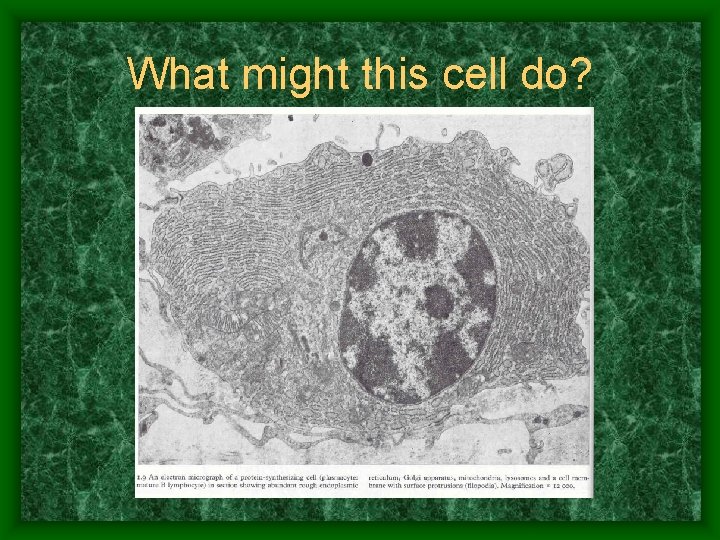
ENDOPLASMIC RETICULUM • Interconnecting membrane-lined channels – Cisternae – Tubules – Vesicles
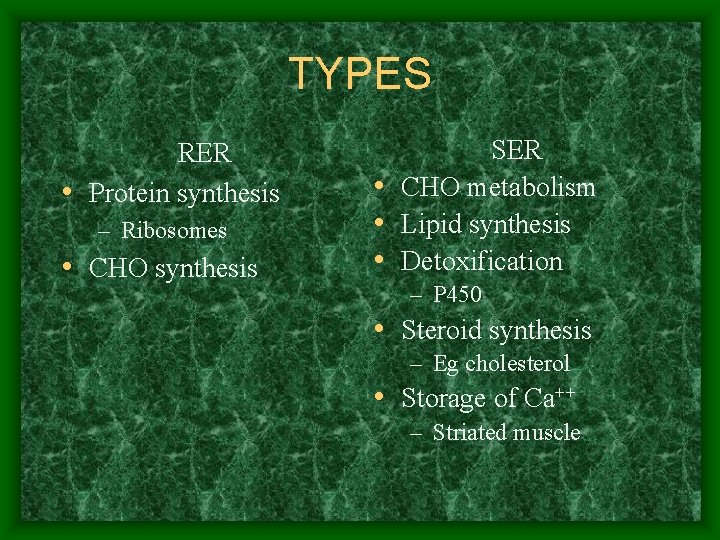
TYPES RER • Protein synthesis – Ribosomes • CHO synthesis SER • CHO metabolism • Lipid synthesis • Detoxification – P 450 • Steroid synthesis – Eg cholesterol • Storage of Ca++ – Striated muscle
What’s this?
What’s this?
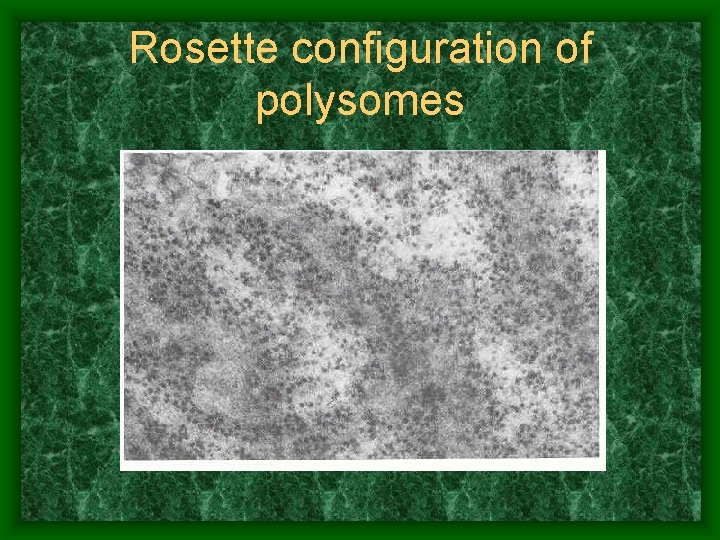
Rosette configuration of polysomes
RIBOSOMES • 15 nm across • 60 S/40 S • Svedberg unit – Function of density, shape, etc. • 73 different proteins (40 in large, 33 in small) • RNA molecules derived from nucleolus
RIBOSOMES 40 S subunit • Site of attachment and translation of m. RNA 60 S subunit • Responsible for release of new protein • Directs protein to cisternae
Mitochondrial Ribosomes • 55 S
MITOCHONDRION
What might this cell do?
Junctional Structures 1. 2. 3. 4. Gap junction Desmosome Tight junction Synapse
Gap junction • Gap of 3 nm between apposing membranes • Free passage of substances • EXAMPLES – Cardiac muscle (syncytium) – Embryonic cells (gene expression)
Desmosome • • Internal layer of dense protein Tonofilaments in protein Anchorage points between cells EXAMPLE – Epidermis
Tight junction • Membranes come into contact no gap • Prevent movement of substances e, g, toxins • EXAMPLE – Intestine – prevent absorption of harmful material from the lumen
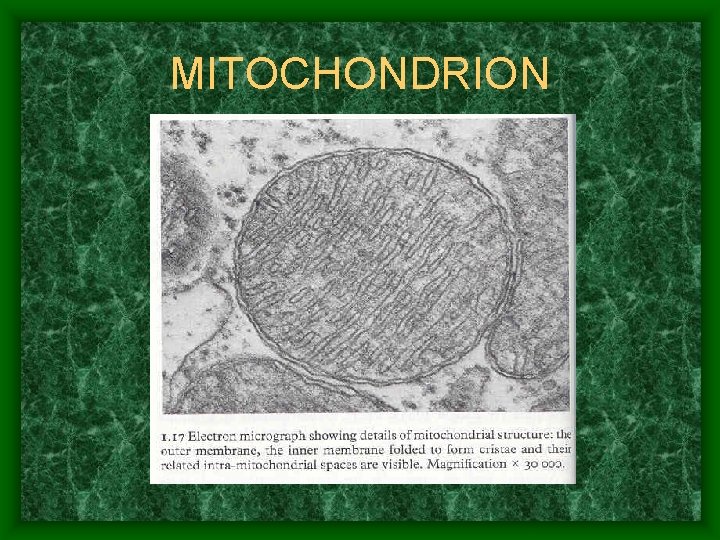
Mitochondria • • 0. 5 – 2 µm long Sausage shaped Outer membrane Inner membrane – folded into cristae • Well-developed in heart and brown fat (produce heat directly rather than via ATP • Matrix • Very large in cardiac cells
Matrix • Kreb’s cycle enzymes e. g. Oxaloacetate dehydrogenase
Inner membrane • Stalked particles • Enzymes of oxidative phosphorylation – ATP-synthetase
Functions of mitochondria • RESPIRATION • Fatty acid metabolism • Calcium concentration
Lysosomes • About 1 µm in diameter • Contain many hydrolases – Proteases – Lipases – Esterases • Numerous in phagocytes and active cells • Tay-Sachs disease: faulty carbohydrase (collection of lipid in CNS death
Golgi complex • Stacks of flattened, interconnected cisternae • Vesicles clustered at boreders • Cup-shaped – Convex side towards nucleus • FUNCTIONS – Addition of carbohydrates/fatty acids (glycosyl tranferase) – Sulphation – Lysosome production
Other cell components • • Microtubules Microfilaments (actin) Microvilli (5 µm long) Cilia + flagella (9 +2)
Nucleus • • • LAST but NOT LEAST!!! envelope Chromosomes Pores Nucleolus
- Slides: 34