
The Cell Biology 314 Mr Doron The Cell
The Cell Biology 314 Mr. Doron
The Cell • The cell is the structural and functional unit of all living organism and is sometimes called the "building block of life. • Some organisms, such as bacteria are unicellular consisting of a single cell. Another example is the ameba. • Other organisms, such as humans are multi-cellular (humans have an estimated 100 trillion cells).
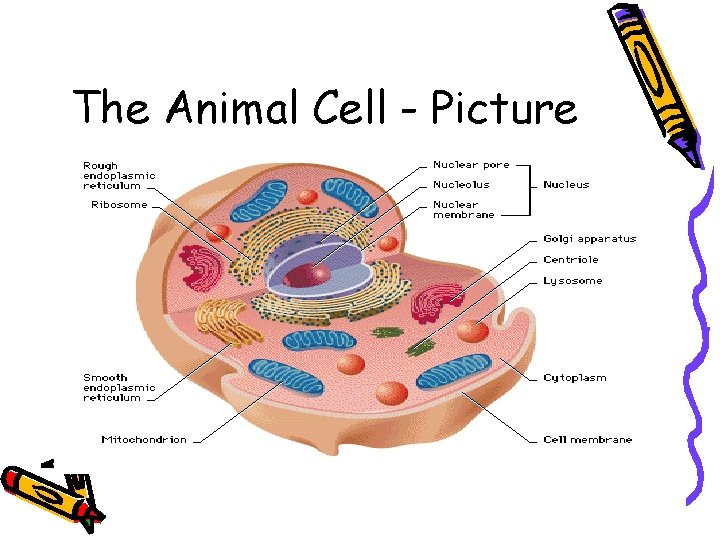
The Animal Cell - Picture
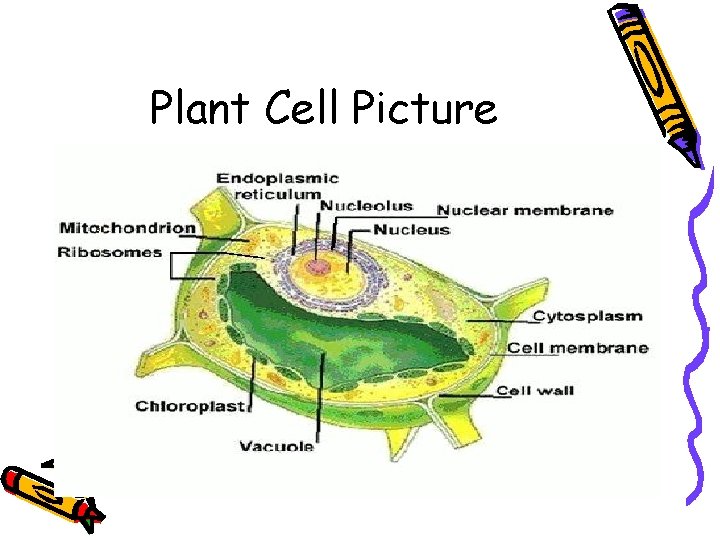
Plant Cell Picture
The Cell • It is the smallest structural unit of an organism that is capable of independent functioning • All living things are composed of cells. These cells come from preexisting cells • Consists of one or more nuclei, cytoplasm, and various organelles, all surrounded by a semi-permeable cell membrane.
Properties of a cell • Each cell is at least somewhat selfcontained and self-maintaining: • a cell can take in nutrients • convert these nutrients into energy • carry out specialized functions and reproduce as necessary. • Each cell stores its own set of instructions for carrying out each of these activities.
Components of a cell • A cell has three basic components – – – – 1) The cell or cytoplasmic membrane 2) the cytoplasm 3) the nucleus The cell membrane: this is the outside part of the cell separates its interior from its environment regulates what moves in and out (selectively permeable) – maintains the electric potential of the cell.
How do Cells Stay Alive? – Cells needs nutrients, oxygen and water. – Taken from the environment – Excretes waste products into environment
Exchanges Between Cell and its Environment • Occurs in three ways – 1) diffusion – 2) osmosis – 3) endocytosis
Diffusion • Movement of particles from an area with high concentration to an area of low concentration • Click the play button to see the video
Osmosis • Passage of a solvent (i. e. water) across a semi-permeable membrane • Click the image for a video
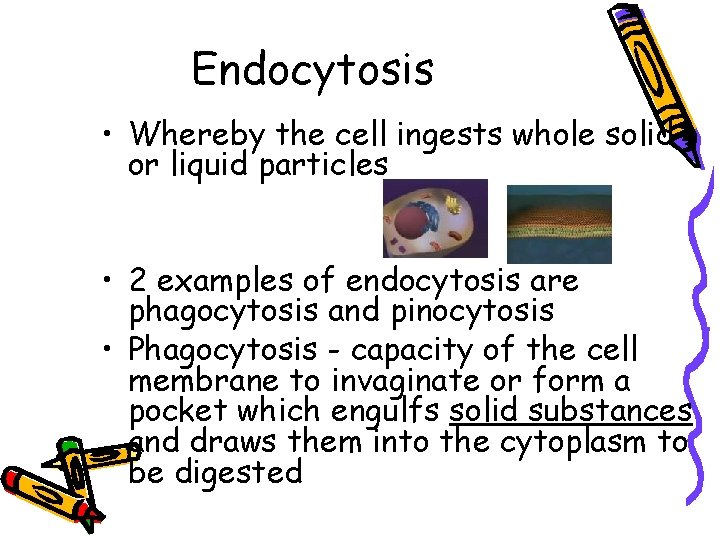
Endocytosis • Whereby the cell ingests whole solid or liquid particles • 2 examples of endocytosis are phagocytosis and pinocytosis • Phagocytosis - capacity of the cell membrane to invaginate or form a pocket which engulfs solid substances and draws them into the cytoplasm to be digested
Pinocytosis • Capacity of the cell membrane to invaginate and engulf liquid substances and draws them into the cytoplasm to be digested. • Active transport: the cell uses energy to move molecules against their concentration gradient (low high)
Nucleus • The nucleus is a membrane-enclosed organelle • The main function of the cell nucleus is to control gene expression and mediate the replication of DNA during the cell cycle. • Chromosomes are responsible for passing hereditary characteristics such as eye colour, hair texture, blood type etc.
Cytoplasm • Cytoplasm is a jelly-like material that fills cells. • The cytoplasm is inside the cell. It ensures the transport of the different substances that enter or leave the cell. • Carries particles that are suspended called organelles. • Each organelle has at least one definite job or function and has a definite form.
Organelles • An organelle is a discrete structure of a cell having a specialized functions. • An organelle is to the cell what an organ is to the body.
Golgi Apparatus • integral in modifying, sorting, and packaging proteins. • In this respect it can be thought of as similar to a post office; it packages and labels "items" and then sends them to different parts of the cell.
Lysosome • They are organelles that contain digestive enzymes They digest excess or worn out organelles, food particles, and engulfed viruses or bacteria. The membrane surrounding a lysosome prevents the digestive enzymes inside from destroying the cell.
Mitochondrion • Responsible for energy production
Vacuole • storage & homeostasis
Endoplasmic Reticulum • modification and folding of new proteins and lipids
- Slides: 21