
The Cell All Living things are composed of
- Slides: 19
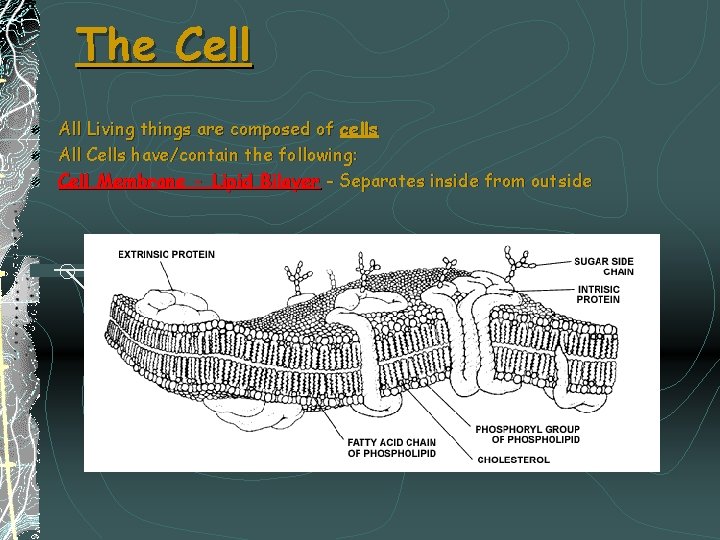
The Cell All Living things are composed of cells All Cells have/contain the following: Cell Membrane - Lipid Bilayer - Separates inside from outside
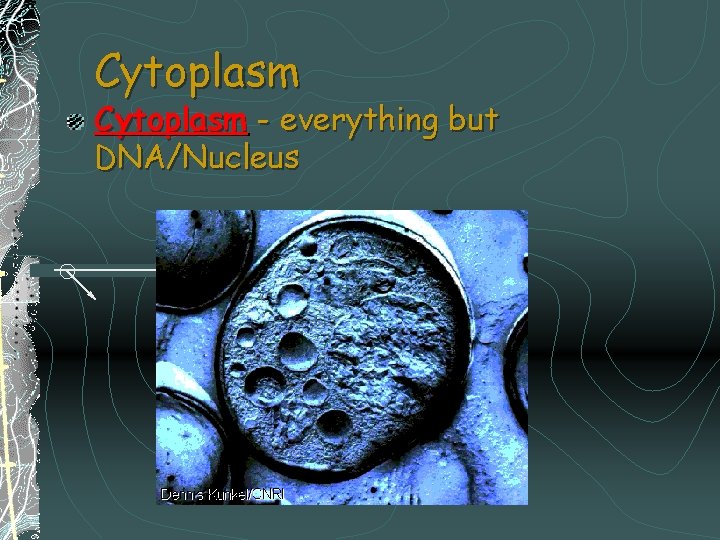
Cytoplasm - everything but DNA/Nucleus
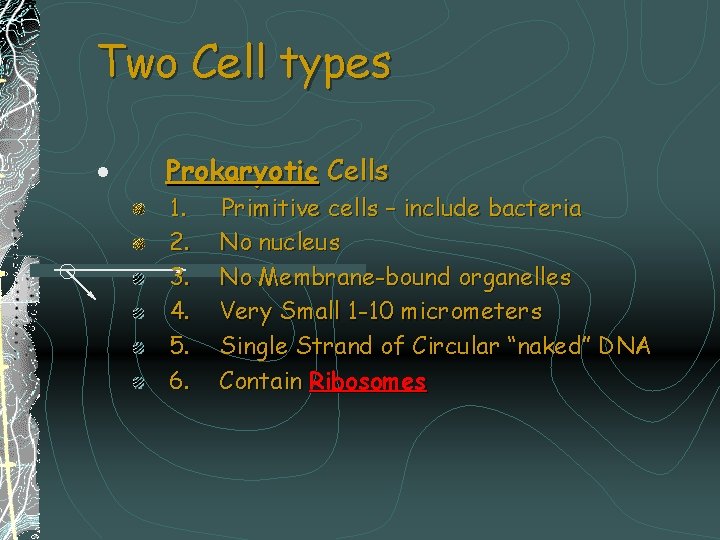
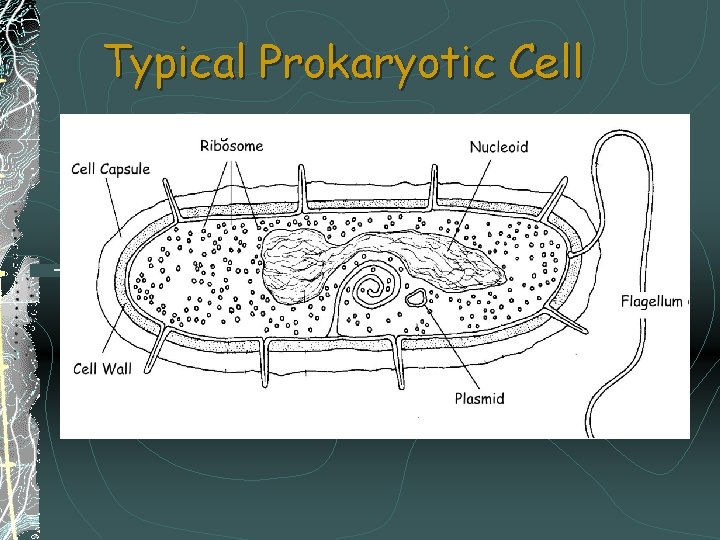
Two Cell types · Prokaryotic Cells 1. 2. 3. 4. 5. 6. Primitive cells – include bacteria No nucleus No Membrane-bound organelles Very Small 1 -10 micrometers Single Strand of Circular “naked” DNA Contain Ribosomes
Typical Prokaryotic Cell
Eukaryotic Cells 1. 2. 3. Eukaryotic Cells 1. Contain a Nucleus which protects DNA / Chromosomes 2. Much larger than prokaryotic cells 3. Have many different types of Membrane bound organelles - compartmentalization = efficiency
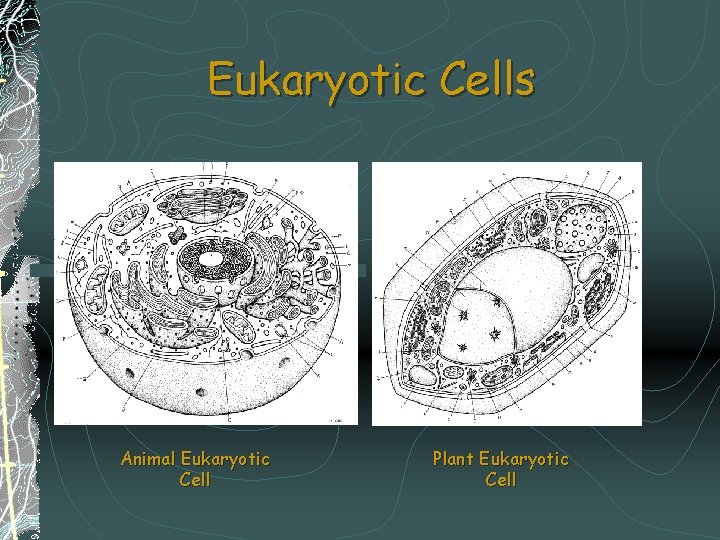
Eukaryotic Cells Animal Eukaryotic Cell Plant Eukaryotic Cell
Organelles Membrane-Bound organelles only found in Eukaryotes Localize Chemical Reactions making the cell far more efficient
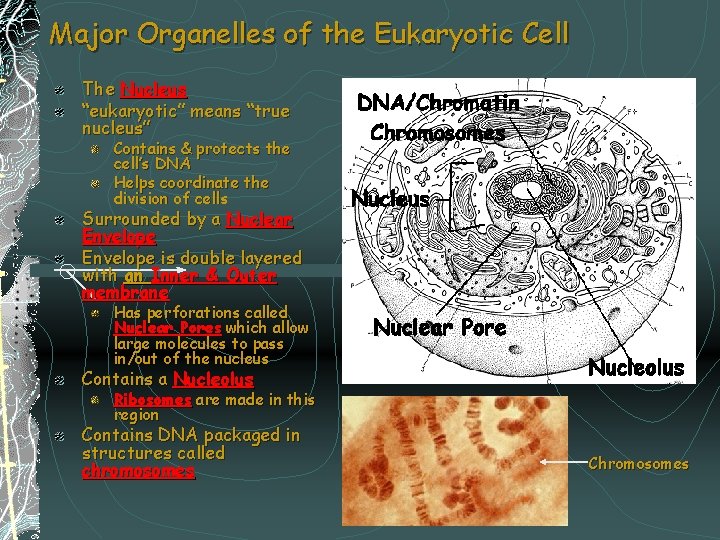
Major Organelles of the Eukaryotic Cell The Nucleus “eukaryotic” means “true nucleus” Contains & protects the cell’s DNA Helps coordinate the division of cells Surrounded by a Nuclear Envelope is double layered with an Inner & Outer membrane Has perforations called Nuclear Pores which allow large molecules to pass in/out of the nucleus Contains a Nucleolus Ribosomes are made in this region Contains DNA packaged in structures called chromosomes Chromosomes
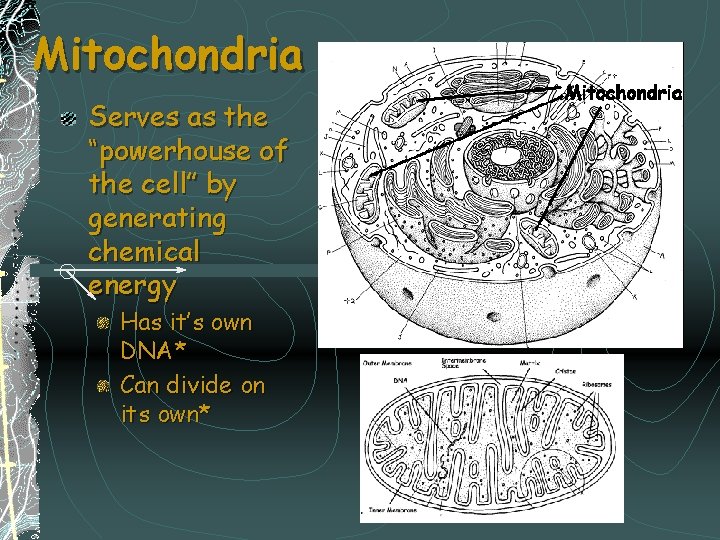
Mitochondria Serves as the “powerhouse of the cell” by generating chemical energy Has it’s own DNA* Can divide on its own*
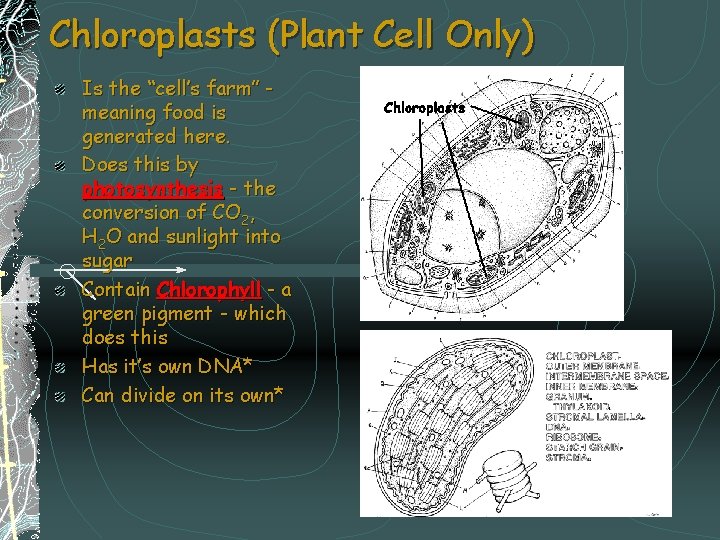
Chloroplasts (Plant Cell Only) Is the “cell’s farm” meaning food is generated here. Does this by photosynthesis - the conversion of CO 2, H 2 O and sunlight into sugar Contain Chlorophyll - a green pigment - which does this Has it’s own DNA* Can divide on its own*
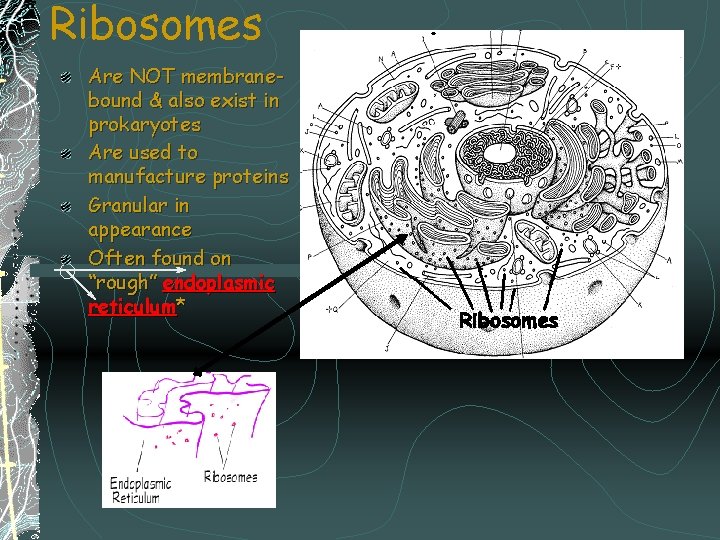
Ribosomes Are NOT membranebound & also exist in prokaryotes Are used to manufacture proteins Granular in appearance Often found on “rough” endoplasmic reticulum*
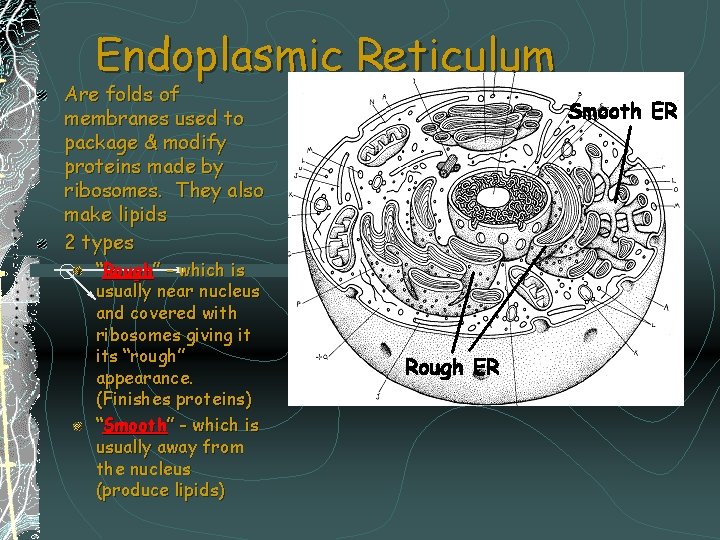
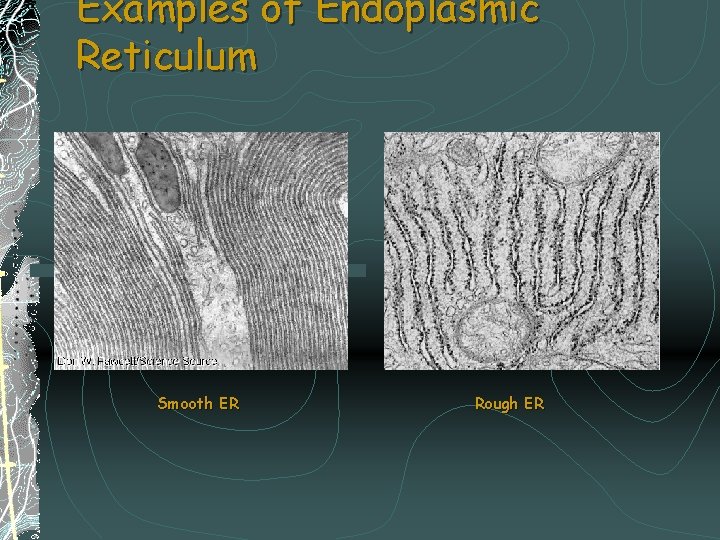
Endoplasmic Reticulum Are folds of membranes used to package & modify proteins made by ribosomes. They also make lipids 2 types “Rough” - which is usually near nucleus and covered with ribosomes giving it its “rough” appearance. (Finishes proteins) “Smooth” - which is usually away from the nucleus (produce lipids)
Examples of Endoplasmic Reticulum Smooth ER Rough ER
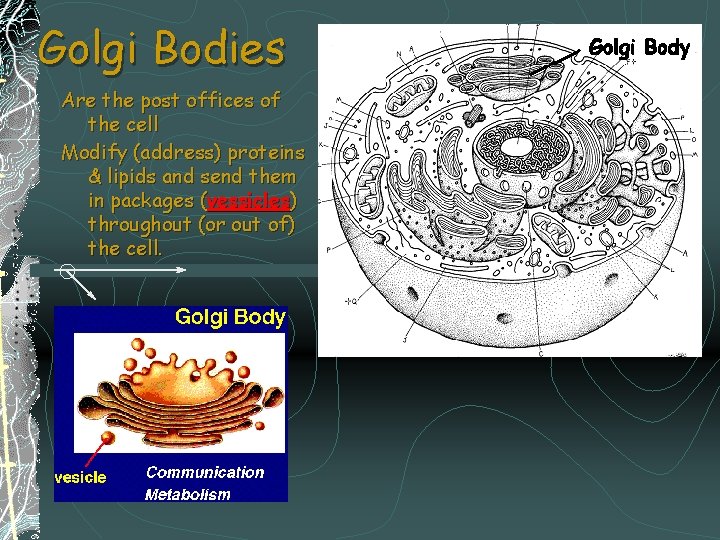
Golgi Bodies Are the post offices of the cell Modify (address) proteins & lipids and send them in packages (vessicles) throughout (or out of) the cell.
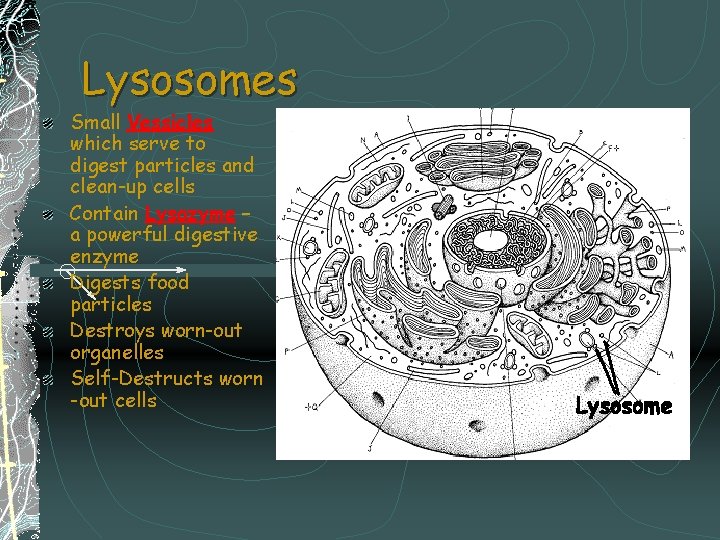
Lysosomes Small Vessicles which serve to digest particles and clean-up cells Contain Lysozyme – a powerful digestive enzyme Digests food particles Destroys worn-out organelles Self-Destructs worn -out cells
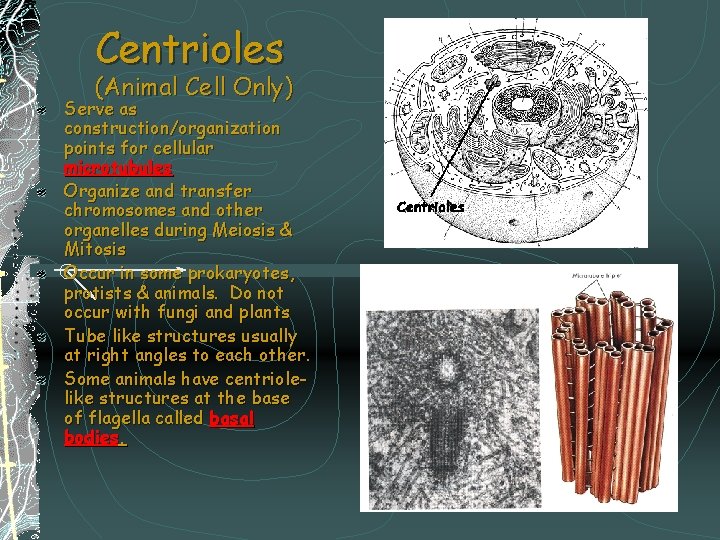
Centrioles (Animal Cell Only) Serve as construction/organization points for cellular microtubules Organize and transfer chromosomes and other organelles during Meiosis & Mitosis Occur in some prokaryotes, protists & animals. Do not occur with fungi and plants Tube like structures usually at right angles to each other. Some animals have centriolelike structures at the base of flagella called basal bodies.
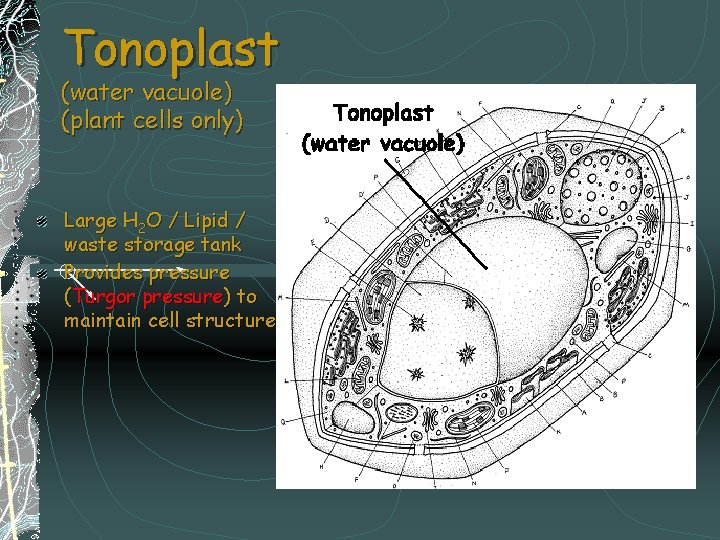
Tonoplast (water vacuole) (plant cells only) Large H 2 O / Lipid / waste storage tank Provides pressure (Turgor pressure) to maintain cell structure
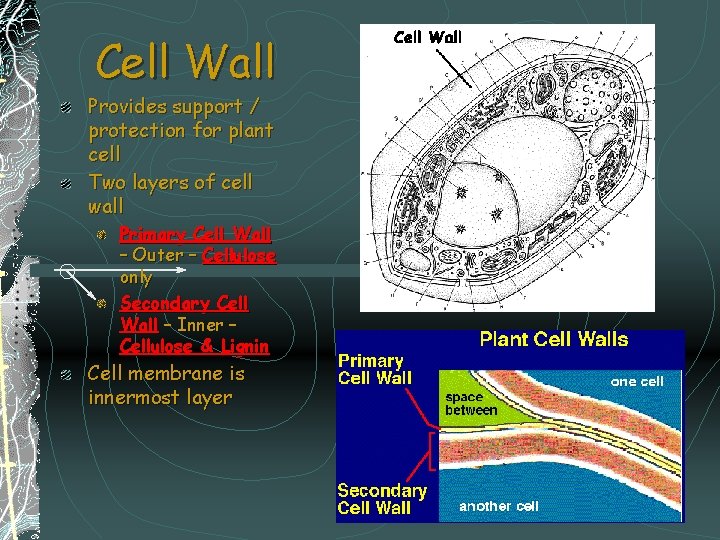
Cell Wall Provides support / protection for plant cell Two layers of cell wall Primary Cell Wall – Outer – Cellulose only Secondary Cell Wall – Inner – Cellulose & Lignin Cell membrane is innermost layer
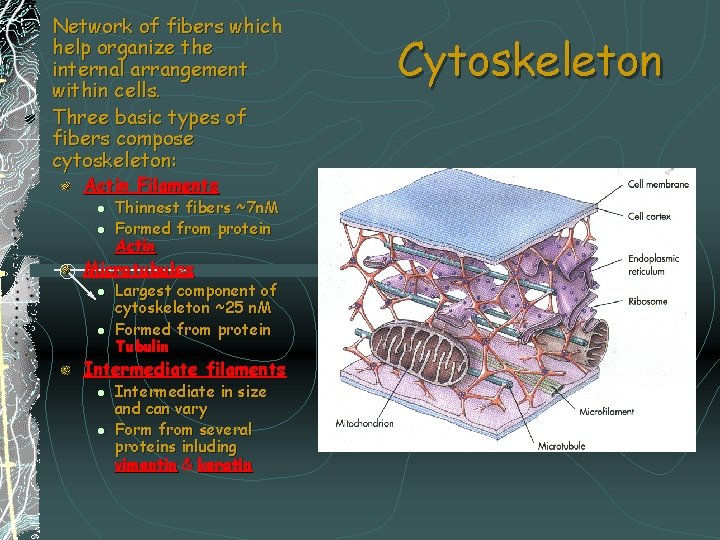
Network of fibers which help organize the internal arrangement within cells. Three basic types of fibers compose cytoskeleton: Actin Filaments l l Thinnest fibers ~7 n. M Formed from protein Actin Microtubules l l Largest component of cytoskeleton ~25 n. M Formed from protein Tubulin Intermediate filaments l l Intermediate in size and can vary Form from several proteins inluding vimentin & keratin Cytoskeleton