
The Celestial Sphere The 88 official constellations cover

- Slides: 29
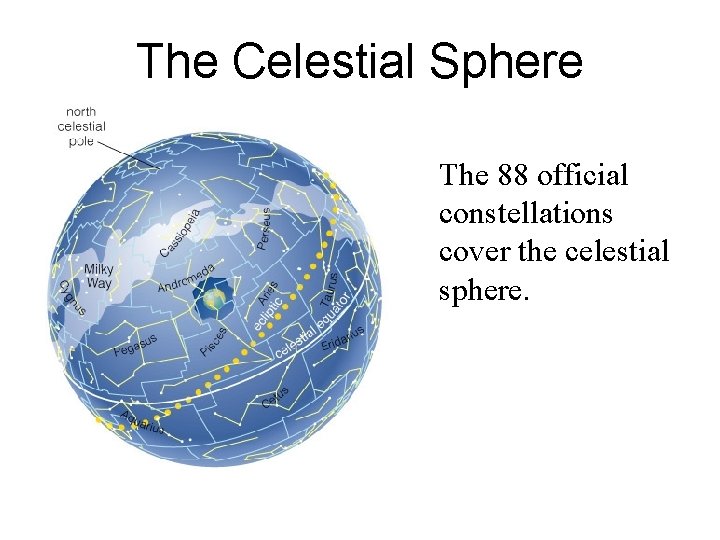
The Celestial Sphere The 88 official constellations cover the celestial sphere.
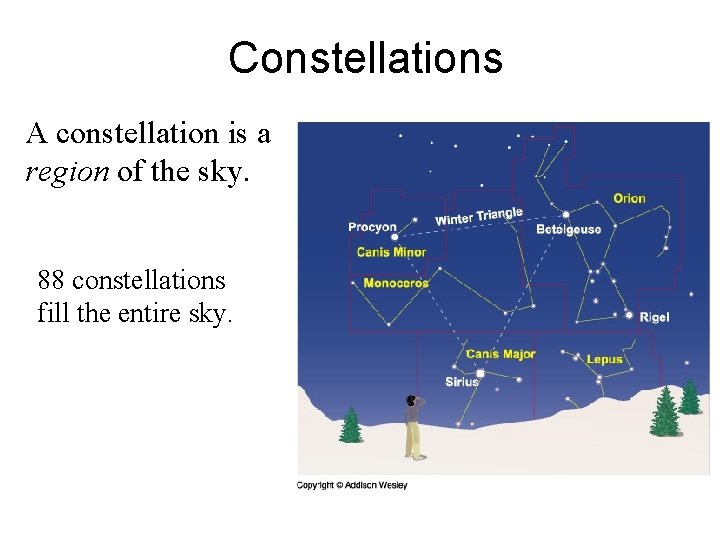
Constellations A constellation is a region of the sky. 88 constellations fill the entire sky.
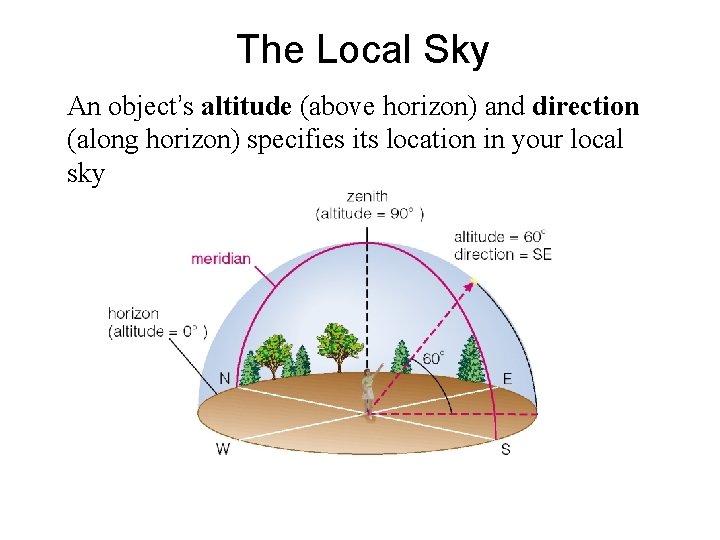
The Local Sky An object’s altitude (above horizon) and direction (along horizon) specifies its location in your local sky
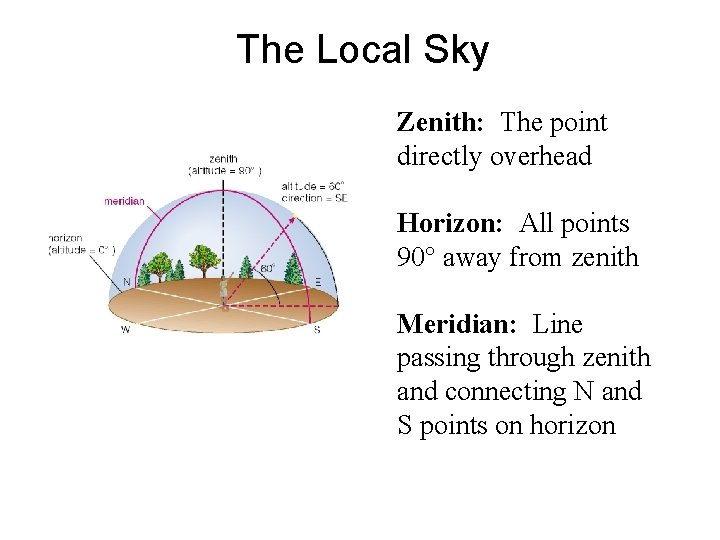
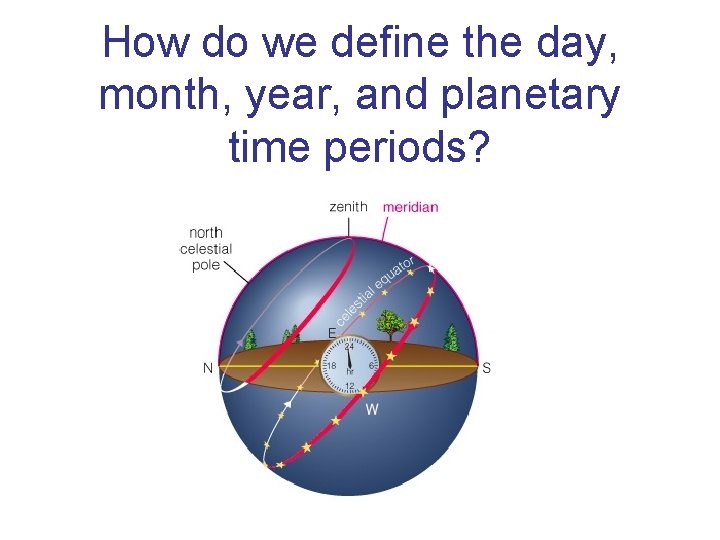
The Local Sky Zenith: The point directly overhead Horizon: All points 90° away from zenith Meridian: Line passing through zenith and connecting N and S points on horizon
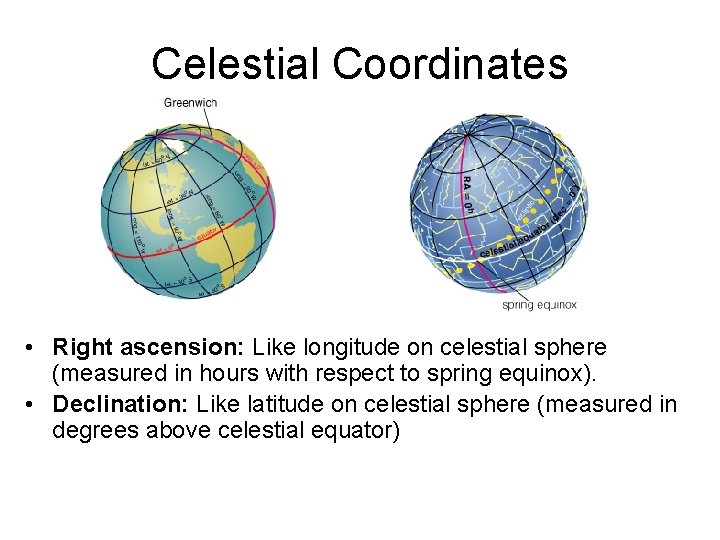
Celestial Coordinates • Right ascension: Like longitude on celestial sphere (measured in hours with respect to spring equinox). • Declination: Like latitude on celestial sphere (measured in degrees above celestial equator)
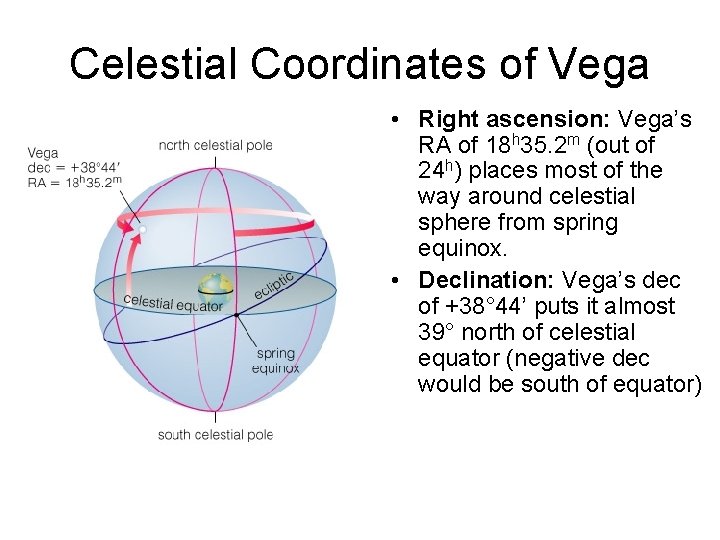
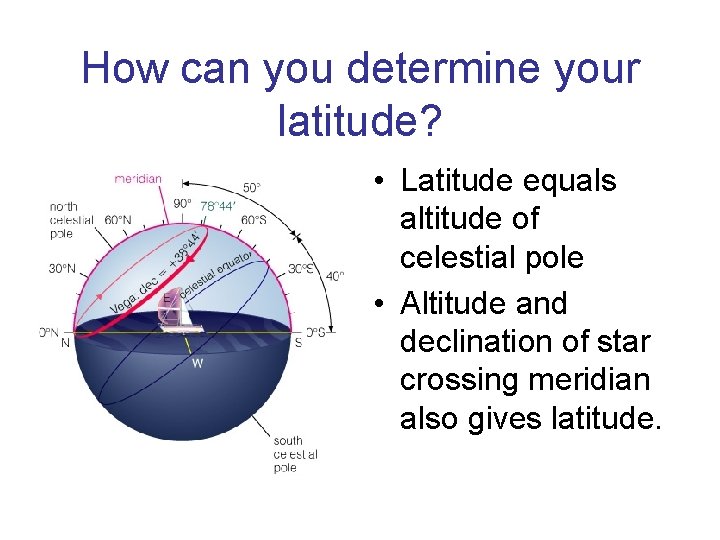
Celestial Coordinates of Vega • Right ascension: Vega’s RA of 18 h 35. 2 m (out of 24 h) places most of the way around celestial sphere from spring equinox. • Declination: Vega’s dec of +38° 44’ puts it almost 39° north of celestial equator (negative dec would be south of equator)
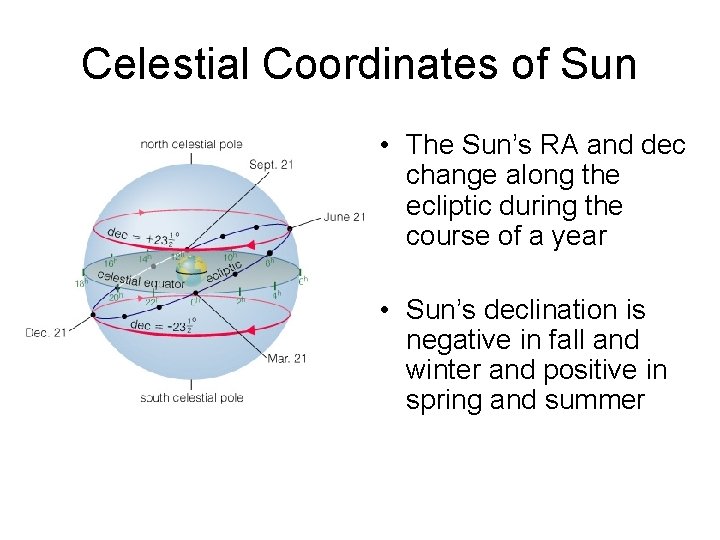
Celestial Coordinates of Sun • The Sun’s RA and dec change along the ecliptic during the course of a year • Sun’s declination is negative in fall and winter and positive in spring and summer
How do we define the day, month, year, and planetary time periods?
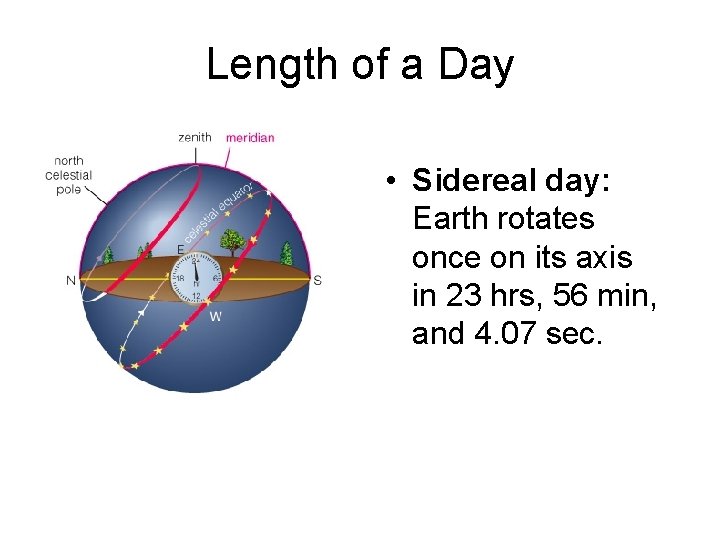
Length of a Day • Sidereal day: Earth rotates once on its axis in 23 hrs, 56 min, and 4. 07 sec.
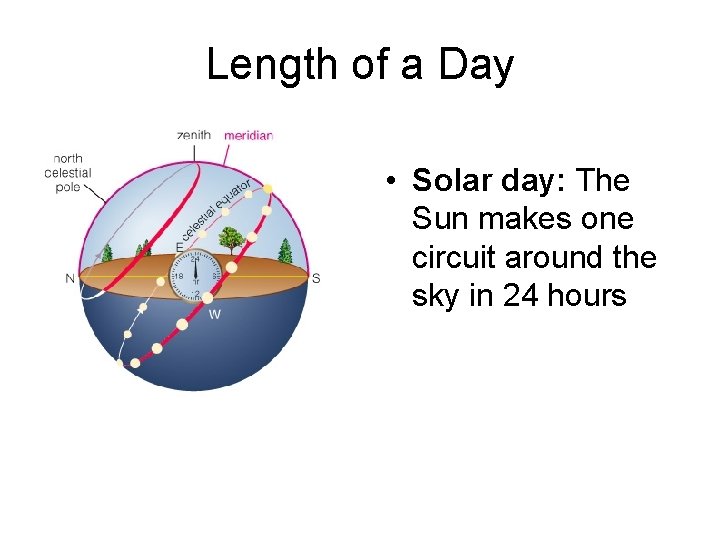
Length of a Day • Solar day: The Sun makes one circuit around the sky in 24 hours
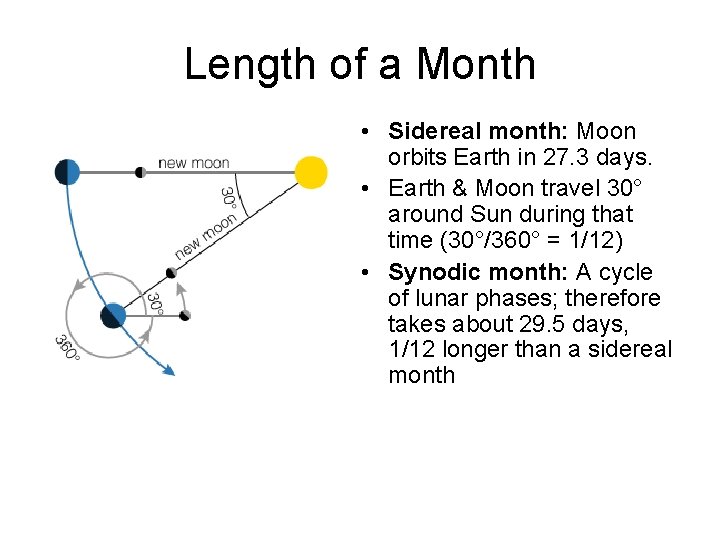
Length of a Month • Sidereal month: Moon orbits Earth in 27. 3 days. • Earth & Moon travel 30° around Sun during that time (30°/360° = 1/12) • Synodic month: A cycle of lunar phases; therefore takes about 29. 5 days, 1/12 longer than a sidereal month
The sky varies as Earth orbits the Sun • As the Earth orbits the Sun, the Sun appears to move eastward along the ecliptic. • At midnight, the stars on our meridian are opposite the Sun in the sky.
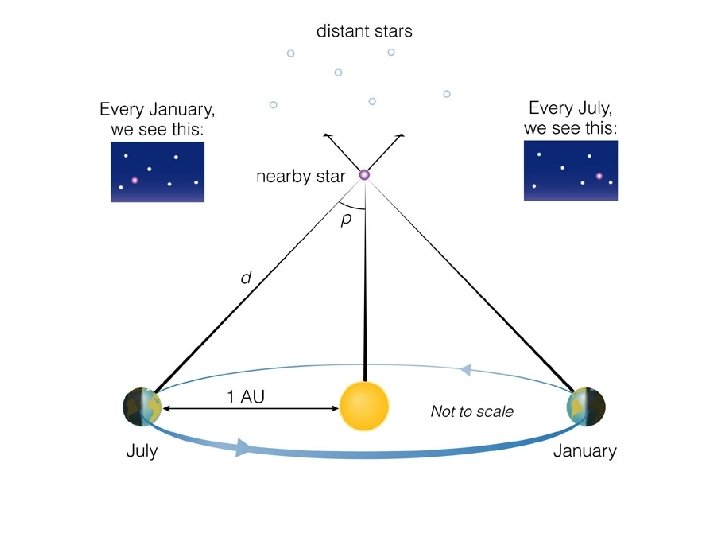
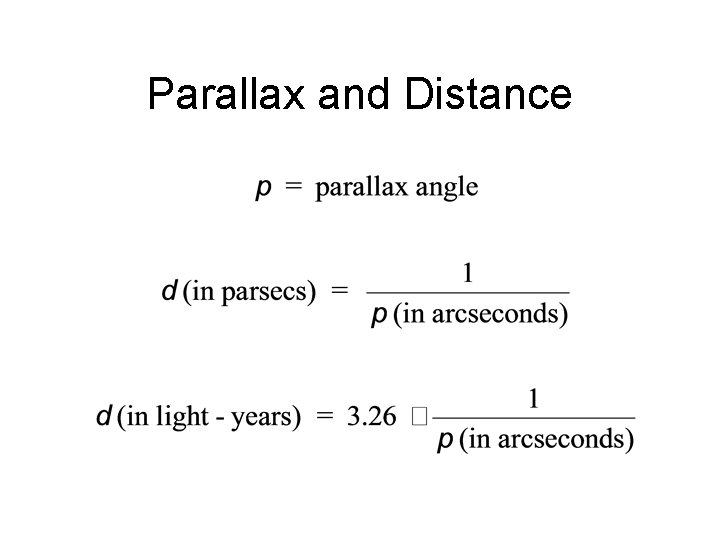
Parallax and Distance
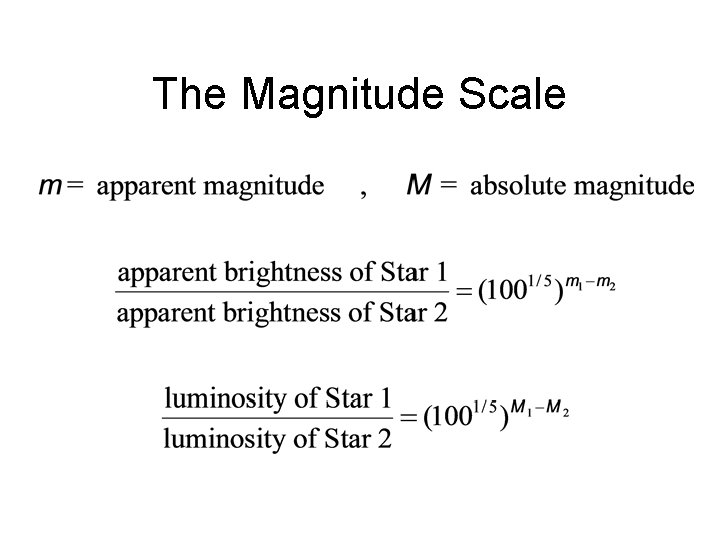
The Magnitude Scale
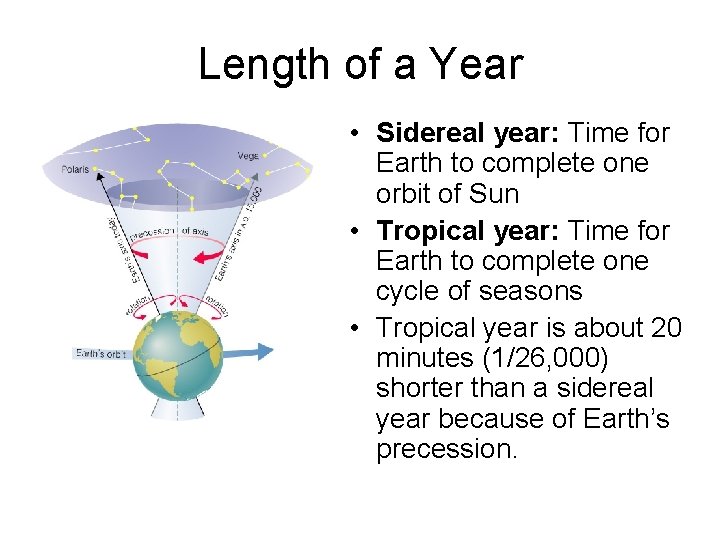
Length of a Year • Sidereal year: Time for Earth to complete one orbit of Sun • Tropical year: Time for Earth to complete one cycle of seasons • Tropical year is about 20 minutes (1/26, 000) shorter than a sidereal year because of Earth’s precession.
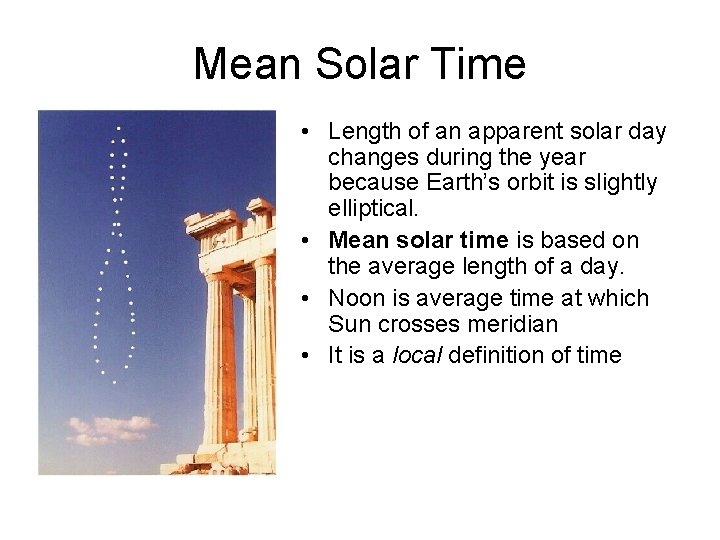
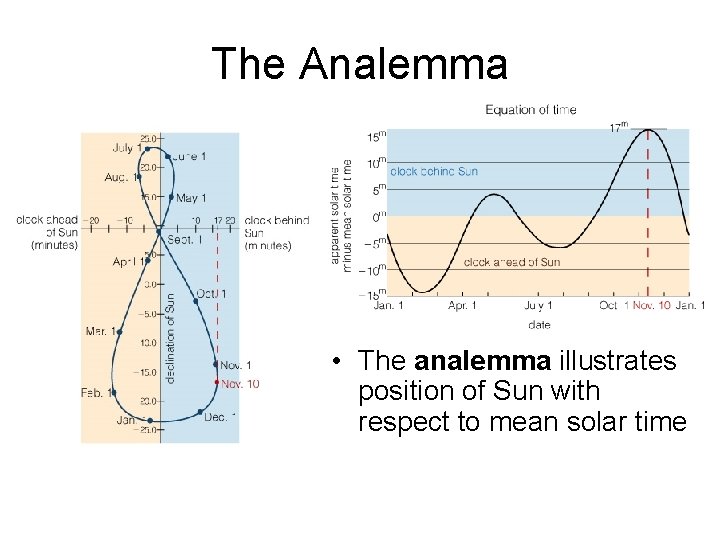
Mean Solar Time • Length of an apparent solar day changes during the year because Earth’s orbit is slightly elliptical. • Mean solar time is based on the average length of a day. • Noon is average time at which Sun crosses meridian • It is a local definition of time
The Analemma • The analemma illustrates position of Sun with respect to mean solar time
Universal Time • Universal time (UT) is defined to be the mean solar time at 0° longitude. • It is also known as Greenwich Mean Time (GMT) because 0° longitude is defined to pass through Greenwich, England • It is the standard time used for astronomy and navigation around the world
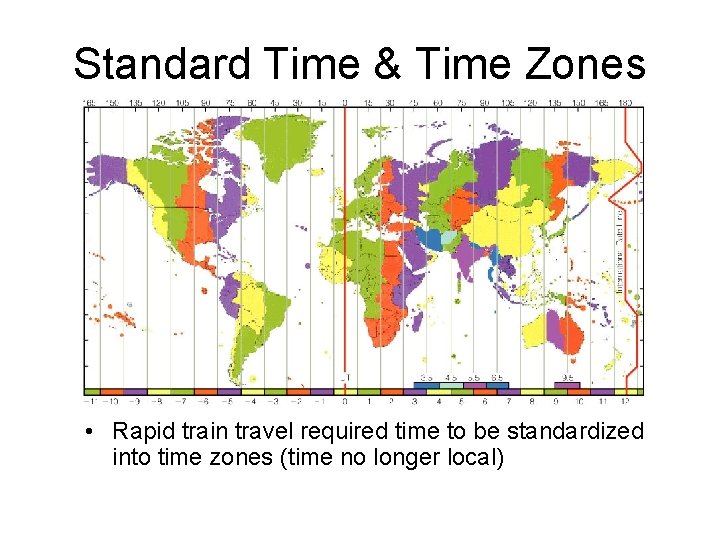
Standard Time & Time Zones • Rapid train travel required time to be standardized into time zones (time no longer local)
Time by the Stars • Sidereal time is equal to right ascension that is passing through the meridian • Thus, the local siderial time is 0 h 0 m when the spring equinox passes through the meridian • A star’s hour angle is the time since it last passed through the meridian Local sidereal time = RA + hour angle
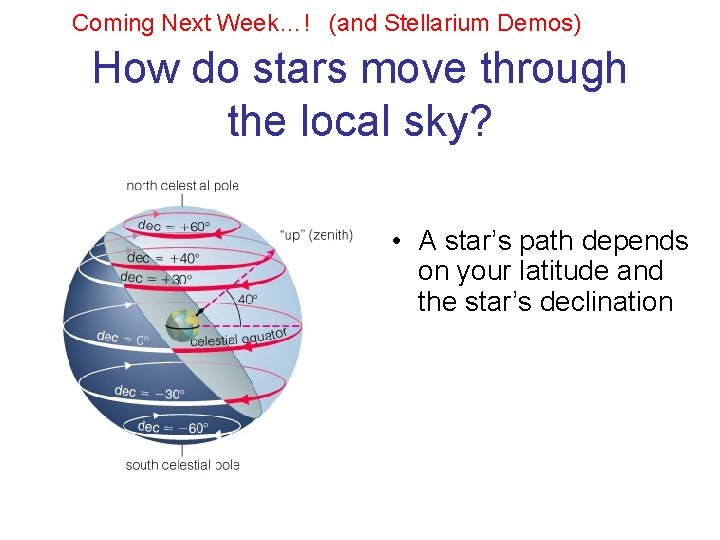
Coming Next Week…! (and Stellarium Demos) How do stars move through the local sky? • A star’s path depends on your latitude and the star’s declination
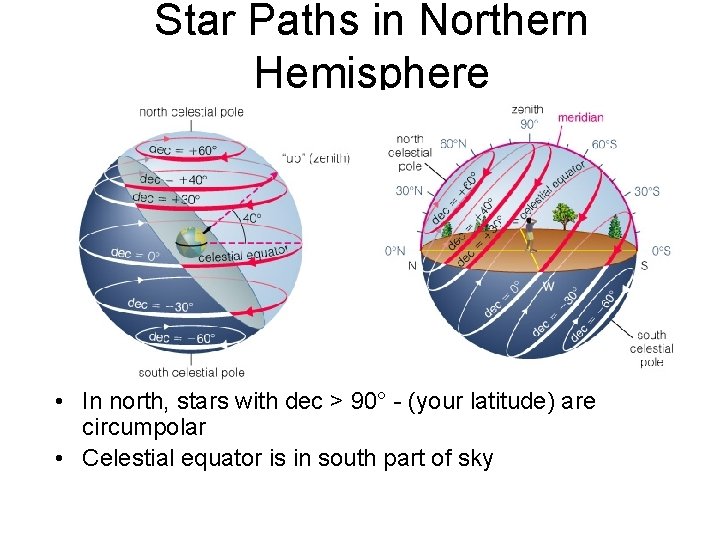
Star Paths in Northern Hemisphere • In north, stars with dec > 90° - (your latitude) are circumpolar • Celestial equator is in south part of sky
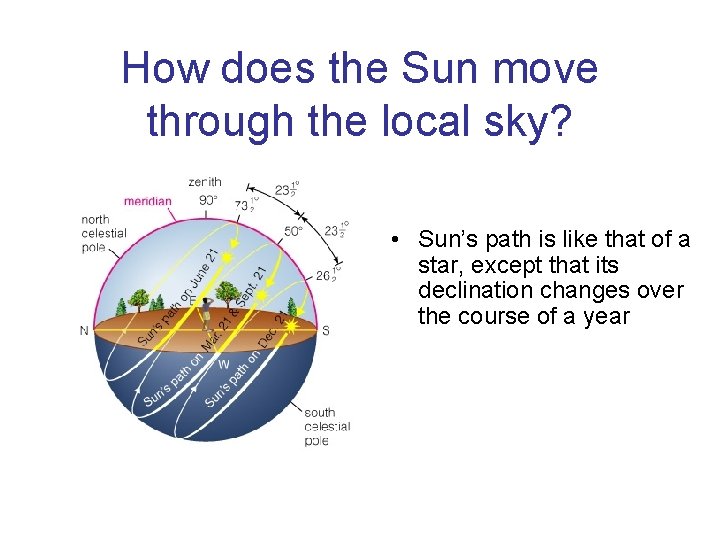
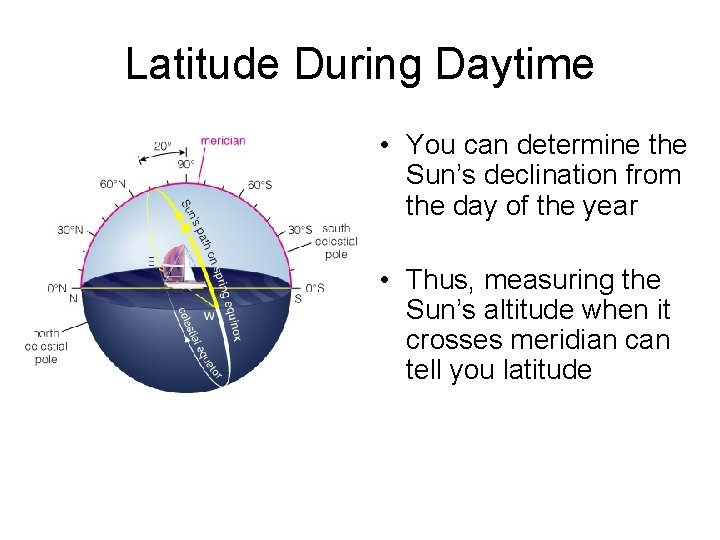
How does the Sun move through the local sky? • Sun’s path is like that of a star, except that its declination changes over the course of a year
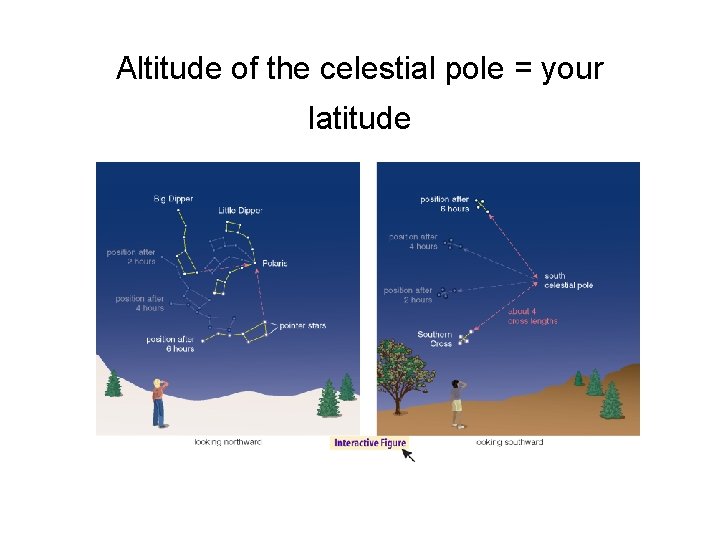
Altitude of the celestial pole = your latitude
How can you determine your latitude? • Latitude equals altitude of celestial pole • Altitude and declination of star crossing meridian also gives latitude.
Latitude During Daytime • You can determine the Sun’s declination from the day of the year • Thus, measuring the Sun’s altitude when it crosses meridian can tell you latitude
How can you determine your longitude? • In order to determine your longitude from the sky, you need to know time of day because of Earth’s rotation • You also need to know day of year because of Earth’s orbit • Accurate measurement of longitude requires an accurate clock.
Summary: • How do we locate objects on the celestial sphere? – Each point on the celestial sphere has a particular right ascension (like longitude) and declination (like latitude). • How do stars move through the local sky? – Their paths depend on your latitude and the star’s declination. • How does the Sun move through the local sky? – Sun moves like a star except its declination depends on the time of year.