
The Cattle kingdom 17 3 By Cali and
The Cattle kingdom 17 -3 By Cali and Aubrie
Vocab Persist- to endure; to continue in the face of difficulty Myth- story or legend; imaginary object; invented story Open Range- unfenced land Cattle Drive- the herding and moving of cattle over long distances Vaquero- (from vaca, meaning cow) the spanish word for cowhand or cowboy Cow Town- settlement at the end of the cattle trail Cattle Kingdom- the region dominated by the cattle industry and its ranches, trail and cow towns
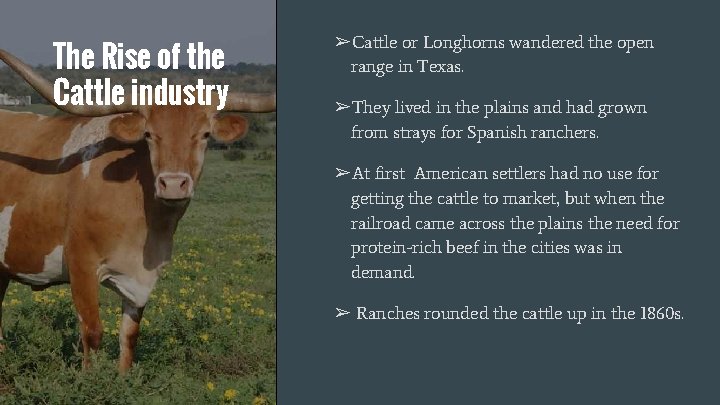
The Rise of the Cattle industry ➢Cattle or Longhorns wandered the open range in Texas. ➢They lived in the plains and had grown from strays for Spanish ranchers. ➢At first American settlers had no use for getting the cattle to market, but when the railroad came across the plains the need for protein-rich beef in the cities was in demand. ➢ Ranches rounded the cattle up in the 1860 s.
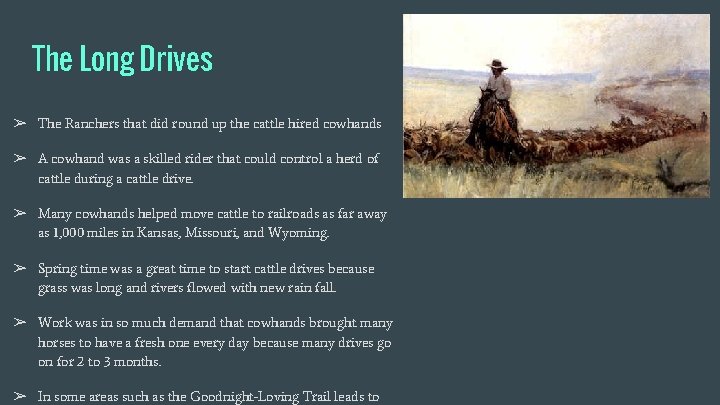
The Long Drives ➢ The Ranchers that did round up the cattle hired cowhands ➢ A cowhand was a skilled rider that could control a herd of cattle during a cattle drive. ➢ Many cowhands helped move cattle to railroads as far away as 1, 000 miles in Kansas, Missouri, and Wyoming. ➢ Spring time was a great time to start cattle drives because grass was long and rivers flowed with new rain fall. ➢ Work was in so much demand that cowhands brought many horses to have a fresh one every day because many drives go on for 2 to 3 months. ➢ In some areas such as the Goodnight-Loving Trail leads to
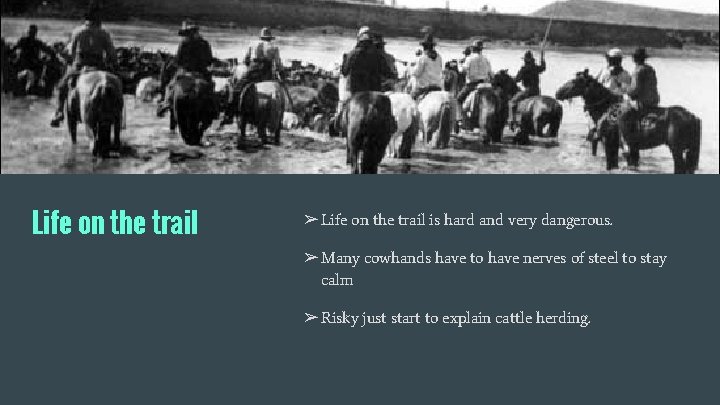
Life on the trail ➢ Life on the trail is hard and very dangerous. ➢ Many cowhands have to have nerves of steel to stay calm ➢ Risky just start to explain cattle herding.
The Risky Ride ➢Andy Adams is a cowhand in Texas and has driven many herds north never before had he seen cattle go bind for thirst, but when it happened to him all he could do was “let them pass. ” ➢When the longhorns found water their sight returned. ➢Other cowhands like Andy has been through similar situations. For instance a bolt of lighting can start a stampede. ➢Also many fast rushing rivers and sweep longhorns way for the rest of the herd. ➢Many of cowhands have battled grass fires,
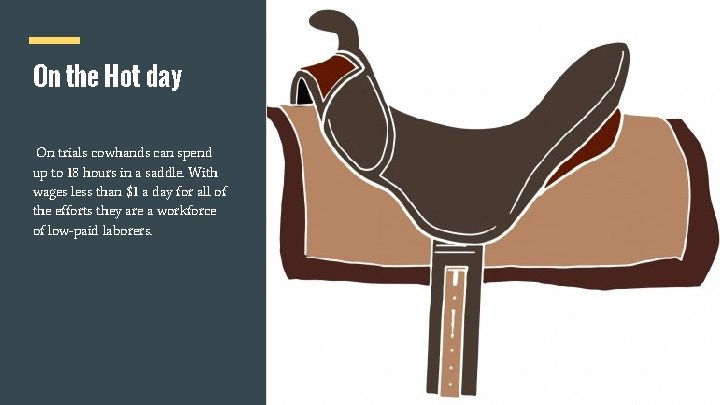
On the Hot day On trials cowhands can spend up to 18 hours in a saddle. With wages less than $1 a day for all of the efforts they are a workforce of low-paid laborers.
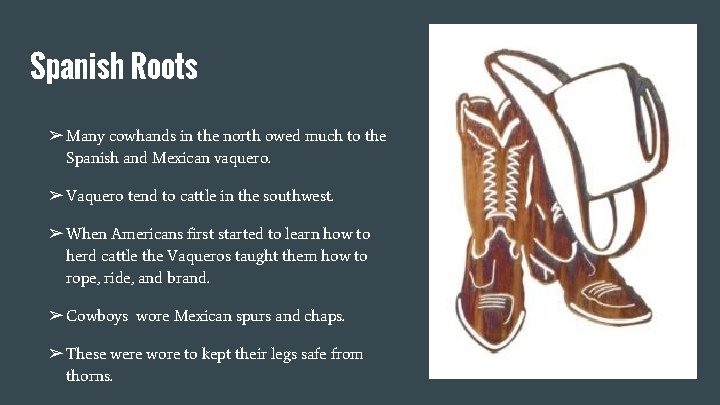
Spanish Roots ➢ Many cowhands in the north owed much to the Spanish and Mexican vaquero. ➢ Vaquero tend to cattle in the southwest. ➢ When Americans first started to learn how to herd cattle the Vaqueros taught them how to rope, ride, and brand. ➢ Cowboys wore Mexican spurs and chaps. ➢ These were wore to kept their legs safe from thorns.
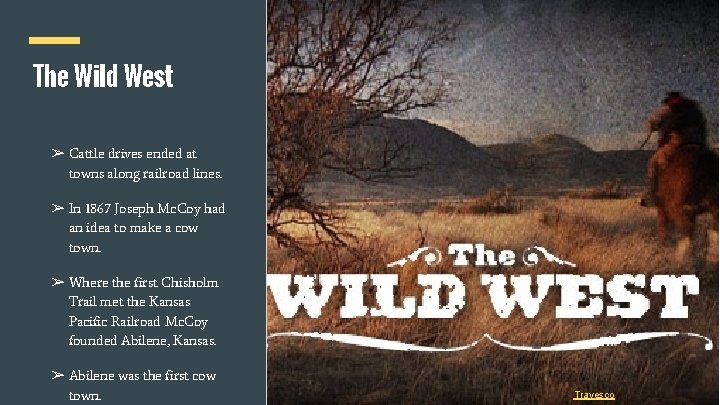
The Wild West ➢ Cattle drives ended at towns along railroad lines. ➢ In 1867 Joseph Mc. Coy had an idea to make a cow town. ➢ Where the first Chisholm Trail met the Kansas Pacific Railroad Mc. Coy founded Abilene, Kansas. ➢ Abilene was the first cow town. Travesco
Wikipedia Myths of the West ➢The West was spread to be known as a place of violence, adventure, and endless possibility.
Myths continue. . . ➢Cody was a former buffalo hunter and made a traveling Wild West show in 1883. ➢Native Americans and cowboy performed daring stunts with sharp-shooting and horseback riding. ➢They reenacted Custer’s Last Stand As a part of the show. ➢“Annie Oakley broke the stereotype of the dainty women by shooting as precise as a man. ” ➢But some Myths were based of facts.
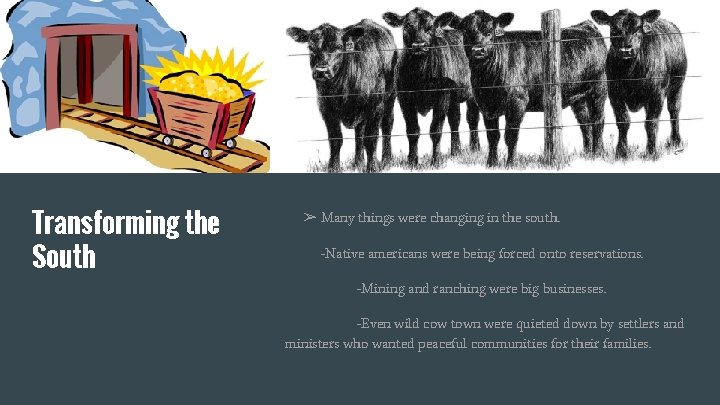
Transforming the South ➢ Many things were changing in the south. -Native americans were being forced onto reservations. -Mining and ranching were big businesses. -Even wild cow town were quieted down by settlers and ministers who wanted peaceful communities for their families.
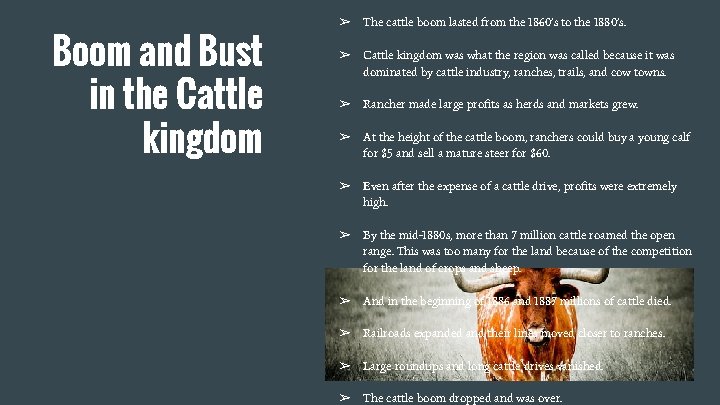
Boom and Bust in the Cattle kingdom ➢ The cattle boom lasted from the 1860’s to the 1880’s. ➢ Cattle kingdom was what the region was called because it was dominated by cattle industry, ranches, trails, and cow towns. ➢ Rancher made large profits as herds and markets grew. ➢ At the height of the cattle boom, ranchers could buy a young calf for $5 and sell a mature steer for $60. ➢ Even after the expense of a cattle drive, profits were extremely high. ➢ By the mid-1880 s, more than 7 million cattle roamed the open range. This was too many for the land because of the competition for the land of crops and sheep. ➢ And in the beginning of 1886 and 1887 millions of cattle died. ➢ Railroads expanded and their lines moved closer to ranches. ➢ Large roundups and long cattle drives vanished. ➢ The cattle boom dropped and was over.
- Slides: 13