
The Catholic Church Feudalism Significance Revival of Europe





- Slides: 47
The Catholic Church & Feudalism Significance: Revival of Europe after Rome
AFTER ROME What problems would beset Europe following the collapse of the Roman Empire? List at least five problems…
NEW ORDER EMERGES • Hard-won political order • Restored after fall of the Roman Empire • Invasions…. depopulation • Will be de-centralized… • • • Local and regional rulers Slow…long process of economic recovery • Increased agricultural production • Increased trade routes • Industry…. commerce…. re-urbanization Cultural unity • Christian church based in Rome • Papacy • Monastic movement
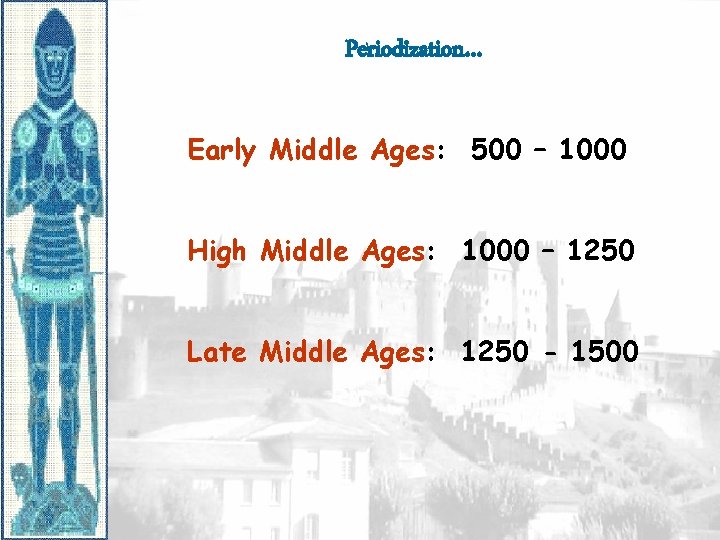
Periodization… Early Middle Ages: 500 – 1000 High Middle Ages: 1000 – 1250 Late Middle Ages: 1250 - 1500
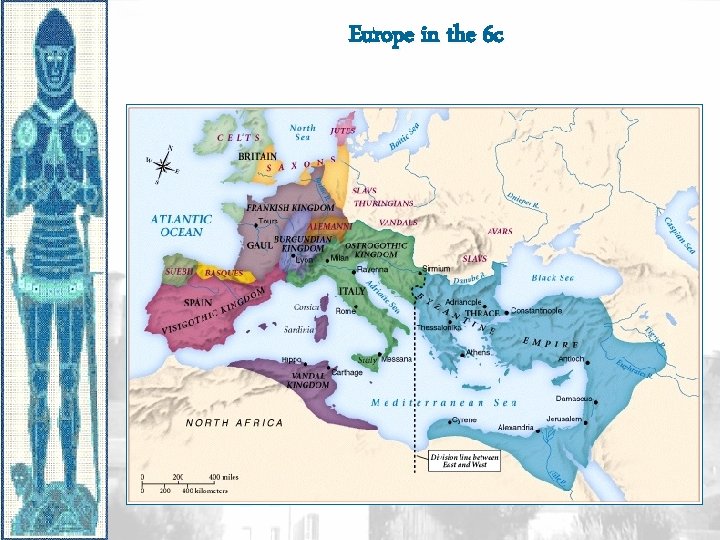
Europe in the 6 c
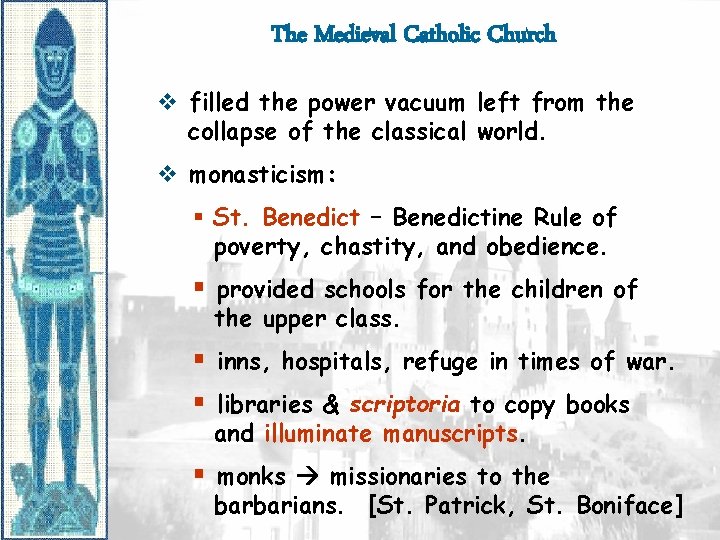
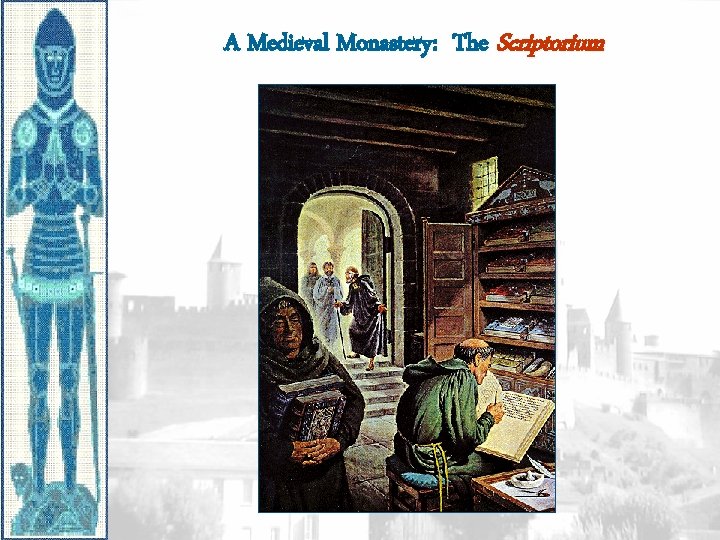
The Medieval Catholic Church v filled the power vacuum left from the collapse of the classical world. v monasticism: § St. Benedict – Benedictine Rule of poverty, chastity, and obedience. § provided schools for the children of the upper class. § inns, hospitals, refuge in times of war. § libraries & scriptoria to copy books and illuminate manuscripts. § monks missionaries to the barbarians. [St. Patrick, St. Boniface]
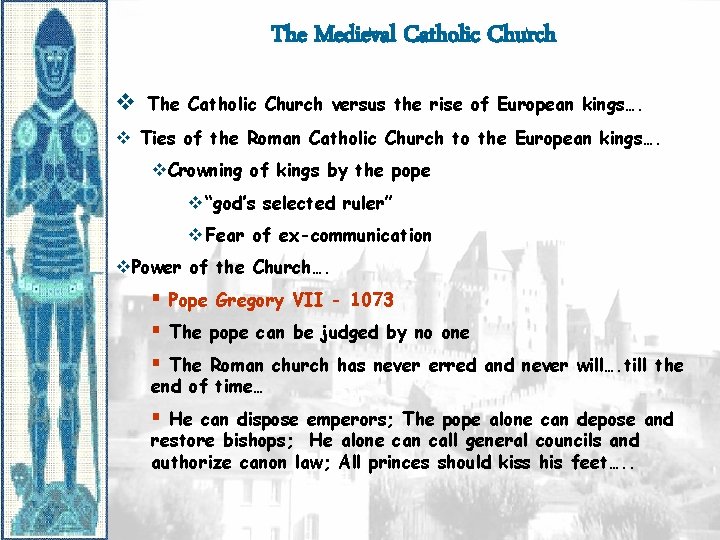
The Medieval Catholic Church v The Catholic Church versus the rise of European kings…. v Ties of the Roman Catholic Church to the European kings…. v. Crowning of kings by the pope v “god’s selected ruler” v Fear of ex-communication v. Power of the Church…. § Pope Gregory VII - 1073 § The pope can be judged by no one § The Roman church has never erred and never will…. till the end of time… § He can dispose emperors; The pope alone can depose and restore bishops; He alone can call general councils and authorize canon law; All princes should kiss his feet…. .
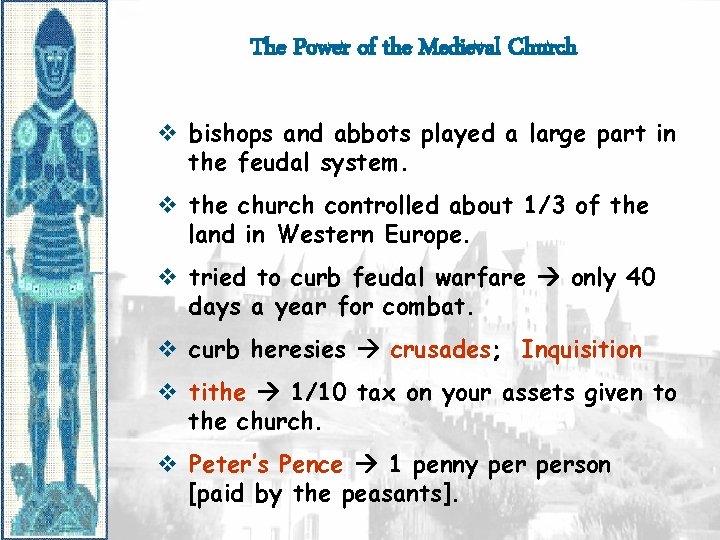
The Power of the Medieval Church v bishops and abbots played a large part in the feudal system. v the church controlled about 1/3 of the land in Western Europe. v tried to curb feudal warfare only 40 days a year for combat. v curb heresies crusades; Inquisition v tithe 1/10 tax on your assets given to the church. v Peter’s Pence 1 penny person [paid by the peasants].
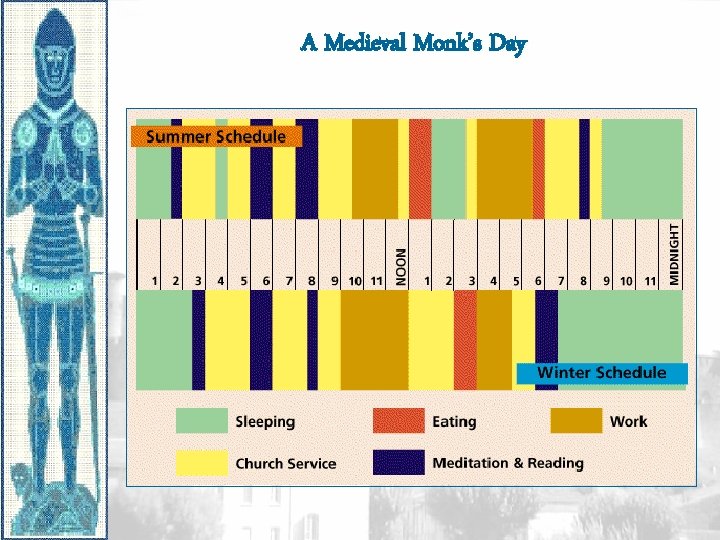
A Medieval Monk’s Day
A Medieval Monastery: The Scriptorium
Illuminated Manuscripts
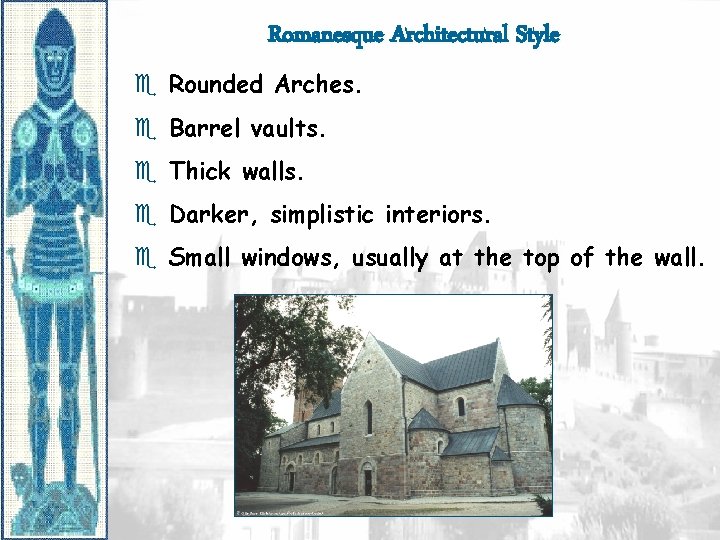
Romanesque Architectural Style e Rounded Arches. e Barrel vaults. e Thick walls. e Darker, simplistic interiors. e Small windows, usually at the top of the wall.
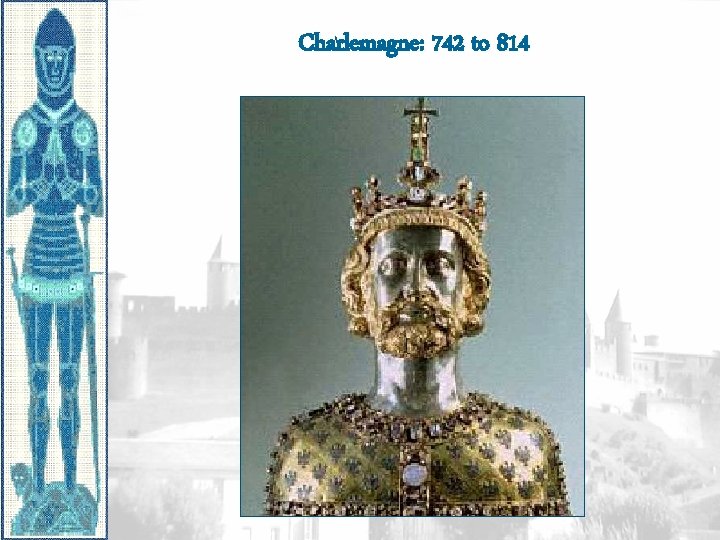
Charlemagne: 742 to 814
Charlemagne’s Empire
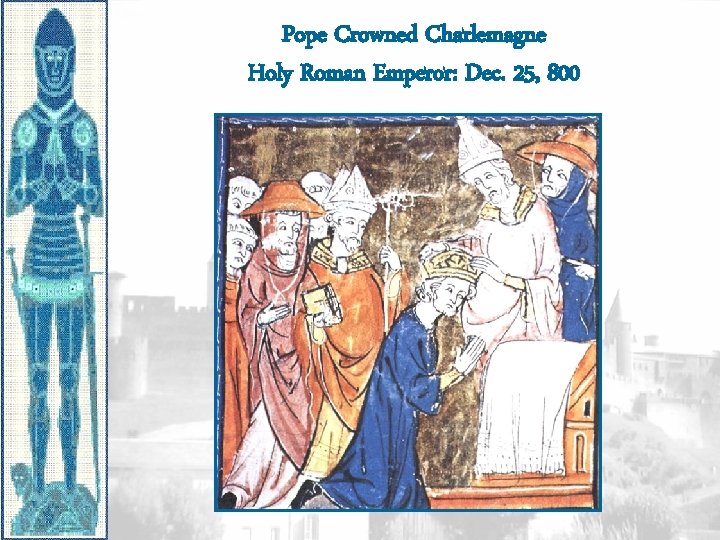
Pope Crowned Charlemagne Holy Roman Emperor: Dec. 25, 800
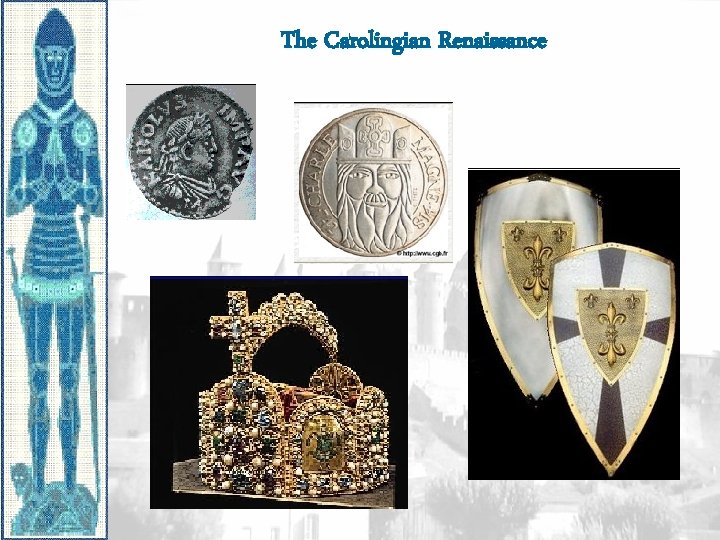
The Carolingian Renaissance
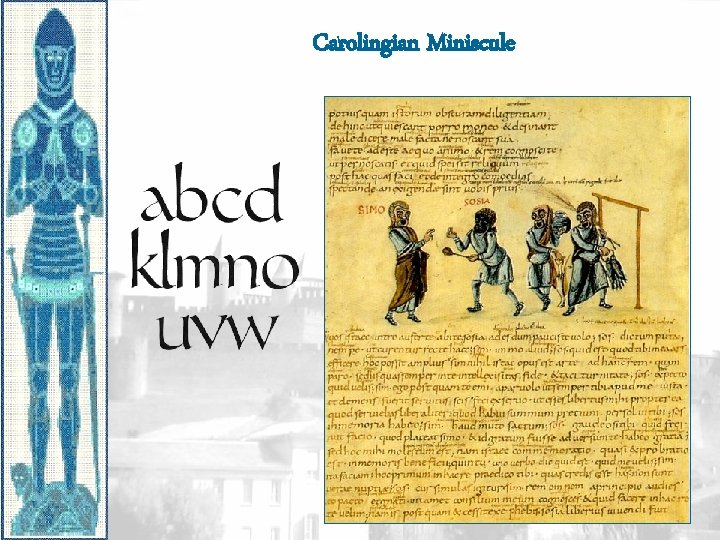
Carolingian Miniscule
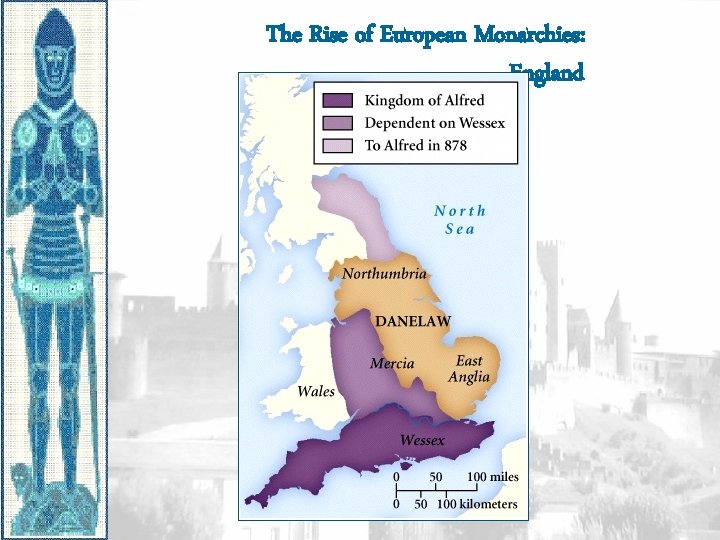
The Rise of European Monarchies: England
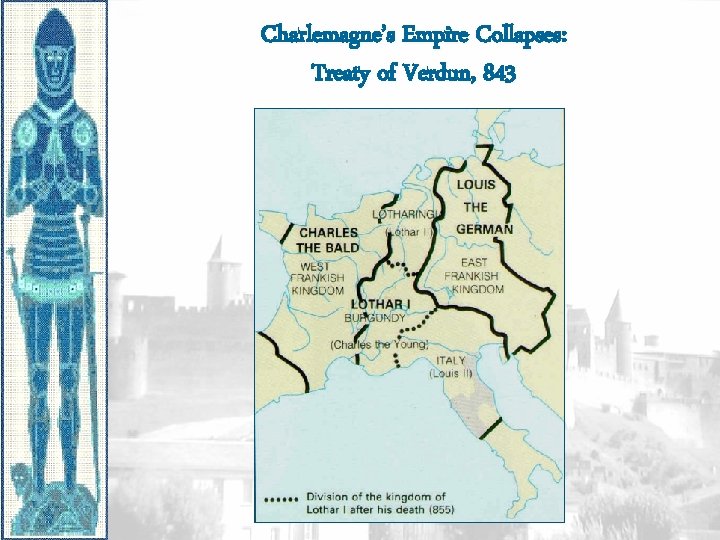
Charlemagne’s Empire Collapses: Treaty of Verdun, 843
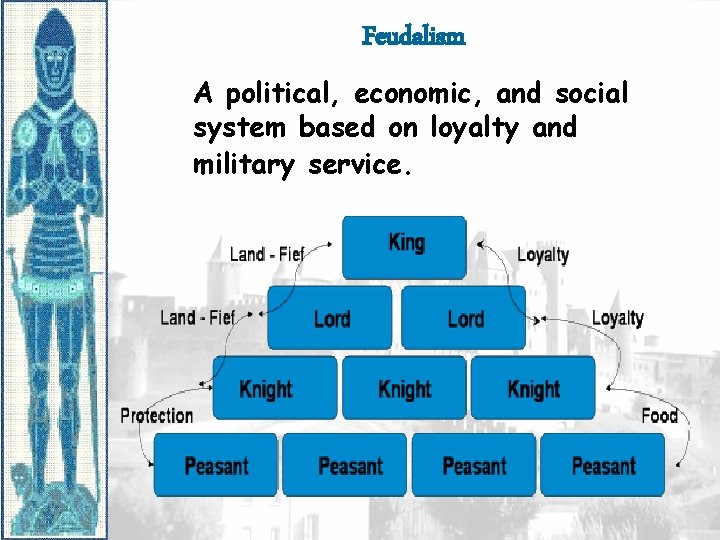
Feudalism A political, economic, and social system based on loyalty and military service.
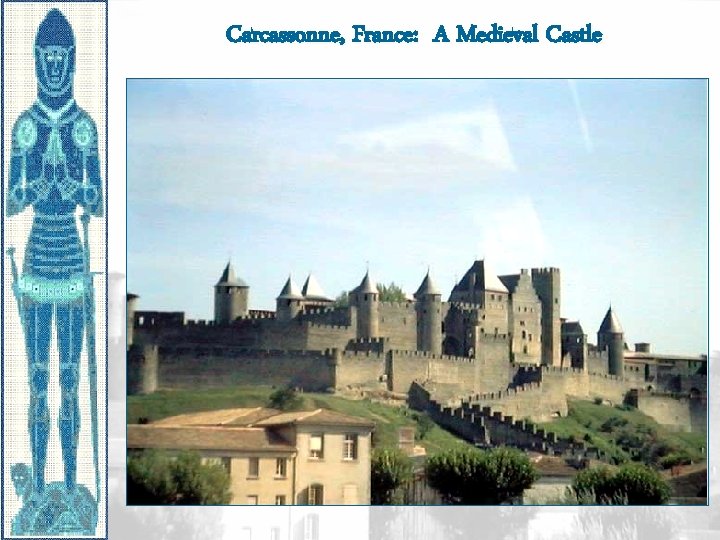
Carcassonne, France: A Medieval Castle
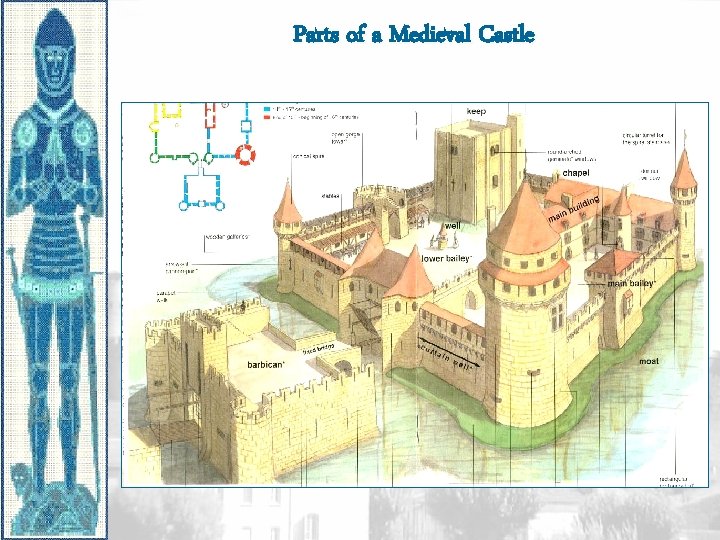
Parts of a Medieval Castle
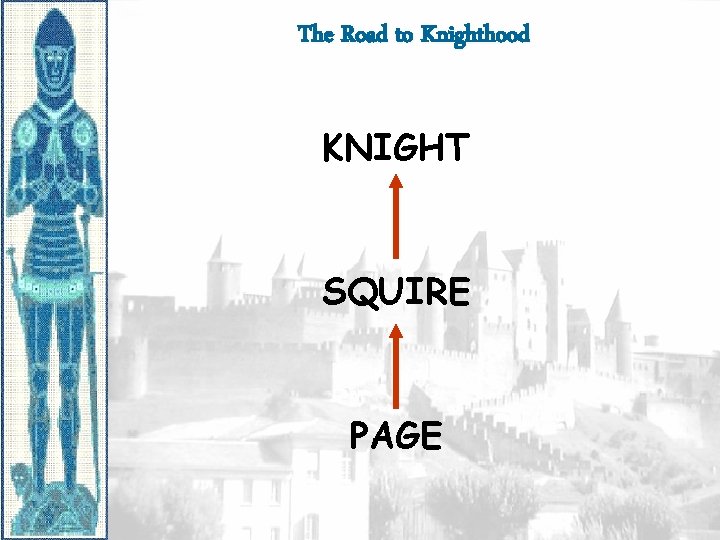
The Road to Knighthood KNIGHT SQUIRE PAGE
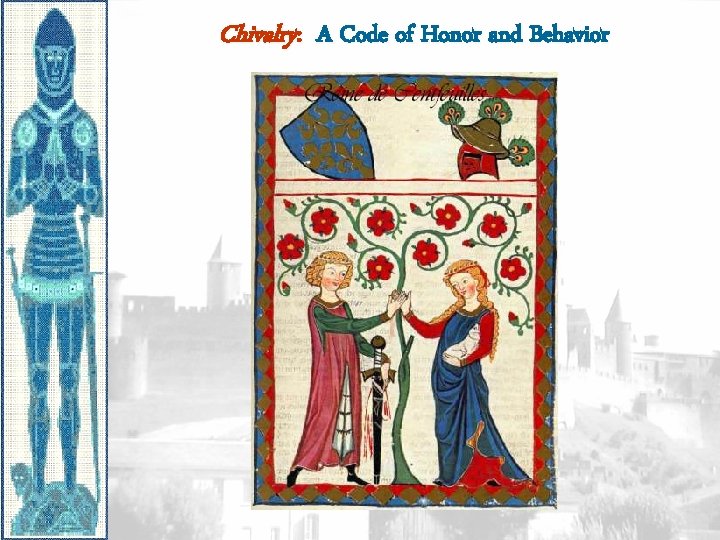
Chivalry: A Code of Honor and Behavior
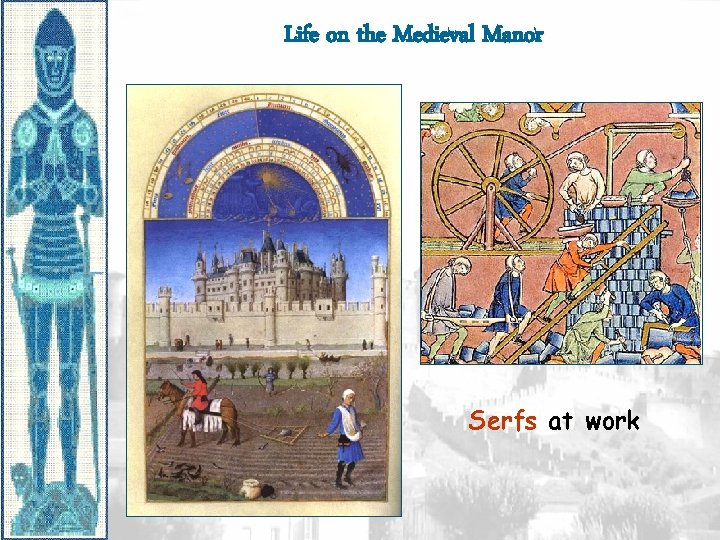
The Medieval Manor
Life on the Medieval Manor Serfs at work
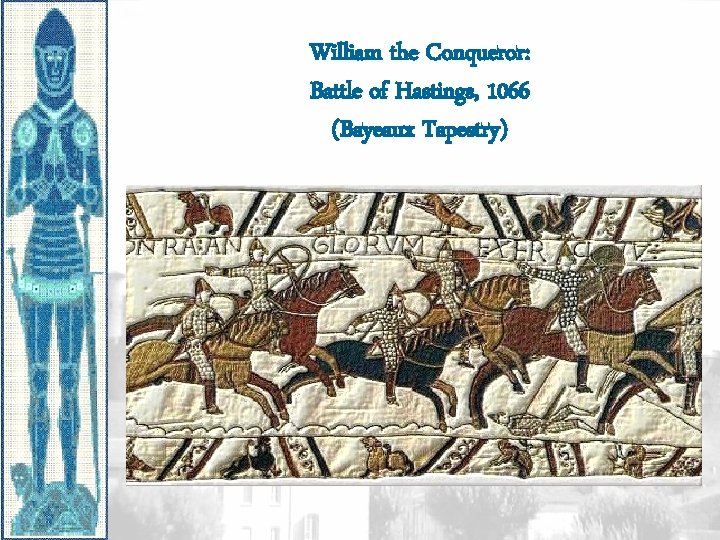
William the Conqueror: Battle of Hastings, 1066 (Bayeaux Tapestry)
Evolution of England’s Political System v Henry I: § William’s son. § set up a court system. § Exchequer dept. of royal finances. v Henry II: § established the principle of common law throughout the kingdom. § grand jury. § trial by jury.
Evolution of England’s Political System v Henry I: § William’s son. § set up a court system. § Exchequer dept. of royal finances. v Henry II: § established the principle of common law throughout the kingdom. § grand jury. § trial by jury.
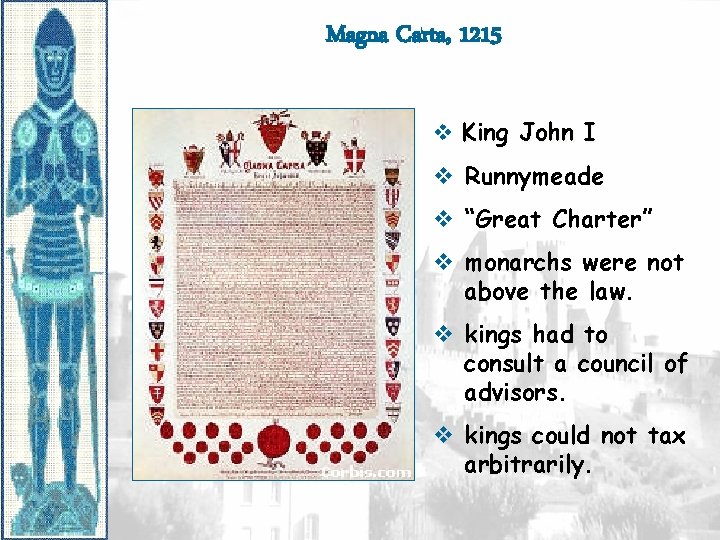
Magna Carta, 1215 v King John I v Runnymeade v “Great Charter” v monarchs were not above the law. v kings had to consult a council of advisors. v kings could not tax arbitrarily.
The Beginnings of the British Parliament v Great Council: § middle class merchants, townspeople [burgesses in Eng. , bourgeoisie in Fr. , burghers in Ger. ] were added at the end of the 13 c. § eventually called Parliament. § by 1400, two chambers evolved: o House of Lords nobles & clergy. o House of Commons knights and burgesses.
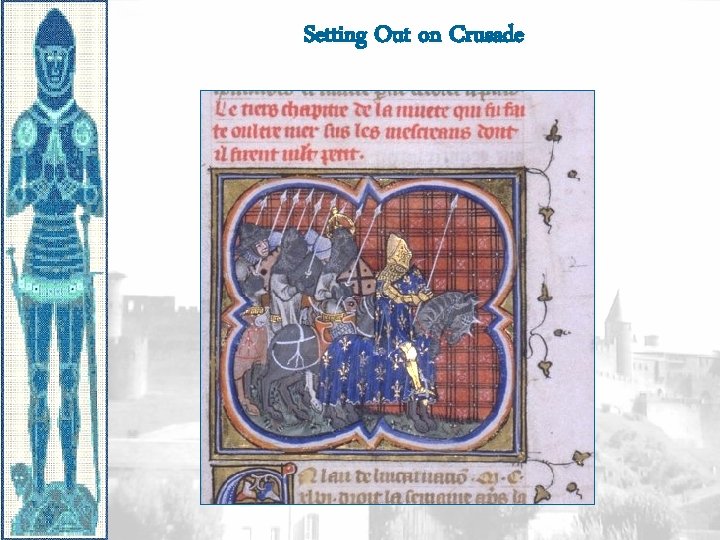
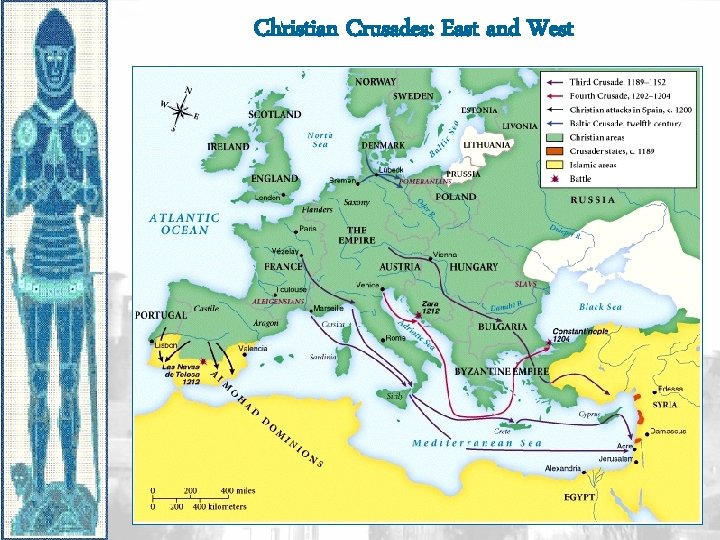
Setting Out on Crusade
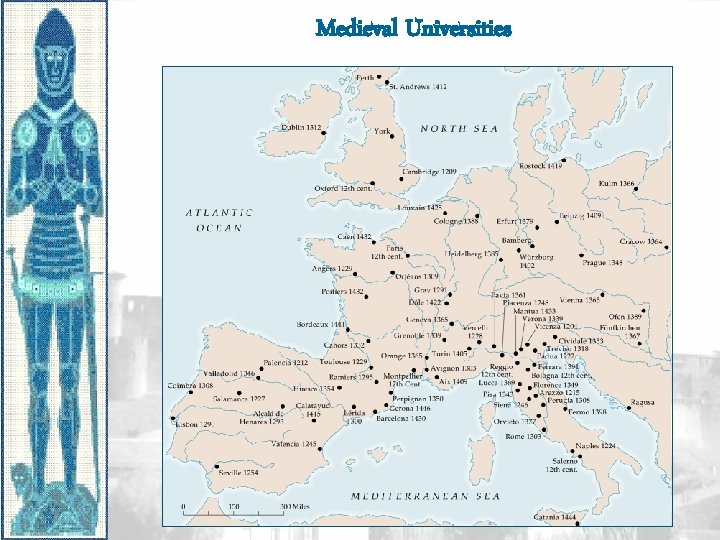
Medieval Universities
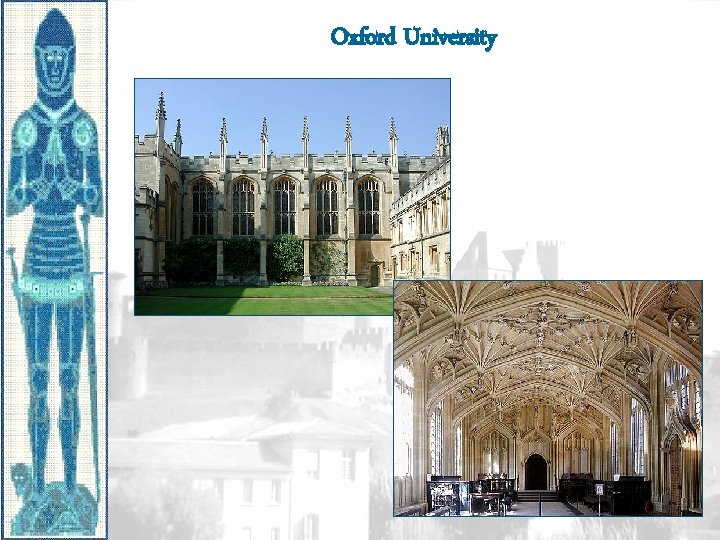
Oxford University
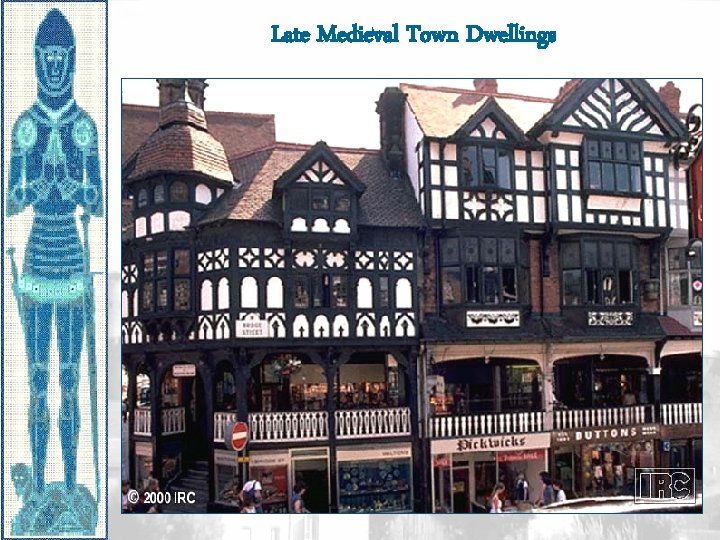
Late Medieval Town Dwellings
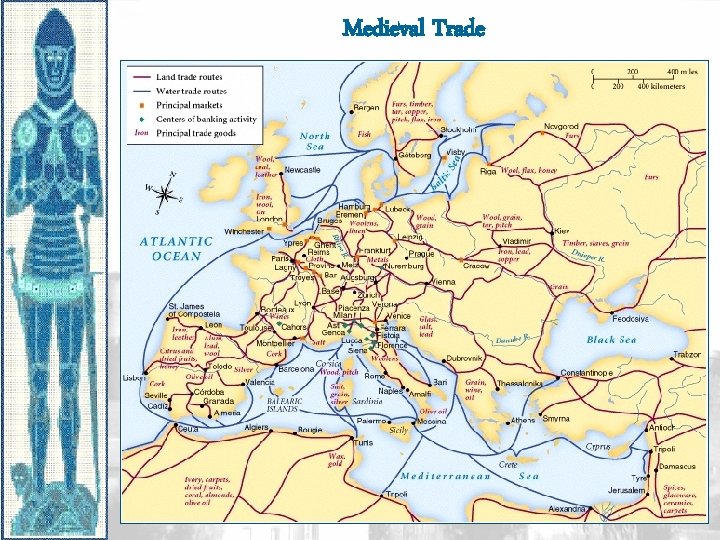
Medieval Trade
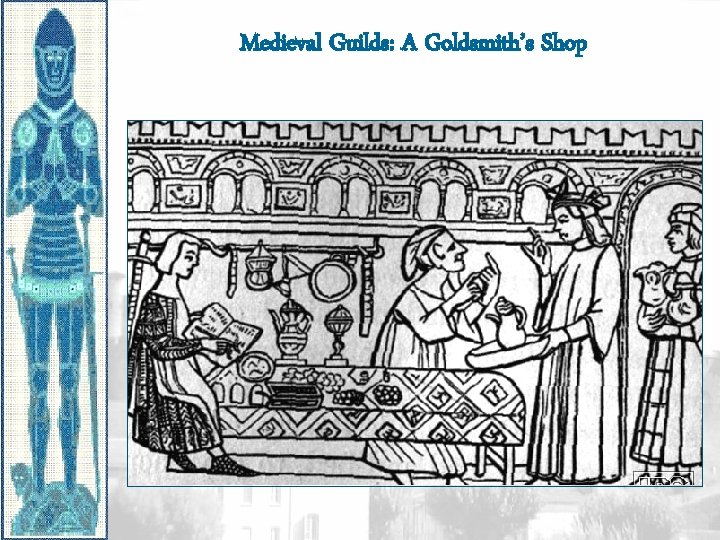
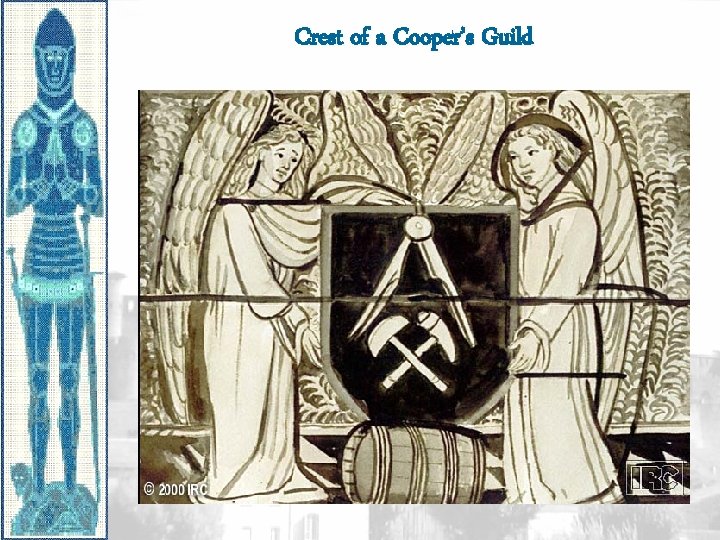
Medieval Guilds Guild Hall v Commercial Monopoly: § Controlled membership apprentice journeyman master craftsman § Controlled quality of the product [masterpiece]. § Controlled prices
Medieval Guilds: A Goldsmith’s Shop
Crest of a Cooper’s Guild
Gothic Architectural Style e Pointed arches. e High, narrow vaults. e Thinner walls. e Flying buttresses. e Elaborate, ornate, airier interiors. e Stained-glass windows. “Flying” Buttresses
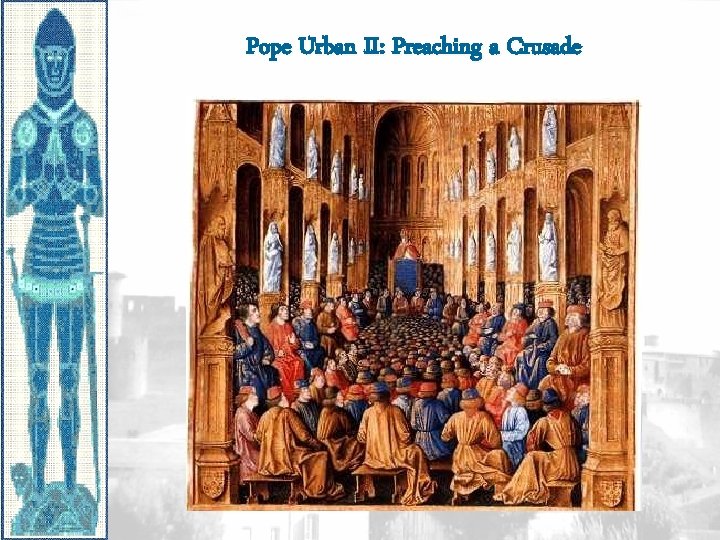
Pope Urban II: Preaching a Crusade
Christian Crusades: East and West