
THE CATEGORY OF MOOD Mood and Modality reasons

- Slides: 5
THE CATEGORY OF MOOD Mood and Modality
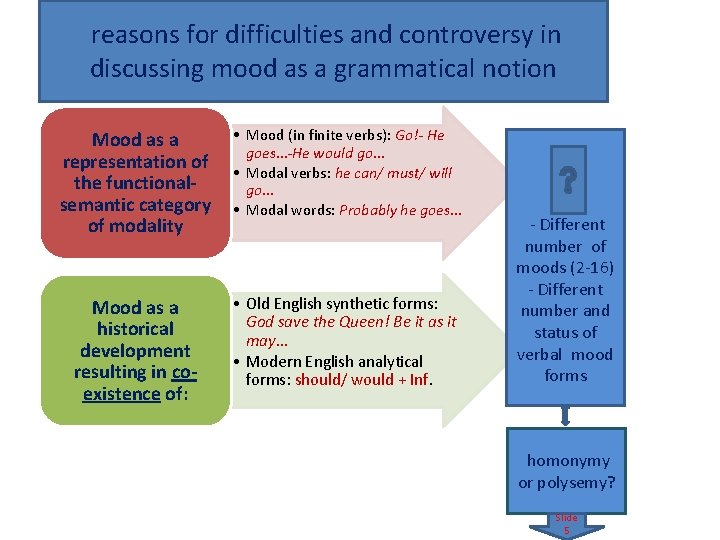
reasons for difficulties and controversy in discussing mood as a grammatical notion Mood as a representation of the functionalsemantic category of modality • Mood (in finite verbs): Go!- He goes…-He would go… • Modal verbs: he can/ must/ will go… • Modal words: Probably he goes… Mood as a historical development resulting in coexistence of: • Old English synthetic forms: God save the Queen! Be it as it may… • Modern English analytical forms: should/ would + Inf. - Different number of moods (2 -16) - Different number and status of verbal mood forms homonymy or polysemy? Slide 5
Mood as a grammatical category : opposed meanings are represented by opposed forms The meaning of reality The meaning of unreality Indicati ve Imperat ive Conjunc tive I take a book – Take a book! *** I take a book – If I took a book/ If I had taken a book/ Should I take a book
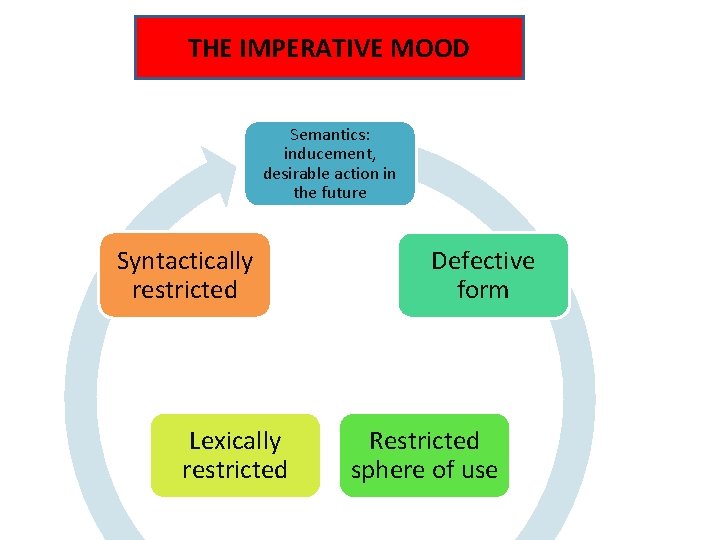
THE IMPERATIVE MOOD Semantics: inducement, desirable action in the future Syntactically restricted Lexically restricted Defective form Restricted sphere of use
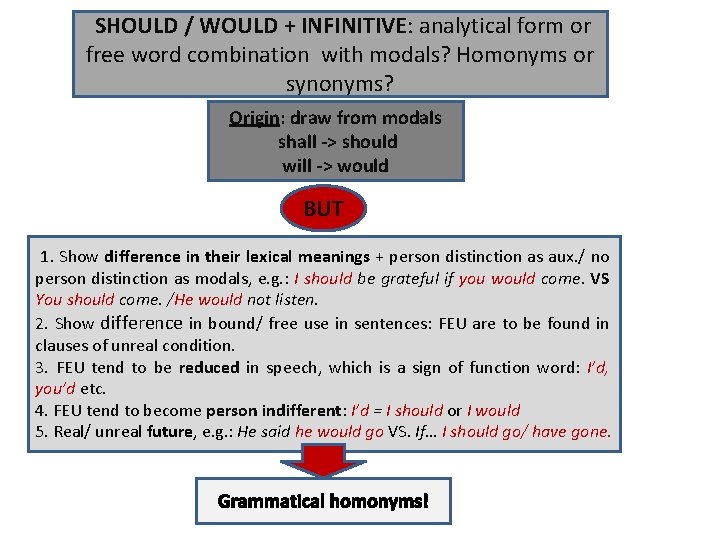
SHOULD / WOULD + INFINITIVE: analytical form or free word combination with modals? Homonyms or synonyms? Origin: draw from modals shall -> should will -> would BUT 1. Show difference in their lexical meanings + person distinction as aux. / no person distinction as modals, e. g. : I should be grateful if you would come. VS You should come. /He would not listen. 2. Show difference in bound/ free use in sentences: FEU are to be found in clauses of unreal condition. 3. FEU tend to be reduced in speech, which is a sign of function word: I’d, you’d etc. 4. FEU tend to become person indifferent: I’d = I should or I would 5. Real/ unreal future, e. g. : He said he would go VS. If… I should go/ have gone. Grammatical homonyms!