
The Categories of Medieval Russian Culture Sacred architecture
- Slides: 23
The Categories of Medieval Russian Culture
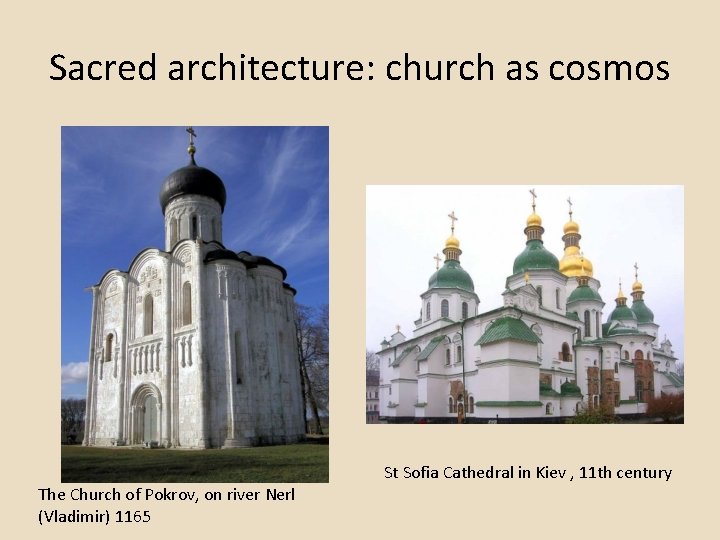
Sacred architecture: church as cosmos St Sofia Cathedral in Kiev , 11 th century The Church of Pokrov, on river Nerl (Vladimir) 1165
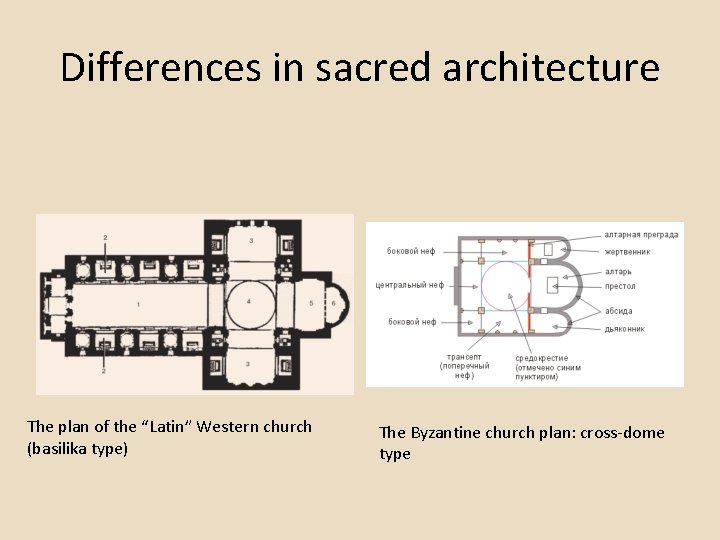
Differences in sacred architecture The plan of the “Latin” Western church (basilika type) The Byzantine church plan: cross-dome type
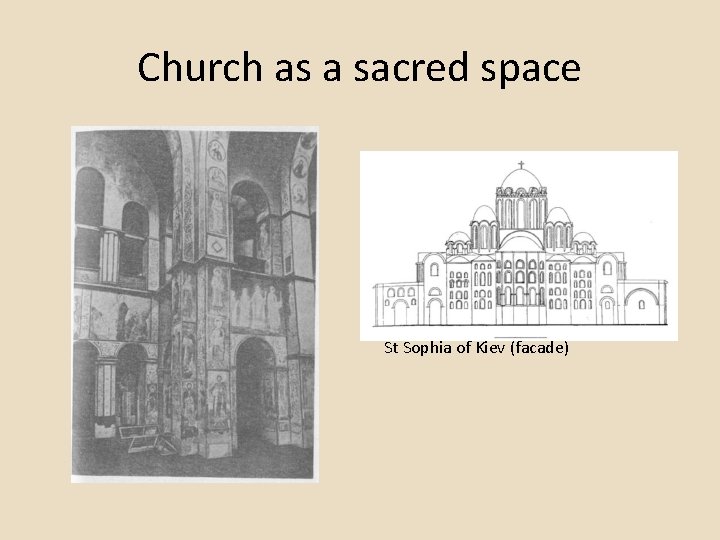
Church as a sacred space St Sophia of Kiev (facade)
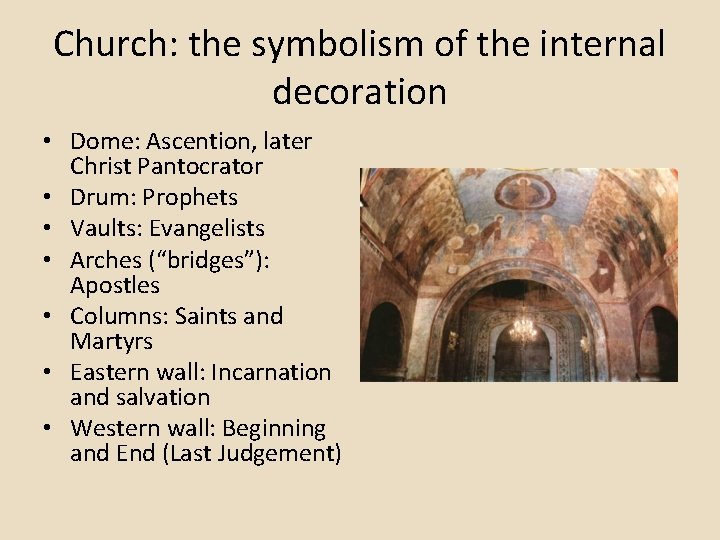
Church: the symbolism of the internal decoration • Dome: Ascention, later Christ Pantocrator • Drum: Prophets • Vaults: Evangelists • Arches (“bridges”): Apostles • Columns: Saints and Martyrs • Eastern wall: Incarnation and salvation • Western wall: Beginning and End (Last Judgement)
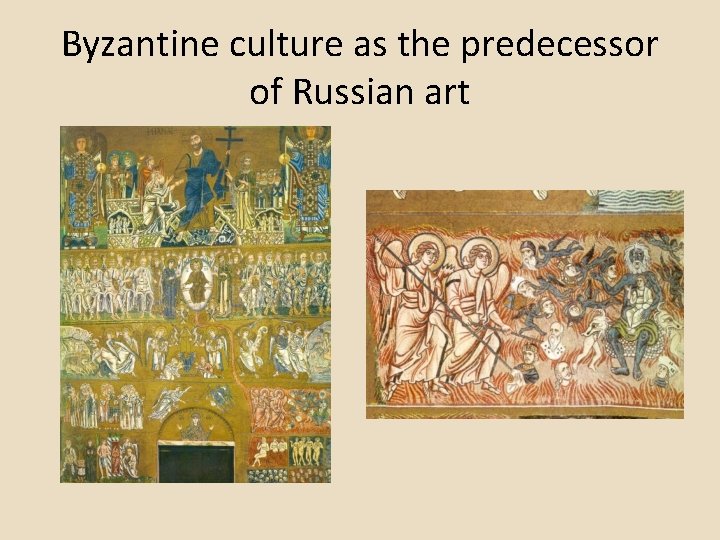
Byzantine culture as the predecessor of Russian art
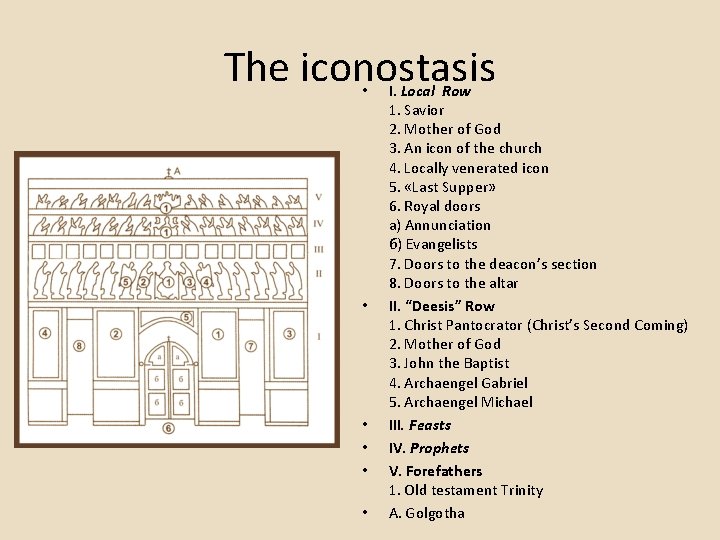
The iconostasis • • • I. Local Row 1. Savior 2. Mother of God 3. An icon of the church 4. Locally venerated icon 5. «Last Supper» 6. Royal doors а) Annunciation б) Evangelists 7. Doors to the deacon’s section 8. Doors to the altar II. “Deesis” Row 1. Christ Pantocrator (Christ’s Second Coming) 2. Mother of God 3. John the Baptist 4. Archaengel Gabriel 5. Archaengel Michael III. Feasts IV. Prophets V. Forefathers 1. Old testament Trinity А. Golgotha
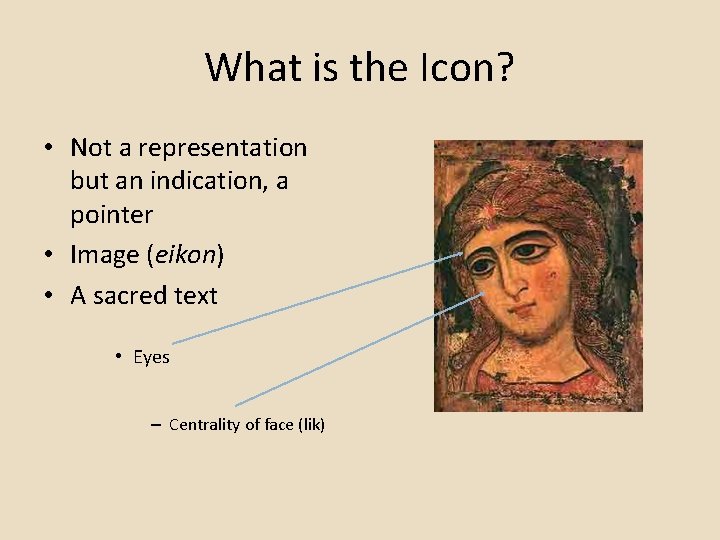
What is the Icon? • Not a representation but an indication, a pointer • Image (eikon) • A sacred text • Eyes – Centrality of face (lik)
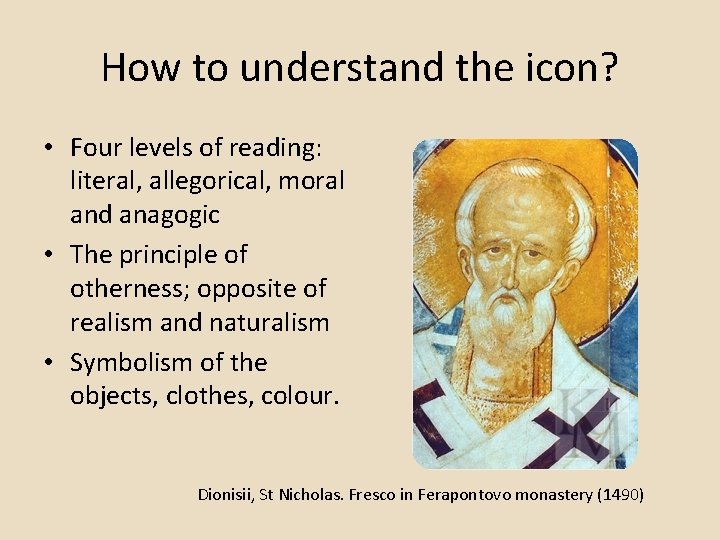
How to understand the icon? • Four levels of reading: literal, allegorical, moral and anagogic • The principle of otherness; opposite of realism and naturalism • Symbolism of the objects, clothes, colour. Dionisii, St Nicholas. Fresco in Ferapontovo monastery (1490)
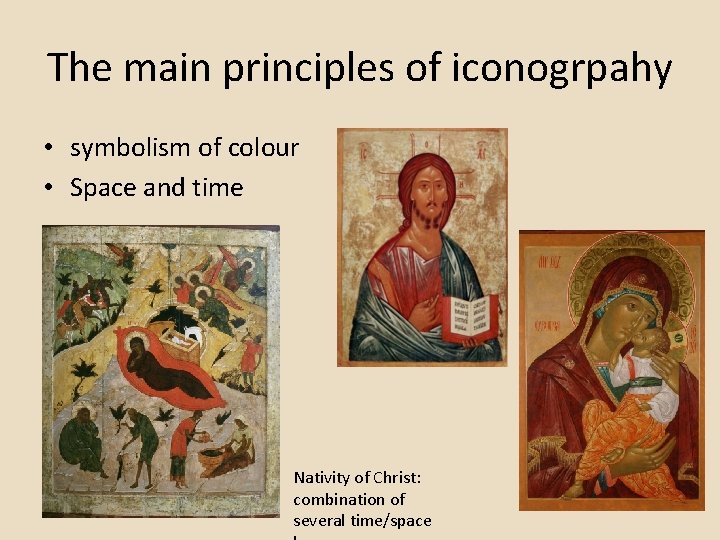
The main principles of iconogrpahy • symbolism of colour • Space and time Nativity of Christ: combination of several time/space
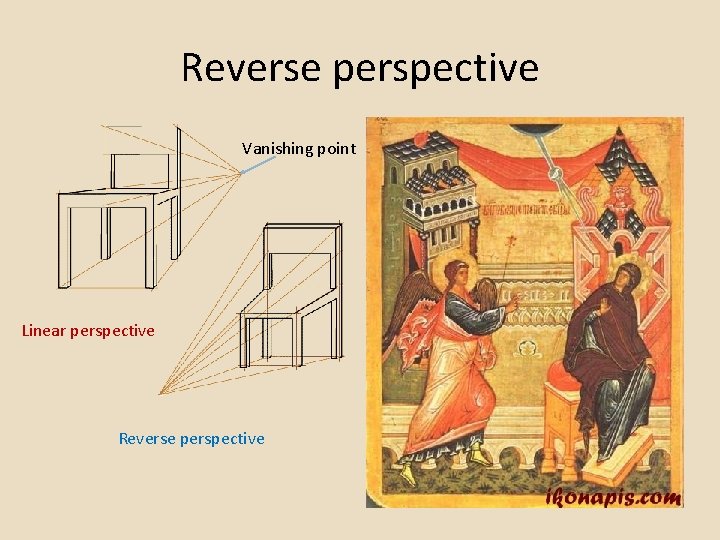
Reverse perspective Vanishing point Linear perspective Reverse perspective
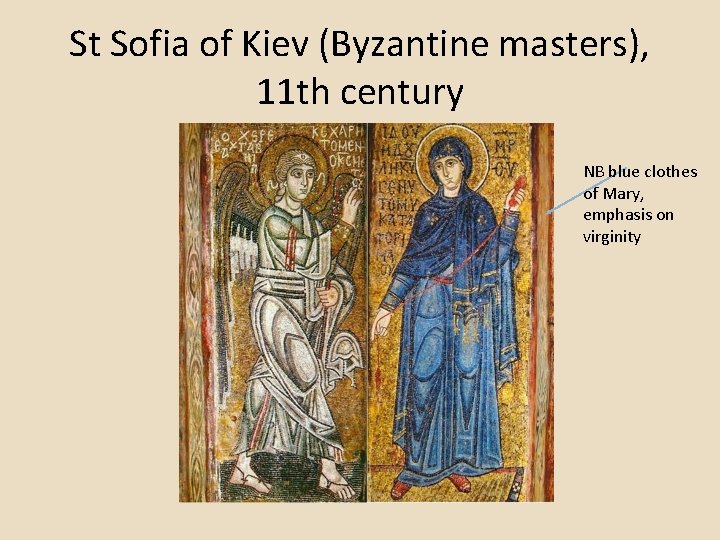
St Sofia of Kiev (Byzantine masters), 11 th century NB blue clothes of Mary, emphasis on virginity
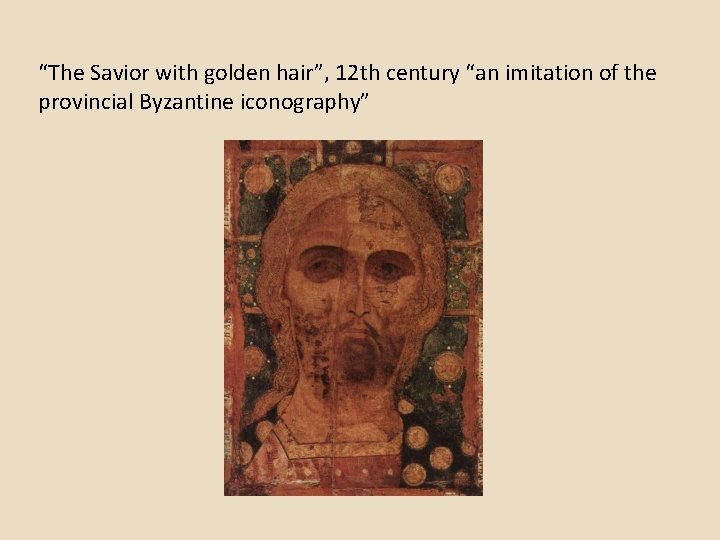
“The Savior with golden hair”, 12 th century “an imitation of the provincial Byzantine iconography”
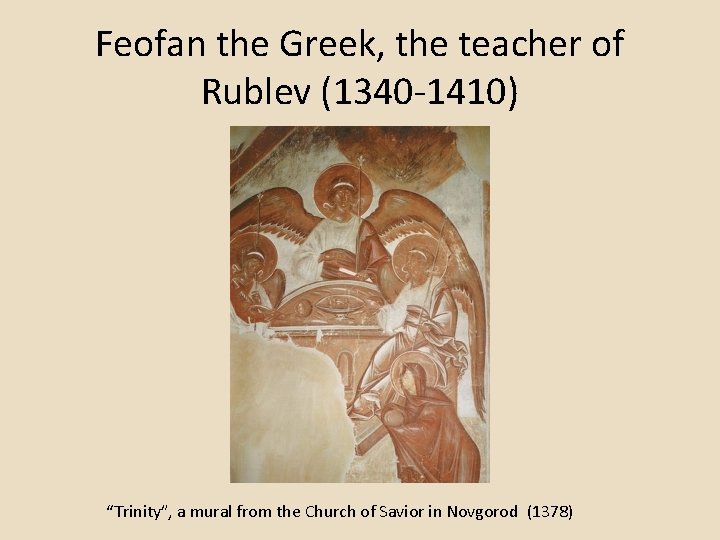
Feofan the Greek, the teacher of Rublev (1340 -1410) “Trinity”, a mural from the Church of Savior in Novgorod (1378)
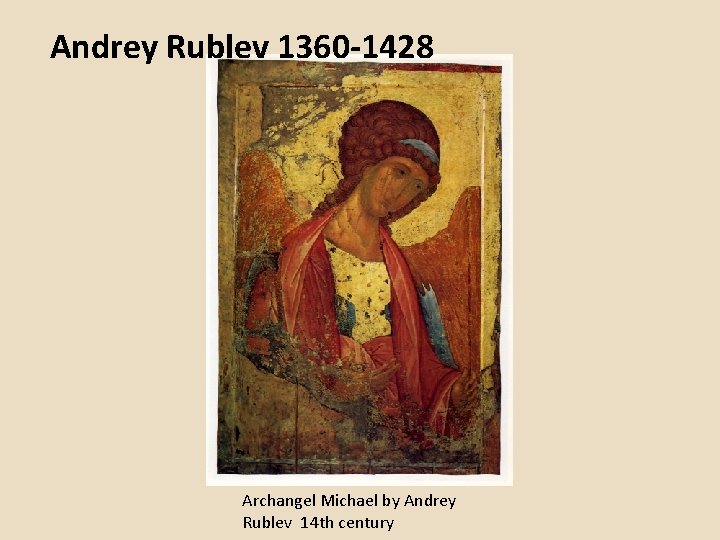
Andrey Rublev 1360 -1428 Archangel Michael by Andrey Rublev 14 th century
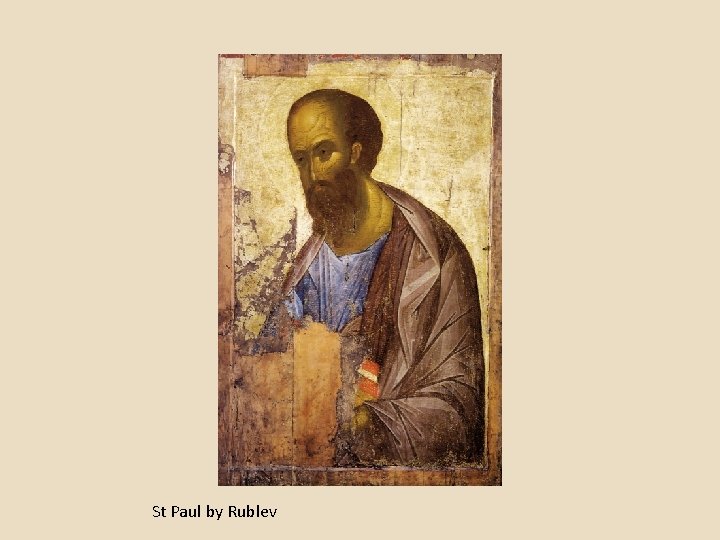
St Paul by Rublev
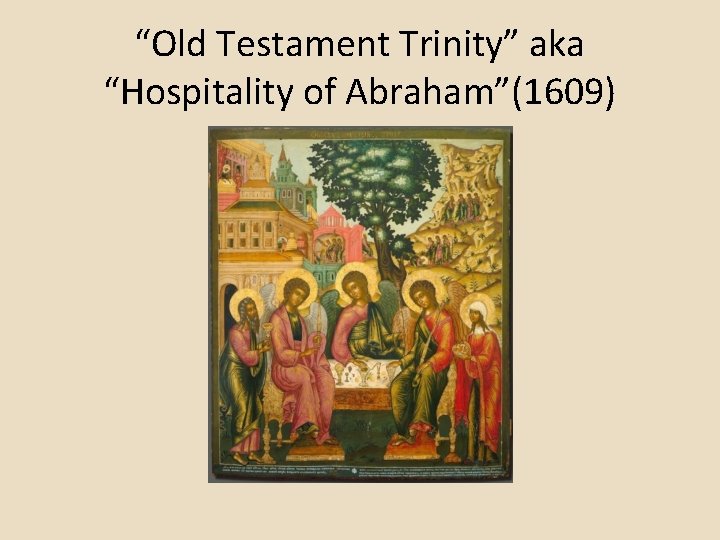
“Old Testament Trinity” aka “Hospitality of Abraham”(1609)
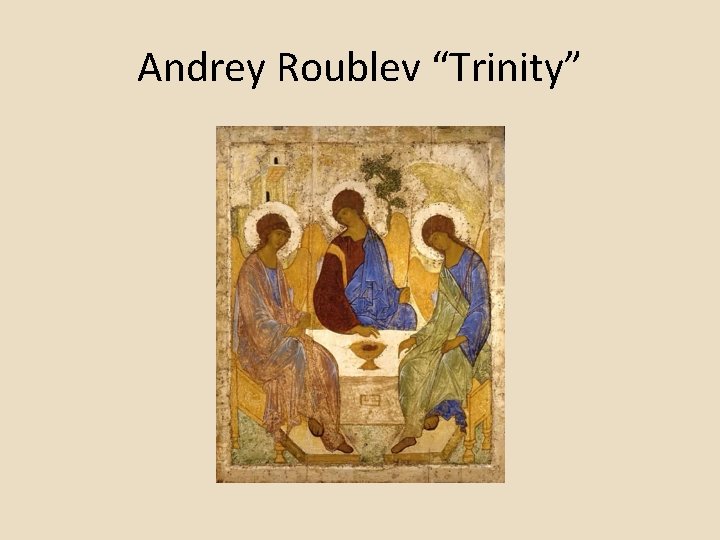
Andrey Roublev “Trinity”
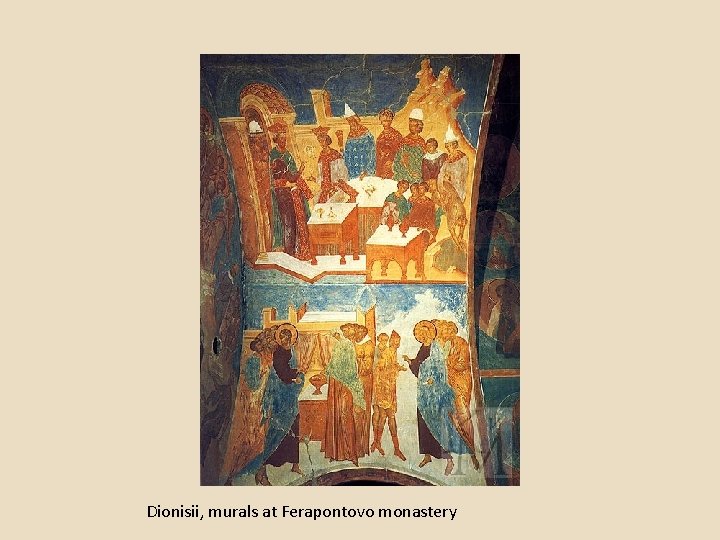
Dionisii, murals at Ferapontovo monastery
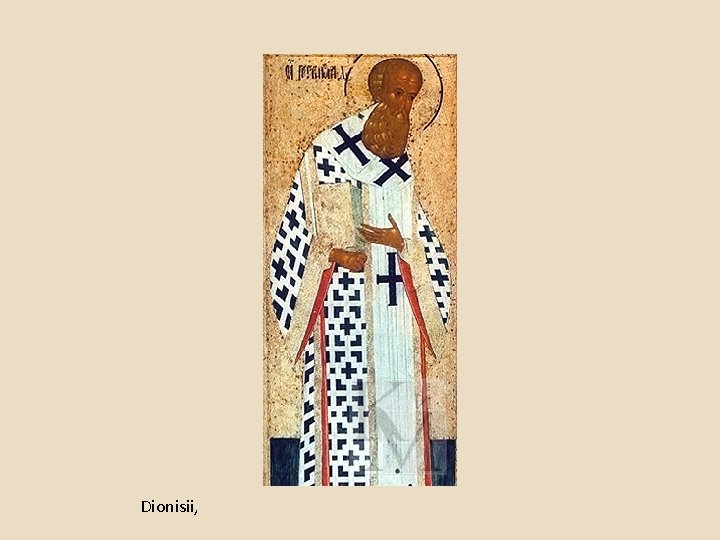
Dionisii,
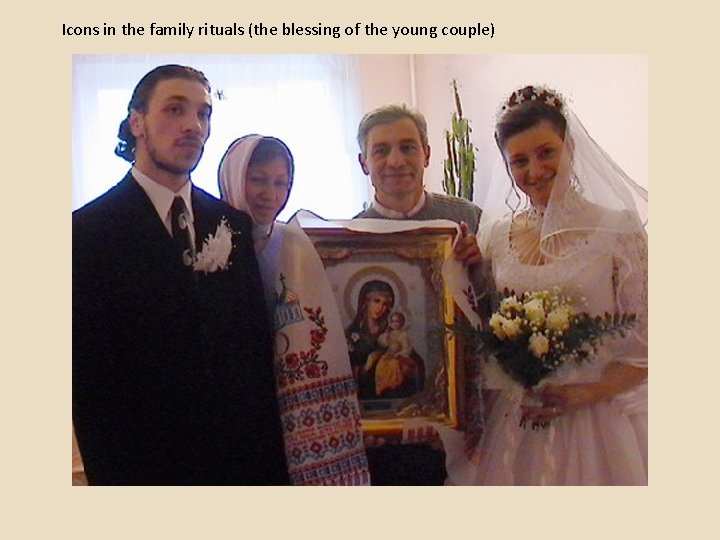
Icons in the family rituals (the blessing of the young couple)
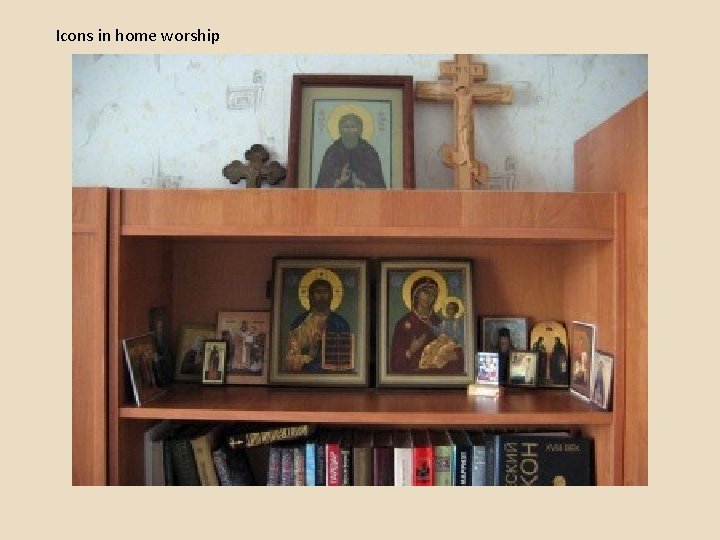
Icons in home worship