
The Cat Duet By Gioachino Rossini A lesson
The Cat Duet By Gioachino Rossini A lesson for 7 -8 year old children using listening and composition skills as well as their creativity and imagination. Claire Massa HOD Music
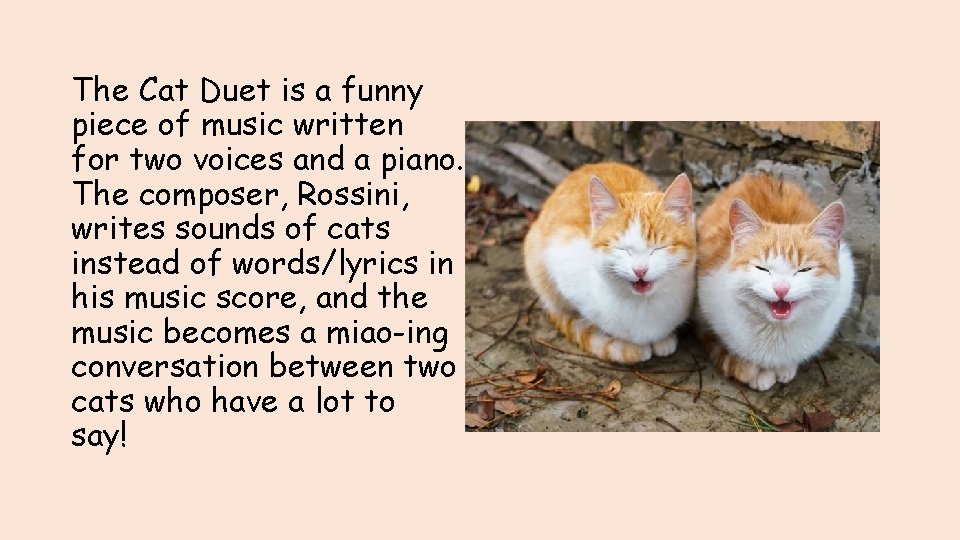
The Cat Duet is a funny piece of music written for two voices and a piano. The composer, Rossini, writes sounds of cats instead of words/lyrics in his music score, and the music becomes a miao-ing conversation between two cats who have a lot to say!
Activity 1 Think of something small you want to say to your friend. Imagine you were a cat and the only word you can say is Miao! How would you make yourself understood? 1. Would you say one big miao, or many small miaos? 2. Would you keep your voice all in one level, or will you change the tone of your voice? 3. Are you able to make a difference between your miaos – to look happy, angry, excited or even sad?
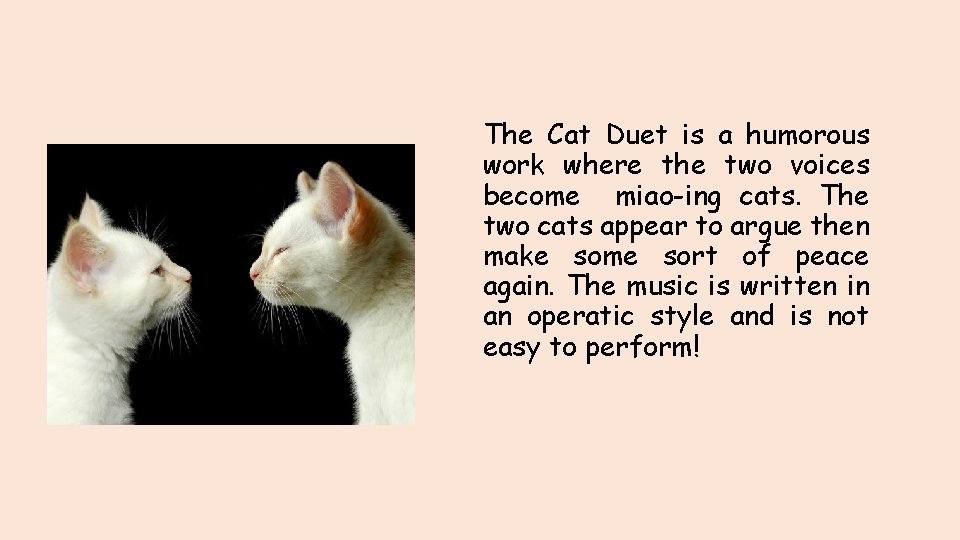
The Cat Duet is a humorous work where the two voices become miao-ing cats. The two cats appear to argue then make some sort of peace again. The music is written in an operatic style and is not easy to perform!
Listen to the music by pressing the link below: https: //www. youtube. com/watch? v=QNy. R 6 rs. GDyg
Activity 2 Wasn’t this an enjoyable piece of music! The following are some points to think about: 1. How can you describe the general pitch of the two voices? Were they in the same range? 2. Was the tempo of the piece fast, slow, or at a medium pace? 3. What was the mood of the piece? 4. Does the piano miao too?
Your answers and thoughts should have been: 1. One singer sings in a high range, and the other in a lower range. 2. The tempo was starts slow and then speeds up to a moderately faster tempo. 3. The mood is light and funny. 4. The piano and pianist do not miao.
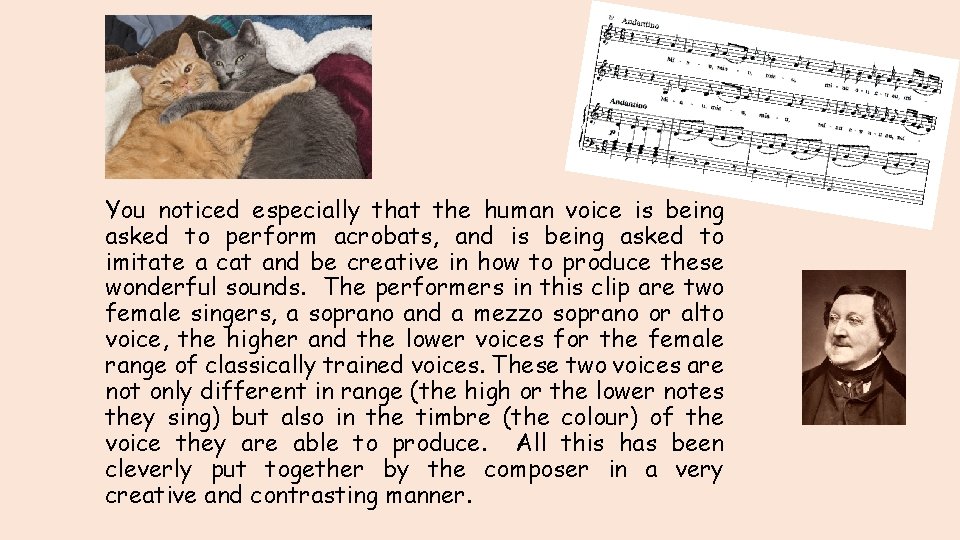
You noticed especially that the human voice is being asked to perform acrobats, and is being asked to imitate a cat and be creative in how to produce these wonderful sounds. The performers in this clip are two female singers, a soprano and a mezzo soprano or alto voice, the higher and the lower voices for the female range of classically trained voices. These two voices are not only different in range (the high or the lower notes they sing) but also in the timbre (the colour) of the voice they are able to produce. All this has been cleverly put together by the composer in a very creative and contrasting manner.
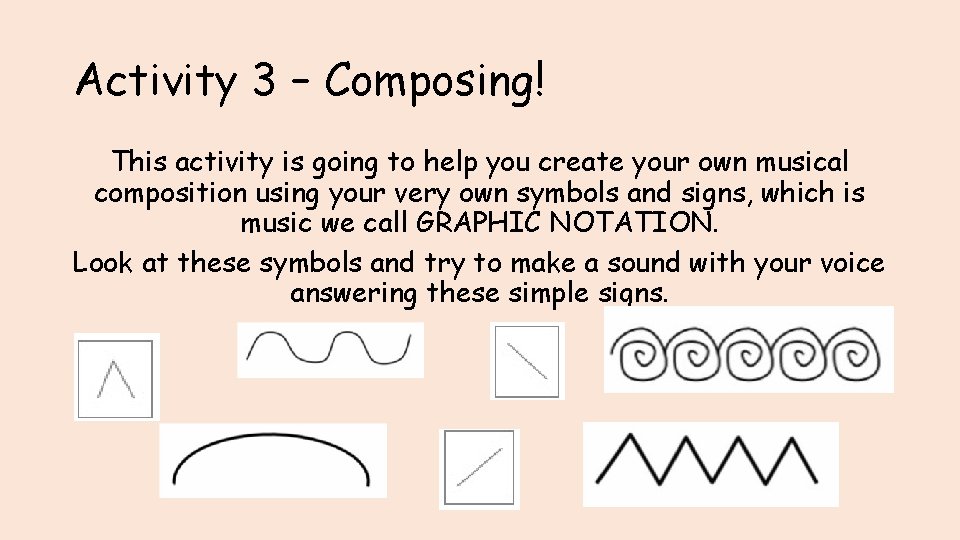
Activity 3 – Composing! This activity is going to help you create your own musical composition using your very own symbols and signs, which is music we call GRAPHIC NOTATION. Look at these symbols and try to make a sound with your voice answering these simple signs.
YOUR TURN! On the next slide, an empty table has been prepared for you. This is going to be a score, in this case a GRAPHIC score which you are going to fill with your own original signs and symbols. Steps: 1) Choose one of the following animals: Donkey, Cock, Lion 2) Think about what noises these animals can make 3) Create symbols to explain these sounds 4) Put them together in your own original composition – be creative! 5) Have fun performing it!
- Slides: 11