
The Caste System What is the Caste System
- Slides: 8
The Caste System
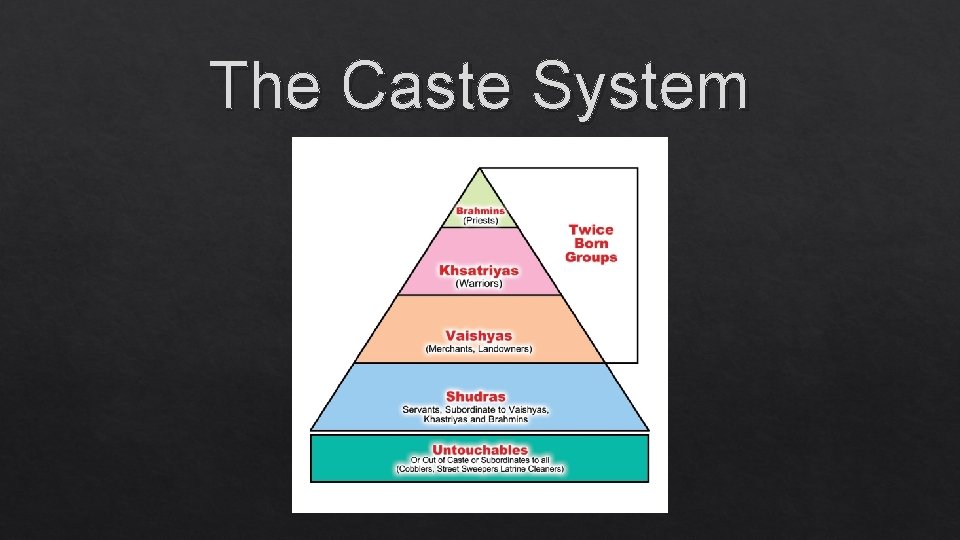
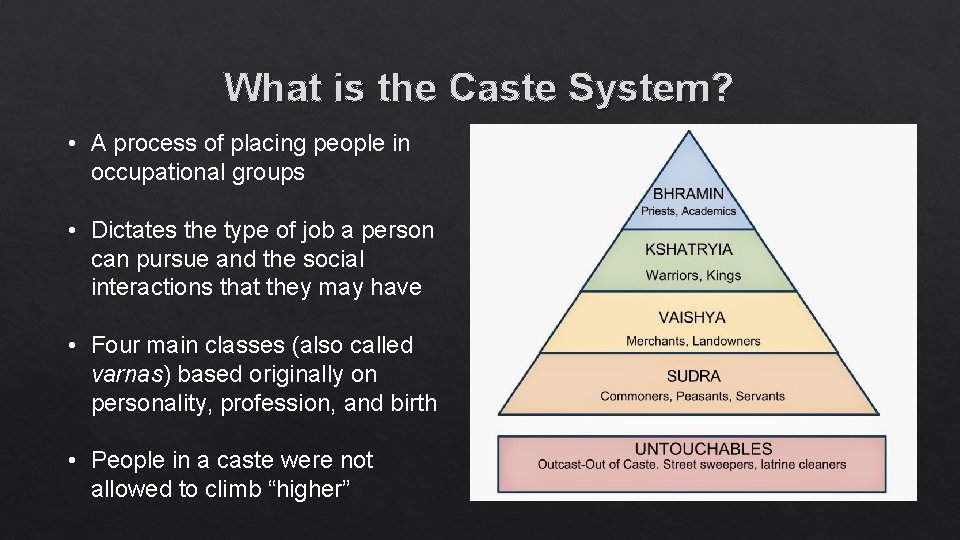
What is the Caste System? • A process of placing people in occupational groups • Dictates the type of job a person can pursue and the social interactions that they may have • Four main classes (also called varnas) based originally on personality, profession, and birth • People in a caste were not allowed to climb “higher”
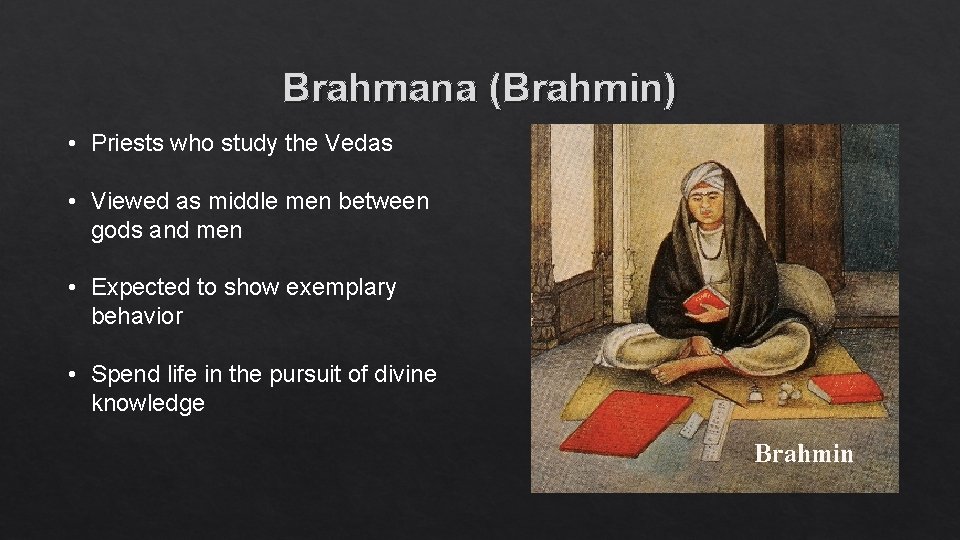
Brahmana (Brahmin) • Priests who study the Vedas • Viewed as middle men between gods and men • Expected to show exemplary behavior • Spend life in the pursuit of divine knowledge
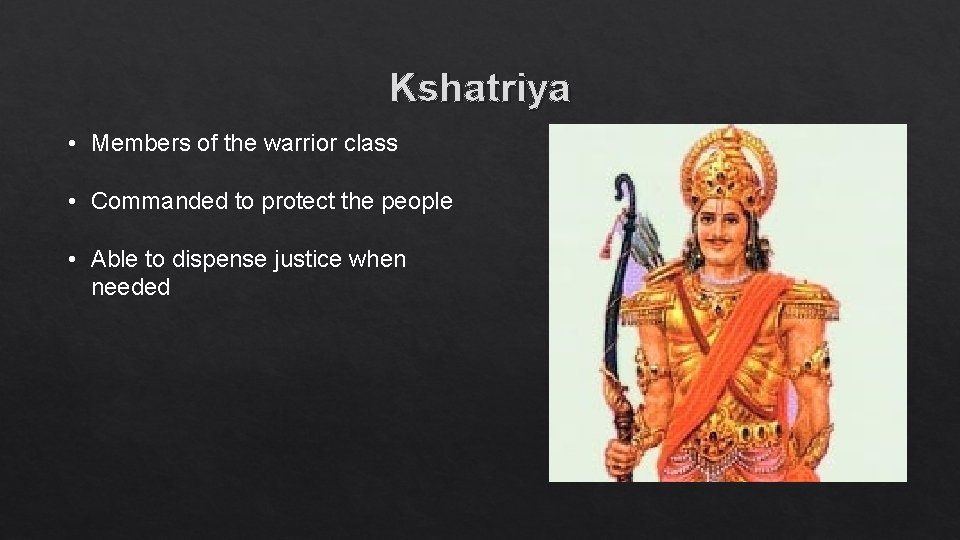
Kshatriya • Members of the warrior class • Commanded to protect the people • Able to dispense justice when needed
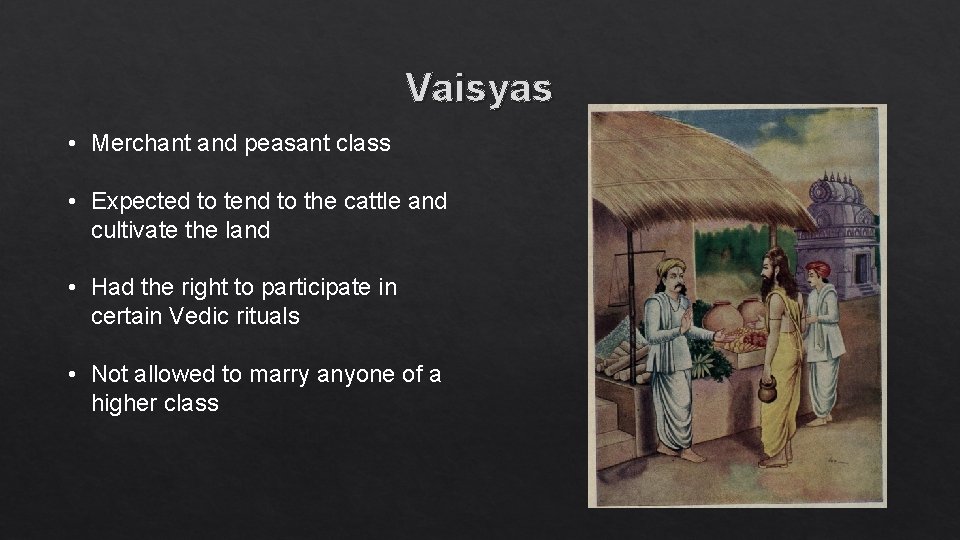
Vaisyas • Merchant and peasant class • Expected to tend to the cattle and cultivate the land • Had the right to participate in certain Vedic rituals • Not allowed to marry anyone of a higher class
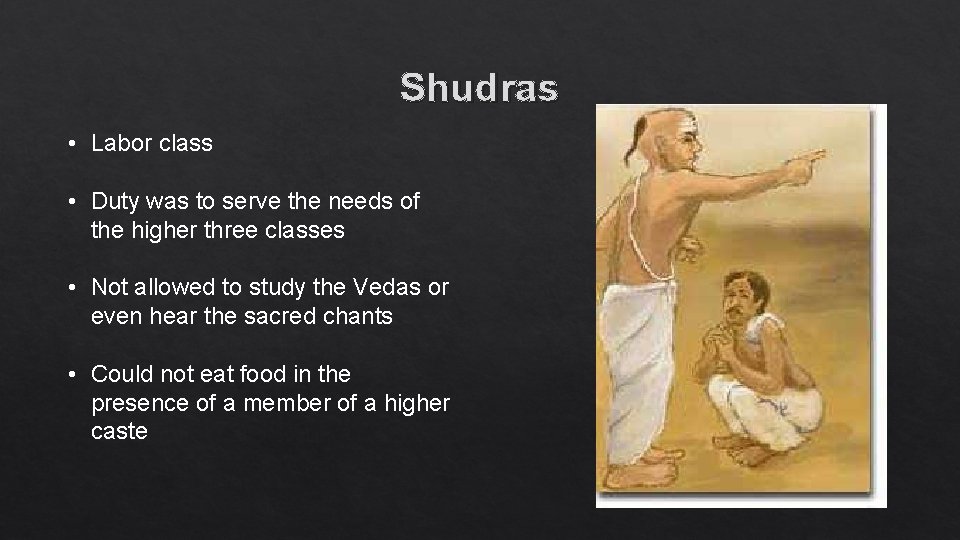
Shudras • Labor class • Duty was to serve the needs of the higher three classes • Not allowed to study the Vedas or even hear the sacred chants • Could not eat food in the presence of a member of a higher caste
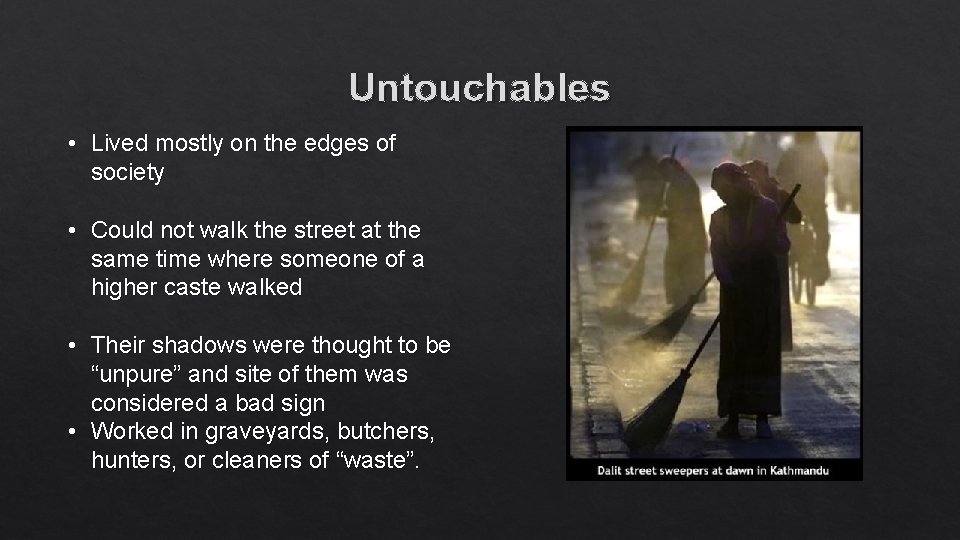
Untouchables • Lived mostly on the edges of society • Could not walk the street at the same time where someone of a higher caste walked • Their shadows were thought to be “unpure” and site of them was considered a bad sign • Worked in graveyards, butchers, hunters, or cleaners of “waste”.
Today • How does the caste system of India differ from our society today? • Are there any elements of a caste system in our society? • How would things be different IF we had a caste society?