
The Caribbean Large Marine Ecosystem Project CLME Data
The Caribbean Large Marine Ecosystem Project (CLME) Data & Information in Support of Decision. Making and Policy Cycle Implementation Patrick Debels Regional Coordinator Patrick. D@unops. org Laverne Walker Senior Project Officer Laverne. W@unops. org
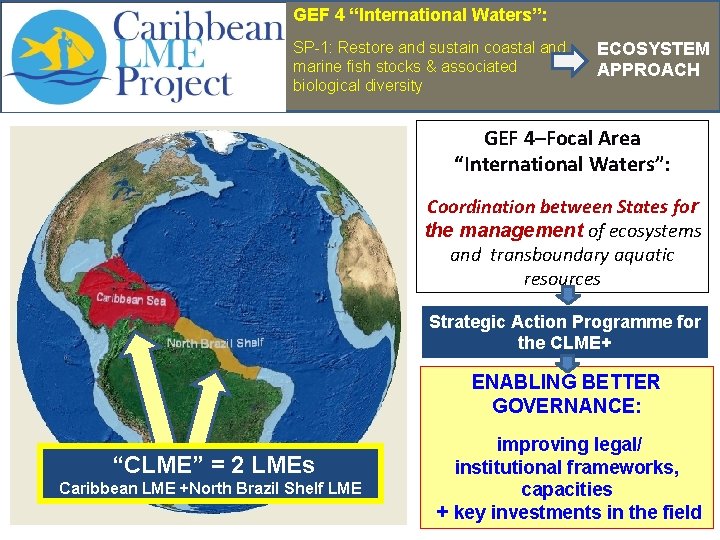
GEF 4 “International Waters”: SP-1: Restore and sustain coastal and marine fish stocks & associated biological diversity ECOSYSTEM APPROACH GEF 4–Focal Area “International Waters”: Coordination between States for the management of ecosystems and transboundary aquatic resources Strategic Action Programme for the CLME+ ENABLING BETTER GOVERNANCE: “CLME” = 2 LMEs Caribbean LME +North Brazil Shelf LME improving legal/ institutional frameworks, capacities + key investments in the field
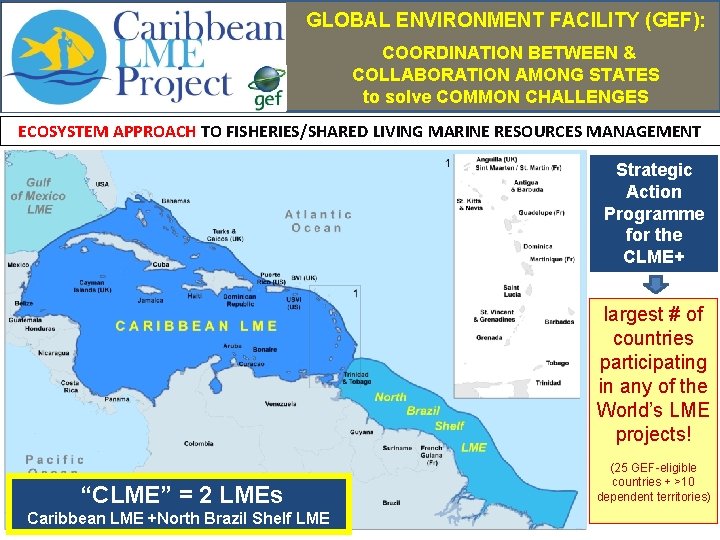
GLOBAL ENVIRONMENT FACILITY (GEF): COORDINATION BETWEEN & COLLABORATION AMONG STATES to solve COMMON CHALLENGES ECOSYSTEM APPROACH TO FISHERIES/SHARED LIVING MARINE RESOURCES MANAGEMENT Strategic Action Programme for the CLME+ largest # of countries participating in any of the World’s LME projects! “CLME” = 2 LMEs Caribbean LME +North Brazil Shelf LME (25 GEF-eligible countries + >10 dependent territories)
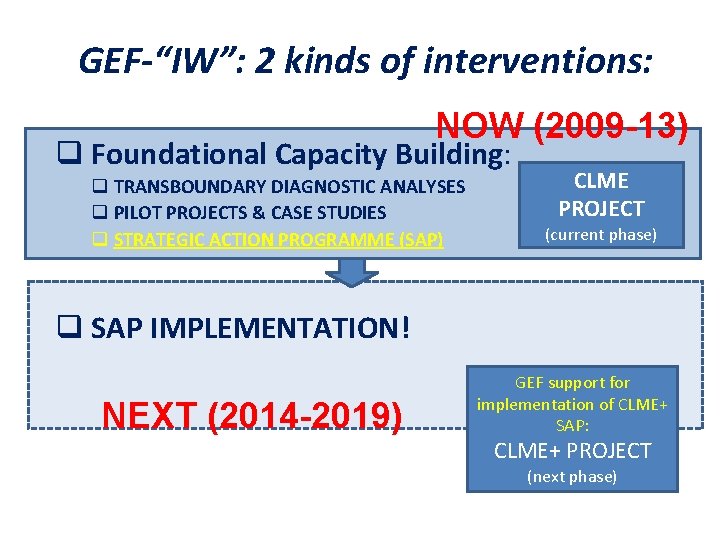
GEF-“IW”: 2 kinds of interventions: NOW (2009 -13) q Foundational Capacity Building: q TRANSBOUNDARY DIAGNOSTIC ANALYSES q PILOT PROJECTS & CASE STUDIES q STRATEGIC ACTION PROGRAMME (SAP) CLME PROJECT (current phase) q SAP IMPLEMENTATION! NEXT (2014 -2019) GEF support for implementation of CLME+ SAP: CLME+ PROJECT (next phase)
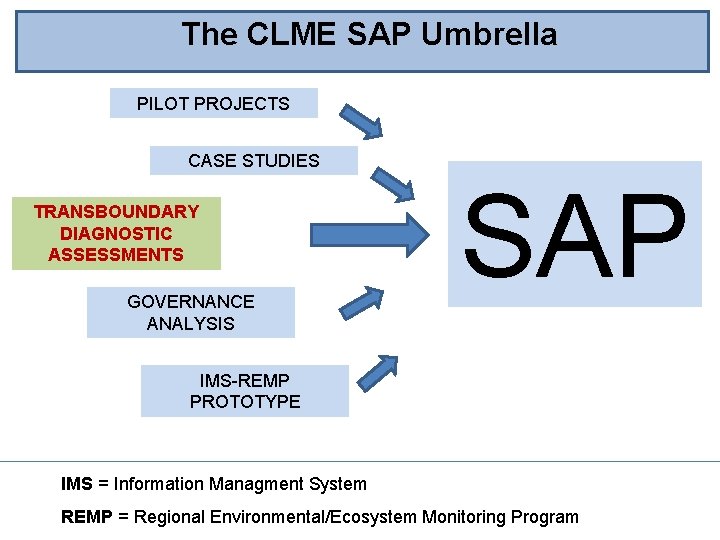
The CLME SAP Umbrella PILOT PROJECTS CASE STUDIES TRANSBOUNDARY DIAGNOSTIC ASSESSMENTS GOVERNANCE ANALYSIS SAP IMS-REMP PROTOTYPE IMS = Information Managment System REMP = Regional Environmental/Ecosystem Monitoring Program
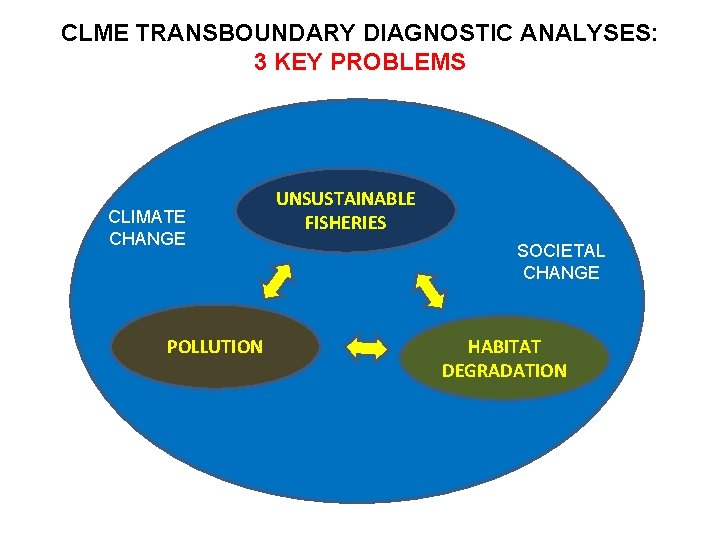
CLME TRANSBOUNDARY DIAGNOSTIC ANALYSES: 3 KEY PROBLEMS CLIMATE CHANGE POLLUTION UNSUSTAINABLE FISHERIES SOCIETAL CHANGE HABITAT DEGRADATION
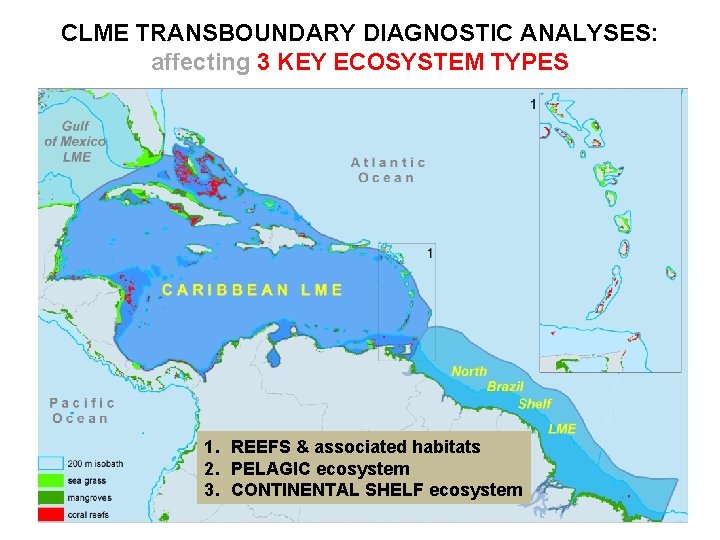
CLME TRANSBOUNDARY DIAGNOSTIC ANALYSES: affecting 3 KEY ECOSYSTEM TYPES 1. REEFS & associated habitats 2. PELAGIC ecosystem 3. CONTINENTAL SHELF ecosystem
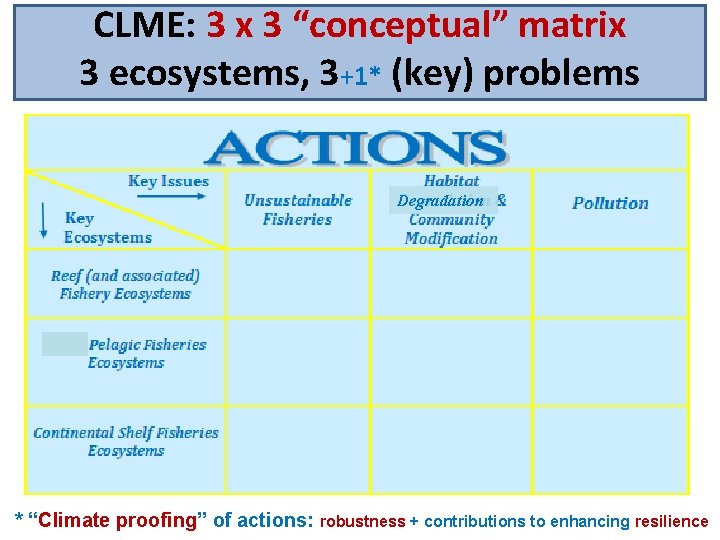
CLME: 3 x 3 “conceptual” matrix 3 ecosystems, 3+1* (key) problems Degradation * “Climate proofing” of actions: robustness + contributions to enhancing resilience
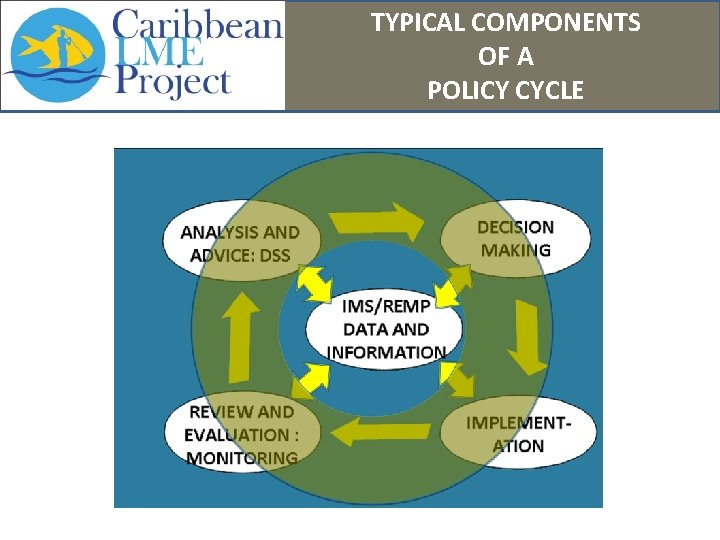
TYPICAL COMPONENTS OF A POLICY CYCLE
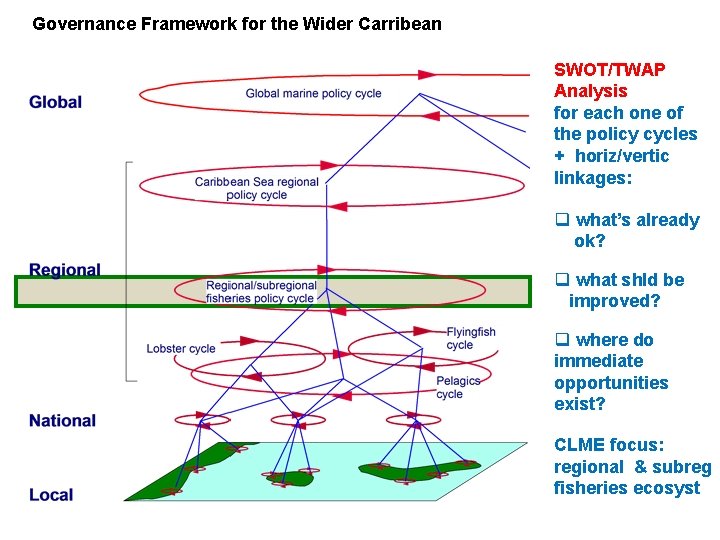
Governance Framework for the Wider Carribean SWOT/TWAP Analysis for each one of the policy cycles + horiz/vertic linkages: q what’s already ok? q what shld be improved? q where do immediate opportunities exist? CLME focus: regional & subreg fisheries ecosyst
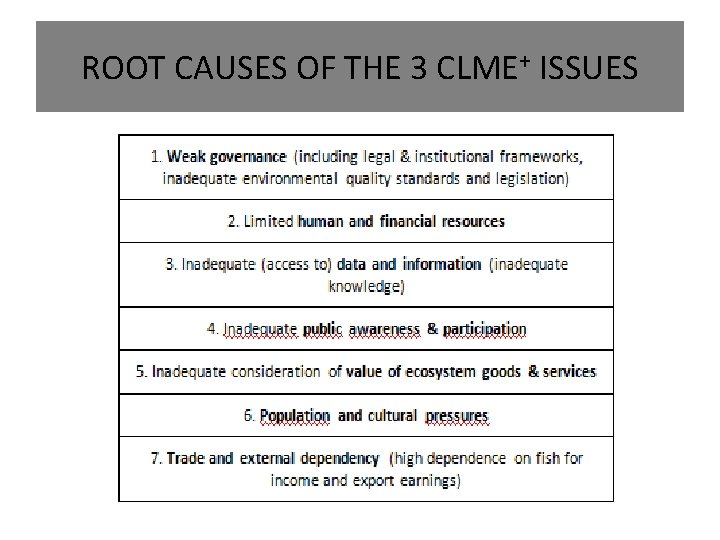
ROOT CAUSES OF THE 3 CLME+ ISSUES
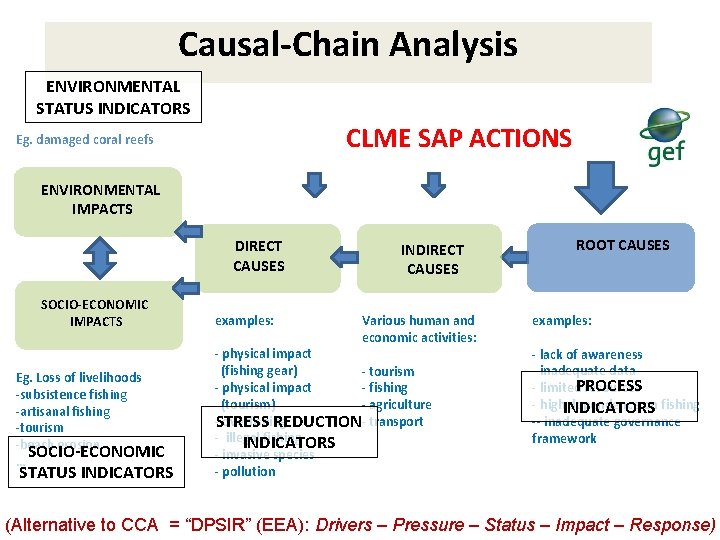
Causal-Chain Analysis ENVIRONMENTAL STATUS INDICATORS CLME SAP ACTIONS Eg. damaged coral reefs ENVIRONMENTAL IMPACTS DIRECT CAUSES SOCIO-ECONOMIC IMPACTS Eg. Loss of livelihoods -subsistence fishing -artisanal fishing -tourism -beach erosion SOCIO-ECONOMIC … STATUS INDICATORS examples: INDIRECT CAUSES Various human and economic activities: - physical impact (fishing gear) - tourism - physical impact - fishing (tourism) - agriculture -STRESS overfishing REDUCTION- transport - illegal fishing INDICATORS - invasive species - pollution ROOT CAUSES examples: - lack of awareness - inadequate data - limited. PROCESS resources - high. INDICATORS dependence on fishing -- inadequate governance framework (Alternative to CCA = “DPSIR” (EEA): Drivers – Pressure – Status – Impact – Response)
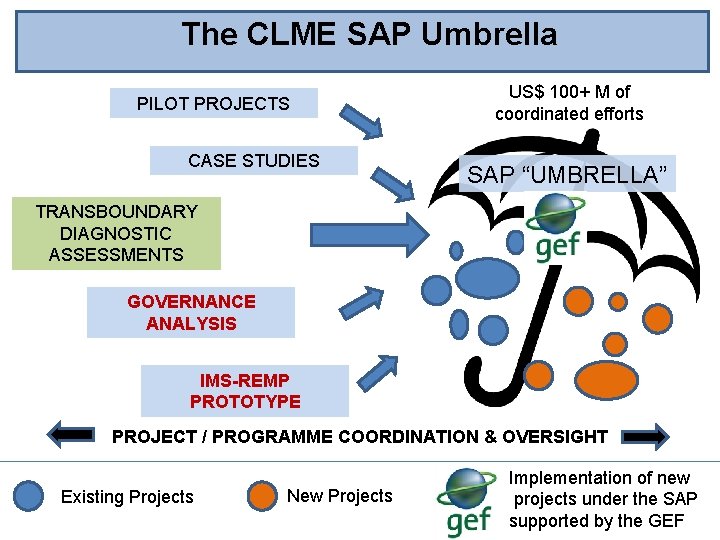
The CLME SAP Umbrella PILOT PROJECTS CASE STUDIES US$ 100+ M of coordinated efforts SAP “UMBRELLA” TRANSBOUNDARY DIAGNOSTIC ASSESSMENTS GOVERNANCE ANALYSIS IMS-REMP PROTOTYPE PROJECT / PROGRAMME COORDINATION & OVERSIGHT Existing Projects New Projects Implementation of new projects under the SAP supported by the GEF
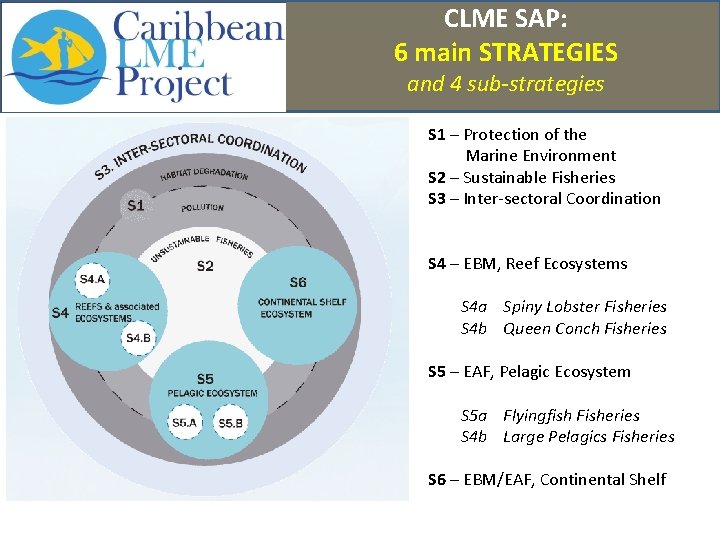
CLME SAP: 6 main STRATEGIES and 4 sub-strategies S 1 – Protection of the Marine Environment S 2 – Sustainable Fisheries S 3 – Inter-sectoral Coordination S 4 – EBM, Reef Ecosystems S 4 a Spiny Lobster Fisheries S 4 b Queen Conch Fisheries S 5 – EAF, Pelagic Ecosystem S 5 a Flyingfish Fisheries S 4 b Large Pelagics Fisheries S 6 – EBM/EAF, Continental Shelf
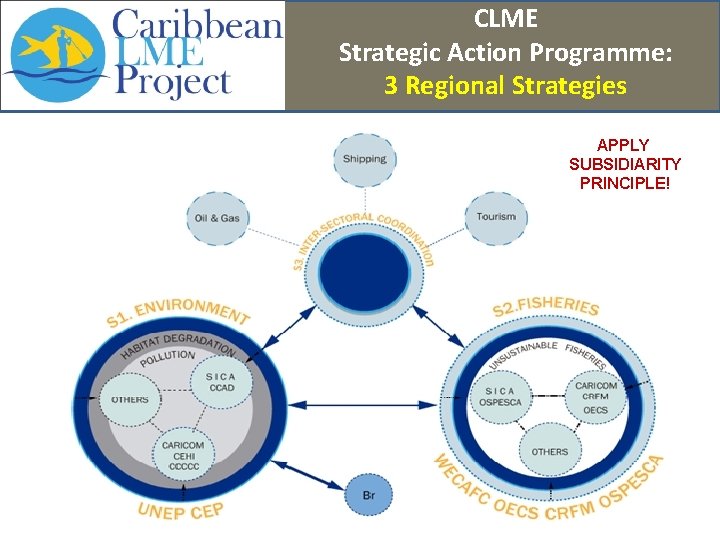
CLME Strategic Action Programme: 3 Regional Strategies APPLY SUBSIDIARITY PRINCIPLE!
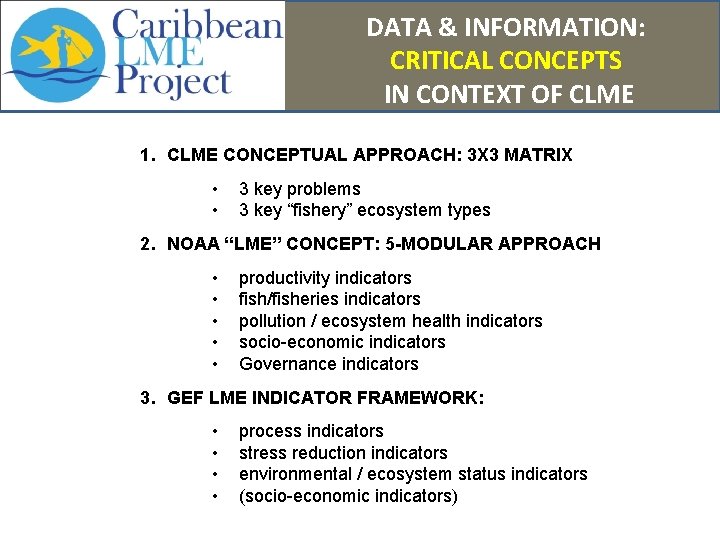
DATA & INFORMATION: CRITICAL CONCEPTS IN CONTEXT OF CLME 1. CLME CONCEPTUAL APPROACH: 3 X 3 MATRIX • • 3 key problems 3 key “fishery” ecosystem types 2. NOAA “LME” CONCEPT: 5 -MODULAR APPROACH • • • productivity indicators fish/fisheries indicators pollution / ecosystem health indicators socio-economic indicators Governance indicators 3. GEF LME INDICATOR FRAMEWORK: • • process indicators stress reduction indicators environmental / ecosystem status indicators (socio-economic indicators)
DATA & INFORMATION: CRITICAL CONCEPTS IN CONTEXT OF CLME 1. CLME GOVERNANCE CASE STUDY – POLICY CYCLE CONCEPT • data & information • analysis & advice – decision-making – implementation – review & evaluation 2. TWAP: • governance architecture • governance performance 3. CLME: MULTITUDE OF ORGANIZATIONS: • subsidiarity principle applies 4. DATA & INFORMATION: • demand-driven <-> offer-driven <-> both 5. CLME SAP: • 6 SAP Strategies + 4 sub-strategies + associated actions
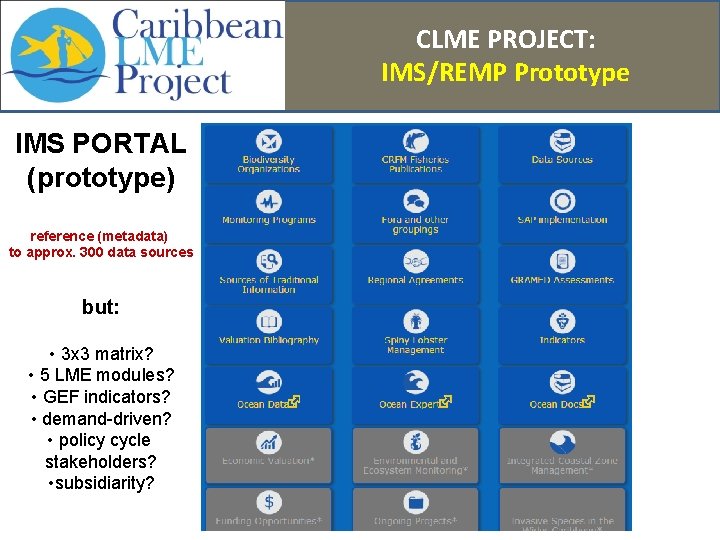
CLME PROJECT: IMS/REMP Prototype IMS PORTAL (prototype) reference (metadata) to approx. 300 data sources but: • 3 x 3 matrix? • 5 LME modules? • GEF indicators? • demand-driven? • policy cycle stakeholders? • subsidiarity?
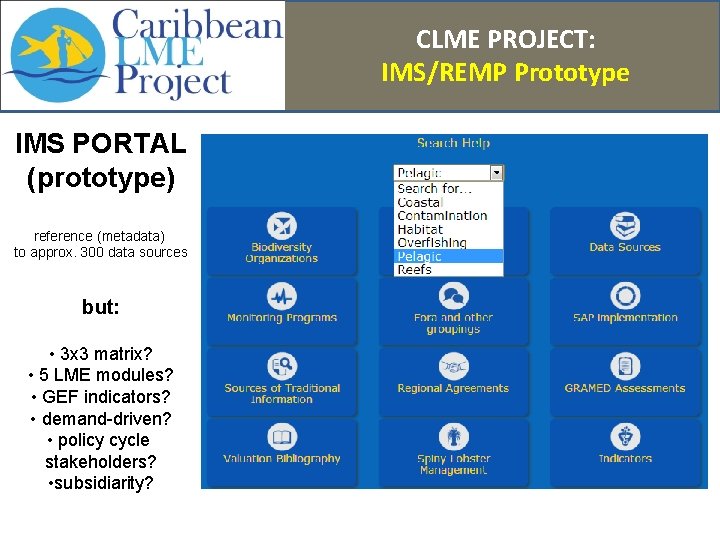
CLME PROJECT: IMS/REMP Prototype IMS PORTAL (prototype) reference (metadata) to approx. 300 data sources but: • 3 x 3 matrix? • 5 LME modules? • GEF indicators? • demand-driven? • policy cycle stakeholders? • subsidiarity?
CLME PROJECT: REMP - Prototype Atlas – “Status” of Marine Environment in CLME+ PROTOTYPE ATLAS: Problem in its production: when PCU requests example maps to be made of “status” of ME in CLME+ (in terms of process, stress reduction and enviro/socio-econ status) this appears to be extremely hard/impossible * HOW COME, with 300+ data sources logged in IMS? - “add hoc” collection? (offer-driven versus demand-driven approach? ) - lack of (correct) application of subsidiarity principle? (“ownership”? )
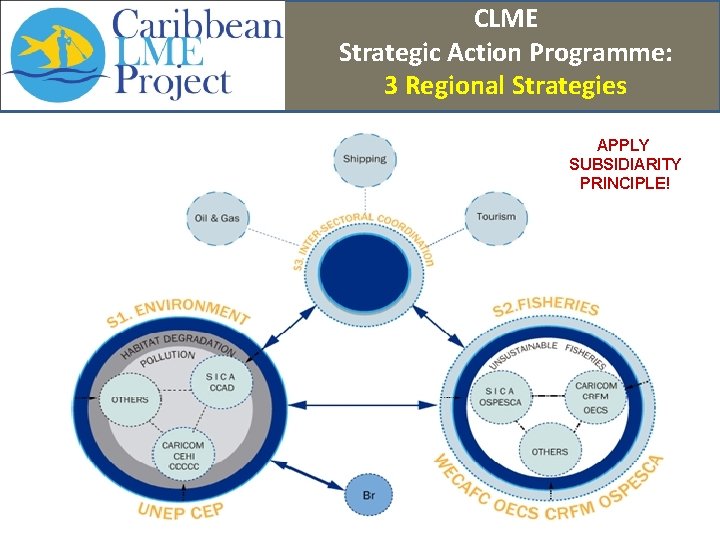
CLME Strategic Action Programme: 3 Regional Strategies APPLY SUBSIDIARITY PRINCIPLE!
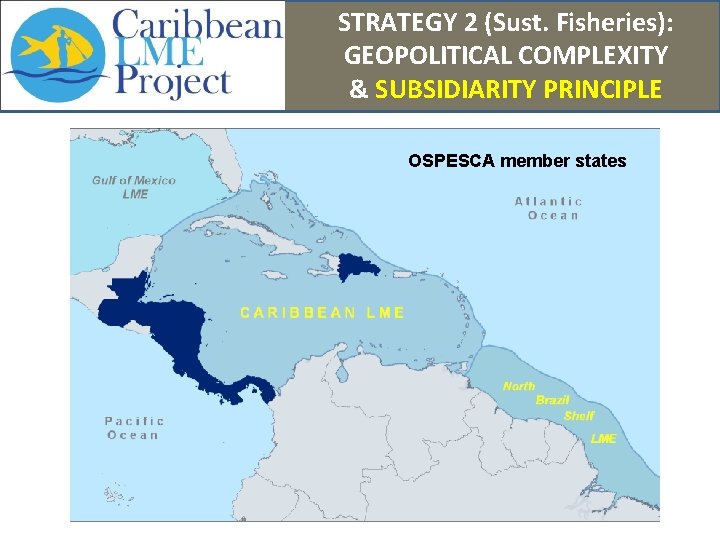
STRATEGY 2 (Sust. Fisheries): GEOPOLITICAL COMPLEXITY & SUBSIDIARITY PRINCIPLE OSPESCA member states
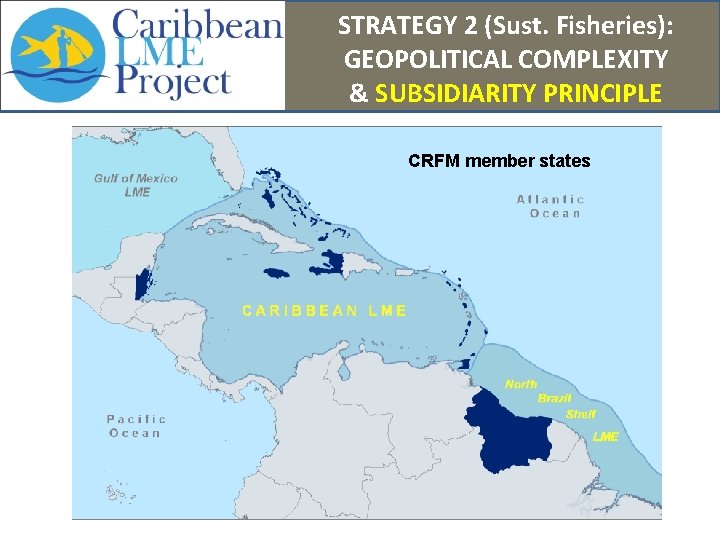
STRATEGY 2 (Sust. Fisheries): GEOPOLITICAL COMPLEXITY & SUBSIDIARITY PRINCIPLE CRFM member states
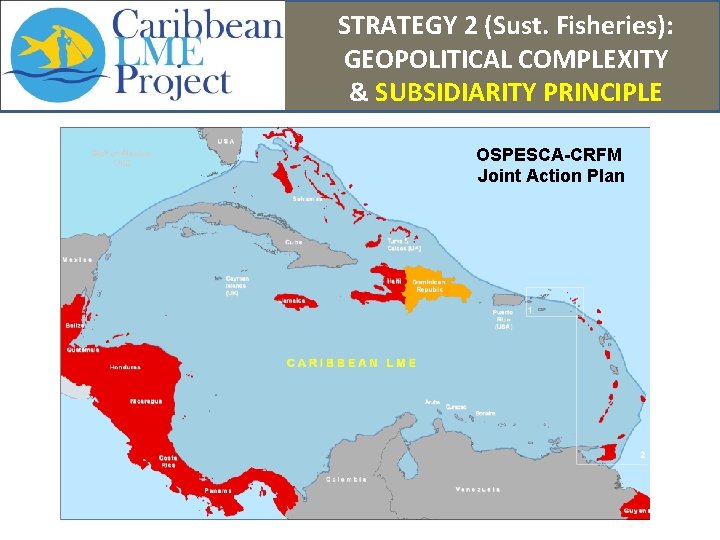
STRATEGY 2 (Sust. Fisheries): GEOPOLITICAL COMPLEXITY & SUBSIDIARITY PRINCIPLE OSPESCA-CRFM Joint Action Plan
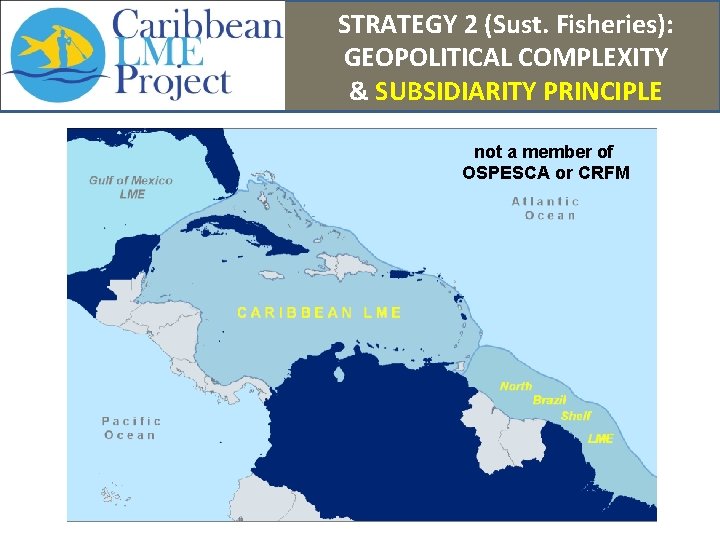
STRATEGY 2 (Sust. Fisheries): GEOPOLITICAL COMPLEXITY & SUBSIDIARITY PRINCIPLE not a member of OSPESCA or CRFM
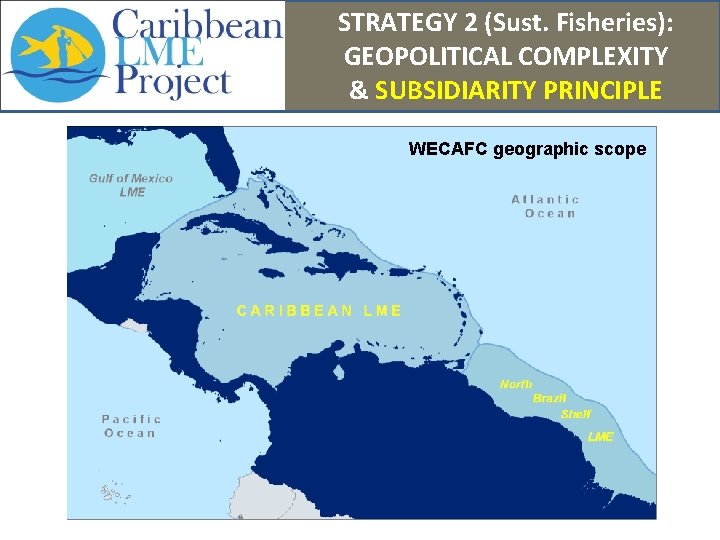
STRATEGY 2 (Sust. Fisheries): GEOPOLITICAL COMPLEXITY & SUBSIDIARITY PRINCIPLE WECAFC geographic scope
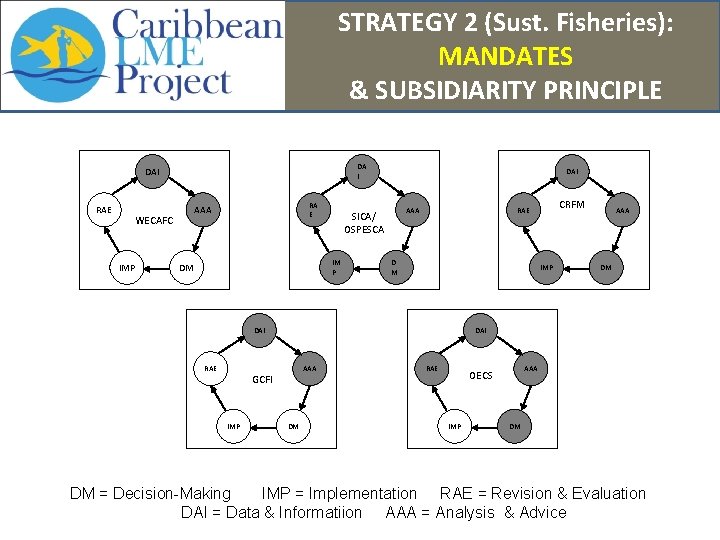
STRATEGY 2 (Sust. Fisheries): MANDATES & SUBSIDIARITY PRINCIPLE DA I DAI RAE WECAFC IMP RA E AAA SICA/ OSPESCA IM P DM DAI D M IMP DM DAI AAA GCFI IMP AAA CRFM DAI RAE CRFM RAE DM RAE AAA OECS IMP DM DM = Decision-Making IMP = Implementation RAE = Revision & Evaluation DAI = Data & Informatiion AAA = Analysis & Advice
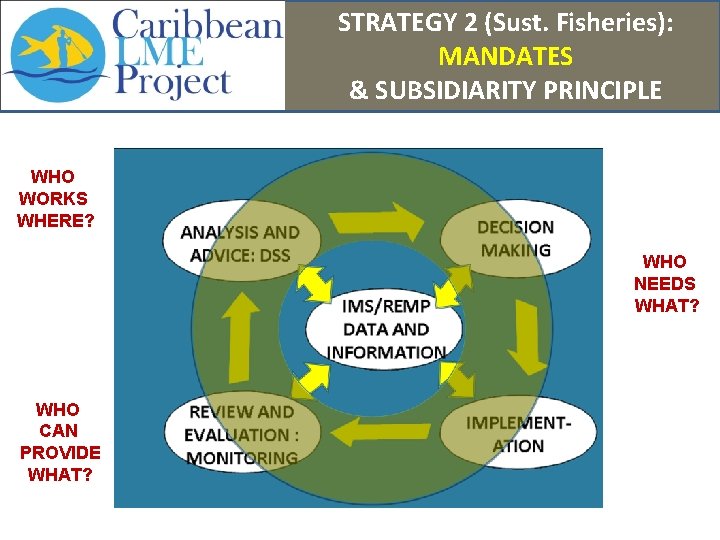
STRATEGY 2 (Sust. Fisheries): MANDATES & SUBSIDIARITY PRINCIPLE WHO WORKS WHERE? WHO NEEDS WHAT? WHO CAN PROVIDE WHAT?
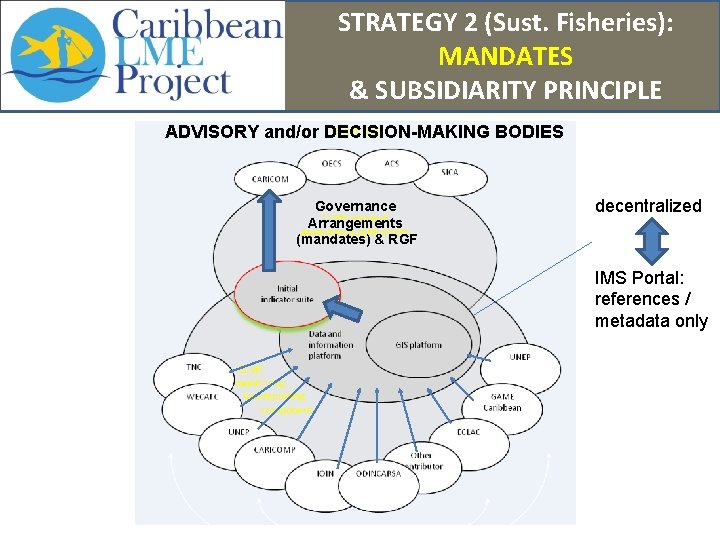
STRATEGY 2 (Sust. Fisheries): MANDATES & SUBSIDIARITY PRINCIPLE ADVISORY and/or DECISION-MAKING BODIES Governance Arrangements (mandates) & RGF decentralized IMS Portal: references / metadata only
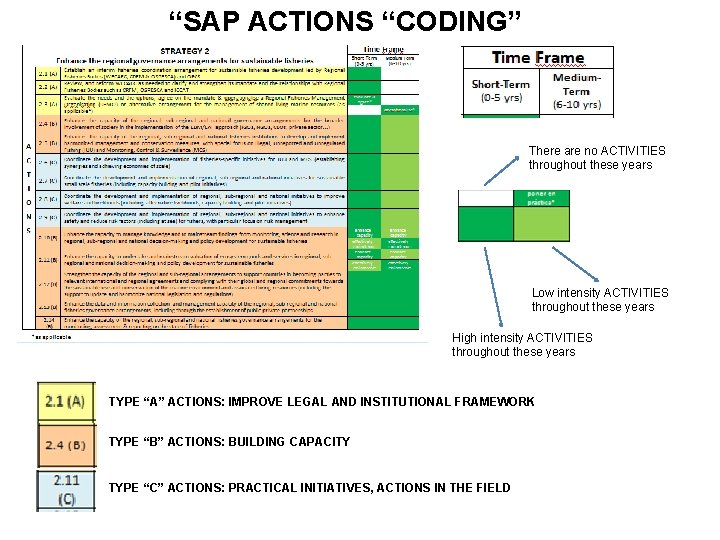
“SAP ACTIONS “CODING” There are no ACTIVITIES throughout these years Low intensity ACTIVITIES throughout these years High intensity ACTIVITIES throughout these years TYPE “A” ACTIONS: IMPROVE LEGAL AND INSTITUTIONAL FRAMEWORK TYPE “B” ACTIONS: BUILDING CAPACITY TYPE “C” ACTIONS: PRACTICAL INITIATIVES, ACTIONS IN THE FIELD
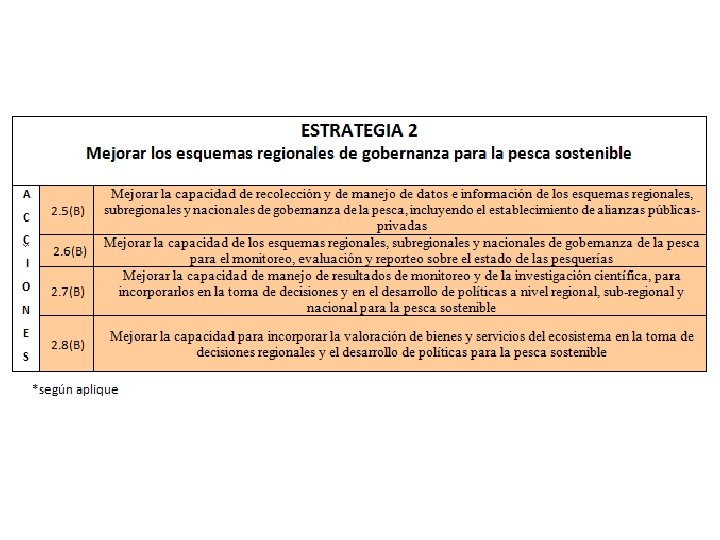
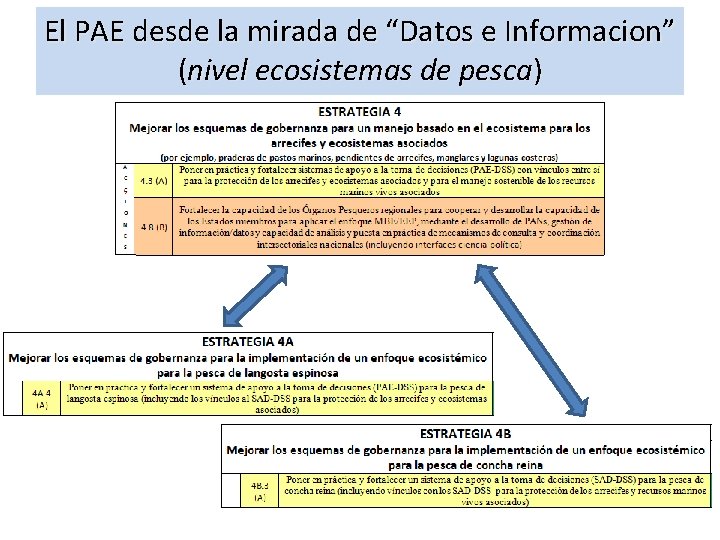
El PAE desde la mirada de “Datos e Informacion” (nivel ecosistemas de pesca)
WWW. CLMEPROJECT. ORG
Thank you www. clmeproject. org CLME Project Coordination Unit Cartagena, Colombia (57) (5) 664 09 14 info@clmeproject. org
- Slides: 34