
THE CAREWAYS GROUP Dr Andr van Jaarsveld Date

- Slides: 44
THE CAREWAYS GROUP Dr. André van Jaarsveld Date: 17 April 2007
THE BUSINESS CASE FOR WELLNESS
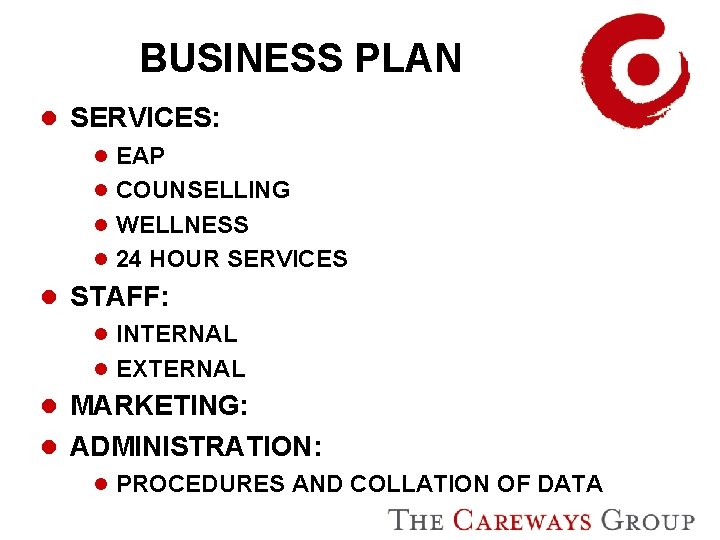
BUSINESS PLAN l SERVICES: l EAP l COUNSELLING l WELLNESS l 24 HOUR SERVICES l STAFF: l INTERNAL l EXTERNAL l MARKETING: l ADMINISTRATION: l PROCEDURES AND COLLATION OF DATA
l INFRASTRUCTURE AND EQUIPMENT l MANAGEMENT: l FINANCIAL:
PROPOSAL l POLICY AND PROCEDURE DEVELOPMENT l SUPERVISOR ORIENTATION AND TRAINING l TOP LEVEL MANAGEMENT l SUPERVISORS l MANAGEMENT CONSULTATION l EMPLOYEE COMMUNICATION PROGRAMME l EMPLOYEE ORIENTATION
l COUNSELLING SERVICES l 24 HOURS l INTERNAL AND EXTERNAL l CONFIDENTIALITY l PROGRAM REPORTING l COST
WHAT OF VALUE COMES OUT OF YOUR ORGANISATION/BUSINESS UNIT ? ? ? ?
PRODUCT AND PEOPLE
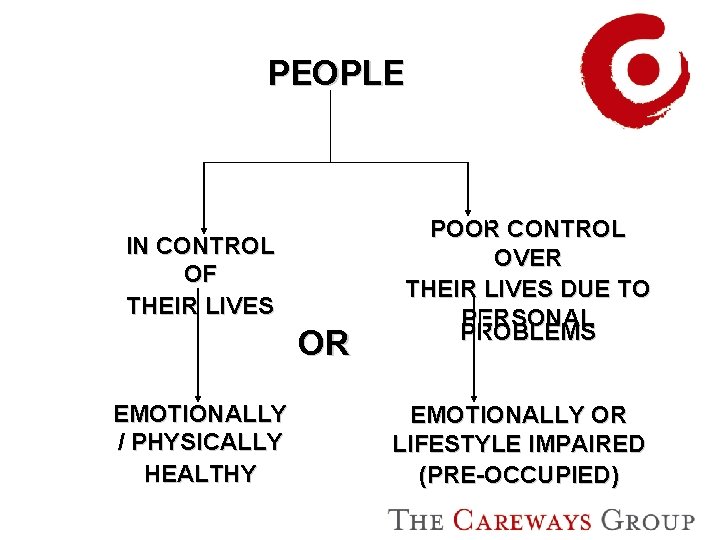
PEOPLE IN CONTROL OF THEIR LIVES OR EMOTIONALLY / PHYSICALLY HEALTHY POOR CONTROL OVER THEIR LIVES DUE TO PERSONAL PROBLEMS EMOTIONALLY OR LIFESTYLE IMPAIRED (PRE-OCCUPIED)
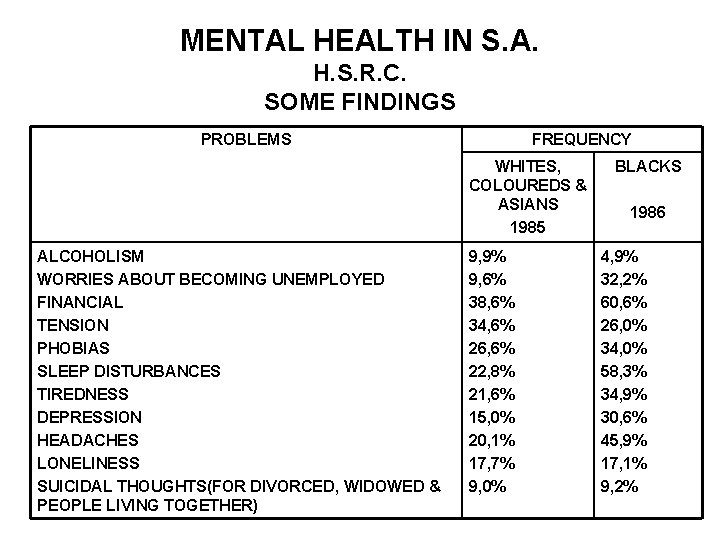
MENTAL HEALTH IN S. A. H. S. R. C. SOME FINDINGS PROBLEMS FREQUENCY WHITES, COLOUREDS & ASIANS 1985 ALCOHOLISM WORRIES ABOUT BECOMING UNEMPLOYED FINANCIAL TENSION PHOBIAS SLEEP DISTURBANCES TIREDNESS DEPRESSION HEADACHES LONELINESS SUICIDAL THOUGHTS(FOR DIVORCED, WIDOWED & PEOPLE LIVING TOGETHER) 9, 9% 9, 6% 38, 6% 34, 6% 26, 6% 22, 8% 21, 6% 15, 0% 20, 1% 17, 7% 9, 0% BLACKS 1986 4, 9% 32, 2% 60, 6% 26, 0% 34, 0% 58, 3% 34, 9% 30, 6% 45, 9% 17, 1% 9, 2%
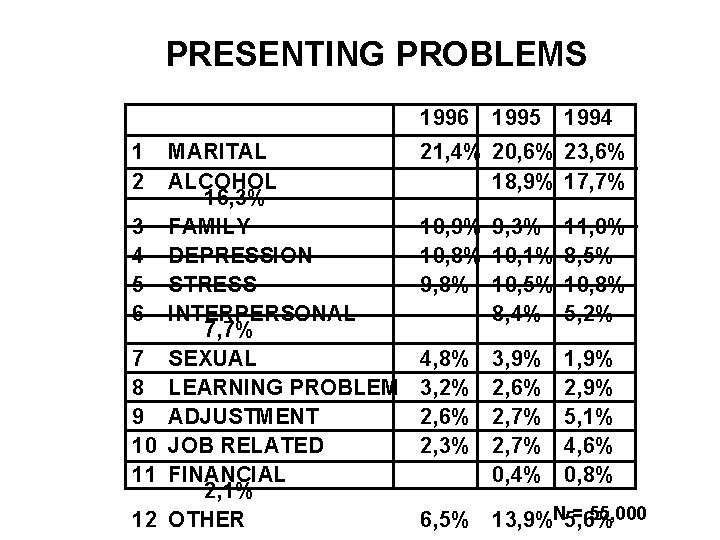
PRESENTING PROBLEMS 1996 1 2 MARITAL ALCOHOL 16, 3% 3 FAMILY 4 DEPRESSION 5 STRESS 6 INTERPERSONAL 7, 7% 7 SEXUAL 8 LEARNING PROBLEM 9 ADJUSTMENT 10 JOB RELATED 11 FINANCIAL 2, 1% 12 OTHER 1995 1994 21, 4% 20, 6% 23, 6% 18, 9% 17, 7% 10, 9% 9, 3% 11, 0% 10, 8% 10, 1% 8, 5% 9, 8% 10, 5% 10, 8% 8, 4% 5, 2% 4, 8% 3, 2% 2, 6% 2, 3% 3, 9% 2, 6% 2, 7% 0, 4% 1, 9% 2, 9% 5, 1% 4, 6% 0, 8% = 55, 000 6, 5% 13, 9%N 5, 6%
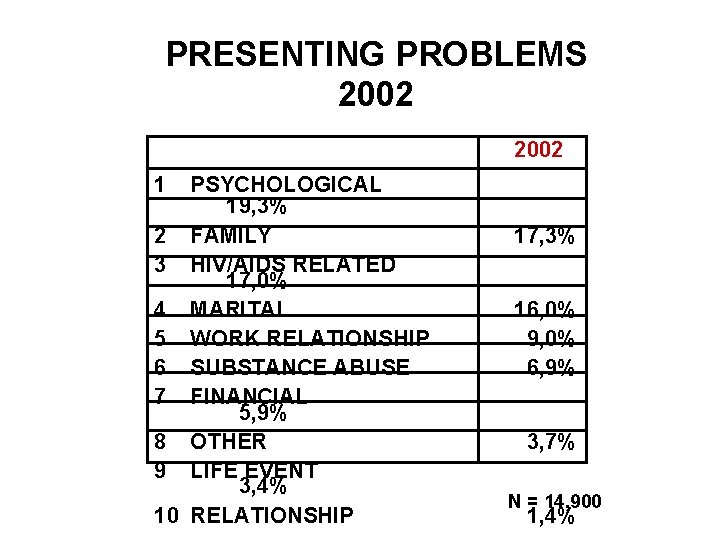
PRESENTING PROBLEMS 2002 1 PSYCHOLOGICAL 19, 3% 2 FAMILY 3 HIV/AIDS RELATED 17, 0% 4 MARITAL 5 WORK RELATIONSHIP 6 SUBSTANCE ABUSE 7 FINANCIAL 5, 9% 8 OTHER 9 LIFE EVENT 3, 4% 10 RELATIONSHIP 17, 3% 16, 0% 9, 0% 6, 9% 3, 7% N = 14, 900 1, 4%
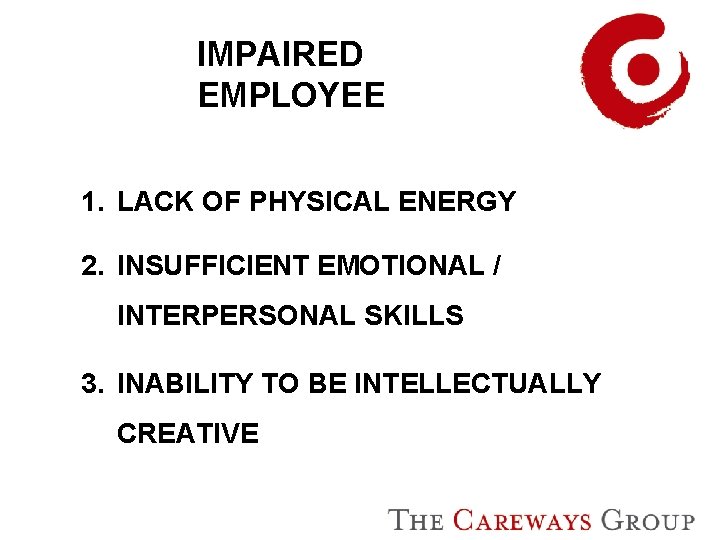
IMPAIRED EMPLOYEE 1. LACK OF PHYSICAL ENERGY 2. INSUFFICIENT EMOTIONAL / INTERPERSONAL SKILLS 3. INABILITY TO BE INTELLECTUALLY CREATIVE
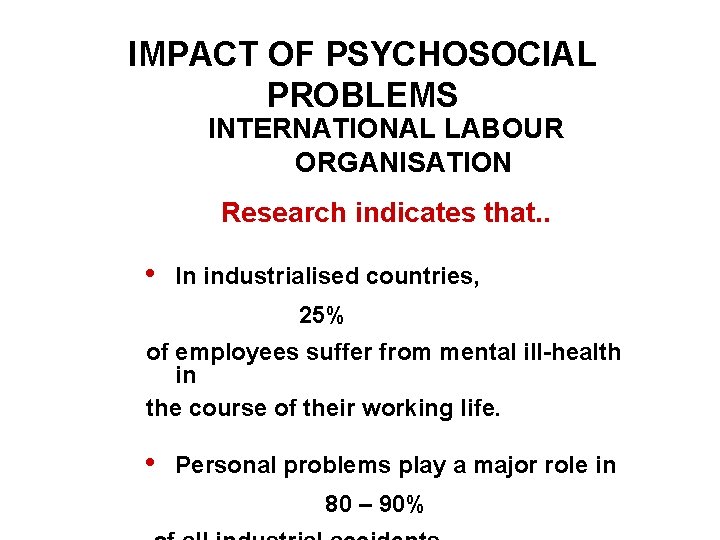
IMPACT OF PSYCHOSOCIAL PROBLEMS INTERNATIONAL LABOUR ORGANISATION Research indicates that. . i In industrialised countries, 25% of employees suffer from mental ill-health in the course of their working life. i Personal problems play a major role in 80 – 90%
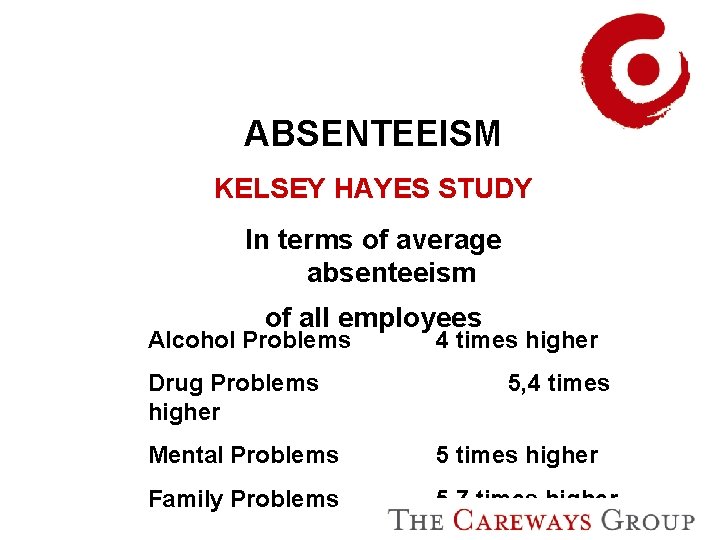
ABSENTEEISM KELSEY HAYES STUDY In terms of average absenteeism of all employees Alcohol Problems Drug Problems higher 4 times higher 5, 4 times Mental Problems 5 times higher Family Problems 5, 7 times higher
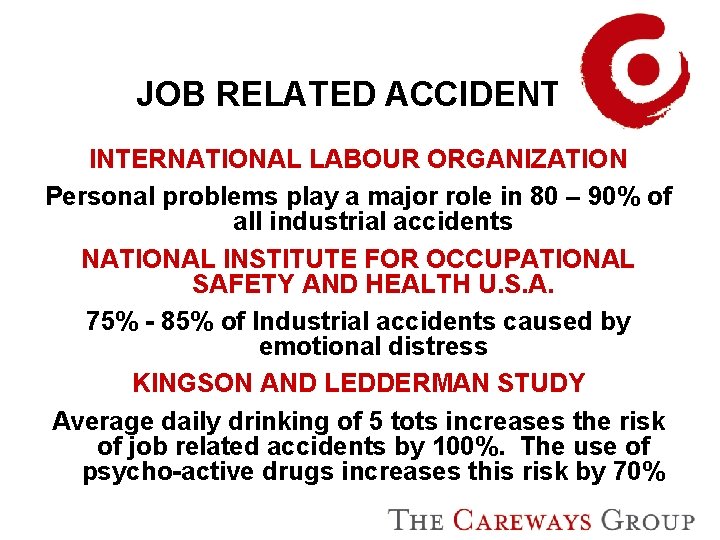
JOB RELATED ACCIDENTS INTERNATIONAL LABOUR ORGANIZATION Personal problems play a major role in 80 – 90% of all industrial accidents NATIONAL INSTITUTE FOR OCCUPATIONAL SAFETY AND HEALTH U. S. A. 75% - 85% of Industrial accidents caused by emotional distress KINGSON AND LEDDERMAN STUDY Average daily drinking of 5 tots increases the risk of job related accidents by 100%. The use of psycho-active drugs increases this risk by 70%
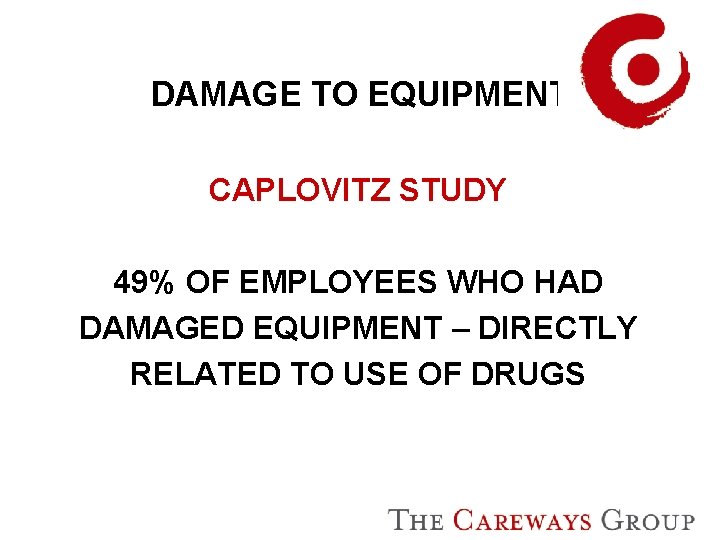
DAMAGE TO EQUIPMENT CAPLOVITZ STUDY 49% OF EMPLOYEES WHO HAD DAMAGED EQUIPMENT – DIRECTLY RELATED TO USE OF DRUGS
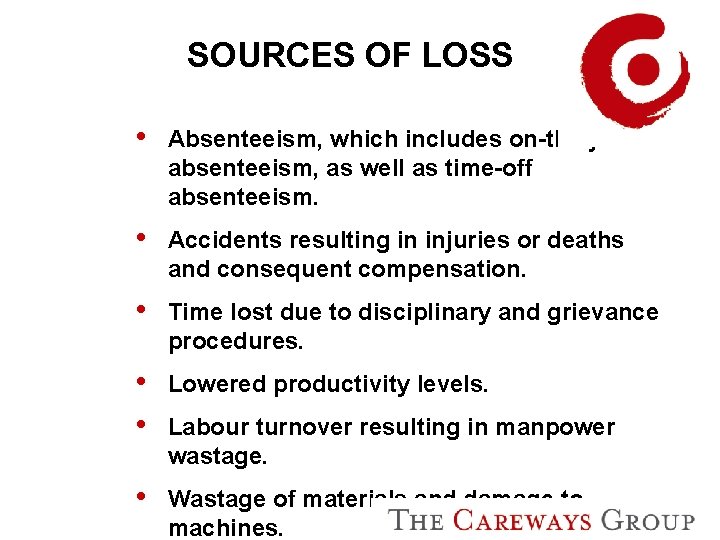
SOURCES OF LOSS i Absenteeism, which includes on-the-job absenteeism, as well as time-off absenteeism. i Accidents resulting in injuries or deaths and consequent compensation. i Time lost due to disciplinary and grievance procedures. i Lowered productivity levels. i Labour turnover resulting in manpower wastage. i Wastage of materials and damage to machines.
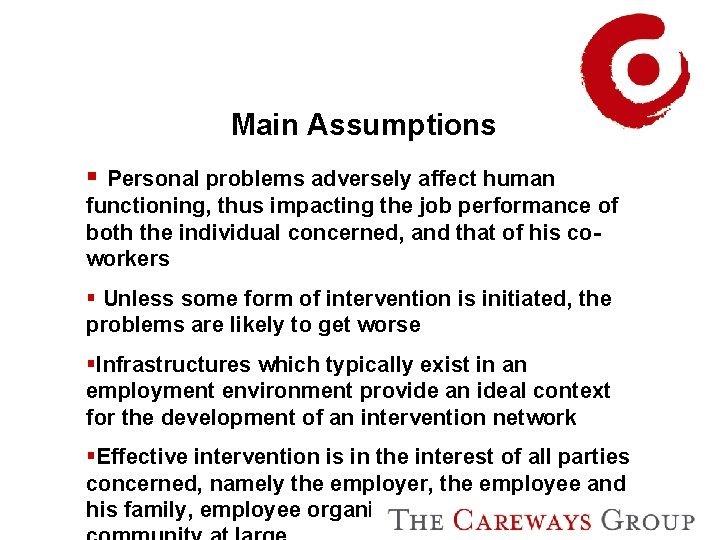
Main Assumptions § Personal problems adversely affect human functioning, thus impacting the job performance of both the individual concerned, and that of his coworkers § Unless some form of intervention is initiated, the problems are likely to get worse §Infrastructures which typically exist in an employment environment provide an ideal context for the development of an intervention network §Effective intervention is in the interest of all parties concerned, namely the employer, the employee and his family, employee organizations and the
THEN THEY ARE IN NEED OF EMPLOYEE WELLBEING, EXECUTIVE WELLBEING OR AT RISK MANAGEMENT PROGRAMMES
WELLNESS SERVICES CAN BE DESCRIBED AS : “An employee and management development system for the early identification of employees whose problems impair their job performance and the motivation of these individuals to receive assistance to resolve the problem”
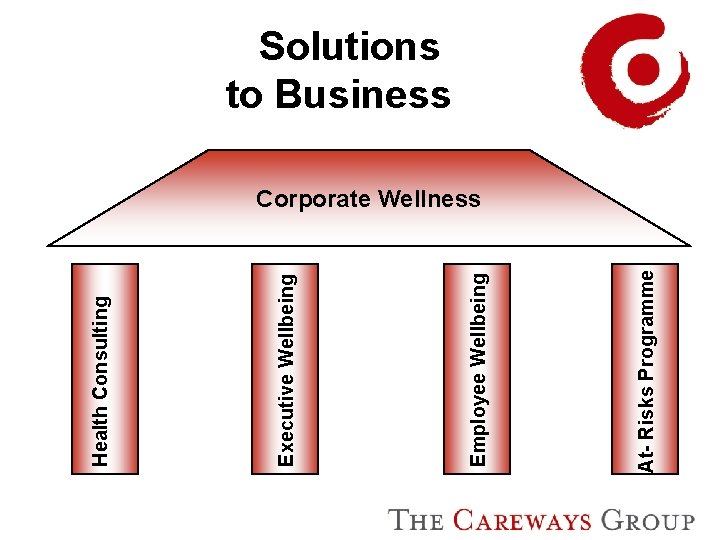
At- Risks Programme Employee Wellbeing Executive Wellbeing Health Consulting Solutions to Business Corporate Wellness
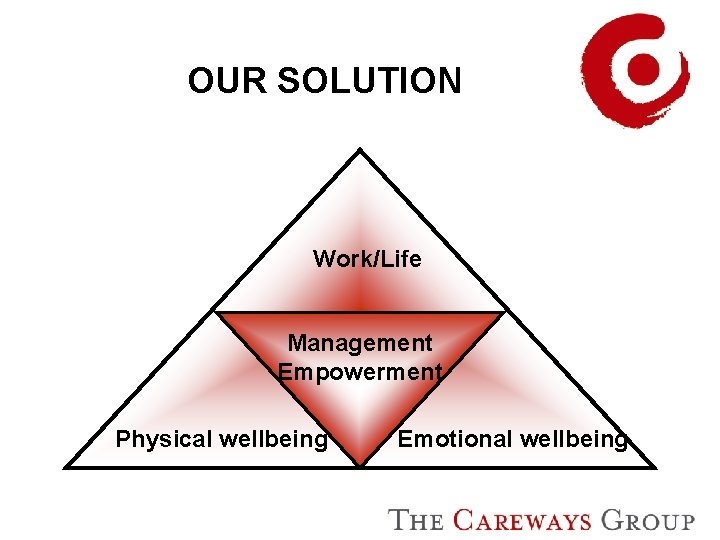
OUR SOLUTION Work/Life Management Empowerment Physical wellbeing Emotional wellbeing
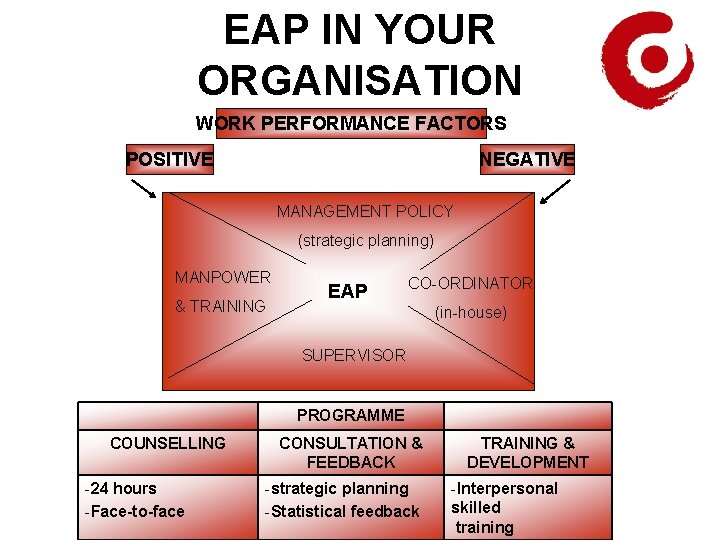
EAP IN YOUR ORGANISATION WORK PERFORMANCE FACTORS POSITIVE NEGATIVE MANAGEMENT POLICY (strategic planning) MANPOWER & TRAINING EAP CO-ORDINATOR (in-house) SUPERVISOR PROGRAMME COUNSELLING -24 hours -Face-to-face CONSULTATION & FEEDBACK -strategic planning -Statistical feedback TRAINING & DEVELOPMENT -Interpersonal skilled training
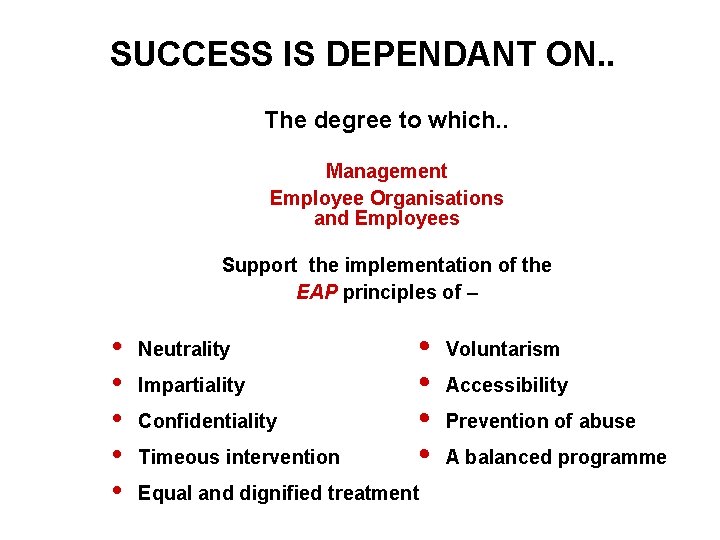
SUCCESS IS DEPENDANT ON. . The degree to which. . Management Employee Organisations and Employees Support the implementation of the EAP principles of – i Neutrality Voluntarism i Impartiality Accessibility i Confidentiality Prevention of abuse i Timeous intervention A balanced programme i Equal and dignified treatment
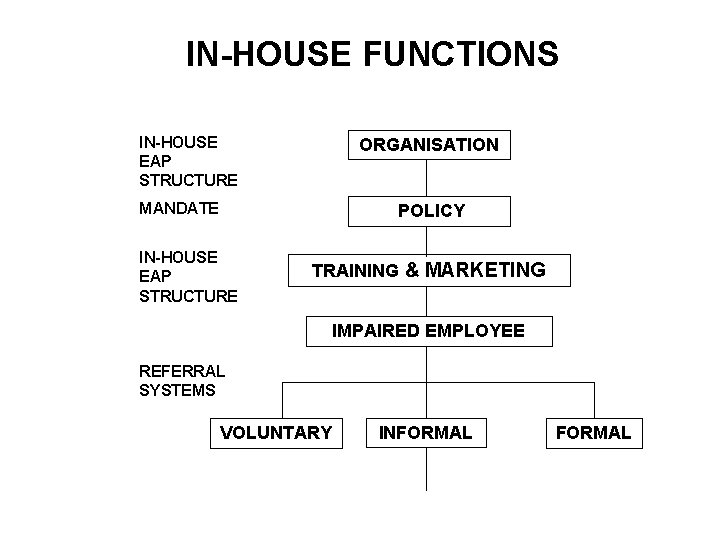
IN-HOUSE FUNCTIONS IN-HOUSE EAP STRUCTURE ORGANISATION MANDATE POLICY IN-HOUSE EAP STRUCTURE TRAINING & MARKETING IMPAIRED EMPLOYEE REFERRAL SYSTEMS VOLUNTARY INFORMAL
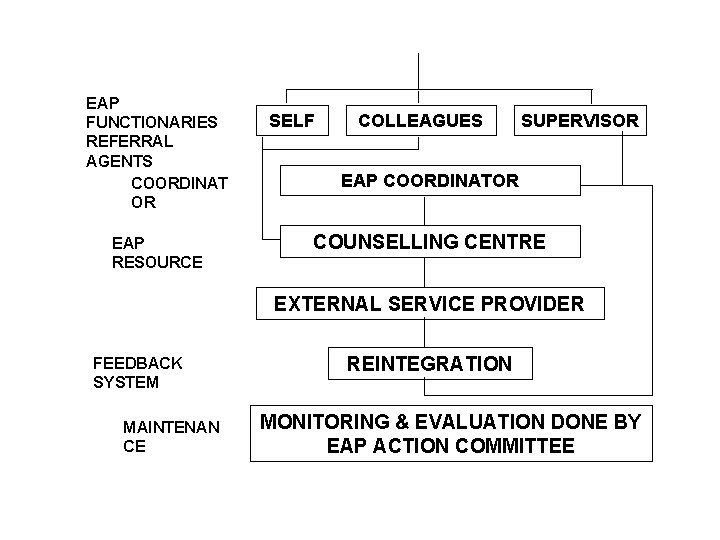
EAP FUNCTIONARIES REFERRAL AGENTS COORDINAT OR EAP RESOURCE SELF COLLEAGUES SUPERVISOR EAP COORDINATOR COUNSELLING CENTRE EXTERNAL SERVICE PROVIDER FEEDBACK SYSTEM MAINTENAN CE REINTEGRATION MONITORING & EVALUATION DONE BY EAP ACTION COMMITTEE
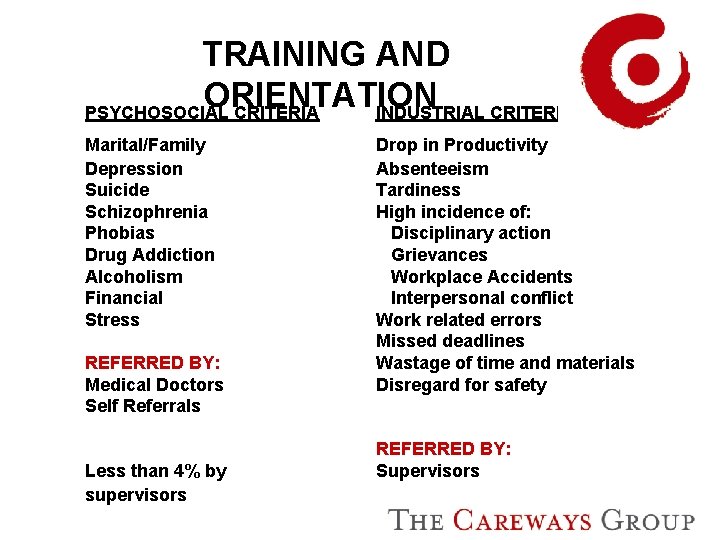
TRAINING AND ORIENTATION PSYCHOSOCIAL CRITERIA INDUSTRIAL CRITERIA Marital/Family Depression Suicide Schizophrenia Phobias Drug Addiction Alcoholism Financial Stress REFERRED BY: Medical Doctors Self Referrals Less than 4% by supervisors Drop in Productivity Absenteeism Tardiness High incidence of: Disciplinary action Grievances Workplace Accidents Interpersonal conflict Work related errors Missed deadlines Wastage of time and materials Disregard for safety REFERRED BY: Supervisors
ENLARGING THE CONCEPT OF EMPLOYEE ASSISTANCE
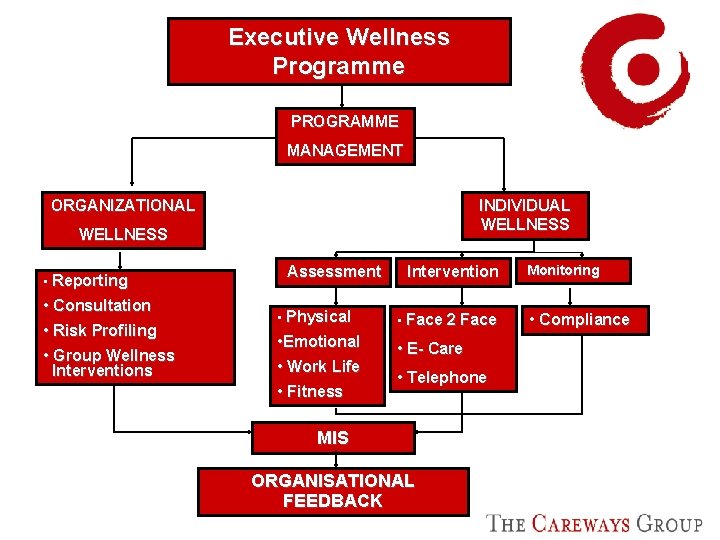
Executive Wellness Programme PROGRAMME MANAGEMENT ORGANIZATIONAL INDIVIDUAL WELLNESS • Reporting • Consultation • Risk Profiling • Group Wellness Interventions Assessment Intervention • Physical • Face 2 Face • Emotional • Work Life • E- Care • Fitness • Telephone MIS ORGANISATIONAL FEEDBACK Monitoring • Compliance
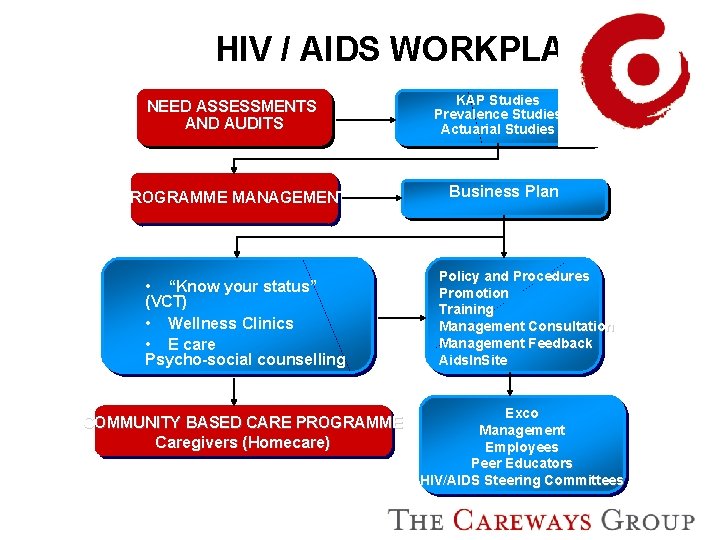
HIV / AIDS WORKPLACE NEED ASSESSMENTS AND AUDITS PROGRAMME MANAGEMENT • “Know your status” (VCT) • Wellness Clinics • E care Psycho-social counselling COMMUNITY BASED CARE PROGRAMME Caregivers (Homecare) KAP Studies Prevalence Studies Actuarial Studies Business Plan Policy and Procedures Promotion Training Management Consultation Management Feedback Aids. In. Site Exco Management Employees Peer Educators HIV/AIDS Steering Committees
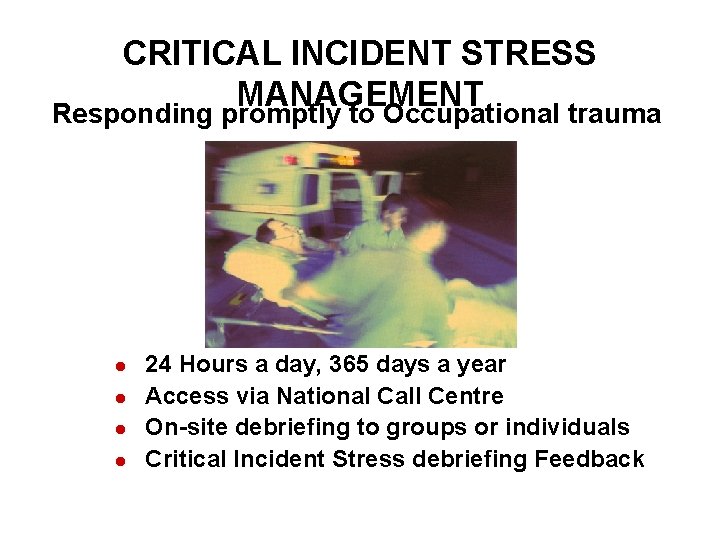
CRITICAL INCIDENT STRESS MANAGEMENT Responding promptly to Occupational trauma l l 24 Hours a day, 365 days a year Access via National Call Centre On-site debriefing to groups or individuals Critical Incident Stress debriefing Feedback
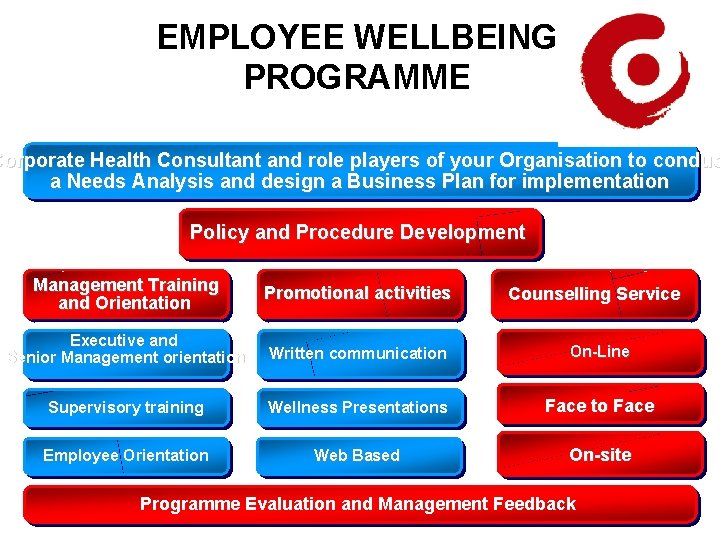
EMPLOYEE WELLBEING PROGRAMME Corporate Health Consultant and role players of your Organisation to conduc a Needs Analysis and design a Business Plan for implementation Policy and Procedure Development Management Training and Orientation Promotional activities Executive and Senior Management orientation Written communication On-Line Supervisory training Wellness Presentations Face to Face Employee Orientation Web Based On-site Counselling Service Programme Evaluation and Management Feedback
REPORTING AND FEEDBACK • • Data Management - Nationally Feedback Reports - Monthly - Quarterly • - Yearly Data Analysis - Trends & Tendencies - Recommendations Training - Consultation &
CONFIDENTIALITY l l l Cornerstone of your EAP No personal information: Therapeutic purposes Counselling during working hours Formal/Mandatory referral: Therapeutic progress Exception: Life threatening events
ACTION COMMITTEE The Action Committee assists the co-ordinator in organizing and executing the following functions: l l The formalizing of an Policy supported by Management and Employee Organizations, defining the principles to be adhered to by all parties concerned. Training of all groups involved in the establishment and implementation of infrastructures
ACTION COMMITTEE l l l Marketing of the EAP to all employees and dependents The ongoing maintenance, development and enrichment of the Programme Evaluation of the Programme in terms of impact and cost-effectiveness
PRICING 1. Programme: Selections - Health Audit - Impact Survey - Programme Management: Policy and procedure development Programme planning, implementation and maintenance Orientation Sessions Promotional Material / Campaigns External Quality Assurance Reporting
PRICING 2. Individual Programmes - Assessments - Psychosocial Counselling - Legal Counselling - Financial Counselling - Preventative Treatment
PRICING 3. Training and Workshops 4. Customisation 5. Payment Terms