
The CARE CERTIFICATE Working in a Person Centred

- Slides: 16
The CARE CERTIFICATE Working in a Person Centred Way Standard 1
Learning outcomes 5. 1 Understand person centred values 5. 2 Understand working in a person centred way 5. 3 Demonstrate awareness of the individual’s immediate environment and make changes to address factors that may be causing discomfort or distress 5. 4 Make others aware of any actions they may be undertaking that are causing discomfort or distress to individuals 5. 5 Support individuals to minimise pain or discomfort 5. 6 Support the individual to maintain their identity and self-esteem 5. 7 Support the individual using person centred values Standard 2
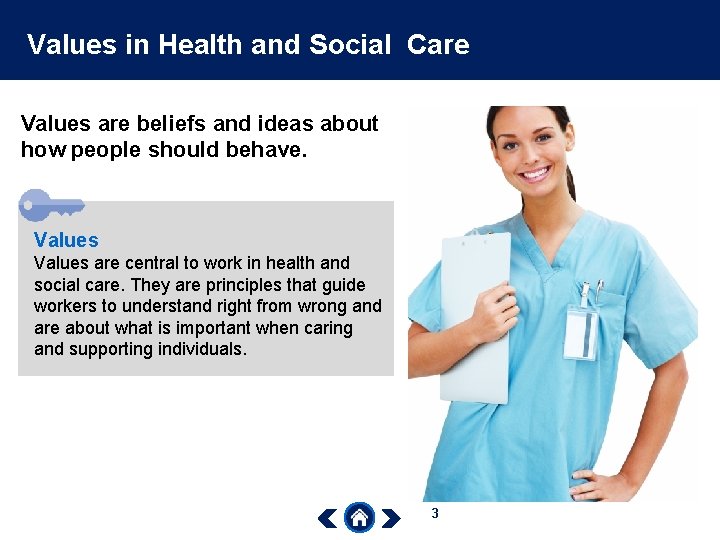
Values in Health and Social Care Values are beliefs and ideas about how people should behave. Values are central to work in health and social care. They are principles that guide workers to understand right from wrong and are about what is important when caring and supporting individuals. 3
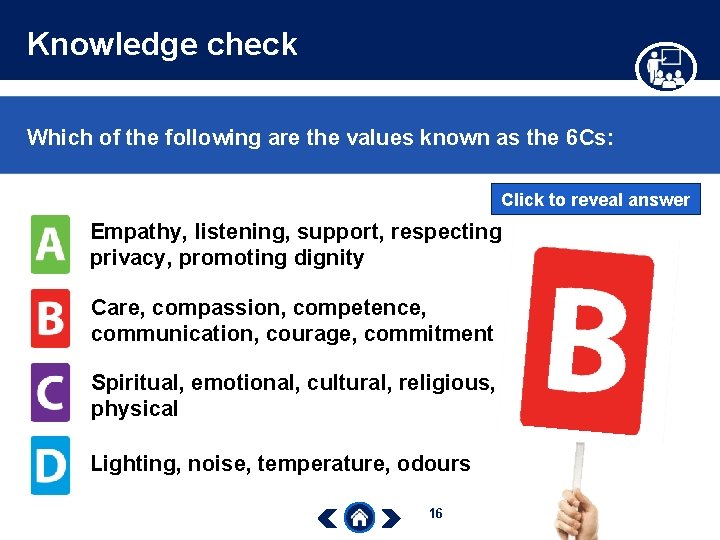
Values in Health and Social Care Commitment Having someone’s best interests at heart and doing what you can to maintain or improve their wellbeing Dedication to providing care and support but also understanding the responsibility you have as a worker Compassion Courage Being able to feel for someone, to understand them and their situation Not to have fear to try out new things or to say if you are concerned about anything Competence To understand what someone needs and have the knowledge and skills to provide it Communication To listen carefully but also be able to speak and act in a way that the person can understand 4
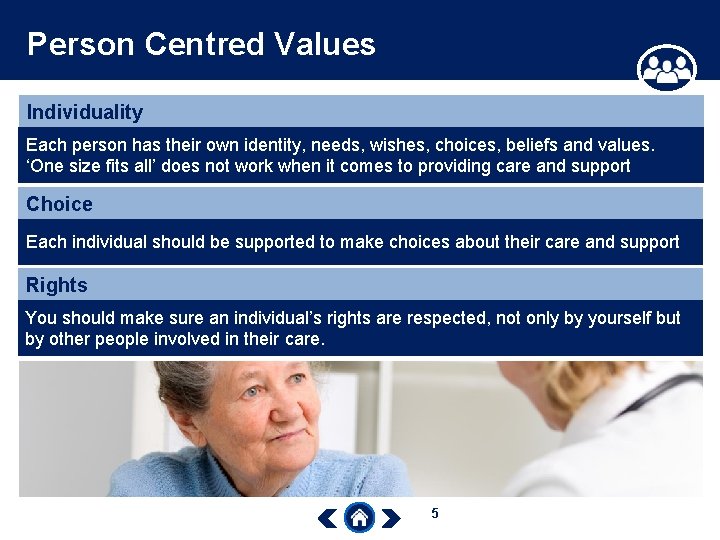
Person Centred Values Individuality Each person has their own identity, needs, wishes, choices, beliefs and values. ‘One size fits all’ does not work when it comes to providing care and support Choice Each individual should be supported to make choices about their care and support Rights You should make sure an individual’s rights are respected, not only by yourself but by other people involved in their care. 5
Person Centred Values Privacy Everyone has a right to private space and time when they need it. Privacy includes the individual’s private information Dignity Treating an individual in a dignified way shows respect, values their individuality and their ethical and moral beliefs. Do not make assumptions about their needs. Respect Believing and showing that an individual has importance as an individual. It involves recognising that they have their own opinions and feelings even if you do not agree with them. Partnership Working with the individual, their family and other workers. Successful partnership relies on communication and trust; valuing and respecting what others have to say. 6
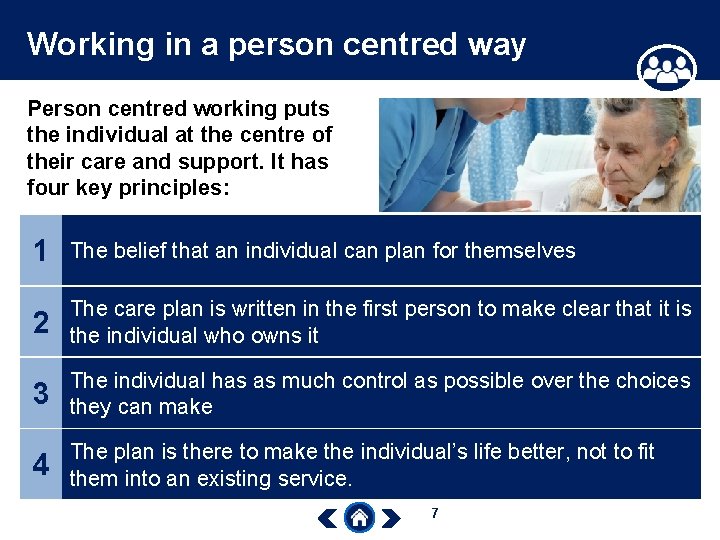
Working in a person centred way Person centred working puts the individual at the centre of their care and support. It has four key principles: 1 The belief that an individual can plan for themselves 2 The care plan is written in the first person to make clear that it is the individual who owns it 3 The individual has as much control as possible over the choices they can make 4 The plan is there to make the individual’s life better, not to fit them into an existing service. 7
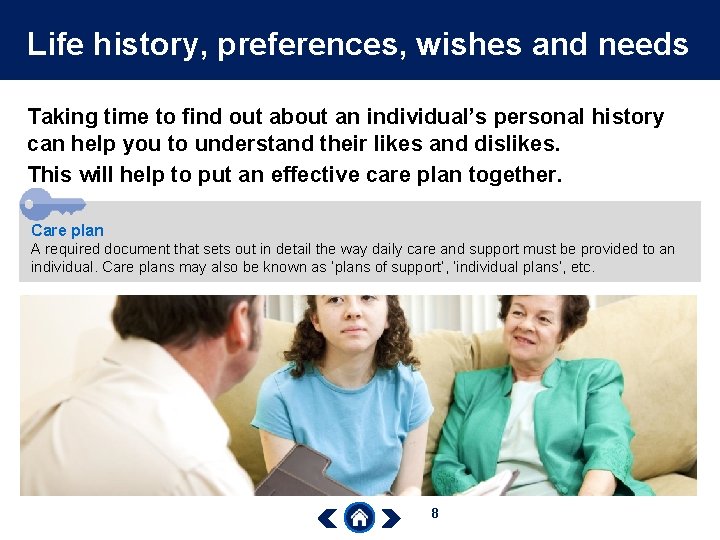
Life history, preferences, wishes and needs Taking time to find out about an individual’s personal history can help you to understand their likes and dislikes. This will help to put an effective care plan together. Care plan A required document that sets out in detail the way daily care and support must be provided to an individual. Care plans may also be known as ‘plans of support’, ‘individual plans’, etc. 8
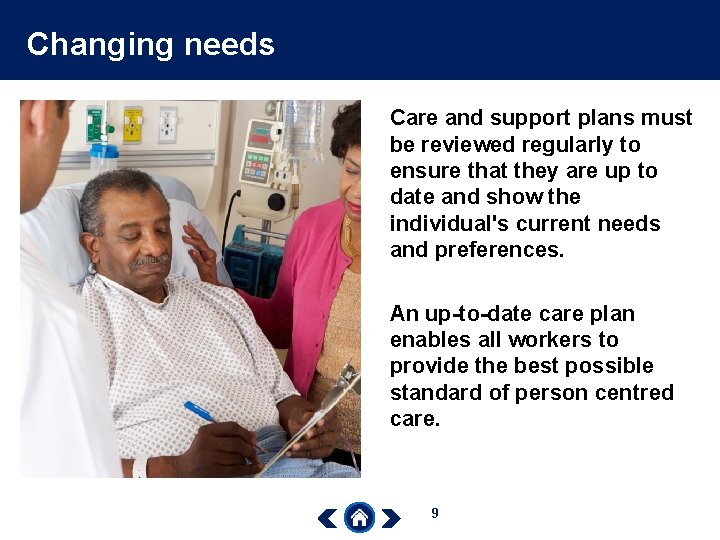
Changing needs Care and support plans must be reviewed regularly to ensure that they are up to date and show the individual's current needs and preferences. An up-to-date care plan enables all workers to provide the best possible standard of person centred care. 9
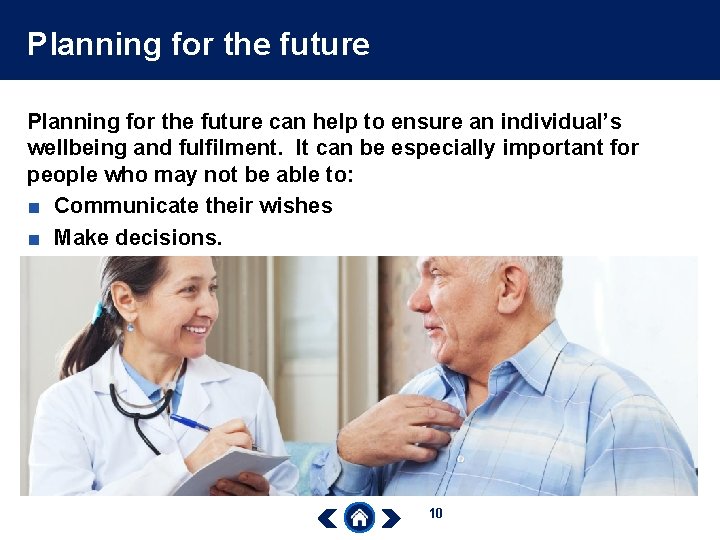
Planning for the future can help to ensure an individual’s wellbeing and fulfilment. It can be especially important for people who may not be able to: ■ Communicate their wishes ■ Make decisions. 10
Minimising discomfort and distress Environmental factors that can affect an individual’s comfort and wellbeing: ■ Lighting ■ Noise ■ Temperature ■ Odours Ask the individual if they want you to change their environment to make them more comfortable - NEVER assume. Actions that can affect an individual’s comfort and wellbeing: ■ Moving a person who has stiff muscles or joints ■ Changing a dressing ■ Letting in bright light ■ Making a loud noise Always warn the individual if something may be uncomfortable. You MUST have consent to carry out a task 11
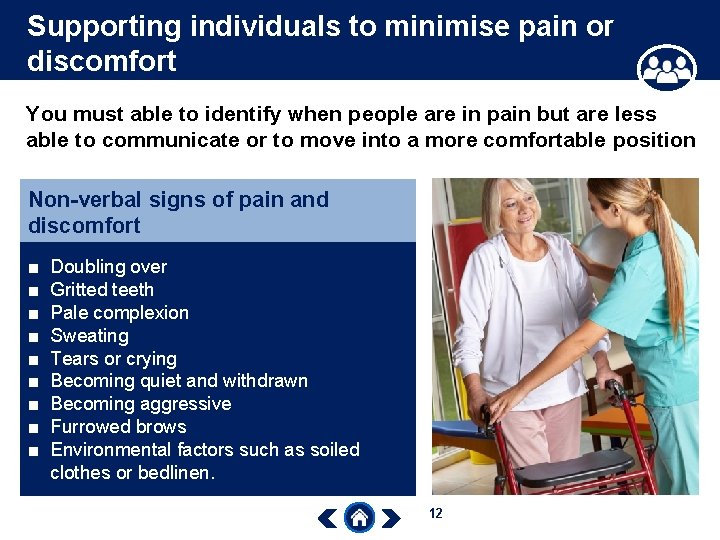
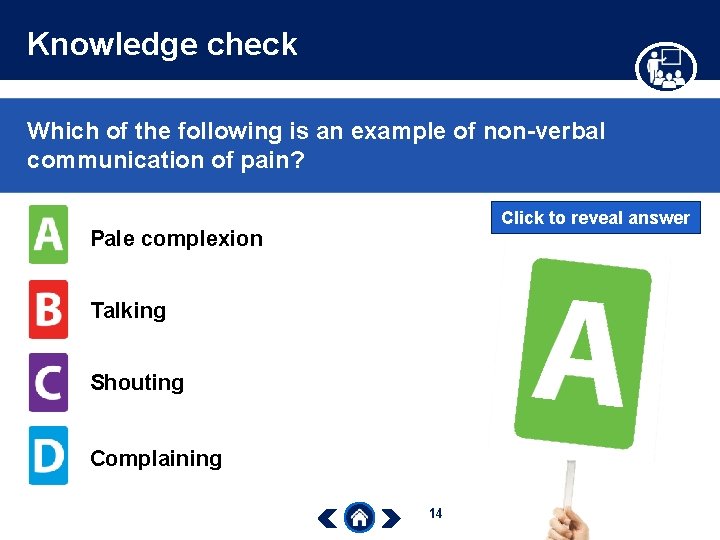
Supporting individuals to minimise pain or discomfort You must able to identify when people are in pain but are less able to communicate or to move into a more comfortable position Non-verbal signs of pain and discomfort ■ ■ ■ ■ ■ Doubling over Gritted teeth Pale complexion Sweating Tears or crying Becoming quiet and withdrawn Becoming aggressive Furrowed brows Environmental factors such as soiled clothes or bedlinen. 12
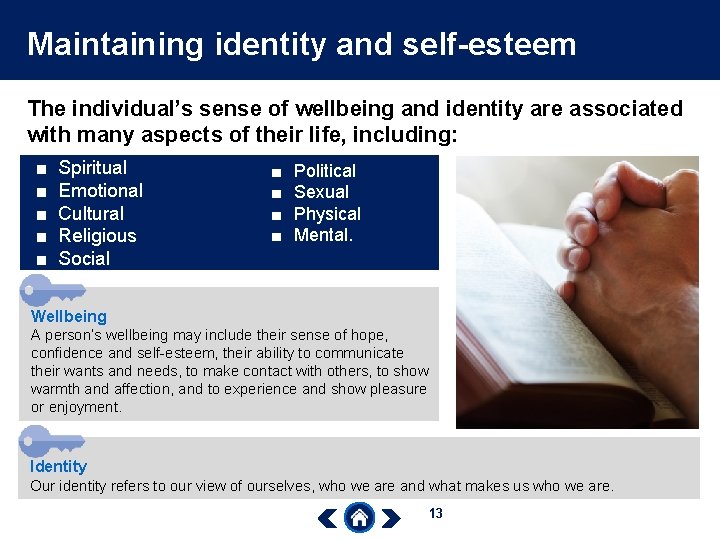
Maintaining identity and self-esteem The individual’s sense of wellbeing and identity are associated with many aspects of their life, including: ■ ■ ■ Spiritual Emotional Cultural Religious Social ■ ■ Political Sexual Physical Mental. Wellbeing A person’s wellbeing may include their sense of hope, confidence and self-esteem, their ability to communicate their wants and needs, to make contact with others, to show warmth and affection, and to experience and show pleasure or enjoyment. Identity Our identity refers to our view of ourselves, who we are and what makes us who we are. 13
Knowledge check Which of the following is an example of non-verbal communication of pain? Click to reveal answer Pale complexion Talking Shouting Complaining 14
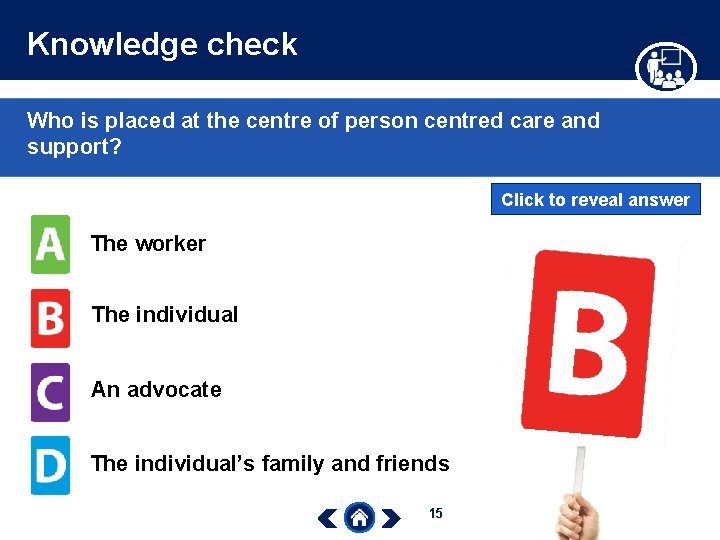
Knowledge check Who is placed at the centre of person centred care and support? Click to reveal answer The worker The individual An advocate The individual’s family and friends 15
Knowledge check Which of the following are the values known as the 6 Cs: Click to reveal answer Empathy, listening, support, respecting privacy, promoting dignity Care, compassion, competence, communication, courage, commitment Spiritual, emotional, cultural, religious, social, physical Lighting, noise, temperature, odours 16