
The Care Act 2014 Doug Feery Barrister Amanda
The Care Act (2014) Doug Feery Barrister Amanda Murphy Independent Social Worker 25 November 2016 Blackburn and Darwen Carers Centre
An agenda �The main provisions of the Care Act 2014 �What has changed and what remains �The underpinning principles �New duty - giving of information & advice �Assessment & eligibility threshold’s - care & support �Carer entitlements ☺ �S 117 aftercare - Mental Health Act – What’s changed? �Access to advocacy �Safeguarding
…the most significant piece of legislation since the establishment of the welfare state. (SCIE)
Points for reference Care Act 2014 Explanatory Notes Care Act 2014 CHAPTER 23 Updated 27 Oct 2016 - online
Background / timetable � 2014 – Royal Assesent � 2015 – Partial implementation � 2016 – The Dilnot (cap on costs) reforms to be implemented
Legislation to be repealed includes: �National assistance Act 1948 �Chronically Sick & Disabled Persons Act 1970 (but only for adults) �Health & Social Services & Social Security Adjudications Act 1983 �NHS & Community Care Act 1990 �Carers �Health Act and Social Care Act 2001 (the Act that concerns direct payments)

To illustrate 1948 1960… 1970… 1980. . . 1990… 2000… 2010…
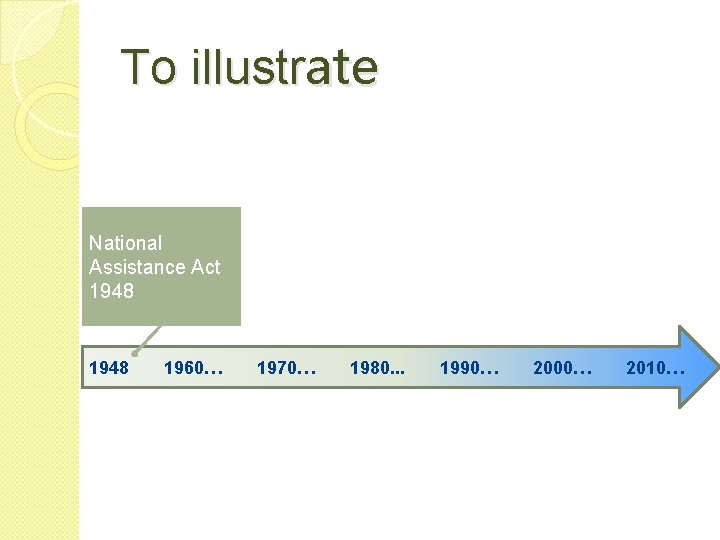
To illustrate National Assistance Act 1948 1960… 1970… 1980. . . 1990… 2000… 2010…
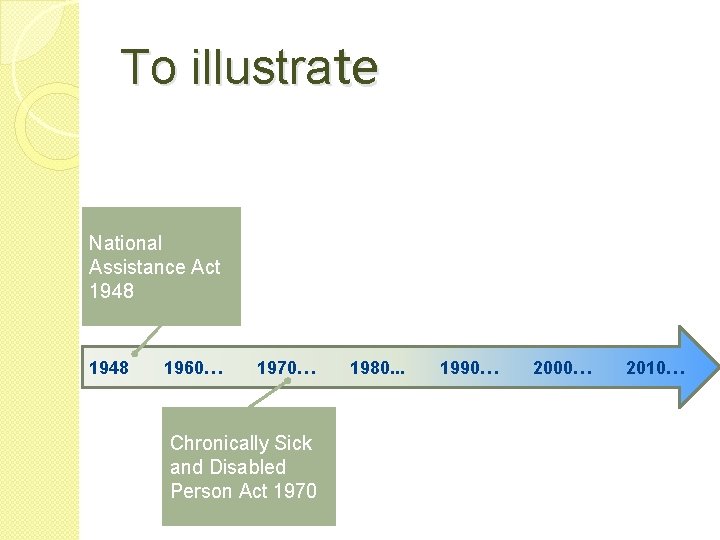
To illustrate National Assistance Act 1948 1960… 1970… Chronically Sick and Disabled Person Act 1970 1980. . . 1990… 2000… 2010…
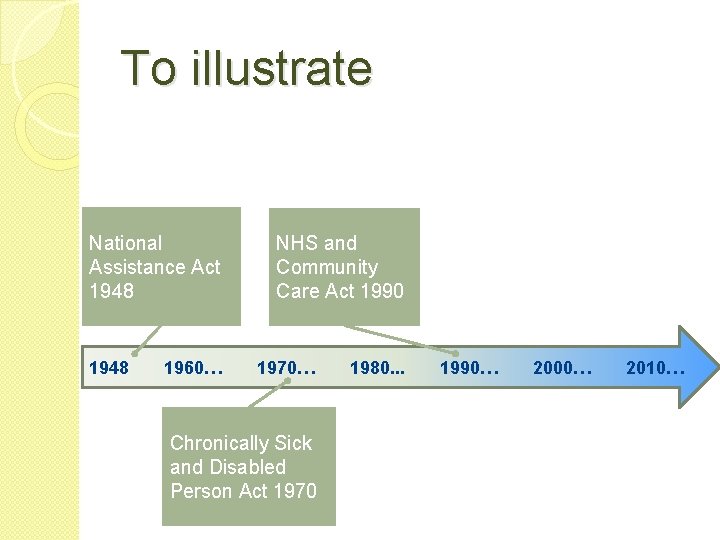
To illustrate National Assistance Act 1948 1960… NHS and Community Care Act 1990 1970… Chronically Sick and Disabled Person Act 1970 1980. . . 1990… 2000… 2010…
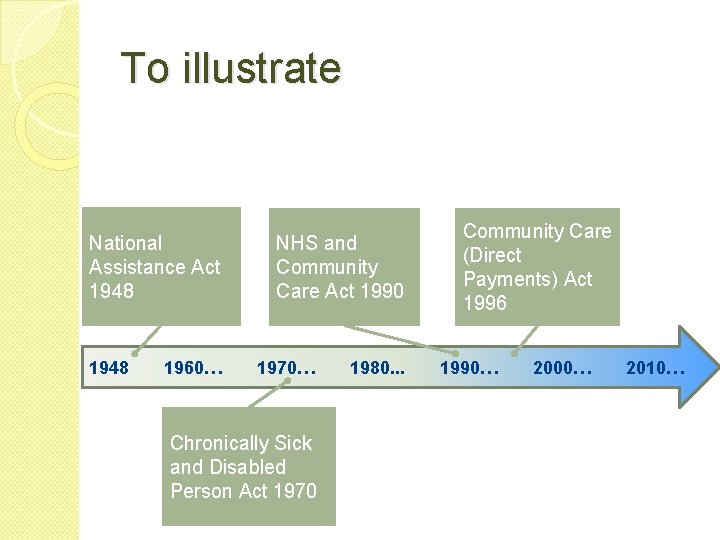
To illustrate National Assistance Act 1948 1960… NHS and Community Care Act 1990 1970… Chronically Sick and Disabled Person Act 1970 1980. . . Community Care (Direct Payments) Act 1996 1990… 2000… 2010…
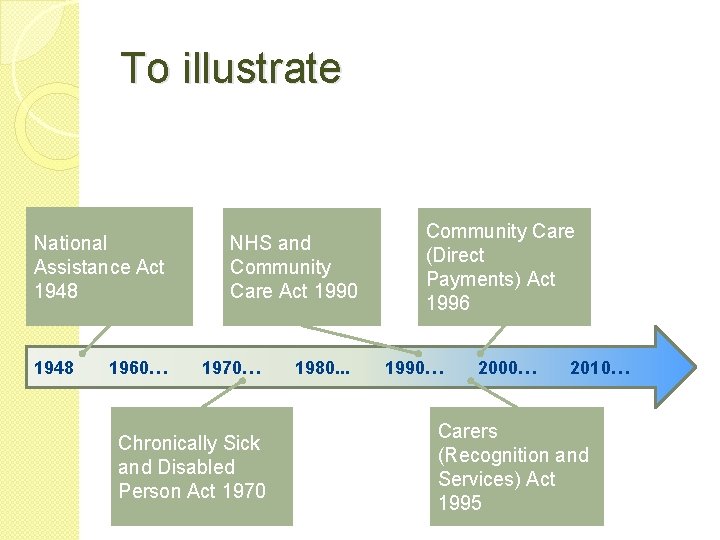
To illustrate National Assistance Act 1948 1960… NHS and Community Care Act 1990 1970… Chronically Sick and Disabled Person Act 1970 1980. . . Community Care (Direct Payments) Act 1996 1990… 2000… 2010… Carers (Recognition and Services) Act 1995
What’s not repealed & remains relevant…
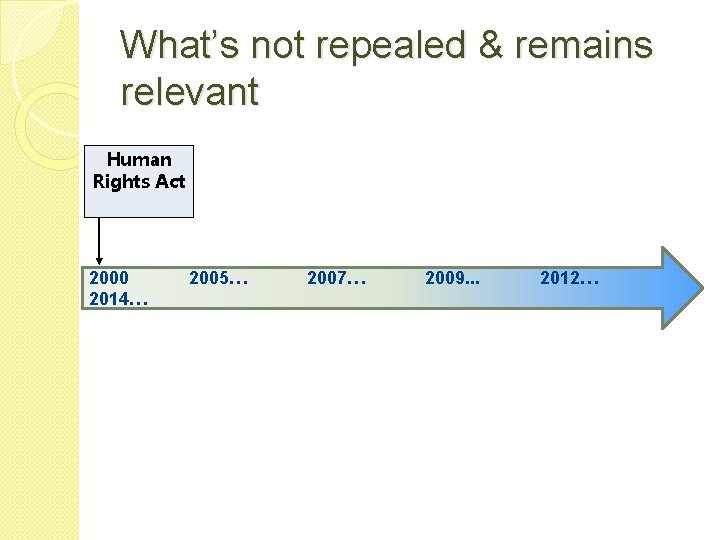
What’s not repealed & remains relevant Human Rights Act 2000 2014… 2005… 2007… 2009. . . 2012…
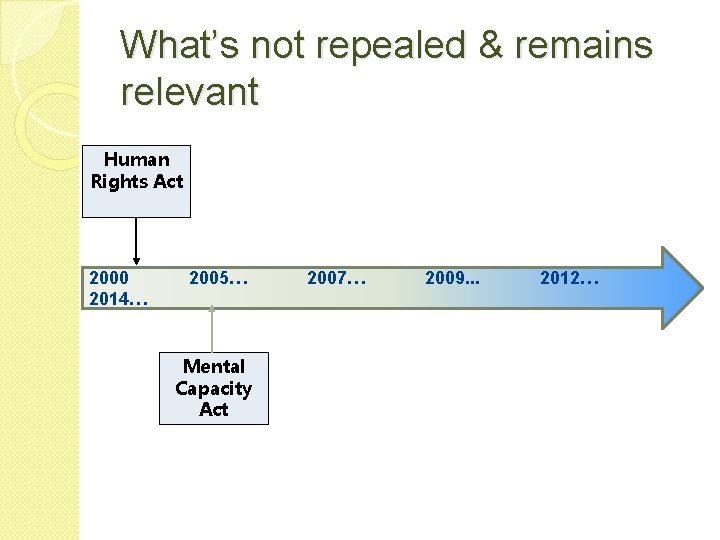
What’s not repealed & remains relevant Human Rights Act 2000 2014… 2005… Mental Capacity Act 2007… 2009. . . 2012…
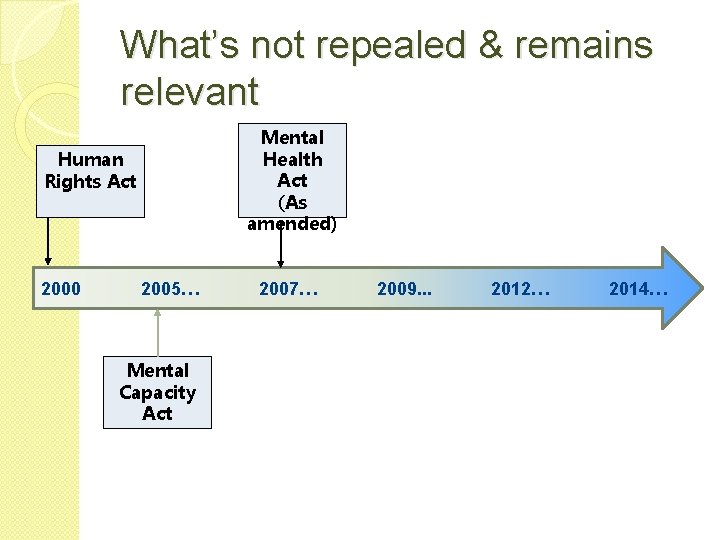
What’s not repealed & remains relevant Mental Health Act (As amended) Human Rights Act 2000 2005… Mental Capacity Act 2007… 2009. . . 2012… 2014…
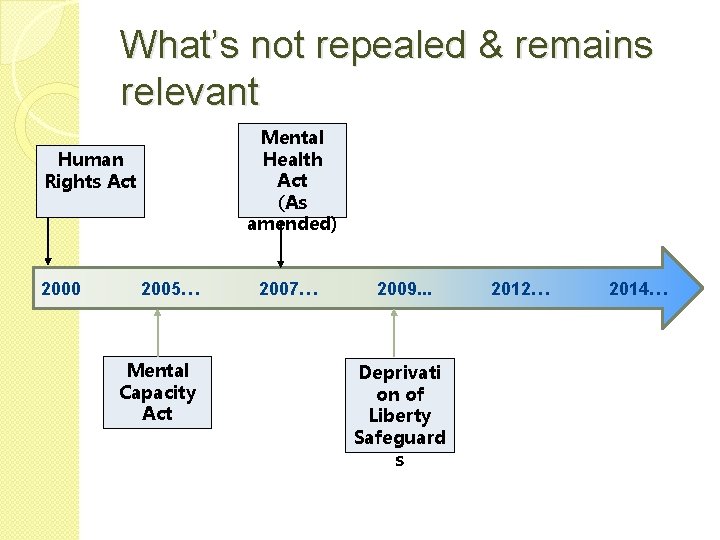
What’s not repealed & remains relevant Mental Health Act (As amended) Human Rights Act 2000 2005… Mental Capacity Act 2007… 2009. . . Deprivati on of Liberty Safeguard s 2012… 2014…
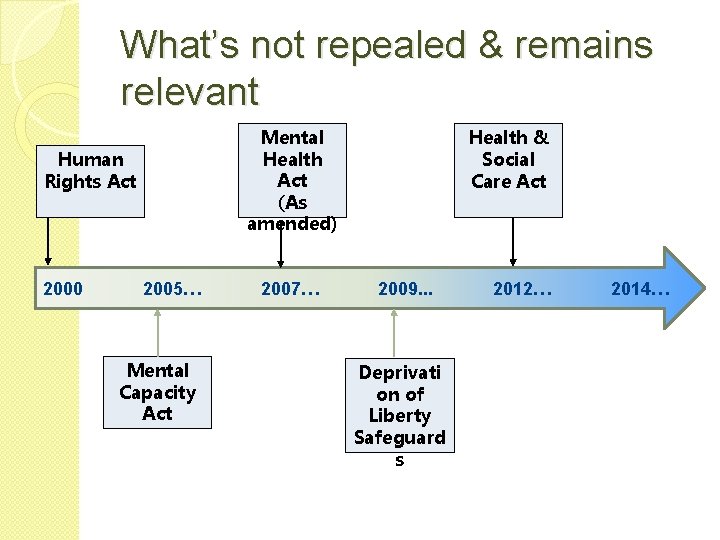
What’s not repealed & remains relevant Mental Health Act (As amended) Human Rights Act 2000 2005… Mental Capacity Act 2007… Health & Social Care Act 2009. . . Deprivati on of Liberty Safeguard s 2012… 2014…
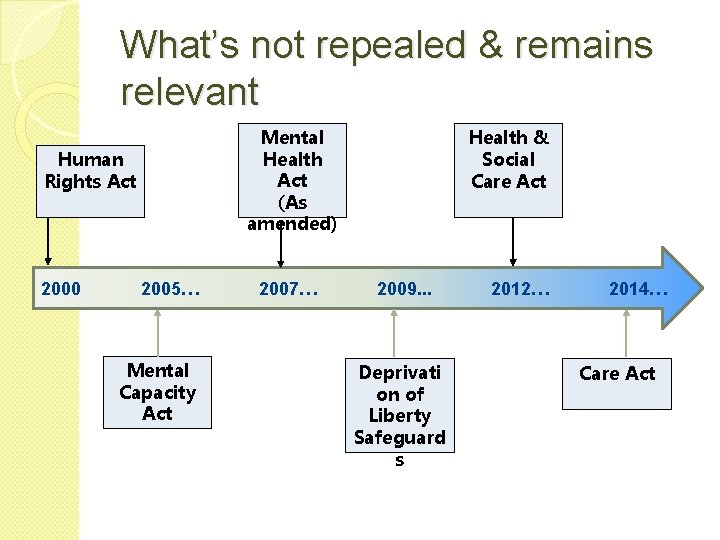
What’s not repealed & remains relevant Mental Health Act (As amended) Human Rights Act 2000 2005… Mental Capacity Act 2007… Health & Social Care Act 2009. . . Deprivati on of Liberty Safeguard s 2012… 2014… Care Act
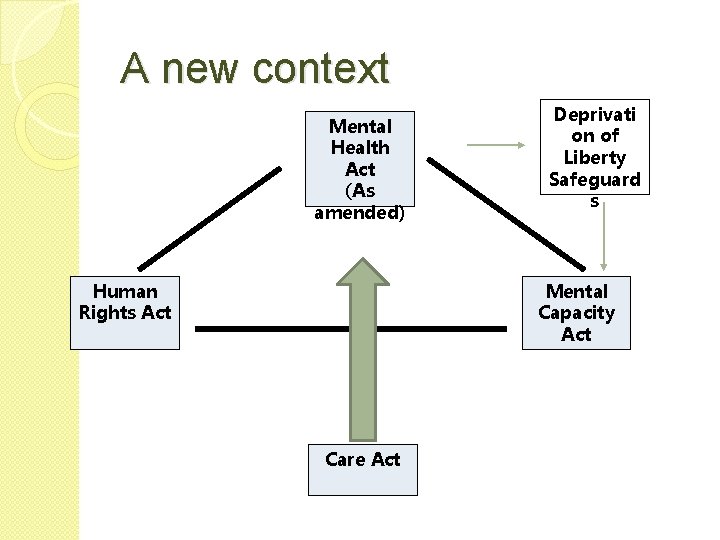
A new context Mental Health Act (As amended) Human Rights Act Deprivati on of Liberty Safeguard s Mental Capacity Act Care Act
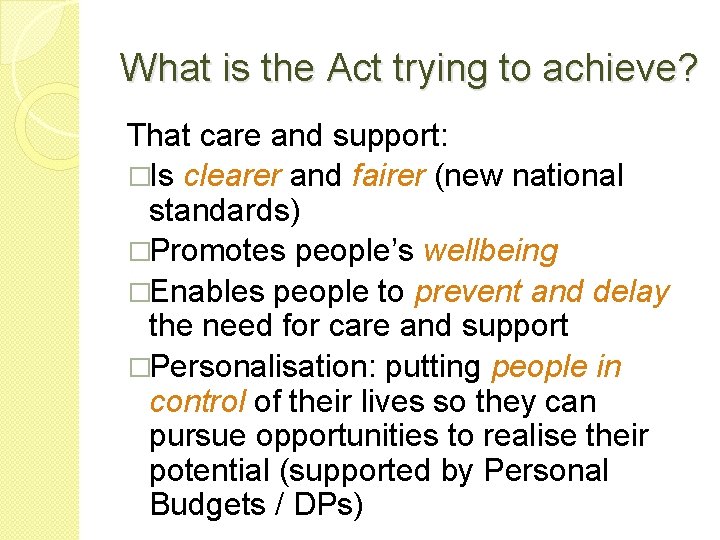
What is the Act trying to achieve? That care and support: �Is clearer and fairer (new national standards) �Promotes people’s wellbeing �Enables people to prevent and delay the need for care and support �Personalisation: putting people in control of their lives so they can pursue opportunities to realise their potential (supported by Personal Budgets / DPs)
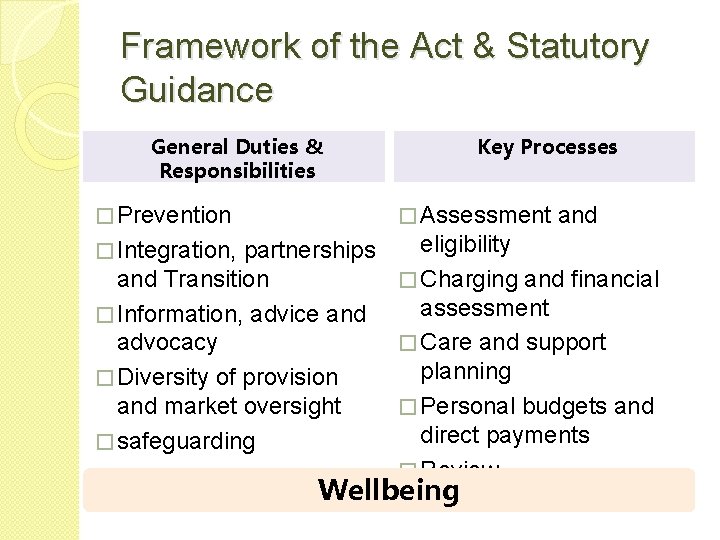
Framework of the Act & Statutory Guidance Key Processes General Duties & Responsibilities � Prevention � Assessment and � Integration, partnerships eligibility � Charging and financial assessment � Care and support planning � Personal budgets and direct payments � Review and Transition � Information, advice and advocacy � Diversity of provision and market oversight � safeguarding Wellbeing
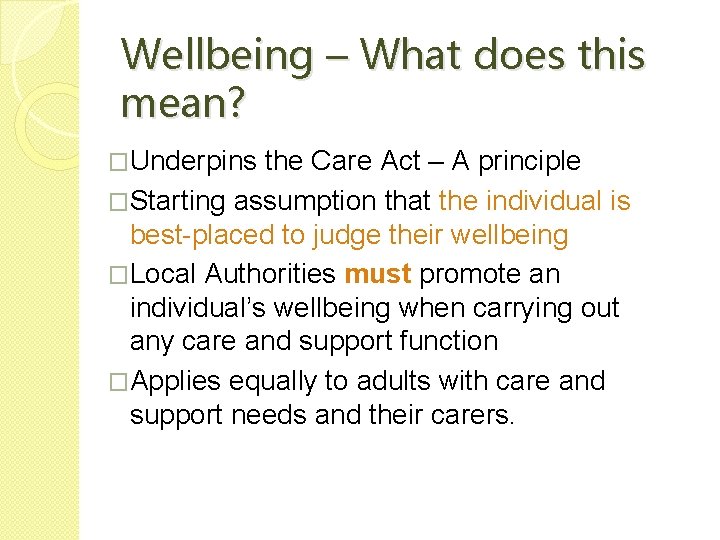
Wellbeing – What does this mean? �Underpins the Care Act – A principle �Starting assumption that the individual is best-placed to judge their wellbeing �Local Authorities must promote an individual’s wellbeing when carrying out any care and support function �Applies equally to adults with care and support needs and their carers.
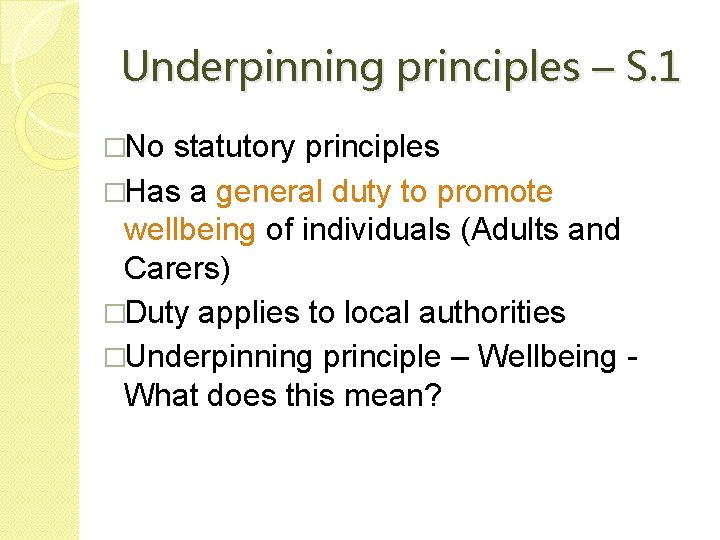
Underpinning principles – S. 1 �No statutory principles �Has a general duty to promote wellbeing of individuals (Adults and Carers) �Duty applies to local authorities �Underpinning principle – Wellbeing - What does this mean?

Wellbei ng Care & support statutory guidance – p. 7
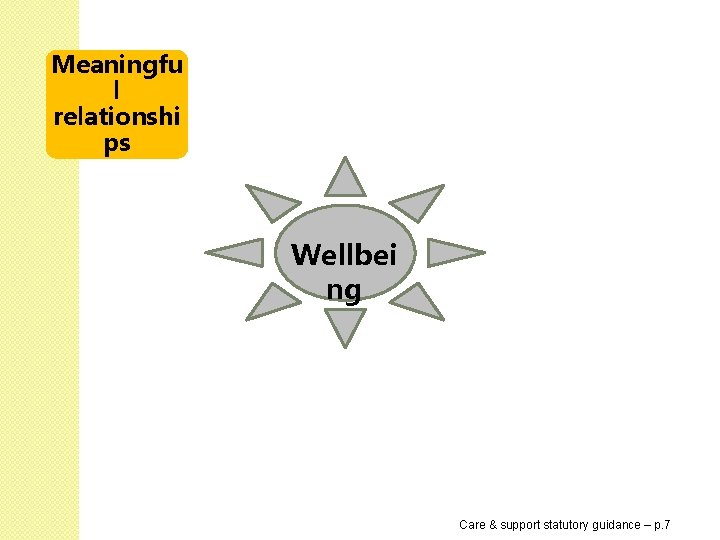
Meaningfu l relationshi ps Wellbei ng Care & support statutory guidance – p. 7
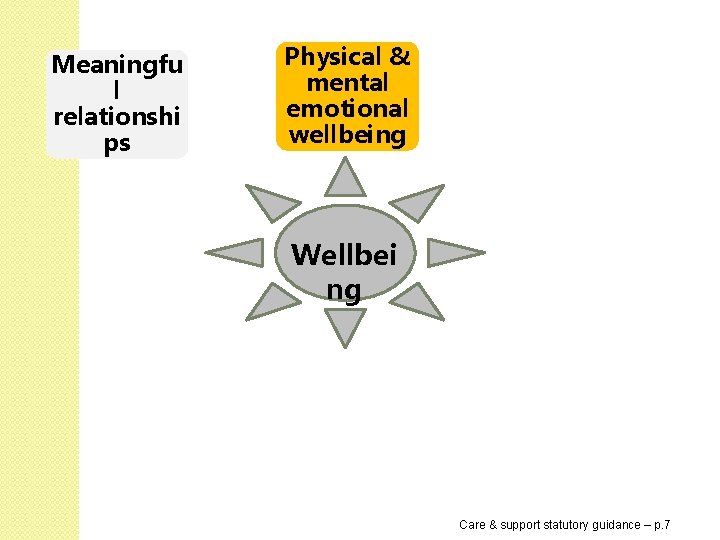
Meaningfu l relationshi ps Physical & mental emotional wellbeing Wellbei ng Care & support statutory guidance – p. 7
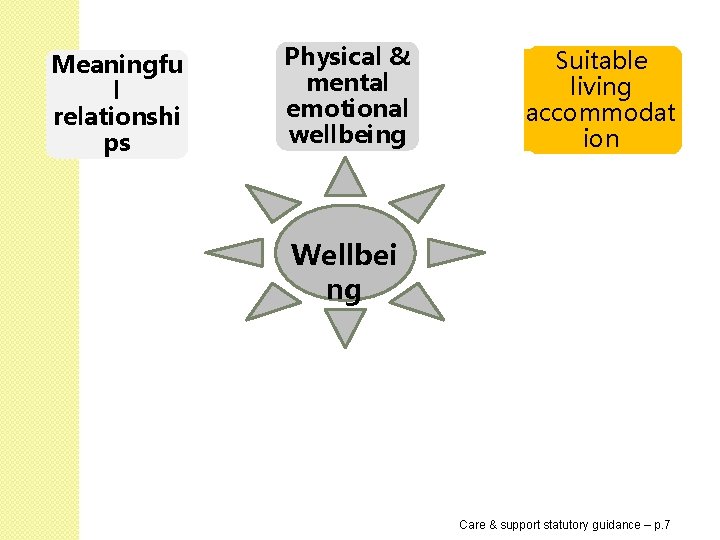
Meaningfu l relationshi ps Physical & mental emotional wellbeing Suitable living accommodat ion Wellbei ng Care & support statutory guidance – p. 7
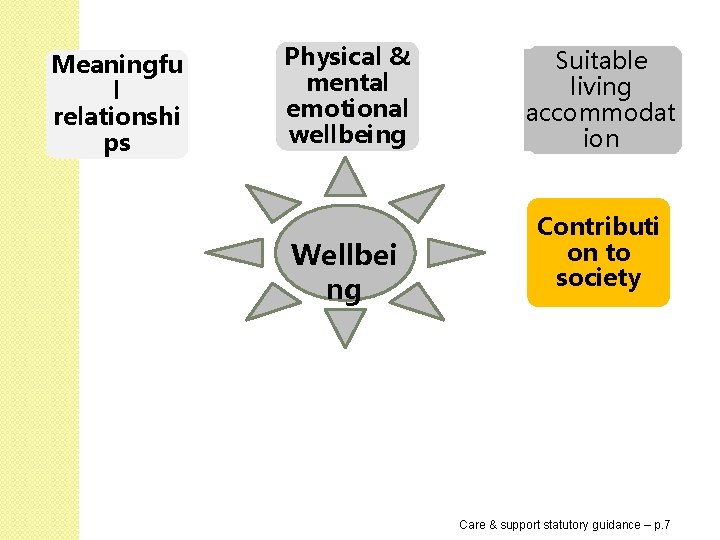
Meaningfu l relationshi ps Physical & mental emotional wellbeing Wellbei ng Suitable living accommodat ion Contributi on to society Care & support statutory guidance – p. 7
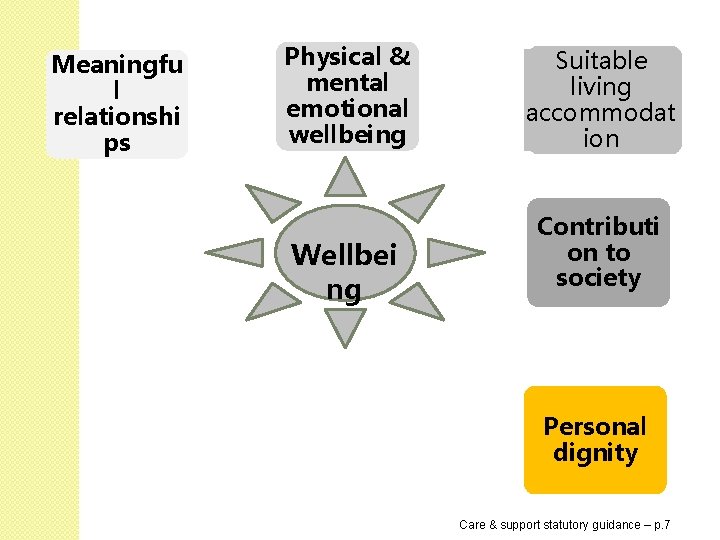
Meaningfu l relationshi ps Physical & mental emotional wellbeing Wellbei ng Suitable living accommodat ion Contributi on to society Personal dignity Care & support statutory guidance – p. 7
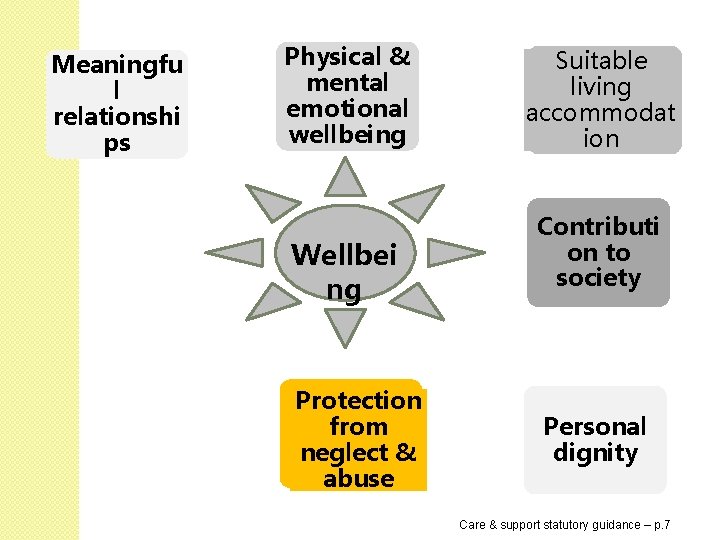
Meaningfu l relationshi ps Physical & mental emotional wellbeing Wellbei ng Protection from neglect & abuse Suitable living accommodat ion Contributi on to society Personal dignity Care & support statutory guidance – p. 7
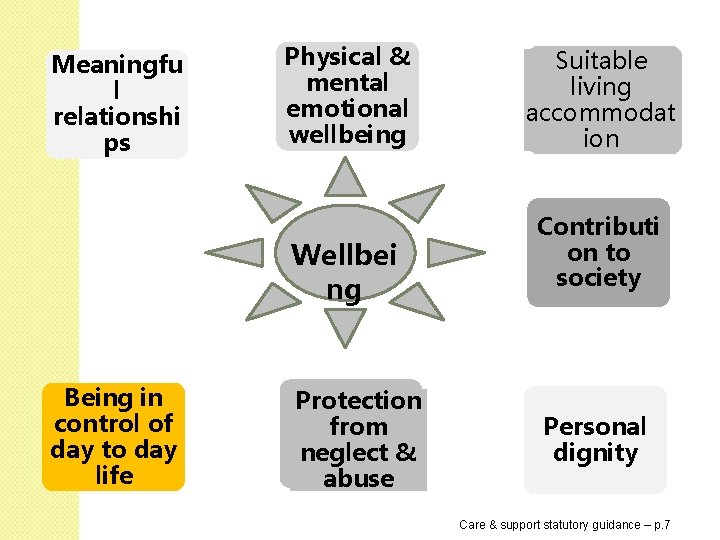
Meaningfu l relationshi ps Physical & mental emotional wellbeing Wellbei ng Being in control of day to day life Protection from neglect & abuse Suitable living accommodat ion Contributi on to society Personal dignity Care & support statutory guidance – p. 7
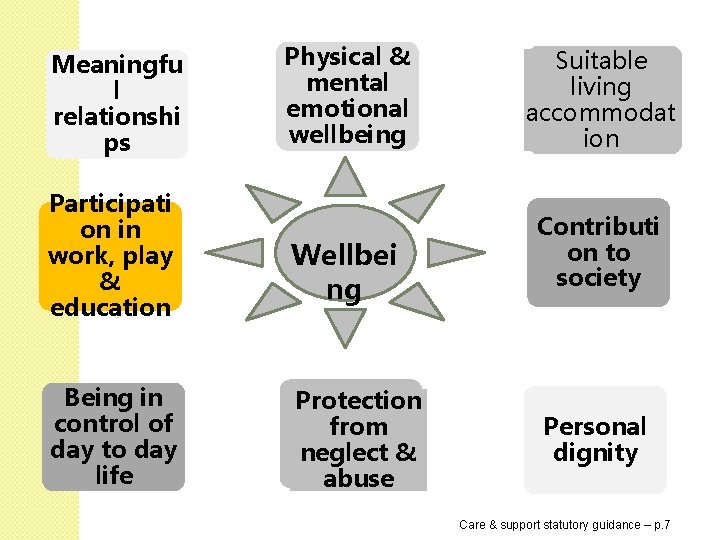
Meaningfu l relationshi ps Participati on in work, play & education Being in control of day to day life Physical & mental emotional wellbeing Wellbei ng Protection from neglect & abuse Suitable living accommodat ion Contributi on to society Personal dignity Care & support statutory guidance – p. 7
In other words… Promoting wellbeing means: �Seeking improvements in the aspects of a persons wellbeing when carrying out a care and support function (i. e. an assessment) �Covers an intentionally broad range of domains across a person’s life �There is no set approach to delivery of care – each case to be assessed on its own merits
Key Headlines �LA – primary responsibility – promoters of individual wellbeing �Shift away from duty to provide services to meeting needs – recognising that everybody's needs are different �Need to recognise individual needs - not a one size fits all – person centred planning! �Focus on preventing or delaying the need for support; LAs may need to invest / utilise existing community resources, facilities, assets etc. , to prevent needs unnecessarily escalating
Cont… �Carers are given significant new entitlements under the Act. �Information and advice service. �LAs must facilitate a diverse, vibrant and sustainable market for care & support services that benefit the whole population. �Eligibility thresholds established: instead of a council assessing levels of need, it will ask if people can achieve certain outcomes.
Prevention rather than crisis management � New duties to provide preventative services to maintain the health of service users rather than dealing with people after they have had an emergency or reached a crisis point. � This is why the provision of Information & Advice is so important, as it can empower people to make informed and considered decisions about the care and support they need before hitting a crisis.
The right to information and advice �Information & Advice services must be: ◦ …in place by April 2015. ◦ …“accessible to and proportionate to the needs of those for whom it is being provided”. �LAs must ensure that they enable people to access independent financial advisors to help them get to grips with the complexities of financing social care. � Information and advice provision will need to include information on health conditions and management of long term conditions (as well
Appropriate & Proportionate �The process is flexible and adaptable so it best fits with the person’s needs, this might be face to face, telephone, online… �A combined assessment with the carer, an integrated assessment or specialist assessment (e. g. with a deafblind person) �Self-supported assessment – LA is final decision maker �Should meet persons communication
Appropriate & Proportionate The key consideration is whether the assessment is proportionate to the severity of need & complexity of the situation (not insufficient or overly intrusive / burdensome) Where needs are easily recognisable, the assessment may be carried out by phone or online, but assessors must have the training & experience to be able to recognise issues around mental capacity and further underlying needs
Assessment & Eligibility
S. 9 – An ‘Adult’ needs assessment If it appears that an adult may have needs for care and support, the local authority must identify what those care and support needs are - regardless of the level of those needs and the adults financial resources. An assessment must include: ◦ an assessment of the impact of the adult’s needs for care and support ◦ the outcomes that the adult wishes to achieve in day-to-day life, and to what extent the provision of care and support could contribute to the achievement of those outcomes. In carrying out a needs assessment, the local authority must involve: ◦ ◦ the adult, any carer that the adult has, and any person whom the adult wishes to be involved. where the adult lacks capacity, the local authority should involve any person who appears to be interested in the adult’s welfare. An assessment must also consider: ◦ whether the adult would benefit from anything under Preventative Services / Information & Advice Services / anything which might be available in the community.
Should not be seen merely as a gateway to services. . . But rather, a crucial means of helping the person to understand their needs, how they can be met, and how they can achieve their outcomes
S. 10 – A ‘Carers’ needs assessment “Carer” means an adult who provides or intends to provide care for another adult (an “adult needing care”) and is not paid, contracted or ‘volunteers’. If it appears that an carer may have needs for care and support, whether currently or in the future, the local authority must identify what those care and support needs are - regardless of the level of those needs and the carers financial resources. A carer’s assessment must include an assessment of: ◦ whether the carer is able, and is likely to continue to be able, to provide care for the adult needing care, ◦ whether the carer is willing, and is likely to continue to be willing, to do so, ◦ the impact of the carer’s needs for support have on their wellbeing ◦ the outcomes that the carer wishes to achieve in day-to-day life, and ◦ whether, and if so to what extent, the provision of support could contribute to the achievement of those outcomes. A local authority must have regard to whether the carer works or wishes to do so, and whether the carer is participating in or wishes to participate in education, training or recreation.
What if a person doesn’t want an assessment? The LA is not required to carry out an assessment where a person with possible needs, or a carer: �Feels that they do not need care �May not want LA support However, this can be overridden where they: �Lack mental capacity �Or are experiencing, or at risk of experiencing, any abuse or neglect. .
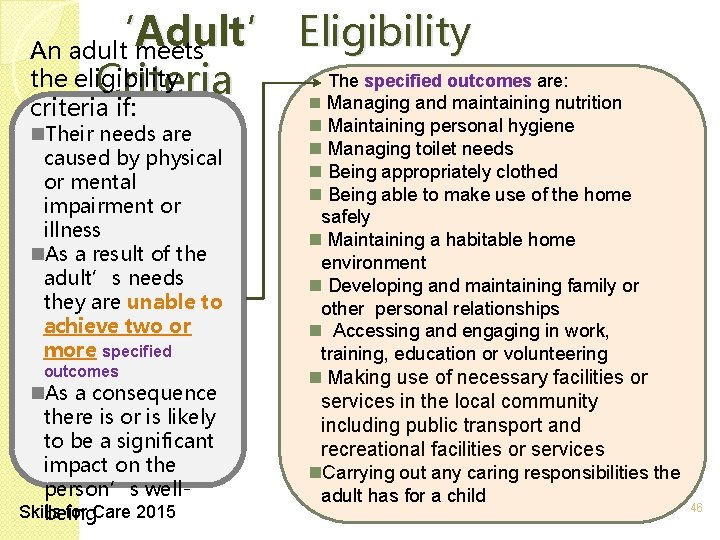
‘Adult’ Eligibility The specified outcomes are: Criteria n Managing and maintaining nutrition An adult meets the eligibility criteria if: n. Their needs are caused by physical or mental impairment or illness n. As a result of the adult’s needs they are unable to achieve two or more specified outcomes n. As a consequence there is or is likely to be a significant impact on the person’s well. Skills for Care 2015 being n Maintaining personal hygiene n Managing toilet needs n Being appropriately clothed n Being able to make use of the home safely n Maintaining a habitable home environment n Developing and maintaining family or other personal relationships n Accessing and engaging in work, training, education or volunteering n Making use of necessary facilities or services in the local community including public transport and recreational facilities or services n. Carrying out any caring responsibilities the adult has for a child 46
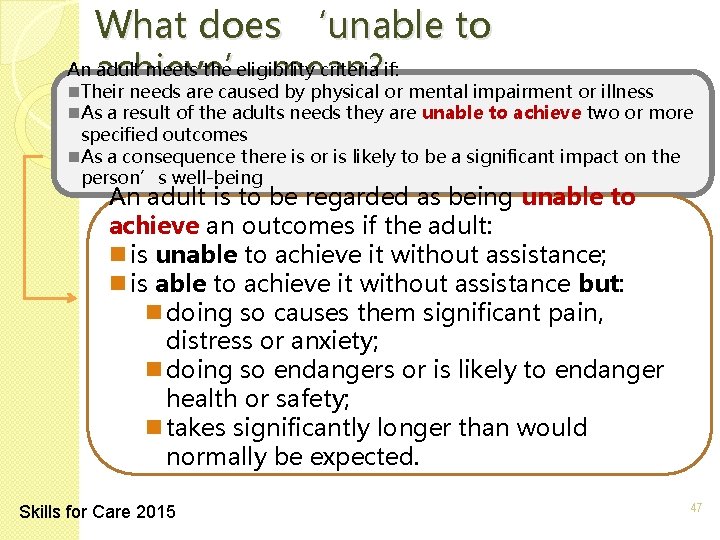
What does ‘unable to An achieve’ adult meets the eligibility criteria if: mean? n. Their needs are caused by physical or mental impairment or illness n. As a result of the adults needs they are unable to achieve two or more specified outcomes n. As a consequence there is or is likely to be a significant impact on the person’s well-being An adult is to be regarded as being unable to achieve an outcomes if the adult: n is unable to achieve it without assistance; n is able to achieve it without assistance but: n doing so causes them significant pain, distress or anxiety; n doing so endangers or is likely to endanger health or safety; n takes significantly longer than would normally be expected. Skills for Care 2015 47
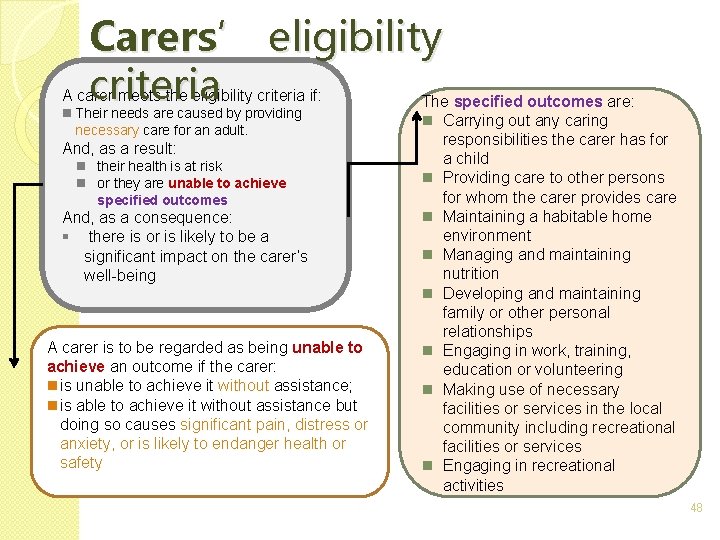
Carers’ eligibility criteria A carer meets the eligibility criteria if: n Their needs are caused by providing necessary care for an adult. And, as a result: n their health is at risk n or they are unable to achieve specified outcomes And, as a consequence: § there is or is likely to be a significant impact on the carer’s well-being A carer is to be regarded as being unable to achieve an outcome if the carer: n is unable to achieve it without assistance; n is able to achieve it without assistance but doing so causes significant pain, distress or anxiety, or is likely to endanger health or safety The specified outcomes are: n Carrying out any caring responsibilities the carer has for a child n Providing care to other persons for whom the carer provides care n Maintaining a habitable home environment n Managing and maintaining nutrition n Developing and maintaining family or other personal relationships n Engaging in work, training, education or volunteering n Making use of necessary facilities or services in the local community including recreational facilities or services n Engaging in recreational activities 48
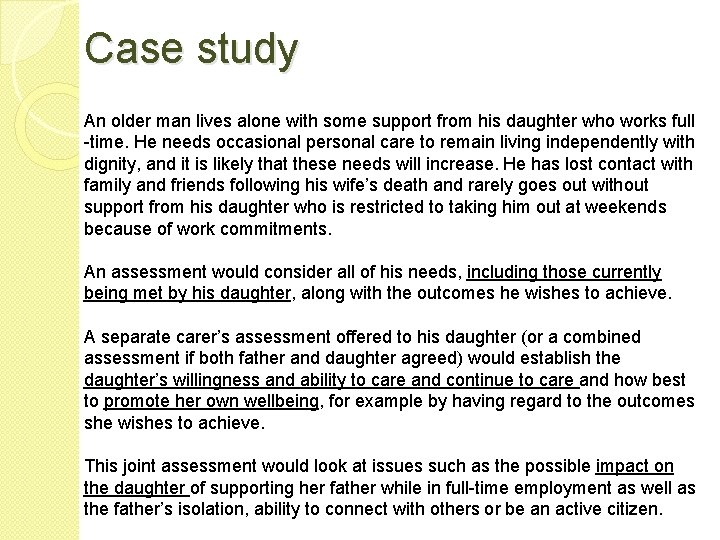
Case study An older man lives alone with some support from his daughter who works full -time. He needs occasional personal care to remain living independently with dignity, and it is likely that these needs will increase. He has lost contact with family and friends following his wife’s death and rarely goes out without support from his daughter who is restricted to taking him out at weekends because of work commitments. An assessment would consider all of his needs, including those currently being met by his daughter, along with the outcomes he wishes to achieve. A separate carer’s assessment offered to his daughter (or a combined assessment if both father and daughter agreed) would establish the daughter’s willingness and ability to care and continue to care and how best to promote her own wellbeing, for example by having regard to the outcomes she wishes to achieve. This joint assessment would look at issues such as the possible impact on the daughter of supporting her father while in full-time employment as well as the father’s isolation, ability to connect with others or be an active citizen.
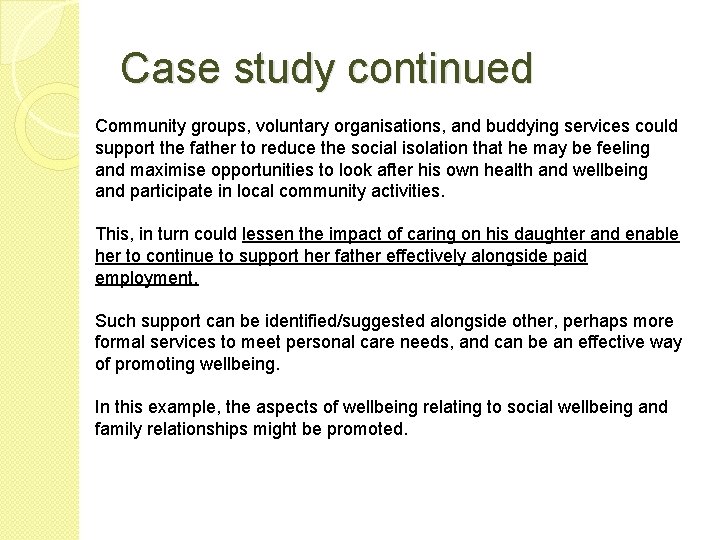
Case study continued Community groups, voluntary organisations, and buddying services could support the father to reduce the social isolation that he may be feeling and maximise opportunities to look after his own health and wellbeing and participate in local community activities. This, in turn could lessen the impact of caring on his daughter and enable her to continue to support her father effectively alongside paid employment. Such support can be identified/suggested alongside other, perhaps more formal services to meet personal care needs, and can be an effective way of promoting wellbeing. In this example, the aspects of wellbeing relating to social wellbeing and family relationships might be promoted.
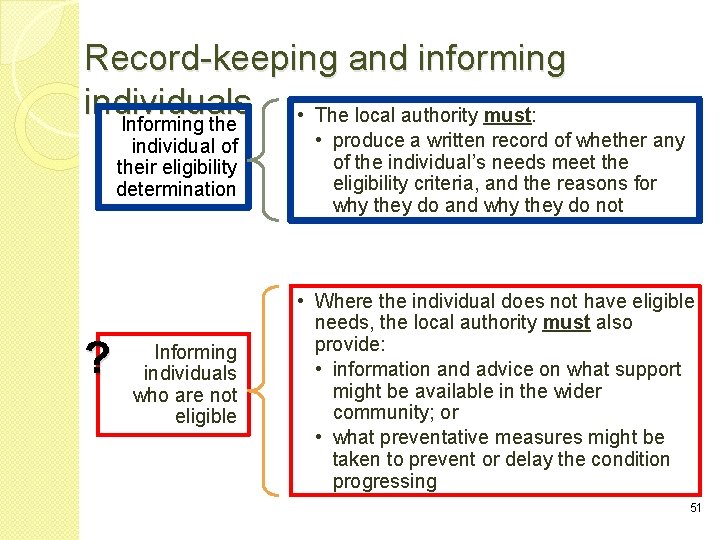
Record-keeping and informing individuals • The local authority must: Informing the individual of their eligibility determination ? Informing individuals who are not eligible • produce a written record of whether any of the individual’s needs meet the eligibility criteria, and the reasons for why they do and why they do not • Where the individual does not have eligible needs, the local authority must also provide: • information and advice on what support might be available in the wider community; or • what preventative measures might be taken to prevent or delay the condition progressing 51
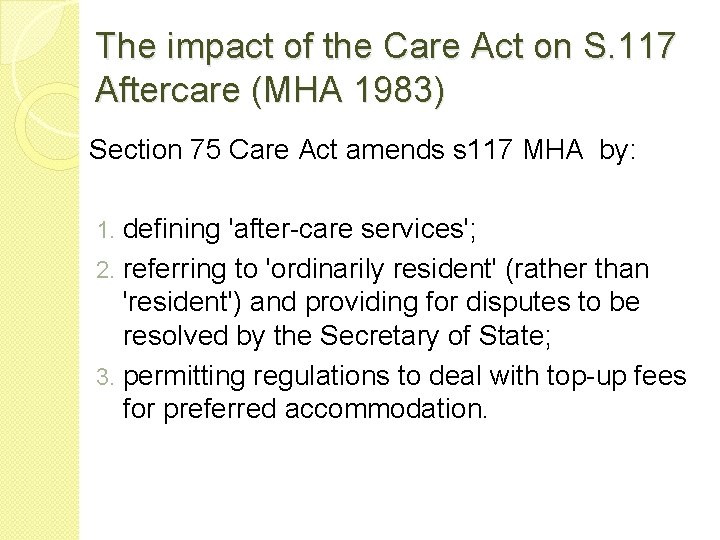
The impact of the Care Act on S. 117 Aftercare (MHA 1983) Section 75 Care Act amends s 117 MHA by: defining 'after-care services'; 2. referring to 'ordinarily resident' (rather than 'resident') and providing for disputes to be resolved by the Secretary of State; 3. permitting regulations to deal with top-up fees for preferred accommodation. 1.
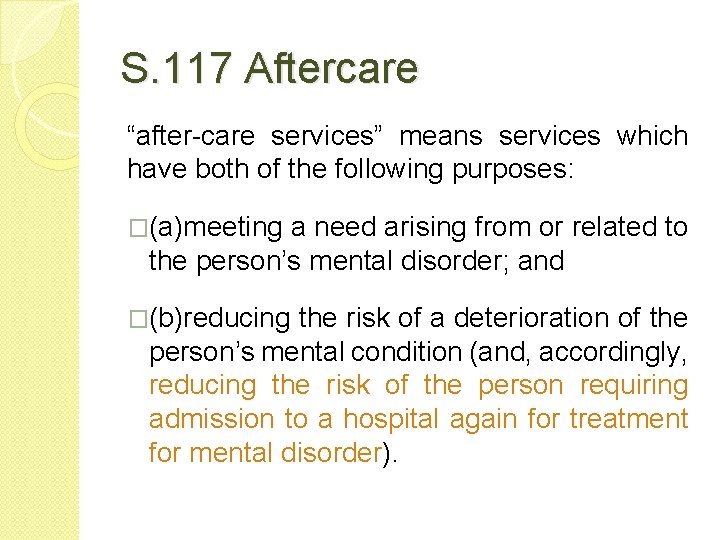
S. 117 Aftercare “after-care services” means services which have both of the following purposes: �(a)meeting a need arising from or related to the person’s mental disorder; and �(b)reducing the risk of a deterioration of the person’s mental condition (and, accordingly, reducing the risk of the person requiring admission to a hospital again for treatment for mental disorder).
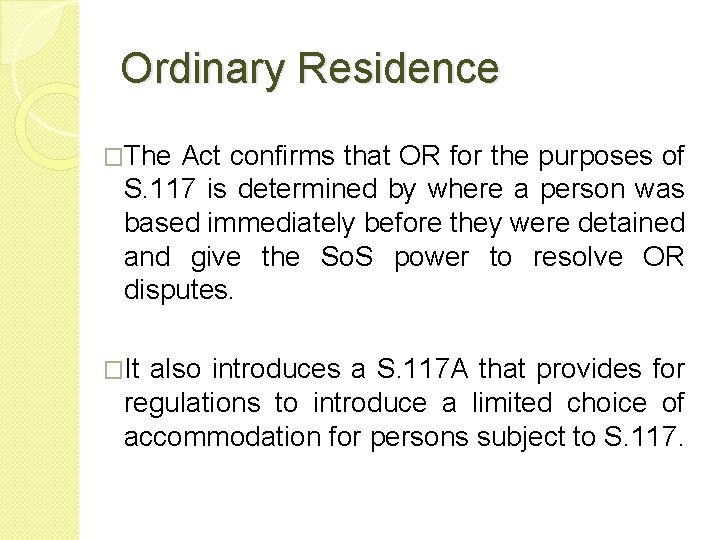
Ordinary Residence �The Act confirms that OR for the purposes of S. 117 is determined by where a person was based immediately before they were detained and give the So. S power to resolve OR disputes. �It also introduces a S. 117 A that provides for regulations to introduce a limited choice of accommodation for persons subject to S. 117.
A basic human right! �People receiving publicly funded or publicly arranged (even if privately funded) care now protected by the Human Rights Act. �This means they can argue that substandard care has breached their human rights and they will have their human rights protected by the law in such a situation. �However, this protection is not afforded to people who self-fund and privately arrange their own care. �Note link to the revised MHA Co. P April 2015
Increased help & protection for people who want to move areas �The Care Act sets out in law a clear process for local authorities to follow if a person in receipt of care wishes to move to another area. �There is evidence that some people are afraid to move as they cannot be sure of receiving appropriate care in a new area.
Market oversight and provider failure �Increased responsibilities for checking on care providers in their area. �If care provider fails or goes bust, LA will have a duty to ensure that people’s care needs are met seamlessly and not disrupted. �CQC to assess which care providers would be ‘hard to replace’ should they go bust or fail. �CQC can request information from care providers about their financial sustainability, in order to spot potential problems earlier.
Safeguarding – S. 42 - 47 �The Act places on a statutory footing some of the safeguarding obligations that are at present, only located in guidance. �No new power is provided to protect adults from abuse, merely process obligations �No power of entry is provided
Safeguarding – core duties The local authority must: � start an enquiry if it believes an adult is experiencing or is at risk of abuse and neglect � ensure that the person is able to be involved as far as possible, for example by providing an interpreter where a person has a particular condition affecting communication – such as autism or deafblindness � appoint an independent advocate if the person has substantial difficulty in being involved in the safeguarding enquiry or safeguarding adult review, and if there is no appropriate individual to support them – this should be done at the earliest opportunity in the process.
Contined… s. 42 - The safeguarding duties apply to an adult who: � has needs for care and support (whether or not the local authority is meeting any of those needs) � is experiencing, or at risk of, abuse or neglect; and � as a result of those care and support needs is unable to protect themselves from either the risk, or the experience, of abuse and neglect. � If at any point the local authority suspects or receives information from another person or agency that an adult is experiencing, or is at risk of, abuse or neglect, it must make enquiries, or cause others to do so.
What is an Enquiry…? �An enquiry is the action taken or instigated by the local authority in response to a concern that abuse or neglect may be taking place. �An enquiry may be a conversation with the adult, or, if the adult lacks capacity or has substantial difficulty in understanding the enquiry, a conversation with their representative or advocate, prior to initiating a formal enquiry under Section 42, right through to a much more formal multiagency plan or course of action.
The objectives of an enquiry into abuse or neglect are to: � establish facts � ascertain the adult’s views and wishes � assess the needs of the adult for protection, support and redress, and how they might be met � protect the adult from the abuse and neglect in accordance with their wishes � make decisions as to what follow-up action should be taken with regard to the person or organisation responsible for the abuse or neglect � enable the adult to achieve resolution and recovery. � If the local authority decides that another organisation should make the enquiry, for example a care provider, then it should be clear about timescales, the need to know the outcome of the enquiry and what action will follow if the enquiry is not completed.
Continued… � Once enquiries are completed, the outcome should be notified to the local authority which should then determine with the adult what, if any, further action is necessary and acceptable. � One outcome of the enquiry may be the formulation of agreed actions for the adult which should be recorded on their care plan. � This will be the responsibility of the relevant agencies to implement.
Cont. . In relation to the adult this should set out: � what steps are to be taken to assure their safety in future � the provision of any support, treatment or therapy including ongoing independent advocacy � any modifications needed in the way services are provided (e. g. same gender care or placement; appointment of an Office of the Public Guardian [OPG] deputy) � how best to support the adult through any action they take to seek justice or redress � any ongoing risk management strategy as appropriate � any action to be taken in relation to the
- Slides: 64