
The Cardiovascular System The Heart Regulation of Heart
- Slides: 30
The Cardiovascular System
The Heart: Regulation of Heart Rate Stroke volume usually remains relatively constant Starling’s law of the heart – the more that the cardiac muscle is stretched, the stronger the contraction Changing heart rate is the most common way to change cardiac output
The Heart: Regulation of Heart Rate Ways to increase your heart rate Sympathetic nervous system �Crisis �Low blood pressure Hormones �Epinephrine-increase heart rate, constrict blood vessels and dilates air passages �Thyroxine-Thyroid hormone that increases metabolic rate and heart rate Exercise Decreased blood volume
The Heart: Regulation of Heart Rate Decreased heart rate Rest and deep breathing High blood pressure or blood volume Prescribed medications such as Lopressor intravenous
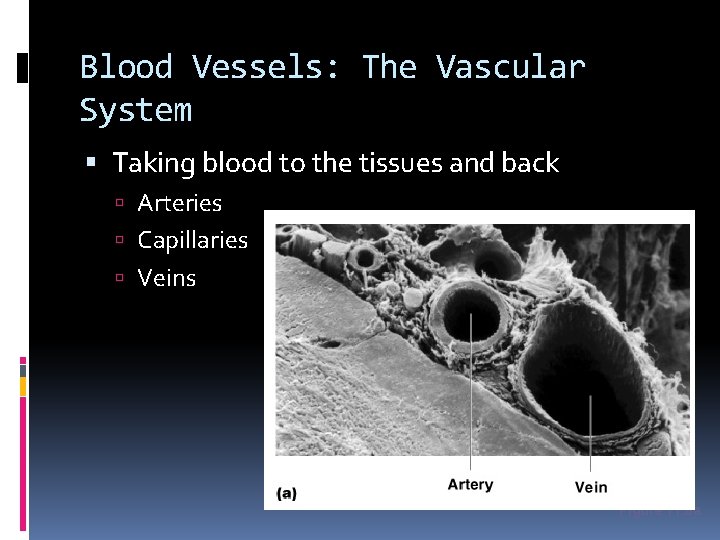
Blood Vessels: The Vascular System Taking blood to the tissues and back Arteries Capillaries Veins Figure 11. 8 a
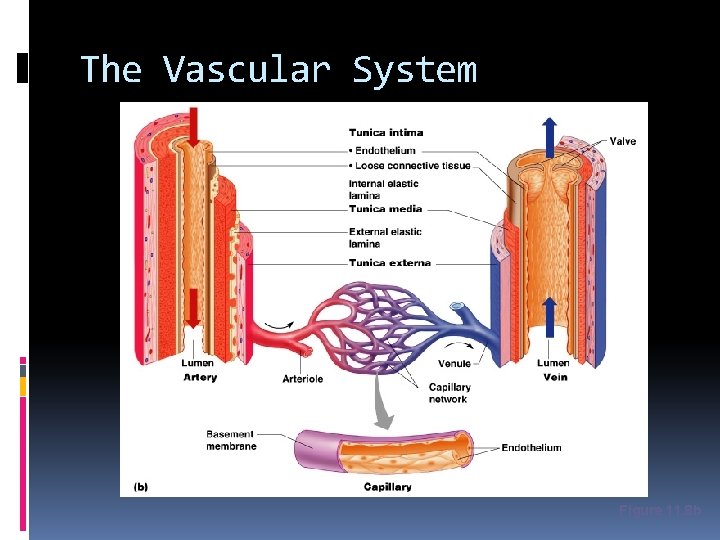
Blood Vessels: Anatomy Three layers (tunics) Tunic intima Endothelium Tunic media Smooth muscle Controlled by sympathetic nervous system Tunic externa Mostly fibrous connective tissue
The Vascular System Figure 11. 8 b
Differences Between Blood Vessel Types Walls of arteries are thickest with smooth muscle to help move blood Skeletal muscle “milks” blood in veins toward the heart. Backflow is prevented with valves Walls of capillaries are only one cell layer thick to allow for exchanges between blood and tissue
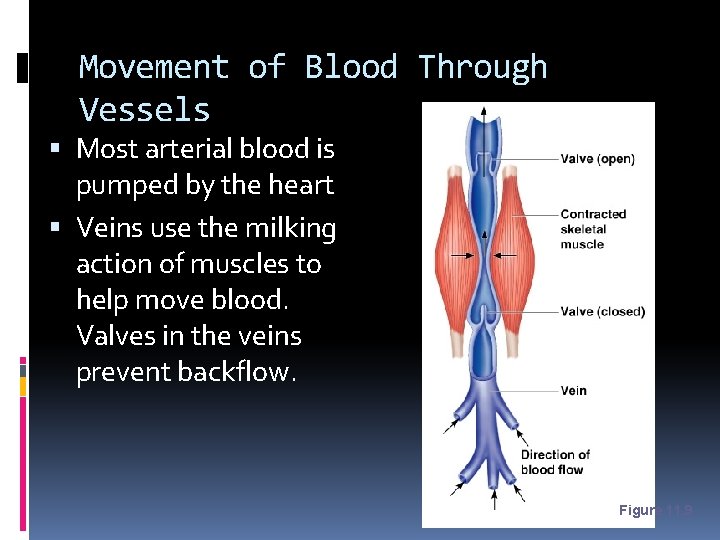
Movement of Blood Through Vessels Most arterial blood is pumped by the heart Veins use the milking action of muscles to help move blood. Valves in the veins prevent backflow. Figure 11. 9
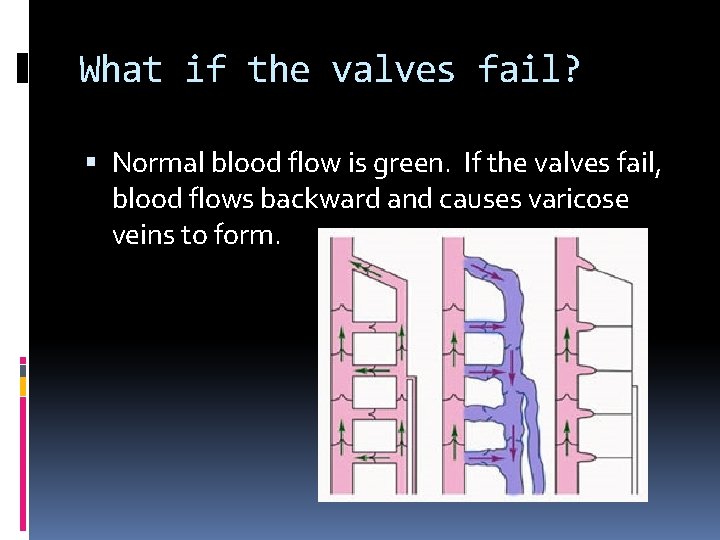
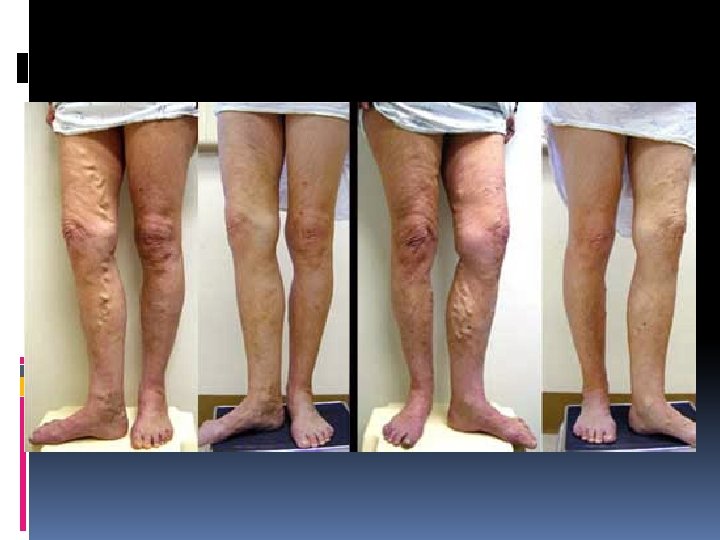
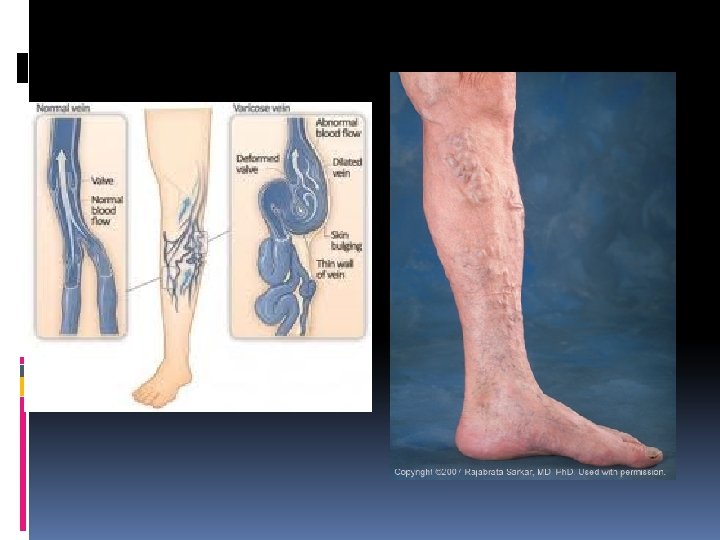
What if the valves fail? Normal blood flow is green. If the valves fail, blood flows backward and causes varicose veins to form.
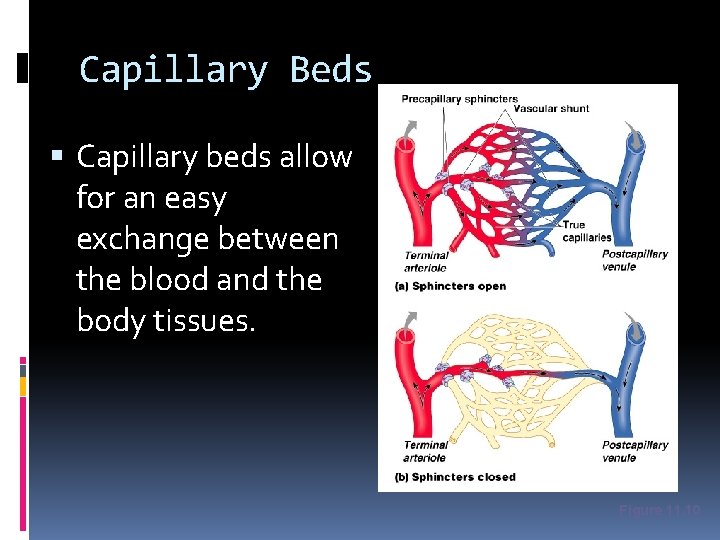
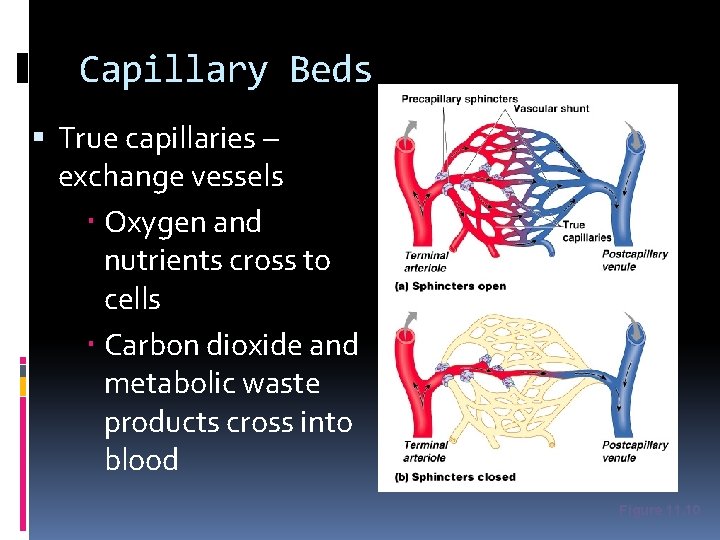
Capillary Beds Capillary beds allow for an easy exchange between the blood and the body tissues. Figure 11. 10
Capillary Beds True capillaries – exchange vessels Oxygen and nutrients cross to cells Carbon dioxide and metabolic waste products cross into blood Figure 11. 10
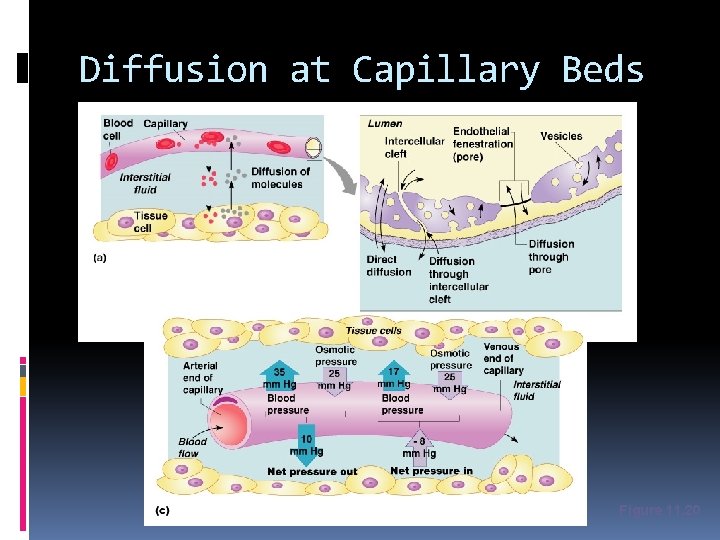
Diffusion at Capillary Beds Figure 11. 20
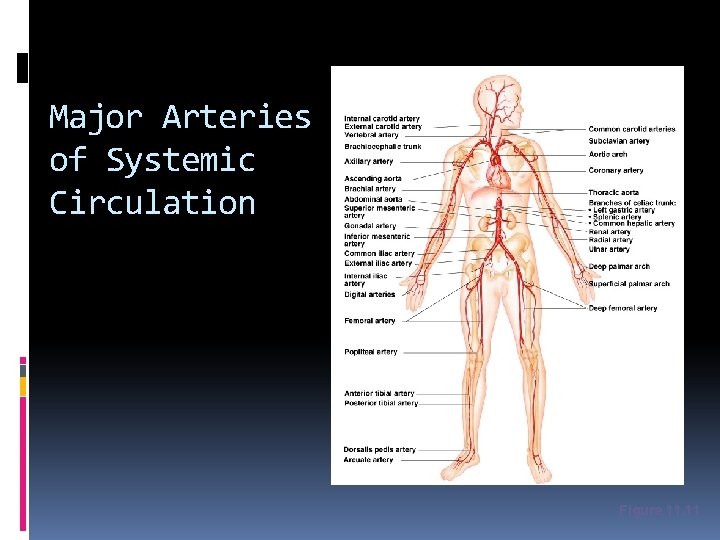
Major Arteries of Systemic Circulation Figure 11. 11
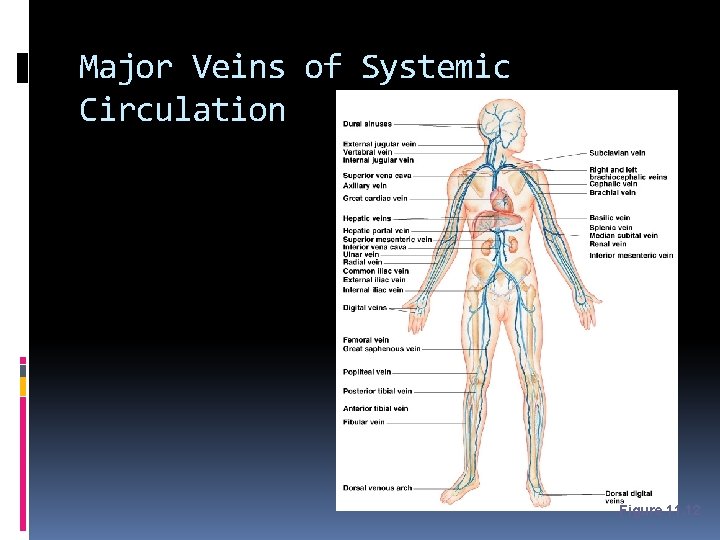
Major Veins of Systemic Circulation Figure 11. 12
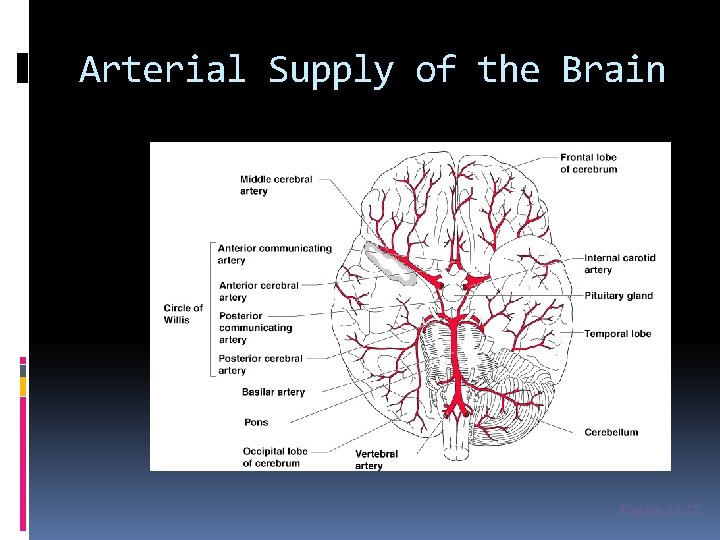
Arterial Supply of the Brain Figure 11. 13
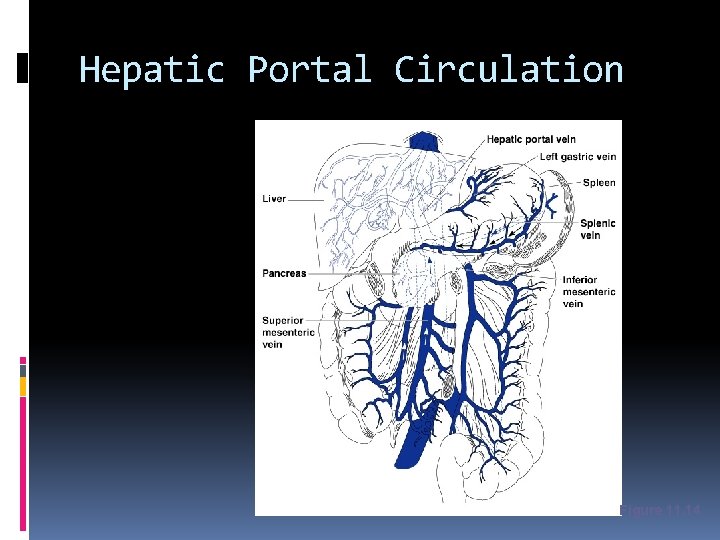
Hepatic Portal Circulation Figure 11. 14
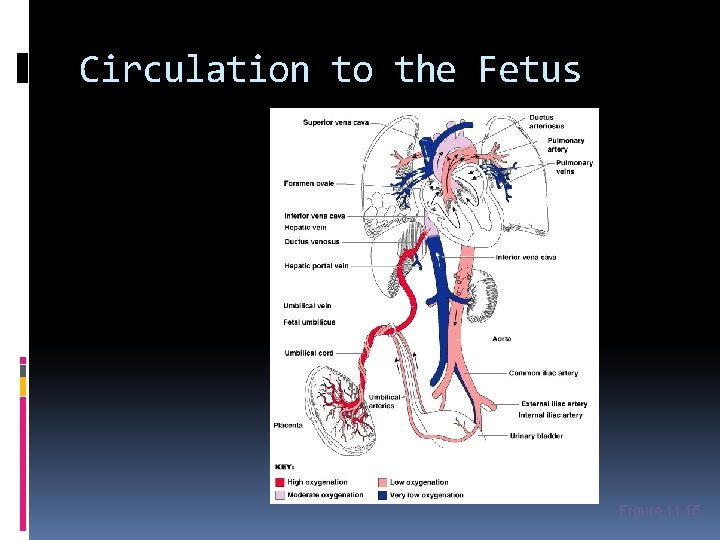
Circulation to the Fetus Figure 11. 15
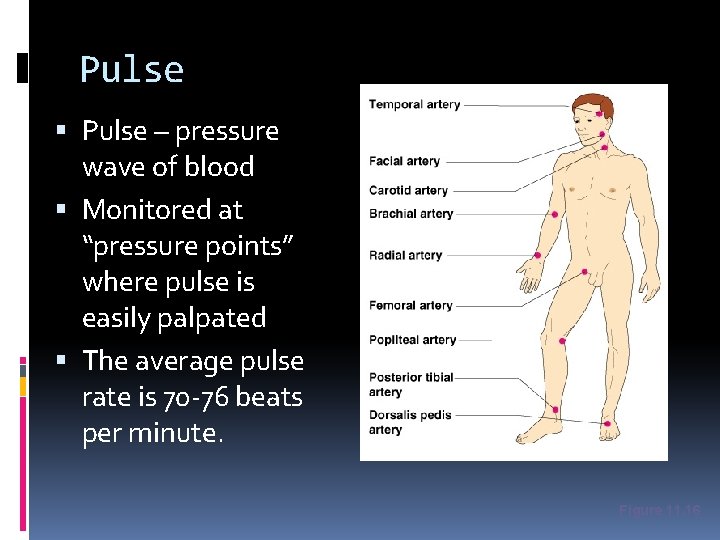
Pulse – pressure wave of blood Monitored at “pressure points” where pulse is easily palpated The average pulse rate is 70 -76 beats per minute. Figure 11. 16
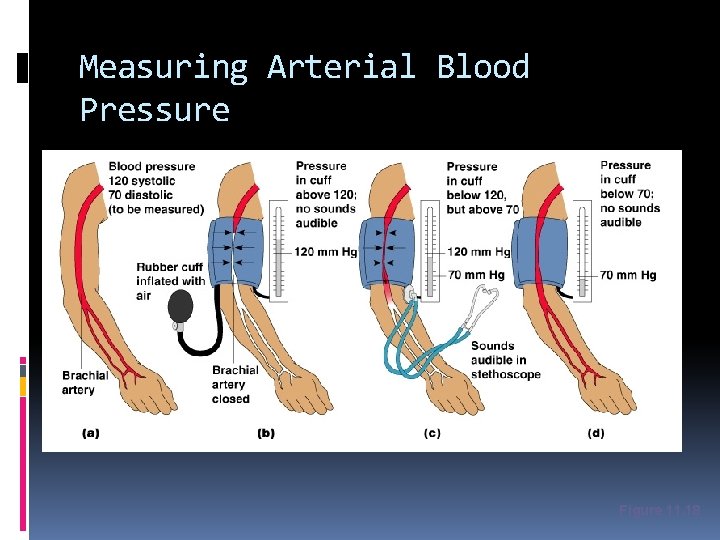
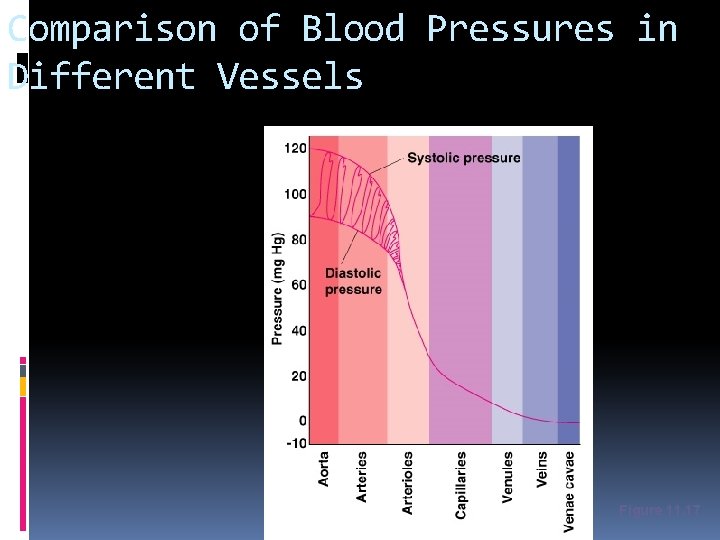
Blood Pressure Measurements by health professionals are made on the pressure in large arteries Systolic – pressure at the peak of ventricular contraction Diastolic – pressure when ventricles relax Pressure in blood vessels decreases as the distance away from the heart increases
Measuring Arterial Blood Pressure Figure 11. 18
Comparison of Blood Pressures in Different Vessels Figure 11. 17
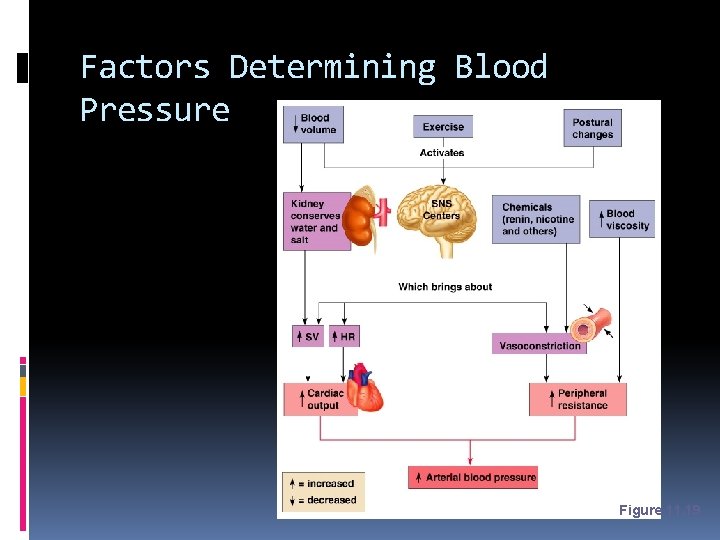
Blood Pressure: Effects of Factors Neural factors Autonomic nervous system adjustments (sympathetic division) Renal factors Regulation by altering blood volume Renin – hormonal control
Blood Pressure: Effects of Factors Temperature Heat has a vasodilation effect Cold has a vasoconstricting effect Chemicals (prescription drugs) Various substances can cause increases or decreases Diet
Factors Determining Blood Pressure Figure 11. 19
Variations in Blood Pressure Human normal range is variable Normal 140– 110 mm Hg systolic 80– 75 mm Hg diastolic Hypotension Low systolic (below 110 mm HG) Often associated with illness Hypertension High systolic (above 140 mm HG) Can be dangerous if it is chronic
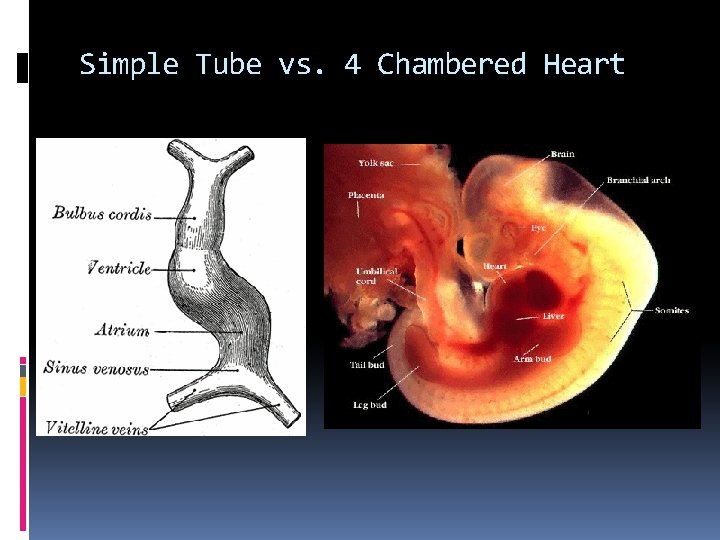
Developmental Aspects of the Cardiovascular System A simple “tube heart” develops in the embryo and pumps by the fourth week The heart becomes a four-chambered organ by the end of seven weeks Few structural changes occur after the seventh week
Simple Tube vs. 4 Chambered Heart