
The Cardiovascular System The Heart Cardiac Output Cardiac
- Slides: 60
The Cardiovascular System
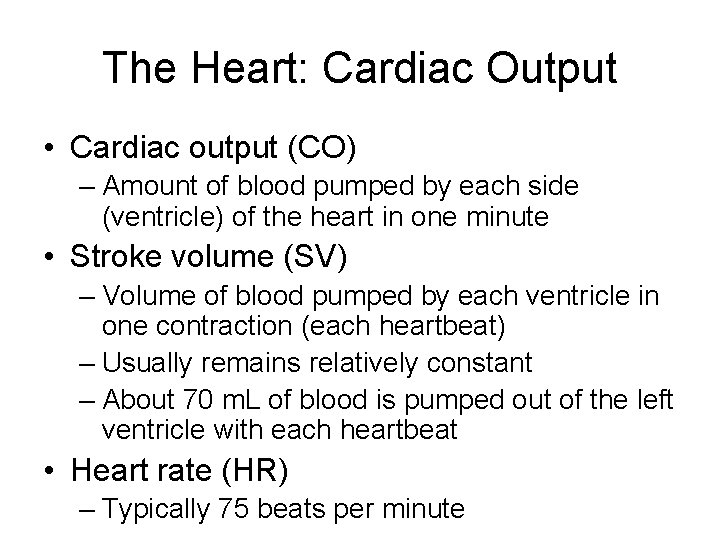
The Heart: Cardiac Output • Cardiac output (CO) – Amount of blood pumped by each side (ventricle) of the heart in one minute • Stroke volume (SV) – Volume of blood pumped by each ventricle in one contraction (each heartbeat) – Usually remains relatively constant – About 70 m. L of blood is pumped out of the left ventricle with each heartbeat • Heart rate (HR) – Typically 75 beats per minute
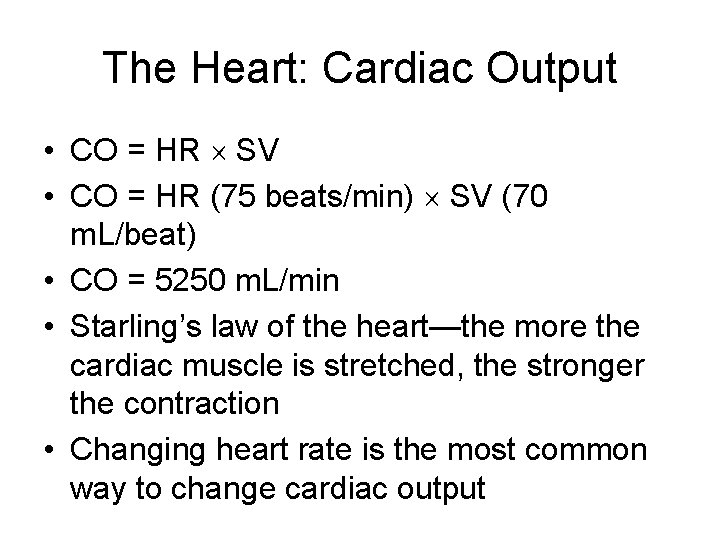
The Heart: Cardiac Output • CO = HR SV • CO = HR (75 beats/min) SV (70 m. L/beat) • CO = 5250 m. L/min • Starling’s law of the heart—the more the cardiac muscle is stretched, the stronger the contraction • Changing heart rate is the most common way to change cardiac output
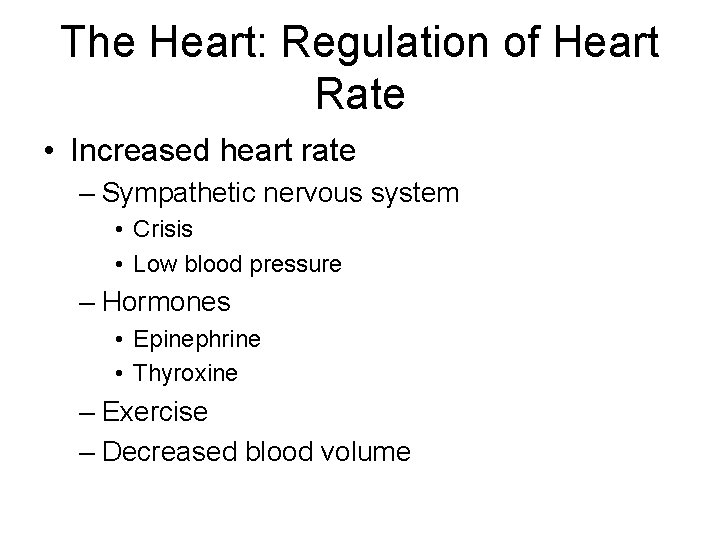
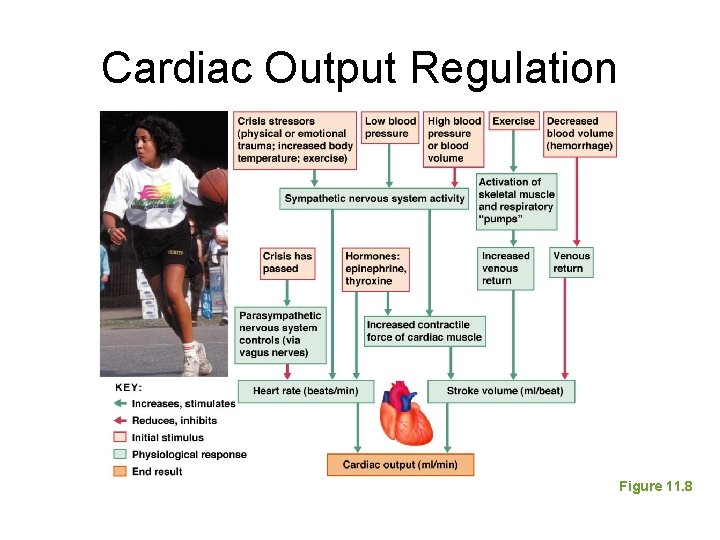
The Heart: Regulation of Heart Rate • Increased heart rate – Sympathetic nervous system • Crisis • Low blood pressure – Hormones • Epinephrine • Thyroxine – Exercise – Decreased blood volume
The Heart: Regulation of Heart Rate • Decreased heart rate – Parasympathetic nervous system – High blood pressure or blood volume – Decreased venous return
Cardiac Output Regulation Figure 11. 8
Blood Vessels: The Vascular System • Transport blood to the tissues and back – Carry blood away from the heart • Arteries • Arterioles – Exchanges between tissues and blood • Capillary beds – Return blood toward the heart • Venules • Veins
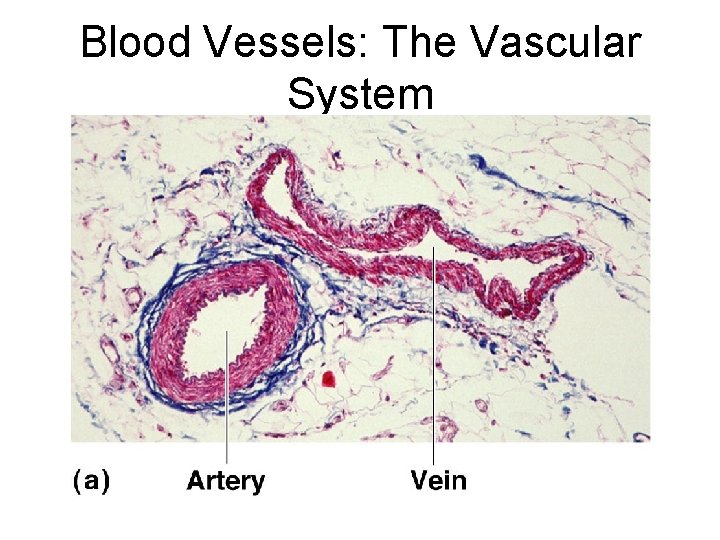
Blood Vessels: The Vascular System
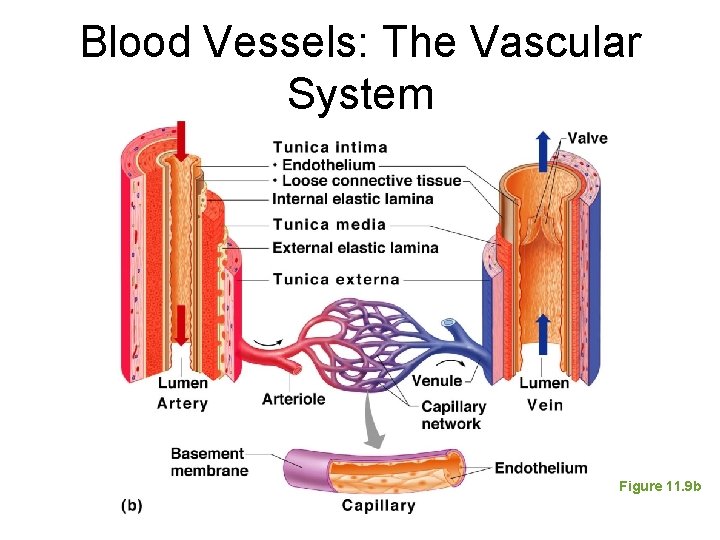
Blood Vessels: Microscopic Anatomy • Three layers (tunics) – Tunic intima • Endothelium – Tunic media • Smooth muscle • Controlled by sympathetic nervous system – Tunic externa • Mostly fibrous connective tissue
Blood Vessels: The Vascular System Figure 11. 9 b
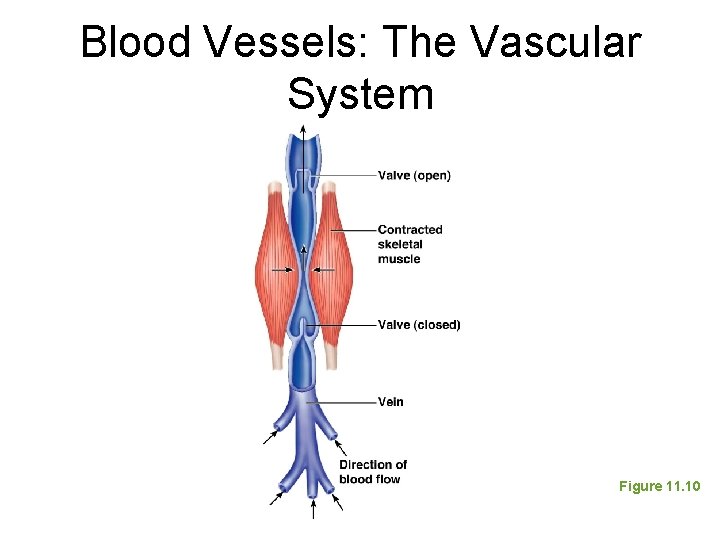
Differences Between Blood Vessels • Walls of arteries are thickest • Lumens of veins are larger • Larger veins have valves to prevent backflow • Skeletal muscle “milks” blood in veins toward the heart • Walls of capillaries are only one cell layer thick to allow for exchanges between blood and tissue
Blood Vessels: The Vascular System Figure 11. 10
Movement of Blood Through Vessels • Most arterial blood is pumped by the heart • Veins use the milking action of muscles to help move blood
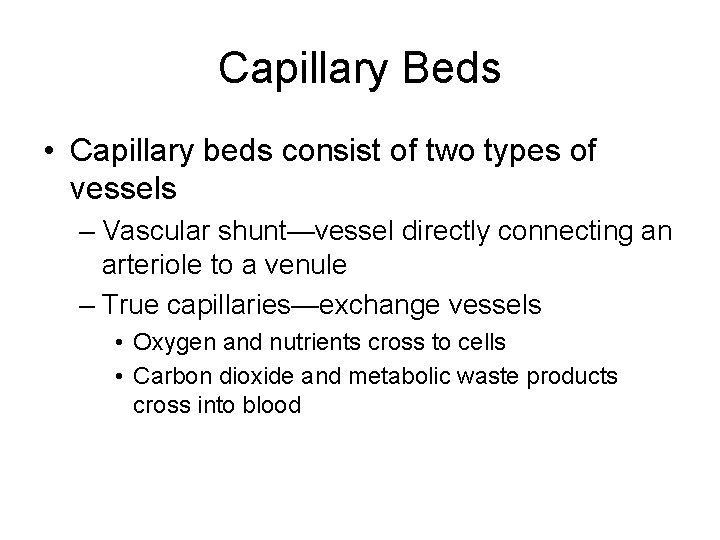
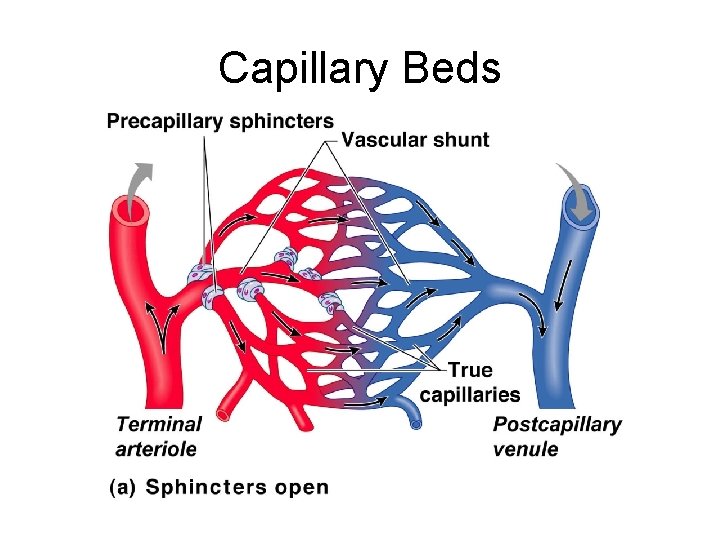
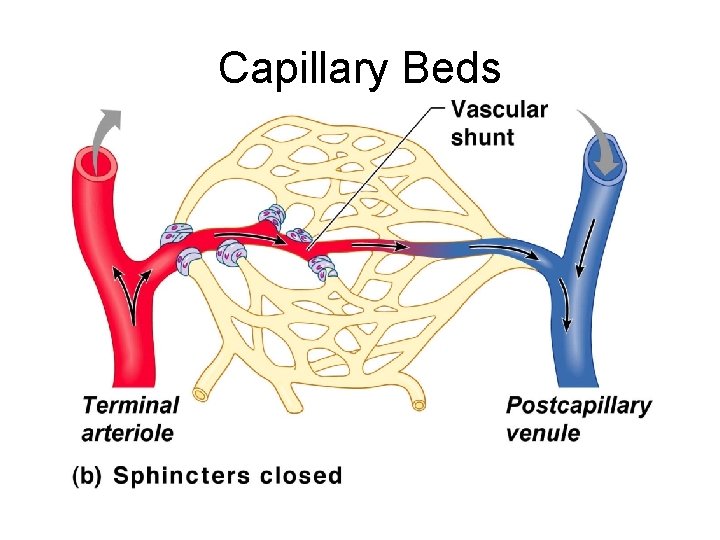
Capillary Beds • Capillary beds consist of two types of vessels – Vascular shunt—vessel directly connecting an arteriole to a venule – True capillaries—exchange vessels • Oxygen and nutrients cross to cells • Carbon dioxide and metabolic waste products cross into blood
Capillary Beds
Capillary Beds
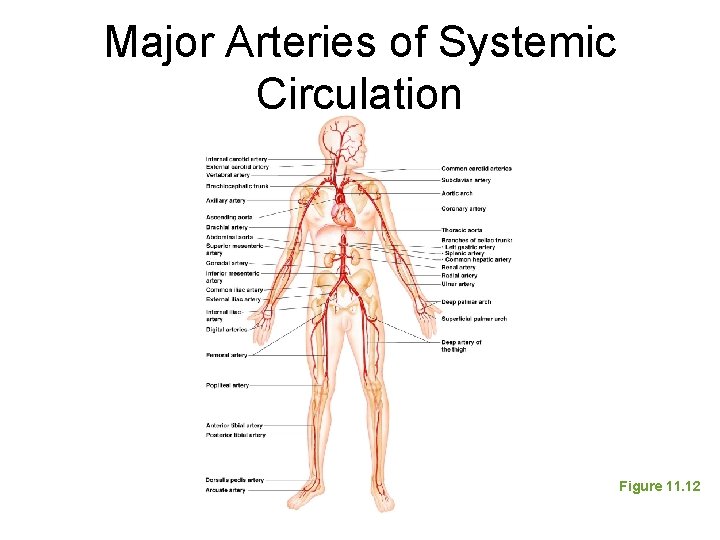
Major Arteries of System Circulation • Aorta – Largest artery in the body – Leaves from the left ventricle of the heart – Regions • Ascending aorta—leaves the left ventricle • Aortic arch—arches to the left • Thoracic aorta—travels downward through the thorax • Abdominal aorta—passes through the diaphragm into the abdominopelvic cavity
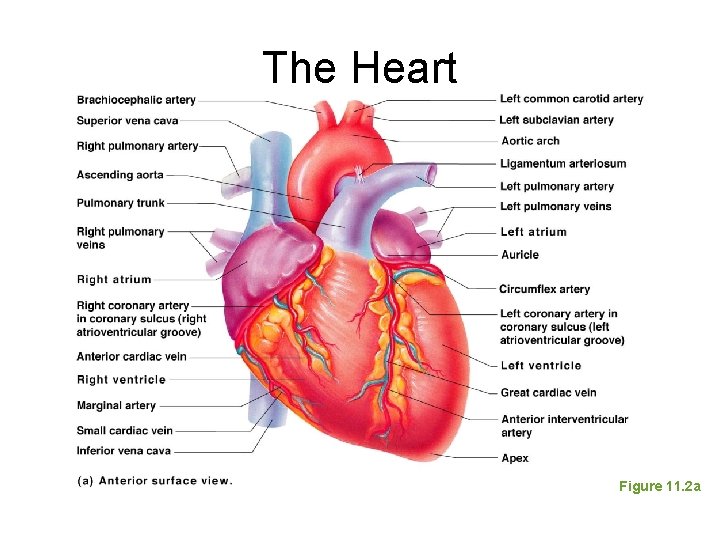
Major Arteries of System Circulation • Arterial branches of the ascending aorta – Right and left coronary arteries serve the heart
The Heart Figure 11. 2 a
Major Arteries of Systemic Circulation • Arterial branches of the aortia arch (BCS) – Brachiocephalic trunk splits into the • Right common carotid artery • Right subclavian artery – Left common carotid artery splits into the • Left internal and external carotid arteries – Left subclavian artery branches into the • Vertebral artery • In the axilla, the subclavian artery becomes the axillary artery brachial artery radial and ulnar arteries
Major Arteries of Systemic Circulation • Arterial branches of the thoracic aorta – Intercostal arteries supply the muscles of the thorax wall – Other branches of the thoracic aorta supply the • Lungs (bronchial arteries) • Esophagus (esophageal arteries) • Diaphragm (phrenic arteries)
Major Arteries of Systemic Circulation • Arterial branches of the abdominal aorta – Celiac trunk is the first branch of the abdominal aorta. Three branches are • Left gastric artery (stomach) • Splenic artery (spleen) • Common hepatic artery (liver) – Superior mesenteric artery supplies most of the small intestine and first half of the large intestine
Major Arteries of Systemic Circulation • Arterial branches of the abdominal aorta – Left and right renal arteries (kidney) – Left and right gonadal arteries • Ovarian arteries in females serve the ovaries • Testicular arteries in males serve the testes – Lumbar arteries serve muscles of the abdomen and trunk
Major Arteries of Systemic Circulation • Arterial branches of the abdominal aorta – Inferior mesenteric artery serves the second half of the large intestine – Left and right common iliac arteries are the final branches of the aorta • Internal iliac arteries serve the pelvic organs • External iliac arteries enter the thigh femoral artery popliteal artery anterior and posterior tibial arteries
Major Arteries of Systemic Circulation Figure 11. 12
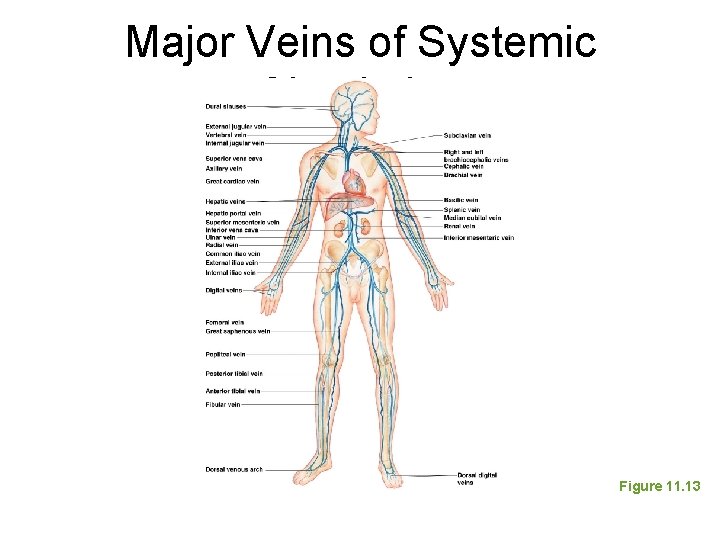
Major Veins of Systemic Circulation • Superior and inferior vena cava enter the right atrium of the heart – Superior vena cava drains the head and arms – Inferior vena cava drains the lower body
Major Veins of Systemic Circulation • Veins draining into the superior vena cava – Radial and ulnar veins brachial vein axillary vein – These veins drain the arms – Cephalic vein drains the lateral aspect of the arm and empties into the axillary vein – Basilic vein drains the medial aspect of the arm and empties into the brachial vein – Basilic and cephalic veins are jointed at the median cubital vein (elbow area)
Major Veins of Systemic Circulation • Veins draining into the superior vena cava – Subclavian vein receives • Venous blood from the arm via the axillary vein • Venous blood from skin and muscles via external jugular vein – Vertebral vein drains the posterior part of the head – Internal jugular vein drains the dural sinuses of the brain
Major Veins of Systemic Circulation • Veins draining into the superior vena cava – Left and right brachiocephalic veins receive venous blood from the • Subclavian veins • Vertebral veins • Internal jugular veins – Brachiocephalic veins join to form the superior vena cava right atrium of heart – Azygous vein drains the thorax
Major Veins of Systemic Circulation • Veins draining into the inferior vena cava – Anterior and posterior tibial veins and fibial veins drain the legs – Posterior tibial vein popliteal vein femoral vein external iliac vein – Great saphenous veins (longest veins of the body) receive superficial drainage of the legs – Each common iliac vein (left and right) is formed by the union of the internal and external iliac vein on its own side
Major Veins of Systemic Circulation • Veins draining into the inferior vena cava – Right gonadal vein drains the right ovary in females and right testicle in males – Left gonadal vein empties into the left renal vein – Left and right renal veins drain the kidneys – Hepatic portal vein drains the digestive organs and travels through the liver before it enters systemic circulation
Major Veins of Systemic Circulation • Veins draining into the inferior vena cava – Left and right hepatic veins drain the liver
Major Veins of Systemic Circulation Figure 11. 13
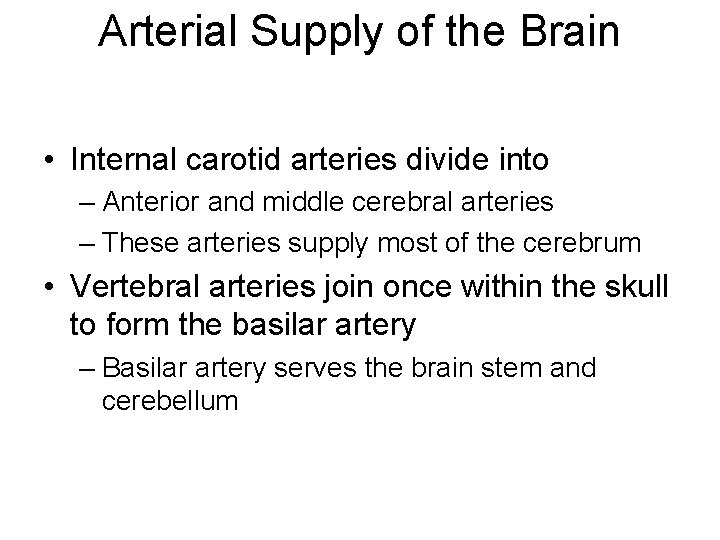
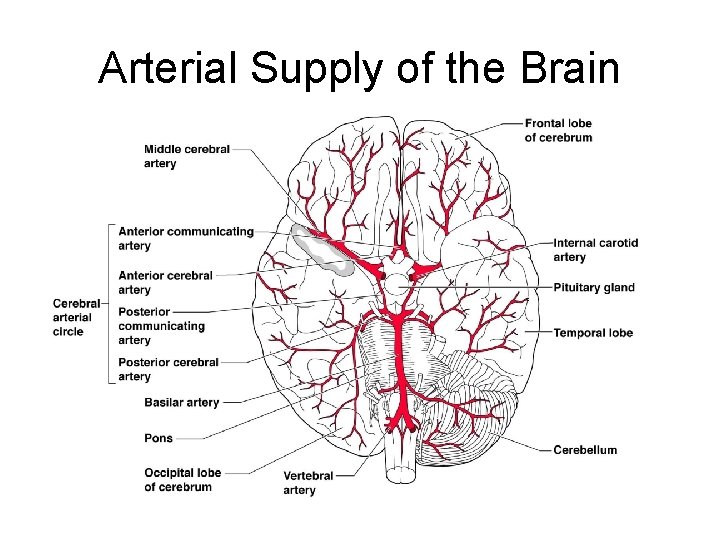
Arterial Supply of the Brain • Internal carotid arteries divide into – Anterior and middle cerebral arteries – These arteries supply most of the cerebrum • Vertebral arteries join once within the skull to form the basilar artery – Basilar artery serves the brain stem and cerebellum
Arterial Supply of the Brain • Posterior cerebral arteries form from the division of the basilar artery – These arteries supply the posterior cerebrum
Circle of Willis • Anterior and posterior blood supplies are united by small communicating arterial branches • Result—complete circle of connecting blood vessels called cerebral arterial circle or circle of Willis
Arterial Supply of the Brain
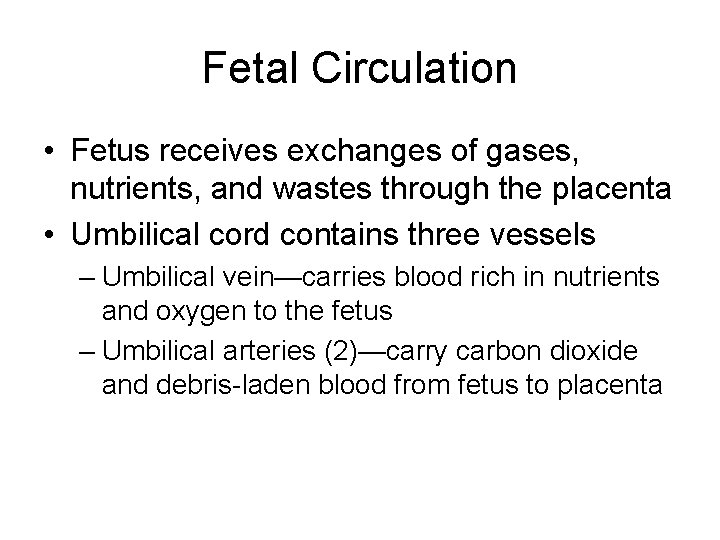
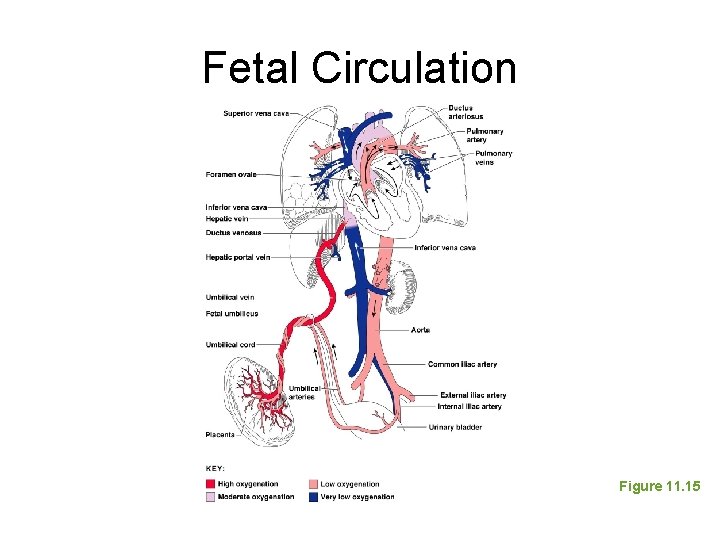
Fetal Circulation • Fetus receives exchanges of gases, nutrients, and wastes through the placenta • Umbilical cord contains three vessels – Umbilical vein—carries blood rich in nutrients and oxygen to the fetus – Umbilical arteries (2)—carry carbon dioxide and debris-laden blood from fetus to placenta
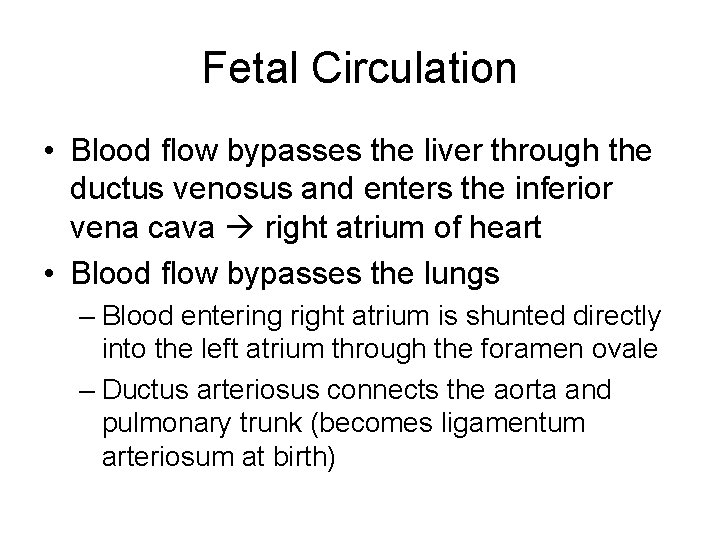
Fetal Circulation • Blood flow bypasses the liver through the ductus venosus and enters the inferior vena cava right atrium of heart • Blood flow bypasses the lungs – Blood entering right atrium is shunted directly into the left atrium through the foramen ovale – Ductus arteriosus connects the aorta and pulmonary trunk (becomes ligamentum arteriosum at birth)
Fetal Circulation Figure 11. 15
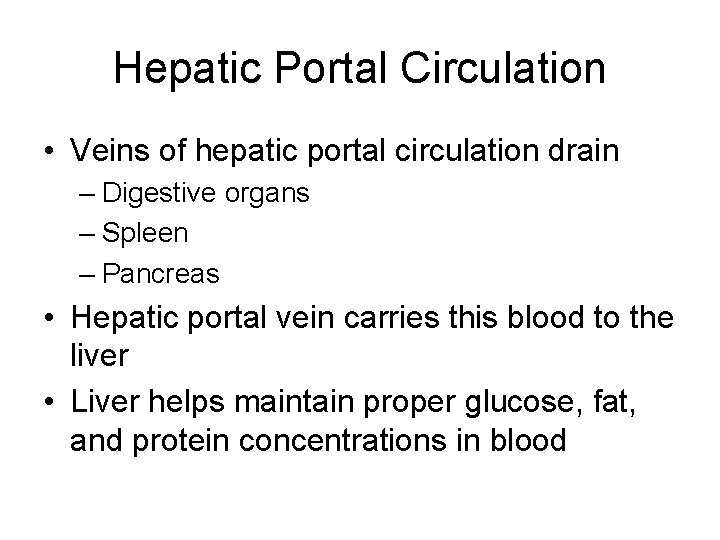
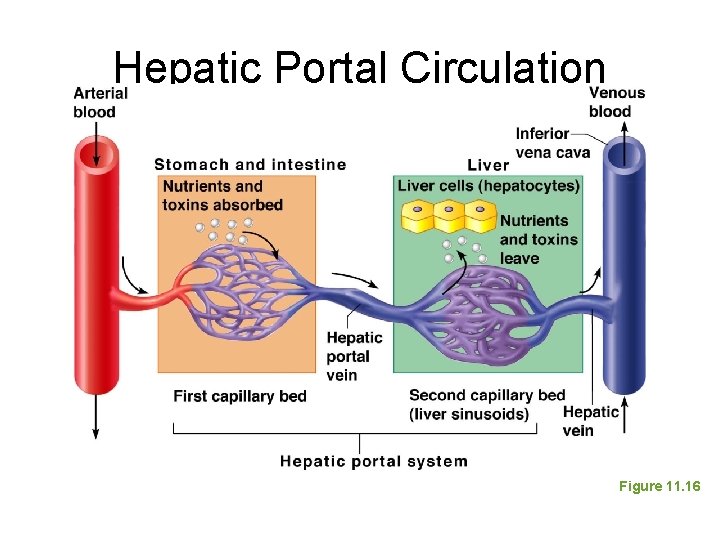
Hepatic Portal Circulation • Veins of hepatic portal circulation drain – Digestive organs – Spleen – Pancreas • Hepatic portal vein carries this blood to the liver • Liver helps maintain proper glucose, fat, and protein concentrations in blood
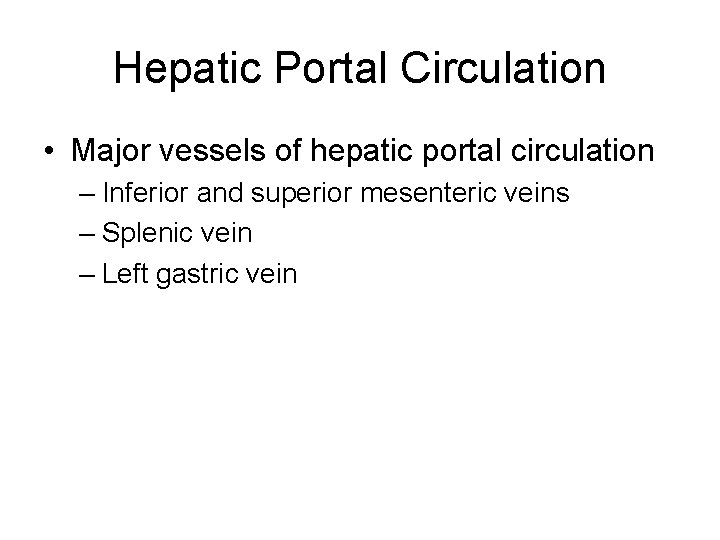
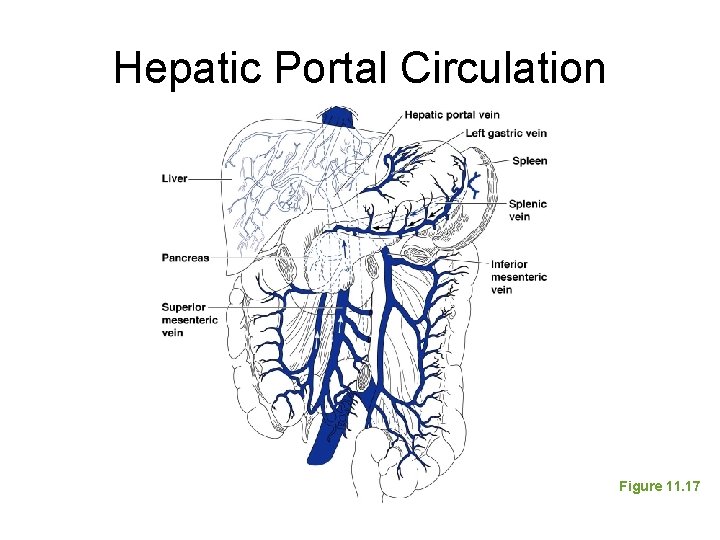
Hepatic Portal Circulation • Major vessels of hepatic portal circulation – Inferior and superior mesenteric veins – Splenic vein – Left gastric vein
Hepatic Portal Circulation Figure 11. 16
Hepatic Portal Circulation Figure 11. 17
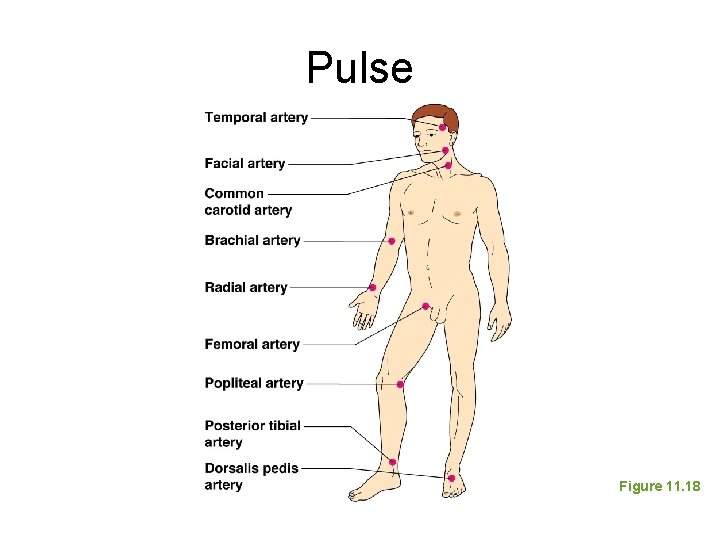
Pulse • Pulse – Pressure wave of blood • Monitored at “pressure points” in arteries where pulse is easily palpated • Pulse averages 70– 76 beats per minute at rest
Pulse Figure 11. 18
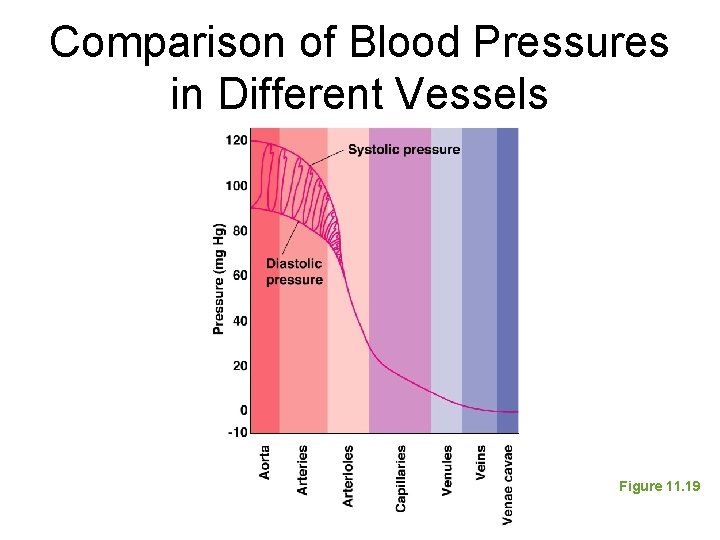
Blood Pressure • Measurements by health professionals are made on the pressure in large arteries – Systolic—pressure at the peak of ventricular contraction – Diastolic—pressure when ventricles relax – Write systolic pressure first and diastolic last (120/80 mm Hg) • Pressure in blood vessels decreases as distance from the heart increases
Comparison of Blood Pressures in Different Vessels Figure 11. 19
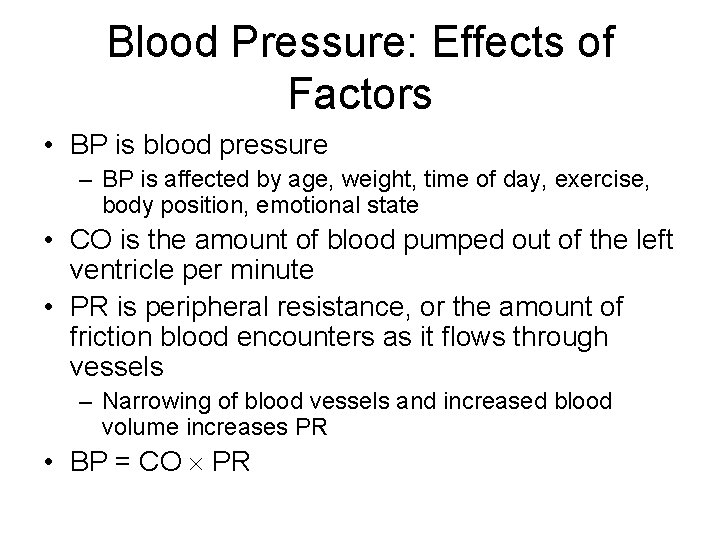
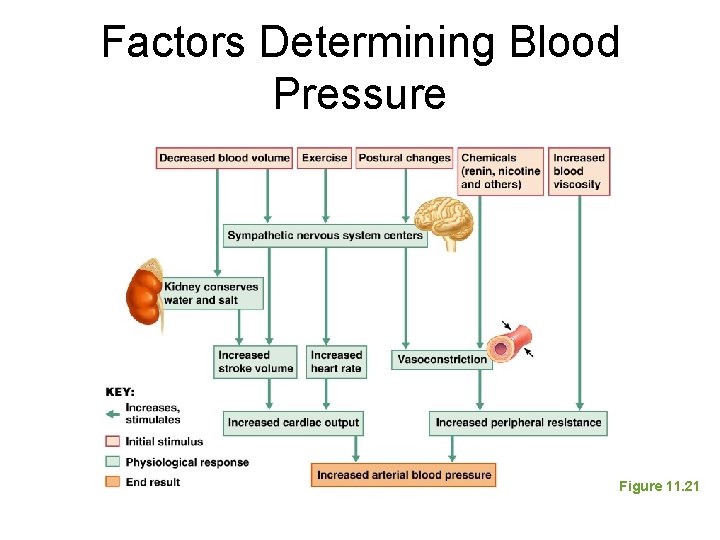
Blood Pressure: Effects of Factors • BP is blood pressure – BP is affected by age, weight, time of day, exercise, body position, emotional state • CO is the amount of blood pumped out of the left ventricle per minute • PR is peripheral resistance, or the amount of friction blood encounters as it flows through vessels – Narrowing of blood vessels and increased blood volume increases PR • BP = CO PR
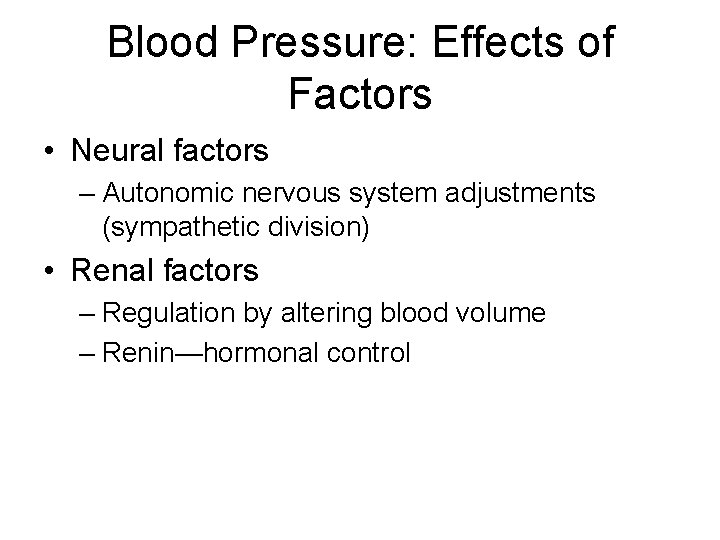
Blood Pressure: Effects of Factors • Neural factors – Autonomic nervous system adjustments (sympathetic division) • Renal factors – Regulation by altering blood volume – Renin—hormonal control
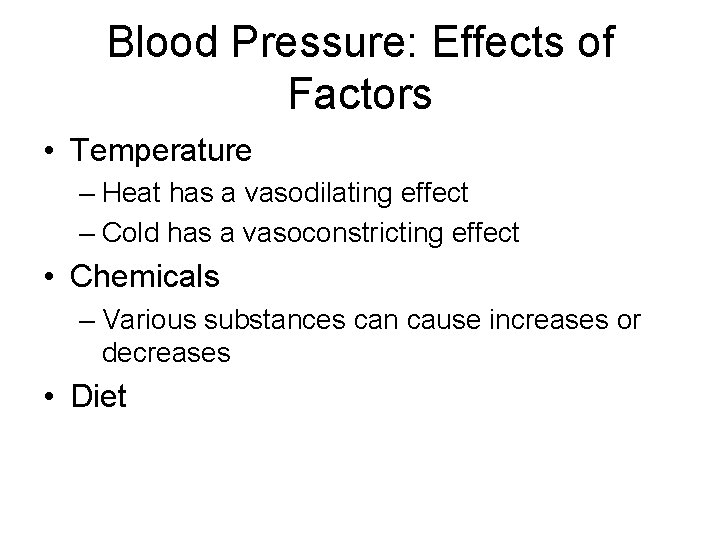
Blood Pressure: Effects of Factors • Temperature – Heat has a vasodilating effect – Cold has a vasoconstricting effect • Chemicals – Various substances can cause increases or decreases • Diet
Factors Determining Blood Pressure Figure 11. 21
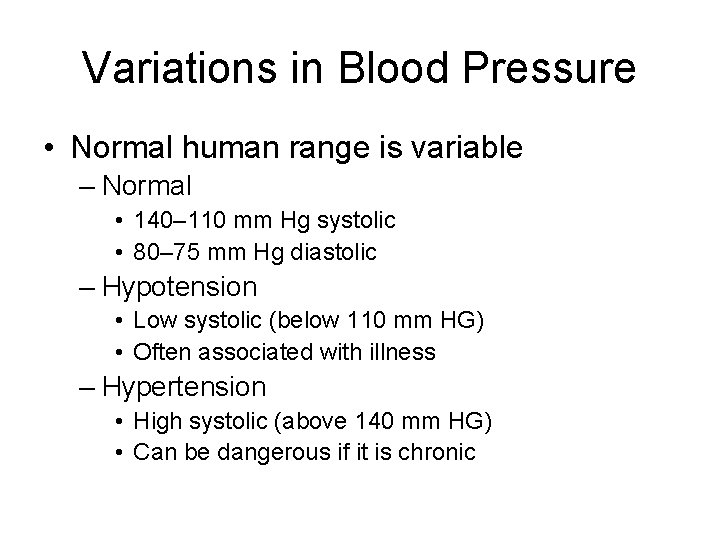
Variations in Blood Pressure • Normal human range is variable – Normal • 140– 110 mm Hg systolic • 80– 75 mm Hg diastolic – Hypotension • Low systolic (below 110 mm HG) • Often associated with illness – Hypertension • High systolic (above 140 mm HG) • Can be dangerous if it is chronic
Capillary Exchange • Substances exchanged due to concentration gradients – Oxygen and nutrients leave the blood – Carbon dioxide and other wastes leave the cells
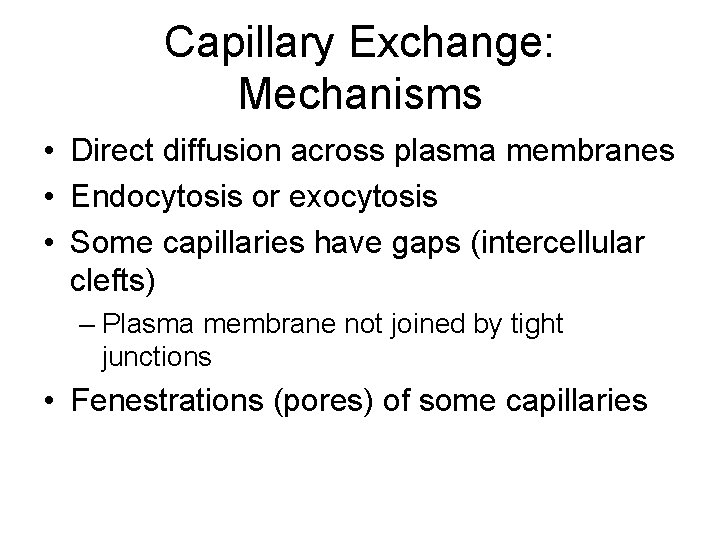
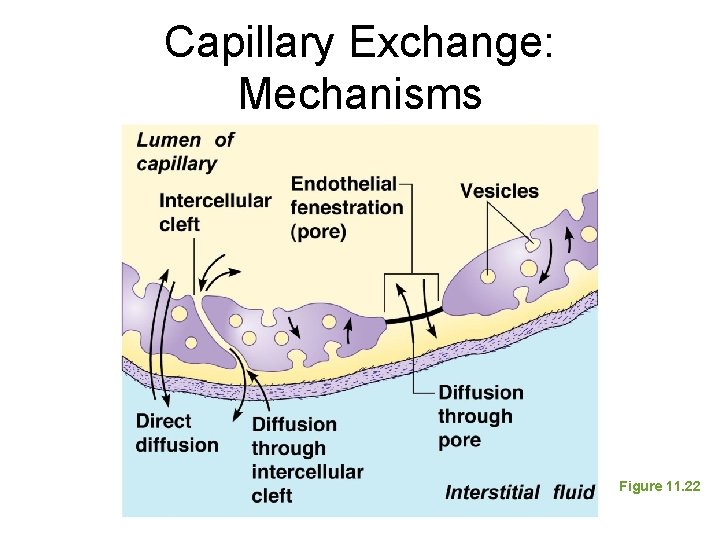
Capillary Exchange: Mechanisms • Direct diffusion across plasma membranes • Endocytosis or exocytosis • Some capillaries have gaps (intercellular clefts) – Plasma membrane not joined by tight junctions • Fenestrations (pores) of some capillaries
Capillary Exchange: Mechanisms Figure 11. 22
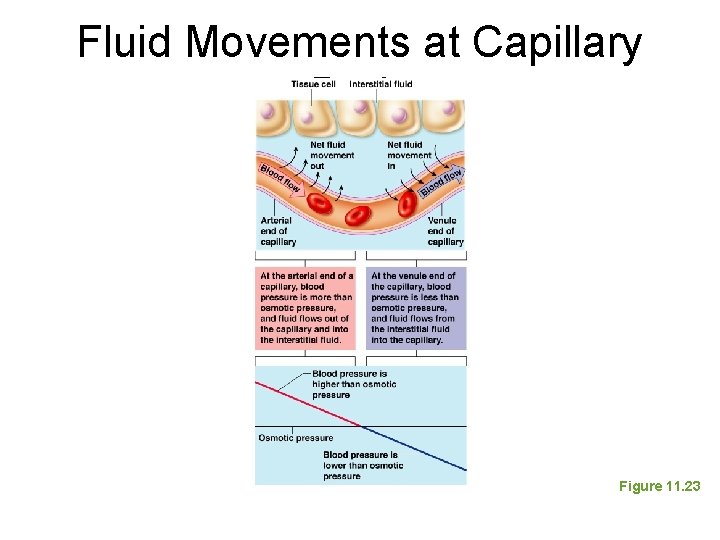
Fluid Movements at Capillary Beds • Blood pressure forces fluid and solutes out of capillaries • Osmotic pressure draws fluid into capillaries • Blood pressure is higher than osmotic pressure at the arterial end of the capillary bed • Blood pressure is lower than osmotic pressure at the venous end of the capillary bed
Fluid Movements at Capillary Beds Figure 11. 23
Developmental Aspects of the Cardiovascular System • A simple “tube heart” develops in the embryo and pumps by the fourth week • The heart becomes a four-chambered organ by the end of seven weeks • Few structural changes occur after the seventh week
Developmental Aspects of the Cardiovascular System • Aging problems associated with the cardiovascular system include – Venous valves weaken – Varicose veins – Progressive atherosclerosis – Loss of elasticity of vessels leads to hypertension – Coronary artery disease results from vessels filled with fatty, calcified deposits