
THE CARDIOVASCULAR SYSTEM n Anatomy n Acute Exercise

- Slides: 33
THE CARDIOVASCULAR SYSTEM n. Anatomy n. Acute Exercise n. Chronic Exercise
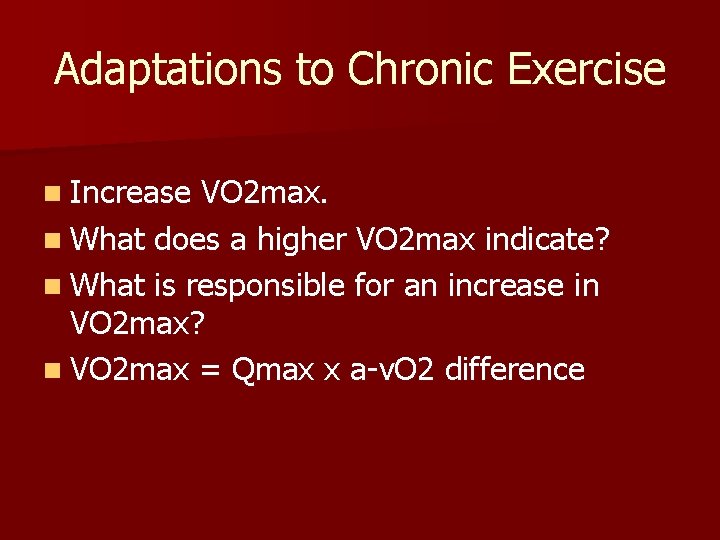
Adaptations to Chronic Exercise n Increase VO 2 max. n What does a higher VO 2 max indicate? n What is responsible for an increase in VO 2 max? n VO 2 max = Qmax x a-v. O 2 difference
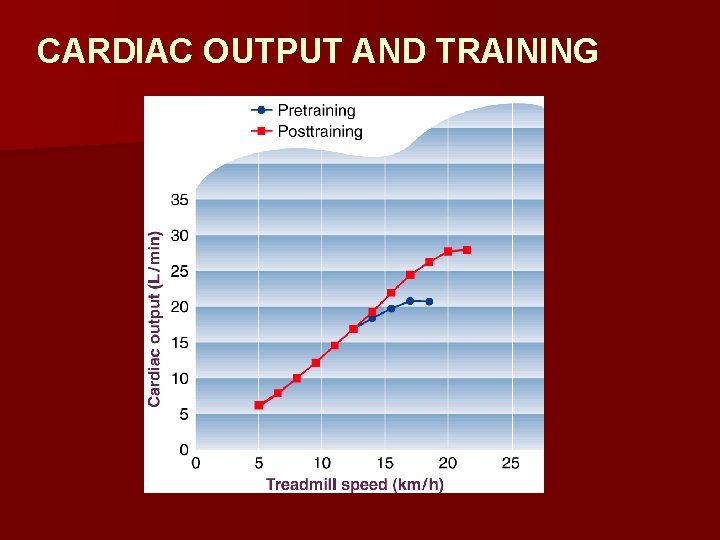
CARDIAC OUTPUT AND TRAINING
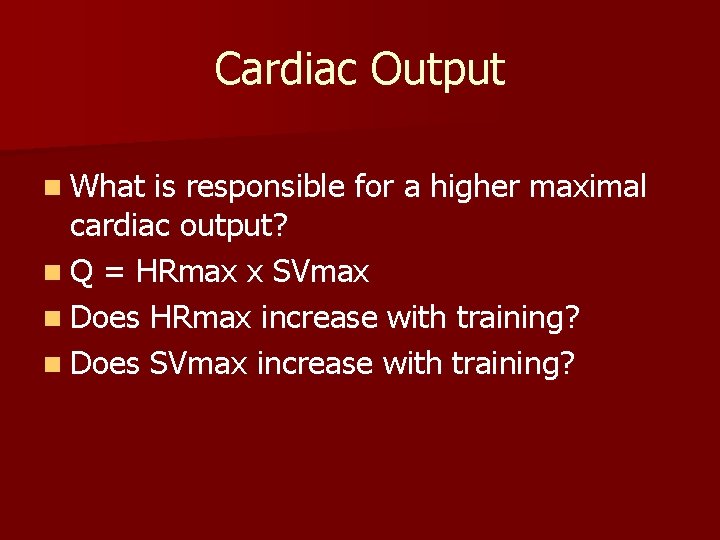
Cardiac Output n What is responsible for a higher maximal cardiac output? n Q = HRmax x SVmax n Does HRmax increase with training? n Does SVmax increase with training?
Stroke Volume n What is responsible for a higher SVmax?
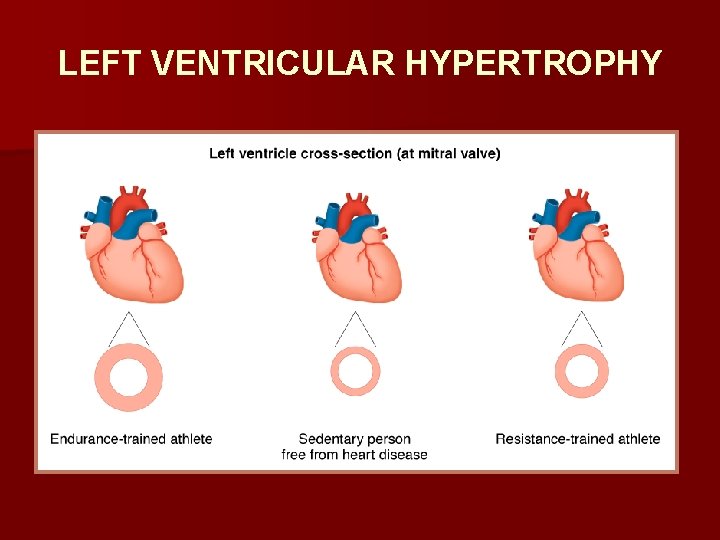
LEFT VENTRICULAR HYPERTROPHY
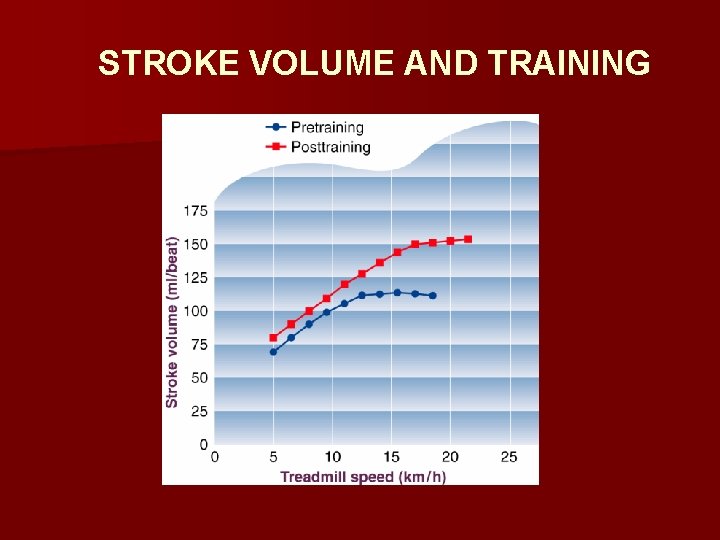
STROKE VOLUME AND TRAINING
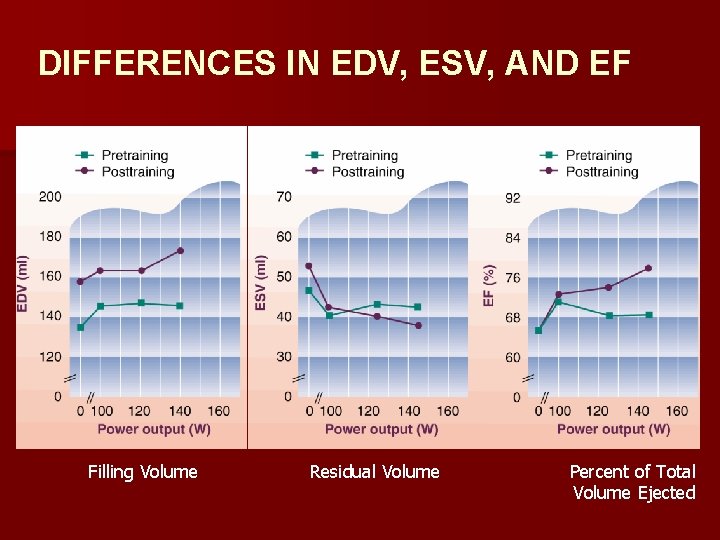
DIFFERENCES IN EDV, ESV, AND EF Filling Volume Residual Volume Percent of Total Volume Ejected
Stroke Volume n. A larger and stronger heart produces an increase in stroke volume at rest, submaximal exercise and maximal exercise n A higher stroke volume at rest and submaximal exercise will allow for a lower heart rate without changing cardiac output
Stroke Volume n. A higher maximal stroke volume will produce a higher cardiac output n A higher cardiac output will produce a higher VO 2 max n A higher VO 2 max indicates a greater ability for aerobic energy production
Stroke Volume n What type of aerobic training is most effective in strengthening the heart and thus increasing stroke volume?
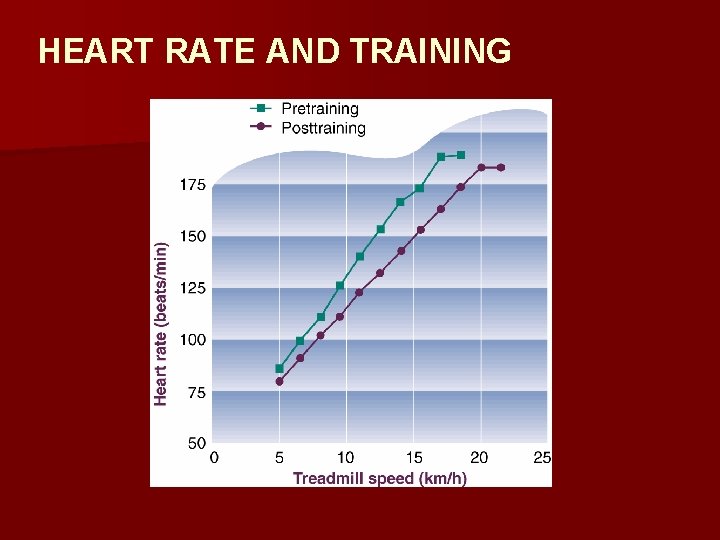
Heart Rate n What affect will a larger SV have on resting HR? n What affect will a larger SV have on submaximal exercise HR? n What affect will a larger SV have on maximal exercise HR?
HEART RATE AND TRAINING
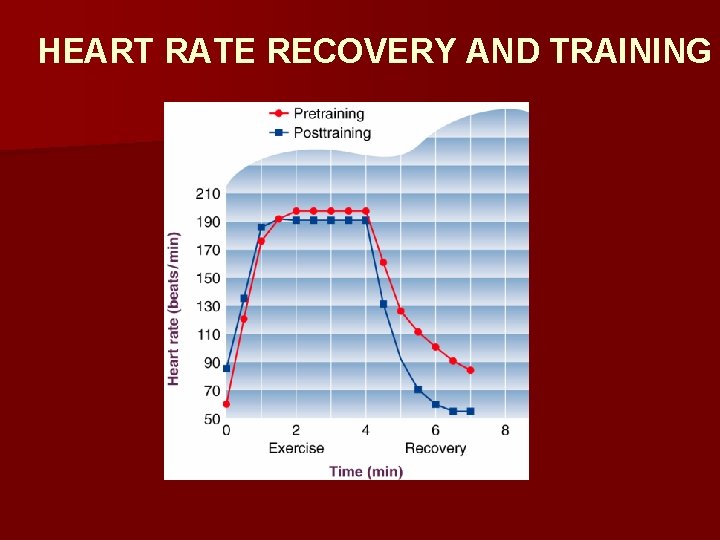
Heart Rate Recovery Period w The time after exercise that it takes your heart to return to its resting rate w With training, heart rate returns to resting level more quickly after exercise w Has been used as an index of cardiorespiratory fitness w Conditions such as altitude or heat can affect it w Should not be used to compare individuals to one another
HEART RATE RECOVERY AND TRAINING
Blood Flow n What other changes occur with training that allow for an increase in blood flow to the muscle? n Capillaries? n Blood?
Capillaries
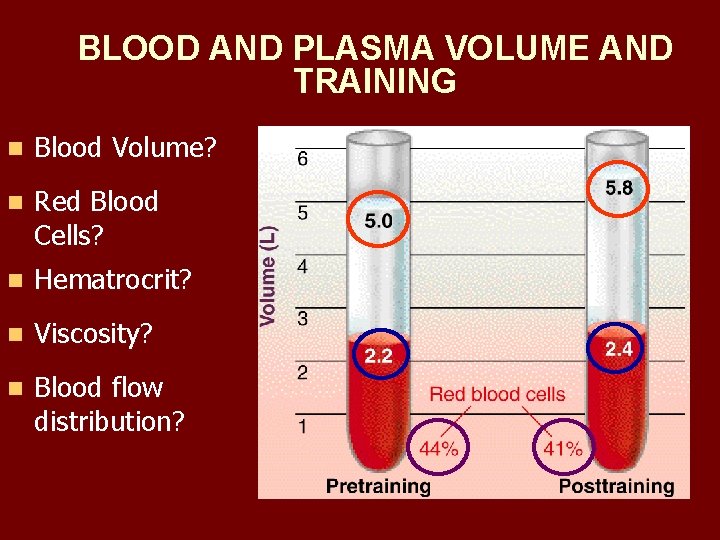
BLOOD AND PLASMA VOLUME AND TRAINING n Blood Volume? n Red Blood Cells? n Hematrocrit? n Viscosity? n Blood flow distribution?
Blood Volume and Training w Endurance training, especially intense training, increases blood volume. w Blood volume increases due to an increase in plasma volume (increases in ADH, aldosterone, and plasma proteins cause more fluid to be retained in the blood). w Red blood cell volume increases, but increase in plasma volume is higher; thus, hematocrit decreases. w Blood viscosity decreases, thus improving circulation and enhancing oxygen delivery. w Changes in plasma volume are highly correlated. with changes in SV and VO 2 max.
a-v O 2 difference n What else needs to happen beside an increase in blood flow and blood volume in order for VO 2 max to increase? n Capillaries n Myoglobin n Mitochondria
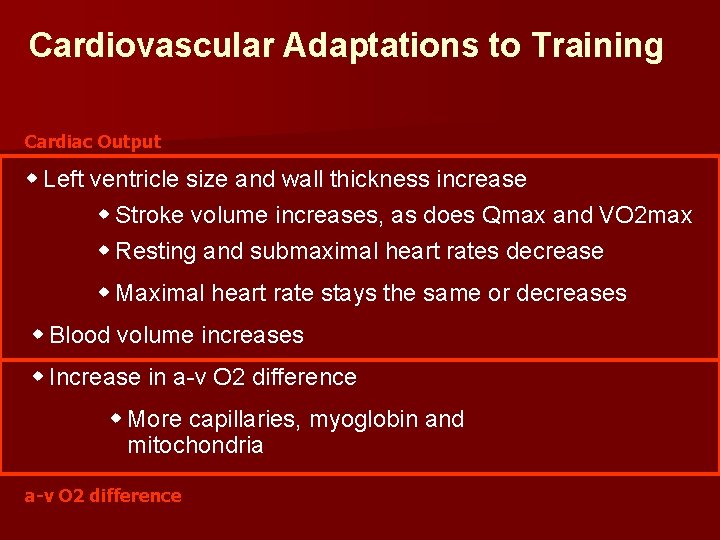
Cardiovascular Adaptations to Training Cardiac Output w Left ventricle size and wall thickness increase w Stroke volume increases, as does Qmax and VO 2 max w Resting and submaximal heart rates decrease w Maximal heart rate stays the same or decreases w Blood volume increases w Increase in a-v O 2 difference w More capillaries, myoglobin and mitochondria a-v O 2 difference
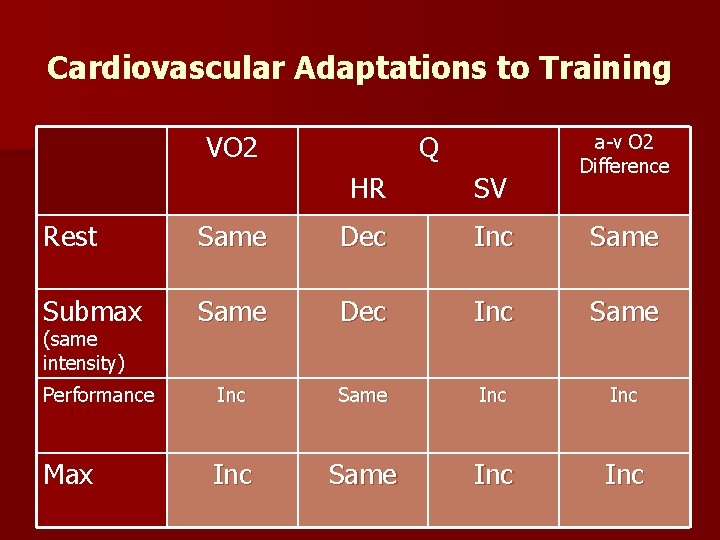
Cardiovascular Adaptations to Training VO 2 Q HR SV a-v O 2 Difference Rest Same Dec Inc Same Submax Same Dec Inc Same Performance Inc Same Inc Max Inc Same Inc (same intensity)
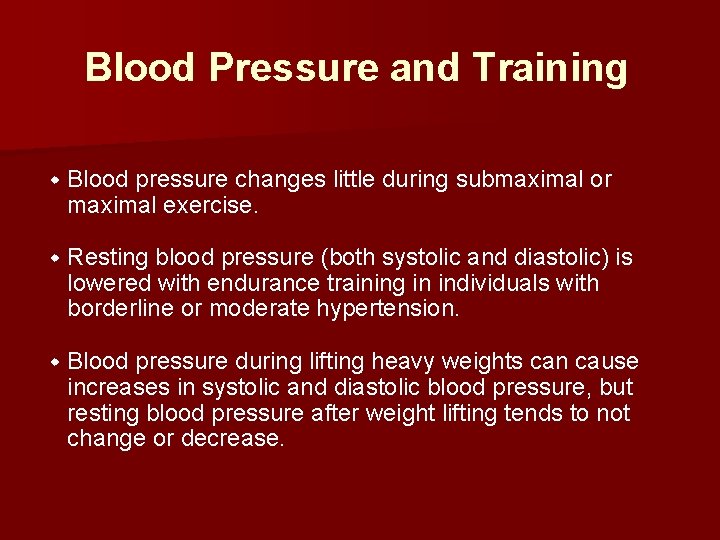
Blood Pressure and Training w Blood pressure changes little during submaximal or maximal exercise. w Resting blood pressure (both systolic and diastolic) is lowered with endurance training in individuals with borderline or moderate hypertension. w Blood pressure during lifting heavy weights can cause increases in systolic and diastolic blood pressure, but resting blood pressure after weight lifting tends to not change or decrease.
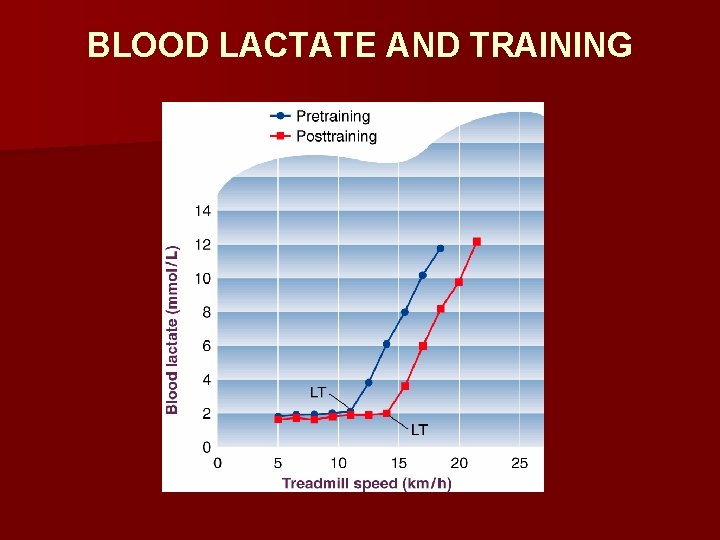
Lactate Threshold n What affect would an increase oxygen supply to the muscles during exercise have on the lactate threshold? n What affect would this have on aerobic performance?
BLOOD LACTATE AND TRAINING
At Rest n At rest the heart can supply all the needed oxygen with a cardiac output of 5 liters per minute. n If the resting stroke volume is higher due to aerobic training, how will the resting heart rate be different? n What about parasympathetic stimulation?
Submaximal Exercise n n n Before training, running at 6 mph required a cardiac output of 15 liters. Also, before training this required a heart rate of 140 bpm Since after weeks of training stroke volume increases, what will happen to the heart rate while running at 6 mph? Why? What would happen to the running speed if the trained person now ran at a heart rate of 140 bpm? If the lactate threshold used to occur at 6 mph, at what speed will it occur now? Why?
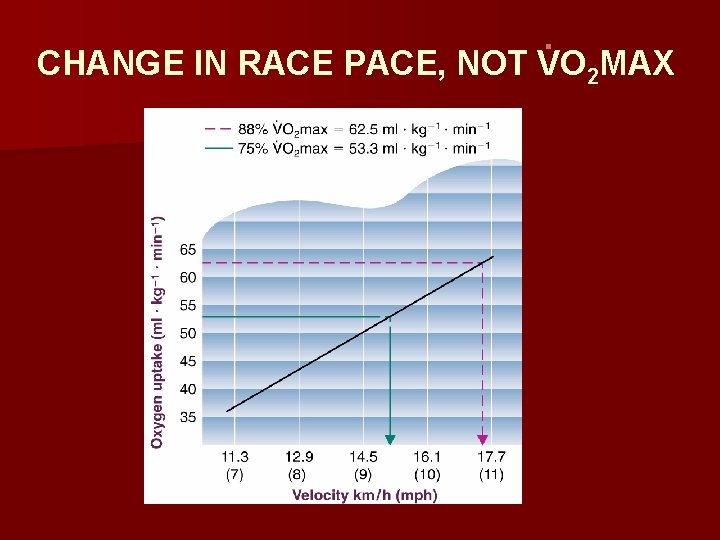
Maximal Exercise n Increase in VO 2 max n Increase SV and blood volume n Indicator of aerobic fitness level
. CHANGE IN RACE PACE, NOT VO 2 MAX
Aerobic Endurance and Performance w Major defense against fatigue which limits optimal performance. w Should be the primary emphasis of training for health and fitness. w All athletes can benefit from maximizing their endurance.
Respiratory Adaptations to Training w Static lung volumes remain unchanged; tidal volume, unchanged at rest and during submaximal exercise, increases with maximal exertion. w Respiratory rate stays steady at rest, decreases with submaximal exercise, and can increase dramatically with maximal exercise after training. w Pulmonary ventilation increases during maximal effort after training. (continued)
Respiratory Adaptations to Training Pulmonary diffusion increases at maximal work rates. w The a-v. O 2 diff increases with training due to more oxygen being extracted by tissues. w w The respiratory system is seldom a limiter of endurance performance. w All the major adaptations of the respiratory system to training are most apparent during maximal exercise.