
The Cardiovascular System Learning goals I can identify

- Slides: 68
The Cardiovascular System
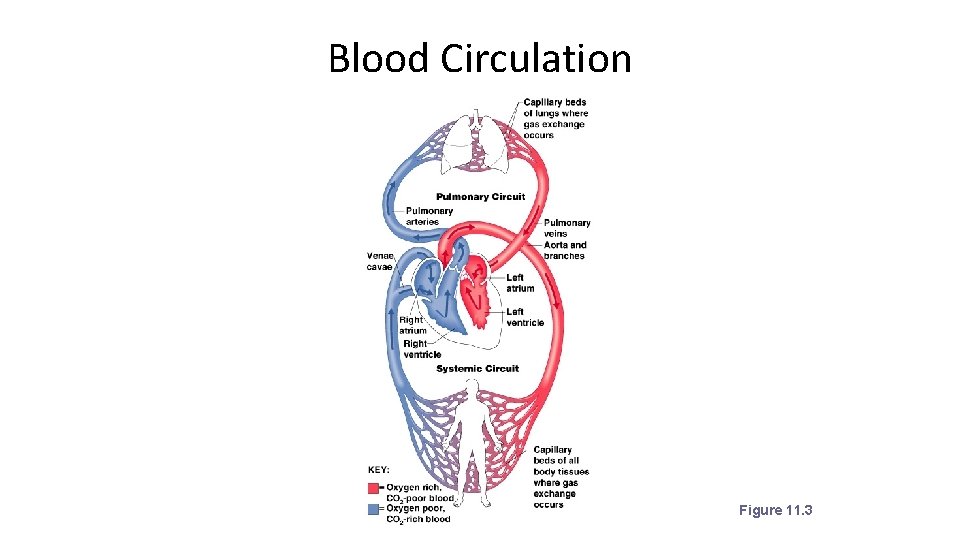
Learning goals • I can identify the 4 chambers of the heart. • I can compare and contrast the 4 chambers in anatomy and function. • I can identify the great vessels that enter and leave the heart. • I can trace the flow of blood through the heart and circulatory system. • I can compare the oxygenation state of blood at different points in the circulatory system.
The Cardiovascular System • A closed system of the heart and blood vessels – The heart pumps blood – Blood vessels allow blood to circulate to all parts of the body • The function of the cardiovascular system is to deliver oxygen and nutrients and to remove carbon dioxide and other waste products
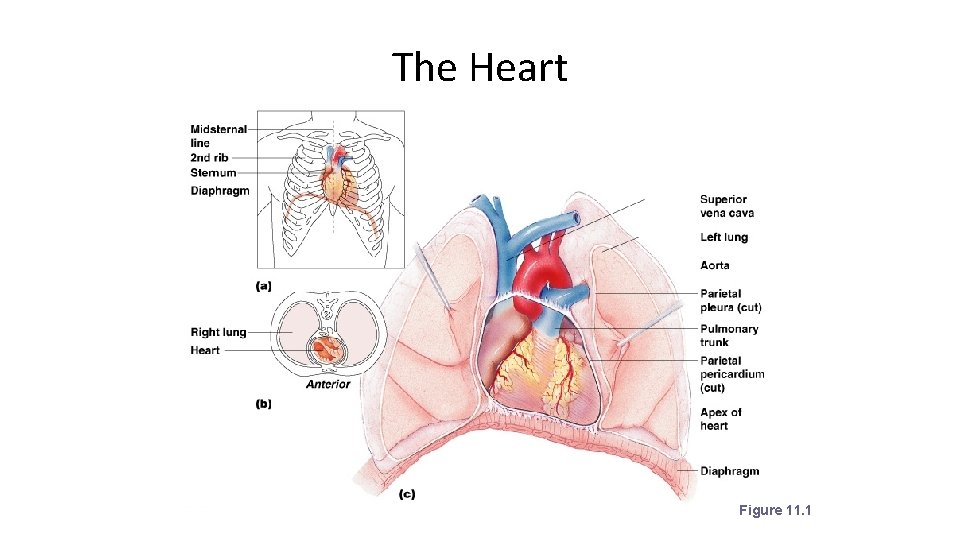
The Heart • Location – Thorax between the lungs – Pointed apex directed toward left hip • About the size of your fist
The Heart Figure 11. 1
The Heart: Coverings • Pericardium – a double serous membrane – Visceral pericardium • Next to heart – Parietal pericardium • Outside layer • Serous fluid fills the space between the layers of pericardium
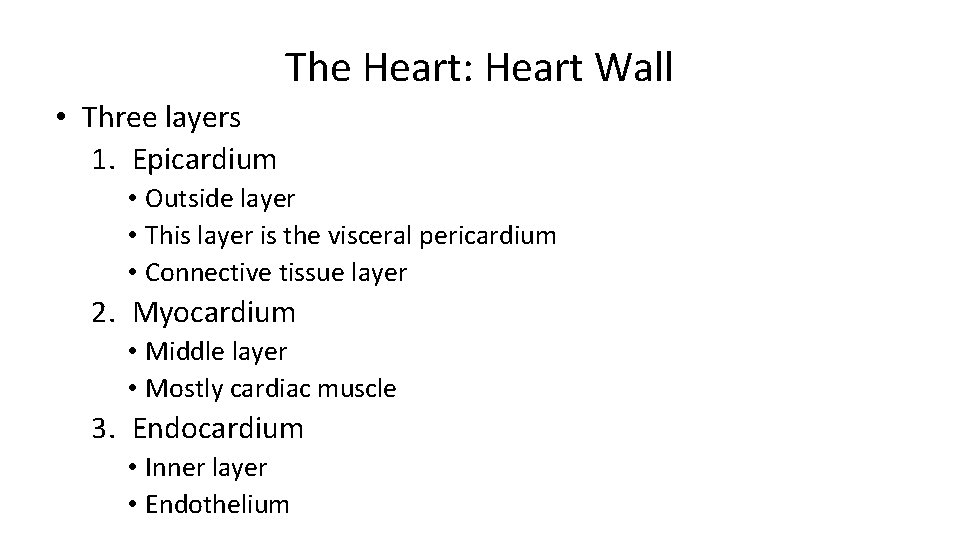
The Heart: Heart Wall • Three layers 1. Epicardium • Outside layer • This layer is the visceral pericardium • Connective tissue layer 2. Myocardium • Middle layer • Mostly cardiac muscle 3. Endocardium • Inner layer • Endothelium
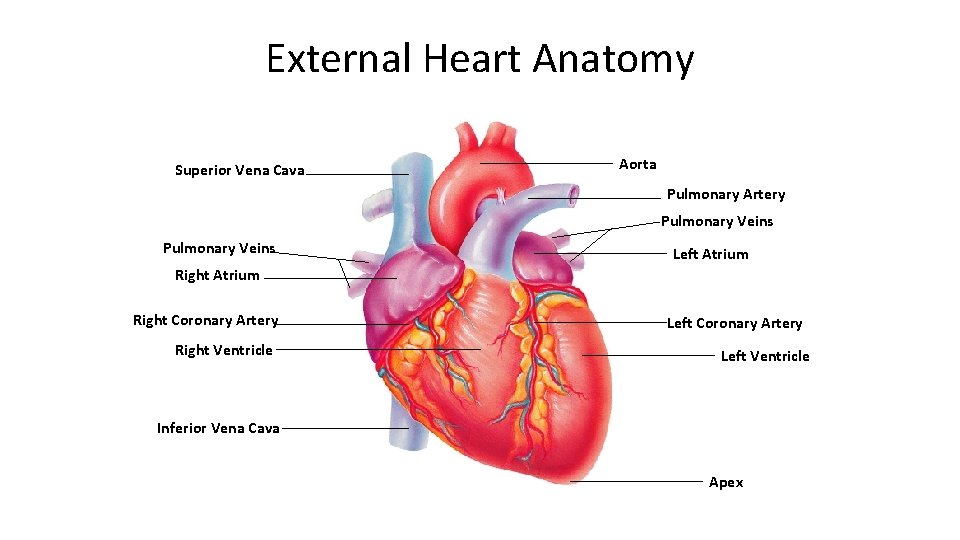
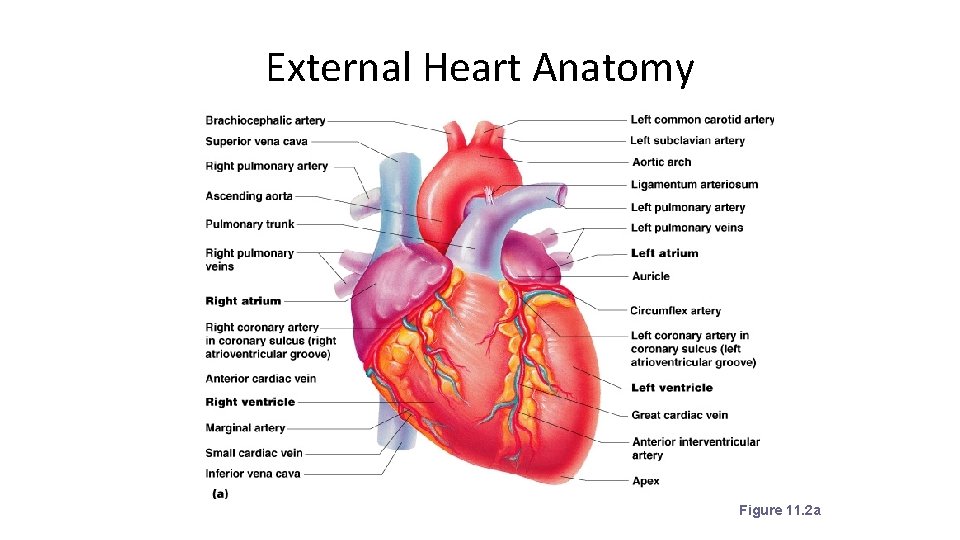
External Heart Anatomy Superior Vena Cava Aorta Pulmonary Artery Pulmonary Veins Left Atrium Right Coronary Artery Right Ventricle Left Coronary Artery Left Ventricle Inferior Vena Cava Apex
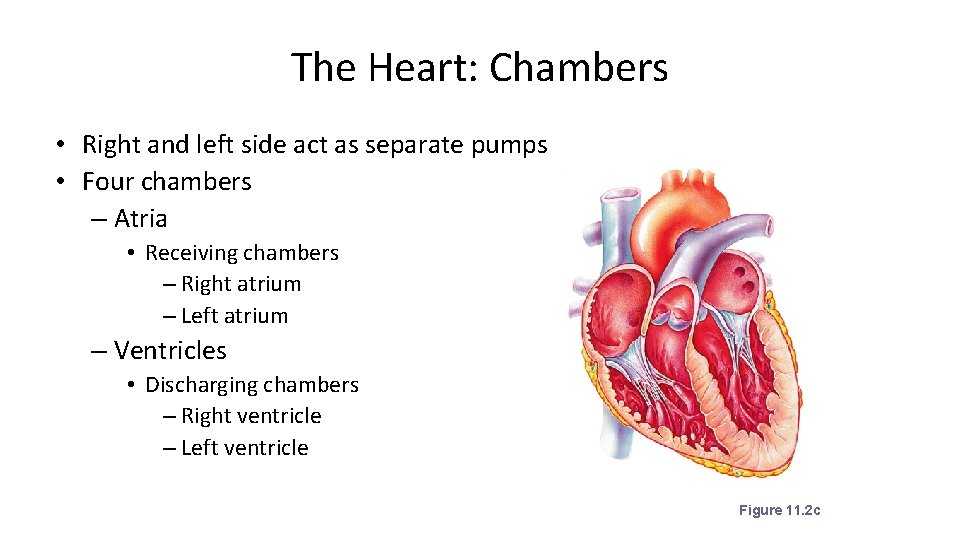
The Heart: Chambers • Right and left side act as separate pumps • Four chambers – Atria • Receiving chambers – Right atrium – Left atrium – Ventricles • Discharging chambers – Right ventricle – Left ventricle Figure 11. 2 c
Blood Circulation Figure 11. 3
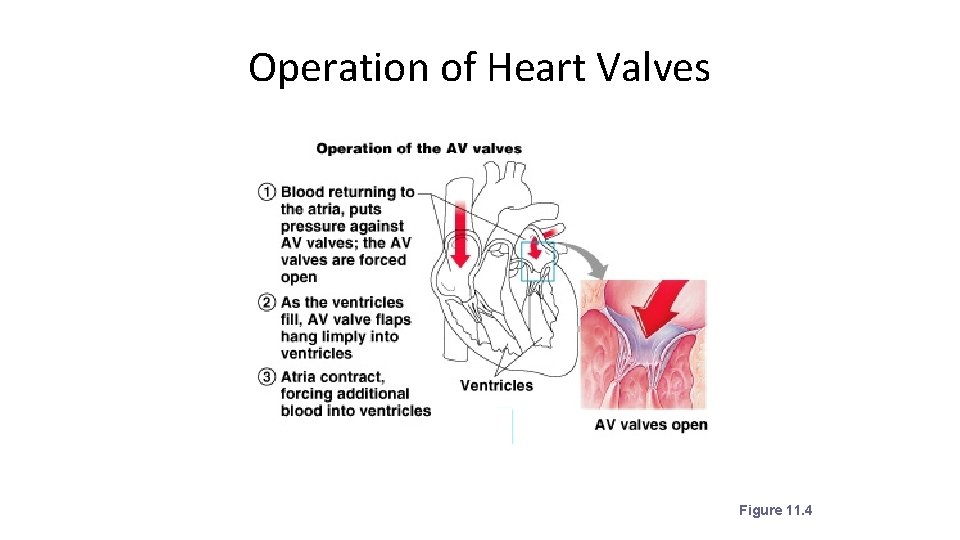
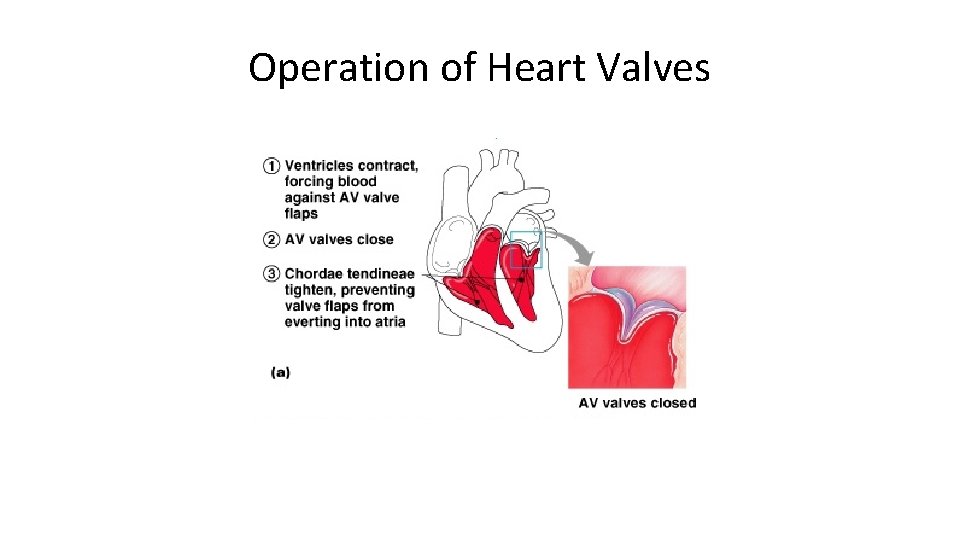
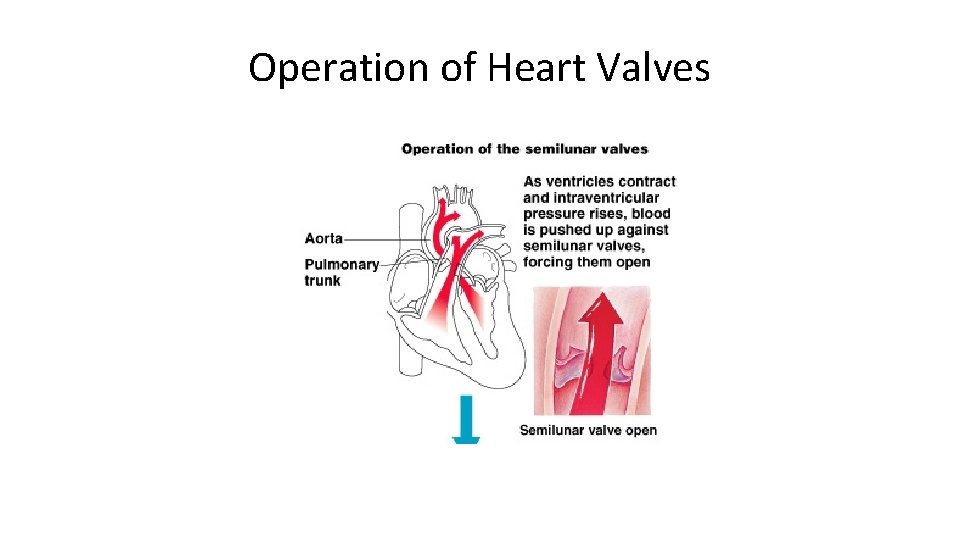
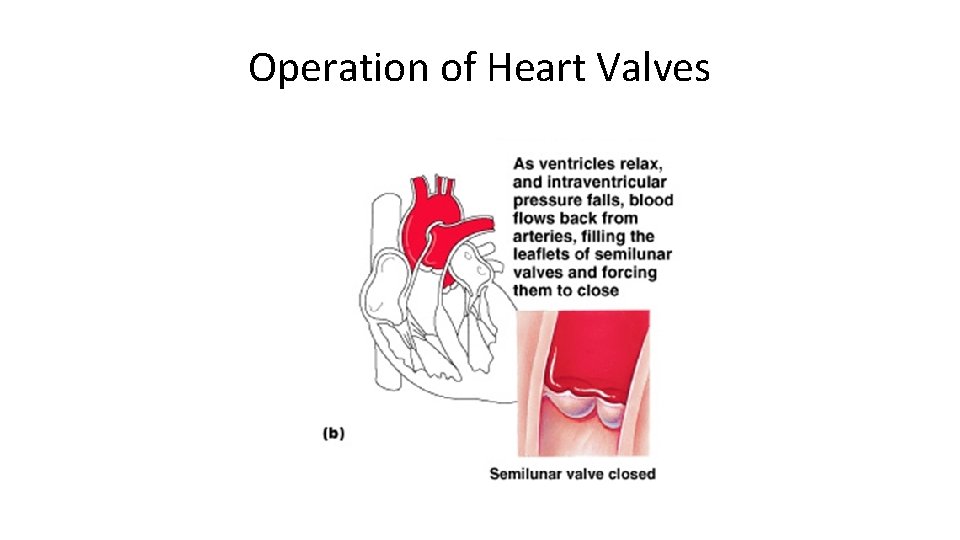
The Heart: Valves • Allow blood to flow in only one direction • Four valves – Atrioventricular valves – between atria and ventricles • Bicuspid valve (left) • Tricuspid valve (right) – Semilunar valves between ventricle and artery • Pulmonary semilunar valve • Aortic semilunar valve
The Heart: Valves • Valves open as blood is pumped through • Held in place by chordae tendineae (“heart strings”) • Close to prevent backflow
Operation of Heart Valves Figure 11. 4
Operation of Heart Valves
Operation of Heart Valves
Operation of Heart Valves
The Heart: Associated Great Vessels • Aorta – Leaves left ventricle • Pulmonary arteries – Leave right ventricle • Vena cava – Enters right atrium • Pulmonary veins (four) – Enter left atrium
Coronary Circulation • Blood in the heart chambers does not nourish the myocardium • The heart has its own nourishing circulatory system – Coronary arteries – Cardiac veins – Blood empties into the right atrium via the coronary sinus
The Heart: Conduction System • Intrinsic conduction system (nodal system) – Heart muscle cells contract, without nerve impulses, in a regular, continuous way
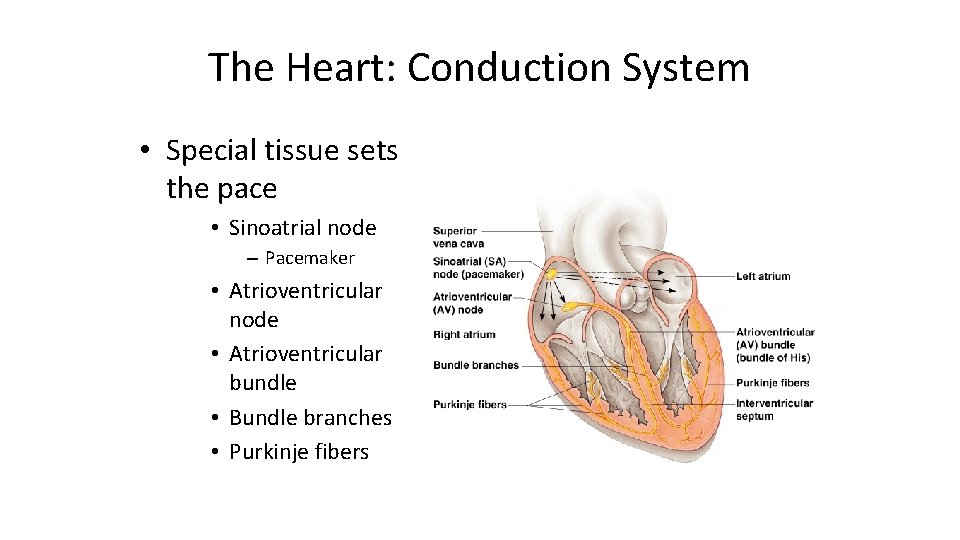
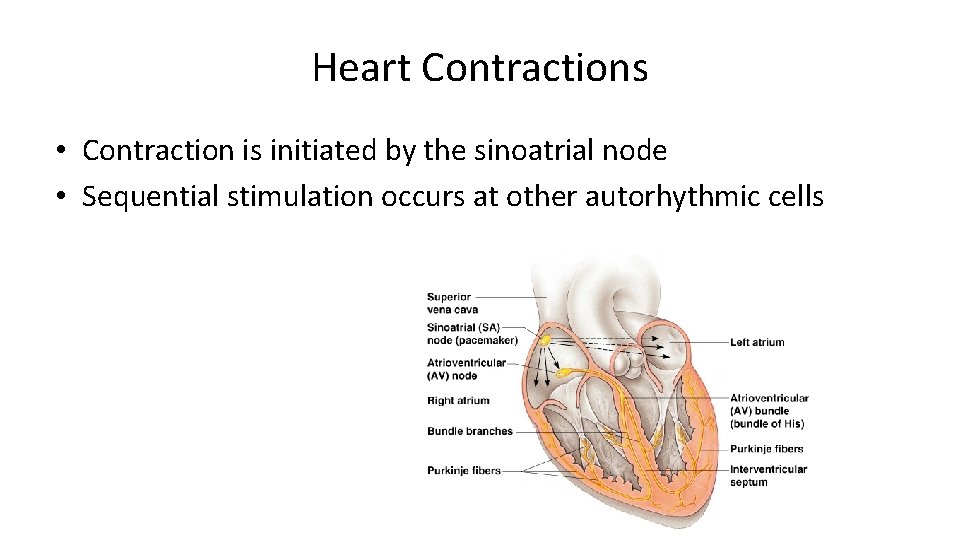
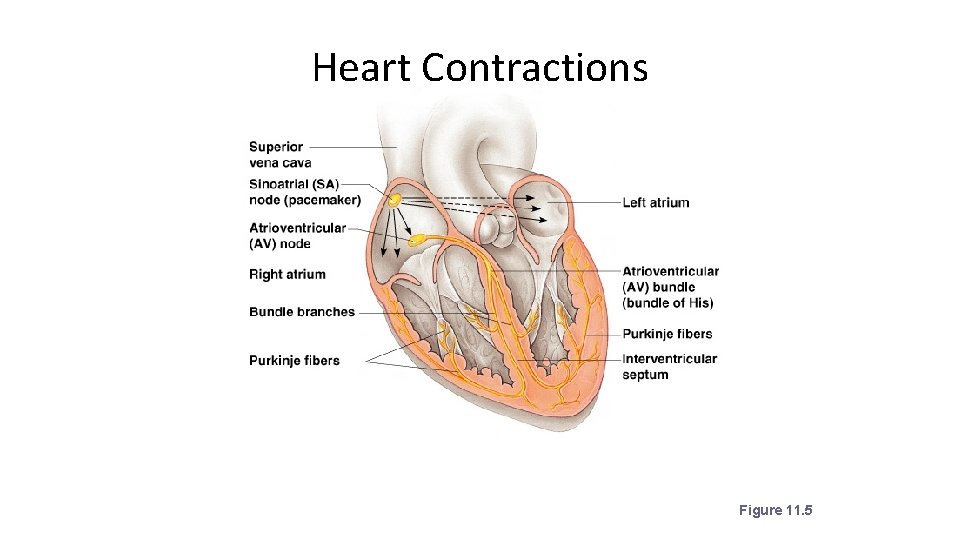
The Heart: Conduction System • Special tissue sets the pace • Sinoatrial node – Pacemaker • Atrioventricular node • Atrioventricular bundle • Bundle branches • Purkinje fibers
Heart Contractions • Contraction is initiated by the sinoatrial node • Sequential stimulation occurs at other autorhythmic cells
Heart Contractions Figure 11. 5
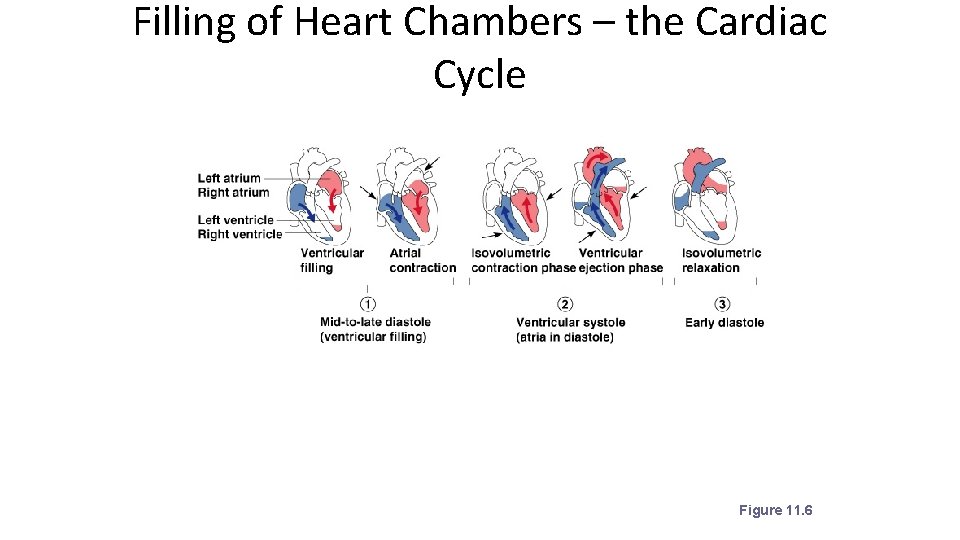
The Heart: Cardiac Cycle • • Atria contract simultaneously Atria relax, then ventricles contract Systole = ventricular contraction Diastole = ventricular relaxation
The Heart: Cardiac Cycle • Cardiac cycle – events of one complete heart beat – Mid-to-late diastole – blood flows into ventricles – Ventricular systole – blood pressure builds before ventricle contracts, pushing out blood – Early diastole – atria finish re-filling, ventricular pressure is low
Filling of Heart Chambers – the Cardiac Cycle Figure 11. 6
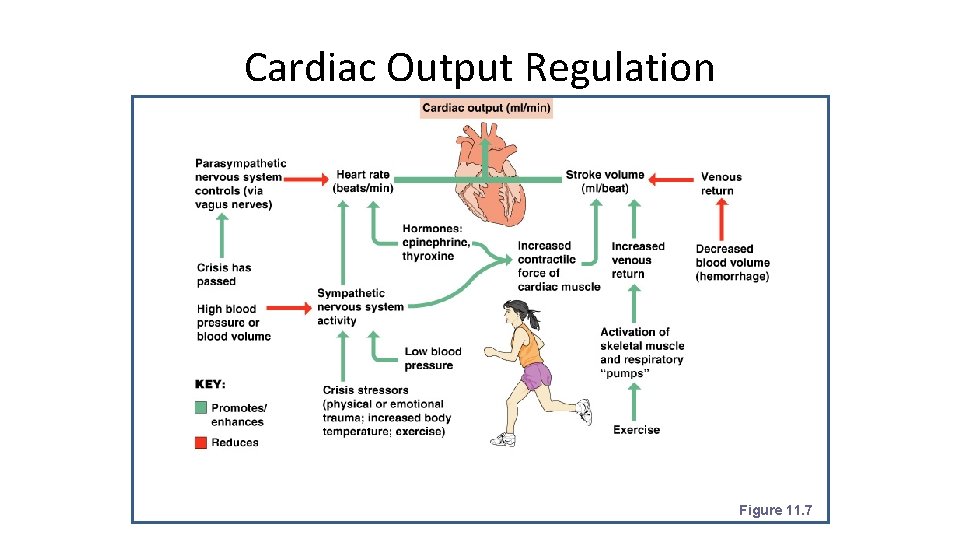
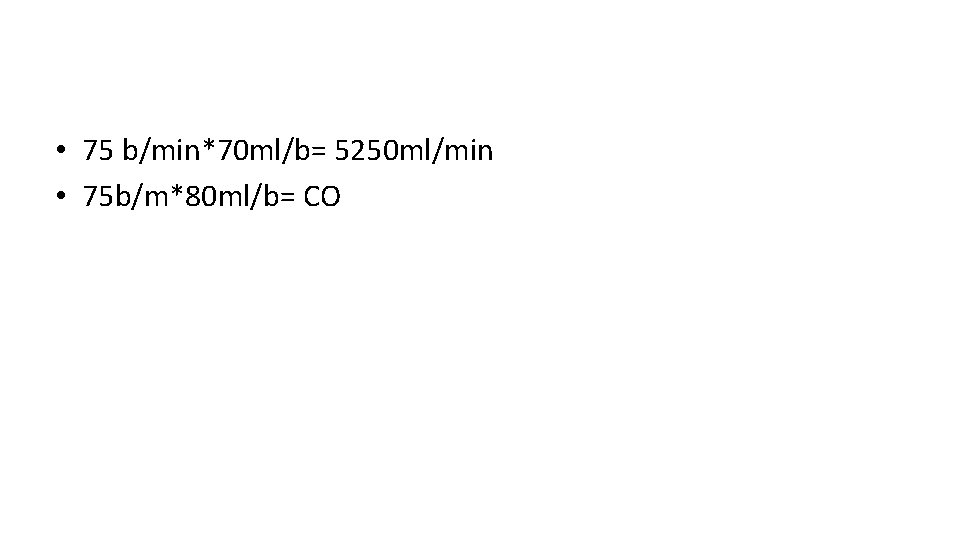
The Heart: Cardiac Output • Cardiac output (CO) – Amount of blood pumped by each side of the heart in one minute – CO = (heart rate [HR]) x (stroke volume [SV]) • Stroke volume – Volume of blood pumped by each ventricle in one contraction
The Heart: Regulation of Heart Rate • Stroke volume usually remains relatively constant – Starling’s law of the heart – the more that the cardiac muscle is stretched, the stronger the contraction – Increased/Decreased venous return • Changing heart rate is the most common way to change cardiac output
The Heart: Regulation of Heart Rate • Increased heart rate – Sympathetic nervous system • Crisis • Low blood pressure – Hormones • Epinephrine • Thyroxine – Exercise
The Heart: Regulation of Heart Rate • Decreased heart rate – Parasympathetic nervous system – High blood pressure or blood volume
Cardiac Output Regulation Figure 11. 7
• 75 b/min*70 ml/b= 5250 ml/min • 75 b/m*80 ml/b= CO
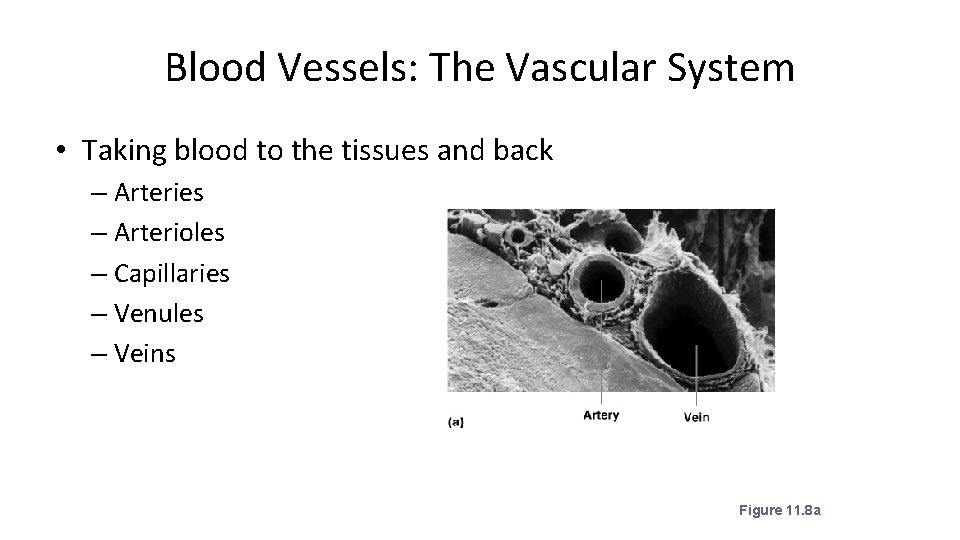
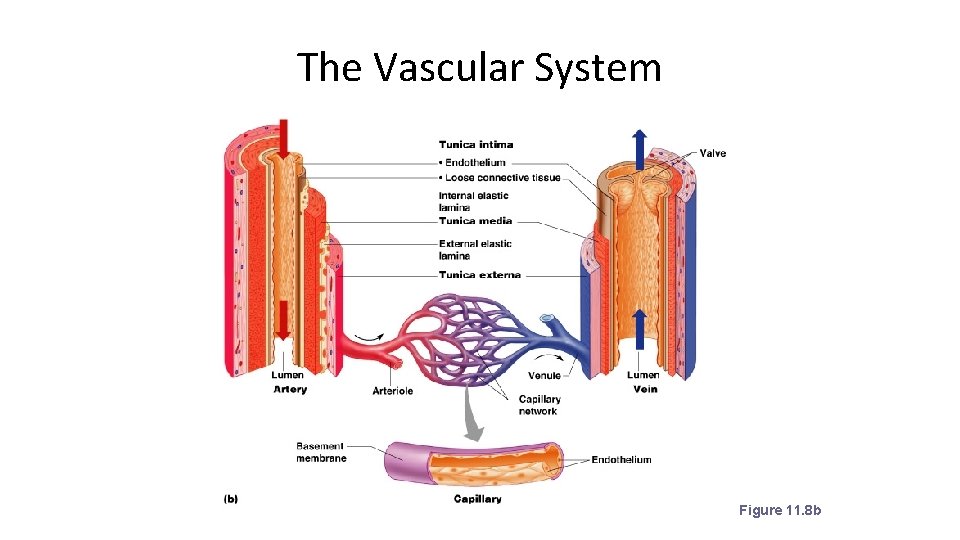
Blood Vessels: The Vascular System • Taking blood to the tissues and back – Arteries – Arterioles – Capillaries – Venules – Veins Figure 11. 8 a
The Vascular System Figure 11. 8 b
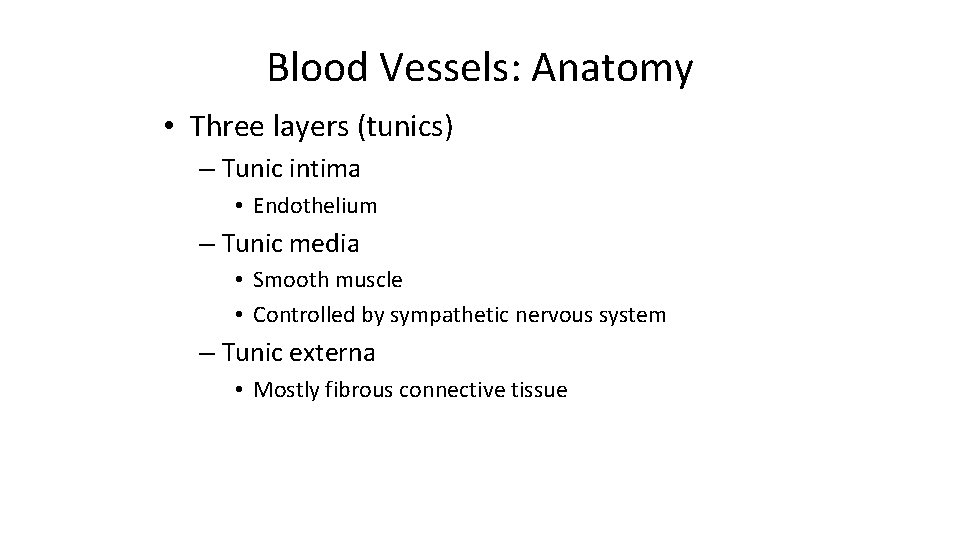
Blood Vessels: Anatomy • Three layers (tunics) – Tunic intima • Endothelium – Tunic media • Smooth muscle • Controlled by sympathetic nervous system – Tunic externa • Mostly fibrous connective tissue
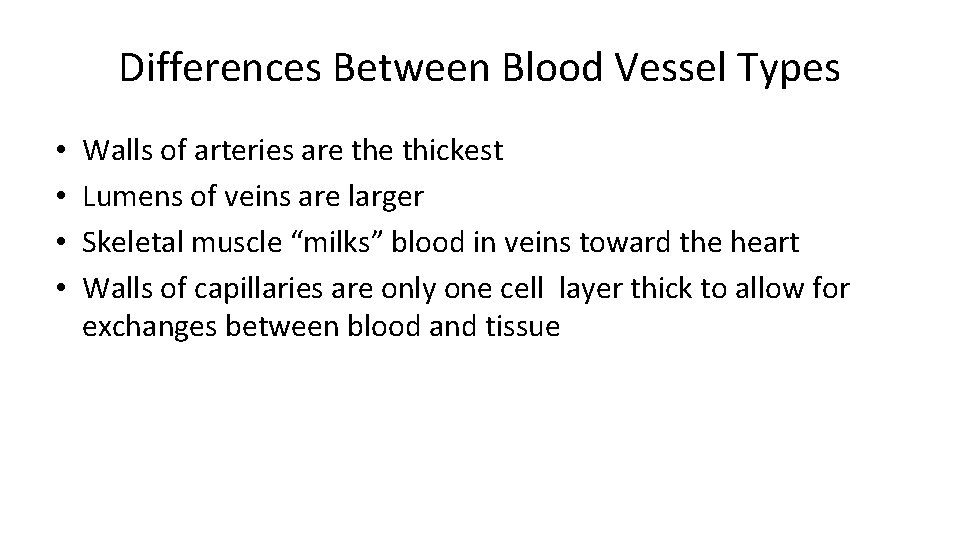
Differences Between Blood Vessel Types • • Walls of arteries are thickest Lumens of veins are larger Skeletal muscle “milks” blood in veins toward the heart Walls of capillaries are only one cell layer thick to allow for exchanges between blood and tissue
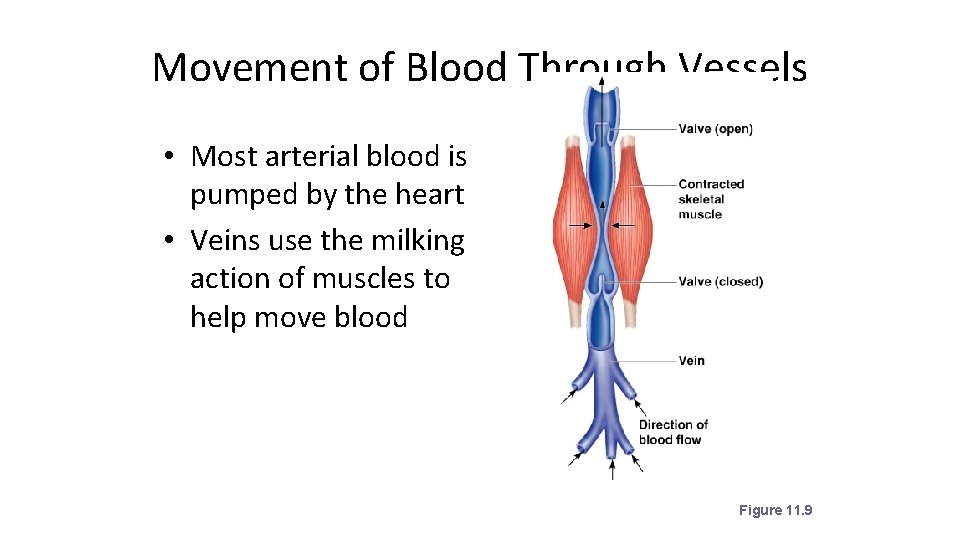
Movement of Blood Through Vessels • Most arterial blood is pumped by the heart • Veins use the milking action of muscles to help move blood Figure 11. 9
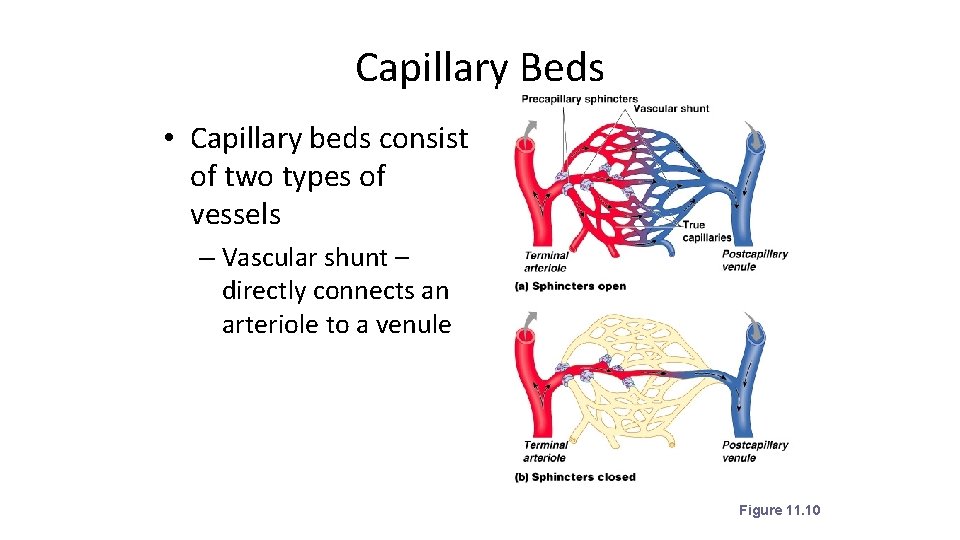
Capillary Beds • Capillary beds consist of two types of vessels – Vascular shunt – directly connects an arteriole to a venule Figure 11. 10
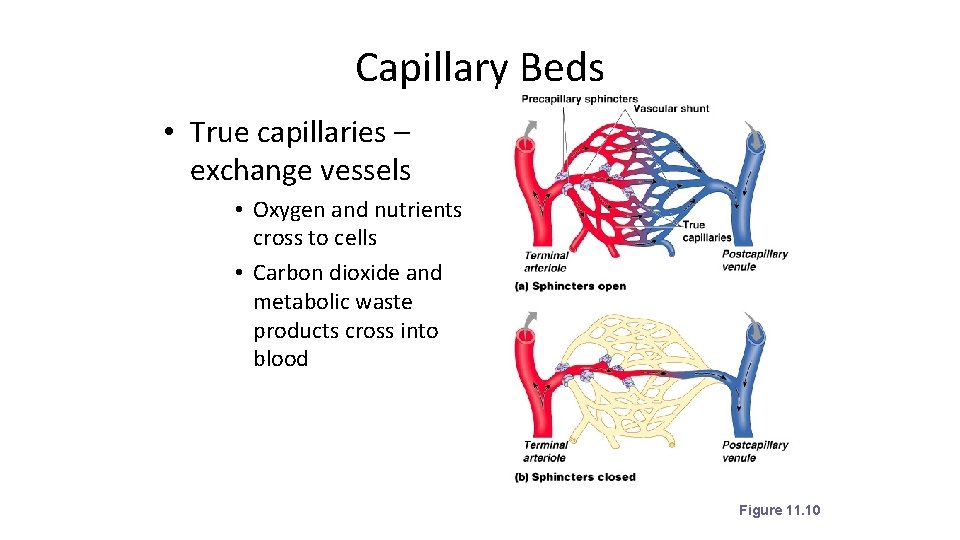
Capillary Beds • True capillaries – exchange vessels • Oxygen and nutrients cross to cells • Carbon dioxide and metabolic waste products cross into blood Figure 11. 10
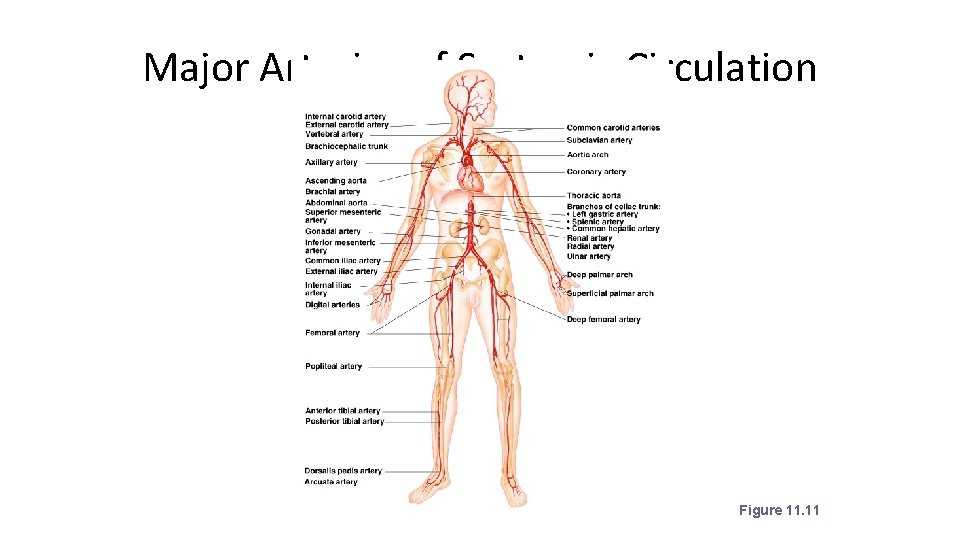
Major Arteries of Systemic Circulation Figure 11. 11
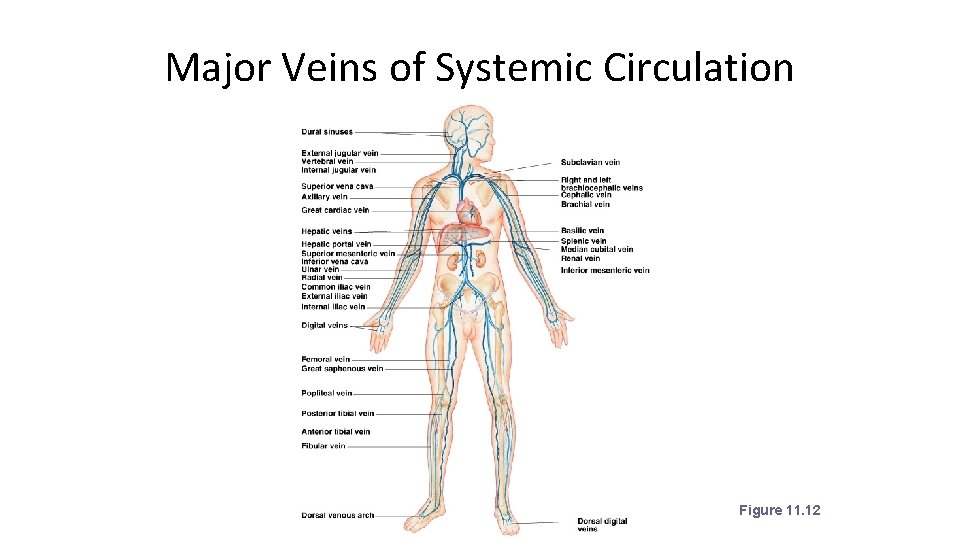
Major Veins of Systemic Circulation Figure 11. 12
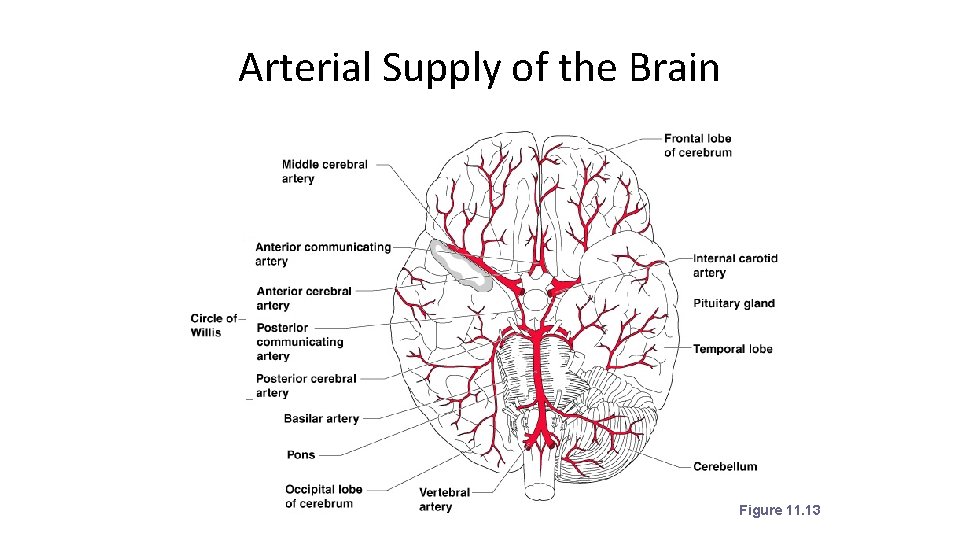
Arterial Supply of the Brain Figure 11. 13
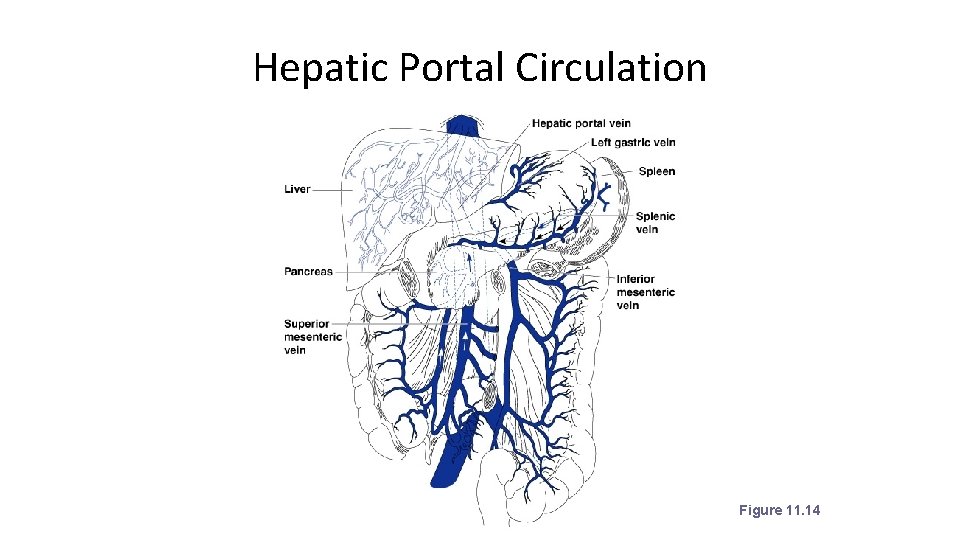
Hepatic Portal Circulation Figure 11. 14
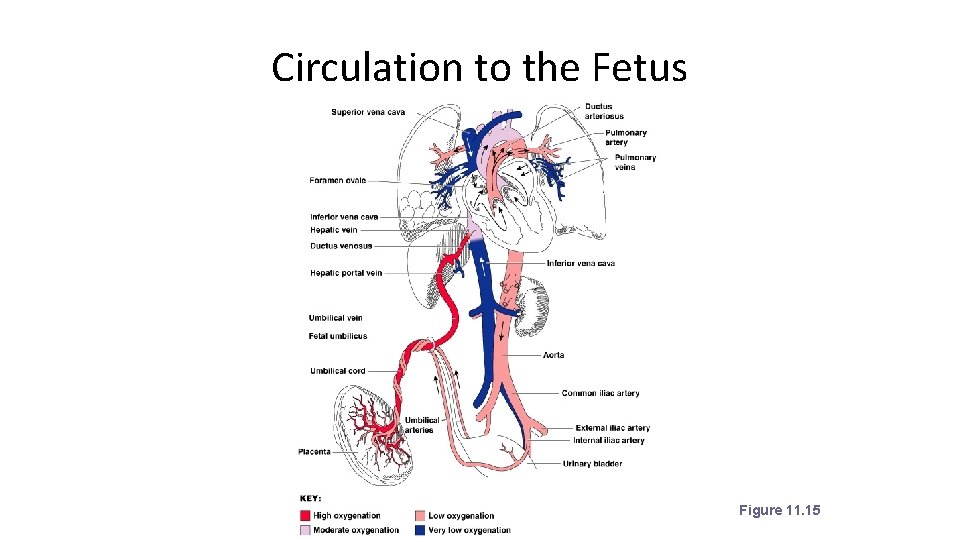
Circulation to the Fetus Figure 11. 15
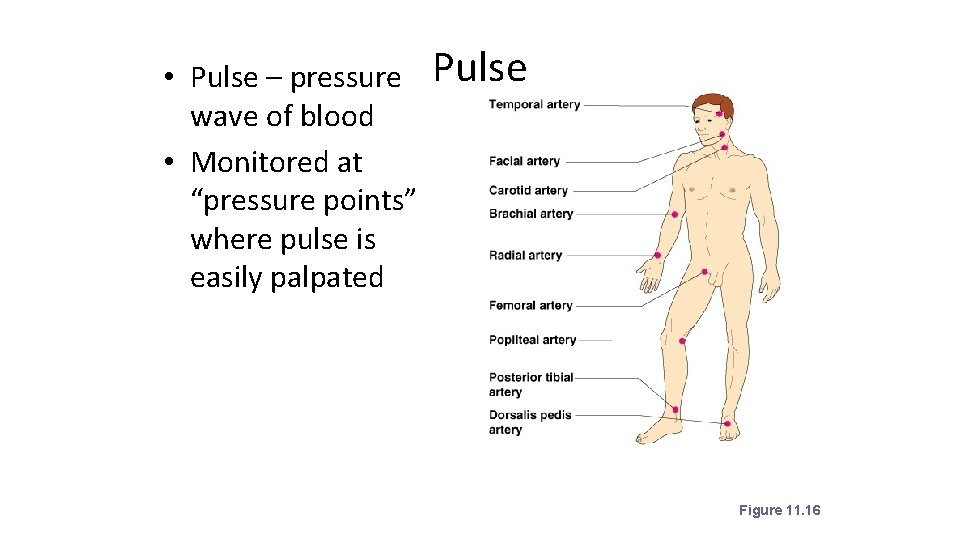
• Pulse – pressure wave of blood • Monitored at “pressure points” where pulse is easily palpated Pulse Figure 11. 16
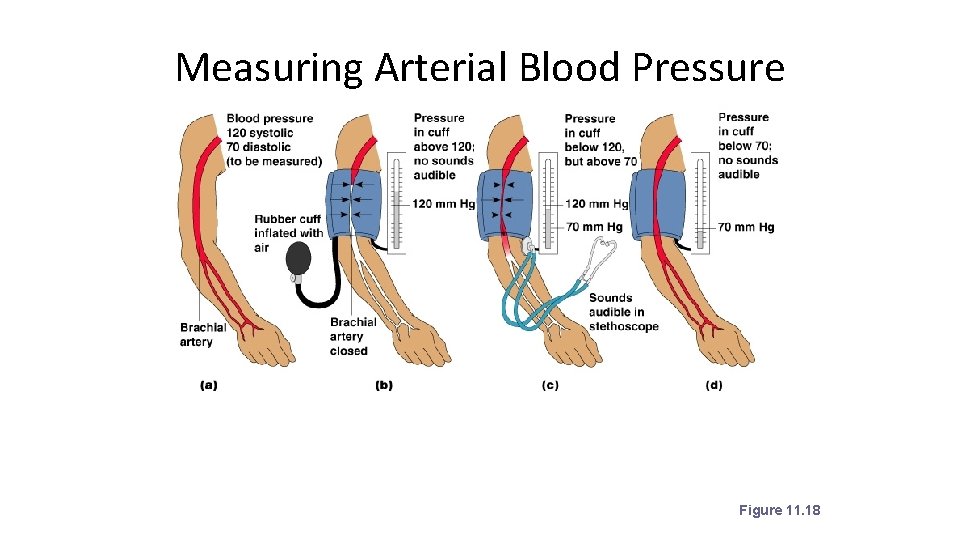
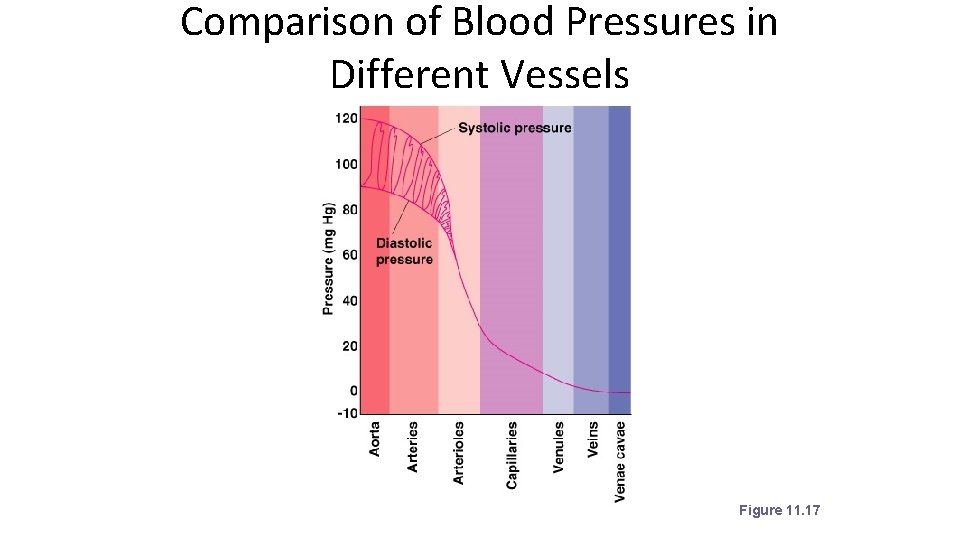
Blood Pressure • Measurements by health professionals are made on the pressure in large arteries – Systolic – pressure at the peak of ventricular contraction – Diastolic – pressure when ventricles relax • Pressure in blood vessels decreases as the distance away from the heart increases
Measuring Arterial Blood Pressure Figure 11. 18
Comparison of Blood Pressures in Different Vessels Figure 11. 17
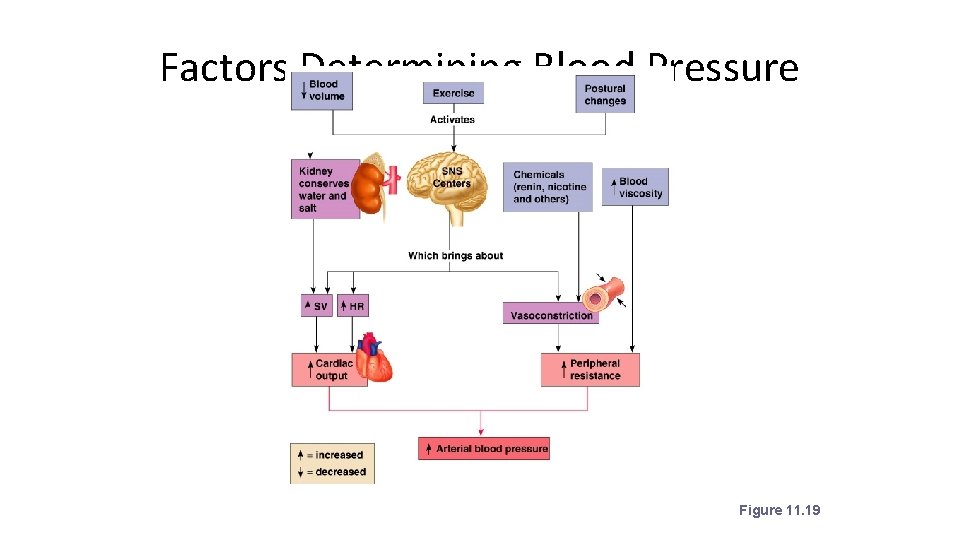
Blood Pressure: Effects of Factors • Neural factors – Autonomic nervous system adjustments (sympathetic division) • Renal factors – Regulation by altering blood volume – Renin – hormonal control
Blood Pressure: Effects of Factors • Temperature – Heat has a vasodilation effect – Cold has a vasoconstricting effect • Chemicals – Various substances can cause increases or decreases • Diet
Variations in Blood Pressure • Human normal range is variable – Normal • 140– 110 mm Hg systolic • 80– 75 mm Hg diastolic – Hypotension • Low systolic (below 110 mm HG) • Often associated with illness – Hypertension • High systolic (above 140 mm HG) • High diastolic (above 90 mm HG) • Can be dangerous if it is chronic
Factors Determining Blood Pressure Figure 11. 19
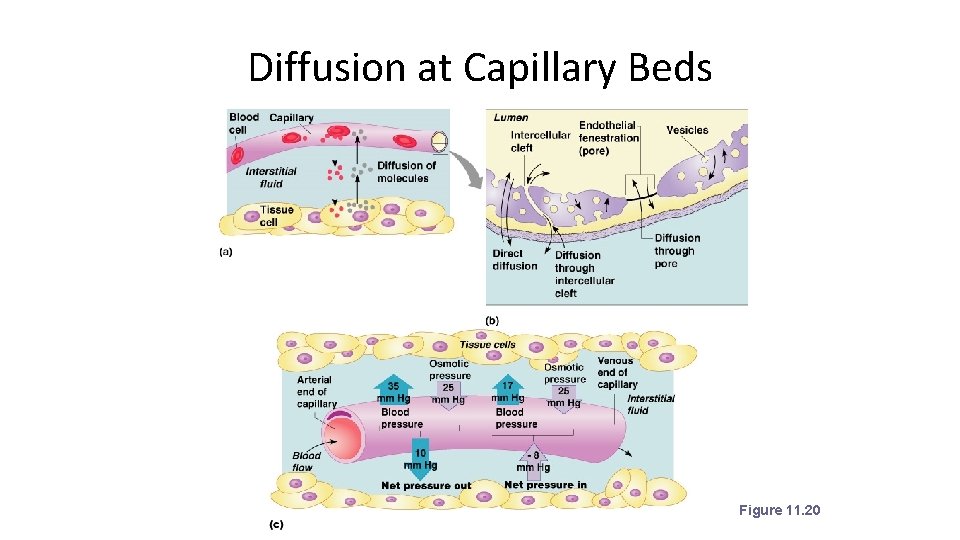
Capillary Exchange • Substances exchanged due to concentration gradients – Oxygen and nutrients leave the blood – Carbon dioxide and other wastes leave the cells
Diffusion at Capillary Beds Figure 11. 20
Capillary Exchange: Mechanisms • Direct diffusion across plasma membranes • Endocytosis or exocytosis • Some capillaries have gaps (intercellular clefts) – Plasma membrane not joined by tight junctions • Fenestrations of some capillaries – Fenestrations = pores
Developmental Aspects of the Cardiovascular System • A simple “tube heart” develops in the embryo and pumps by the fourth week • The heart becomes a four-chambered organ by the end of seven weeks • Few structural changes occur after the seventh week
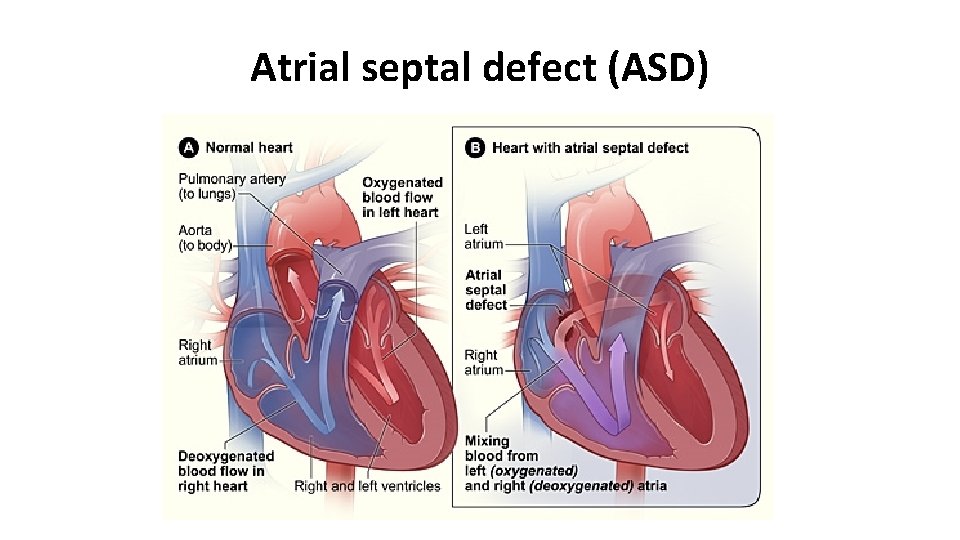
Atrial septal defect (ASD) • An ASD is a hole in the part of the septum that separates the atria • Oxygen-rich blood flows from the L. atrium into the R. atrium – instead of flowing into the left ventricle • Few, if any, symptoms • About ½ of ASDs close on their own • Medium & large ASDs -repaired with surgery
Atrial septal defect (ASD)
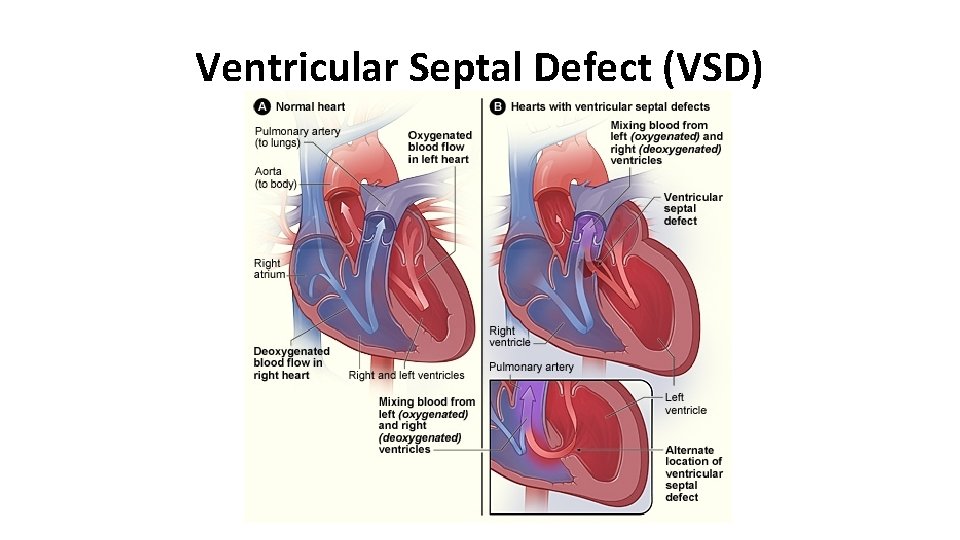
Ventricular Septal Defect (VSD) • Hole in the wall separating the ventricles • May cause higher pressure in the heart or reduced oxygen to the body • Large VSDs allow a lot of blood to flow from the left ventricle to the right ventricle. • Left side of the heart must work harder • Increases blood pressure in the right side of the heart and the lungs.
Ventricular Septal Defect (VSD)
Ventricular Septal Defect (VSD) • Heart’s extra workload can cause heart failure and poor growth. • If the hole isn't closed, high blood pressure can scar the arteries in the lungs. • Open-heart surgery to repair VSDs.
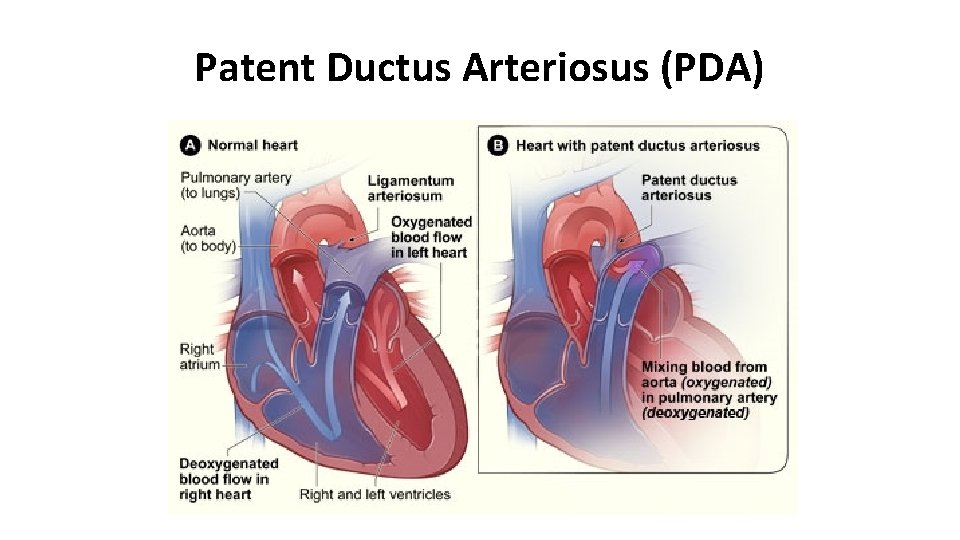
Patent Ductus Arteriosus (PDA) • An unclosed hole in the aorta. • Fetus's blood does not need to go to lungs to get oxygenated. • Ductus arteriosus allows the blood to skip the circulation to the lungs • At birth, the blood must receive oxygen in the lungs and this hole is supposed to close.
Patent Ductus Arteriosus (PDA)
Patent Ductus Arteriosus (PDA) • A heart murmur might be the only sign of PDA. • Other symptoms: shortness of breath, poor feeding and growth, tiring easily, and sweating with exertion. • PDA is treated with medicines, catheter-based procedures, and surgery. • Small PDAs often close without treatment.
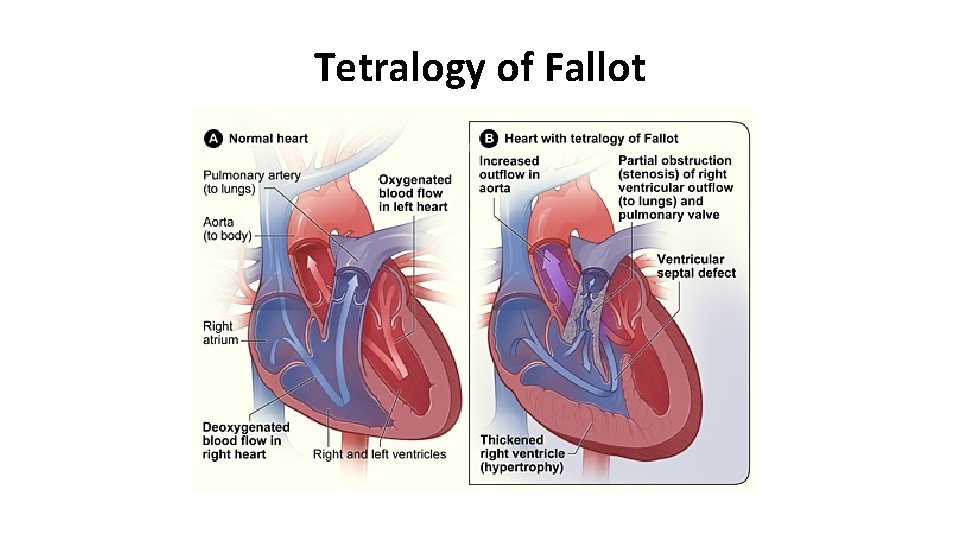
Tetralogy of Fallot • • Complex defect involving four problems Pulmonary valve stenosis (narrowing) A large VSD An overriding aorta – aorta between the left and right ventricles, directly over the VSD. – oxygen-poor blood from R. ventricle flows directly into the aorta instead of into the pulmonary artery. • Right ventricular hypertrophy – muscle of R. ventricle is thicker than usual because it has to work harder than normal.
Tetralogy of Fallot
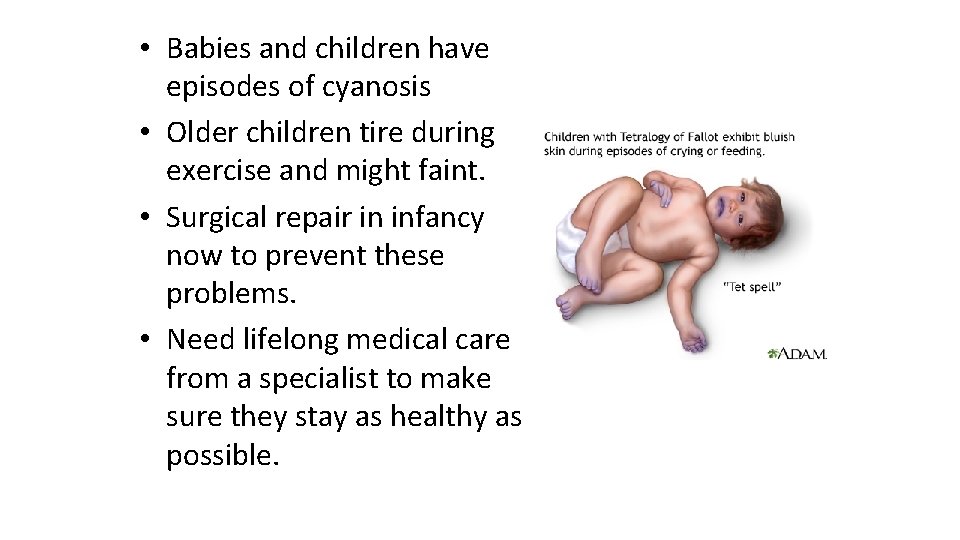
• Babies and children have episodes of cyanosis • Older children tire during exercise and might faint. • Surgical repair in infancy now to prevent these problems. • Need lifelong medical care from a specialist to make sure they stay as healthy as possible.
External Heart Anatomy Figure 11. 2 a