
The Cardiovascular System Chapter 9 The Cardiovascular System


- Slides: 32
The Cardiovascular System Chapter 9
The Cardiovascular System Includes: Heart Blood vessels Blood (and blood circulation)
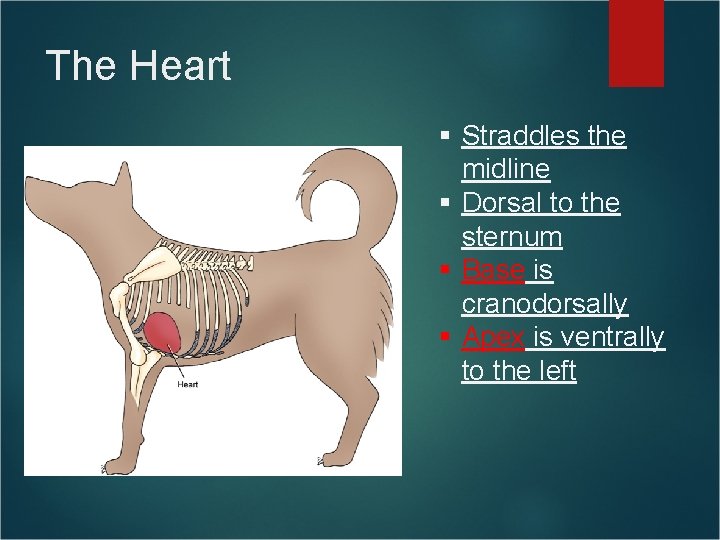
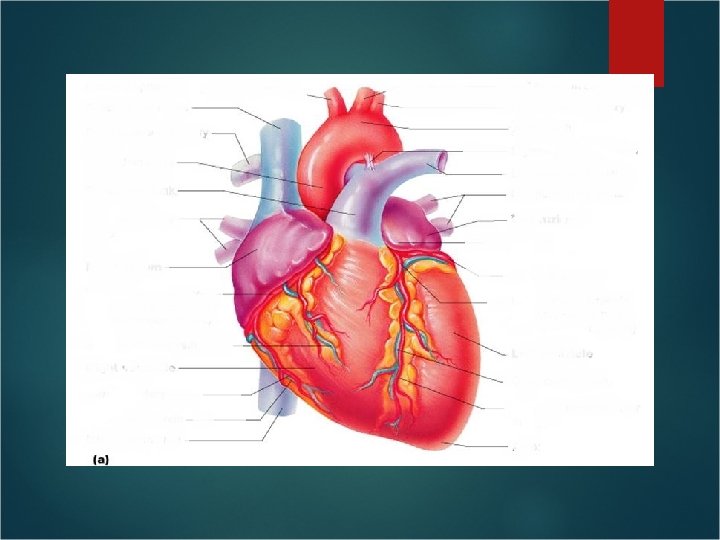
The Heart § Straddles the midline § Dorsal to the sternum § Base is cranodorsally § Apex is ventrally to the left
The Heart Acts as a pump to circulate blood throughout the body to nourish tissues and remove waste products. Made of cardiac muscle (involuntary; striated) Size varies with species Located in the thoracic cavity
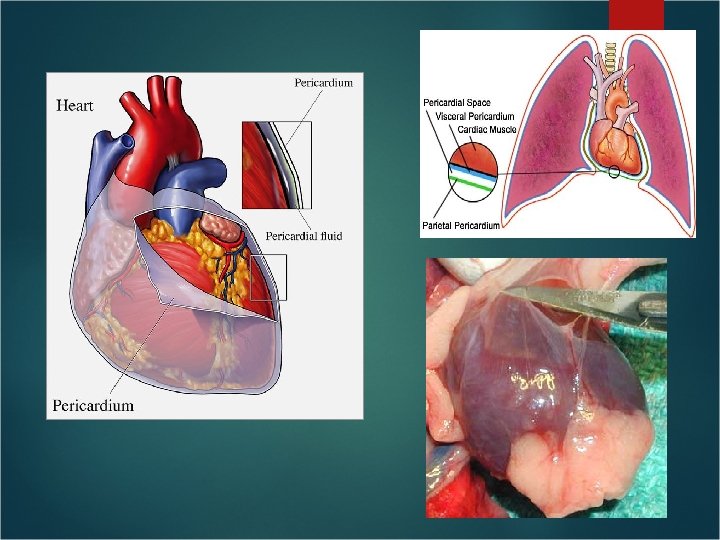
The Pericardium Membrane that covers the heart Composed of: Fibrous pericardium (external layer) Tough, fibrous sac surrounding serous layers Serous pericardium (inner layers) Parietal layer – lines the pericardium Visceral layer – (a. k. a. – epicardium) – covers the surface of the heart
The Pericardium The pericardial space is the space between the two serous layers of the pericardium This space contains pericardial fluid Pericardial fluid prevents friction between the heart and the pericardium when the heart beats
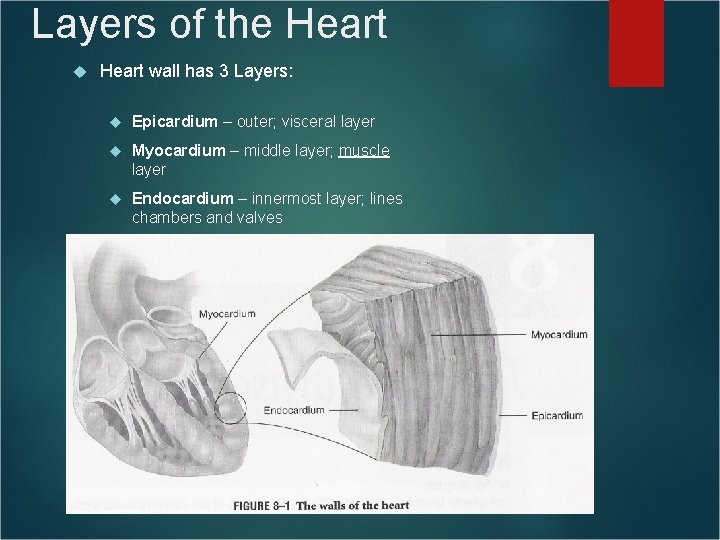
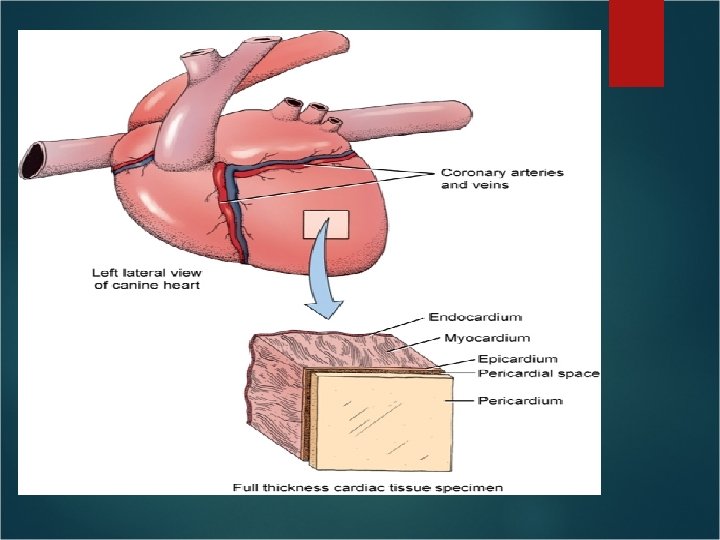
Layers of the Heart wall has 3 Layers: Epicardium – outer; visceral layer Myocardium – middle layer; muscle layer Endocardium – innermost layer; lines chambers and valves
LAYERS OF THE HEART:
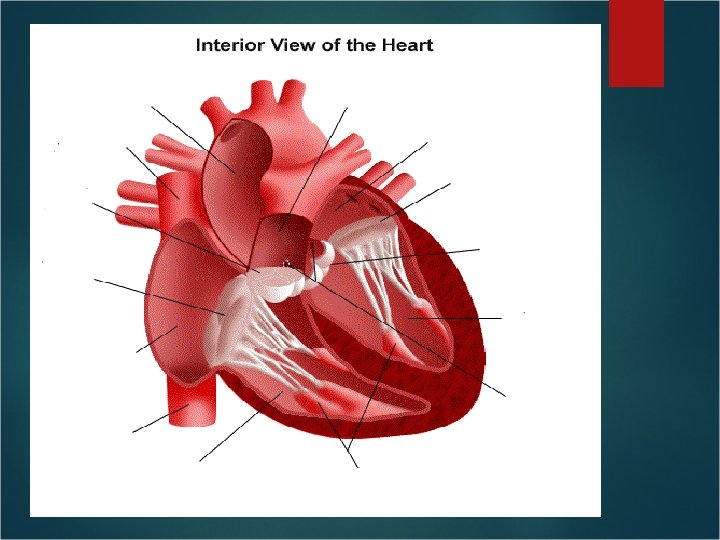
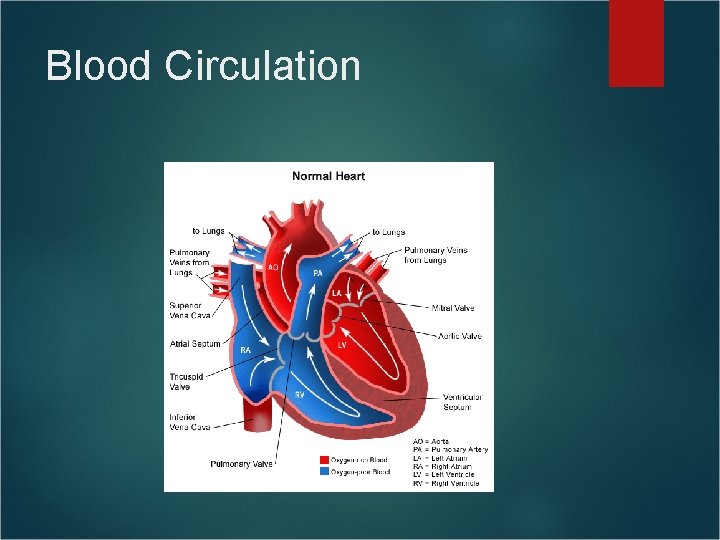
Chambers of the Heart There are 4 chambers within the heart: 2 craniodorsal chambers = atria 2 caudoventral chambers = ventricles The heart is divided into right and left sides. Interatrial septum divides atria Interventricular septum divides ventricles
Chambers of the Heart Atria receive blood and ventricles send blood. Atria have thin walls and ventricles have thick walls. The right side of the heart receives blood from body and sends it to the lungs to pick up O 2. The left side of the heart receives oxygenated blood from lungs and sends it to the tissues.
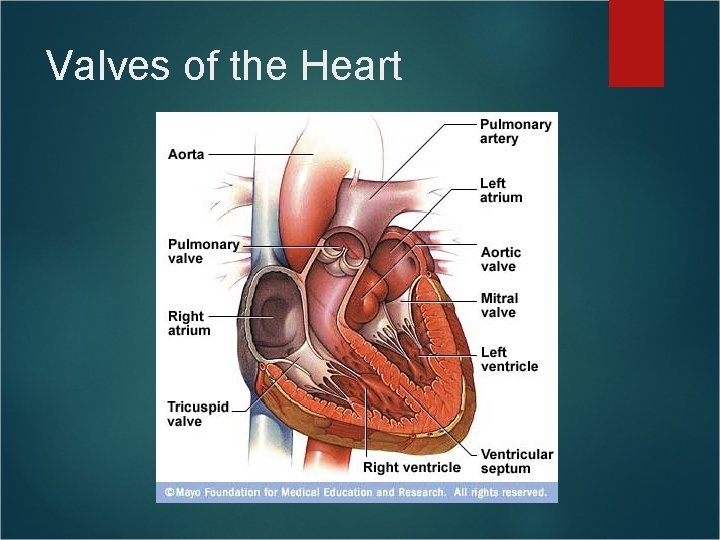
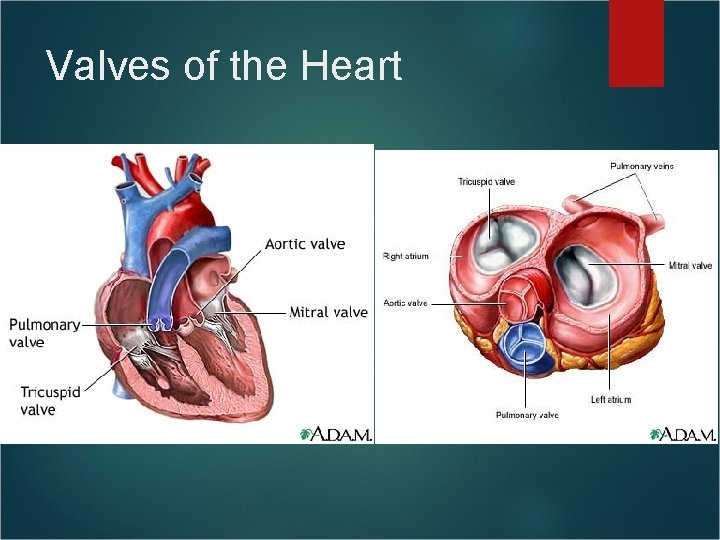
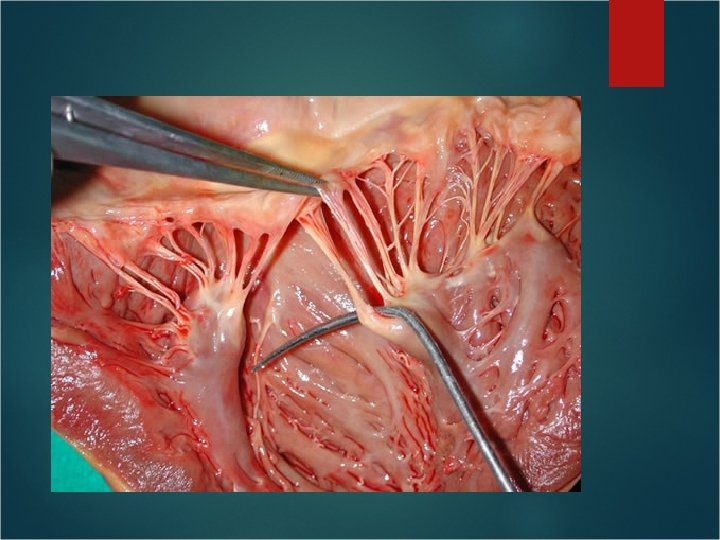
Valves of the Heart Atrioventricular valves (AV valves) lie between each atria and ventricle. Mitral valve – Left side; called bicuspid valve because it only has two flaps/cusps. Tricuspid valve – Right side; has three flaps Flaps are attached to ventricular wall by chordae tendineae.
Valves of the Heart Semilunar valves (half-moon shaped) prevent backflow of blood from arteries into ventricles. Aortic semilunar valve is a 3 -flapped valve between left ventricle and aorta. Pulmonary semilunar valve is located between right ventricle and pulmonary artery.
Valves of the Heart
Valves of the Heart
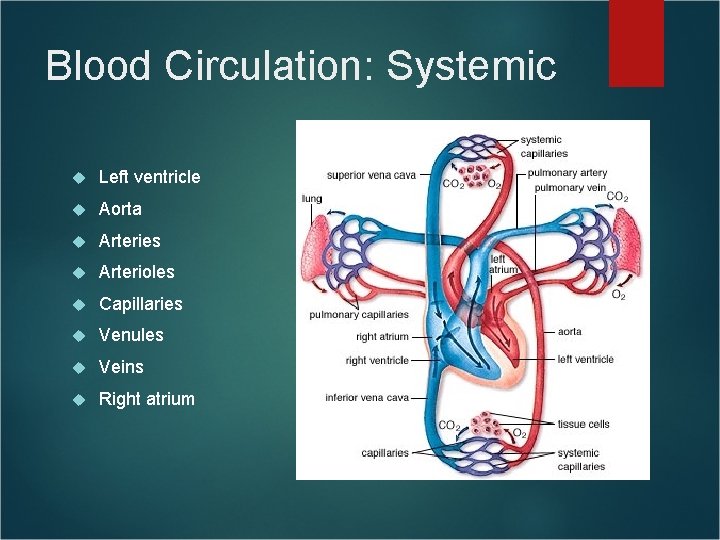
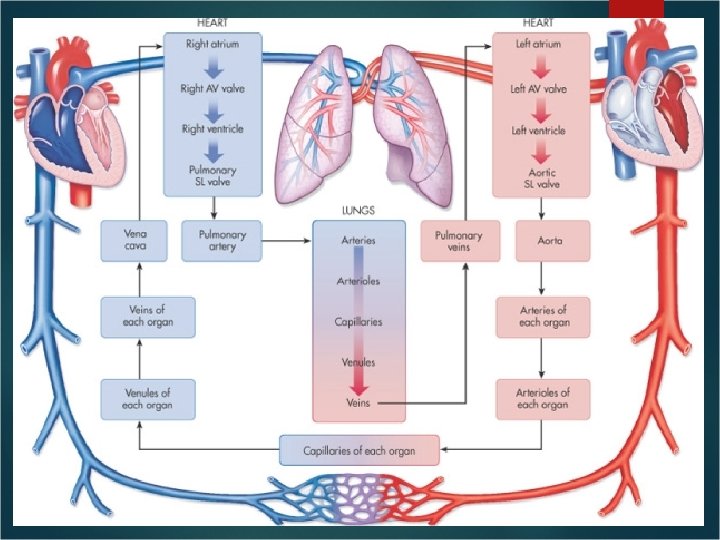
Blood Circulation: Systemic Left ventricle Aorta Arteries Arterioles Capillaries Venules Veins Right atrium
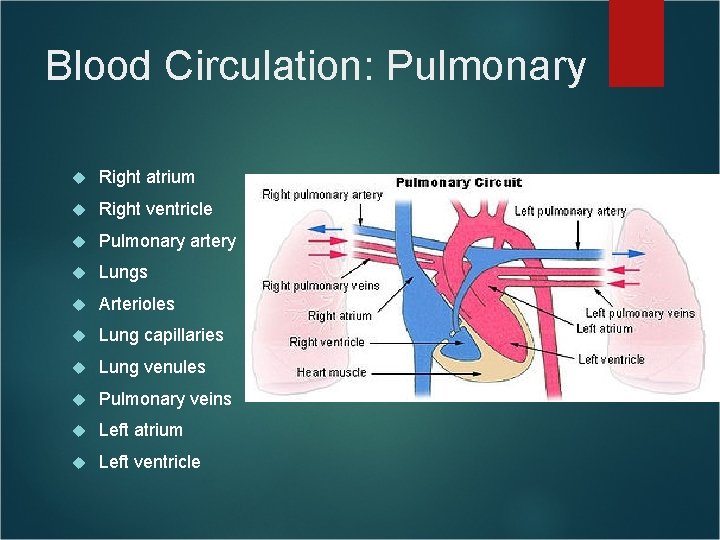
Blood Circulation: Pulmonary Right atrium Right ventricle Pulmonary artery Lungs Arterioles Lung capillaries Lung venules Pulmonary veins Left atrium Left ventricle
Blood Circulation
Blood Vessels Arteries carry oxygenated blood away from the heart back to the body. Walls are thick and muscular ***Exception = pulmonary artery*** Veins transport deoxygenated blood back to the heart. Walls are thin and elastic Valves prevent backflow of blood ***Exception = pulmonary vein***
Blood Vessels As arteries branch out and become smaller, they become arterioles. Arterioles branch and become smaller into capillaries. Capillaries have very thin walls and distribute O 2 to tissues while picking up CO 2 Capillaries branch into larger structures called venules which empty into larger structures called veins which return blood to the heart.
Blood Vessels
Drop that beat!!! Autonomic Nervous System: Parasympathetc: mainly supply the SA & AV Nodes, slows the heart rate, reduces impuse conduction Sympathetic: acts on the SA & AV nodes to increase the heart rate and impulse condction
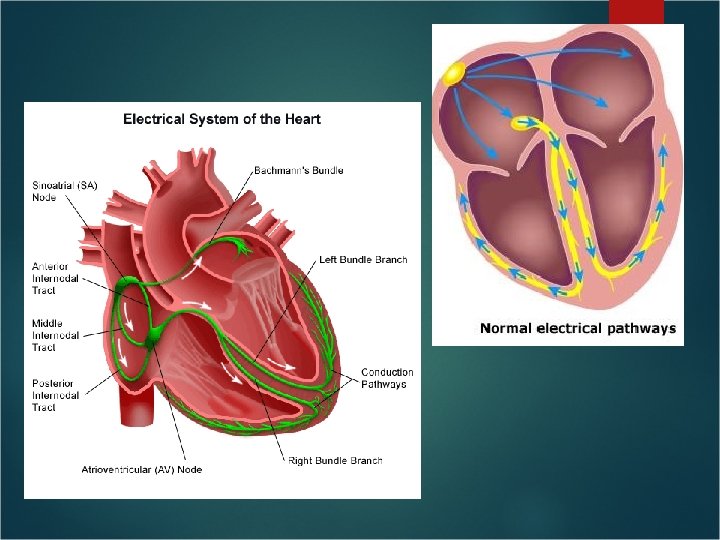
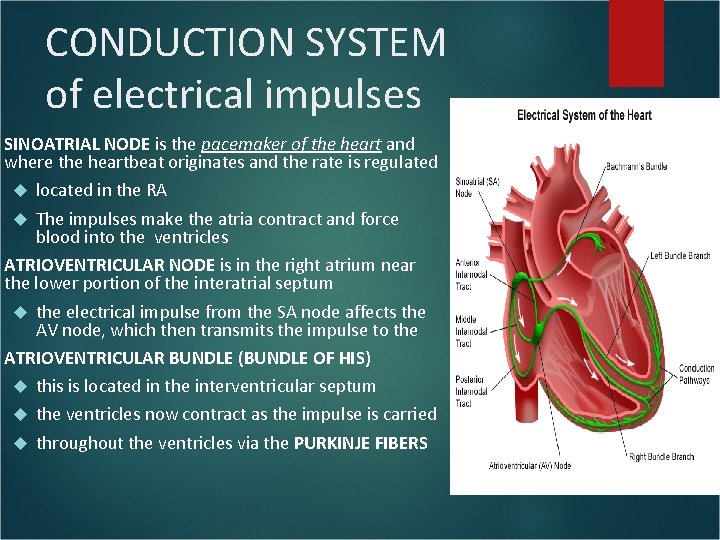
CONDUCTION SYSTEM of electrical impulses SINOATRIAL NODE is the pacemaker of the heart and where the heartbeat originates and the rate is regulated located in the RA The impulses make the atria contract and force blood into the ventricles ATRIOVENTRICULAR NODE is in the right atrium near the lower portion of the interatrial septum the electrical impulse from the SA node affects the AV node, which then transmits the impulse to the ATRIOVENTRICULAR BUNDLE (BUNDLE OF HIS) this is located in the interventricular septum the ventricles now contract as the impulse is carried throughout the ventricles via the PURKINJE FIBERS
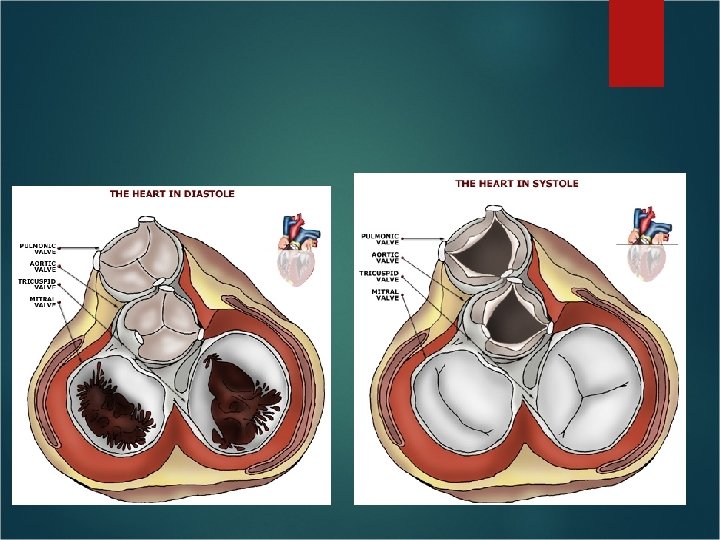
The Cardiac Cycle Atria contract in unison; ventricles contract in unison As one group contracts, the other relaxes. Atrial contraction sends blood into ventricles through bicuspid and tricuspid valves. While this is occurring, the semilunar valves close Ventricles relax at this time
The Cardiac Cycle Ventricular contraction sends blood through the semilunar valves and into the aorta and pulmonary artery. While this is occurring, the bicuspid and tricuspid valves close The atria relax, allowing blood to enter from the vena cava and pulmonary veins.
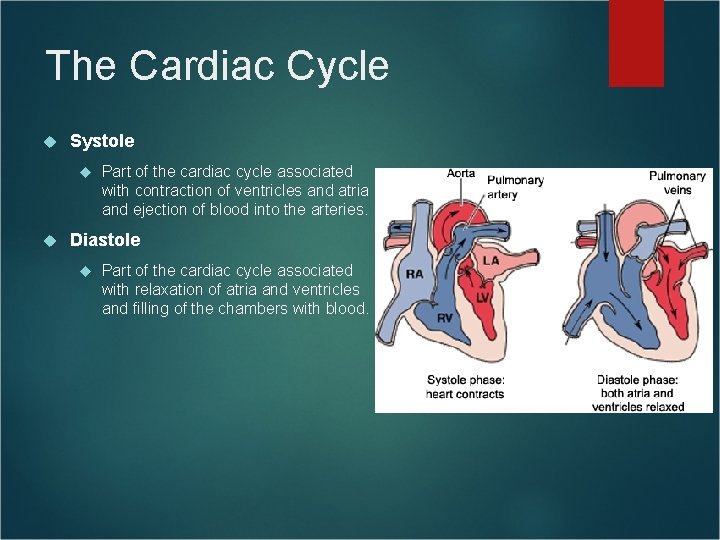
The Cardiac Cycle Systole Part of the cardiac cycle associated with contraction of ventricles and atria and ejection of blood into the arteries. Diastole Part of the cardiac cycle associated with relaxation of atria and ventricles and filling of the chambers with blood.