
The Cardiovascular System Blood The Heart Blood Vessels
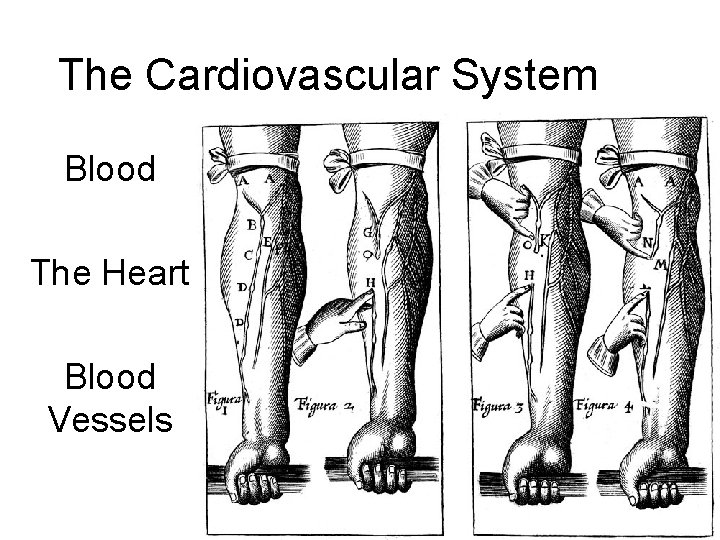
The Cardiovascular System Blood The Heart Blood Vessels
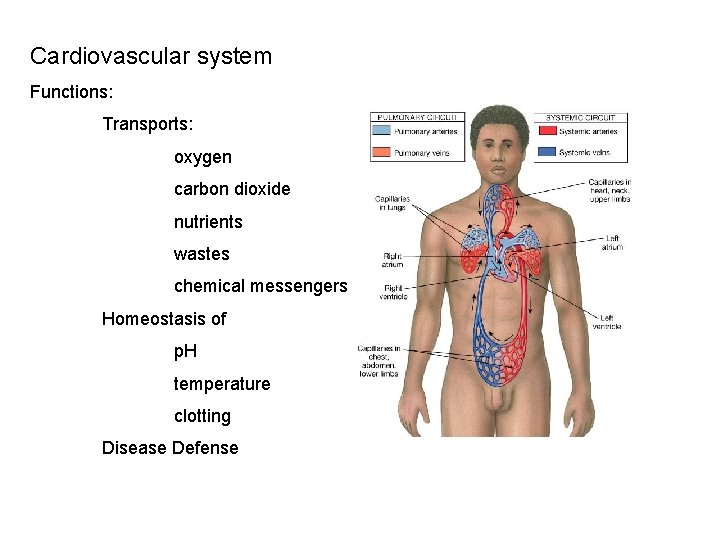
Cardiovascular system Functions: Transports: oxygen carbon dioxide nutrients wastes chemical messengers Homeostasis of p. H temperature clotting Disease Defense
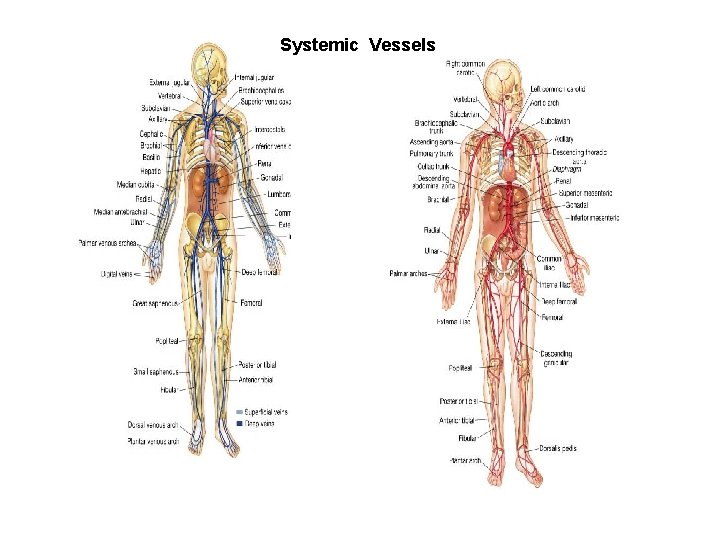
Systemic Vessels
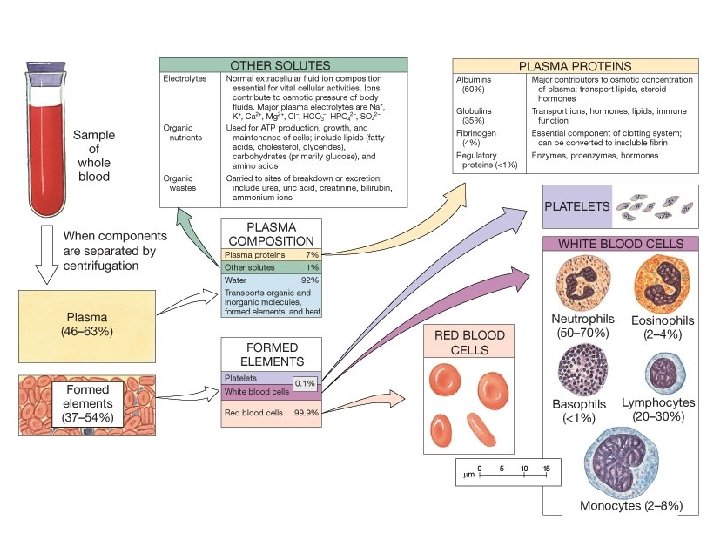
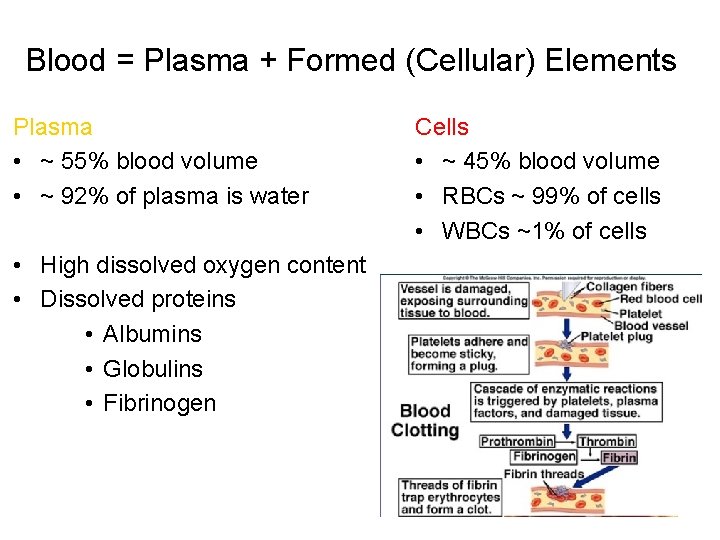
Blood = Plasma + Formed (Cellular) Elements Plasma • ~ 55% blood volume • ~ 92% of plasma is water • High dissolved oxygen content • Dissolved proteins • Albumins • Globulins • Fibrinogen Cells • ~ 45% blood volume • RBCs ~ 99% of cells • WBCs ~1% of cells
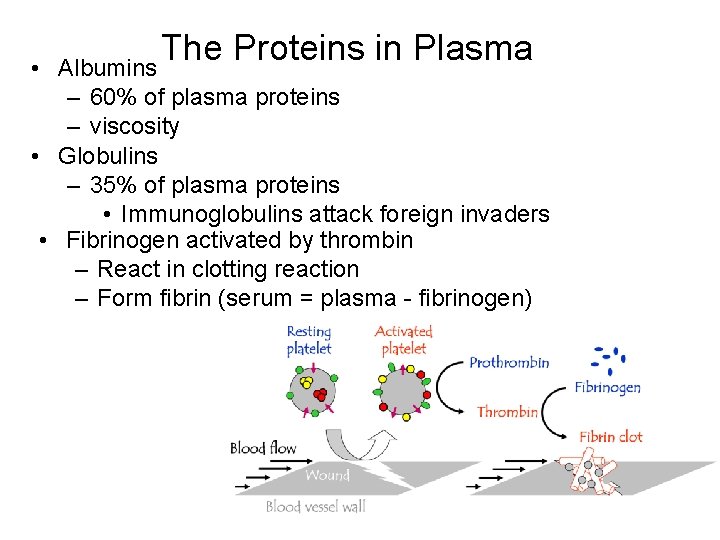
• The Proteins in Plasma Albumins – 60% of plasma proteins – viscosity • Globulins – 35% of plasma proteins • Immunoglobulins attack foreign invaders • Fibrinogen activated by thrombin – React in clotting reaction – Form fibrin (serum = plasma - fibrinogen)
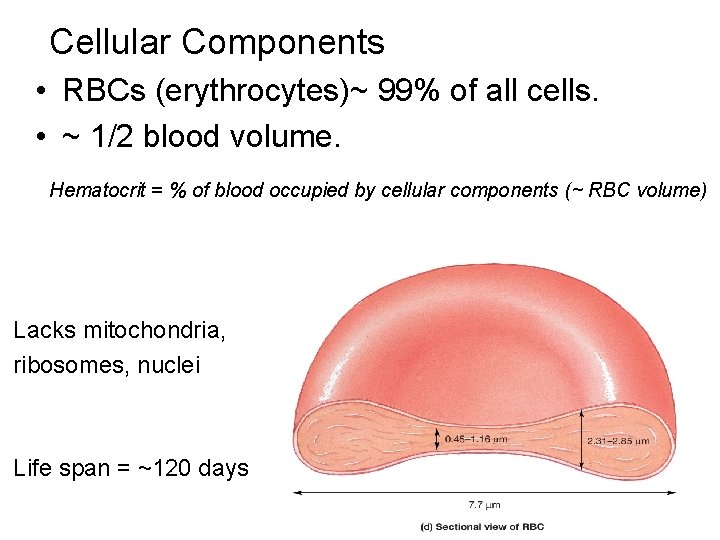
Cellular Components • RBCs (erythrocytes)~ 99% of all cells. • ~ 1/2 blood volume. Hematocrit = % of blood occupied by cellular components (~ RBC volume) Lacks mitochondria, ribosomes, nuclei Life span = ~120 days
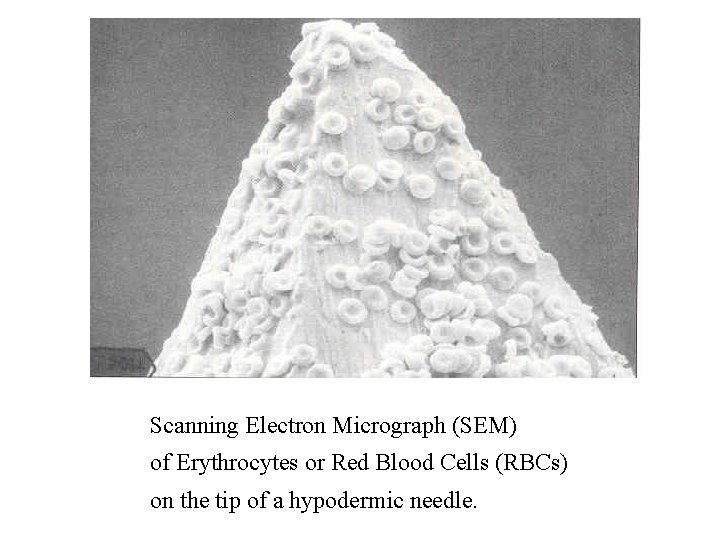
Scanning Electron Micrograph (SEM) of Erythrocytes or Red Blood Cells (RBCs) on the tip of a hypodermic needle.
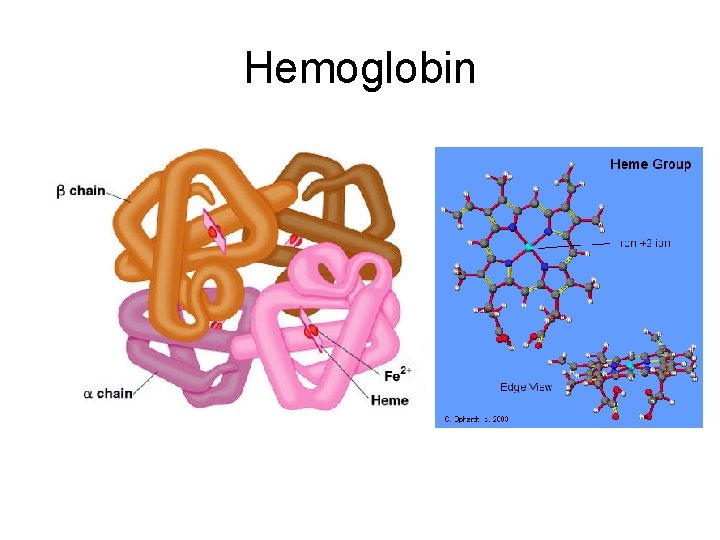
Hemoglobin
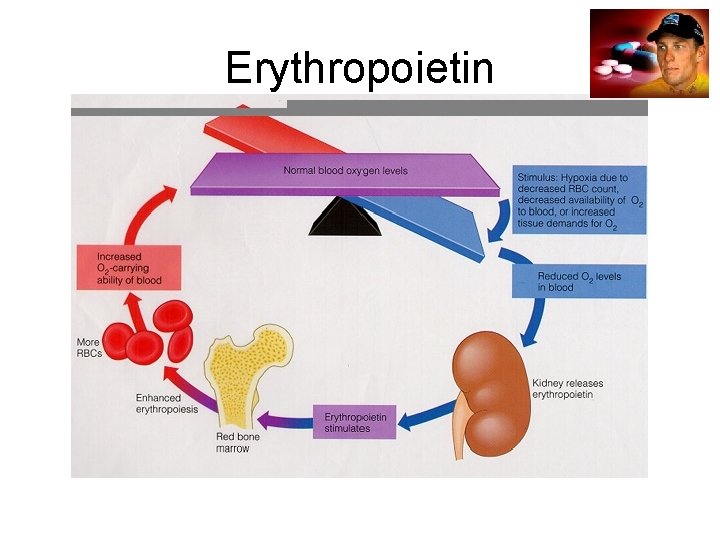
Erythropoietin

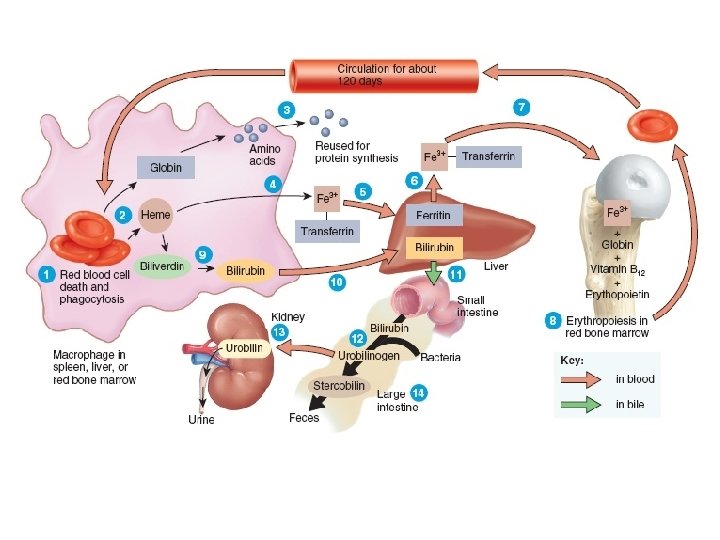
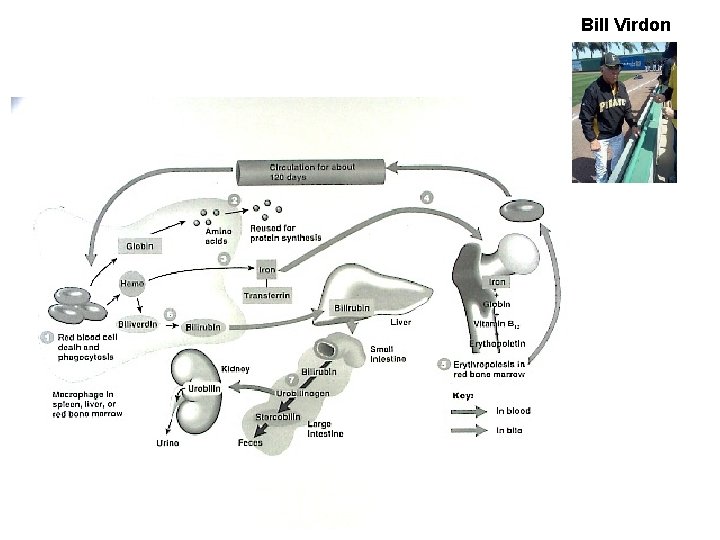
Life and death of an RBC
Bill Virdon
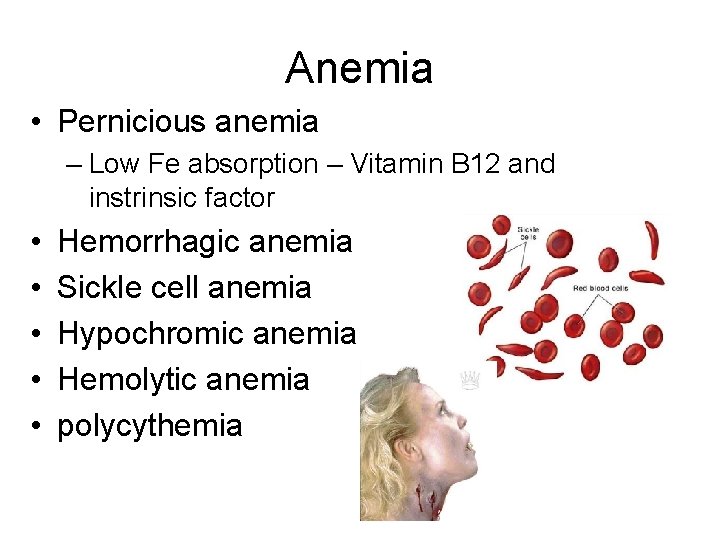
Anemia • Pernicious anemia – Low Fe absorption – Vitamin B 12 and instrinsic factor • • • Hemorrhagic anemia Sickle cell anemia Hypochromic anemia Hemolytic anemia polycythemia

Pernicious anemia
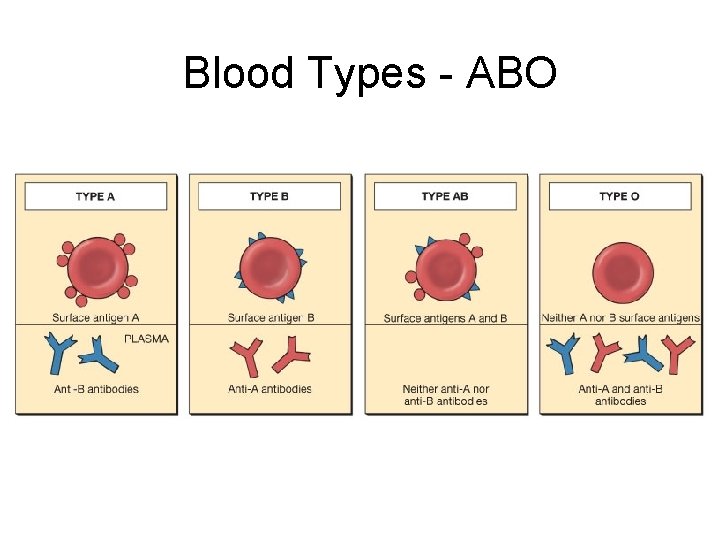
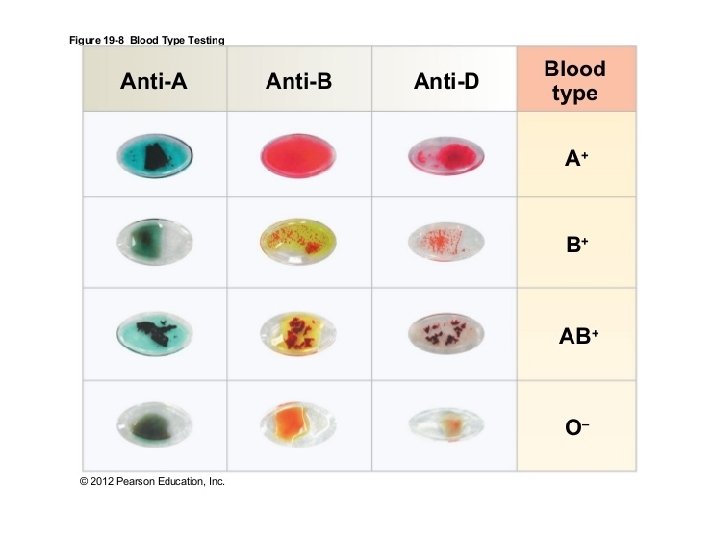
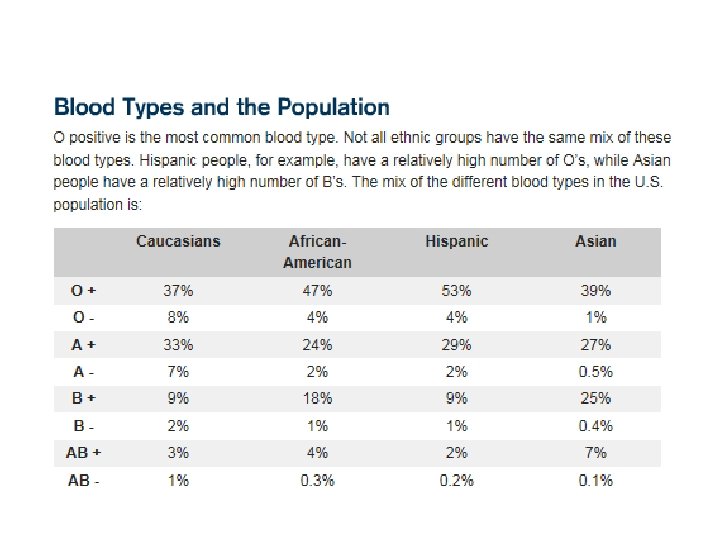
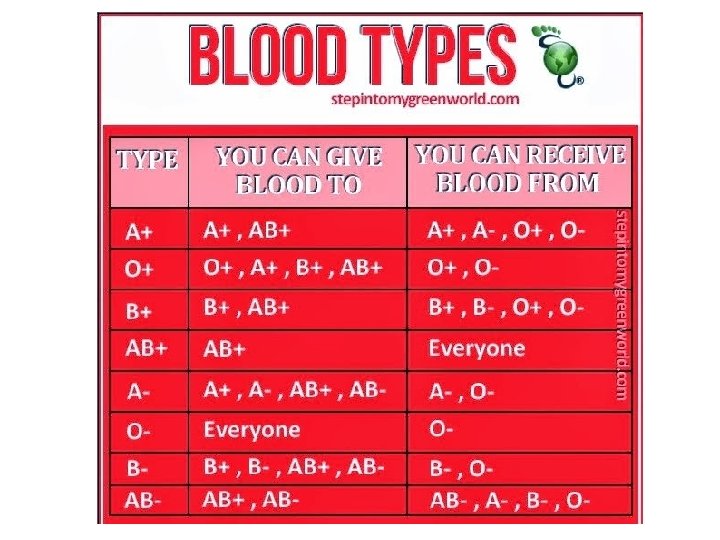
Blood Types - ABO
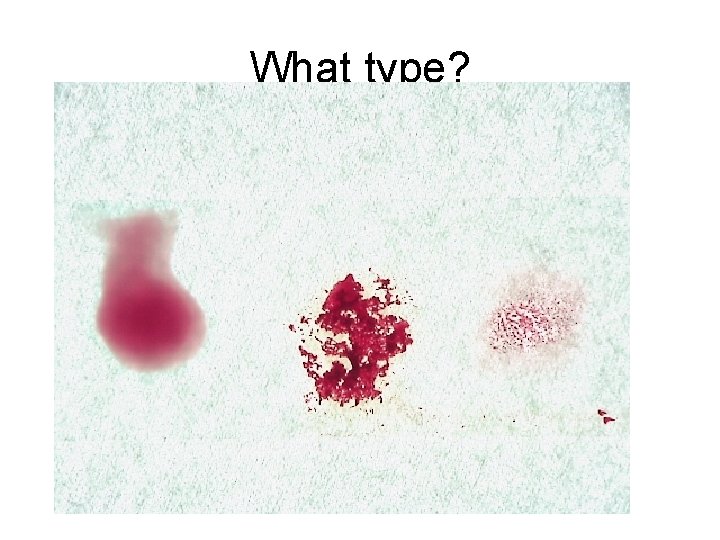
What type?
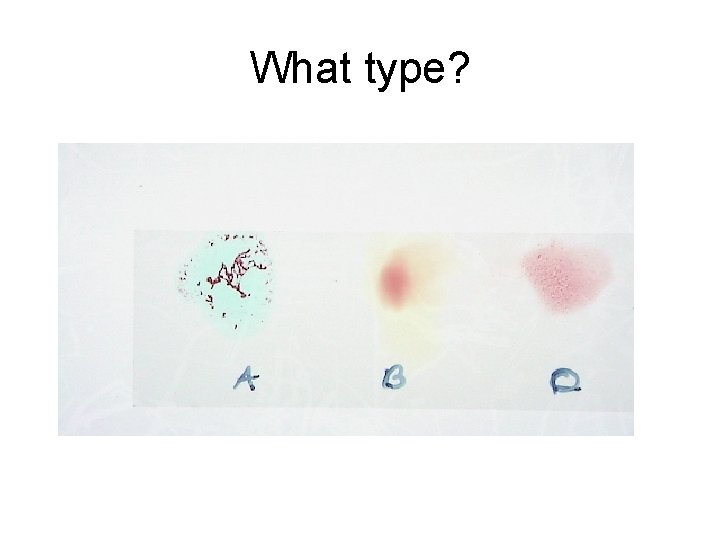
What type?
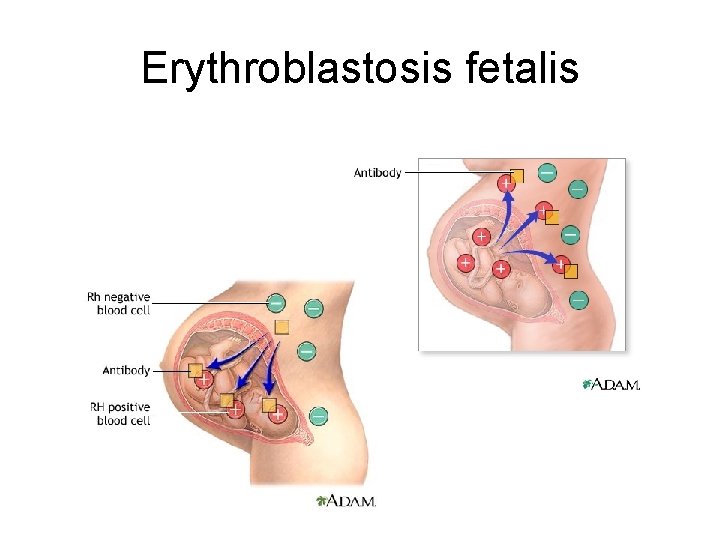
Erythroblastosis fetalis
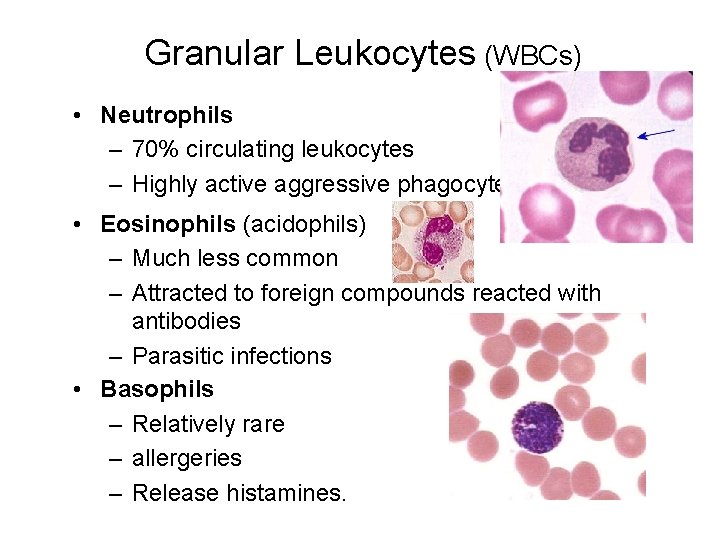
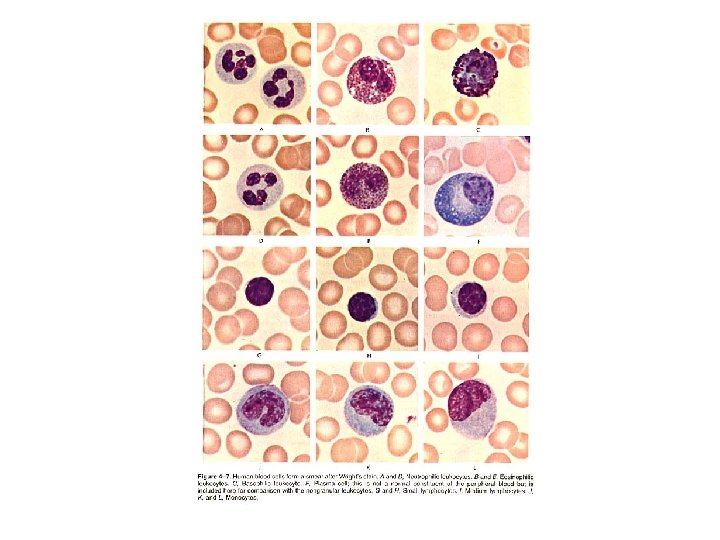
Granular Leukocytes (WBCs) • Neutrophils – 70% circulating leukocytes – Highly active aggressive phagocytes • Eosinophils (acidophils) – Much less common – Attracted to foreign compounds reacted with antibodies – Parasitic infections • Basophils – Relatively rare – allergeries – Release histamines.
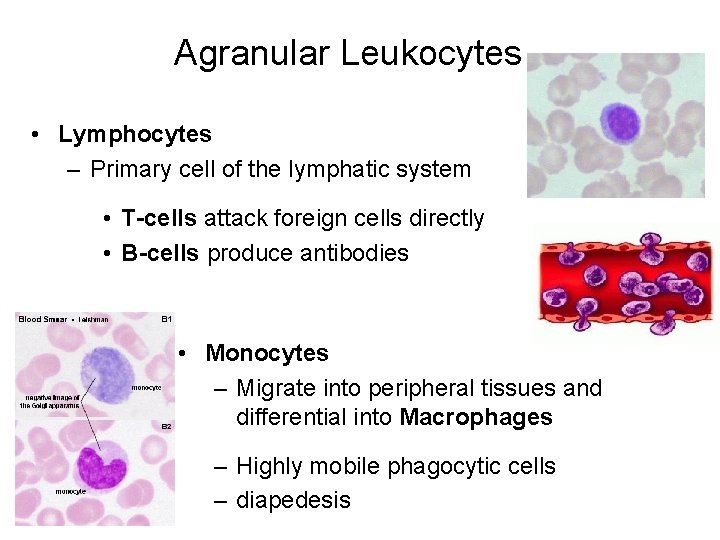
Agranular Leukocytes • Lymphocytes – Primary cell of the lymphatic system • T-cells attack foreign cells directly • B-cells produce antibodies • Monocytes – Migrate into peripheral tissues and differential into Macrophages – Highly mobile phagocytic cells – diapedesis
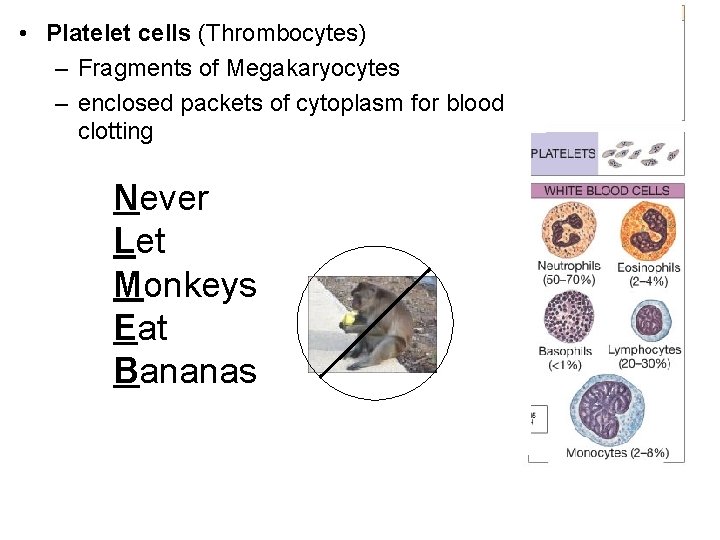
• Platelet cells (Thrombocytes) – Fragments of Megakaryocytes – enclosed packets of cytoplasm for blood clotting Never Let Monkeys Eat Bananas
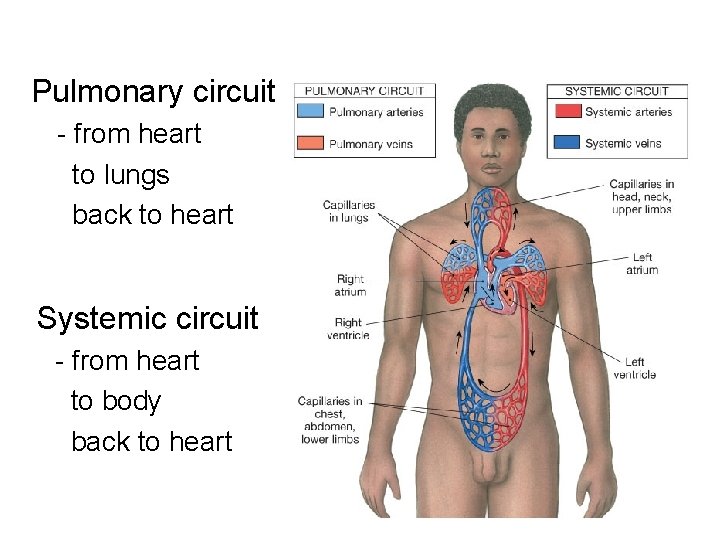
Pulmonary circuit - from heart to lungs back to heart Systemic circuit - from heart to body back to heart
Arteries = vessels that carry blood away from the heart. Veins = vessels that return blood to the heart. Capillaries = smallest vessels, found between smallest arteries and veins. These are the exchange vessels.
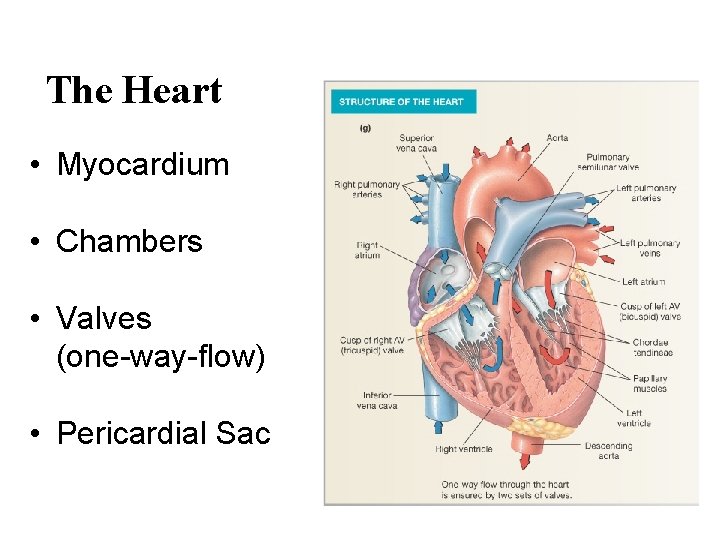
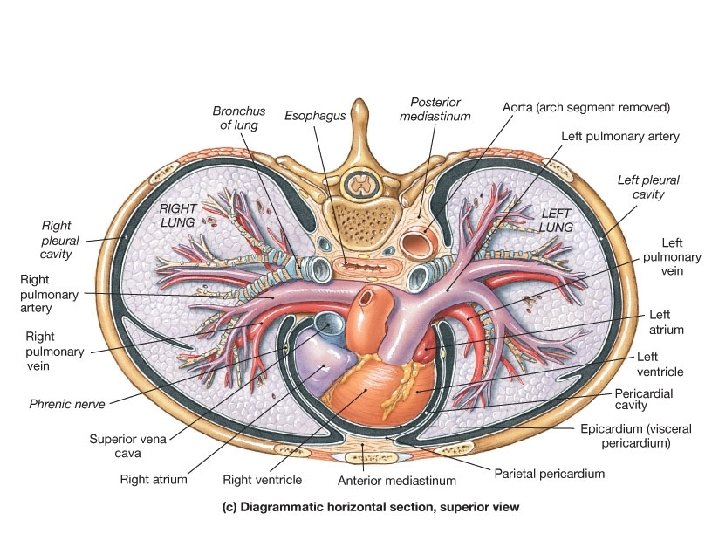
The Heart • Myocardium • Chambers • Valves (one-way-flow) • Pericardial Sac
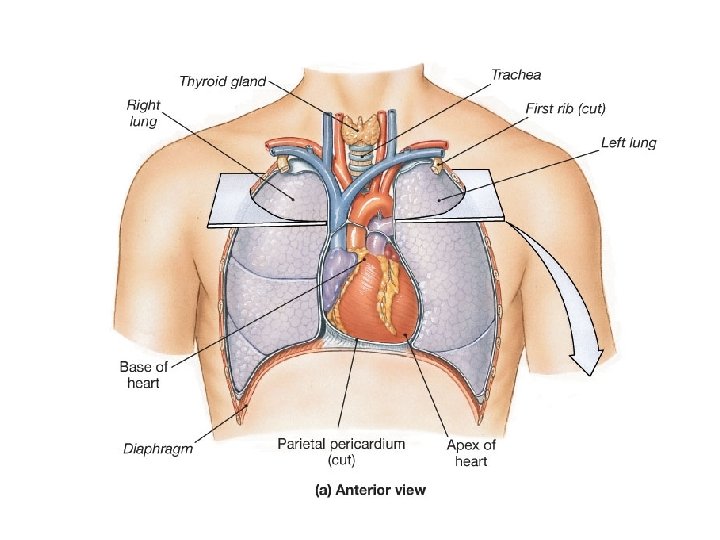
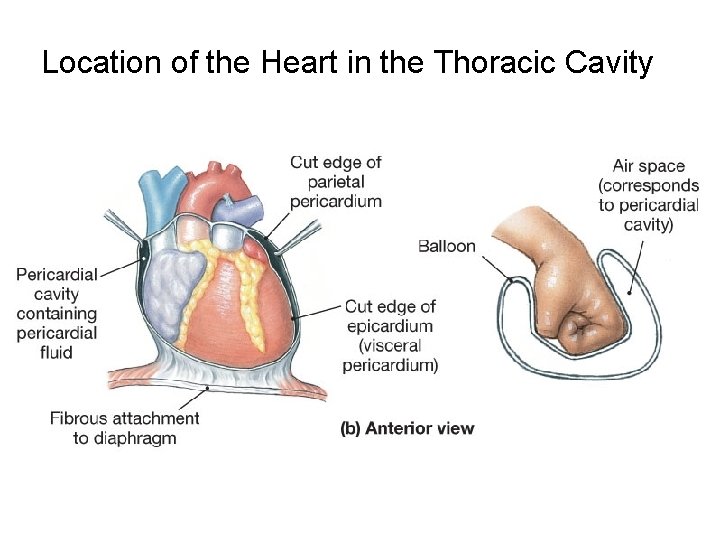
Location of the Heart in the Thoracic Cavity
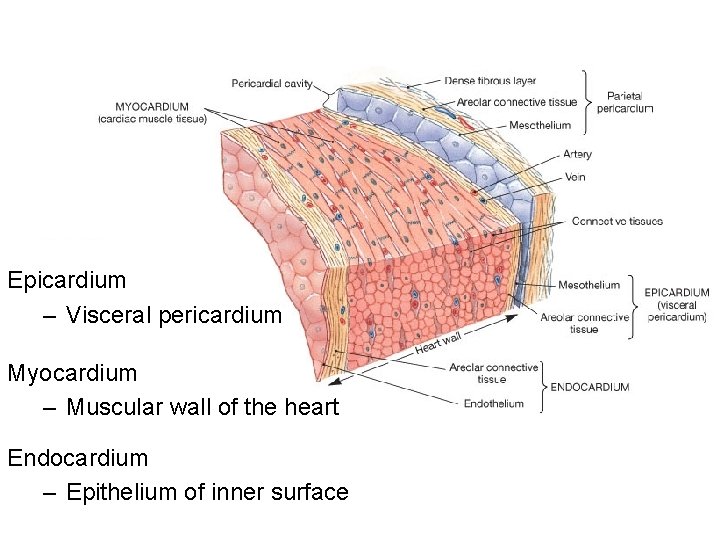
Epicardium – Visceral pericardium Myocardium – Muscular wall of the heart Endocardium – Epithelium of inner surface
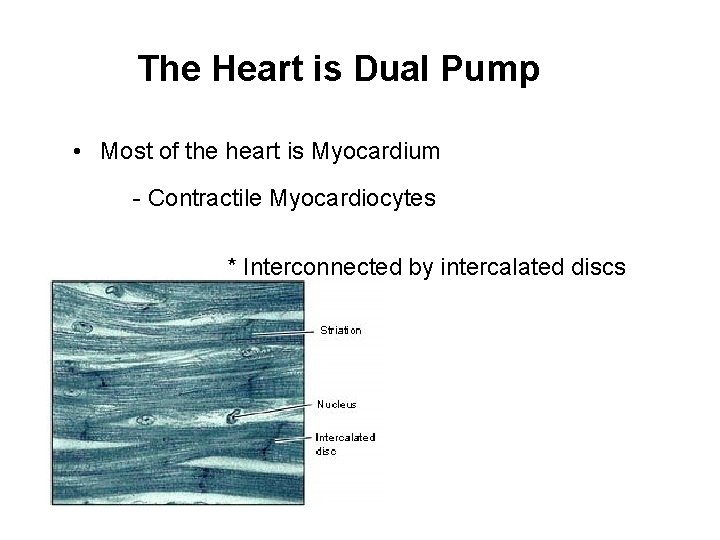
The Heart is Dual Pump • Most of the heart is Myocardium - Contractile Myocardiocytes * Interconnected by intercalated discs
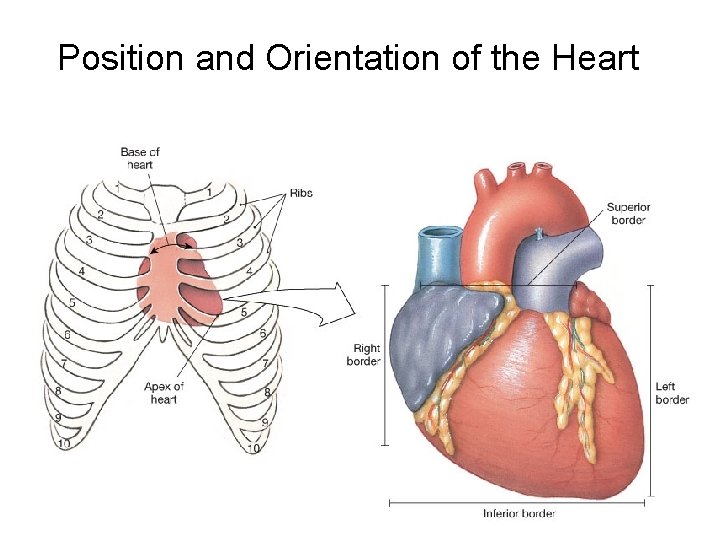
Position and Orientation of the Heart
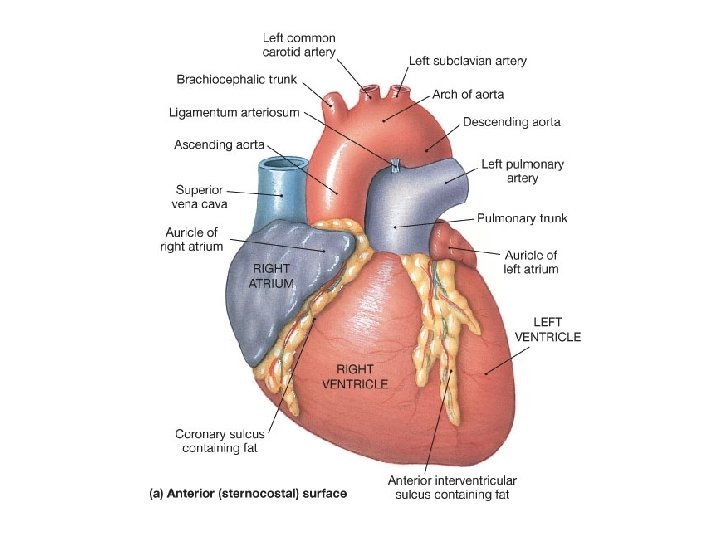
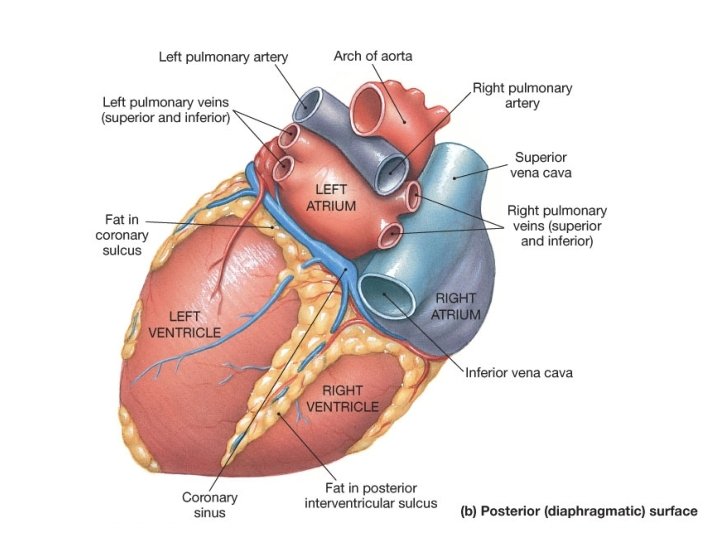
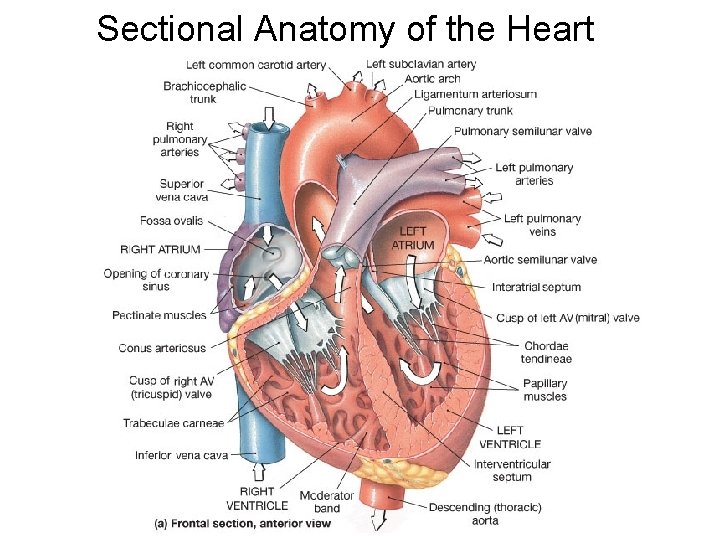
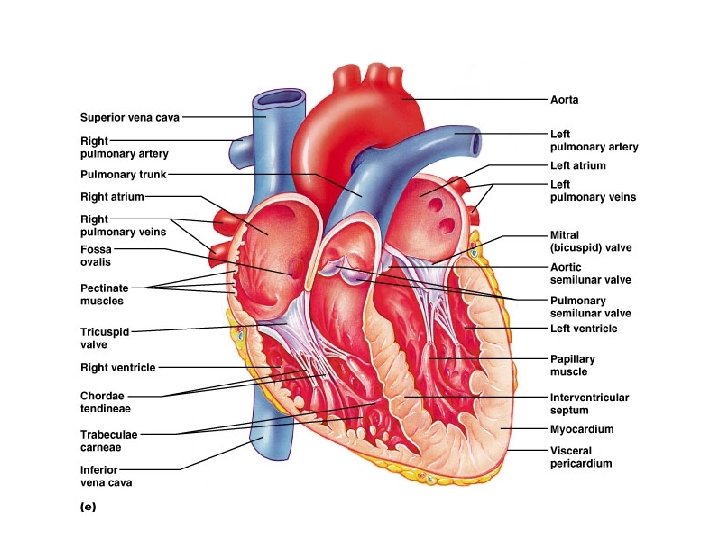
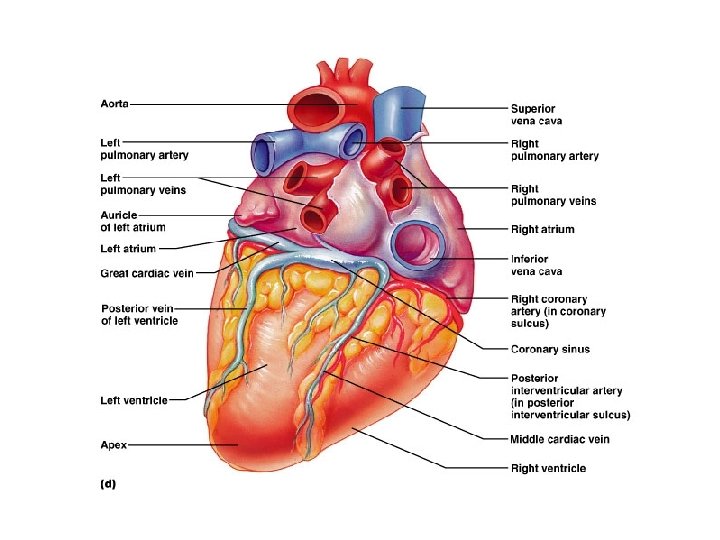
Sectional Anatomy of the Heart
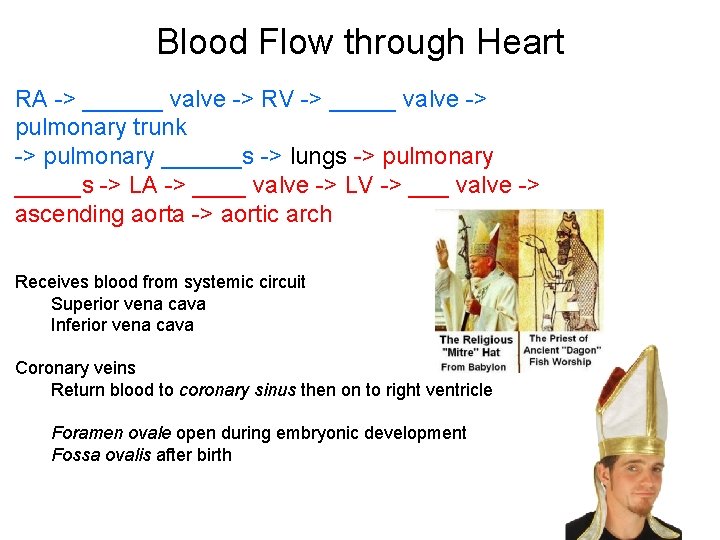
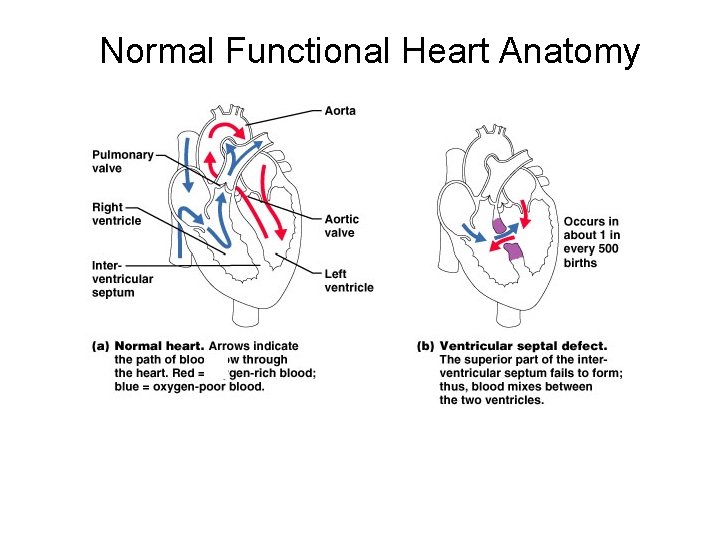
Blood Flow through Heart RA -> ______ valve -> RV -> _____ valve -> pulmonary trunk -> pulmonary ______s -> lungs -> pulmonary _____s -> LA -> ____ valve -> LV -> ___ valve -> ascending aorta -> aortic arch Receives blood from systemic circuit Superior vena cava Inferior vena cava Coronary veins Return blood to coronary sinus then on to right ventricle Foramen ovale open during embryonic development Fossa ovalis after birth
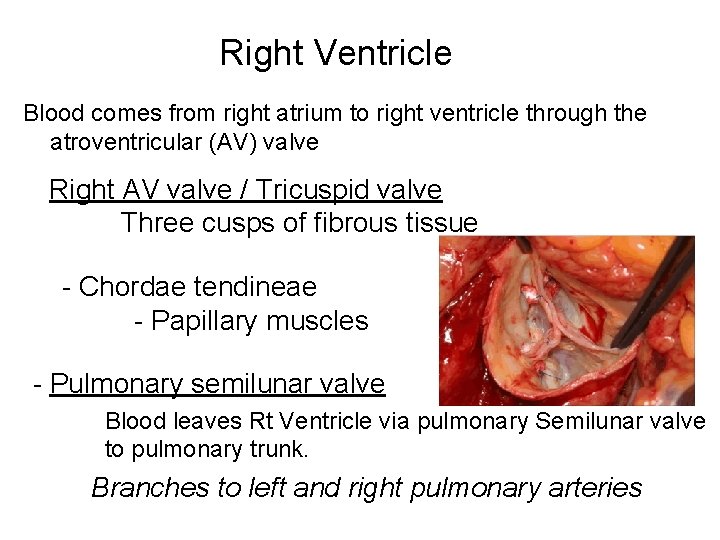
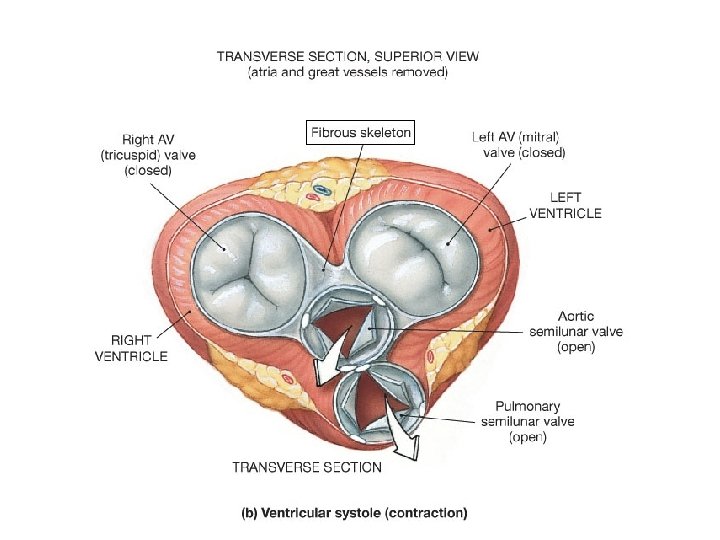
Right Ventricle Blood comes from right atrium to right ventricle through the atroventricular (AV) valve Right AV valve / Tricuspid valve Three cusps of fibrous tissue - Chordae tendineae - Papillary muscles - Pulmonary semilunar valve Blood leaves Rt Ventricle via pulmonary Semilunar valve to pulmonary trunk. Branches to left and right pulmonary arteries
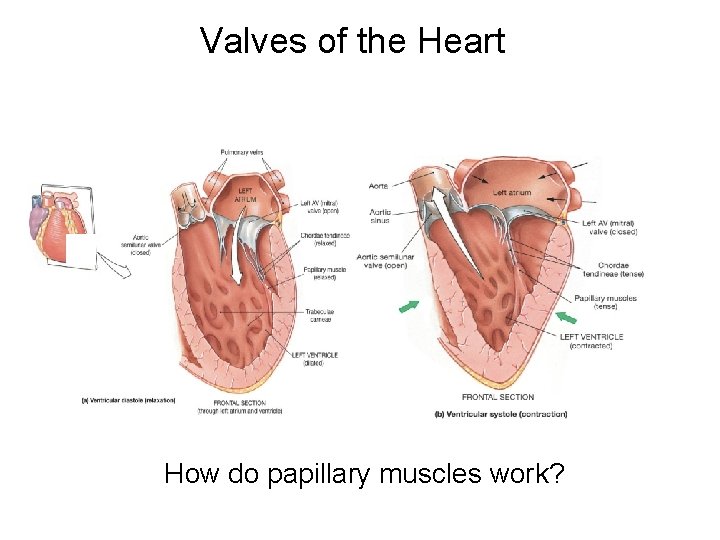
Valves of the Heart How do papillary muscles work?
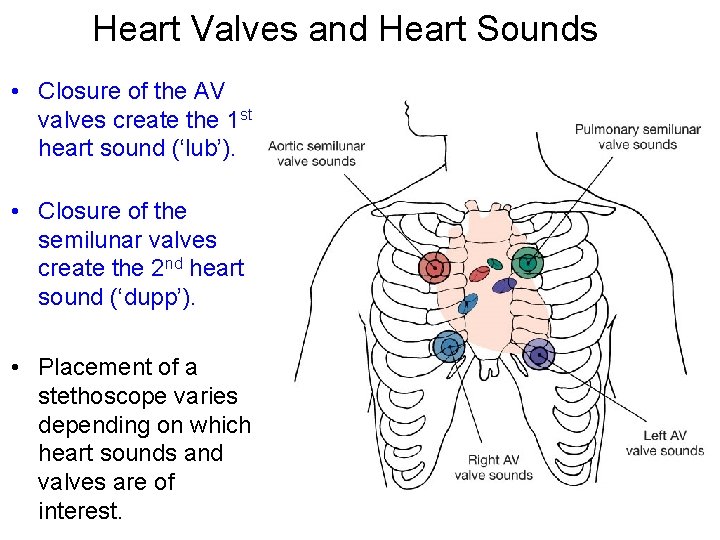
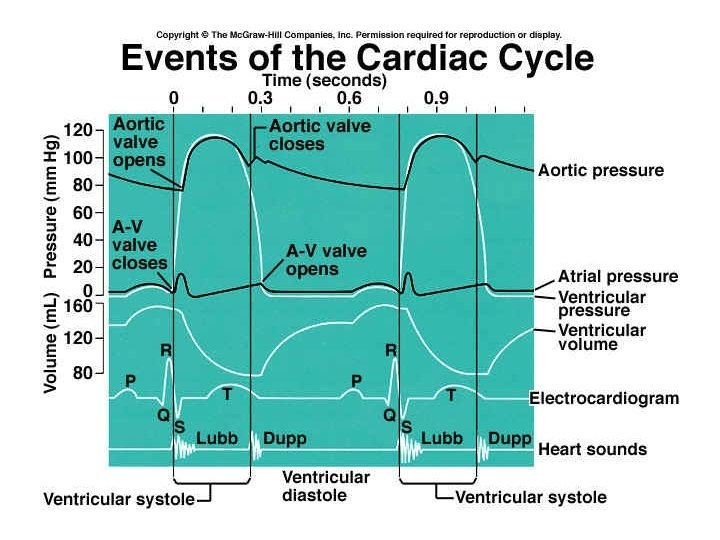
Heart Valves and Heart Sounds • Closure of the AV valves create the 1 st heart sound (‘lub’). • Closure of the semilunar valves create the 2 nd heart sound (‘dupp’). • Placement of a stethoscope varies depending on which heart sounds and valves are of interest.
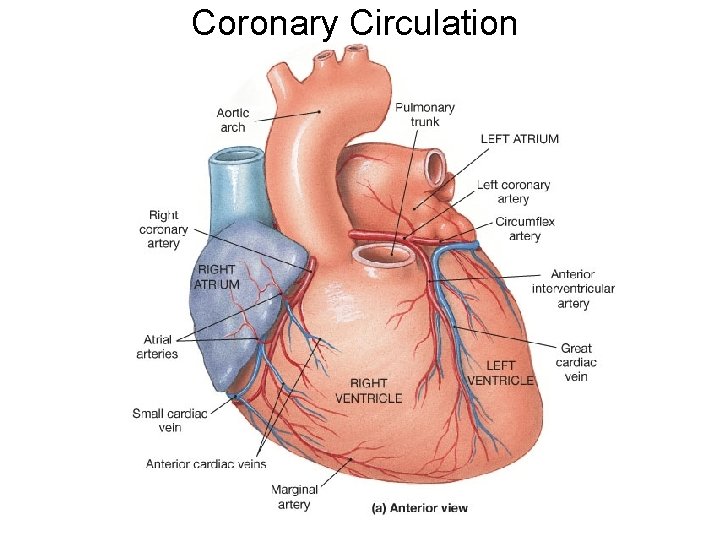
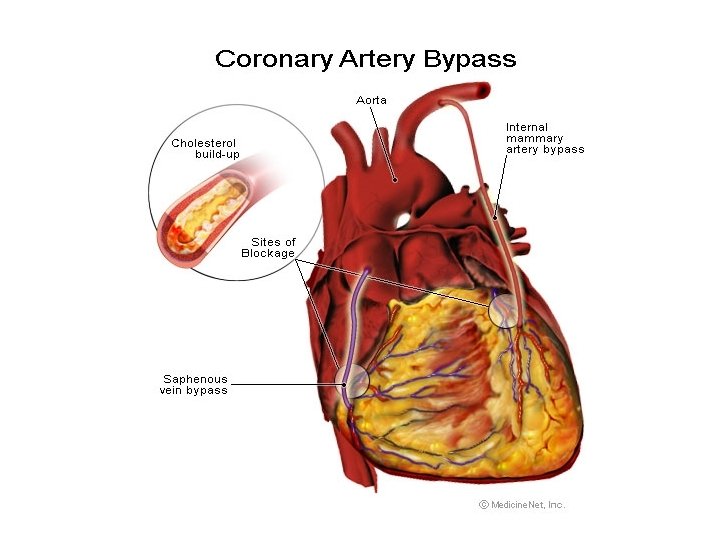
Coronary Circulation
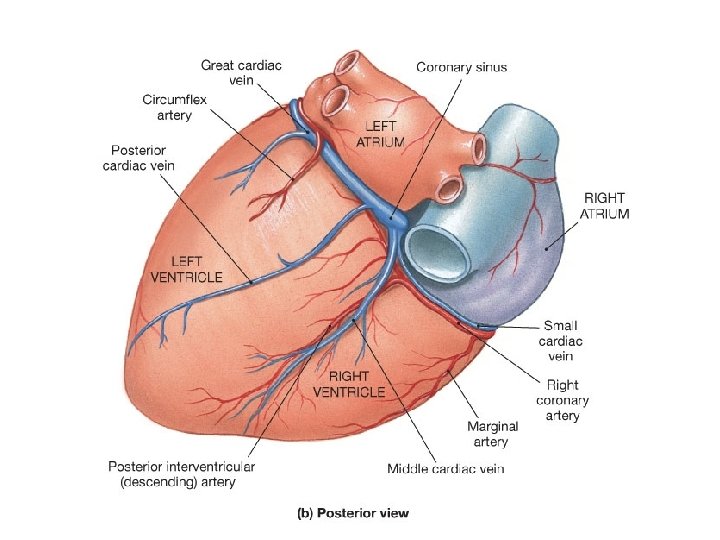
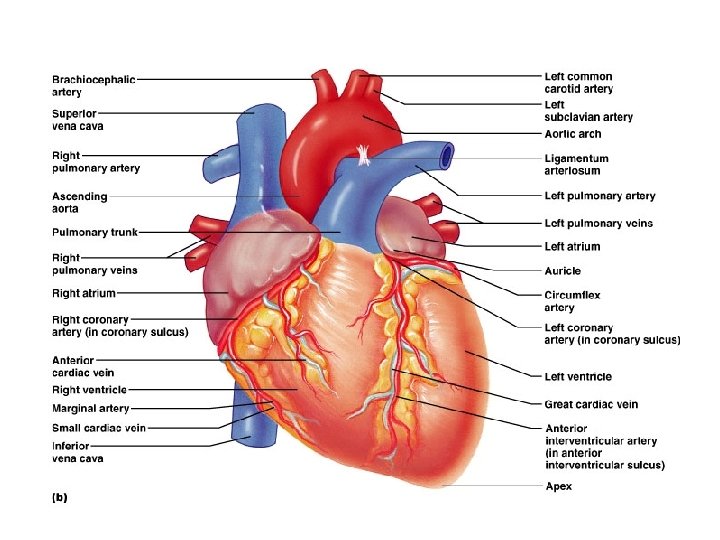
Normal Functional Heart Anatomy
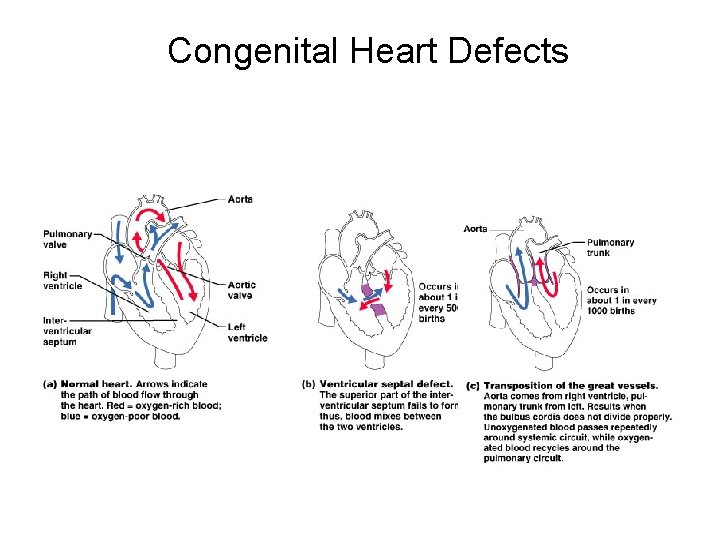
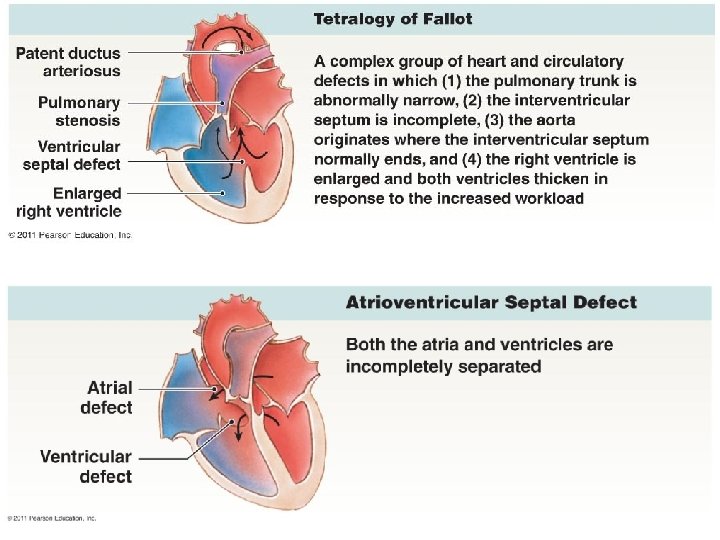
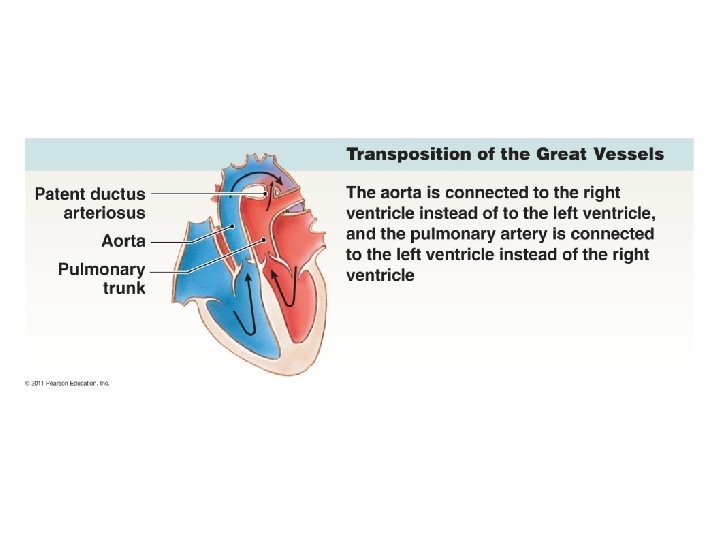
Congenital Heart Defects
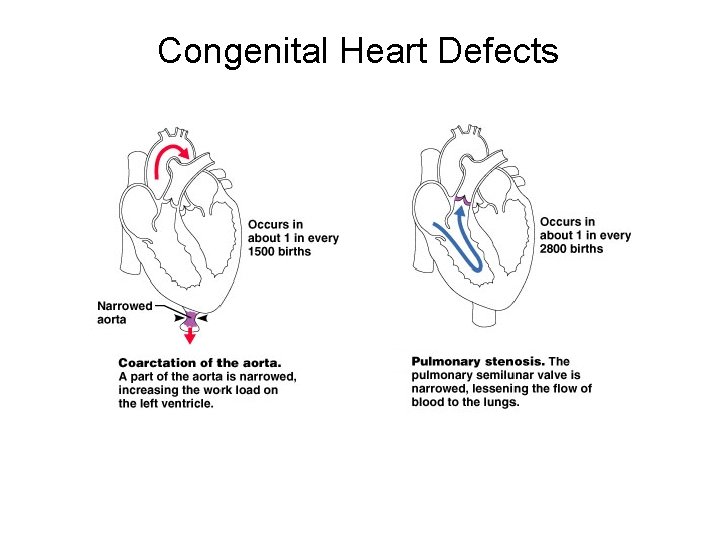
Congenital Heart Defects
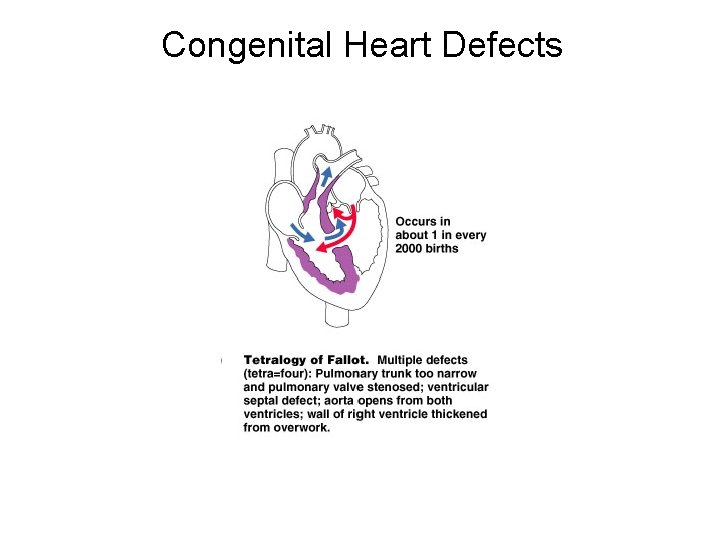
Congenital Heart Defects
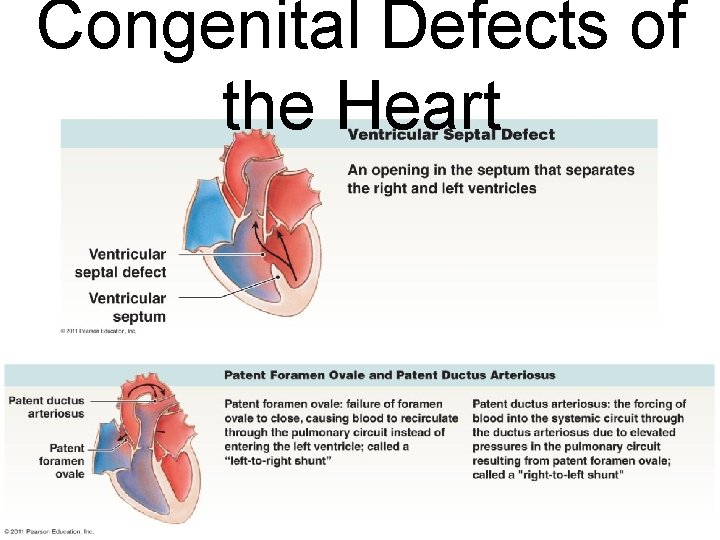
Congenital Defects of the Heart
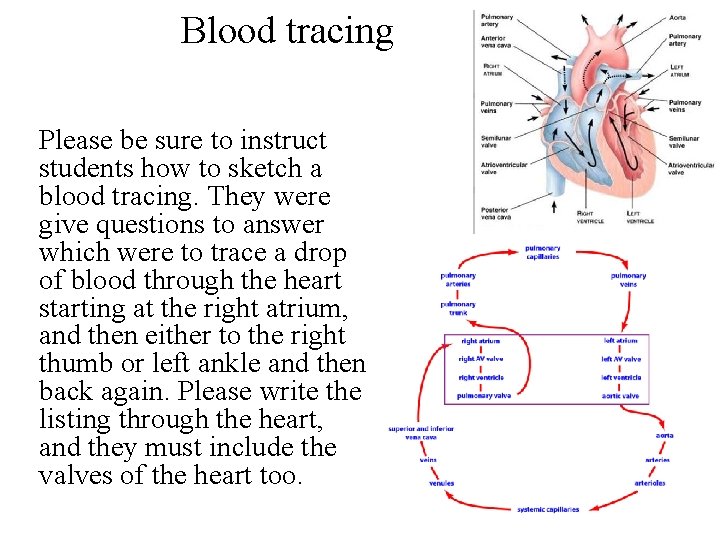
Blood tracing Please be sure to instruct students how to sketch a blood tracing. They were give questions to answer which were to trace a drop of blood through the heart starting at the right atrium, and then either to the right thumb or left ankle and then back again. Please write the listing through the heart, and they must include the valves of the heart too.
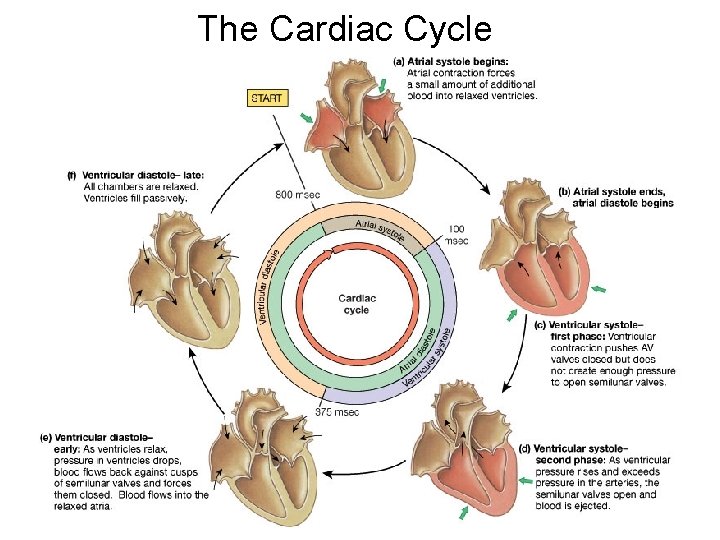
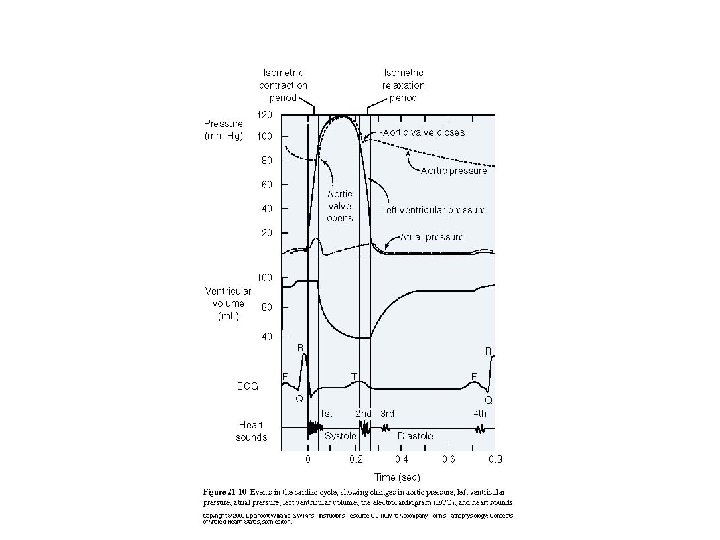
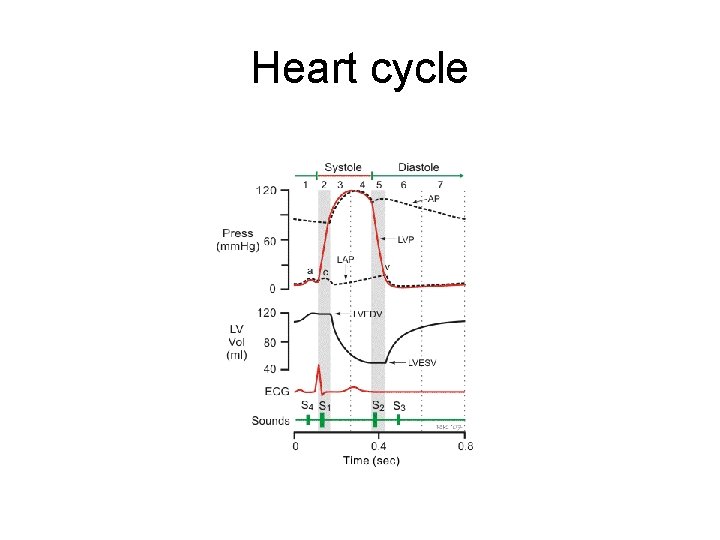
The Cardiac Cycle
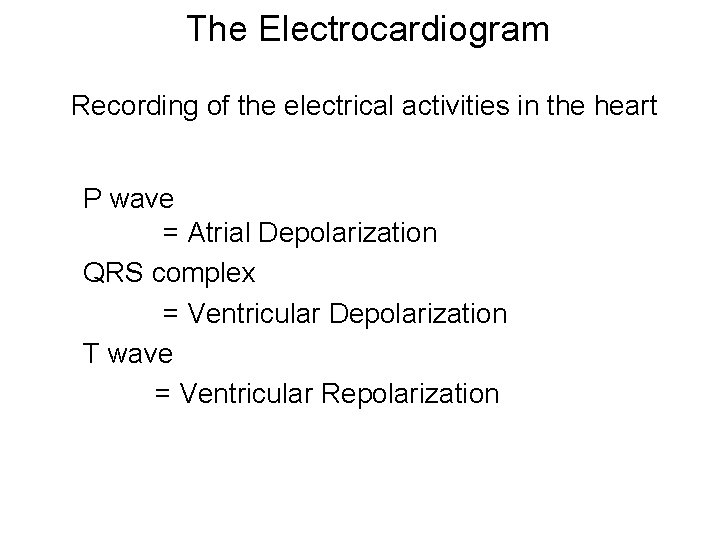
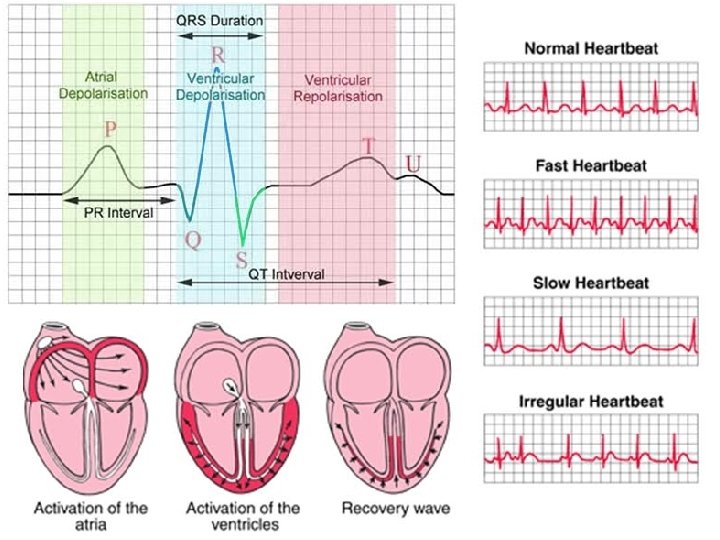
The Electrocardiogram Recording of the electrical activities in the heart P wave = Atrial Depolarization QRS complex = Ventricular Depolarization T wave = Ventricular Repolarization
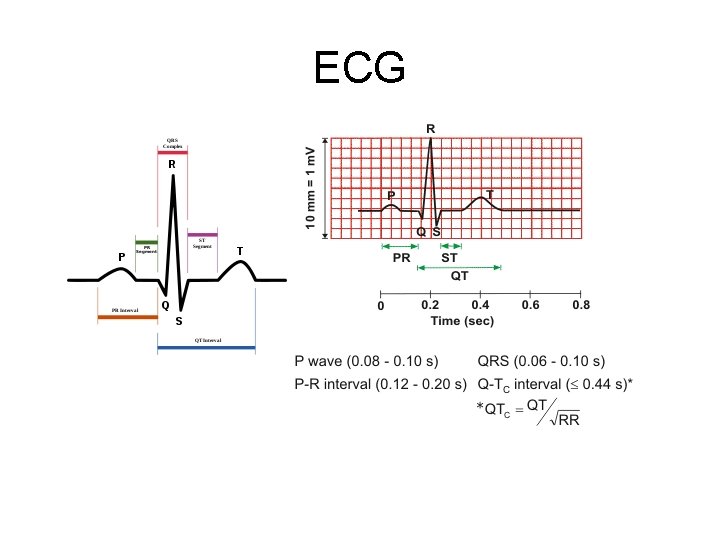
ECG
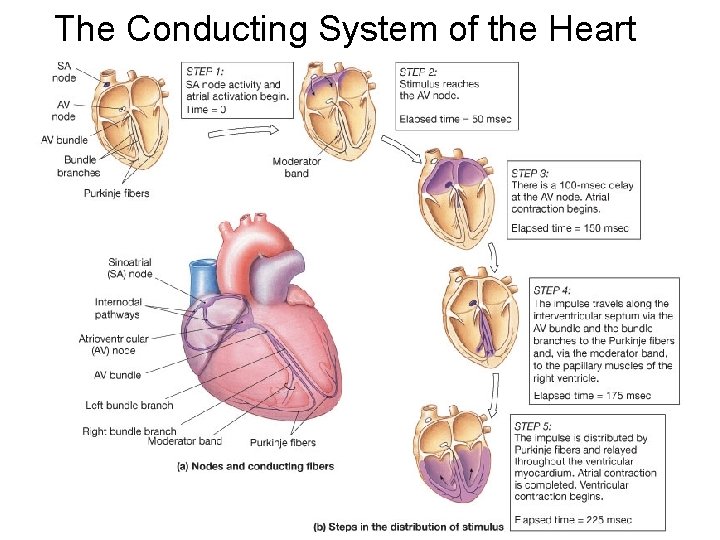
The Conducting System of the Heart
Heart cycle
Blood Pressure

BP

BP
- Slides: 68