
The Cardiac Cycle Pump Function Blood Pressure Hemodynamics
The Cardiac Cycle, Pump Function & Blood Pressure
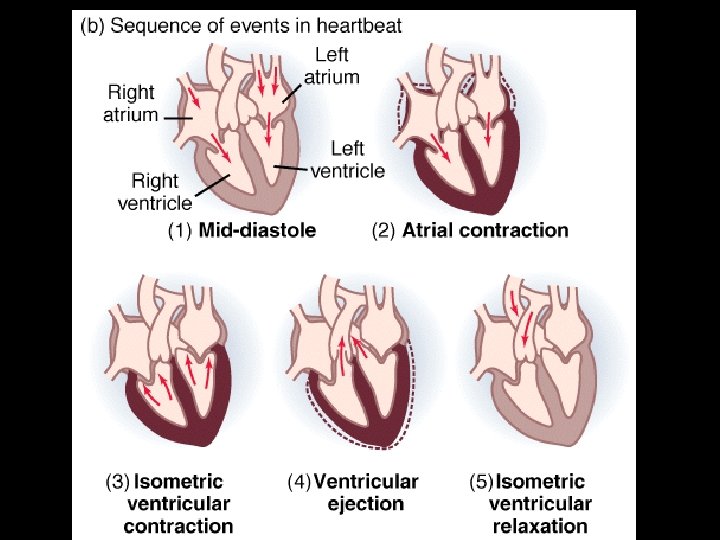

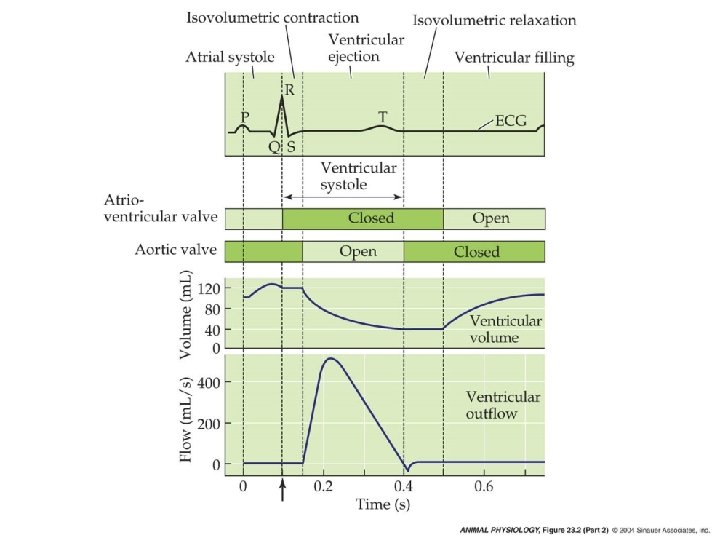

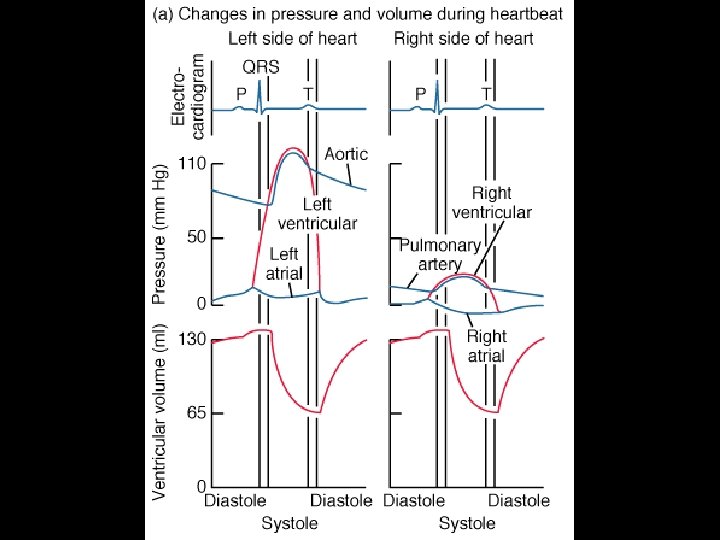

Hemodynamics P = R P 1 Q = blood flow rate (m. L/sec) P= pressure difference between ends of vessels R = resistance Q P 2

Vessel diameter/radius is the most critical factor determining blood flow D = 1, Q = 1 m. L/sec D = 2, Q = 16 m. L/sec D = 4, Q = 256 m. L/sec
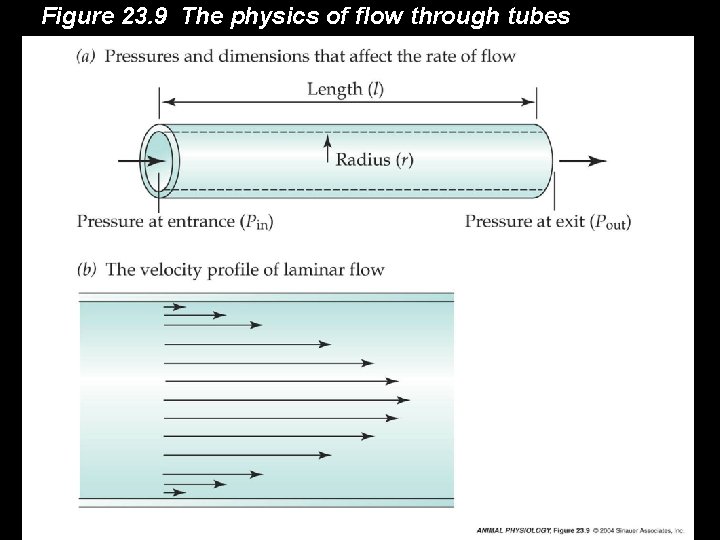
Figure 23. 9 The physics of flow through tubes
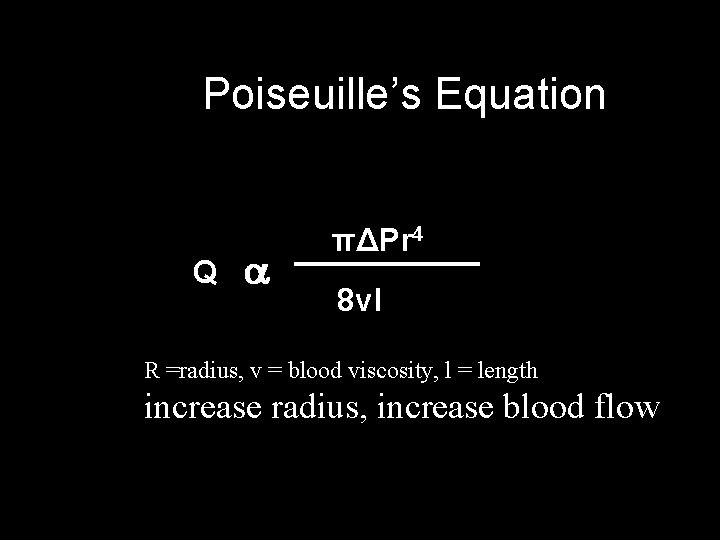
Poiseuille’s Equation Q πΔPr 4 8 vl R =radius, v = blood viscosity, l = length increase radius, increase blood flow
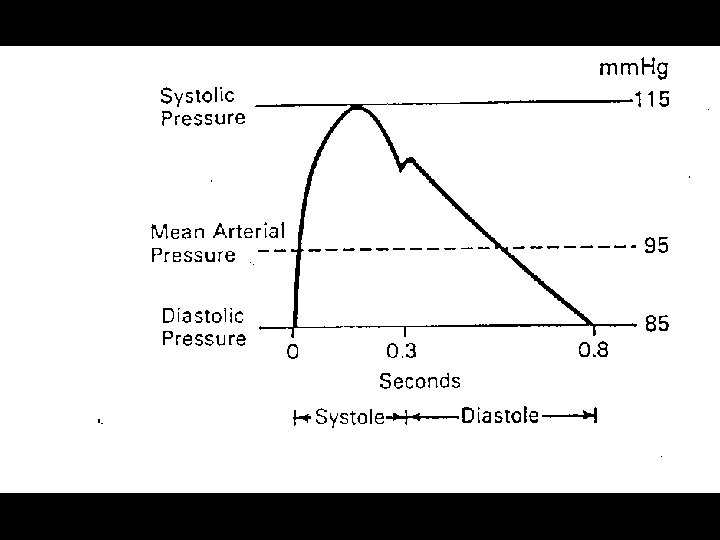
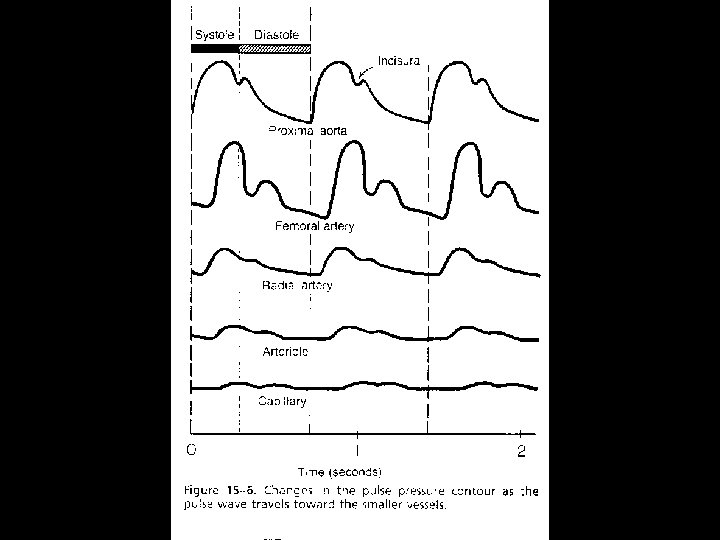
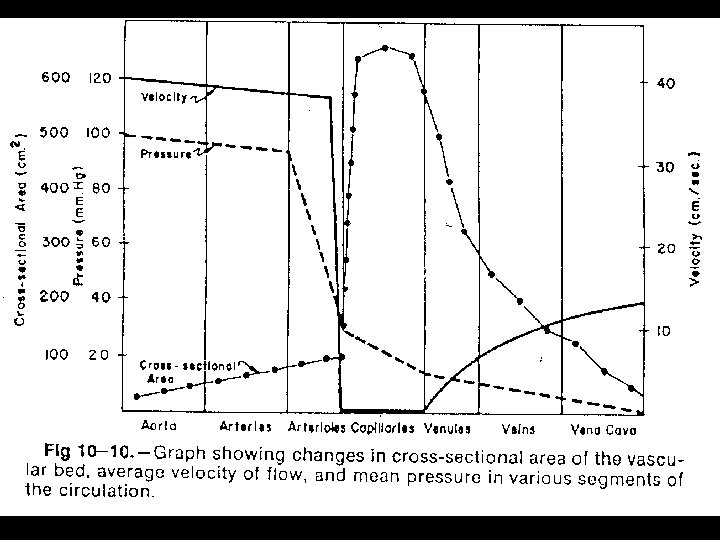
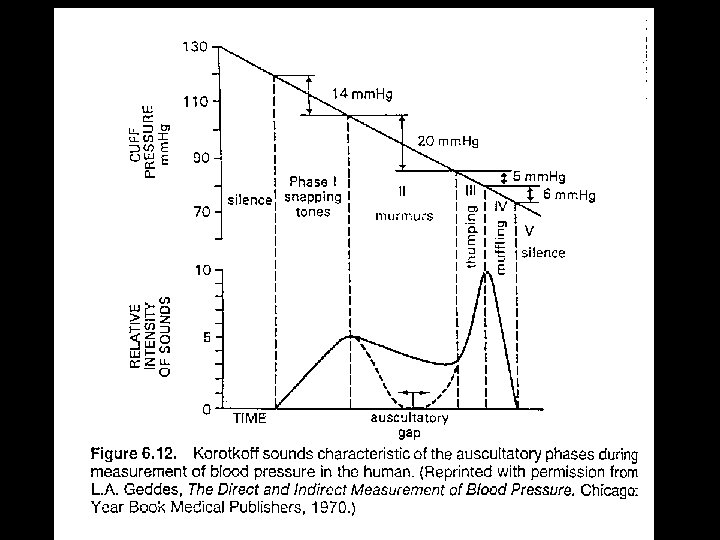
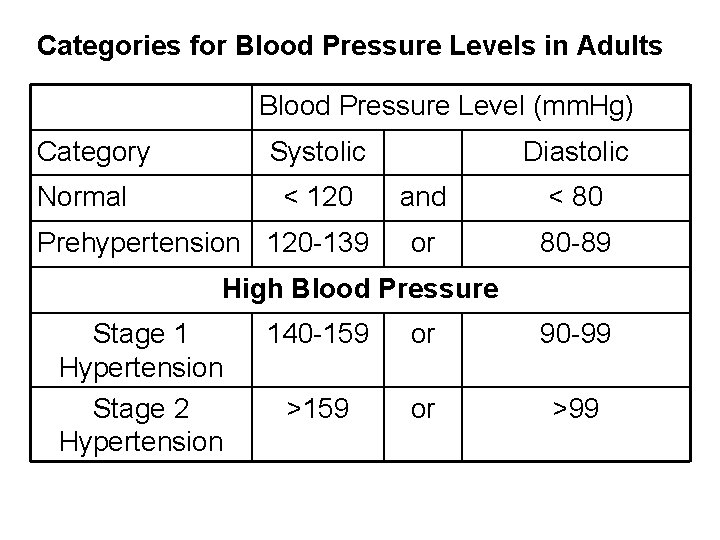
Categories for Blood Pressure Levels in Adults Blood Pressure Level (mm. Hg) Category Systolic Normal < 120 Prehypertension 120 -139 Diastolic and < 80 or 80 -89 High Blood Pressure Stage 1 Hypertension Stage 2 Hypertension 140 -159 or 90 -99 >159 or >99
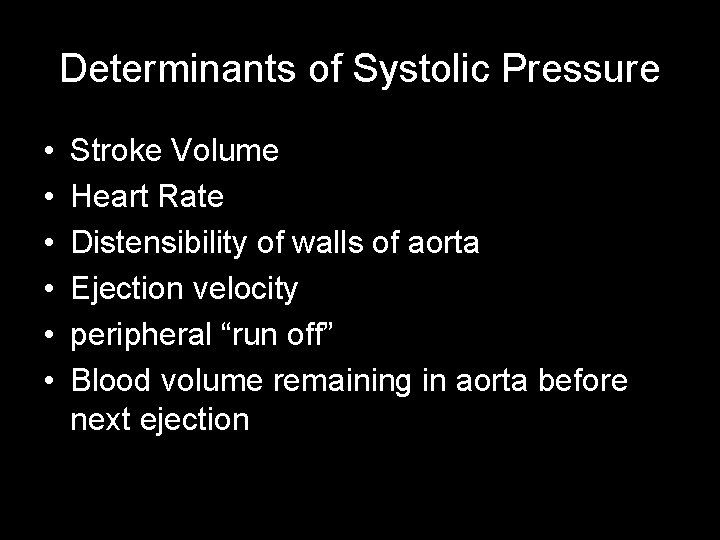
Determinants of Systolic Pressure • • • Stroke Volume Heart Rate Distensibility of walls of aorta Ejection velocity peripheral “run off” Blood volume remaining in aorta before next ejection
Determinants of Diastolic Pressure • • Systolic Pressure Aortic Distensibility Rate of peripheral “run off” Heart Rate (duration of diastole)
Effects of Posture on BP • Supine mean arterial BP=100 mm. Hg • Upright pressure varies with level above or below the heart – For every 1 cm above heart, pressure decreases by. 77 mm. Hg. – For every 1 cm below heart, pressure increases by. 77 mm. Hg.
- Slides: 23