
The Carbon Cycle Down to details store a
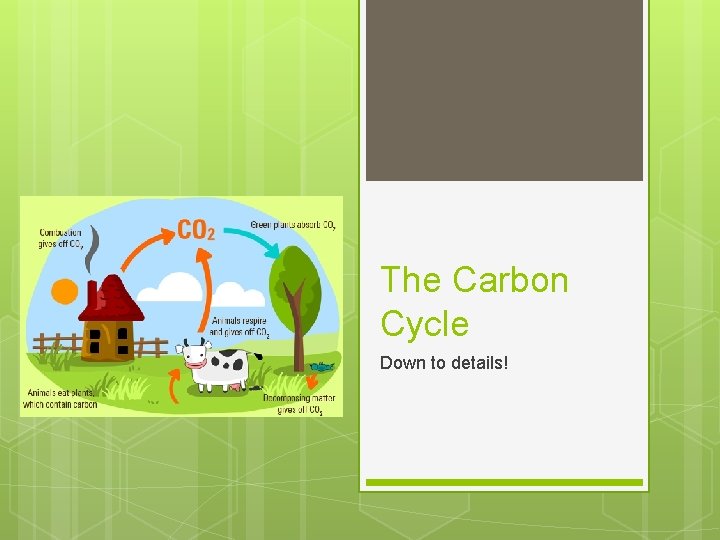
The Carbon Cycle Down to details!
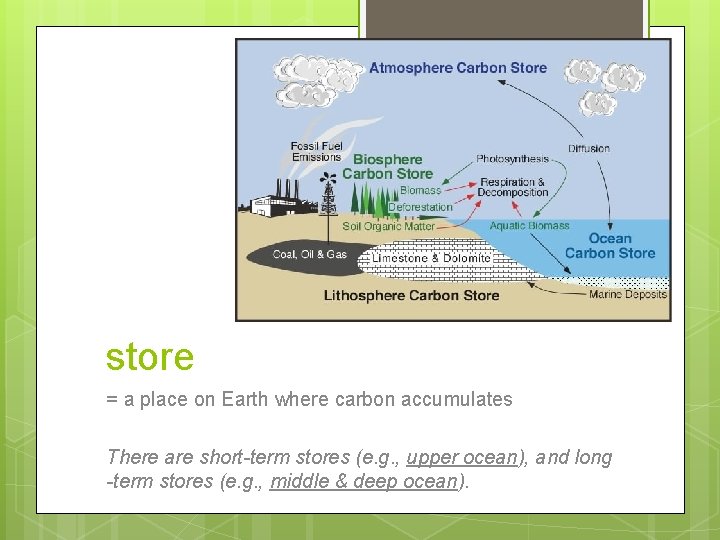
store = a place on Earth where carbon accumulates There are short-term stores (e. g. , upper ocean), and long -term stores (e. g. , middle & deep ocean).
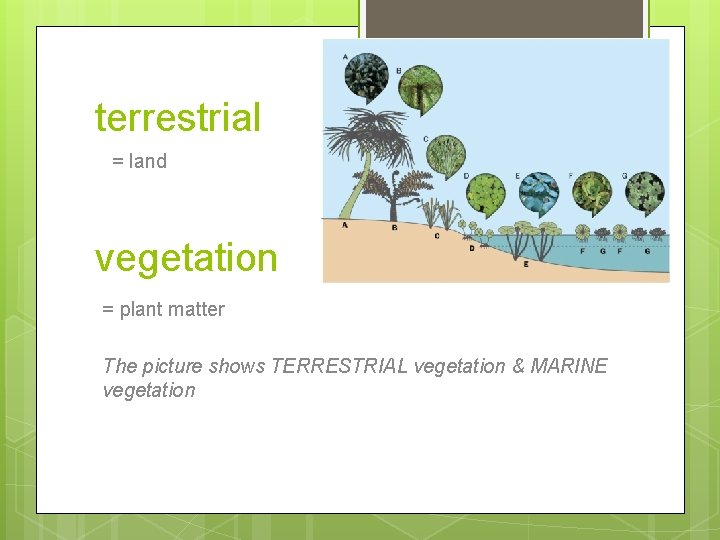
terrestrial = land vegetation = plant matter The picture shows TERRESTRIAL vegetation & MARINE vegetation
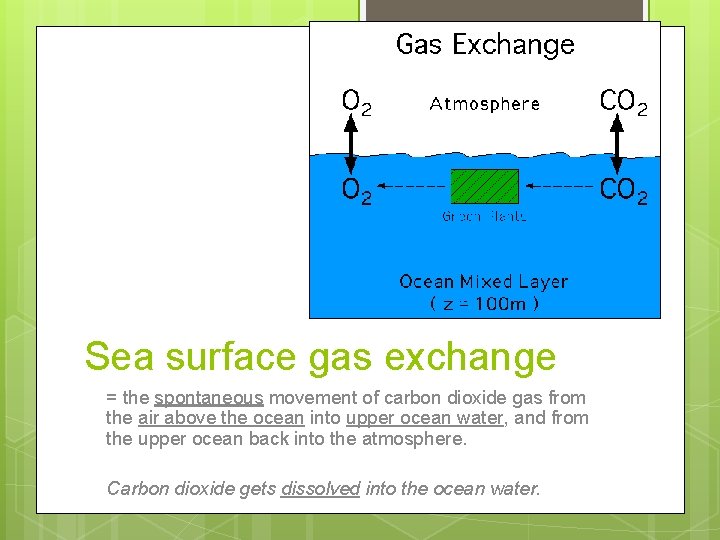
Sea surface gas exchange = the spontaneous movement of carbon dioxide gas from the air above the ocean into upper ocean water, and from the upper ocean back into the atmosphere. Carbon dioxide gets dissolved into the ocean water.
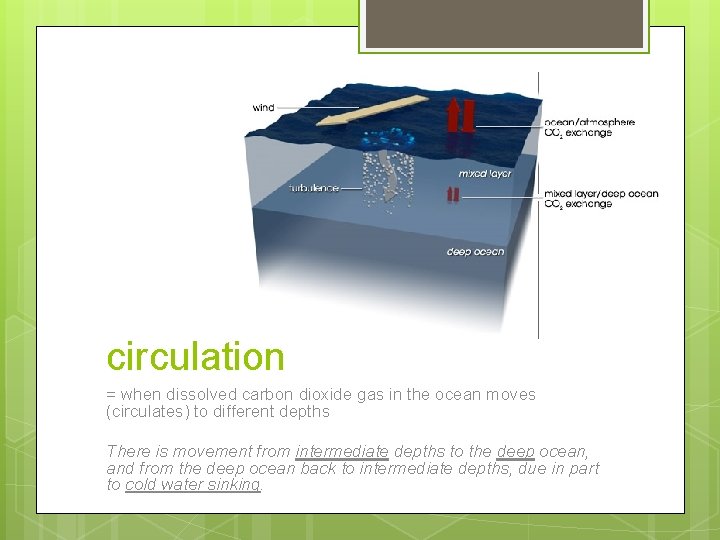
circulation = when dissolved carbon dioxide gas in the ocean moves (circulates) to different depths There is movement from intermediate depths to the deep ocean, and from the deep ocean back to intermediate depths, due in part to cold water sinking.
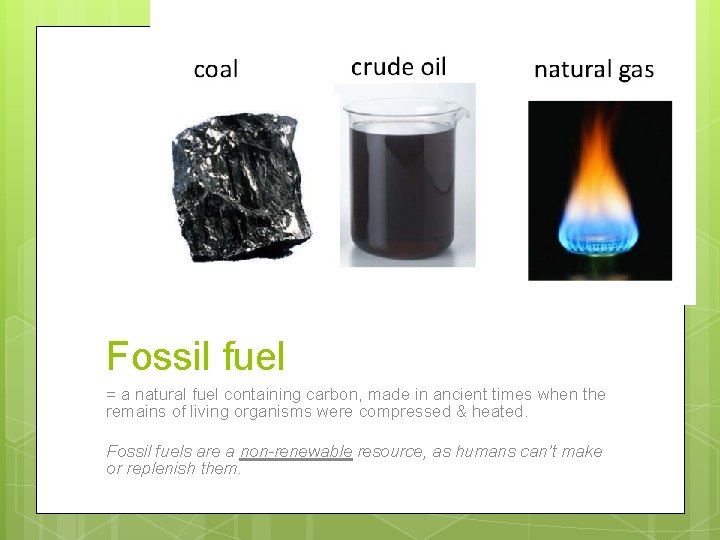
Fossil fuel = a natural fuel containing carbon, made in ancient times when the remains of living organisms were compressed & heated. Fossil fuels are a non-renewable resource, as humans can’t make or replenish them.
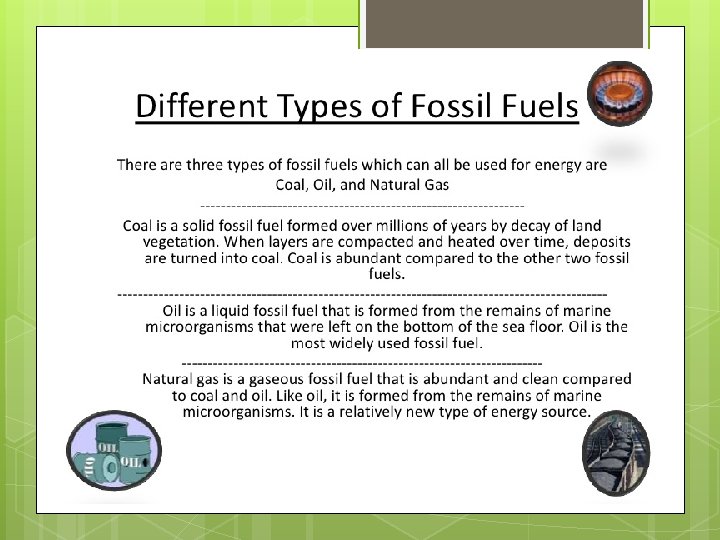
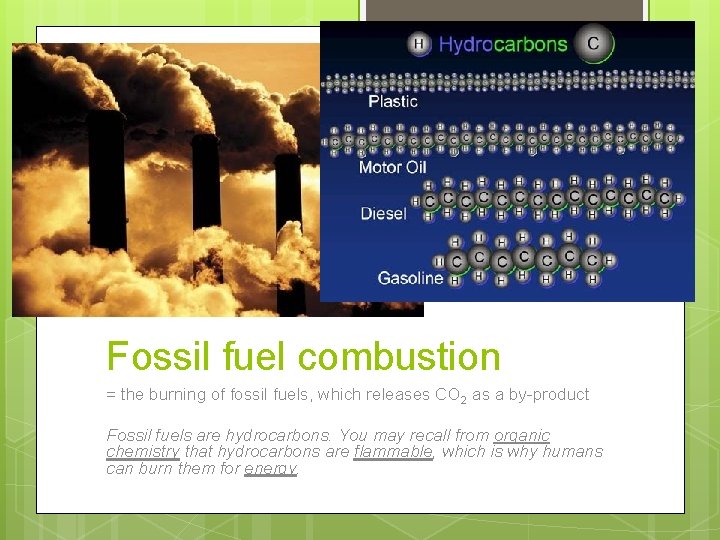
Fossil fuel combustion = the burning of fossil fuels, which releases CO 2 as a by-product Fossil fuels are hydrocarbons. You may recall from organic chemistry that hydrocarbons are flammable, which is why humans can burn them for energy.
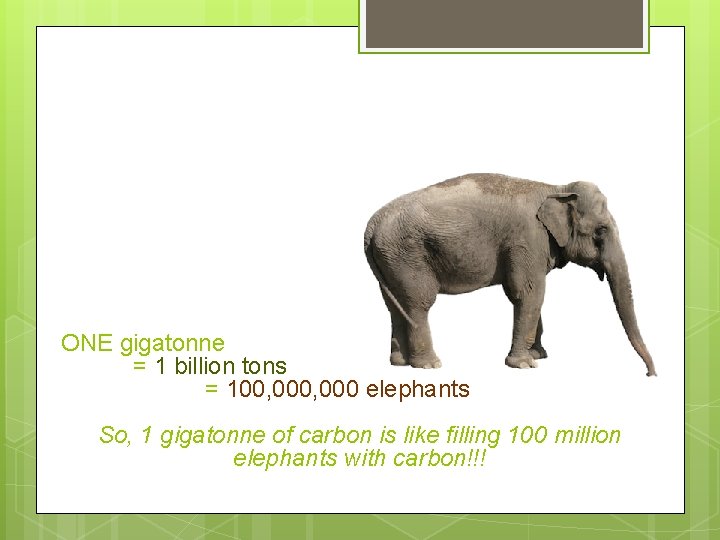
ONE gigatonne = 1 billion tons = 100, 000 elephants So, 1 gigatonne of carbon is like filling 100 million elephants with carbon!!!
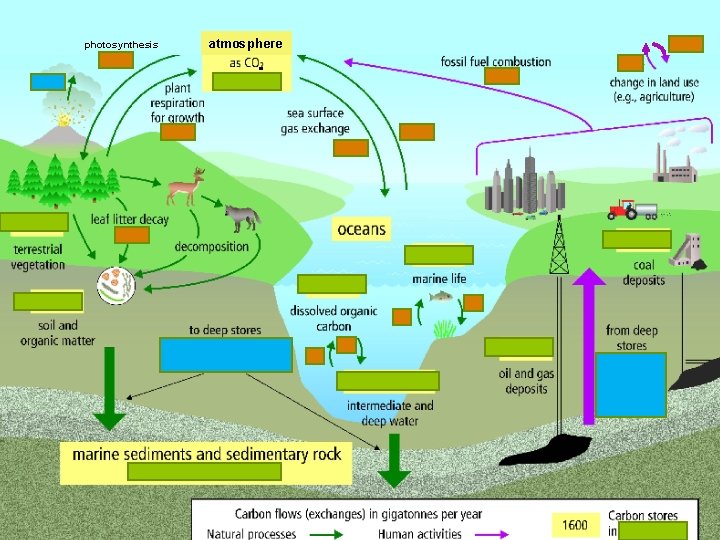
photosynthesis atmosphere ATMOSPHERE 0. 5
Link to “Carbon Cycle Movie” https: //fc. deltasd. bc. ca/~mannandale/sc 10/version 2. html
- Slides: 11