
The Canterbury Tales Geoffrey Chaucer Literary Term Glossary
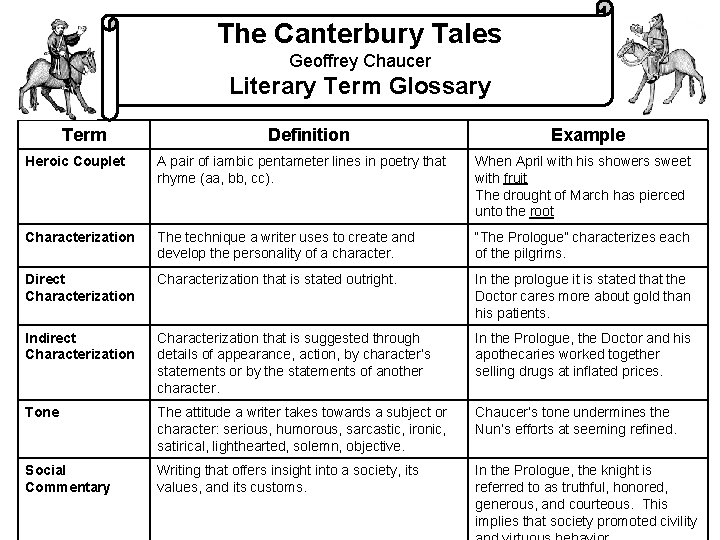
The Canterbury Tales Geoffrey Chaucer Literary Term Glossary Term Definition Example Heroic Couplet A pair of iambic pentameter lines in poetry that rhyme (aa, bb, cc). When April with his showers sweet with fruit The drought of March has pierced unto the root Characterization The technique a writer uses to create and develop the personality of a character. “The Prologue” characterizes each of the pilgrims. Direct Characterization that is stated outright. In the prologue it is stated that the Doctor cares more about gold than his patients. Indirect Characterization that is suggested through details of appearance, action, by character’s statements or by the statements of another character. In the Prologue, the Doctor and his apothecaries worked together selling drugs at inflated prices. Tone The attitude a writer takes towards a subject or character: serious, humorous, sarcastic, ironic, satirical, lighthearted, solemn, objective. Chaucer’s tone undermines the Nun’s efforts at seeming refined. Social Commentary Writing that offers insight into a society, its values, and its customs. In the Prologue, the knight is referred to as truthful, honored, generous, and courteous. This implies that society promoted civility
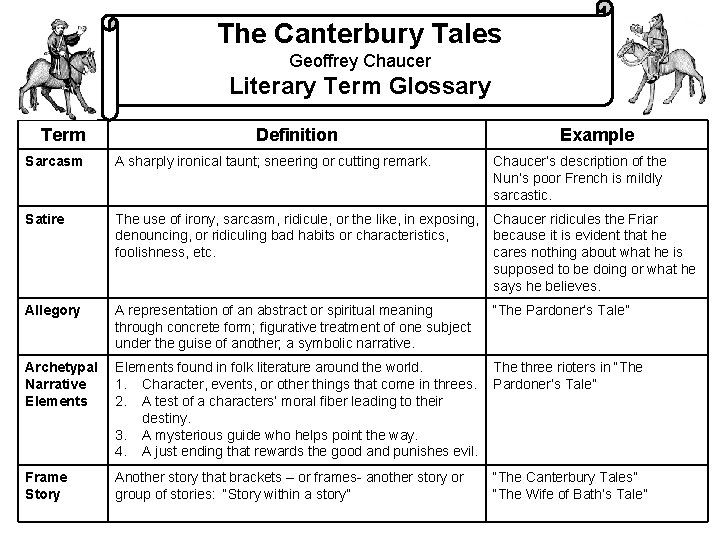
The Canterbury Tales Geoffrey Chaucer Literary Term Glossary Term Definition Example Sarcasm A sharply ironical taunt; sneering or cutting remark. Chaucer’s description of the Nun’s poor French is mildly sarcastic. Satire The use of irony, sarcasm, ridicule, or the like, in exposing, denouncing, or ridiculing bad habits or characteristics, foolishness, etc. Chaucer ridicules the Friar because it is evident that he cares nothing about what he is supposed to be doing or what he says he believes. Allegory A representation of an abstract or spiritual meaning through concrete form; figurative treatment of one subject under the guise of another; a symbolic narrative. “The Pardoner’s Tale” Archetypal Narrative Elements found in folk literature around the world. 1. Character, events, or other things that come in threes. 2. A test of a characters’ moral fiber leading to their destiny. 3. A mysterious guide who helps point the way. 4. A just ending that rewards the good and punishes evil. The three rioters in “The Pardoner’s Tale” Frame Story Another story that brackets – or frames- another story or group of stories: “Story within a story” “The Canterbury Tales” “The Wife of Bath’s Tale”
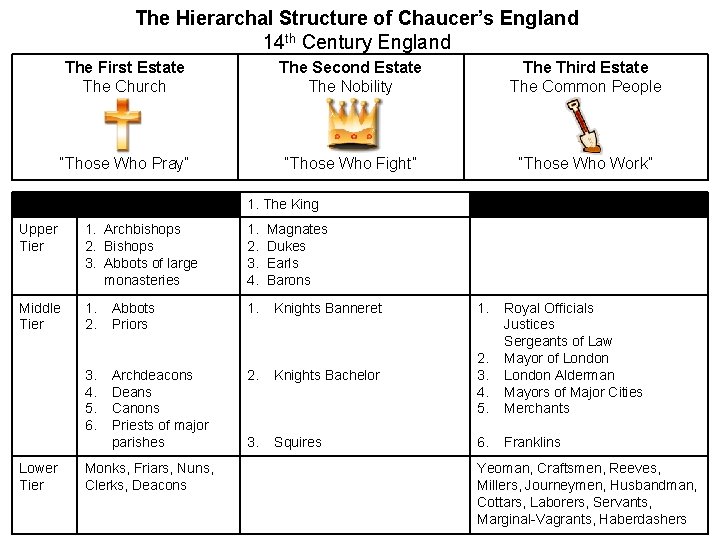
The Hierarchal Structure of Chaucer’s England 14 th Century England The First Estate The Church The Second Estate The Nobility The Third Estate The Common People “Those Who Pray” “Those Who Fight” “Those Who Work” 1. The King Upper Tier 1. Archbishops 2. Bishops 3. Abbots of large monasteries 1. 2. 3. 4. Middle Tier 1. 2. 1. 3. 4. 5. 6. Lower Tier Abbots Priors Archdeacons Deans Canons Priests of major parishes Monks, Friars, Nuns, Clerks, Deacons Magnates Dukes Earls Barons Knights Banneret 2. Knights Bachelor 3. Squires 1. 2. 3. 4. 5. Royal Officials Justices Sergeants of Law Mayor of London Alderman Mayors of Major Cities Merchants 6. Franklins Yeoman, Craftsmen, Reeves, Millers, Journeymen, Husbandman, Cottars, Laborers, Servants, Marginal-Vagrants, Haberdashers
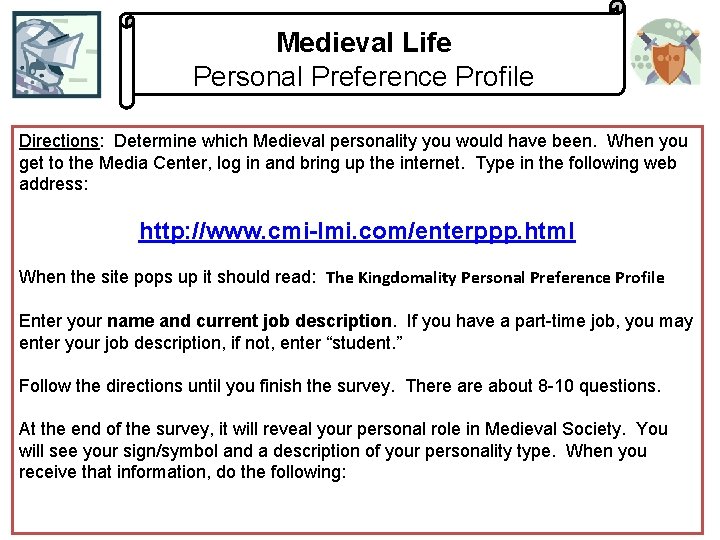
Medieval Life Personal Preference Profile Directions: Determine which Medieval personality you would have been. When you get to the Media Center, log in and bring up the internet. Type in the following web address: http: //www. cmi-lmi. com/enterppp. html When the site pops up it should read: The Kingdomality Personal Preference Profile Enter your name and current job description. If you have a part-time job, you may enter your job description, if not, enter “student. ” Follow the directions until you finish the survey. There about 8 -10 questions. At the end of the survey, it will reveal your personal role in Medieval Society. You will see your sign/symbol and a description of your personality type. When you receive that information, do the following:
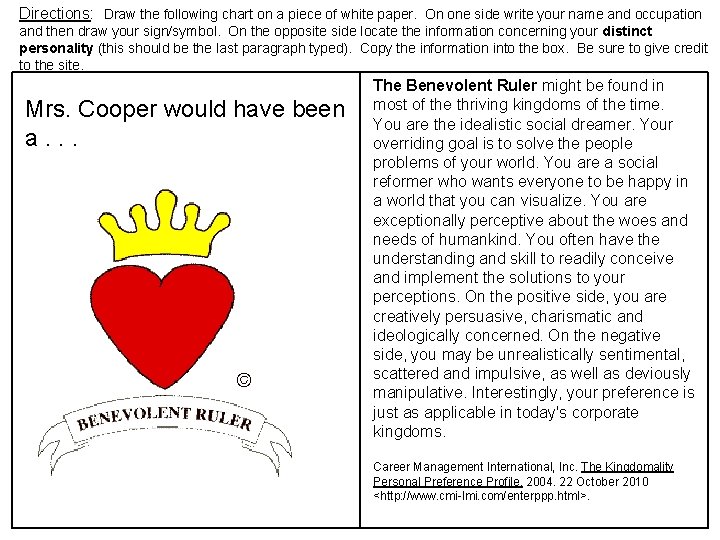
Directions: Draw the following chart on a piece of white paper. On one side write your name and occupation and then draw your sign/symbol. On the opposite side locate the information concerning your distinct personality (this should be the last paragraph typed). Copy the information into the box. Be sure to give credit to the site. Mrs. Cooper would have been a. . . The Benevolent Ruler might be found in most of the thriving kingdoms of the time. You are the idealistic social dreamer. Your overriding goal is to solve the people problems of your world. You are a social reformer who wants everyone to be happy in a world that you can visualize. You are exceptionally perceptive about the woes and needs of humankind. You often have the understanding and skill to readily conceive and implement the solutions to your perceptions. On the positive side, you are creatively persuasive, charismatic and ideologically concerned. On the negative side, you may be unrealistically sentimental, scattered and impulsive, as well as deviously manipulative. Interestingly, your preference is just as applicable in today's corporate kingdoms. Career Management International, Inc. The Kingdomality Personal Preference Profile. 2004. 22 October 2010 <http: //www. cmi-lmi. com/enterppp. html>.
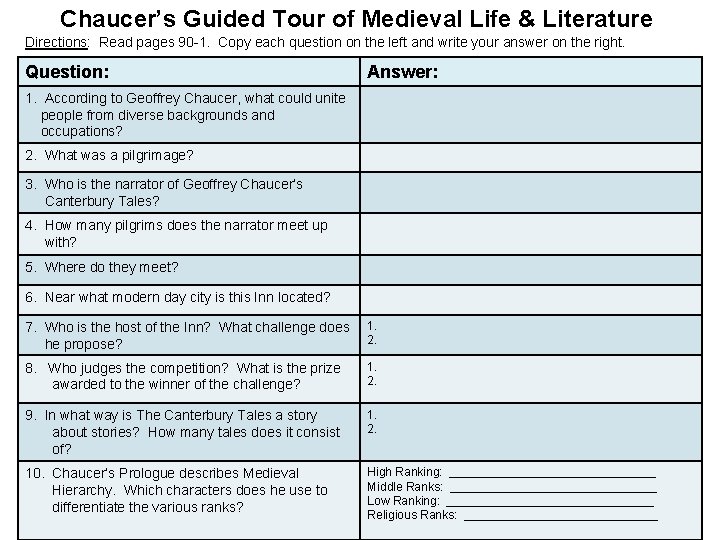
Chaucer’s Guided Tour of Medieval Life & Literature Directions: Read pages 90 -1. Copy each question on the left and write your answer on the right. Question: Answer: 1. According to Geoffrey Chaucer, what could unite people from diverse backgrounds and occupations? 2. What was a pilgrimage? 3. Who is the narrator of Geoffrey Chaucer’s Canterbury Tales? 4. How many pilgrims does the narrator meet up with? 5. Where do they meet? 6. Near what modern day city is this Inn located? 7. Who is the host of the Inn? What challenge does he propose? 1. 2. 8. Who judges the competition? What is the prize awarded to the winner of the challenge? 1. 2. 9. In what way is The Canterbury Tales a story about stories? How many tales does it consist of? 1. 2. 10. Chaucer’s Prologue describes Medieval Hierarchy. Which characters does he use to differentiate the various ranks? High Ranking: ________________ Middle Ranks: ________________ Low Ranking: ________________ Religious Ranks: _______________
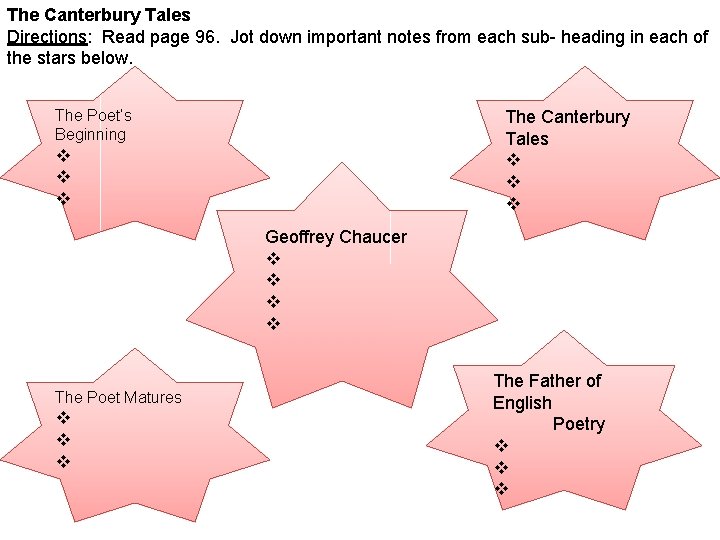
The Canterbury Tales Directions: Read page 96. Jot down important notes from each sub- heading in each of the stars below. The Poet’s Beginning The Canterbury Tales v v v Geoffrey Chaucer v v The Poet Matures v v v The Father of English Poetry v v v
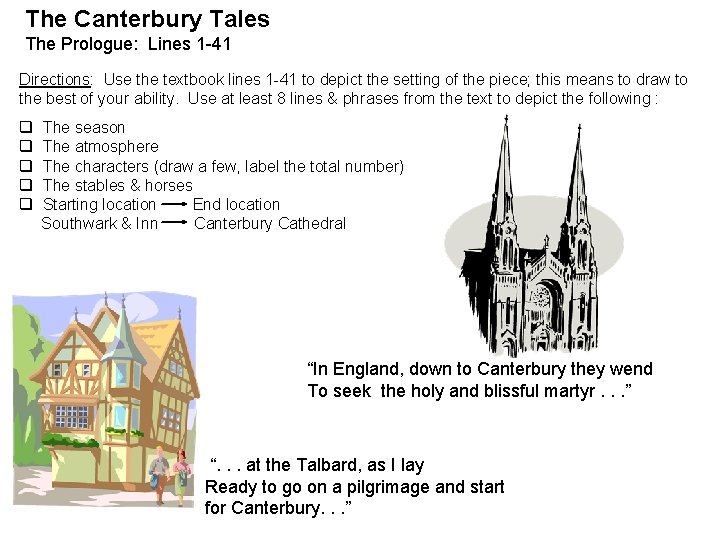
The Canterbury Tales The Prologue: Lines 1 -41 Directions: Use the textbook lines 1 -41 to depict the setting of the piece; this means to draw to the best of your ability. Use at least 8 lines & phrases from the text to depict the following : q q q The season The atmosphere The characters (draw a few, label the total number) The stables & horses Starting location End location Southwark & Inn Canterbury Cathedral “In England, down to Canterbury they wend To seek the holy and blissful martyr. . . ” “. . . at the Talbard, as I lay Ready to go on a pilgrimage and start for Canterbury. . . ”
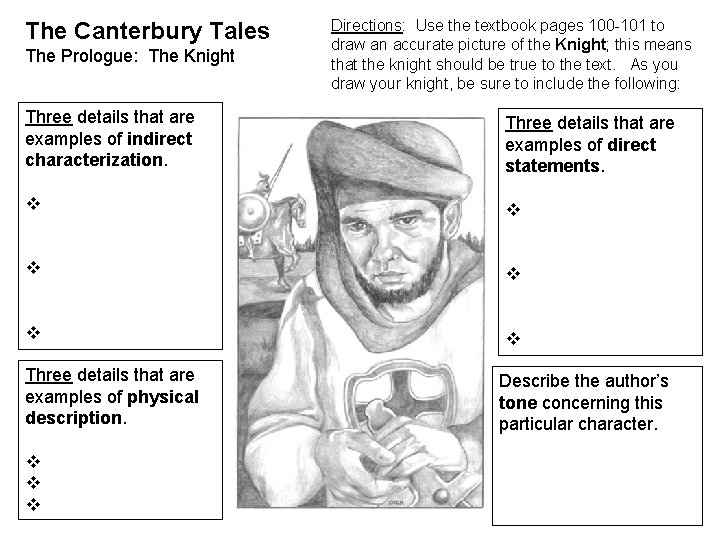
The Canterbury Tales The Prologue: The Knight Directions: Use the textbook pages 100 -101 to draw an accurate picture of the Knight; this means that the knight should be true to the text. As you draw your knight, be sure to include the following: Three details that are examples of indirect characterization. Three details that are examples of direct statements. v v v Three details that are examples of physical description. v v v Describe the author’s tone concerning this particular character.
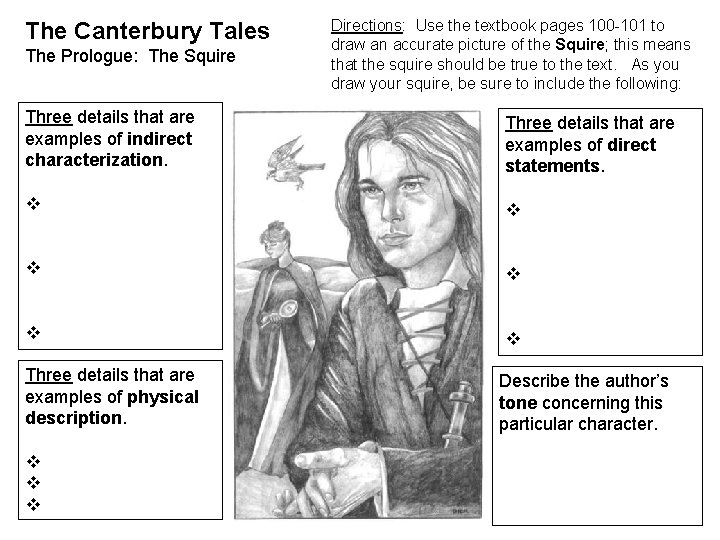
The Canterbury Tales The Prologue: The Squire Directions: Use the textbook pages 100 -101 to draw an accurate picture of the Squire; this means that the squire should be true to the text. As you draw your squire, be sure to include the following: Three details that are examples of indirect characterization. Three details that are examples of direct statements. v v v Three details that are examples of physical description. v v v Describe the author’s tone concerning this particular character.
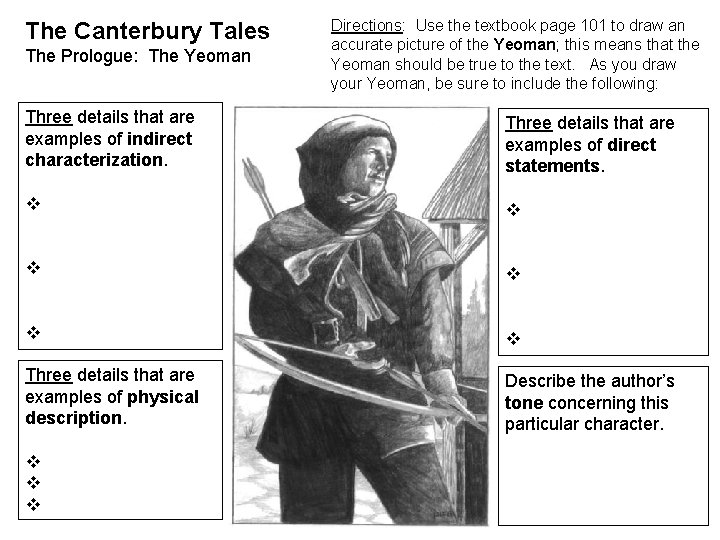
The Canterbury Tales The Prologue: The Yeoman Directions: Use the textbook page 101 to draw an accurate picture of the Yeoman; this means that the Yeoman should be true to the text. As you draw your Yeoman, be sure to include the following: Three details that are examples of indirect characterization. Three details that are examples of direct statements. v v v Three details that are examples of physical description. Describe the author’s tone concerning this particular character. v v v
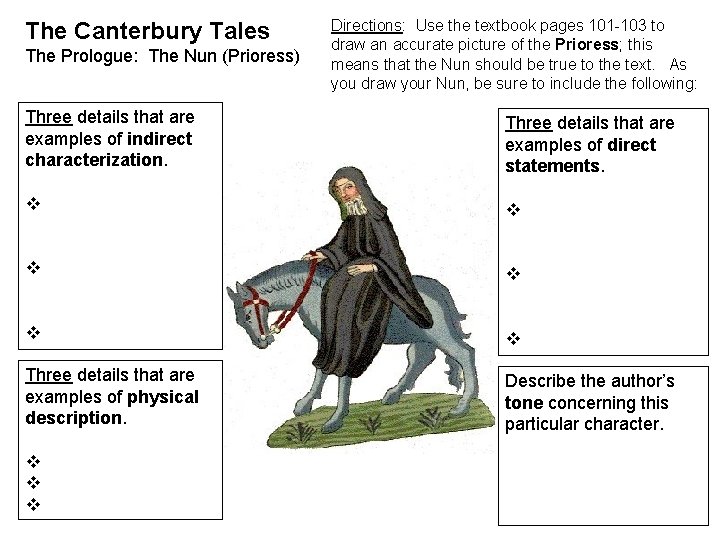
The Canterbury Tales The Prologue: The Nun (Prioress) Directions: Use the textbook pages 101 -103 to draw an accurate picture of the Prioress; this means that the Nun should be true to the text. As you draw your Nun, be sure to include the following: Three details that are examples of indirect characterization. Three details that are examples of direct statements. v v v Three details that are examples of physical description. Describe the author’s tone concerning this particular character. v v v
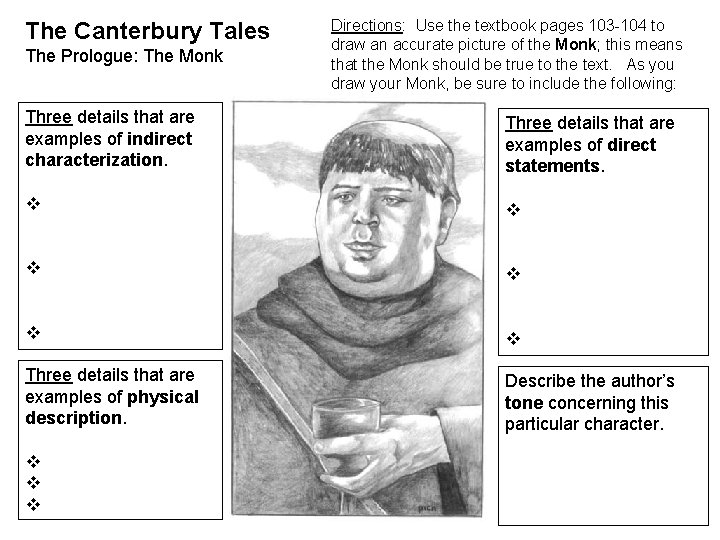
The Canterbury Tales The Prologue: The Monk Directions: Use the textbook pages 103 -104 to draw an accurate picture of the Monk; this means that the Monk should be true to the text. As you draw your Monk, be sure to include the following: Three details that are examples of indirect characterization. Three details that are examples of direct statements. v v v Three details that are examples of physical description. Describe the author’s tone concerning this particular character. v v v
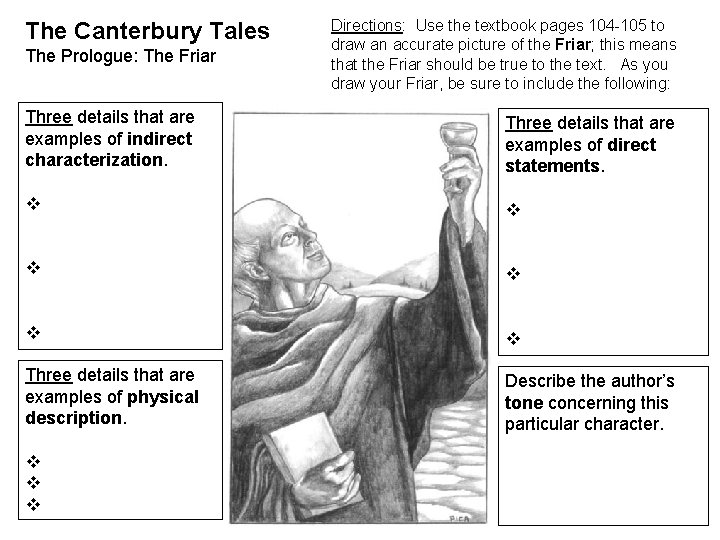
The Canterbury Tales The Prologue: The Friar Directions: Use the textbook pages 104 -105 to draw an accurate picture of the Friar; this means that the Friar should be true to the text. As you draw your Friar, be sure to include the following: Three details that are examples of indirect characterization. Three details that are examples of direct statements. v v v Three details that are examples of physical description. Describe the author’s tone concerning this particular character. v v v
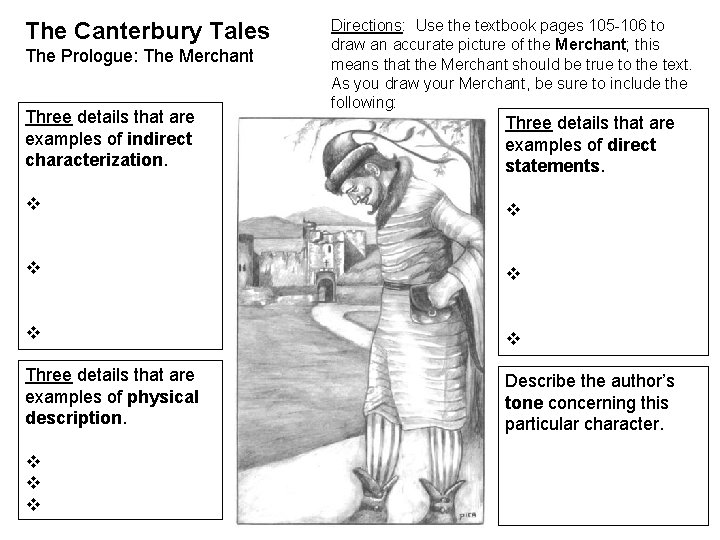
The Canterbury Tales The Prologue: The Merchant Three details that are examples of indirect characterization. Directions: Use the textbook pages 105 -106 to draw an accurate picture of the Merchant; this means that the Merchant should be true to the text. As you draw your Merchant, be sure to include the following: Three details that are examples of direct statements. v v v Three details that are examples of physical description. Describe the author’s tone concerning this particular character. v v v
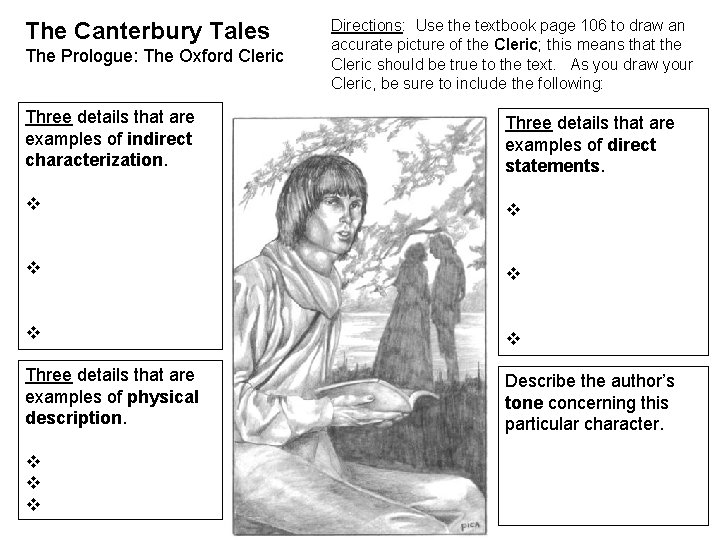
The Canterbury Tales The Prologue: The Oxford Cleric Directions: Use the textbook page 106 to draw an accurate picture of the Cleric; this means that the Cleric should be true to the text. As you draw your Cleric, be sure to include the following: Three details that are examples of indirect characterization. Three details that are examples of direct statements. v v v Three details that are examples of physical description. Describe the author’s tone concerning this particular character. v v v
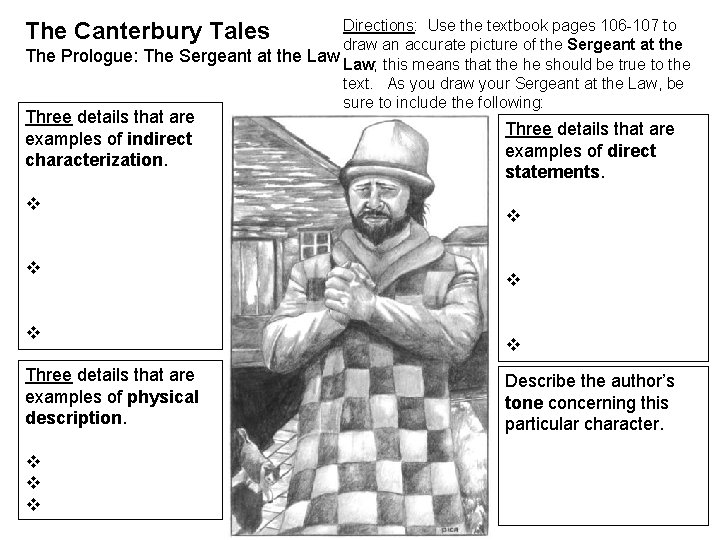
Directions: Use the textbook pages 106 -107 to draw an accurate picture of the Sergeant at the The Prologue: The Sergeant at the Law; this means that the he should be true to the text. As you draw your Sergeant at the Law, be sure to include the following: The Canterbury Tales Three details that are examples of indirect characterization. v v v Three details that are examples of physical description. v v v Three details that are examples of direct statements. v v v Describe the author’s tone concerning this particular character.
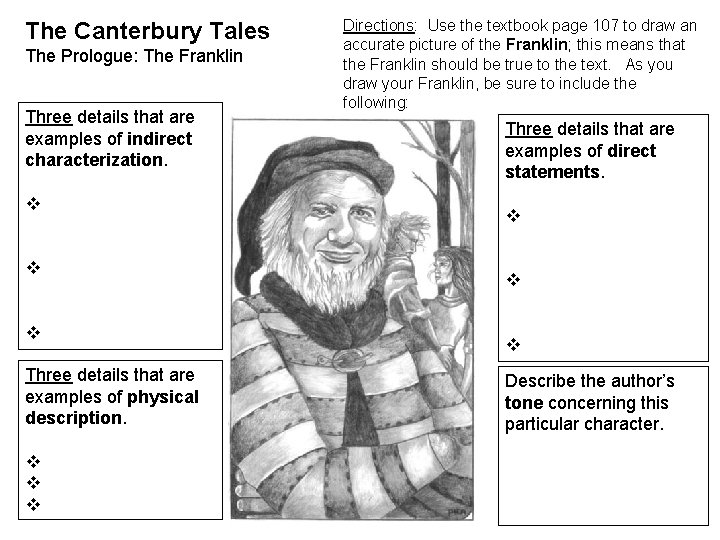
The Canterbury Tales The Prologue: The Franklin Three details that are examples of indirect characterization. v v v Three details that are examples of physical description. v v v Directions: Use the textbook page 107 to draw an accurate picture of the Franklin; this means that the Franklin should be true to the text. As you draw your Franklin, be sure to include the following: Three details that are examples of direct statements. v v v Describe the author’s tone concerning this particular character.
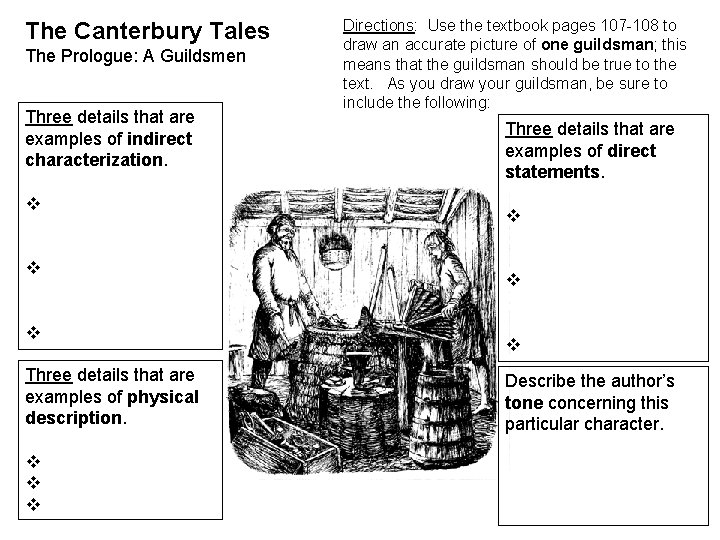
The Canterbury Tales The Prologue: A Guildsmen Three details that are examples of indirect characterization. v v v Three details that are examples of physical description. v v v Directions: Use the textbook pages 107 -108 to draw an accurate picture of one guildsman; this means that the guildsman should be true to the text. As you draw your guildsman, be sure to include the following: Three details that are examples of direct statements. v v v Describe the author’s tone concerning this particular character.
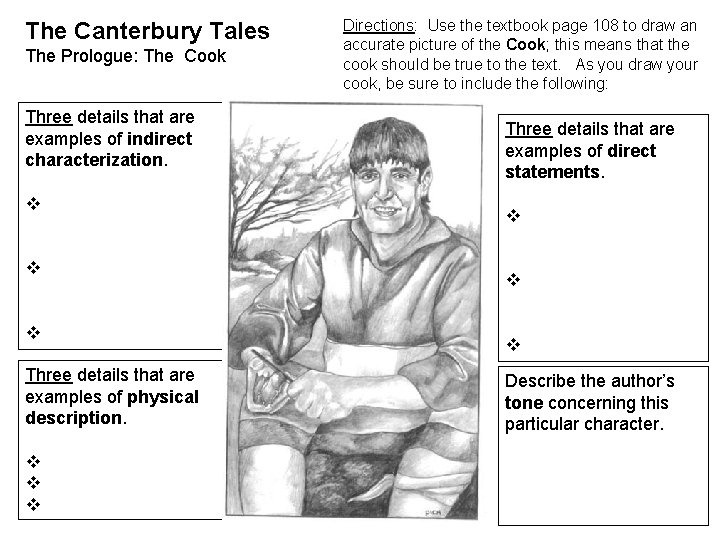
The Canterbury Tales The Prologue: The Cook Three details that are examples of indirect characterization. v v v Three details that are examples of physical description. v v v Directions: Use the textbook page 108 to draw an accurate picture of the Cook; this means that the cook should be true to the text. As you draw your cook, be sure to include the following: Three details that are examples of direct statements. v v v Describe the author’s tone concerning this particular character.
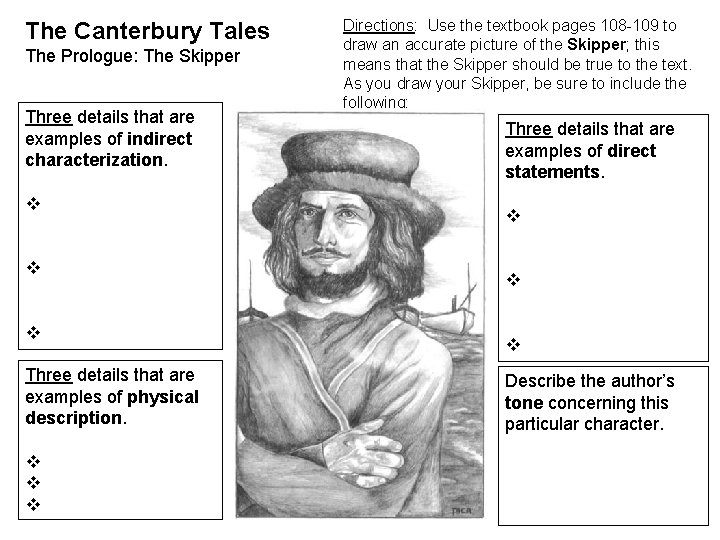
The Canterbury Tales The Prologue: The Skipper Three details that are examples of indirect characterization. v v v Three details that are examples of physical description. v v v Directions: Use the textbook pages 108 -109 to draw an accurate picture of the Skipper; this means that the Skipper should be true to the text. As you draw your Skipper, be sure to include the following: Three details that are examples of direct statements. v v v Describe the author’s tone concerning this particular character.
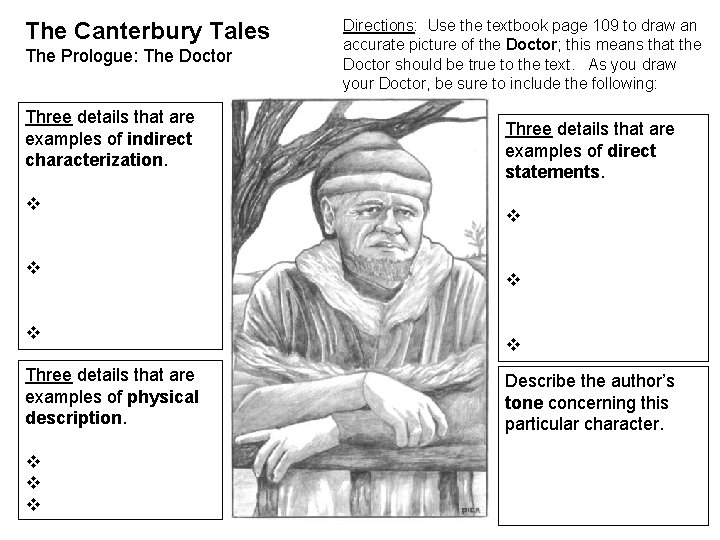
The Canterbury Tales The Prologue: The Doctor Three details that are examples of indirect characterization. v v v Three details that are examples of physical description. v v v Directions: Use the textbook page 109 to draw an accurate picture of the Doctor; this means that the Doctor should be true to the text. As you draw your Doctor, be sure to include the following: Three details that are examples of direct statements. v v v Describe the author’s tone concerning this particular character.
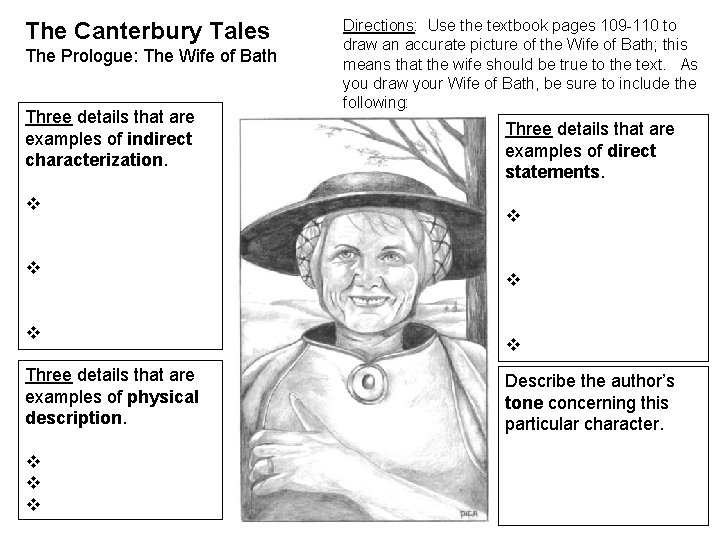
The Canterbury Tales The Prologue: The Wife of Bath Three details that are examples of indirect characterization. v v v Three details that are examples of physical description. v v v Directions: Use the textbook pages 109 -110 to draw an accurate picture of the Wife of Bath; this means that the wife should be true to the text. As you draw your Wife of Bath, be sure to include the following: Three details that are examples of direct statements. v v v Describe the author’s tone concerning this particular character.
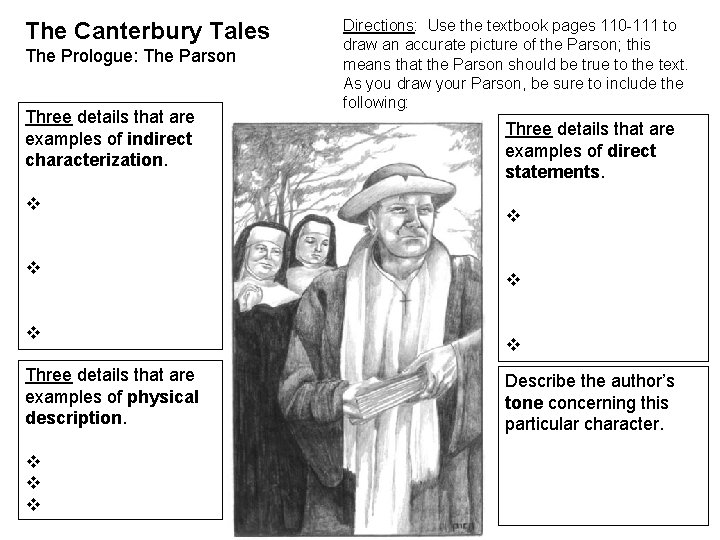
The Canterbury Tales The Prologue: The Parson Three details that are examples of indirect characterization. v v v Three details that are examples of physical description. v v v Directions: Use the textbook pages 110 -111 to draw an accurate picture of the Parson; this means that the Parson should be true to the text. As you draw your Parson, be sure to include the following: Three details that are examples of direct statements. v v v Describe the author’s tone concerning this particular character.
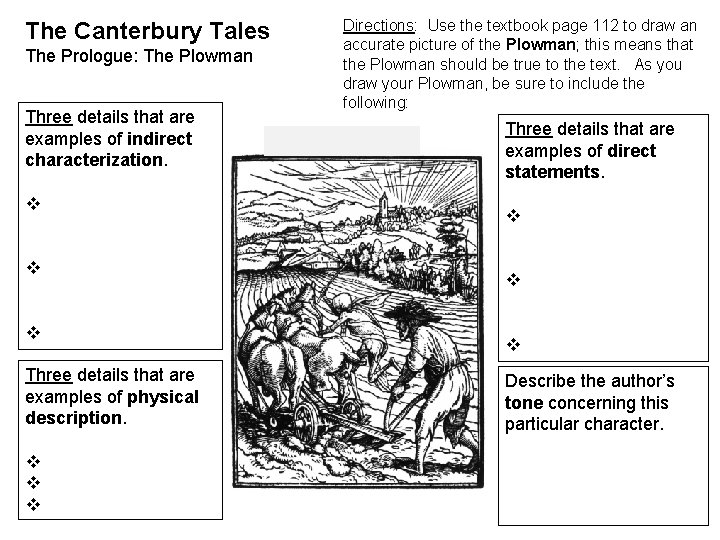
The Canterbury Tales The Prologue: The Plowman Three details that are examples of indirect characterization. v v v Three details that are examples of physical description. v v v Directions: Use the textbook page 112 to draw an accurate picture of the Plowman; this means that the Plowman should be true to the text. As you draw your Plowman, be sure to include the following: Three details that are examples of direct statements. v v v Describe the author’s tone concerning this particular character.
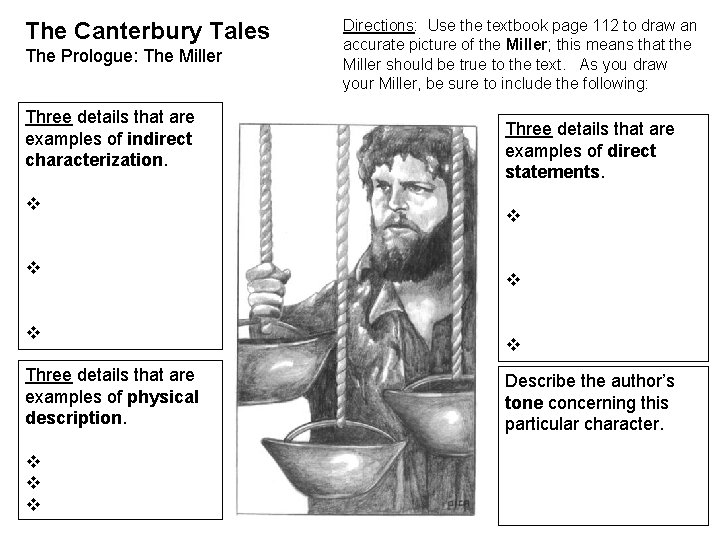
The Canterbury Tales The Prologue: The Miller Three details that are examples of indirect characterization. v v v Three details that are examples of physical description. v v v Directions: Use the textbook page 112 to draw an accurate picture of the Miller; this means that the Miller should be true to the text. As you draw your Miller, be sure to include the following: Three details that are examples of direct statements. v v v Describe the author’s tone concerning this particular character.
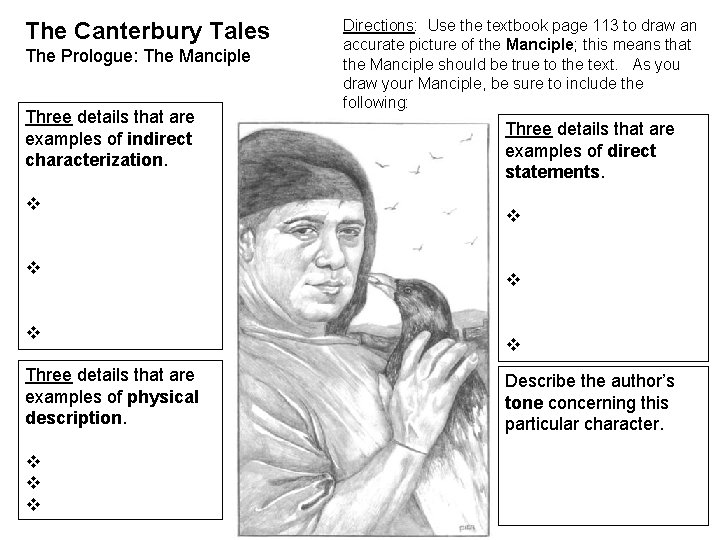
The Canterbury Tales The Prologue: The Manciple Three details that are examples of indirect characterization. v v v Three details that are examples of physical description. v v v Directions: Use the textbook page 113 to draw an accurate picture of the Manciple; this means that the Manciple should be true to the text. As you draw your Manciple, be sure to include the following: Three details that are examples of direct statements. v v v Describe the author’s tone concerning this particular character.
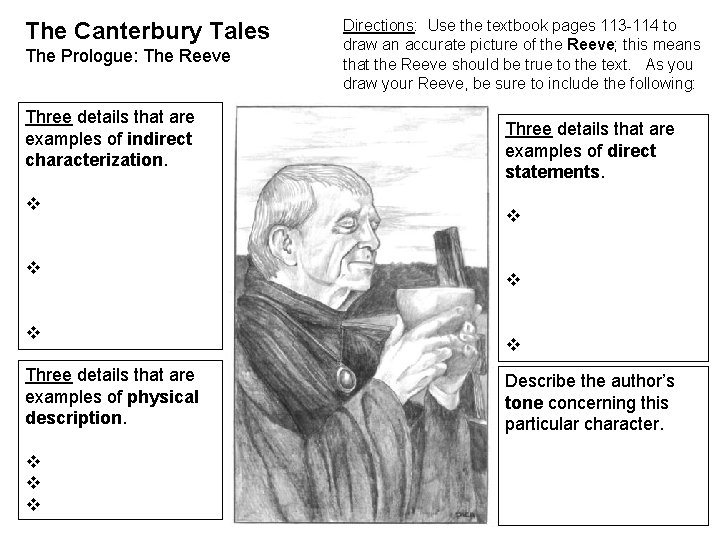
The Canterbury Tales The Prologue: The Reeve Three details that are examples of indirect characterization. v v v Three details that are examples of physical description. v v v Directions: Use the textbook pages 113 -114 to draw an accurate picture of the Reeve; this means that the Reeve should be true to the text. As you draw your Reeve, be sure to include the following: Three details that are examples of direct statements. v v v Describe the author’s tone concerning this particular character.

The Canterbury Tales The Prologue: The Summoner Three details that are examples of indirect characterization. v v v Three details that are examples of physical description. v v v Directions: Use the textbook pages 114 -115 to draw an accurate picture of the Summoner; this means that the summoner should be true to the text. As you draw your summoner, be sure to include the following: Three details that are examples of direct statements. v v v Describe the author’s tone concerning this particular character.
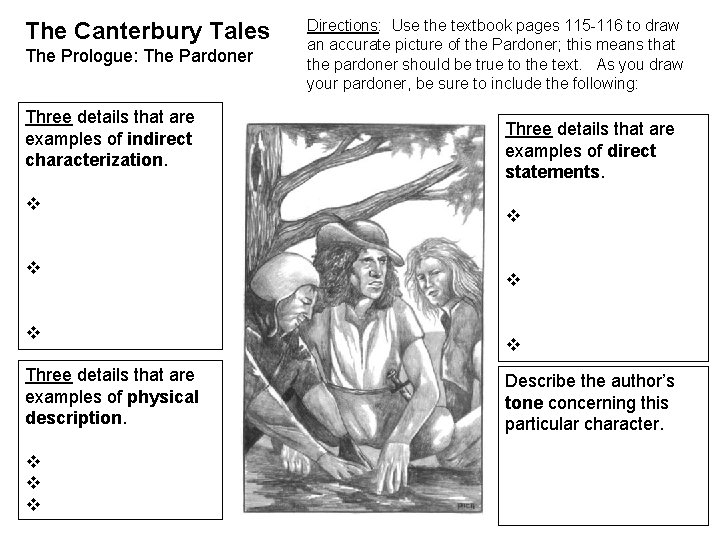
The Canterbury Tales The Prologue: The Pardoner Three details that are examples of indirect characterization. v v v Three details that are examples of physical description. v v v Directions: Use the textbook pages 115 -116 to draw an accurate picture of the Pardoner; this means that the pardoner should be true to the text. As you draw your pardoner, be sure to include the following: Three details that are examples of direct statements. v v v Describe the author’s tone concerning this particular character.
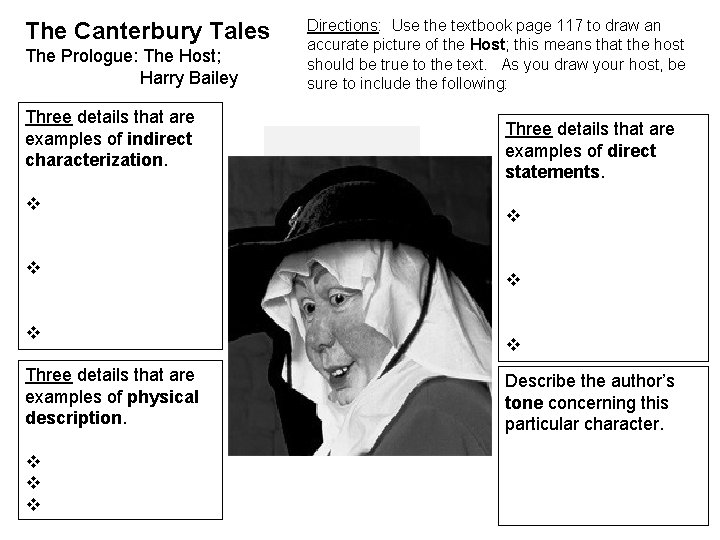
The Canterbury Tales The Prologue: The Host; Harry Bailey Three details that are examples of indirect characterization. v v v Three details that are examples of physical description. v v v Directions: Use the textbook page 117 to draw an accurate picture of the Host; this means that the host should be true to the text. As you draw your host, be sure to include the following: Three details that are examples of direct statements. v v v Describe the author’s tone concerning this particular character.
The Canterbury Tales The Prologue: Lines 735+ Question Answer 1. What two apologies does Chaucer make in lines 745 -766? 1. 2. According to Chaucer which two historical figures spoke “broadly”? 3. What does Plato mean by “The word should be as cousin to the deed”? 4. What does the Host’s decision to accompany the pilgrims say about him? 6. What was to be the Host’s role during the trip? 7. How was it determined who would first tell their tale?
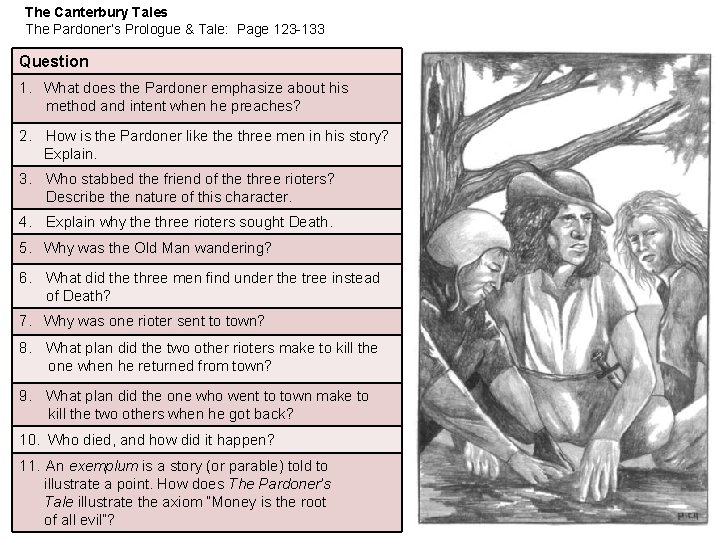
The Canterbury Tales The Pardoner’s Prologue & Tale: Page 123 -133 Question 1. What does the Pardoner emphasize about his method and intent when he preaches? 2. How is the Pardoner like three men in his story? Explain. 3. Who stabbed the friend of the three rioters? Describe the nature of this character. 4. Explain why the three rioters sought Death. 5. Why was the Old Man wandering? 6. What did the three men find under the tree instead of Death? 7. Why was one rioter sent to town? 8. What plan did the two other rioters make to kill the one when he returned from town? 9. What plan did the one who went to town make to kill the two others when he got back? 10. Who died, and how did it happen? 11. An exemplum is a story (or parable) told to illustrate a point. How does The Pardoner’s Tale illustrate the axiom “Money is the root of all evil”?
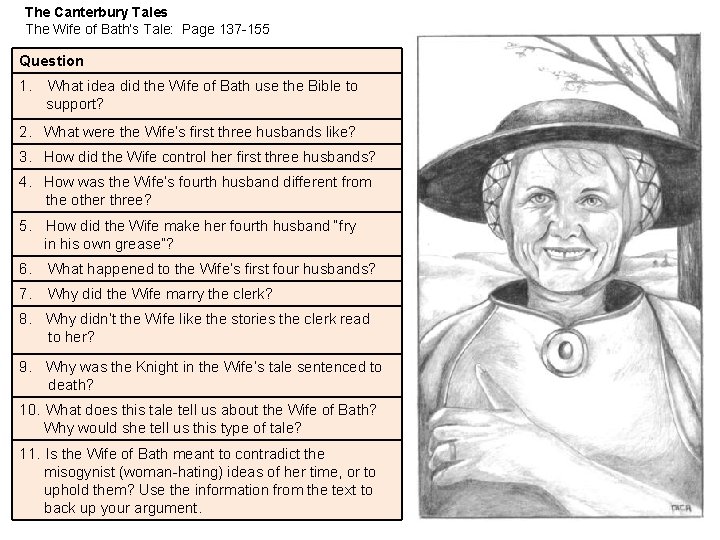
The Canterbury Tales The Wife of Bath’s Tale: Page 137 -155 Question 1. What idea did the Wife of Bath use the Bible to support? 2. What were the Wife’s first three husbands like? 3. How did the Wife control her first three husbands? 4. How was the Wife’s fourth husband different from the other three? 5. How did the Wife make her fourth husband “fry in his own grease”? 6. What happened to the Wife’s first four husbands? 7. Why did the Wife marry the clerk? 8. Why didn’t the Wife like the stories the clerk read to her? 9. Why was the Knight in the Wife’s tale sentenced to death? 10. What does this tale tell us about the Wife of Bath? Why would she tell us this type of tale? 11. Is the Wife of Bath meant to contradict the misogynist (woman-hating) ideas of her time, or to uphold them? Use the information from the text to back up your argument.
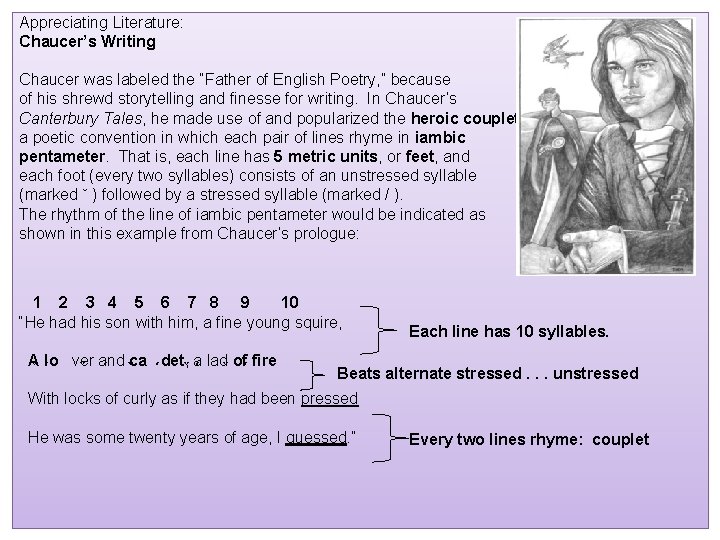
Appreciating Literature: Chaucer’s Writing Chaucer was labeled the “Father of English Poetry, ” because of his shrewd storytelling and finesse for writing. In Chaucer’s Canterbury Tales, he made use of and popularized the heroic couplet, a poetic convention in which each pair of lines rhyme in iambic pentameter. That is, each line has 5 metric units, or feet, and each foot (every two syllables) consists of an unstressed syllable (marked ˇ ) followed by a stressed syllable (marked / ). The rhythm of the line of iambic pentameter would be indicated as shown in this example from Chaucer’s prologue: 1 2 3 4 5 6 7 8 9 10 “He had his son with him, a fine young squire, A lo ver and ca det, a lad of fire ˇ ˇ ˇ Each line has 10 syllables. Beats alternate stressed. . . unstressed With locks of curly as if they had been pressed He was some twenty years of age, I guessed. ” Every two lines rhyme: couplet
Appreciating Literature: Chaucer’s Prologue Project A Modern Pilgrimage Project Directions: Chaucer’s Canterbury Tales was also a social commentary, writing that offers insight into society, its values, and its customs. Therefore, on a poster board, characterize two individuals that, if embarking on a pilgrimage today, would represent some walk of life (rock star, wedding planner, computer programmer). These should be modern jobs, ones that did not exist in Chaucer’s England. They should also represent varying levels of society when looking at it from a hierarchal point of view. For each character: 1. Draw, cut of magazines, coloring books, etc. until you have the character just right. Your character may be “Plain Jane” or s/he may have mixed-matched clothing in order to have an easier time characterizing through words. Label each character according to position. 2. have 3. In 20 lines (10 heroic couplets; yes, you will be writing in iambic pentameter!) per character, describe your character using both direct and indirect characterization. In other words some of the characterization should be straightforward and some should be implied. You may wish to brainstorm your character’s personality before trying to write this in heroic couplets. You must at least three examples of direct characterization and three examples of indirect characterization per character. This should be labeled before submitting. As Chaucer chose to be straightforward about some of his characters and satirical about others, you will do the same. Pay close attention to the tone you take concerning each character. One should be straightforward and honest and with the other, you should enjoy poking fun of his or her quirks. Label each one for tone. Portrait 1 Title Project Title ____ L A ____ B ____ E ____ L ____ I ____ N ____ G ____ Portrait 2 Title
- Slides: 36