
The CANARI Rural Livelihood Programme building community capacity
The CANARI Rural Livelihood Programme: building community capacity, resilience and sustainability in local communities in Trinidad and Tobago Session 1 : Community development and the environment The First Biennial Community Development Partnership Forum & Exhibition (CDPF-1) Hilton Hotel and Conference Centre, Port of Spain Trinidad and Tobago 19 July, 2013
The Caribbean Natural Resources Institute Mission: Promoting and facilitating equitable participation and effective collaboration in the management of natural resources critical to development in the Caribbean islands, so that people will have a better quality of life and natural resources will be conserved, through action learning and research, capacity building, communication and fostering partnerships
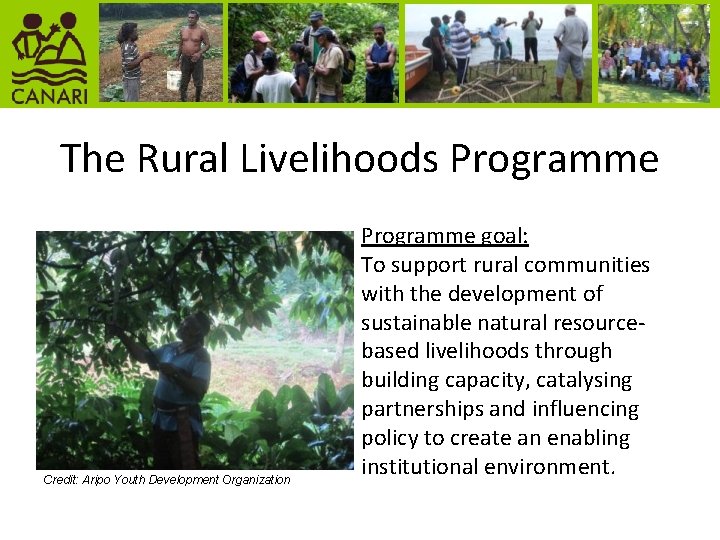
The Rural Livelihoods Programme Credit: Aripo Youth Development Organization Programme goal: To support rural communities with the development of sustainable natural resourcebased livelihoods through building capacity, catalysing partnerships and influencing policy to create an enabling institutional environment.
Programme objectives • To conduct research on how to manage ecosystems to protect and enhance the provision of goods and services for sustainable and resilient livelihoods. • To develop and test a process for building the capacity of rural communities to develop sustainable small businesses based on the use of natural resources • To build the capacity of rural communities to develop sustainable livelihoods resilient to climate change and other risks, including via facilitating exchanges and sharing of information between rural communities
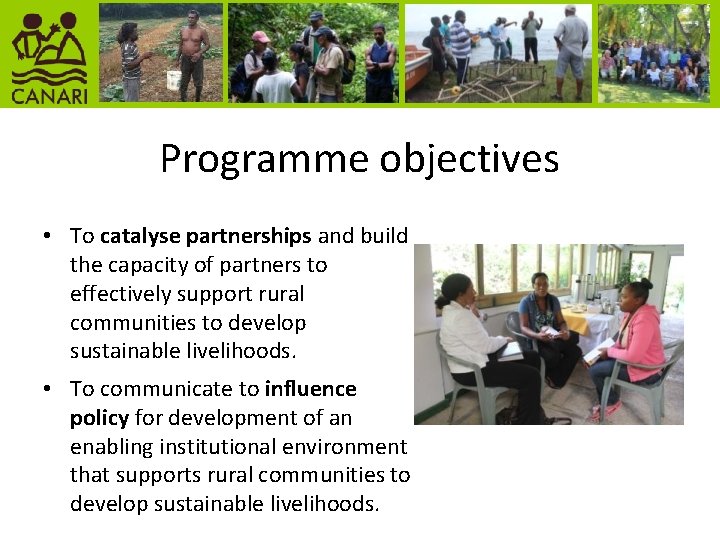
Programme objectives • To catalyse partnerships and build the capacity of partners to effectively support rural communities to develop sustainable livelihoods. • To communicate to influence policy for development of an enabling institutional environment that supports rural communities to develop sustainable livelihoods.
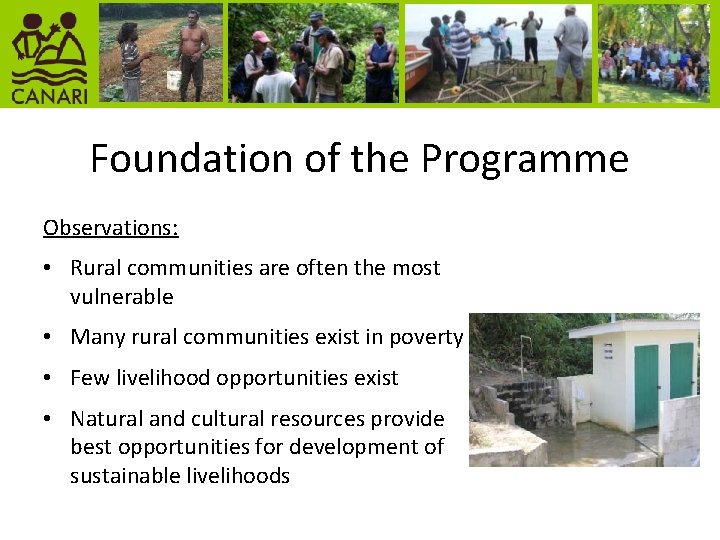
Foundation of the Programme Observations: • Rural communities are often the most vulnerable • Many rural communities exist in poverty • Few livelihood opportunities exist • Natural and cultural resources provide best opportunities for development of sustainable livelihoods
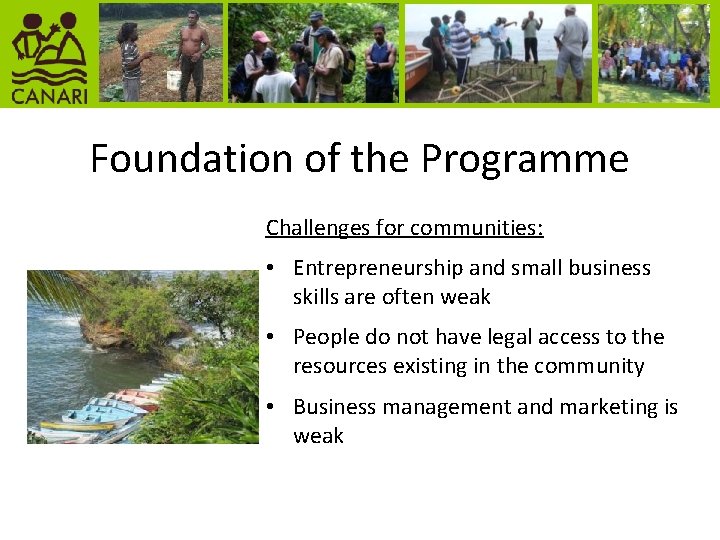
Foundation of the Programme Challenges for communities: • Entrepreneurship and small business skills are often weak • People do not have legal access to the resources existing in the community • Business management and marketing is weak
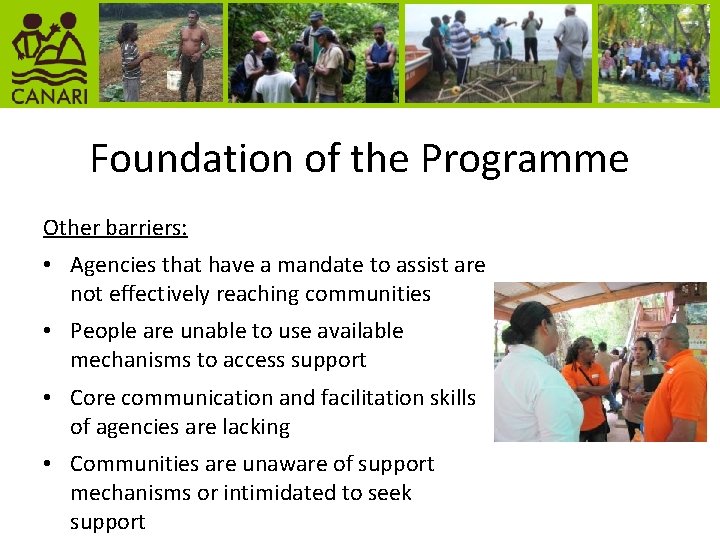
Foundation of the Programme Other barriers: • Agencies that have a mandate to assist are not effectively reaching communities • People are unable to use available mechanisms to access support • Core communication and facilitation skills of agencies are lacking • Communities are unaware of support mechanisms or intimidated to seek support
Foundation of the Programme CANARI developed a concept to assist these vulnerable groups J. B. Fernandes Memorial Trust I has provided funding support to a project in 2010 that evolved into a programme of work in 2011. The Programme is piloting an approach in Trinidad and Tobago with intention to replicate in other Caribbean islands.
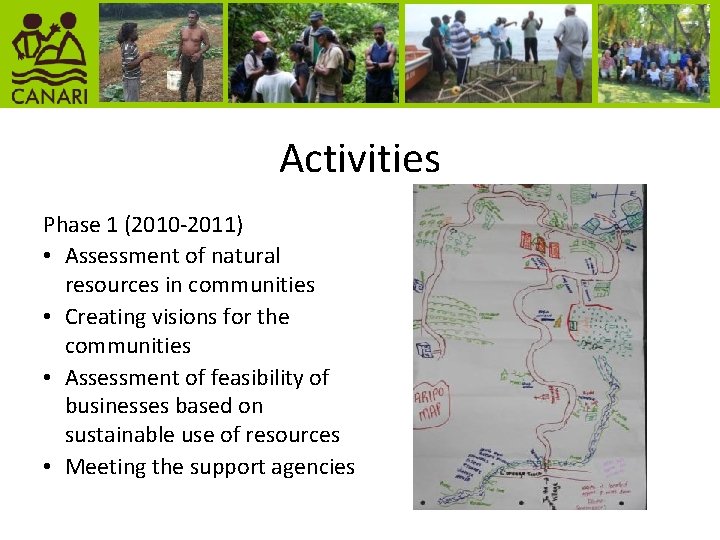
Activities Phase 1 (2010 -2011) • Assessment of natural resources in communities • Creating visions for the communities • Assessment of feasibility of businesses based on sustainable use of resources • Meeting the support agencies
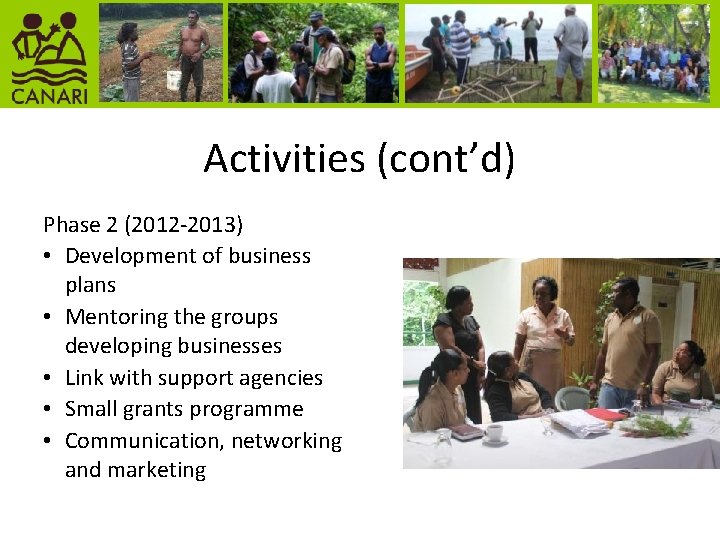
Activities (cont’d) Phase 2 (2012 -2013) • Development of business plans • Mentoring the groups developing businesses • Link with support agencies • Small grants programme • Communication, networking and marketing
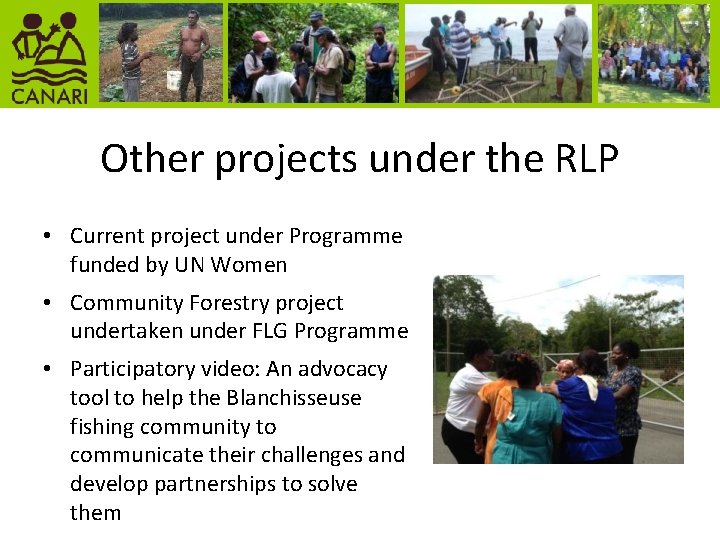
Other projects under the RLP • Current project under Programme funded by UN Women • Community Forestry project undertaken under FLG Programme • Participatory video: An advocacy tool to help the Blanchisseuse fishing community to communicate their challenges and develop partnerships to solve them
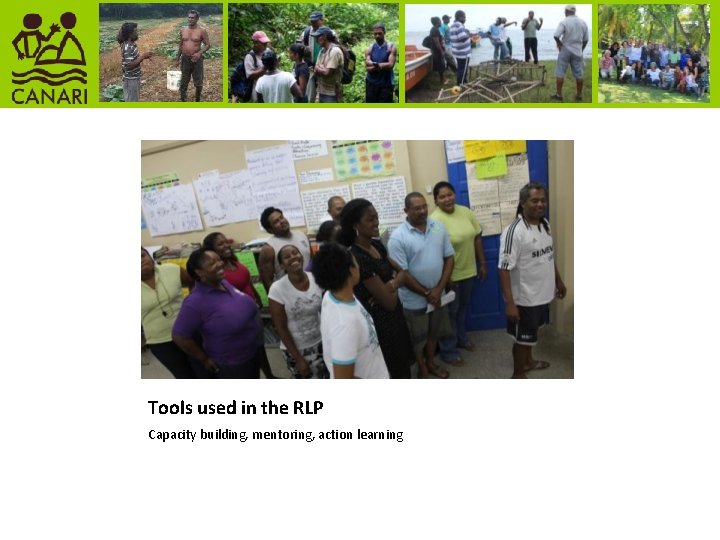
Tools used in the RLP Capacity building, mentoring, action learning
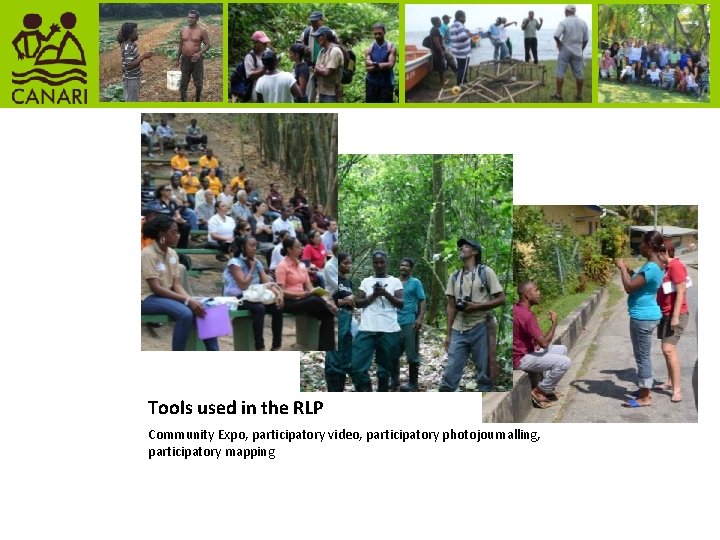
Tools used in the RLP Community Expo, participatory video, participatory photojournalling, participatory mapping
Outcomes • Linkage with agencies: how to communicate • Linkage with each other: how to network • Establishment and development of businesses • Interest in training • Women in business (Blanchisseuse Aquaculture and Producers Association, Women Involved in Natural Resources ) • Youth in business (Heights of Aripo)
Thank You Caribbean Natural Resources Institute (CANARI) Building 7, Fernandes Business Centre Eastern Main Road, Laventille, Trinidad Tel: 868 -626 -6062 Fax: 868 -626 -1788 E-mail: keisha@canari. org Website: www. canari. org | New: : Caribbean Natural Resources Institute | : 2011 CANARI Check out CANARI publications on our Scribd page: Caribbean Natural Resources Institute
- Slides: 16