
The Canadian Constitution What is a constitution It
- Slides: 24
The Canadian Constitution
What is a constitution? �It is a list of rules which govern the actions of any organization. �Your student council has a constitution which stipulates the accepted rules of practice. �Nations have more complex constitutions but the purpose is the same.
Characteristics of a Good Constitution �It is easily understood by those to whom it applies. �It is not ignored by those who are elected to power. �It can be changed easily but not too easily.
Changing the Rules �A constitution written one hundred years ago cannot always meet modern needs. �Amending formulas must be written into a good constitution. �Amendments must meet the needs of most people in an organization or nation.
National Constitutions �These are often complex and lengthy legal documents. �They may, however, be very simple. �Great Britain has an unwritten constitution. �Canada’s constitution is both written and unwritten.
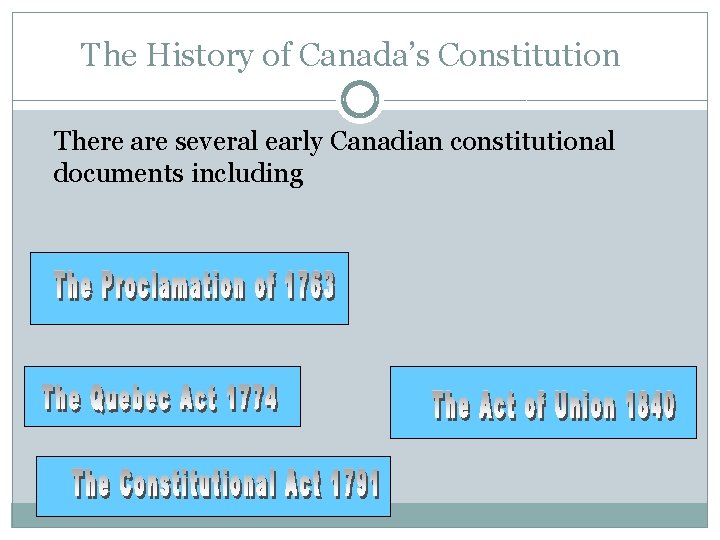
The History of Canada’s Constitution There are several early Canadian constitutional documents including
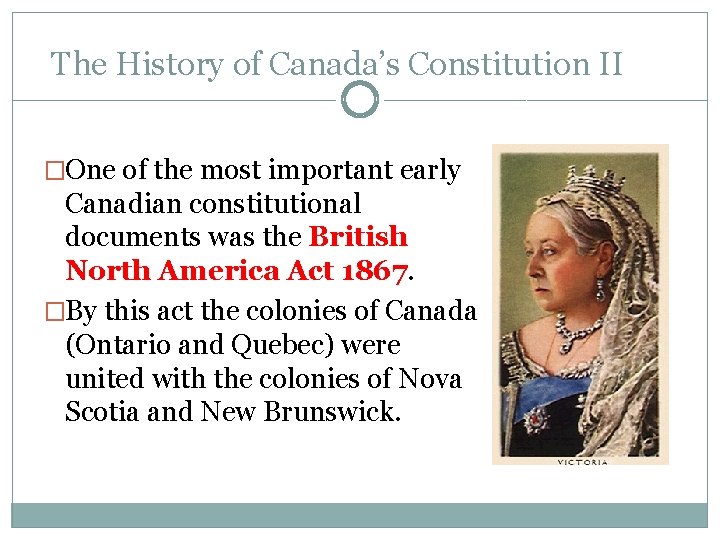
The History of Canada’s Constitution II �One of the most important early Canadian constitutional documents was the British North America Act 1867. �By this act the colonies of Canada (Ontario and Quebec) were united with the colonies of Nova Scotia and New Brunswick.
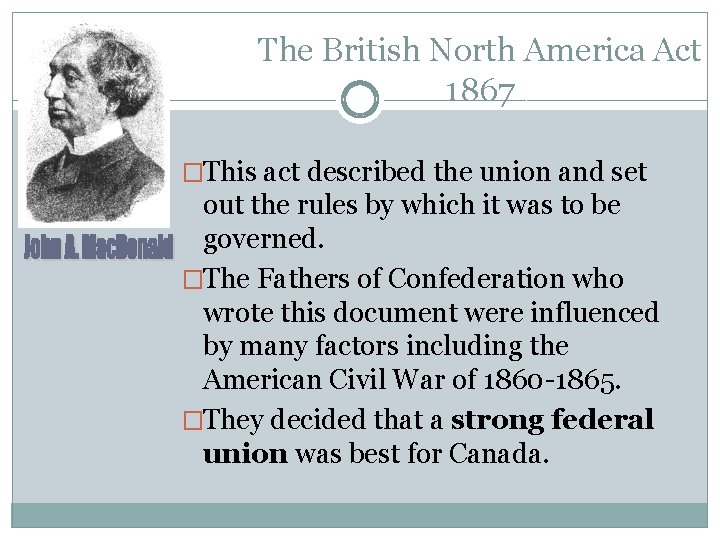
The British North America Act 1867 �This act described the union and set out the rules by which it was to be governed. �The Fathers of Confederation who wrote this document were influenced by many factors including the American Civil War of 1860 -1865. �They decided that a strong federal union was best for Canada.
A Federal Union � This type of union provides for a sharing of power between a central government and the separate governments of individual provinces or states. � A strong federal union places more power in the hands of the central government than it grants to the provinces or states. � A legislative union which did not divide power was rejected as impractical.
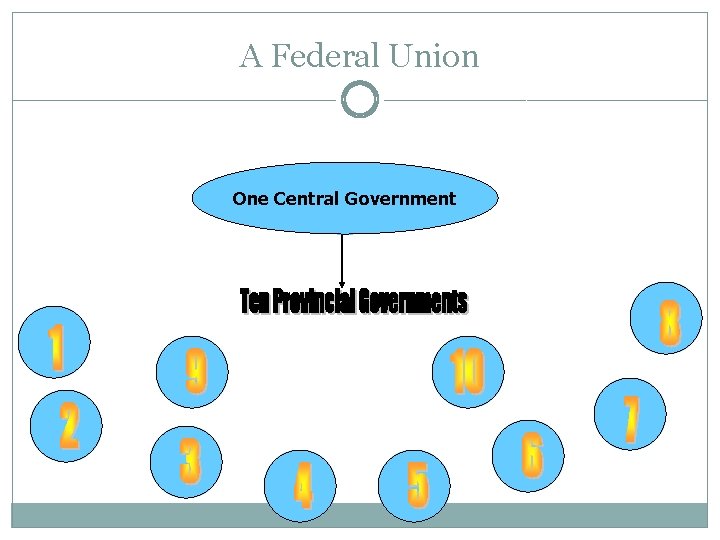
A Federal Union One Central Government
The British North America Act and Federal Union Two sections of this act listed the powers of the central government and the provinces. �Section 91 - listed the powers of the central or federal government. �Section 92 - listed the powers of the provinces.
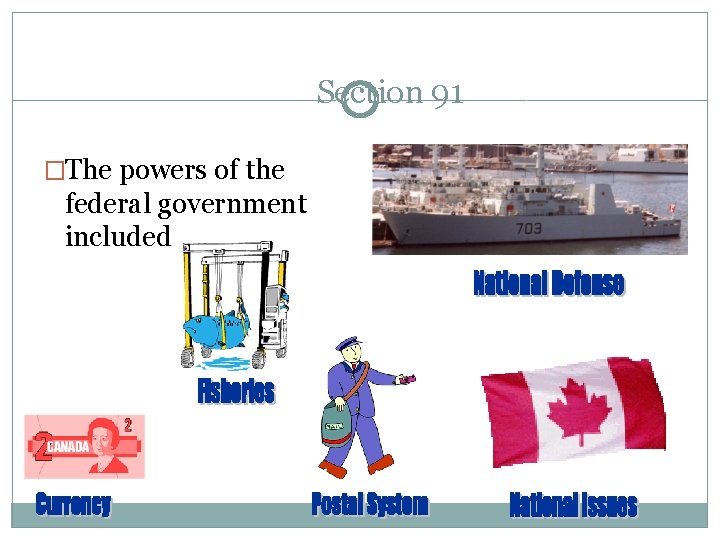
Section 91 �The powers of the federal government included
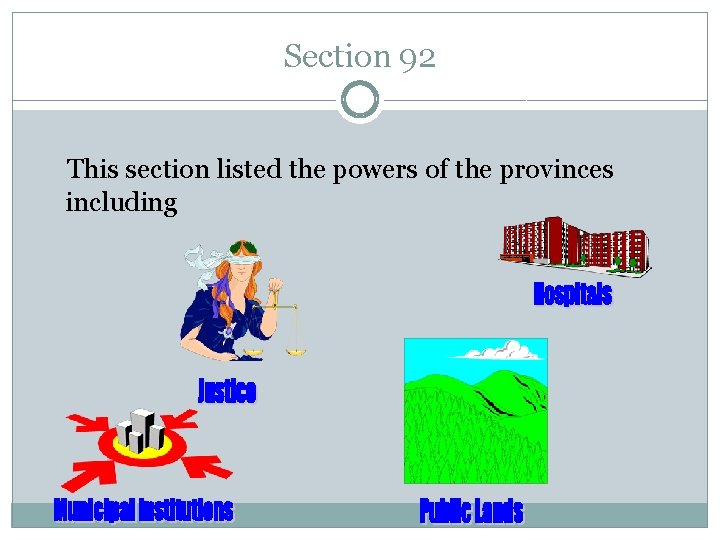
Section 92 This section listed the powers of the provinces including
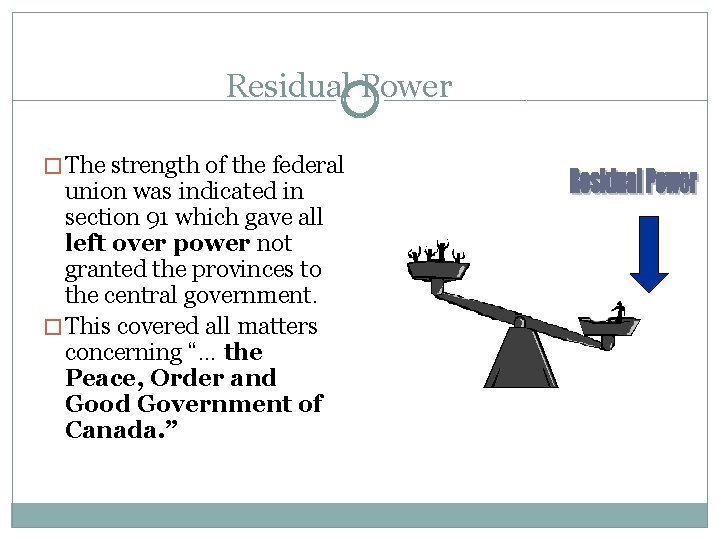
Residual Power � The strength of the federal union was indicated in section 91 which gave all left over power not granted the provinces to the central government. � This covered all matters concerning “… the Peace, Order and Good Government of Canada. ”
The Struggle for Power �Since 1867 the provinces have struggled to take power away from the central government. �This struggle continues today and is often a source of considerable friction between the two levels of government.
Unwritten Canadian Constitution �Much of Canada’s constitution was unwritten and consisted of British parliamentary traditions and practices. �These were called conventions. �Eg. Position of PM
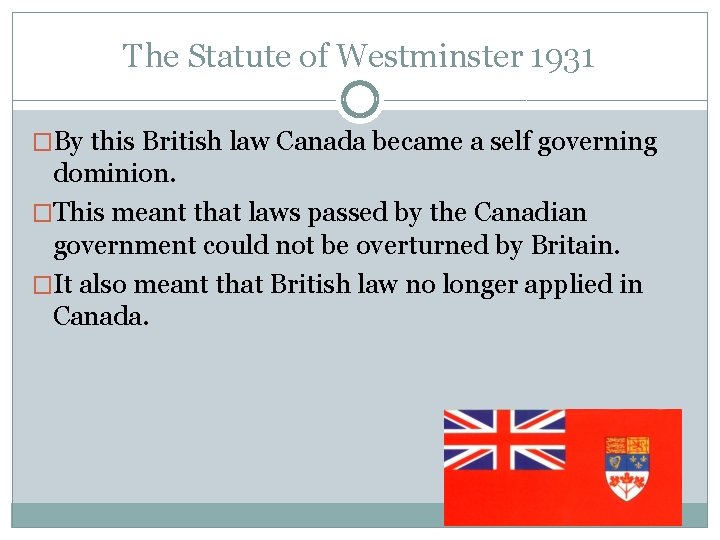
The Statute of Westminster 1931 �By this British law Canada became a self governing dominion. �This meant that laws passed by the Canadian government could not be overturned by Britain. �It also meant that British law no longer applied in Canada.
Constitutional Patriation 1982 �To patriate means to bring home. �The process required that the British government revoke the BNA Act of 1867. �It further required that Canada enact its own written constitution.
The Winds of Change �It was unusual for a sovereign and independent nation like Canada to have a foreign constitution. �The growth of nationalism in Quebec was a catalyst to change this situation. �The Liberal government of Pierre Trudeau finally undertook this difficult task and achieved patriation in 1982.
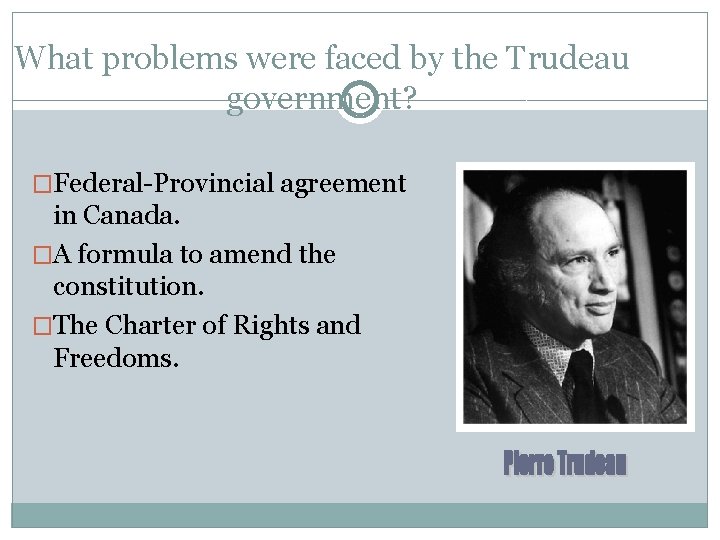
What problems were faced by the Trudeau government? �Federal-Provincial agreement in Canada. �A formula to amend the constitution. �The Charter of Rights and Freedoms.
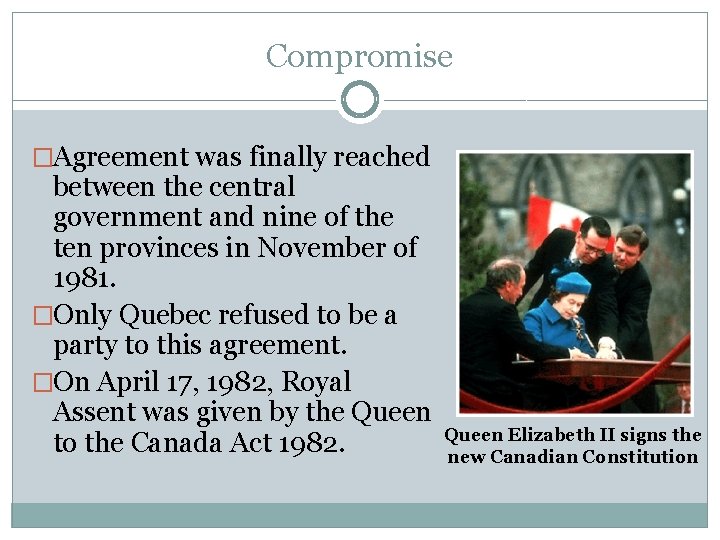
Compromise �Agreement was finally reached between the central government and nine of the ten provinces in November of 1981. �Only Quebec refused to be a party to this agreement. �On April 17, 1982, Royal Assent was given by the Queen to the Canada Act 1982. Queen Elizabeth II signs the new Canadian Constitution
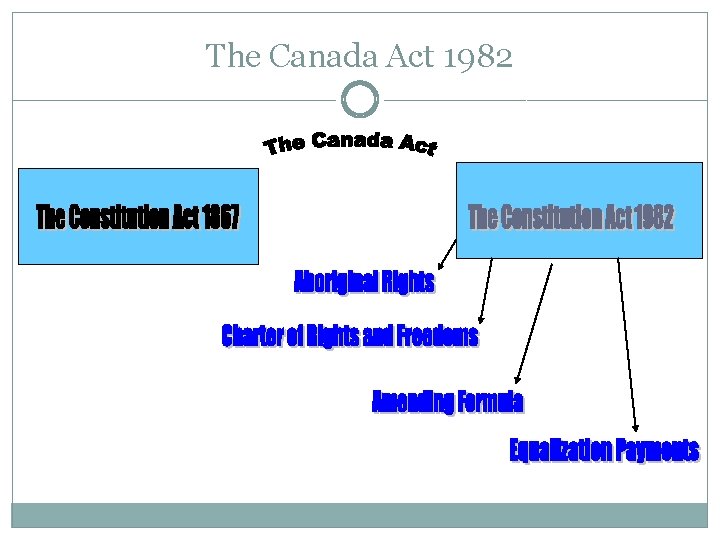
The Canada Act 1982 There are two major components to the Canada Act 1982. �The Constitution Act 1867 -This was the old British North America Act 1867. �The Constitution Act 1982 -This was new and contained several important components.
The Canada Act 1982
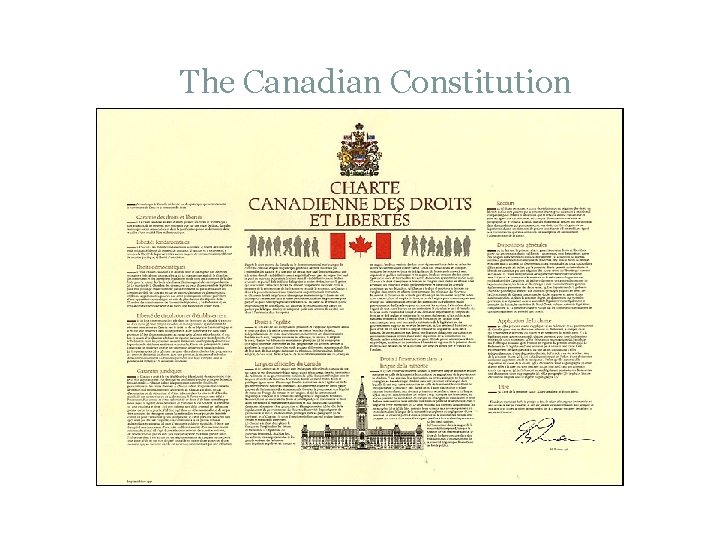
The Charter of Rights and Freedoms �An entrenched Charter which could not be changed other than by constitutional amendment was included in the constitution. �Provinces were allowed the notwithstanding clause which provided exemption from some provisions of the Charter. CHARTER