
The Byzantine Empire What is the significance of
The Byzantine Empire What is the significance of the Byzantine Empire?
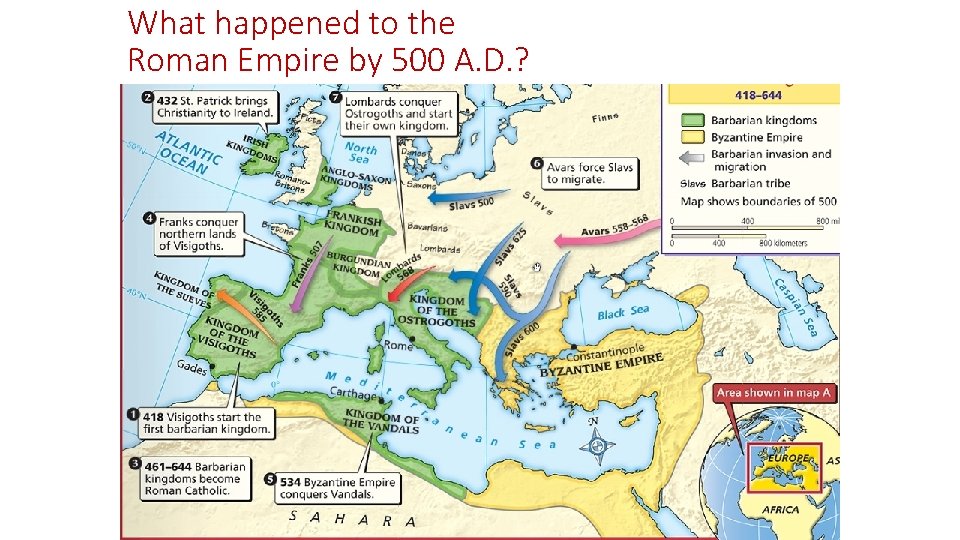
What happened to the Roman Empire by 500 A. D. ?
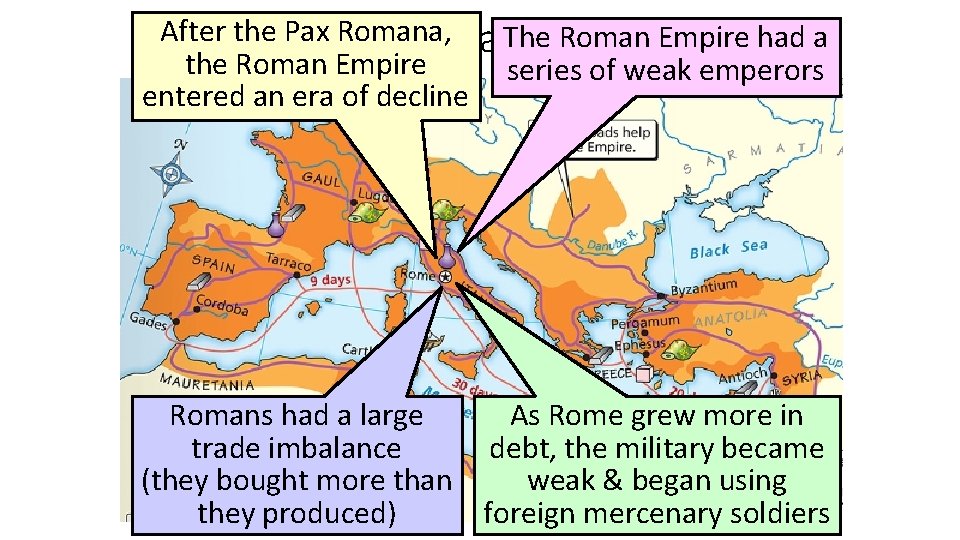
After. Fall the of Paxthe Romana, The Roman Empire had a The Roman Empire the Roman Empire entered an era of decline series of weak emperors Romans had a large As Rome grew more in trade imbalance debt, the military became (they bought more than weak & began using they produced) foreign mercenary soldiers
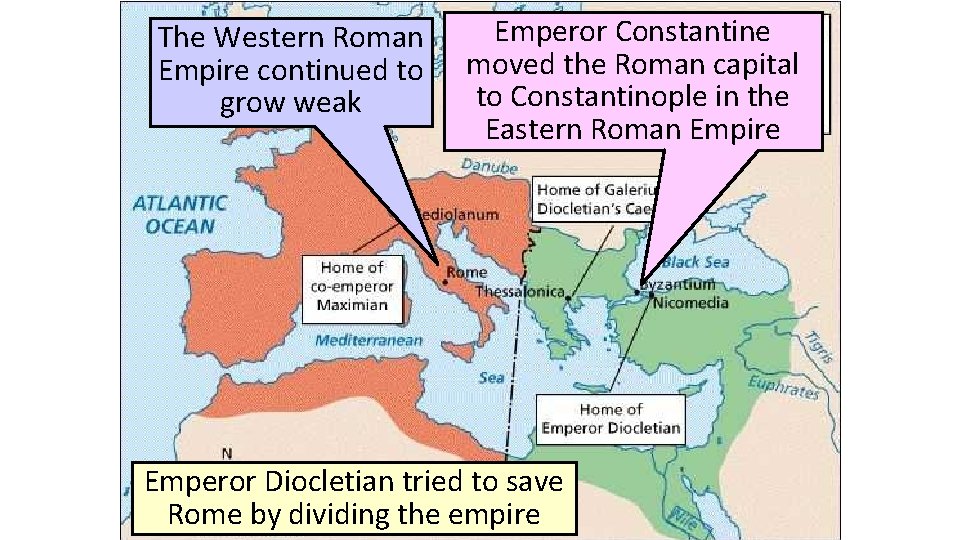
• The Western Roman Empire continued to Textgrow weak Emperor Constantine moved the Roman capital to Constantinople in the Eastern Roman Empire Emperor Diocletian tried to save Rome by dividing the empire
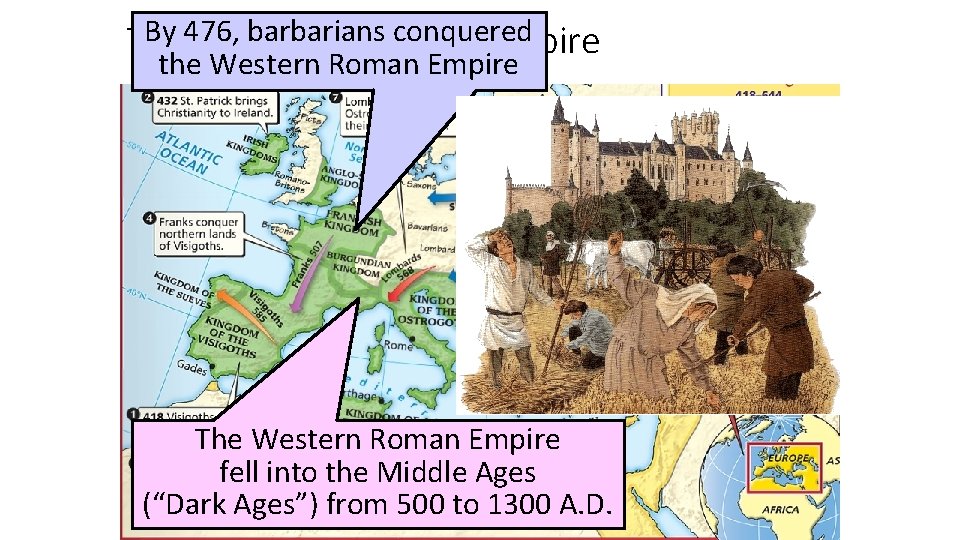
By 476, conquered The Fallbarbarians of the Roman Empire the Western Roman Empire The Western Roman Empire fell into the Middle Ages (“Dark Ages”) from 500 to 1300 A. D.
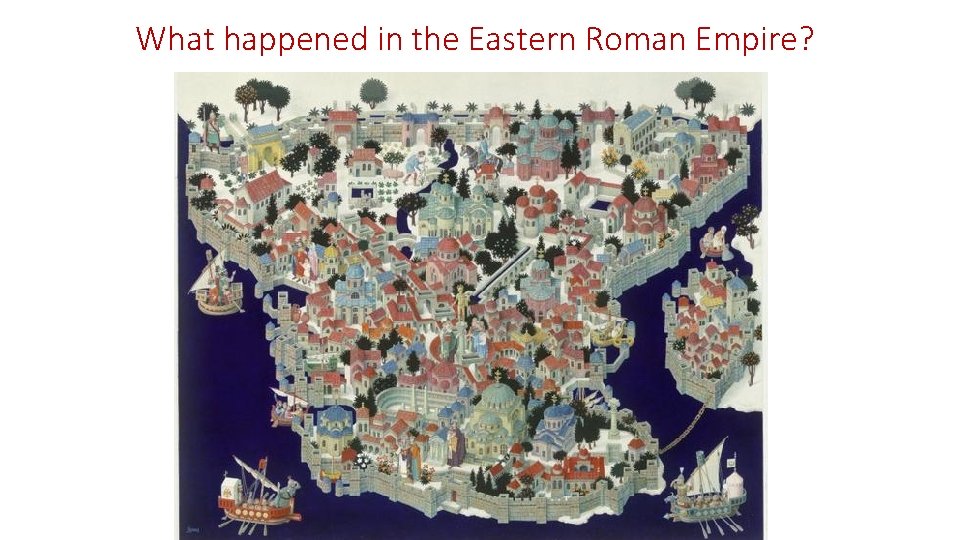
What happened in the Eastern Roman Empire?
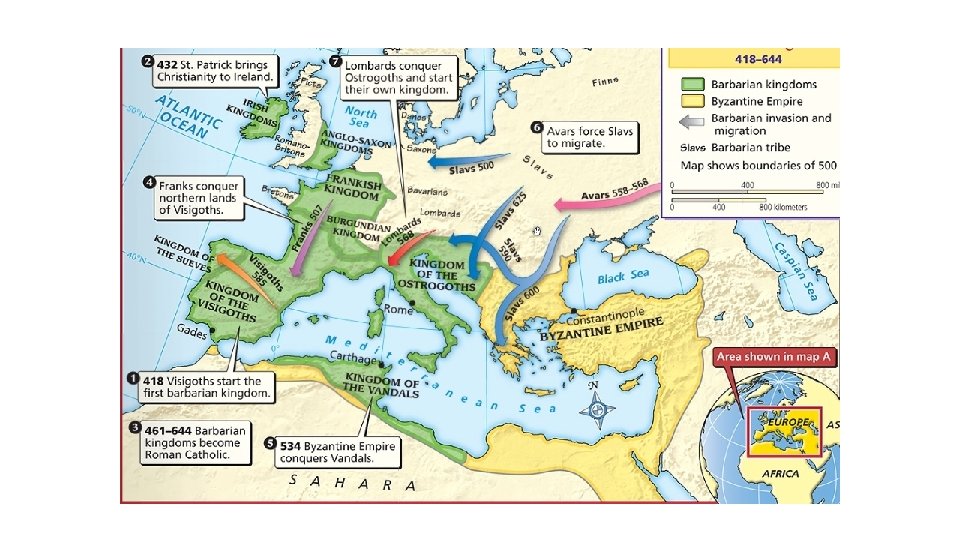
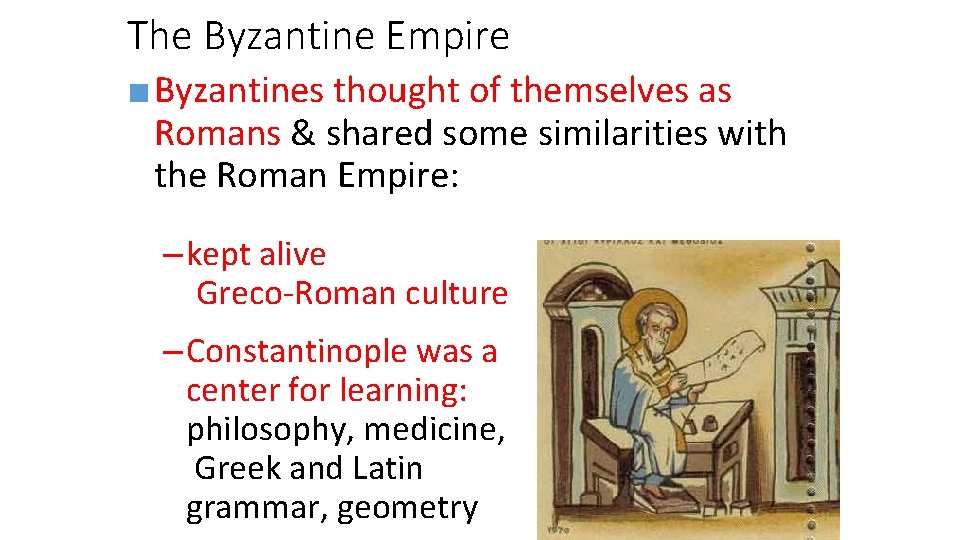
The Byzantine Empire ■ Byzantines thought of themselves as Romans & shared some similarities with the Roman Empire: – kept alive Greco-Roman culture – Constantinople was a center for learning: philosophy, medicine, Greek and Latin grammar, geometry
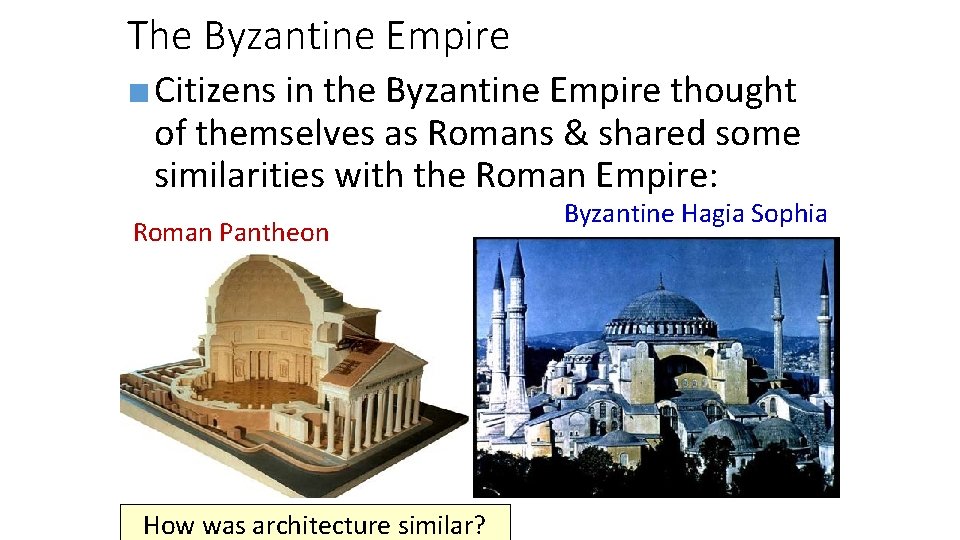
The Byzantine Empire ■ Citizens in the Byzantine Empire thought of themselves as Romans & shared some similarities with the Roman Empire: Roman Pantheon How was architecture similar? Byzantine Hagia Sophia
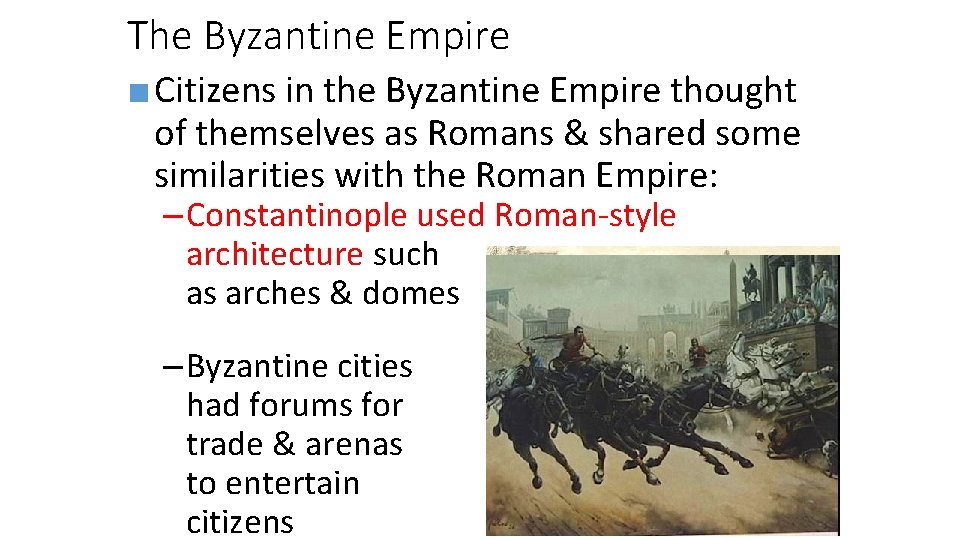
The Byzantine Empire ■ Citizens in the Byzantine Empire thought of themselves as Romans & shared some similarities with the Roman Empire: – Constantinople used Roman-style architecture such as arches & domes – Byzantine cities had forums for trade & arenas to entertain citizens
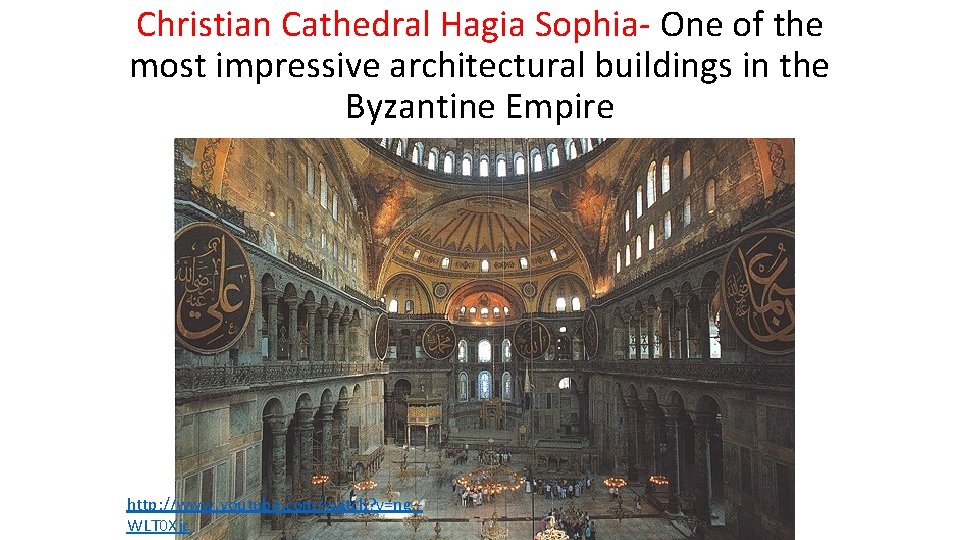
Christian Cathedral Hagia Sophia- One of the most impressive architectural buildings in the Byzantine Empire http: //www. youtube. com/watch? v=ng-WLT 0 Xjc
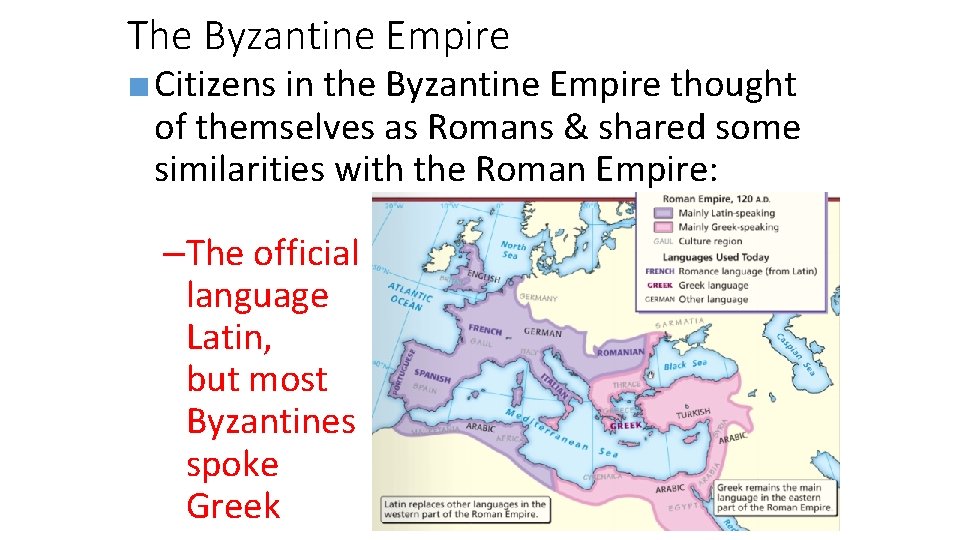
The Byzantine Empire ■ Citizens in the Byzantine Empire thought of themselves as Romans & shared some similarities with the Roman Empire: –The official language Latin, but most Byzantines spoke Greek

The Byzantine Empire ■ Citizens in the Byzantine Empire thought of themselves as Romans & shared some similarities with the Roman Empire: –Both the Roman & Byzantine Empires were ruled by Byzantine Roman emperors who had absolute government power over the empire –Justinian was the most How was famous Byzantine Emperor government – 88, 29 died violently, 13 abandoned similar?
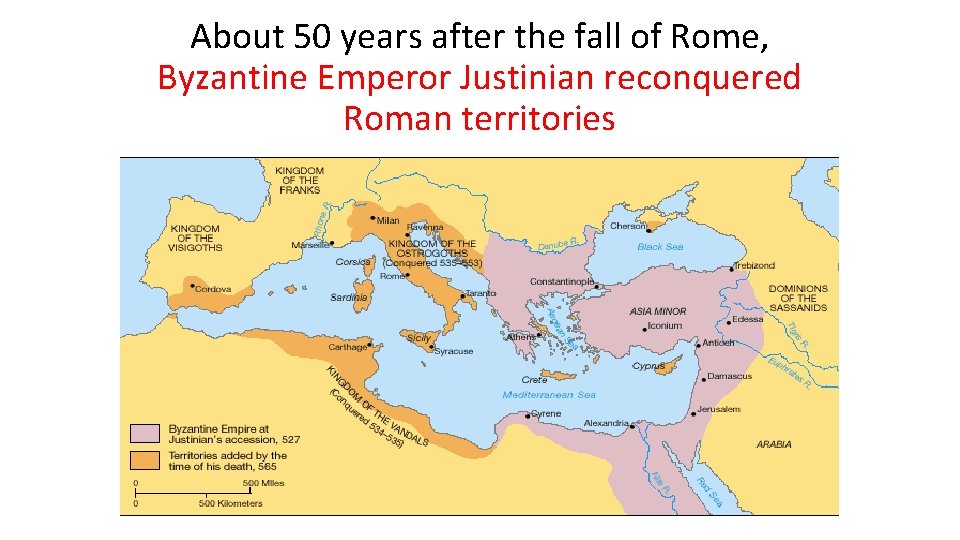
About 50 years after the fall of Rome, Byzantine Emperor Justinian reconquered Roman territories
The Justinian Code To oversee his new empire, Justinian ordered legal experts to consolidate old Roman laws into a single law code • The Justinian Code served as the legal basis for criminal justice, marriage, property, slavery, & women’s rights • The law code became one of the most important legacies of the Byzantine Empire & served as the basis for laws for the next 900 years
Justinian Code • In partners, you will look over the handout comparing California law and the laws of the Justinian Code. • Each person must complete their chart giving similarities and differences between these two legal systems.
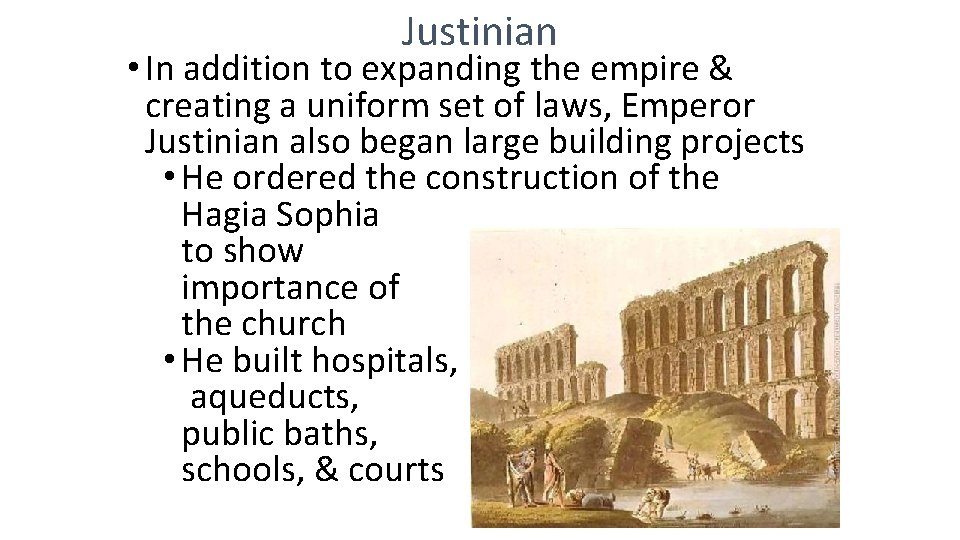
Justinian • In addition to expanding the empire & creating a uniform set of laws, Emperor Justinian also began large building projects • He ordered the construction of the Hagia Sophia to show importance of the church • He built hospitals, aqueducts, public baths, schools, & courts
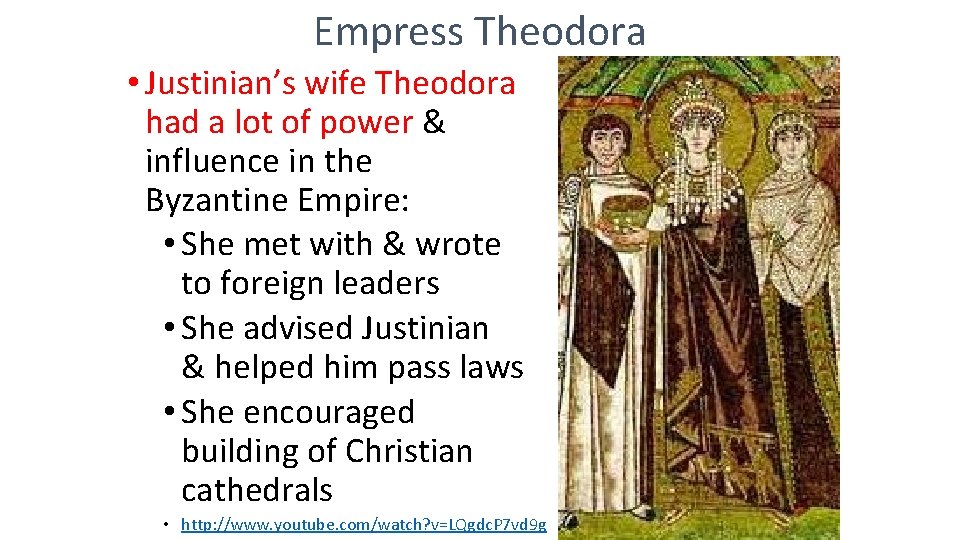
Empress Theodora • Justinian’s wife Theodora had a lot of power & influence in the Byzantine Empire: • She met with & wrote to foreign leaders • She advised Justinian & helped him pass laws • She encouraged building of Christian cathedrals • http: //www. youtube. com/watch? v=LQgdc. P 7 vd 9 g
Justinian & Theodora • Empress Theodora ("Norwegian Wood" by the Beatles) – You. Tube • Mixed views of Justinian and Theodora
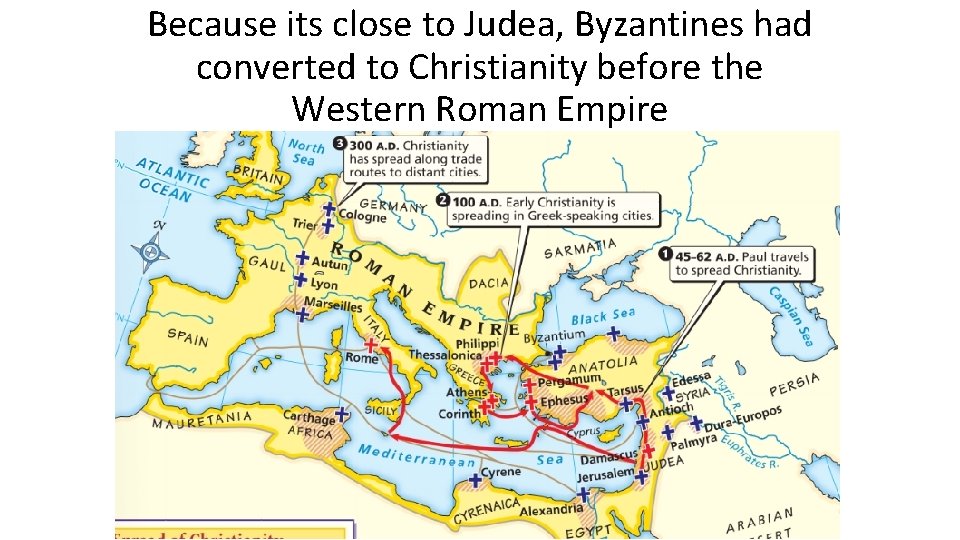
Because its close to Judea, Byzantines had converted to Christianity before the Western Roman Empire
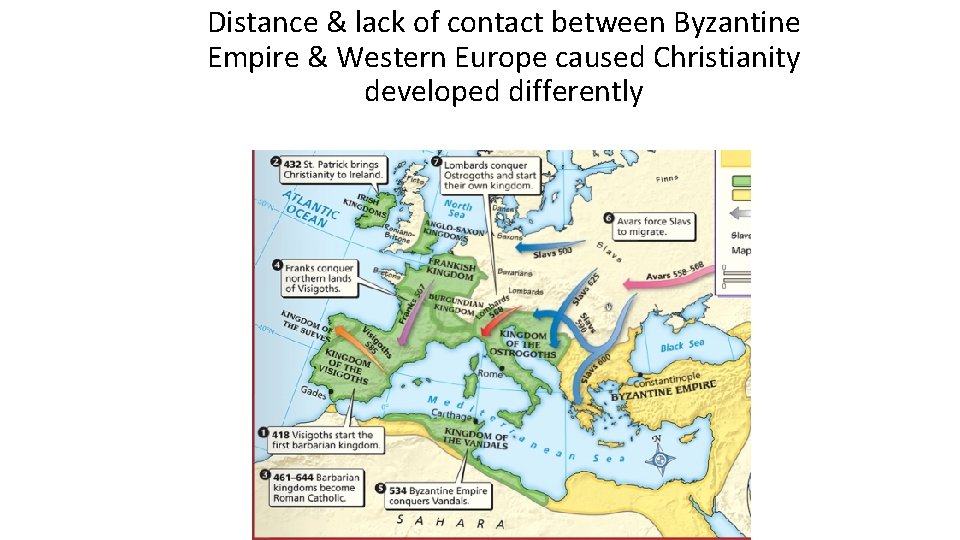
Distance & lack of contact between Byzantine Empire & Western Europe caused Christianity developed differently
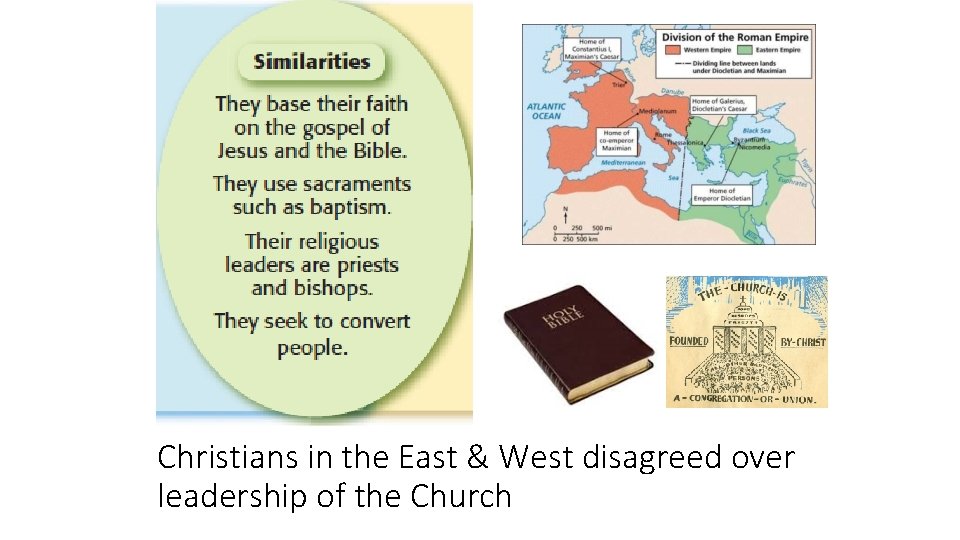
Christians in the East & West disagreed over leadership of the Church
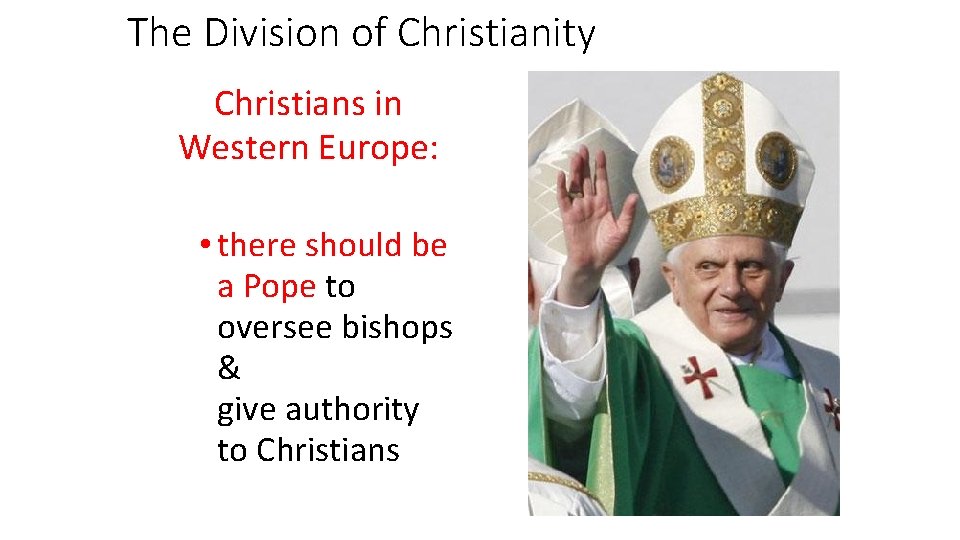
The Division of Christianity Christians in Western Europe: • there should be a Pope to oversee bishops & give authority to Christians
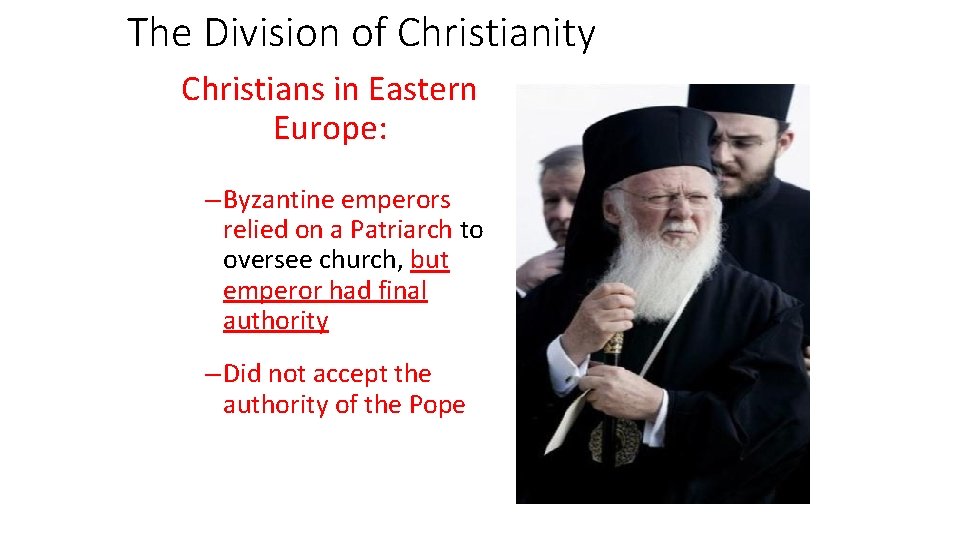
The Division of Christianity Christians in Eastern Europe: – Byzantine emperors relied on a Patriarch to oversee church, but emperor had final authority – Did not accept the authority of the Pope
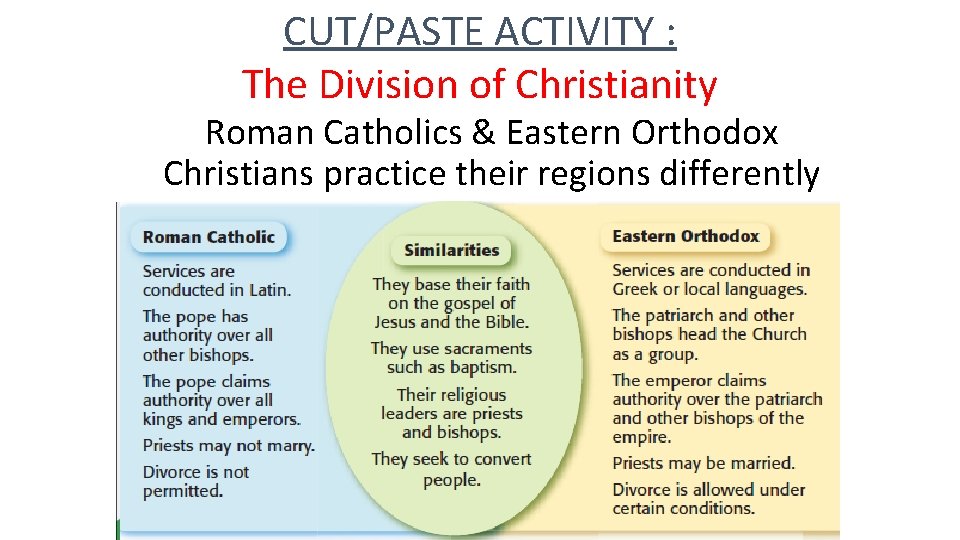
CUT/PASTE ACTIVITY : The Division of Christianity Roman Catholics & Eastern Orthodox Christians practice their regions differently
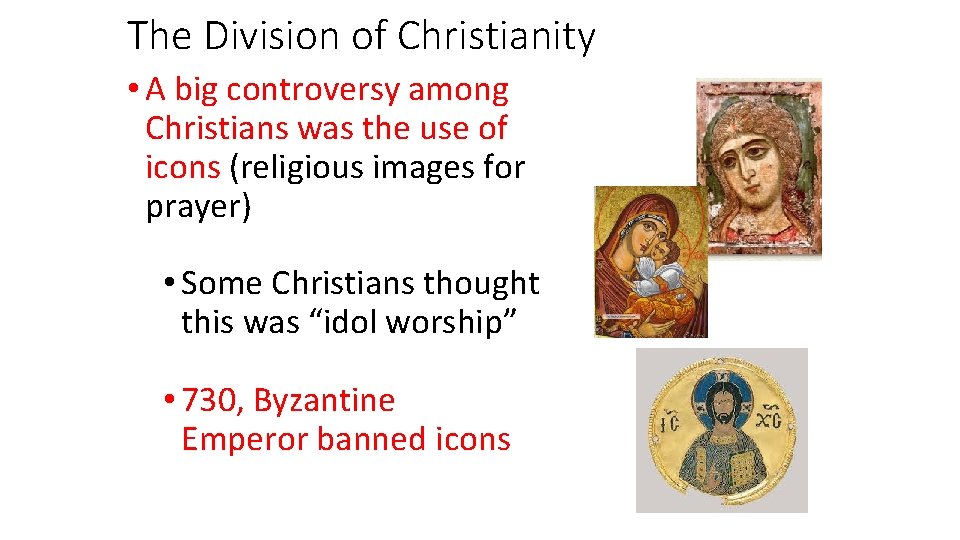
The Division of Christianity • A big controversy among Christians was the use of icons (religious images for prayer) • Some Christians thought this was “idol worship” • 730, Byzantine Emperor banned icons
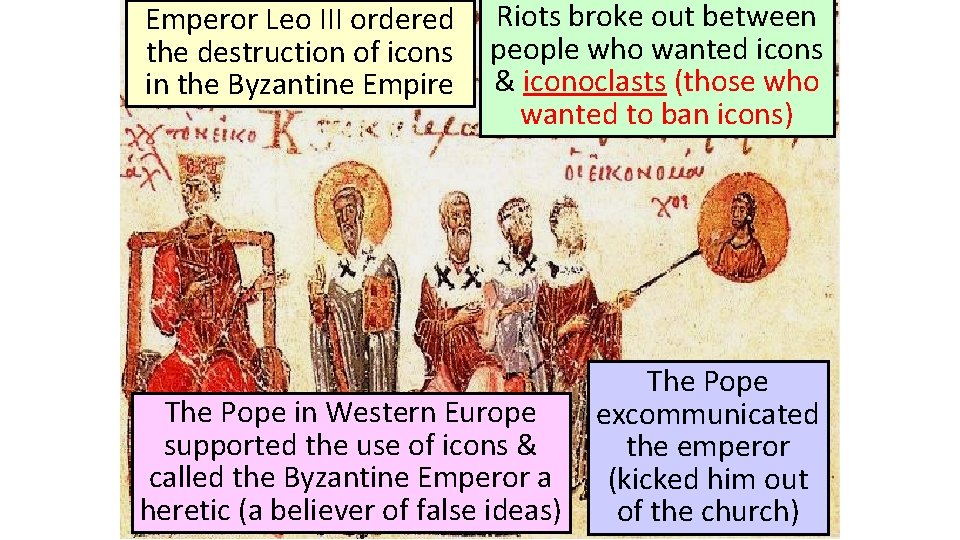
Emperor Leo III ordered the destruction of icons in the Byzantine Empire Riots broke out between people who wanted icons & iconoclasts (those who wanted to ban icons) The Pope in Western Europe supported the use of icons & called the Byzantine Emperor a heretic (a believer of false ideas) The Pope excommunicated the emperor (kicked him out of the church)
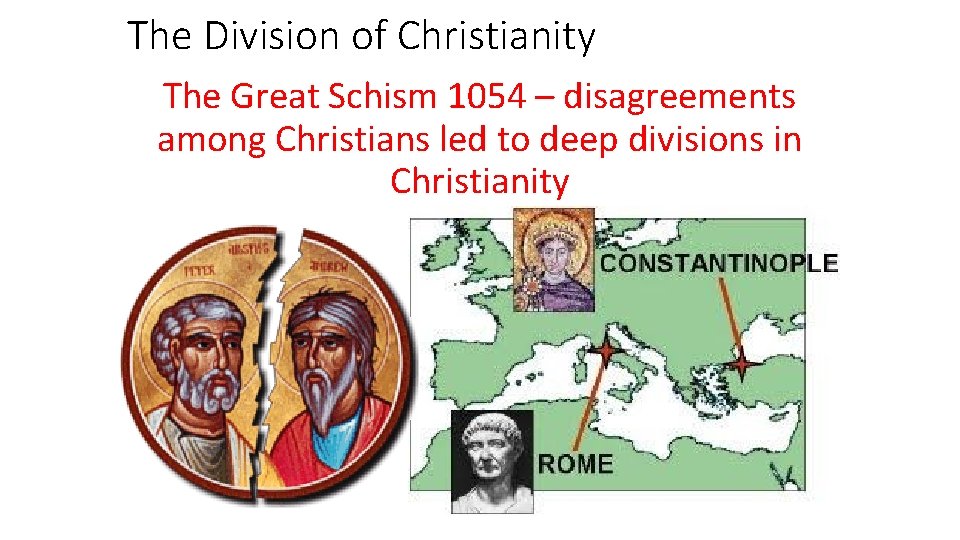
The Division of Christianity The Great Schism 1054 – disagreements among Christians led to deep divisions in Christianity
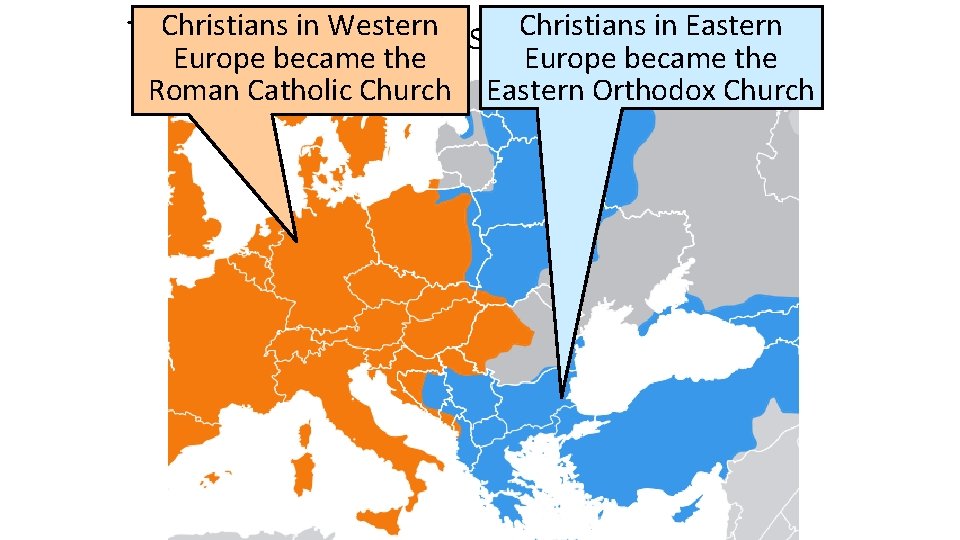
Christians in Western Christians in Eastern The. Europe Division of Christianity became the Europe became the Roman Catholic Church Eastern Orthodox Church

“Gettin’ Byzzy With It” Song Lyric Analysis • Listen to the song as you read the lyrics • Analyze the song and think about what you know the song is talking about, and what you don’t know
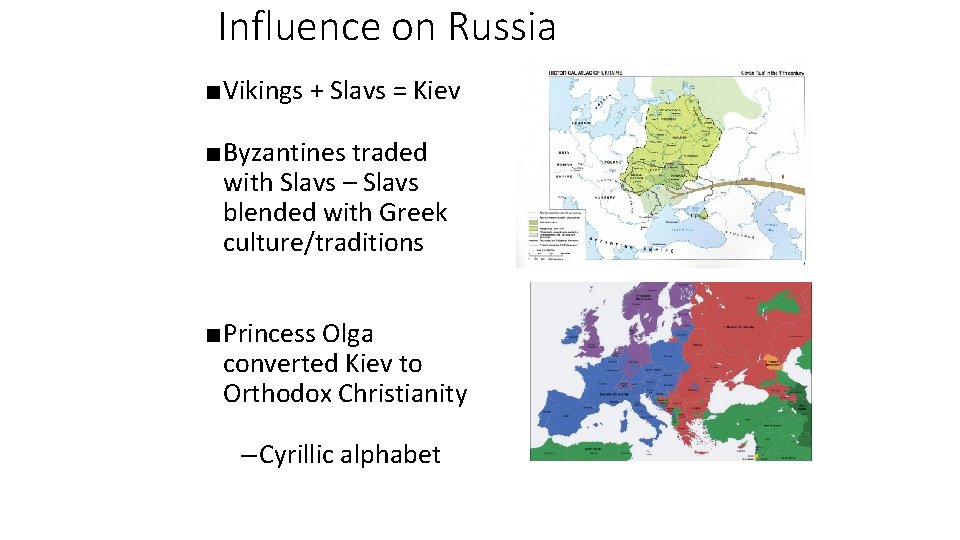
Influence on Russia ■Vikings + Slavs = Kiev ■Byzantines traded with Slavs – Slavs blended with Greek culture/traditions ■Princess Olga converted Kiev to Orthodox Christianity – Cyrillic alphabet
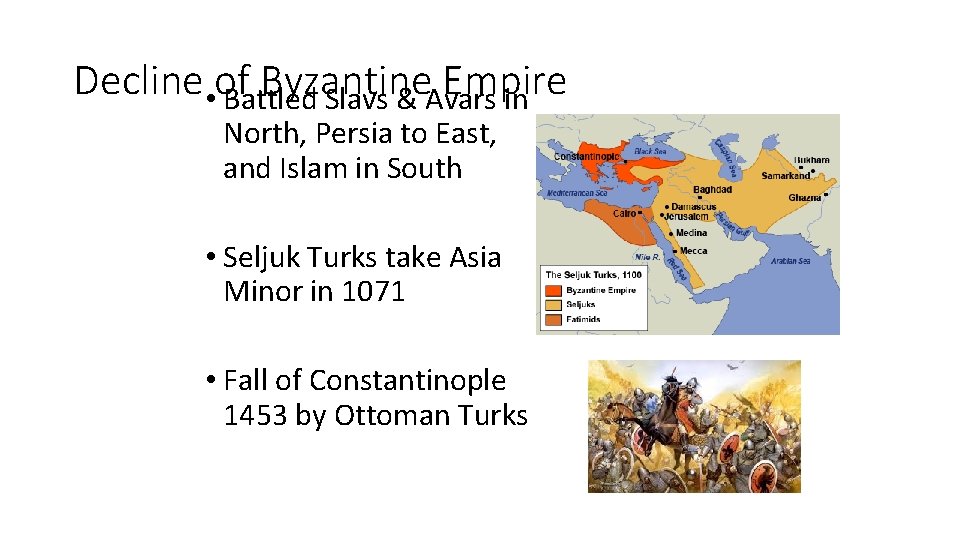
Decline • of Byzantine Empire Battled Slavs & Avars in North, Persia to East, and Islam in South • Seljuk Turks take Asia Minor in 1071 • Fall of Constantinople 1453 by Ottoman Turks

Middle Ages
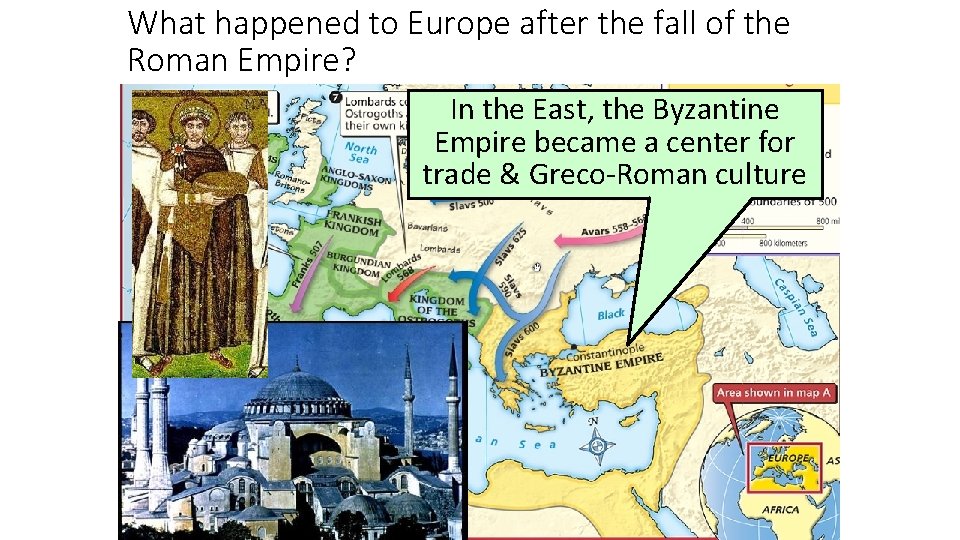
What happened to Europe after the fall of the Roman Empire? In the East, the Byzantine Empire became a center for trade & Greco-Roman culture
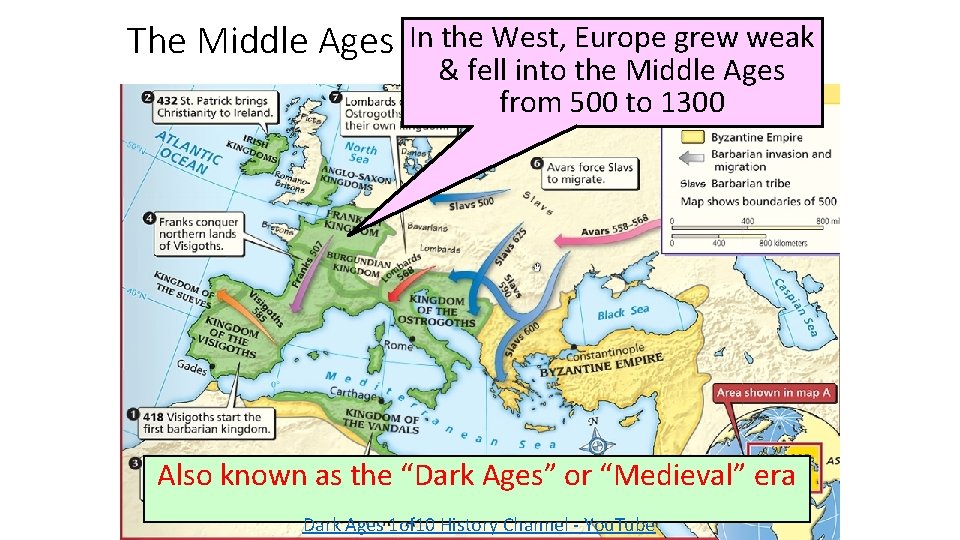
The Middle Ages In the West, Europe grew weak & fell into the Middle Ages from 500 to 1300 Also known as the “Dark Ages” or “Medieval” era Dark Ages 1 of 10 History Channel - You. Tube
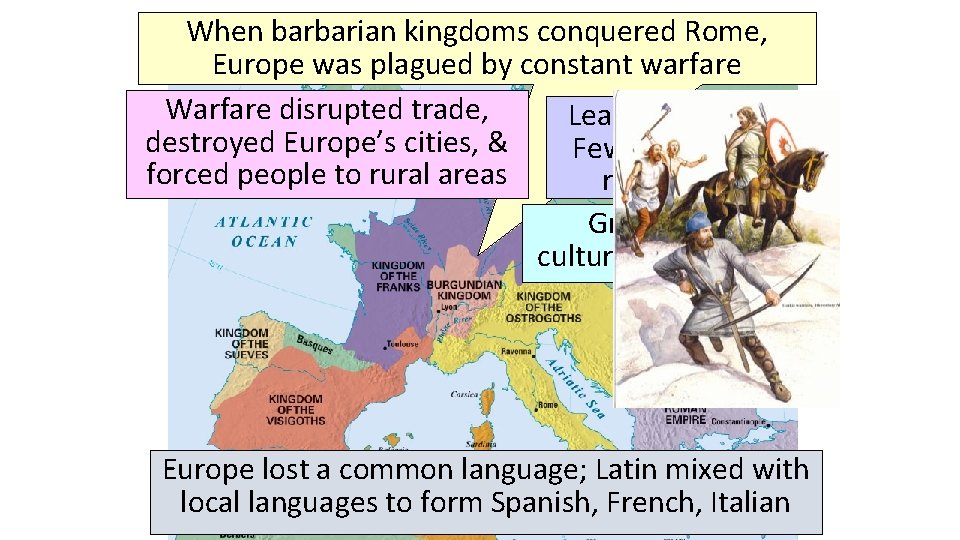
When barbarian kingdoms conquered Rome, Europe After the Fall of Rome Europe was plagued by constant warfare Warfare disrupted trade, destroyed Europe’s cities, & forced people to rural areas Learning declined; Few people could read or write Greco-Roman culture was forgotten Europe lost a common language; Latin mixed with local languages to form Spanish, French, Italian
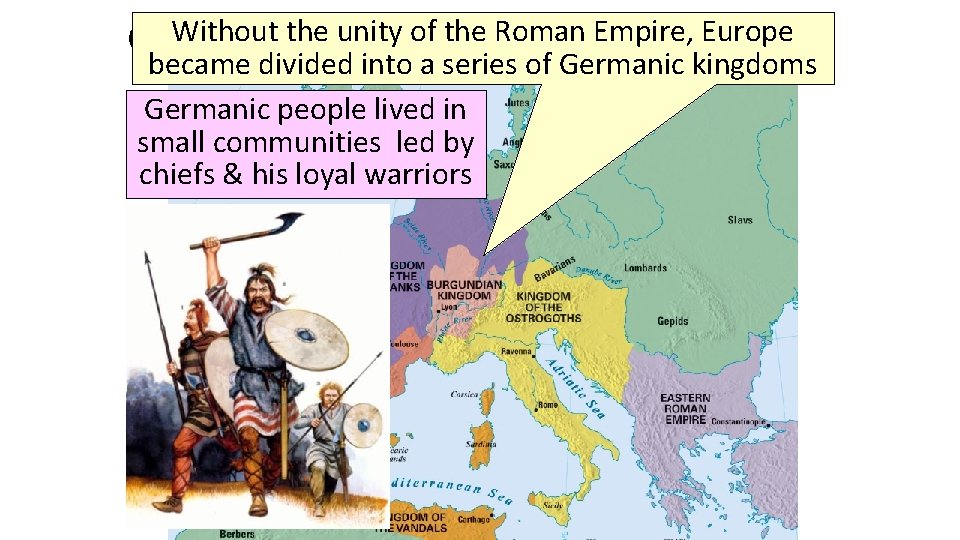
Without the unity ofinthe Roman Empire, Europe Germanic Tribes the Middle Ages became divided into a series of Germanic kingdoms Germanic people lived in small communities led by chiefs & his loyal warriors
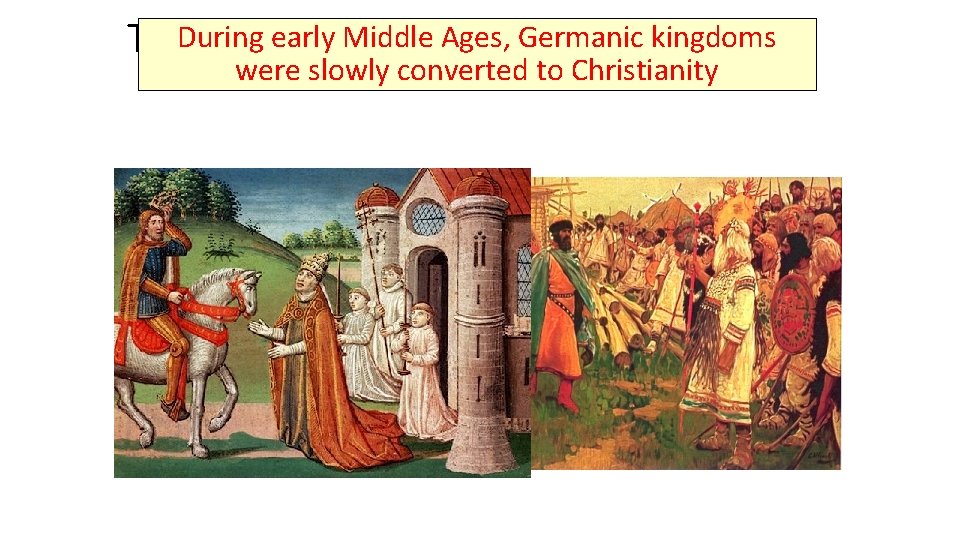
early of Middle Ages, Germanic kingdoms The. During Spread Christianity were slowly converted to Christianity
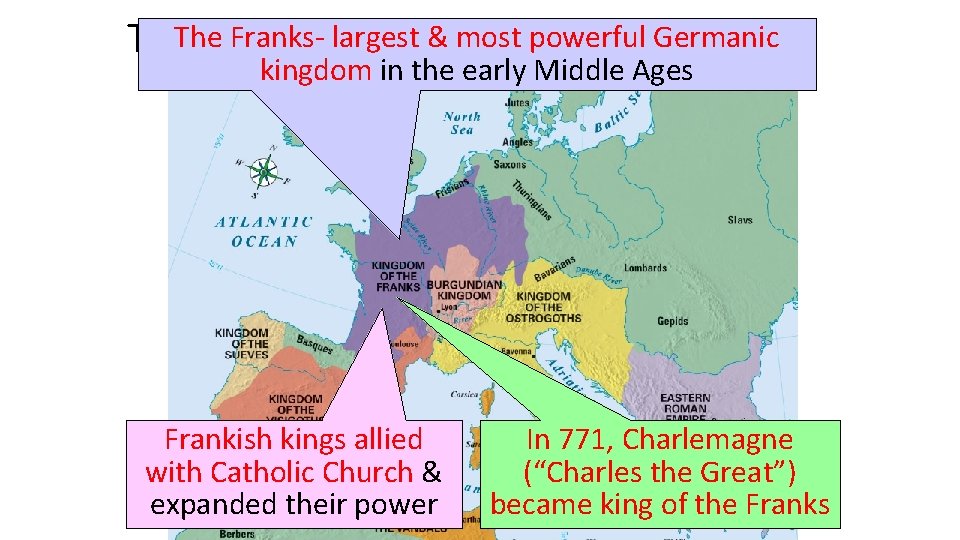
Franks- largest & most powerful Germanic The. Spread of Christianity kingdom in the early Middle Ages Frankish kings allied with Catholic Church & expanded their power In 771, Charlemagne (“Charles the Great”) became king of the Franks
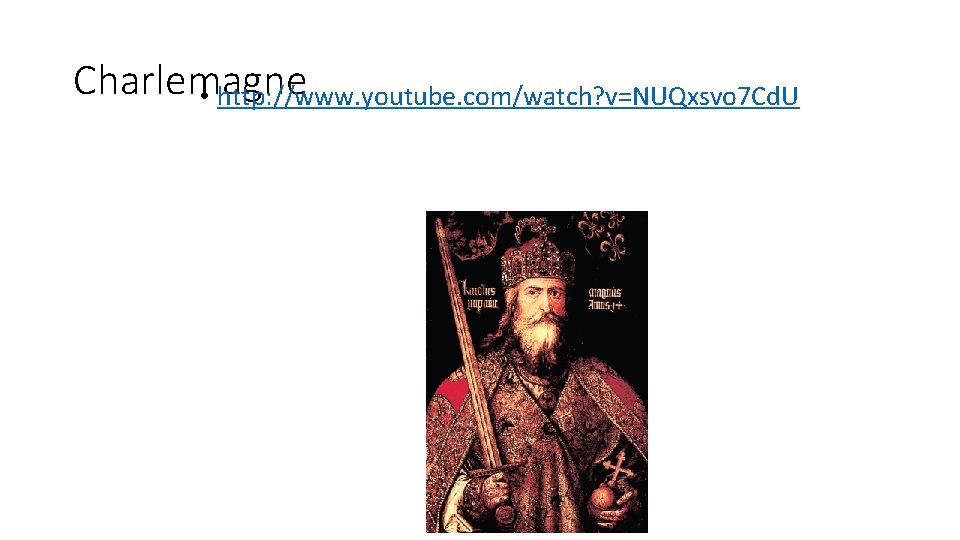
Charlemagne • http: //www. youtube. com/watch? v=NUQxsvo 7 Cd. U
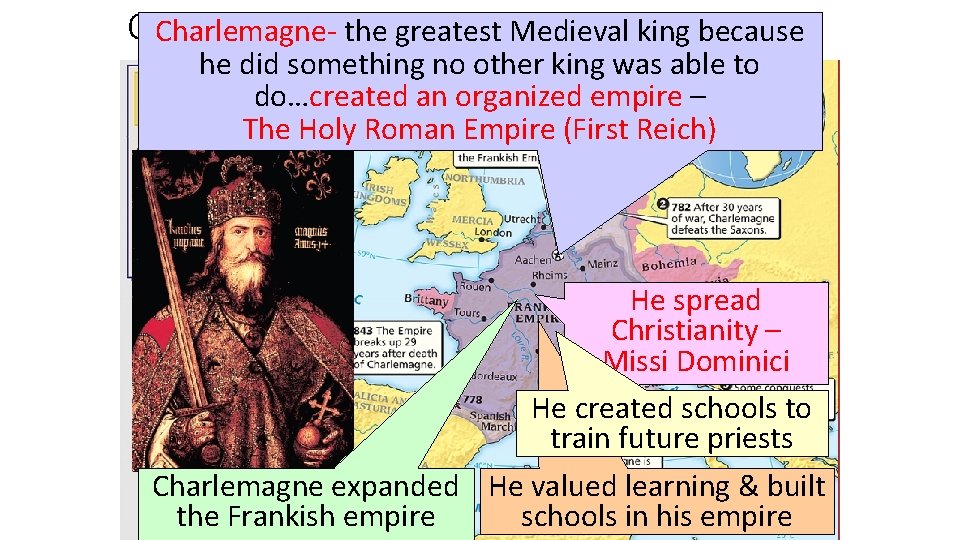
Charlemagne & the Frankish Empire Charlemagne- the greatest Medieval king because he did something no other king was able to do…created an organized empire – The Holy Roman Empire (First Reich) He spread Christianity – Missi Dominici He created schools to train future priests Charlemagne expanded He valued learning & built the Frankish empire schools in his empire
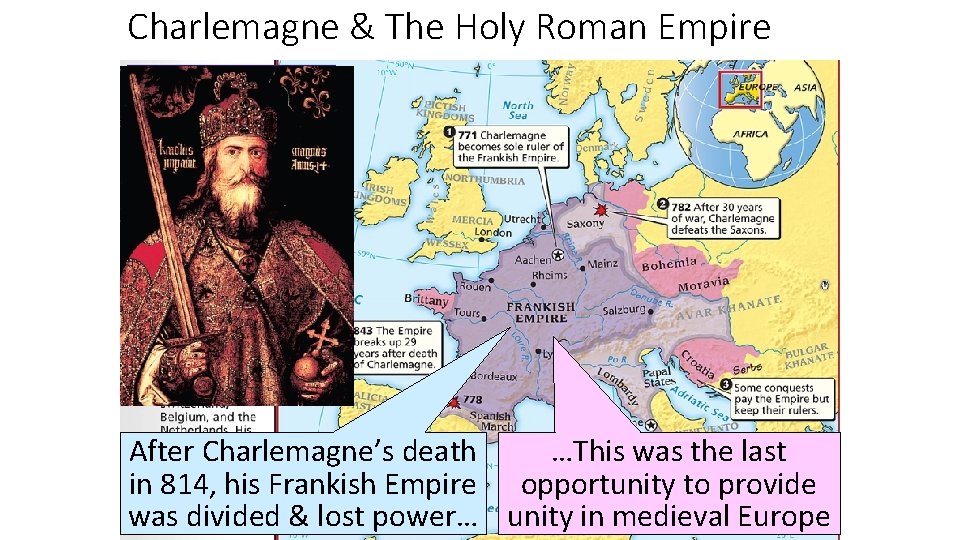
Charlemagne & The Holy Roman Empire After Charlemagne’s death …This was the last in 814, his Frankish Empire opportunity to provide was divided & lost power… unity in medieval Europe

http: //www. youtube. com /watch? v=c. TTa. Vn. Zy. G 2 g
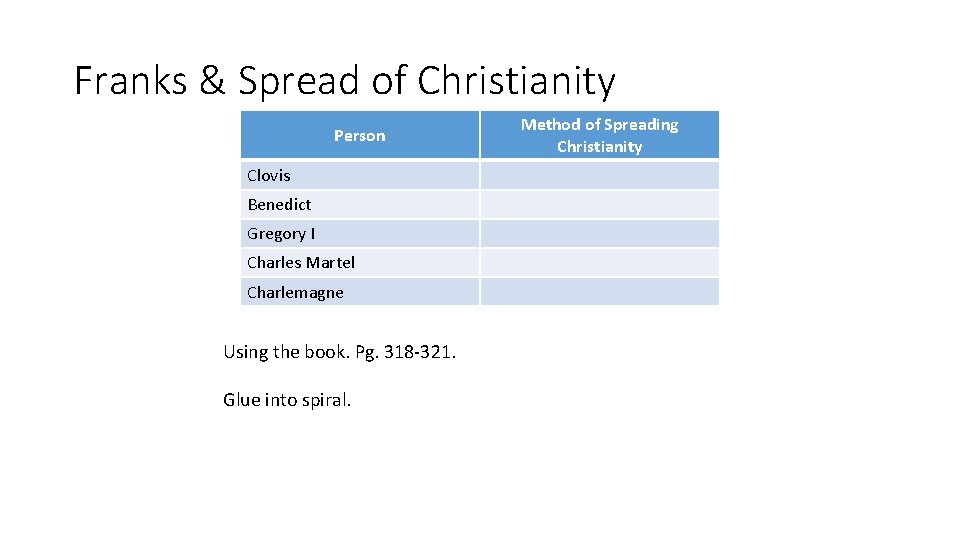
Franks & Spread of Christianity Person Clovis Benedict Gregory I Charles Martel Charlemagne Using the book. Pg. 318 -321. Glue into spiral. Method of Spreading Christianity
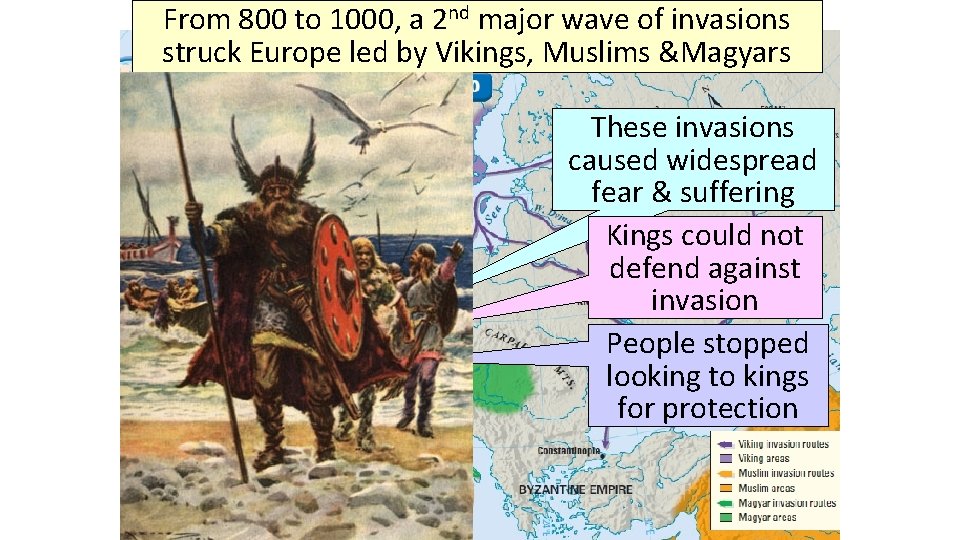
From 800 to 1000, a 2 nd major wave of invasions struck Europe led by Vikings, Muslims &Magyars • Text These invasions caused widespread fear & suffering Kings could not defend against invasion People stopped looking to kings for protection
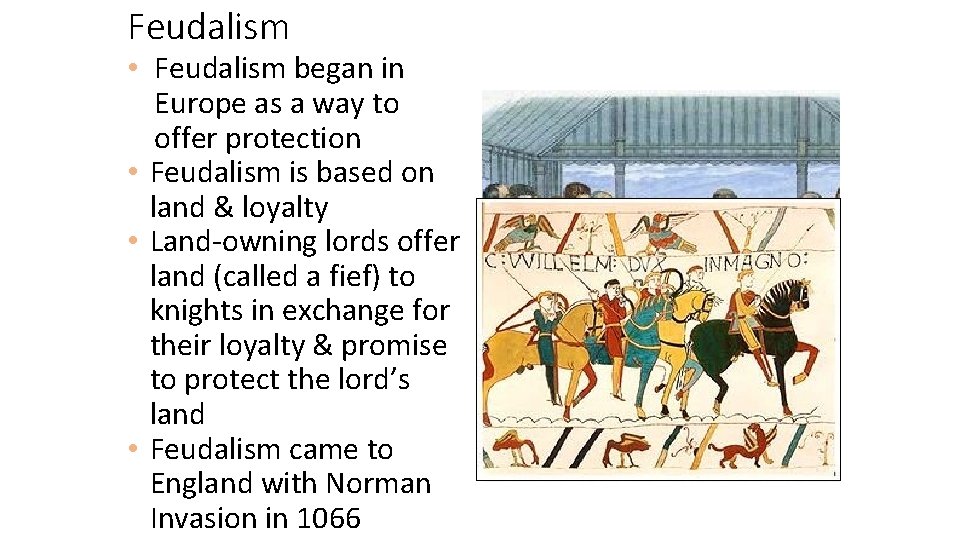
Feudalism • Feudalism began in Europe as a way to offer protection • Feudalism is based on land & loyalty • Land-owning lords offer land (called a fief) to knights in exchange for their loyalty & promise to protect the lord’s land • Feudalism came to England with Norman Invasion in 1066
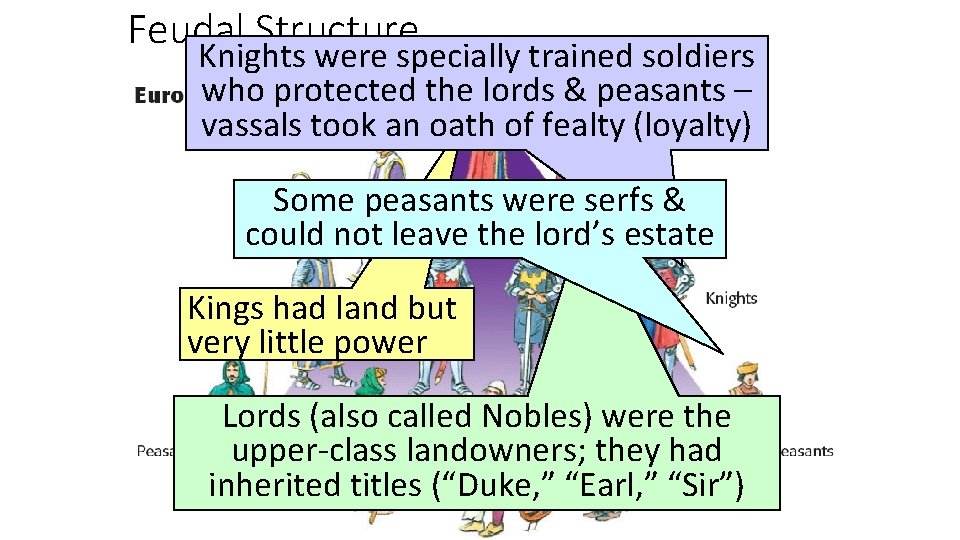
Feudal Structure Knights were specially trained soldiers who protected the lords & peasants – vassals took an oath of fealty (loyalty) Some peasants were serfs & could not leave the lord’s estate Kings had land but very little power Lords (also called Nobles) were the upper-class landowners; they had inherited titles (“Duke, ” “Earl, ” “Sir”)
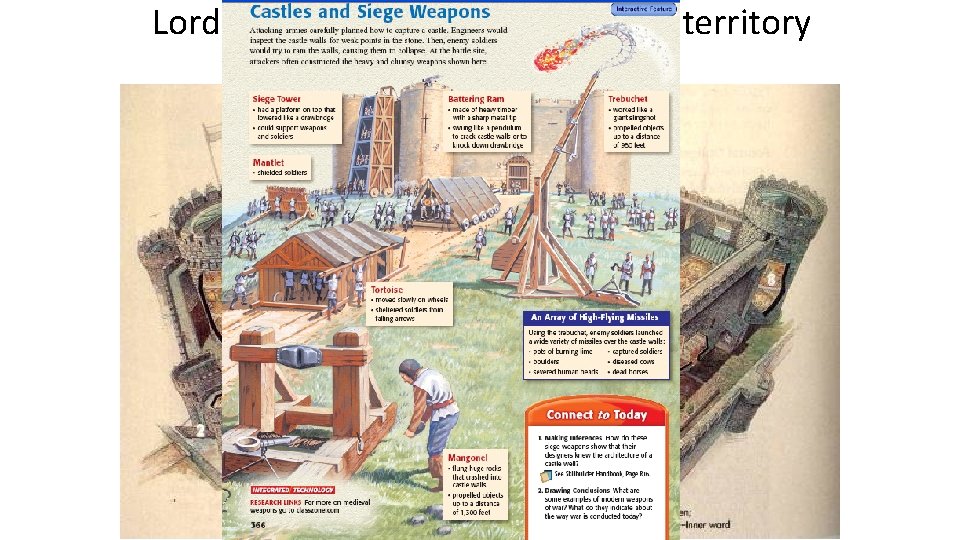
Lords built castles to protect their territory from outside invasions
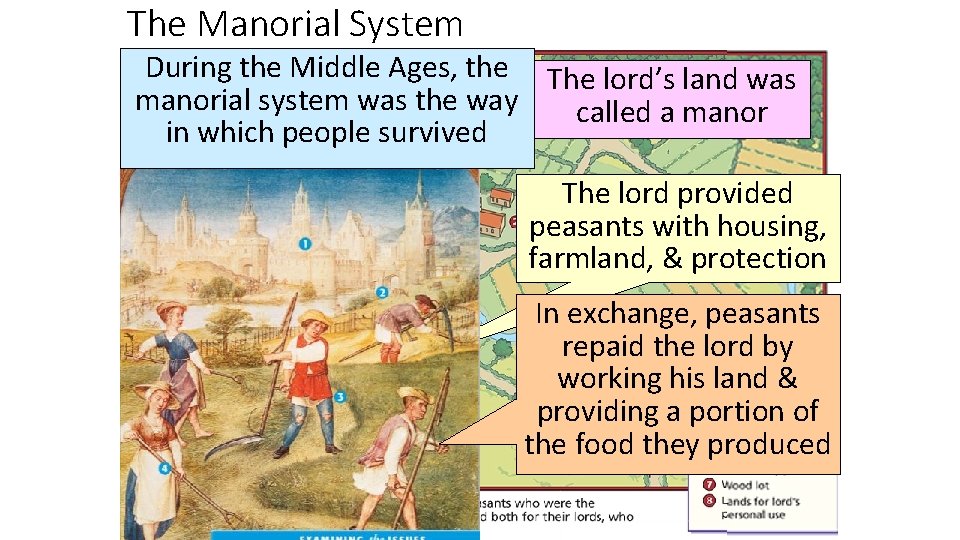
The Manorial System During the Middle Ages, the The lord’s land was manorial system was the way called a manor in which people survived The lord provided peasants with housing, farmland, & protection In exchange, peasants repaid the lord by working his land & providing a portion of the food they produced
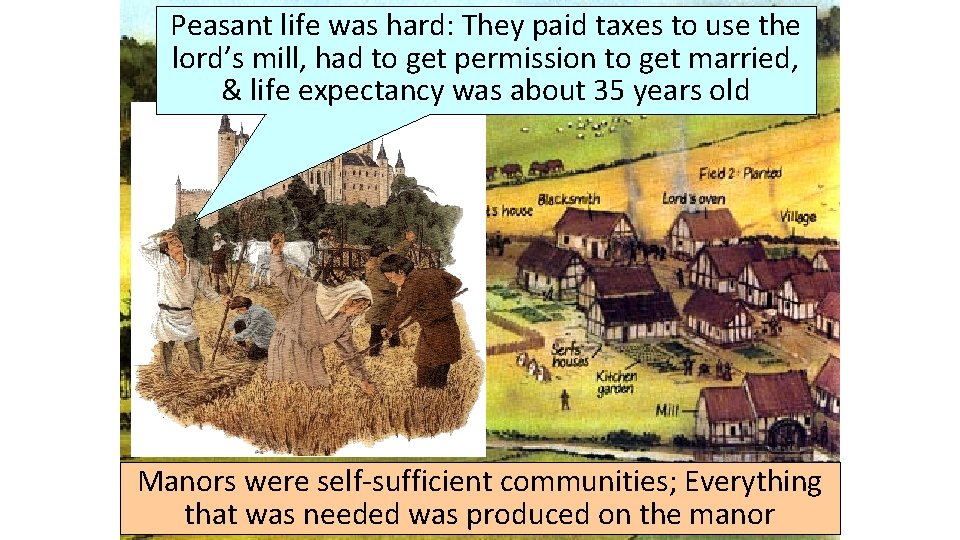
Peasant life was hard: They paid taxes to use the lord’s mill, had to get permission to get married, & life expectancy was about 35 years old Manors were self-sufficient communities; Everything that was needed was produced on the manor
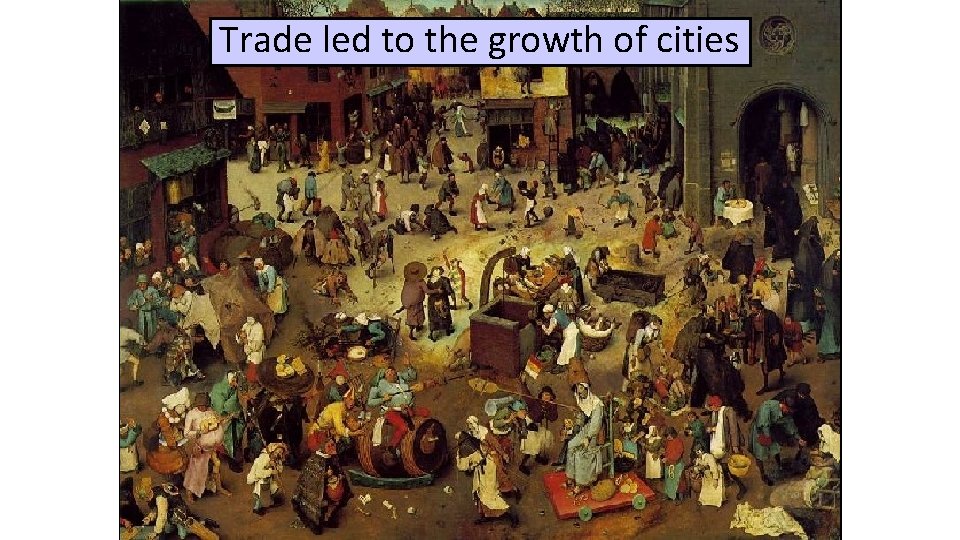
After the Crusades, people wanted Medieval fairs brought Trade. Middle led to the growth of cities High Ages—Crusades more luxury goods & began to trade iron & salt to the feudal manors; this was a very rare thing
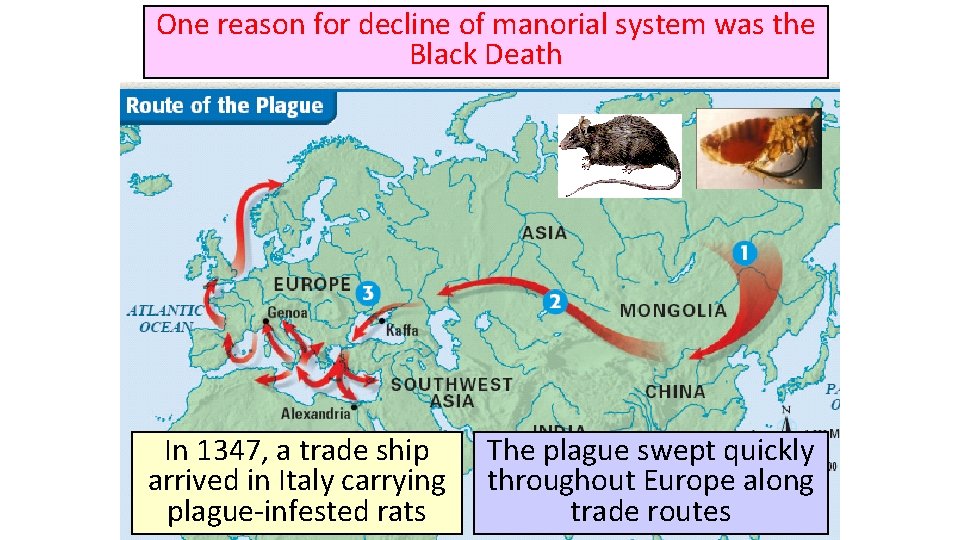
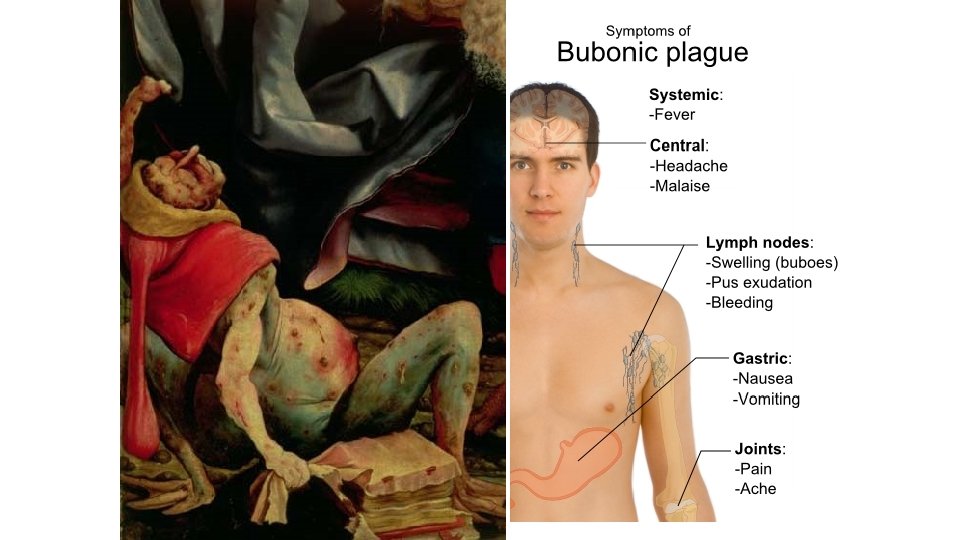
One reason for decline of manorial system was the Black Death In 1347, a trade ship arrived in Italy carrying plague-infested rats The plague swept quickly throughout Europe along trade routes
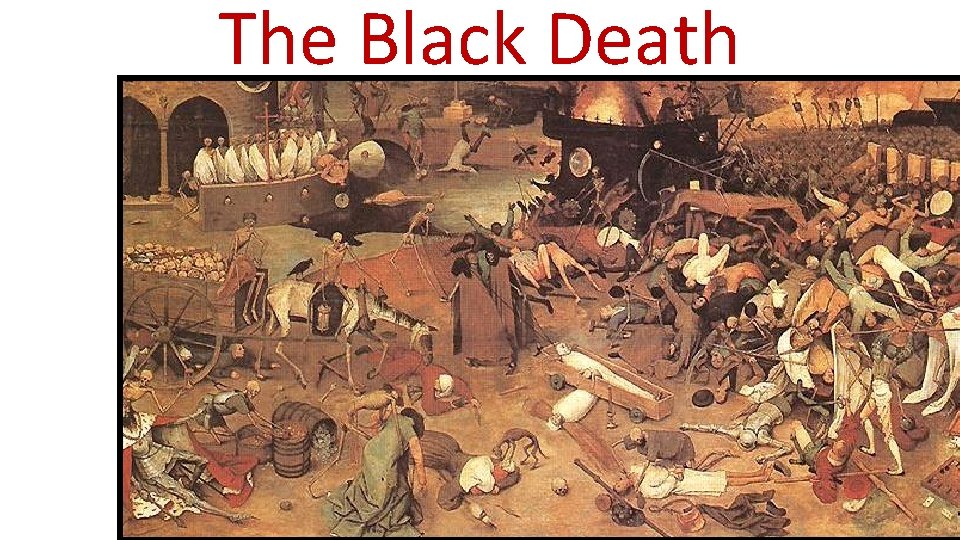
The Black Death
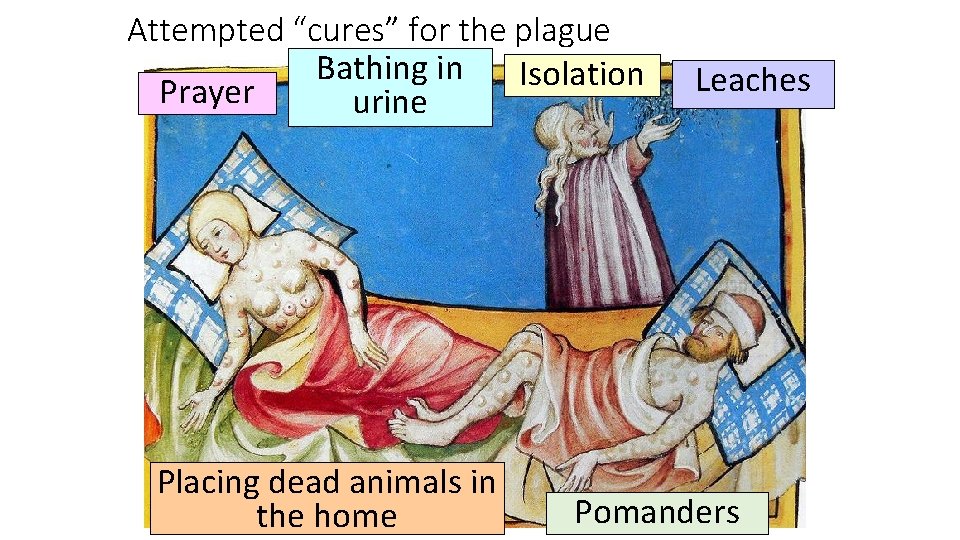
Attempted “cures” for the plague Bathing in Isolation Prayer urine Placing dead animals in the home Leaches Pomanders
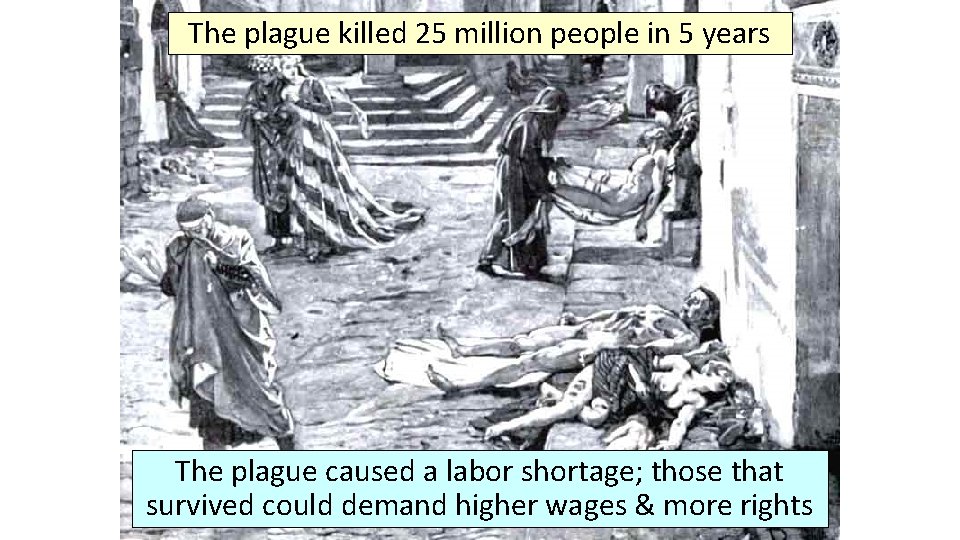
The plague killed 25 million people in 5 years The plague caused a labor shortage; those that survived could demand higher wages & more rights
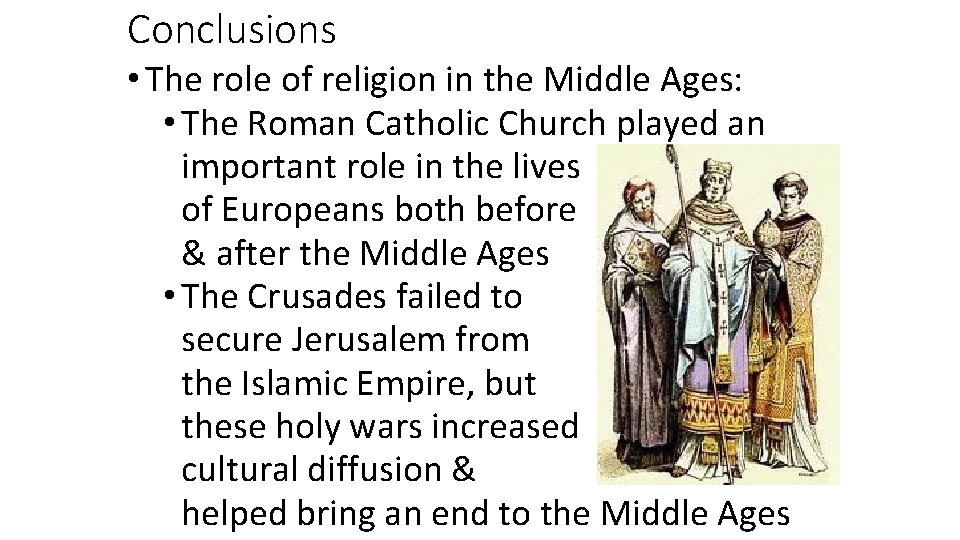
Conclusions • The role of religion in the Middle Ages: • The Roman Catholic Church played an important role in the lives of Europeans both before & after the Middle Ages • The Crusades failed to secure Jerusalem from the Islamic Empire, but these holy wars increased cultural diffusion & helped bring an end to the Middle Ages
- Slides: 57