
The Byzantine Empire UNIT 3 NOTES PG 1
The Byzantine Empire UNIT 3 NOTES (PG. 1 – 2)
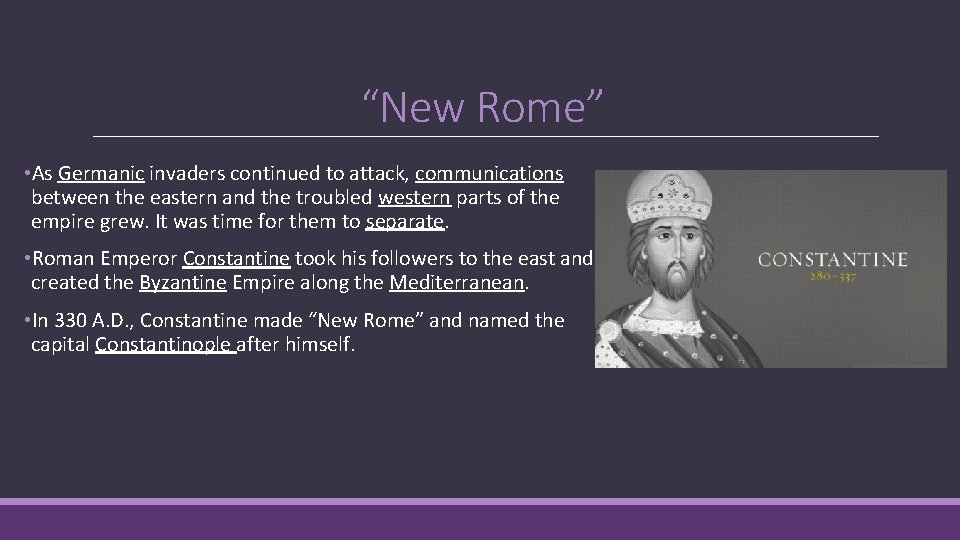
“New Rome” • As Germanic invaders continued to attack, communications between the eastern and the troubled western parts of the empire grew. It was time for them to separate. • Roman Emperor Constantine took his followers to the east and created the Byzantine Empire along the Mediterranean. • In 330 A. D. , Constantine made “New Rome” and named the capital Constantinople after himself.
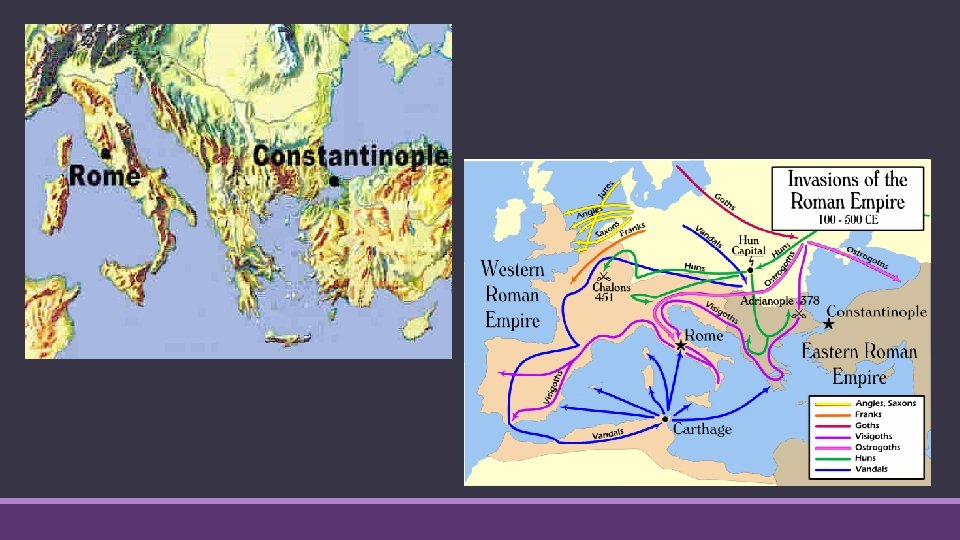
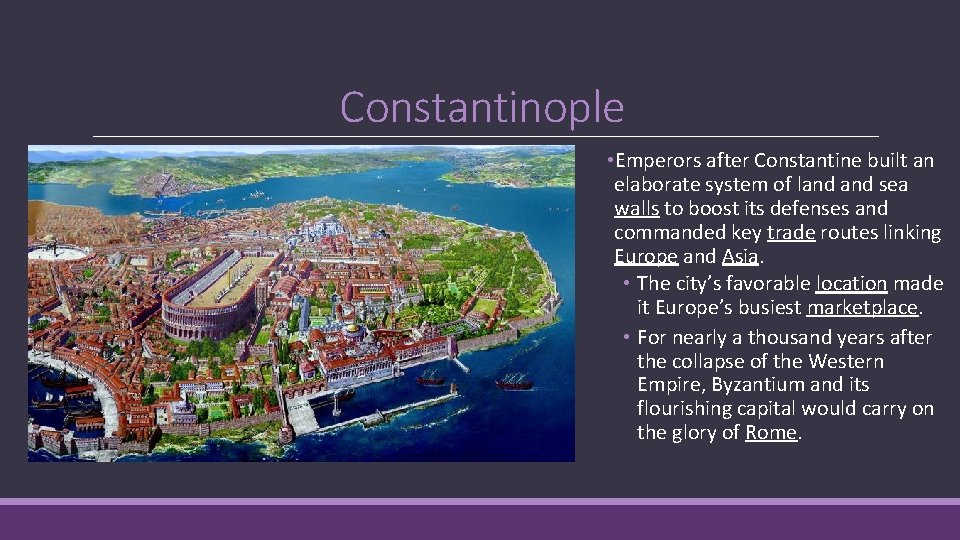
Constantinople • Emperors after Constantine built an elaborate system of land sea walls to boost its defenses and commanded key trade routes linking Europe and Asia. • The city’s favorable location made it Europe’s busiest marketplace. • For nearly a thousand years after the collapse of the Western Empire, Byzantium and its flourishing capital would carry on the glory of Rome.
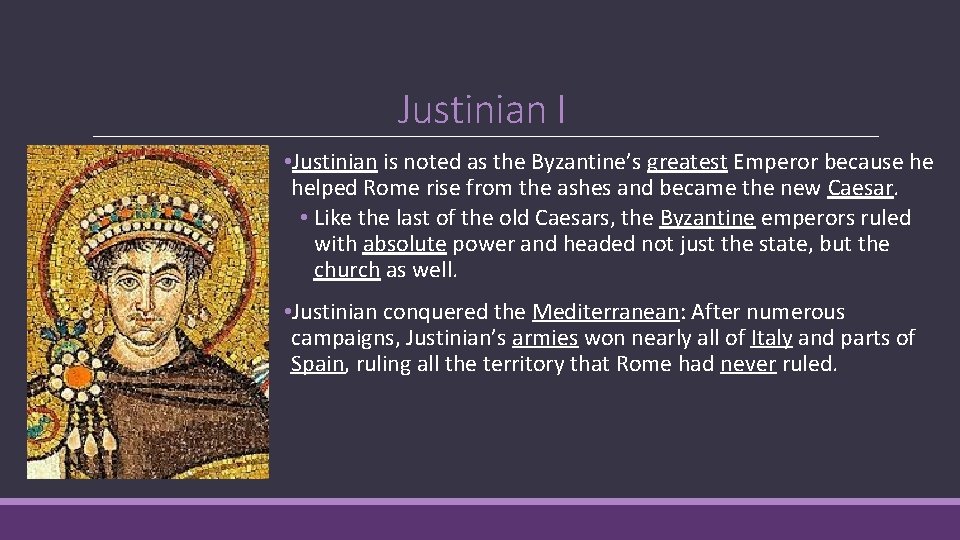
Justinian I • Justinian is noted as the Byzantine’s greatest Emperor because he helped Rome rise from the ashes and became the new Caesar. • Like the last of the old Caesars, the Byzantine emperors ruled with absolute power and headed not just the state, but the church as well. • Justinian conquered the Mediterranean: After numerous campaigns, Justinian’s armies won nearly all of Italy and parts of Spain, ruling all the territory that Rome had never ruled.
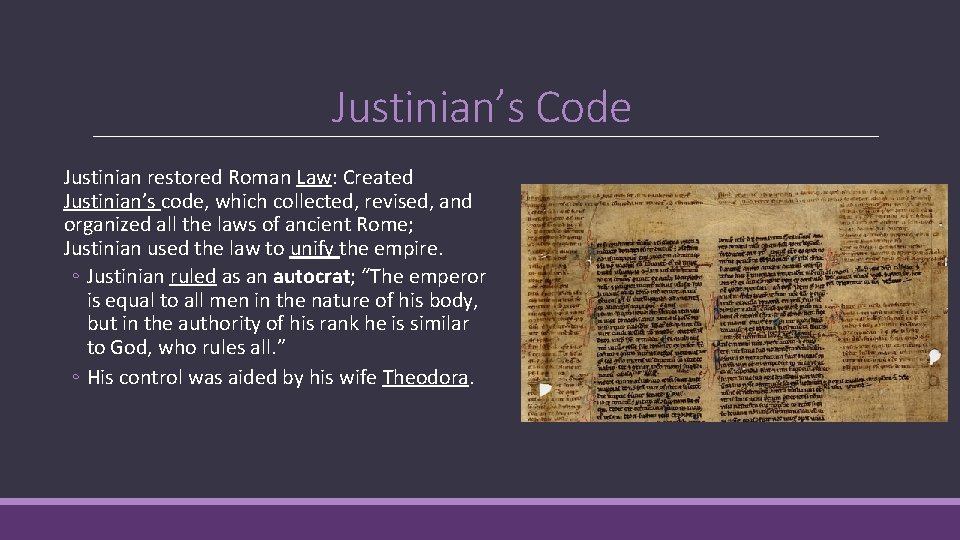
Justinian’s Code Justinian restored Roman Law: Created Justinian’s code, which collected, revised, and organized all the laws of ancient Rome; Justinian used the law to unify the empire. ◦ Justinian ruled as an autocrat; “The emperor is equal to all men in the nature of his body, but in the authority of his rank he is similar to God, who rules all. ” ◦ His control was aided by his wife Theodora.
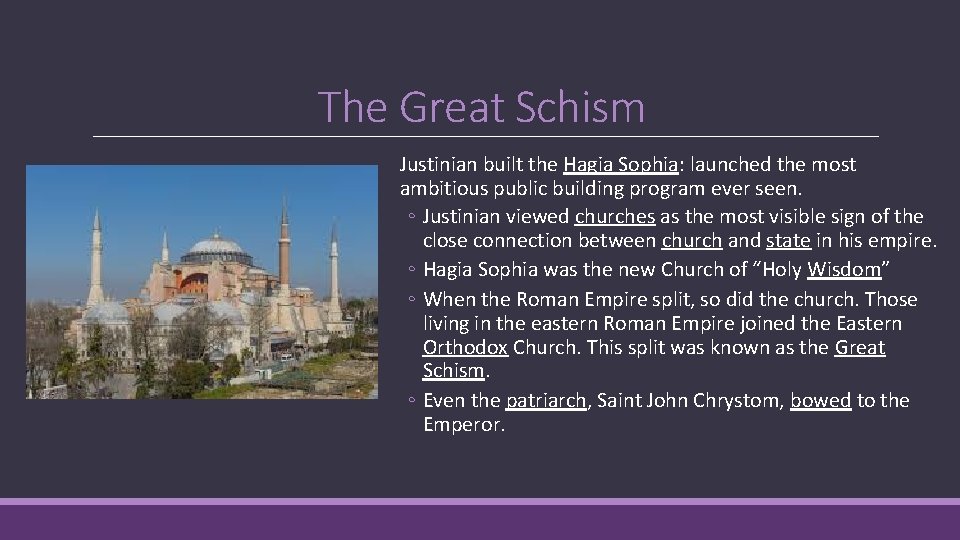
The Great Schism Justinian built the Hagia Sophia: launched the most ambitious public building program ever seen. ◦ Justinian viewed churches as the most visible sign of the close connection between church and state in his empire. ◦ Hagia Sophia was the new Church of “Holy Wisdom” ◦ When the Roman Empire split, so did the church. Those living in the eastern Roman Empire joined the Eastern Orthodox Church. This split was known as the Great Schism. ◦ Even the patriarch, Saint John Chrystom, bowed to the Emperor.
Fall of the Byzantines… • In the later years of Justinian’s reign, a disease similar to the Bubonic Plague broke out in Constantinople probably from rat-infested ships from India. Historians estimate that in 542, the worst year of the plague, 10, 000 people were dying every day. • The Byzantines had enemies in the East and West. They called the foreign invaders from the west “barbarians. ” The faced Muslim Turks in the east. • After the Crusades (1095 -1291), the Byzantine economy collapsed, leading to a poorly supplied army. They were eventually attacked & defeated by the Ottomans.
- Slides: 8