
The Byzantine Empire Background Geography Review What was
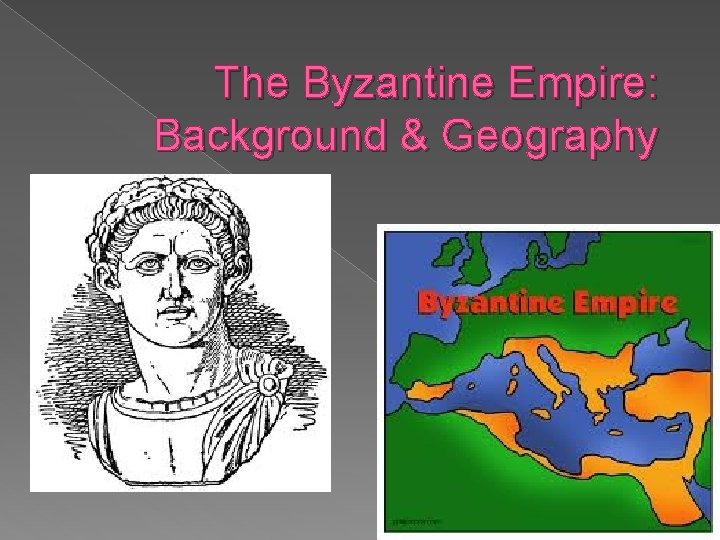
The Byzantine Empire: Background & Geography
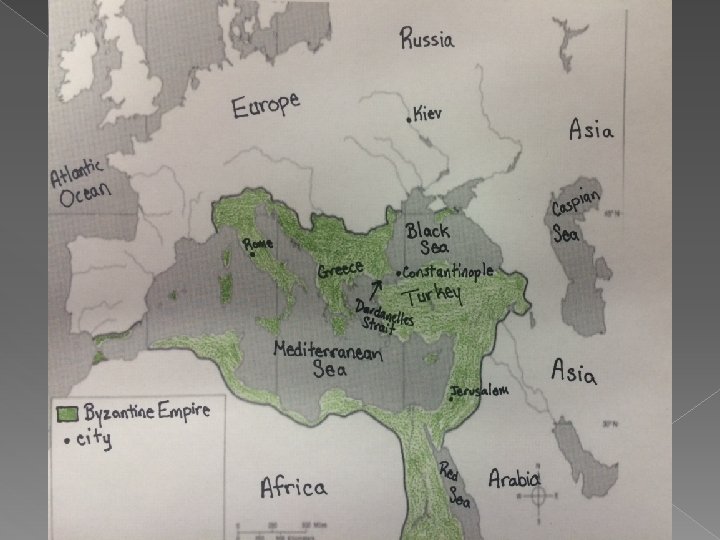
Review What was the capital city of the Eastern Roman Empire? (original name) › Byzantium What was the capital city’s name changed to? › Constantinople Who was it named after? › Constantine What modern-day country is Constantinople in? › Turkey
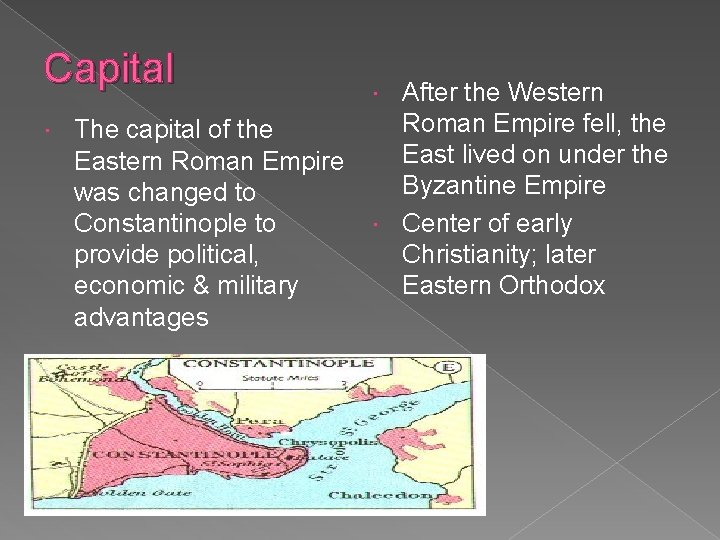
Capital The capital of the Eastern Roman Empire was changed to Constantinople to provide political, economic & military advantages After the Western Roman Empire fell, the East lived on under the Byzantine Empire Center of early Christianity; later Eastern Orthodox
Location of Constantinople Protection of the eastern frontier › Large navy protected invasions by sea › Could control movement between the Mediterranean and Black seas Distance from Germanic invasions in the western empire Easily fortified site on a peninsula bordering natural harbors Bottom Line – City was easy to defend!
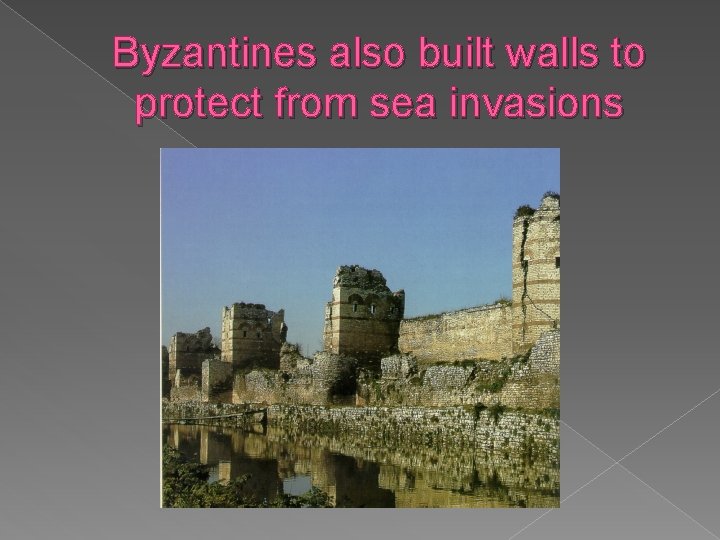
Byzantines also built walls to protect from sea invasions
Trade in Constantinople Crossroads of trade › Goods from both the Black & Caspian seas could reach the city easily › Items went through Constantinople on the way to Western Europe Persian Rugs, Chinese Silks & Byzantine Crafts After Rome falls, Constantinople becomes the wealthiest city in the world
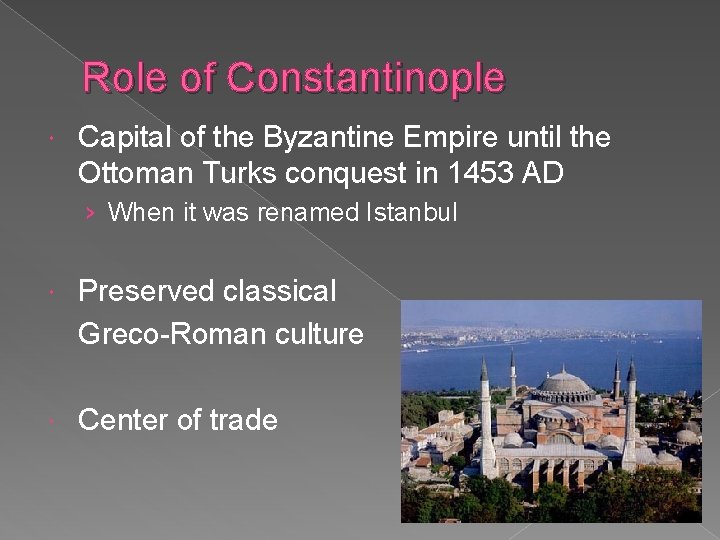
Role of Constantinople Capital of the Byzantine Empire until the Ottoman Turks conquest in 1453 AD › When it was renamed Istanbul Preserved classical Greco-Roman culture Center of trade
Justinian As the first to codify (organize) Roman law, Justinian provided the basis for the law codes of Western Europe Under Justinian, the Byzantine Empire reached its height in culture & prosperity
Lasting Legacy of Emperor Justinian Codification of Roman Law › Impact on European legal codes Reconquest of former Roman territories Expansion of trade • Successful in making Constantinople the wealthiest city in the world
Culture Greek Orthodox Christianity and imperial patronage (support) enabled the Byzantine Empire to develop a unique style of art & architecture Greek and Roman traditions were preserved in the Byzantine Empire
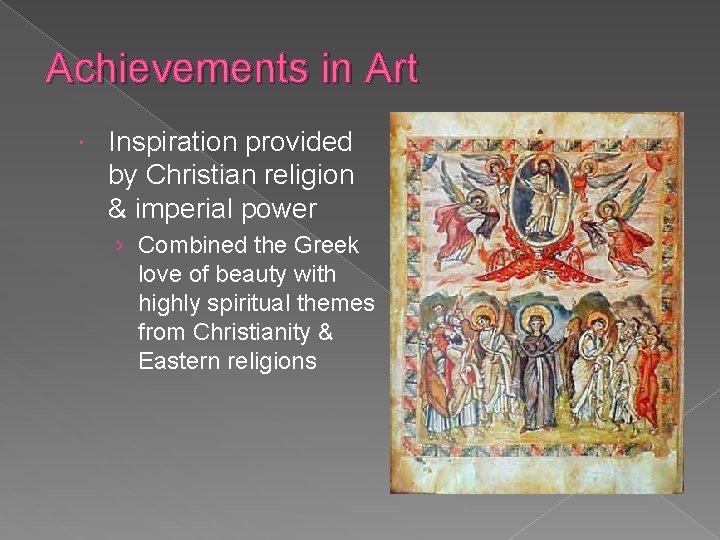
Achievements in Art Inspiration provided by Christian religion & imperial power › Combined the Greek love of beauty with highly spiritual themes from Christianity & Eastern religions
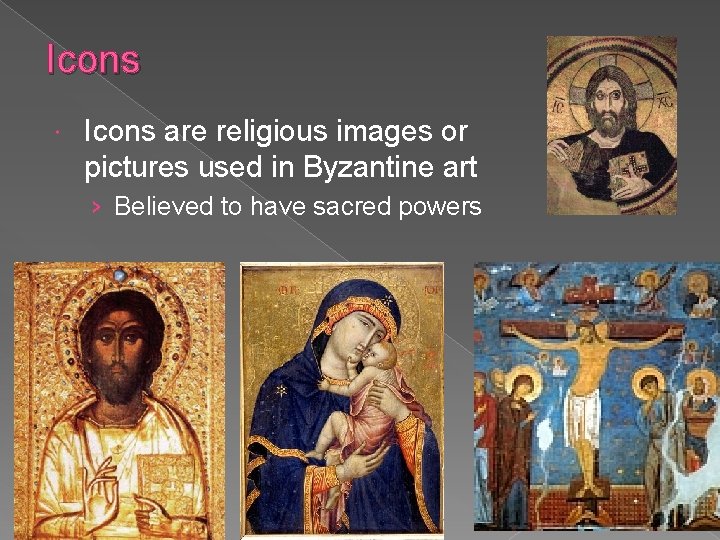
Icons are religious images or pictures used in Byzantine art › Believed to have sacred powers
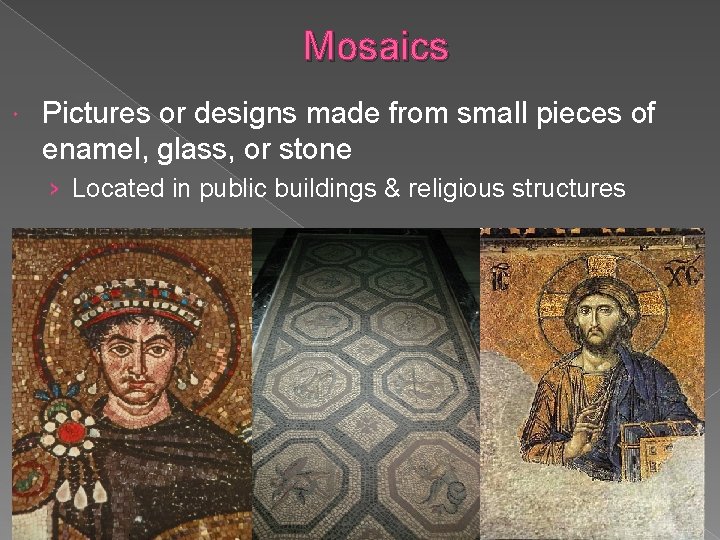
Mosaics Pictures or designs made from small pieces of enamel, glass, or stone › Located in public buildings & religious structures
Architecture Like the Romans, Byzantine Emperors used grand architecture to symbolize power Hagia Sophia › A Byzantine Church › Turned into a mosque when Muslims Turks seized Constantinople; now stands as a museum
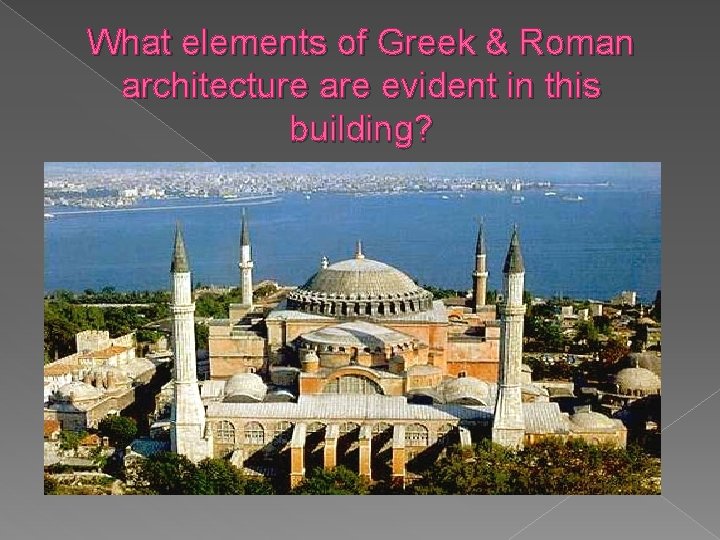
What elements of Greek & Roman architecture are evident in this building?
Culture Continued flourishing of Greco-Roman traditions Greek language › Contrasted with Latin the West Greek Orthodox Christianity Greek and Roman knowledge preserved in Byzantine libraries › Copied the works of Plato, Sophocles, Thucydides and others to ensure their survival
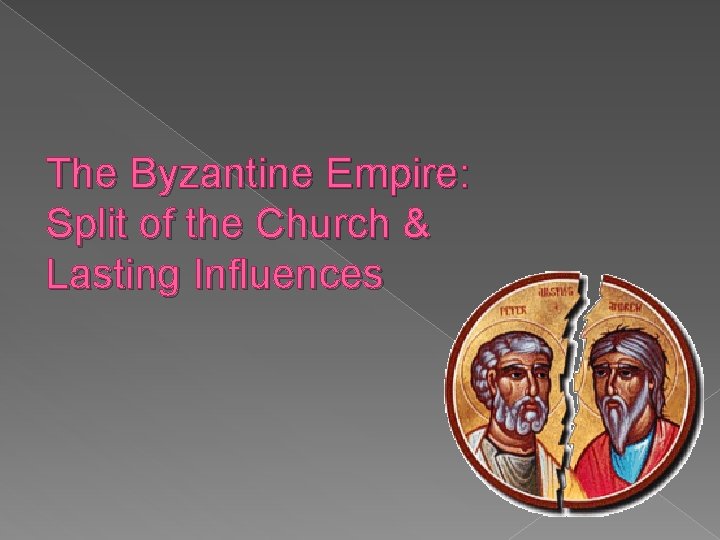
The Byzantine Empire: Split of the Church & Lasting Influences
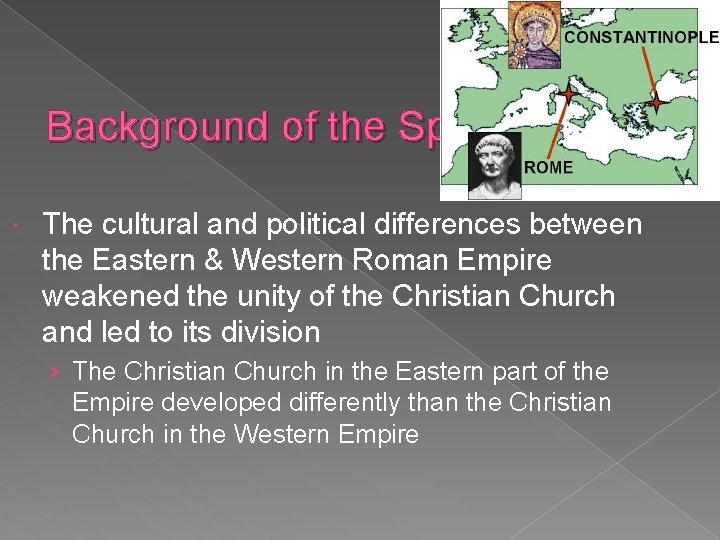
Background of the Split The cultural and political differences between the Eastern & Western Roman Empire weakened the unity of the Christian Church and led to its division › The Christian Church in the Eastern part of the Empire developed differently than the Christian Church in the Western Empire
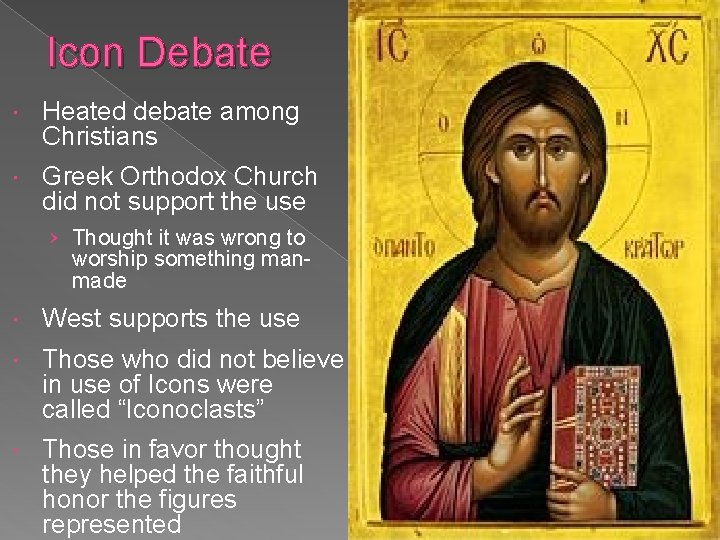
Icon Debate Heated debate among Christians Greek Orthodox Church did not support the use › Thought it was wrong to worship something manmade West supports the use Those who did not believe in use of Icons were called “Iconoclasts” Those in favor thought they helped the faithful honor the figures represented
Division Pope Leo I established the view that the Pope was the representative of Christ on Earth › Greek Orthodox Church did not support this view Pope & Patriarch both excommunicated each other from the Church Authority of the Pope accepted in the West Authority of the Patriarch accepted in the East West and East churches now totally divided
Characteristics Western Roman Catholic Church Centered in Rome Latin is used in Mass Pope is supreme authority, & begins to dictate to kings Clergy practiced celibacy Believed in Purgatory: stage between Heaven & Hell Eastern Greek Orthodox Church Centered in Constantinople Greek and vernacular languages used in Mass Patriarch rules under direction of the Byzantine Emperor Clergy allowed to marry Rejected the idea of Purgatory
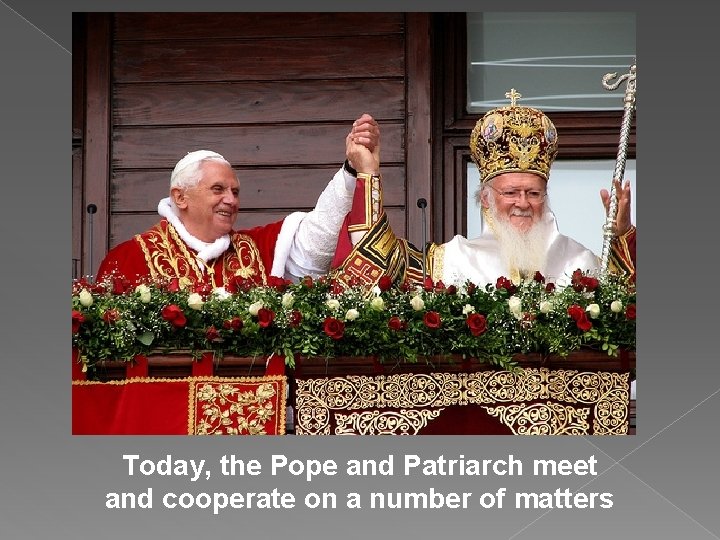
Today, the Pope and Patriarch meet and cooperate on a number of matters
Influence Byzantine civilization influenced Russian and Eastern Europe civilizations through its religion, culture & trade › Russian rulers looked to Byzantine for a royal model Trade Routes between Black Sea & Baltic Sea Adoption of Orthodox Christianity by Russia and most of Eastern Europe Church architecture and religious art
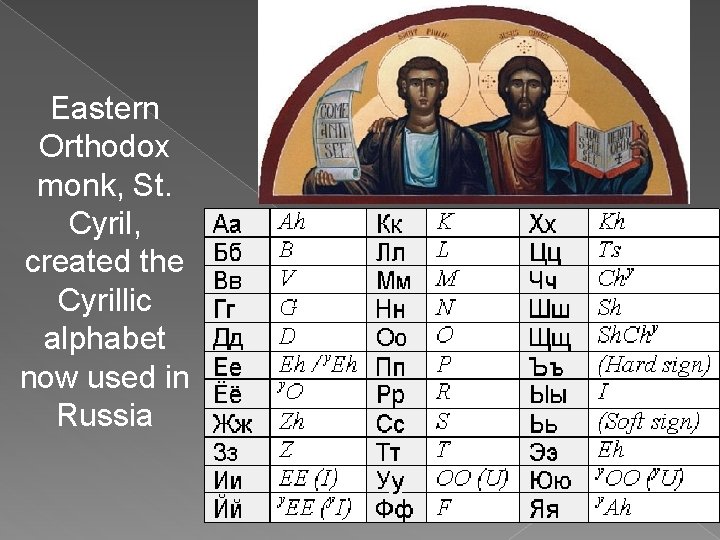
Eastern Orthodox monk, St. Cyril, created the Cyrillic alphabet now used in Russia
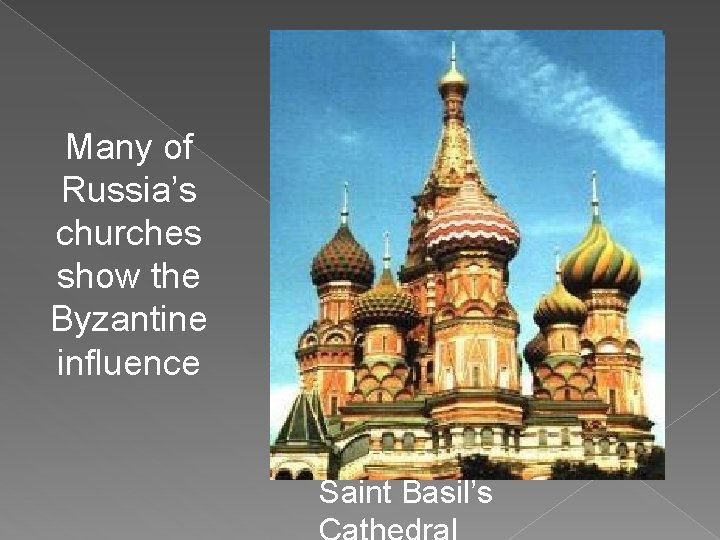
Many of Russia’s churches show the Byzantine influence Saint Basil’s
- Slides: 26