
The Byzantine Empire 324 1453 Icon of Jesus
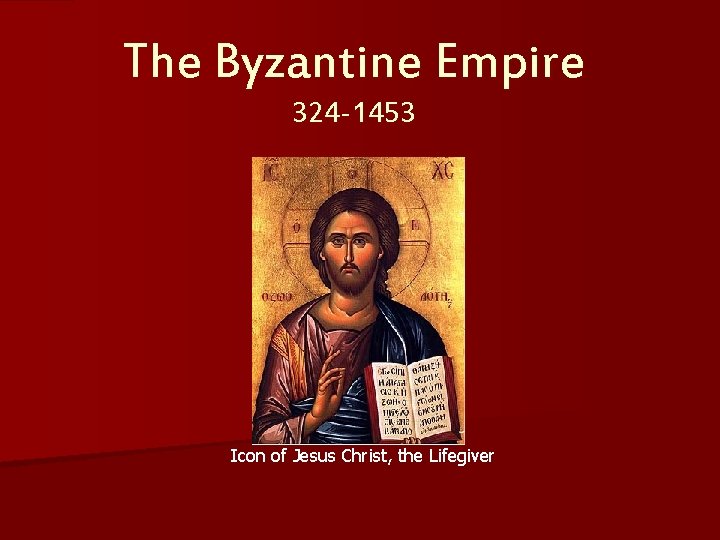
The Byzantine Empire 324 -1453 Icon of Jesus Christ, the Lifegiver
Vocabulary Words Eastern Orthodox Constantinople Bosporus Strait Justinian the Great Theodora Nika Rebellion Justinian’s Code Filioque controversy Hagia Sophia General Belisarius Bubonic Plague Great Schism Seljuk Turks Ottoman Empire
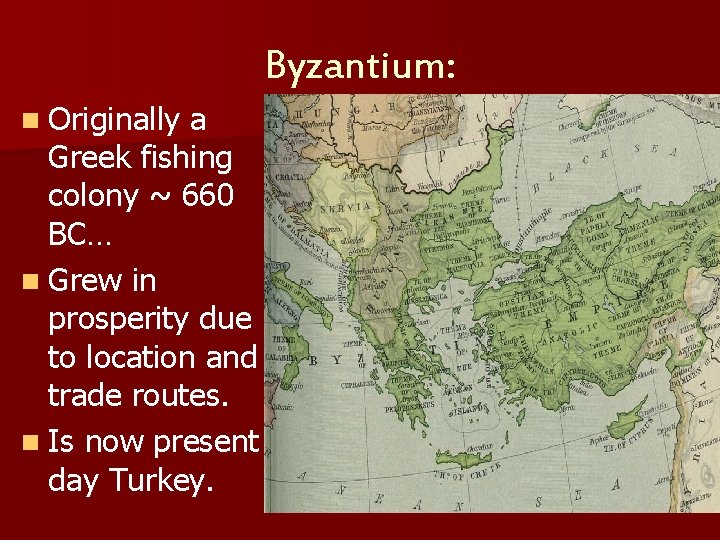
Byzantium: n Originally a Greek fishing colony ~ 660 BC… n Grew in prosperity due to location and trade routes. n Is now present day Turkey.
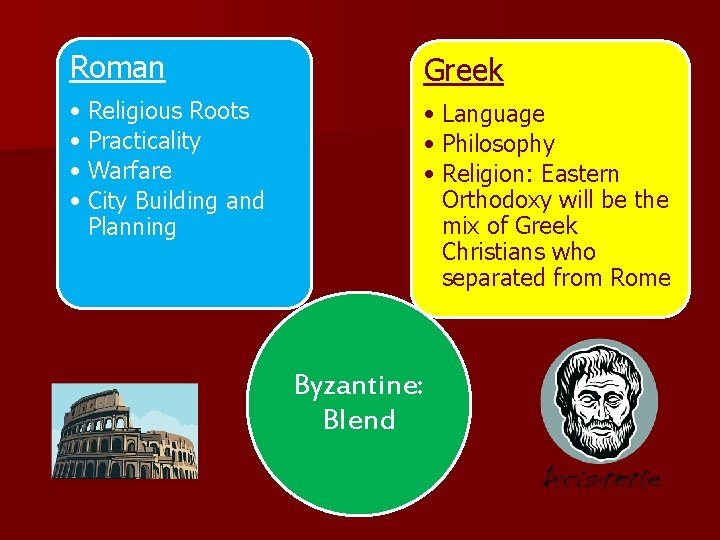
Roman Greek • Religious Roots • Practicality • Warfare • City Building and Planning • Language • Philosophy • Religion: Eastern Orthodoxy will be the mix of Greek Christians who separated from Rome Byzantine: Blend
Video on Byzantine Empire https: //ed. ted. com/lessons/therise-and-fall-of-the-byzantineempire-leonora-neville#review

Constantinople “The New Rome” A. Strategic location – trade and defense. Surrounded by Bosporus Strait, Mediterranean and Aegean Seas. B. The water and a wall kept invaders out.
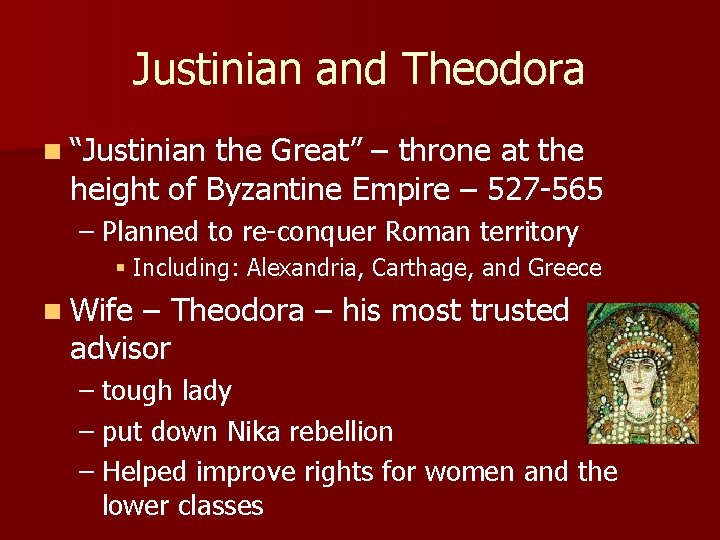
Justinian and Theodora n “Justinian the Great” – throne at the height of Byzantine Empire – 527 -565 – Planned to re-conquer Roman territory § Including: Alexandria, Carthage, and Greece n Wife – Theodora – his most trusted advisor – tough lady – put down Nika rebellion – Helped improve rights for women and the lower classes
Video on Nika Riots n https: //www. youtube. com/watch? v=Dm 9 msc. L 2 q. HU
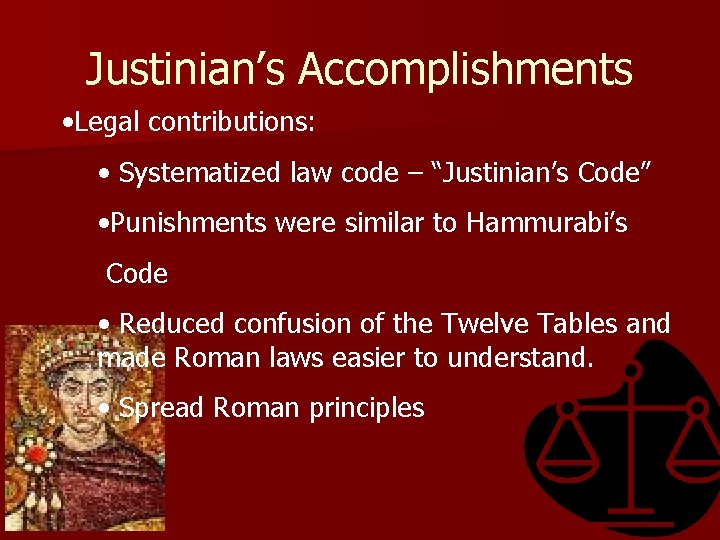
Justinian’s Accomplishments • Legal contributions: • Systematized law code – “Justinian’s Code” • Punishments were similar to Hammurabi’s Code • Reduced confusion of the Twelve Tables and made Roman laws easier to understand. • Spread Roman principles
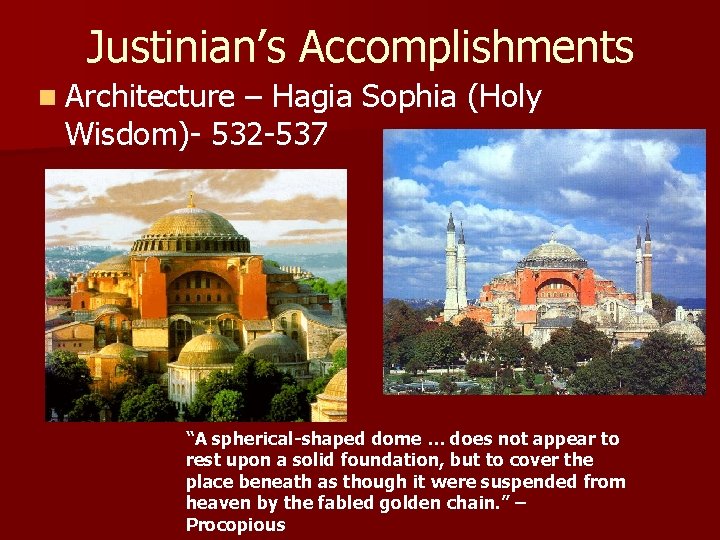
Justinian’s Accomplishments n Architecture – Hagia Sophia (Holy Wisdom)- 532 -537 “A spherical-shaped dome … does not appear to rest upon a solid foundation, but to cover the place beneath as though it were suspended from heaven by the fabled golden chain. ” – Procopious
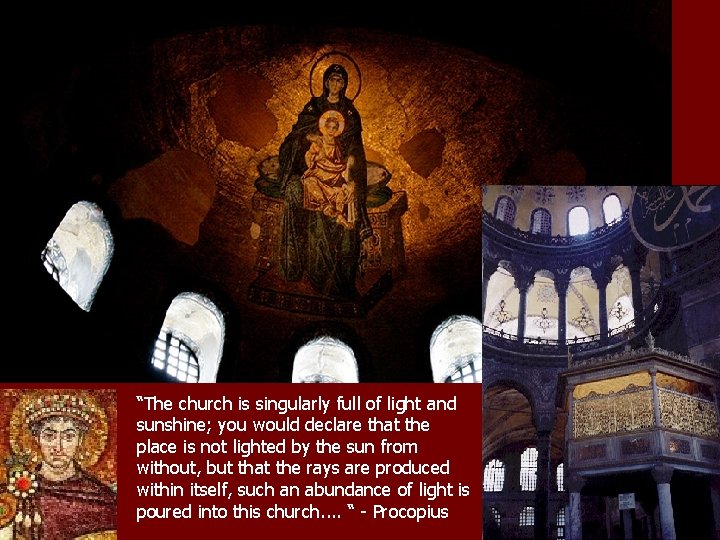
“The church is singularly full of light and sunshine; you would declare that the place is not lighted by the sun from without, but that the rays are produced within itself, such an abundance of light is poured into this church. . “ - Procopius
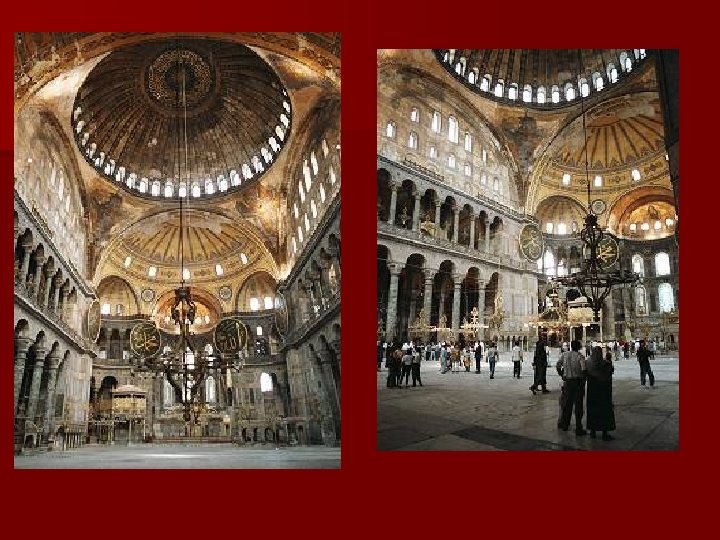
Video of Hagia Sophia https: //www. youtube. com/watch? v=a. OEx. HX 45 j. LQ
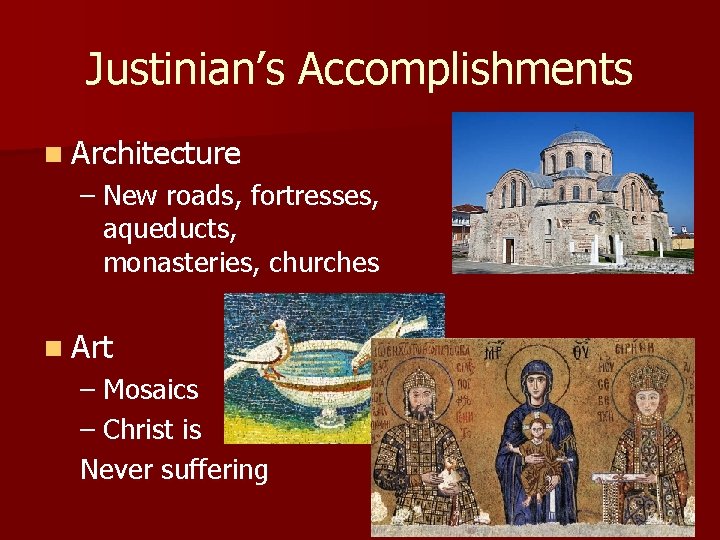
Justinian’s Accomplishments n Architecture – New roads, fortresses, aqueducts, monasteries, churches n Art – Mosaics – Christ is Never suffering
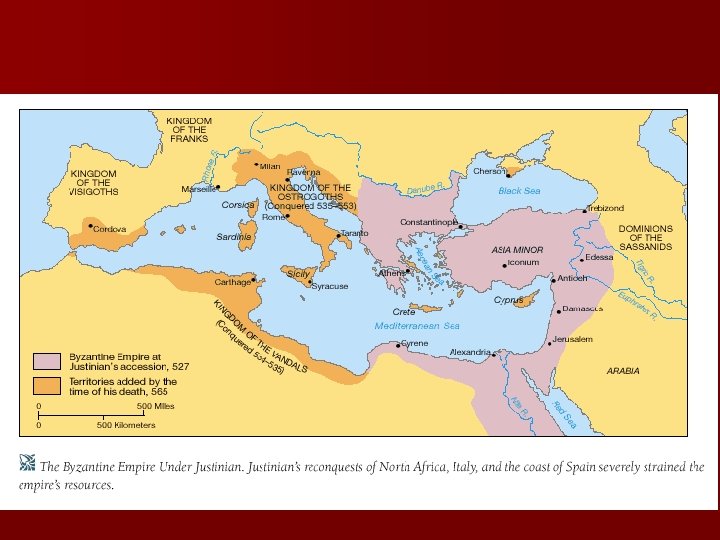
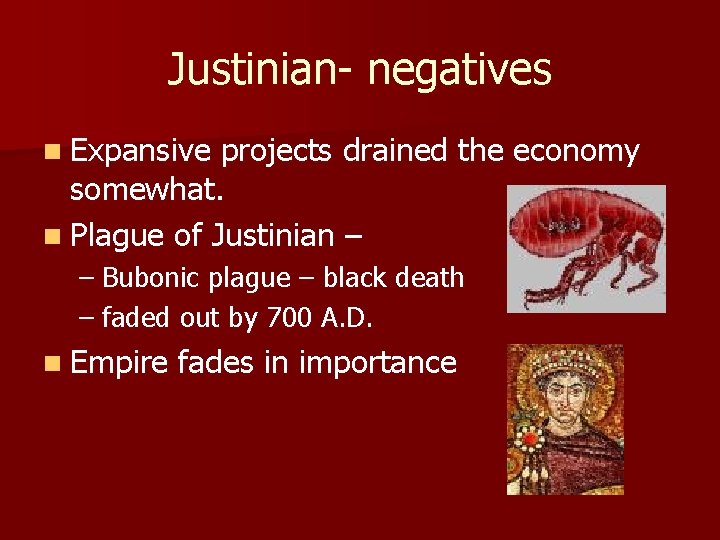
Justinian- negatives n Expansive projects drained the economy somewhat. n Plague of Justinian – – Bubonic plague – black death – faded out by 700 A. D. n Empire fades in importance
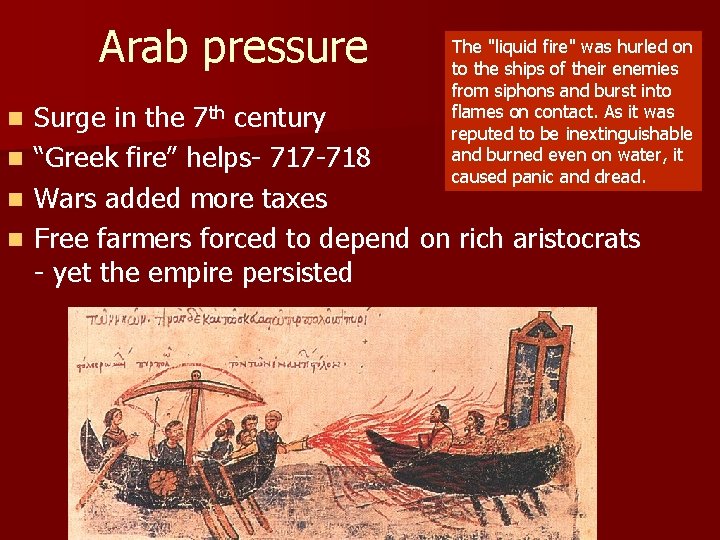
Arab pressure n n The "liquid fire" was hurled on to the ships of their enemies from siphons and burst into flames on contact. As it was reputed to be inextinguishable and burned even on water, it caused panic and dread. Surge in the 7 th century “Greek fire” helps- 717 -718 Wars added more taxes Free farmers forced to depend on rich aristocrats - yet the empire persisted
Setbacks to Byzantines n Invasions – From all sides § Persians took: Anitoch, Jerusalem, and Alexandria § Muslims begin expansion 632 A. D.
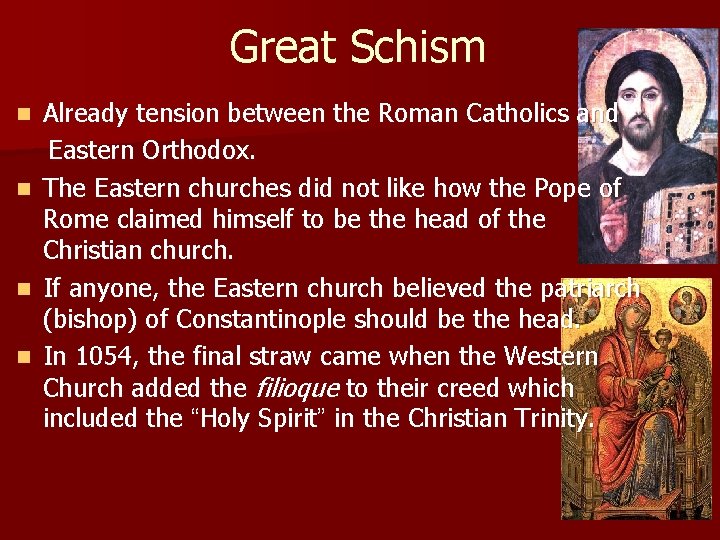
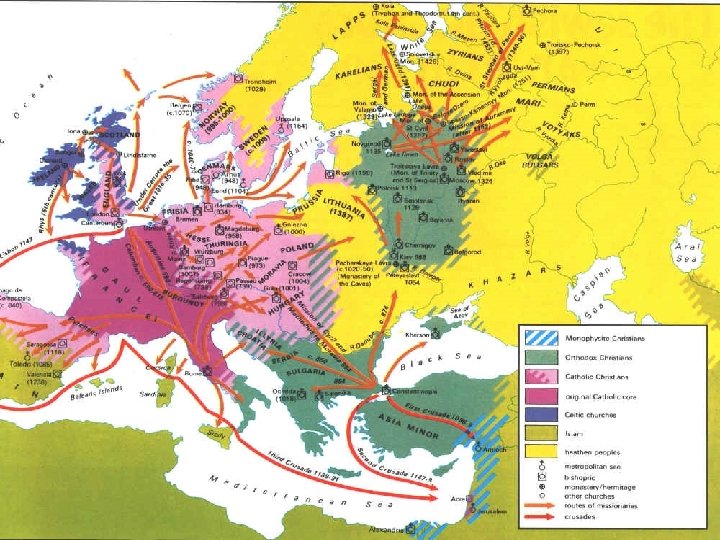
Great Schism Already tension between the Roman Catholics and Eastern Orthodox. n The Eastern churches did not like how the Pope of Rome claimed himself to be the head of the Christian church. n If anyone, the Eastern church believed the patriarch (bishop) of Constantinople should be the head. n In 1054, the final straw came when the Western Church added the filioque to their creed which included the “Holy Spirit” in the Christian Trinity. n
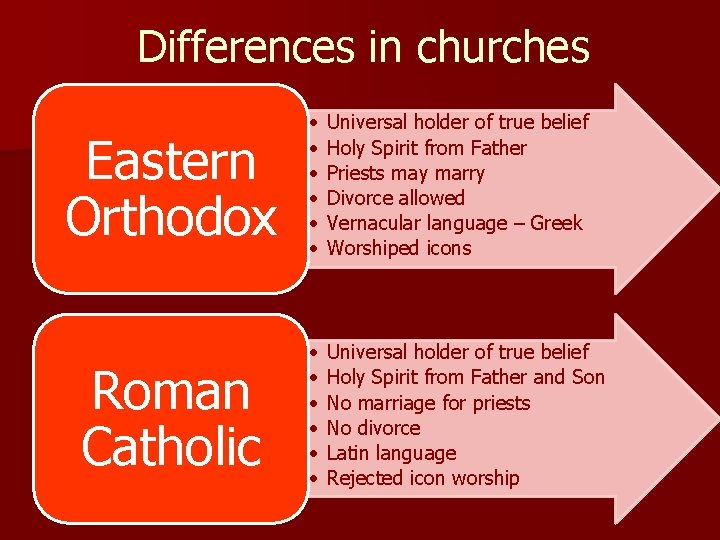
Differences in churches Eastern Orthodox • • • Universal holder of true belief Holy Spirit from Father Priests may marry Divorce allowed Vernacular language – Greek Worshiped icons Roman Catholic • • • Universal holder of true belief Holy Spirit from Father and Son No marriage for priests No divorce Latin language Rejected icon worship
Great Schism-Cont. In 1054, Pope Leo IX of Rome and the Patriarch/Bishop of Constantinople decided to excommunicate each other. n Excommunication is the worst punishment a member of the Christian Church can receive. n They are not allowed to receive sacraments and have no hope of entering heaven, according to Christian beliefs. n
Solution to Great Schism The result of the 1054 Schism is the division between the Roman Catholic and Eastern Orthodox Church. n Eastern Orthodox Christians are not considered Apostolic (key word “apostle”) because they don’t follow the divinity of St. Peter. n They do not recognize the supremacy of the Pope. n The two churches have never gotten back together but did reconcile their differences in the 1900 s. n
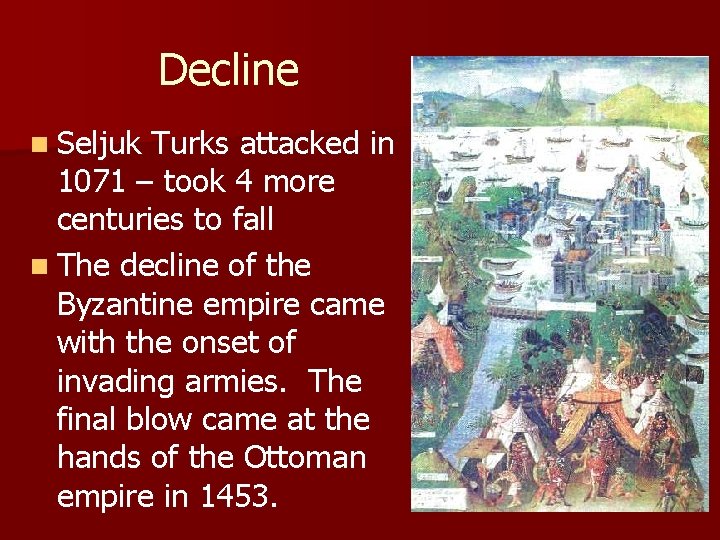
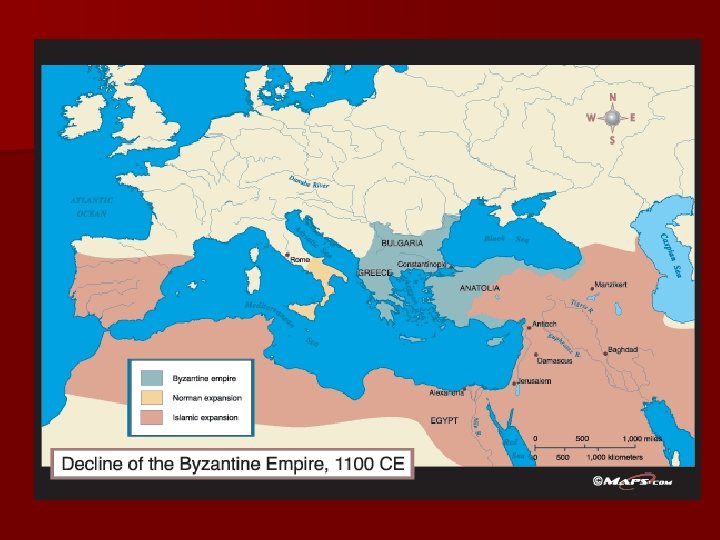
Decline n Seljuk Turks attacked in 1071 – took 4 more centuries to fall n The decline of the Byzantine empire came with the onset of invading armies. The final blow came at the hands of the Ottoman empire in 1453.
Discussion Questions 1. 2. 3. 4. 5. How did the development of civilization in Eastern and Western Europe differ? How does Orthodox Christianity differ from Roman Catholicism? Why did they split in 1054? What caused the decline of the Byzantine Empire? What has survived from this Empire? How did the Byzantine influence the development of Russia? What happened to Eastern Europe after the decline of the Byzantine Empire?
- Slides: 26