
The Building Blocks of Matter Atoms Matter Anything
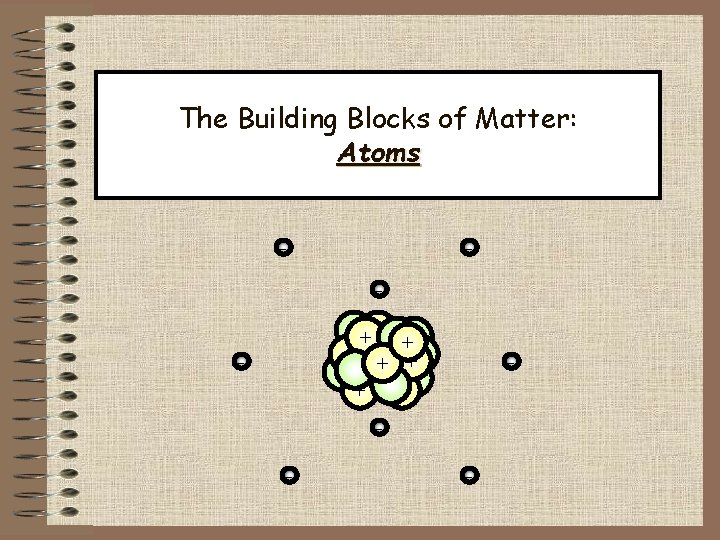
The Building Blocks of Matter: Atoms - ++ + + + - -
Matter • Anything that has mass and takes up space (volume) – Examples: • • A brick has mass and takes up space A desk has mass and takes up space A pencil has mass and takes up space Air has mass and takes up space All of the above examples are considered matter because they have mass and take up space. Can you think of anything that would not be considered matter?
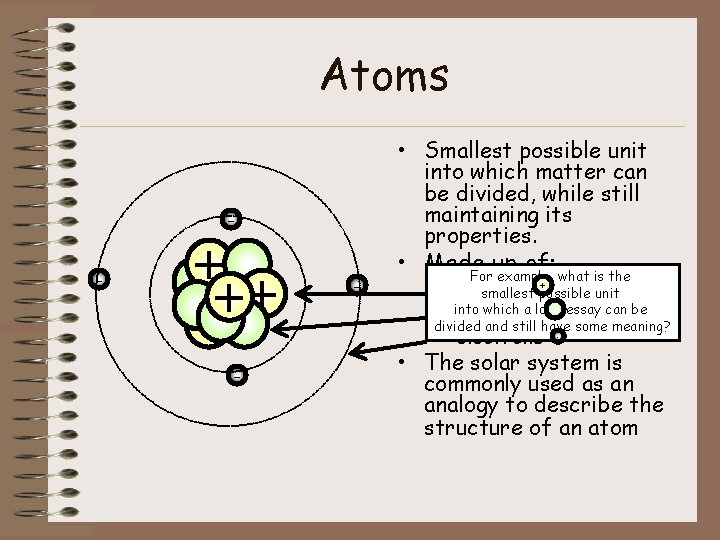
Atoms • Smallest possible unit into which matter can be divided, while still maintaining its properties. - + + - - • Made up of: For example, what is the + – protons smallest possible unit which a long essay can be – into neutrons divided and still have some meaning? – electrons - • The solar system is commonly used as an analogy to describe the structure of an atom
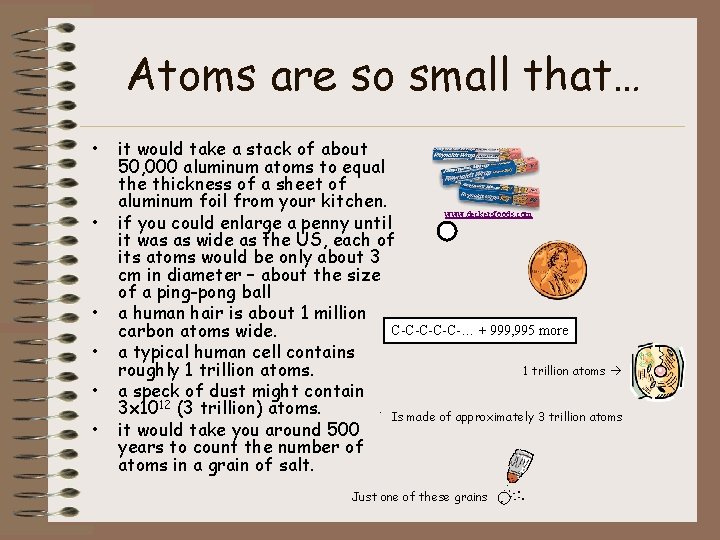
Atoms are so small that… • • • it would take a stack of about 50, 000 aluminum atoms to equal the thickness of a sheet of aluminum foil from your kitchen. www. deckersfoods. com if you could enlarge a penny until it was as wide as the US, each of its atoms would be only about 3 cm in diameter – about the size of a ping-pong ball a human hair is about 1 million C-C-C-… + 999, 995 more carbon atoms wide. a typical human cell contains 1 trillion atoms roughly 1 trillion atoms. a speck of dust might contain. 3 x 10¹² (3 trillion) atoms. Is made of approximately 3 trillion atoms it would take you around 500 years to count the number of atoms in a grain of salt. Just one of these grains
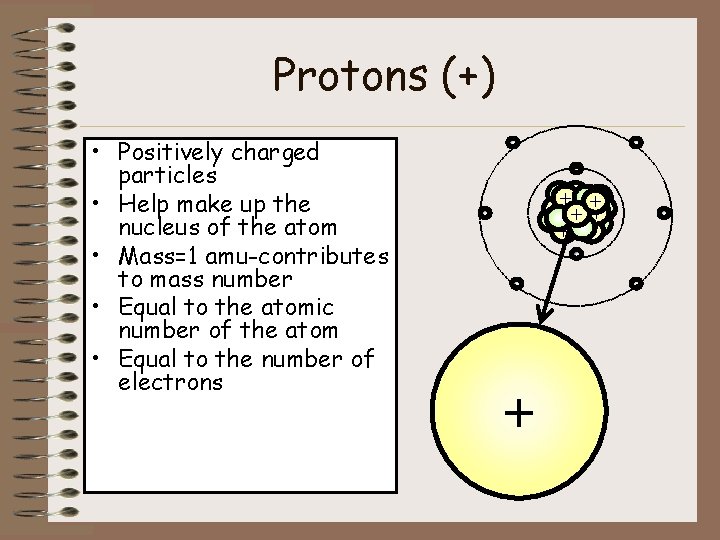
Protons (+) • Positively charged particles • Help make up the nucleus of the atom • Mass=1 amu-contributes to mass number • Equal to the atomic number of the atom • Equal to the number of electrons - ++ + + + - - + -
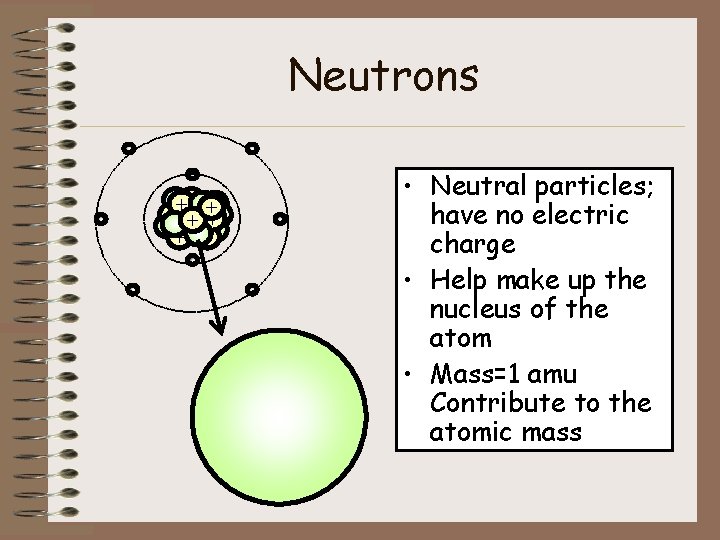
Neutrons - ++ + + + - - - • Neutral particles; have no electric charge • Help make up the nucleus of the atom • Mass=1 amu Contribute to the atomic mass
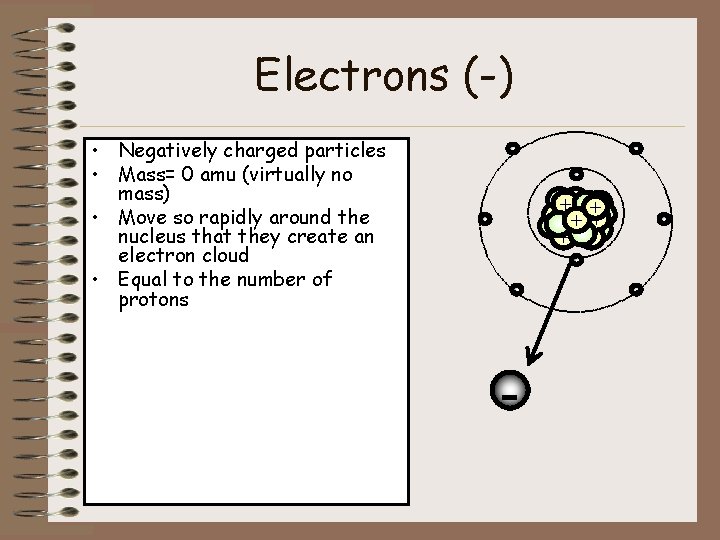
Electrons (-) • Negatively charged particles • Mass= 0 amu (virtually no mass) • Move so rapidly around the nucleus that they create an electron cloud • Equal to the number of protons - ++ + + + - -
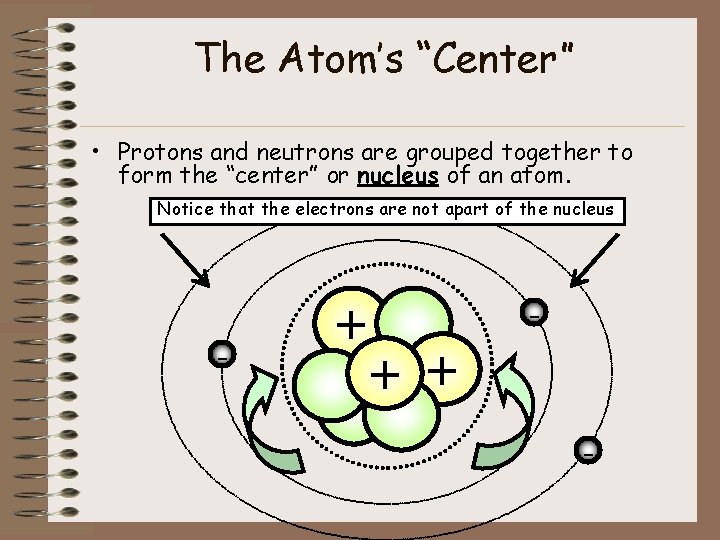
The Atom’s “Center” • Protons and neutrons are grouped together to form the “center” or nucleus of an atom. Notice that the electrons are not apart of the nucleus - + + -
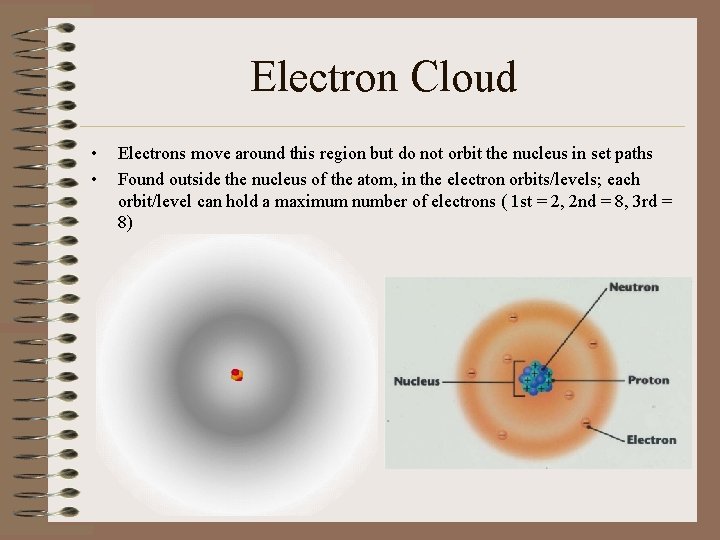
Electron Cloud • • Electrons move around this region but do not orbit the nucleus in set paths Found outside the nucleus of the atom, in the electron orbits/levels; each orbit/level can hold a maximum number of electrons ( 1 st = 2, 2 nd = 8, 3 rd = 8)
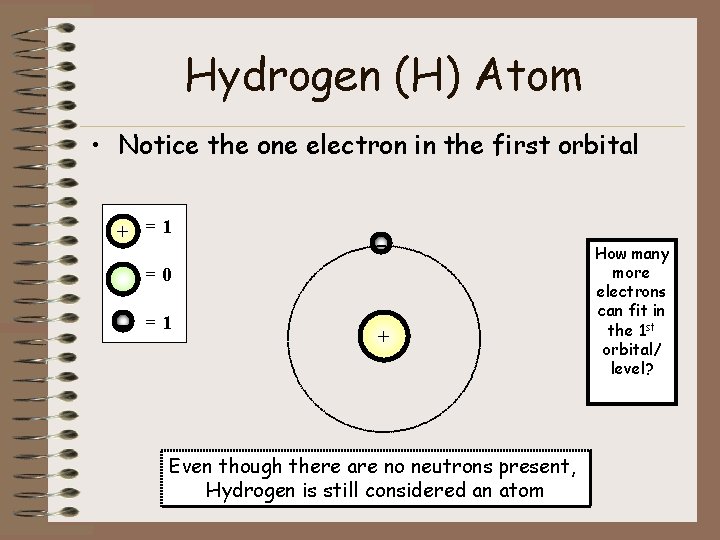
Hydrogen (H) Atom • Notice the one electron in the first orbital + =1 - =0 - =1 + Even though there are no neutrons present, Hydrogen is still considered an atom How many more electrons can fit in the 1 st orbital/ level?
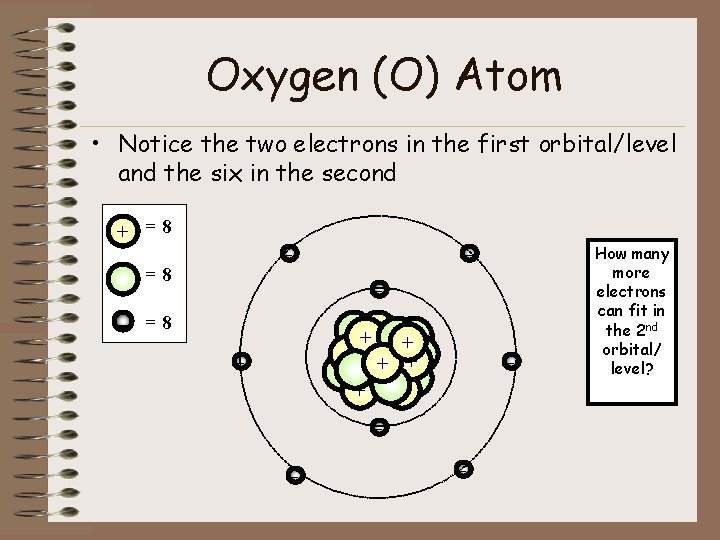
Oxygen (O) Atom • Notice the two electrons in the first orbital/level and the six in the second + =8 - - =8 ++ + + + - - How many more electrons can fit in the 2 nd orbital/ level?
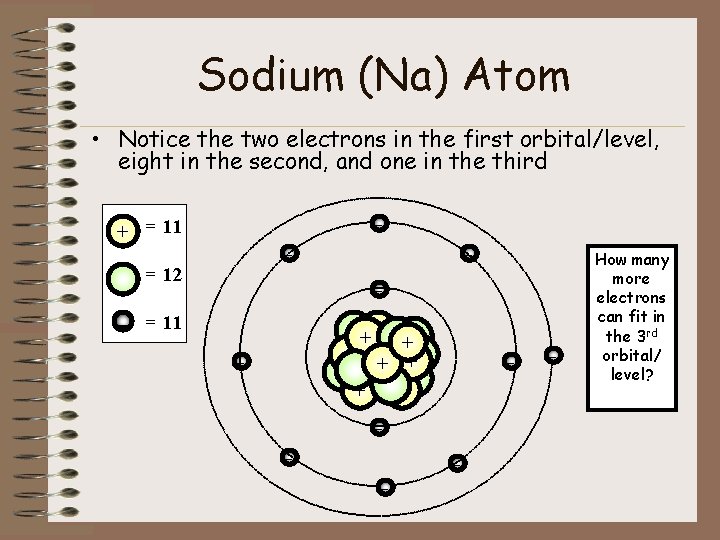
Sodium (Na) Atom • Notice the two electrons in the first orbital/level, eight in the second, and one in the third - + = 11 - = 12 - - = 11 ++ + + + - - - How many more electrons can fit in the 3 rd orbital/ level?
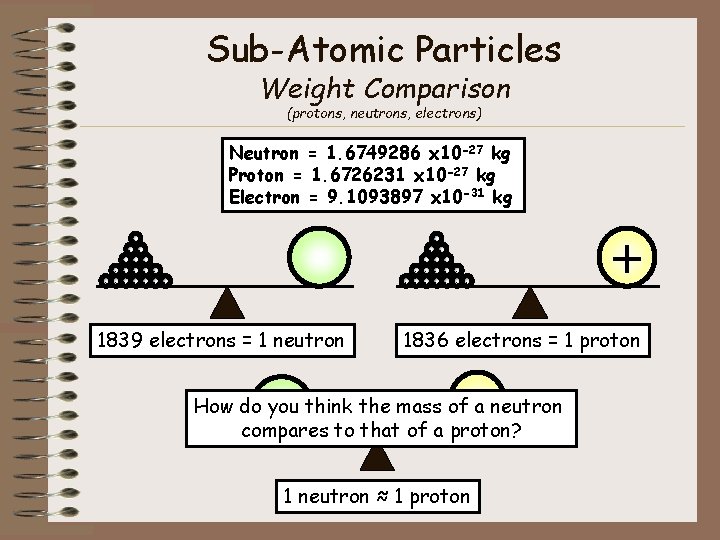
Sub-Atomic Particles Weight Comparison (protons, neutrons, electrons) Neutron = 1. 6749286 x 10 -27 kg Proton = 1. 6726231 x 10 -27 kg Electron = 9. 1093897 x 10 -31 kg - - - - - - - 1839 electrons = 1 neutron + 1836 electrons = 1 proton + How do you think the mass of a neutron compares to that of a proton? 1 neutron ≈ 1 proton
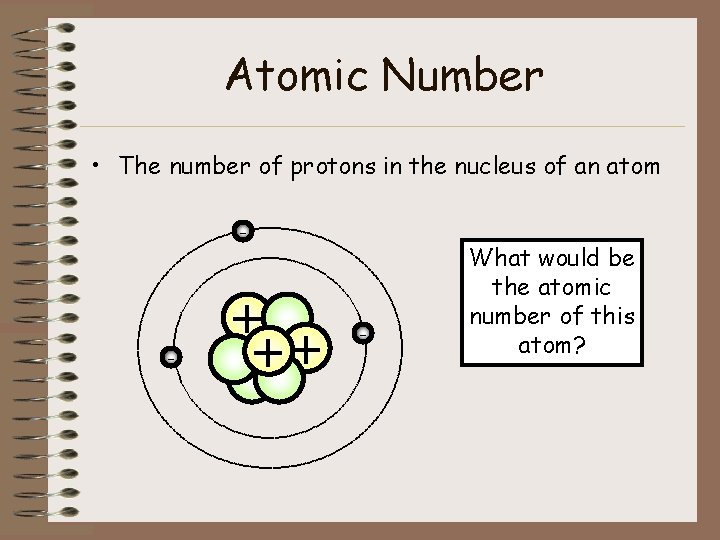
Atomic Number • The number of protons in the nucleus of an atom - - + ++ - What would be the atomic number of this atom?
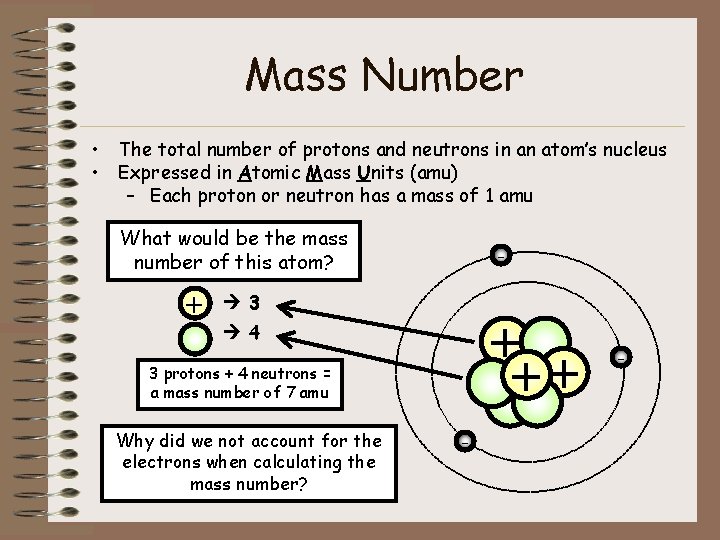
Mass Number • The total number of protons and neutrons in an atom’s nucleus • Expressed in Atomic Mass Units (amu) – Each proton or neutron has a mass of 1 amu What would be the mass number of this atom? + - 3 + ++ 4 3 protons + 4 neutrons = a mass number of 7 amu Why did we not account for the electrons when calculating the mass number? - -
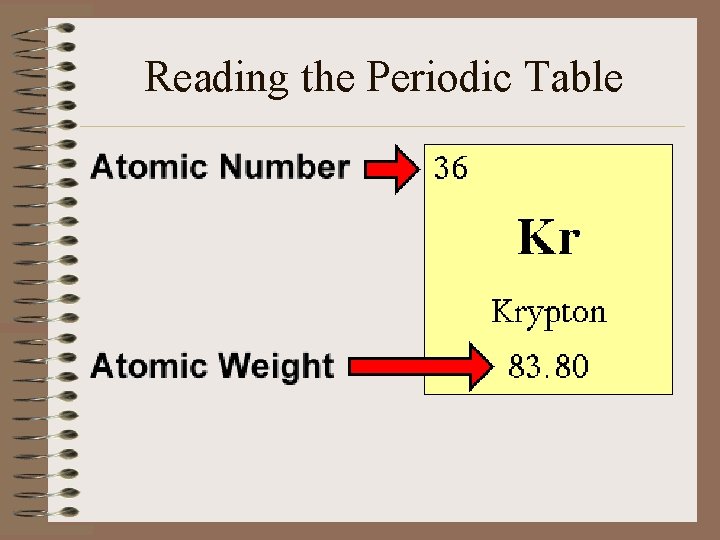
Reading the Periodic Table
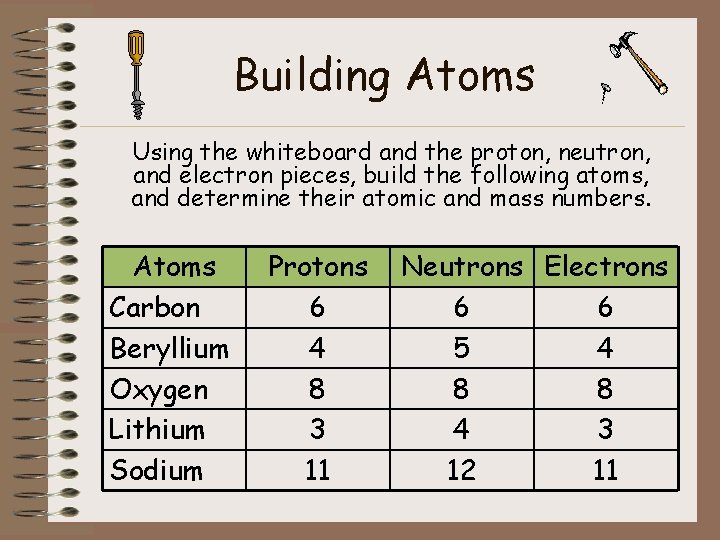
Building Atoms Using the whiteboard and the proton, neutron, and electron pieces, build the following atoms, and determine their atomic and mass numbers. Atoms Carbon Beryllium Oxygen Lithium Sodium Protons 6 4 8 3 11 Neutrons Electrons 6 6 5 4 8 8 4 3 12 11
Atom Builder • Using the interactive website link below, practice building atoms. • http: //www. pbs. org/wgbh/aso /tryit/atom/ • Using the classzone. com link below, click on the “Build an Atom” simulation and practice building atoms. http: //www. classzone. com/books/ml_sci_physical/page_ build. cfm? id=resour_ch 1&u=2##
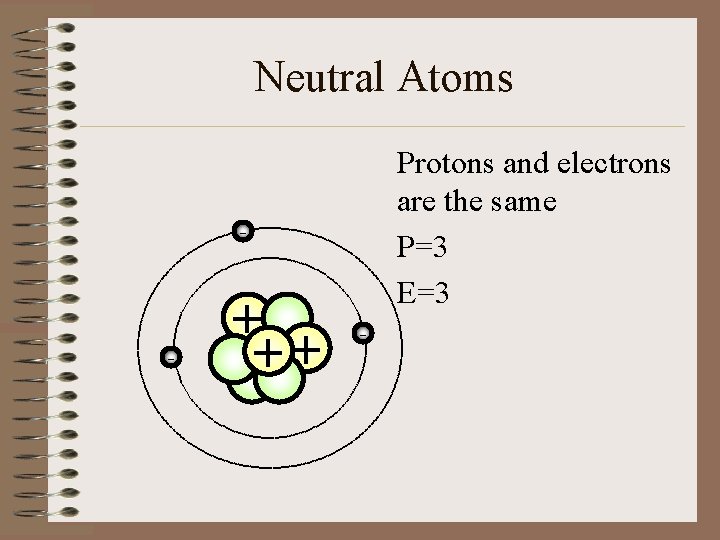
Neutral Atoms Protons and electrons are the same P=3 E=3 - - + ++ -
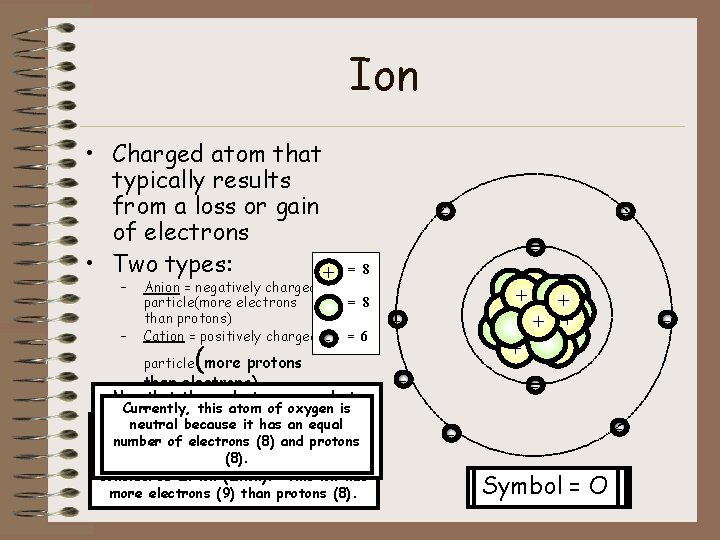
Ion • Charged atom that typically results from a loss or gain of electrons • Two types: + – – Anion = negatively charged particle(more electrons than protons) Cation = positively charged - ( = 8 = 968 particle more protons than electrons) - Now that three electrons were lost, Currently, of oxygen the numberthis of atom electrons (6) andis neutral it of has an equal Now that because this atom oxygen just protons (8) is still unbalanced; number of itelectron, electrons (8)ion, protons gained an it isand nobut longer therefore, is still an now it (8). neutral or referred an atom. to. Itasis anow is specifically cation. considered an ion (anion). This ion has more electrons (9) than protons (8). - ++ + + + - - - 2+ Symbol == O O 1 -
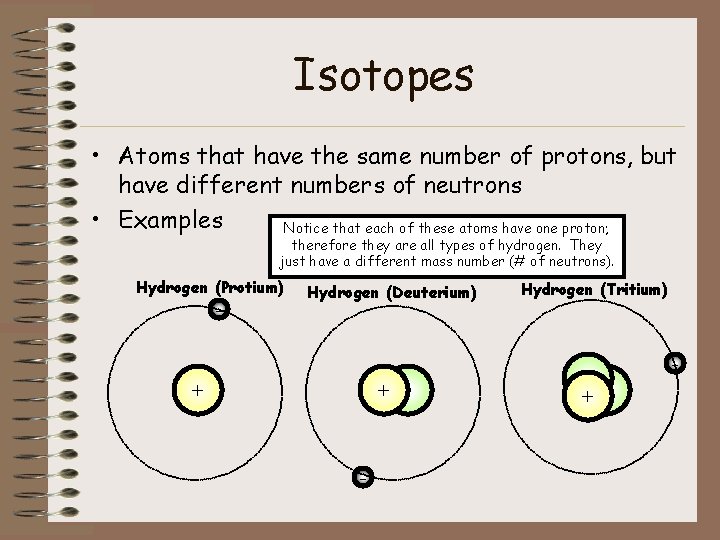
Isotopes • Atoms that have the same number of protons, but have different numbers of neutrons • Examples Notice that each of these atoms have one proton; therefore they are all types of hydrogen. They just have a different mass number (# of neutrons). Hydrogen (Protium) - Hydrogen (Deuterium) Hydrogen (Tritium) + + - +
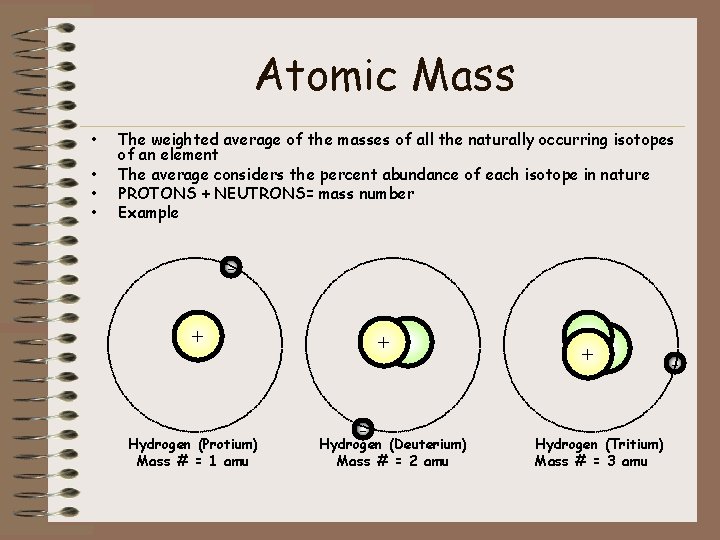
Atomic Mass • • The weighted average of the masses of all the naturally occurring isotopes of an element The average considers the percent abundance of each isotope in nature PROTONS + NEUTRONS= mass number Example + Hydrogen (Protium) Mass # = 1 amu + - Hydrogen (Deuterium) Mass # = 2 amu + Hydrogen (Tritium) Mass # = 3 amu -
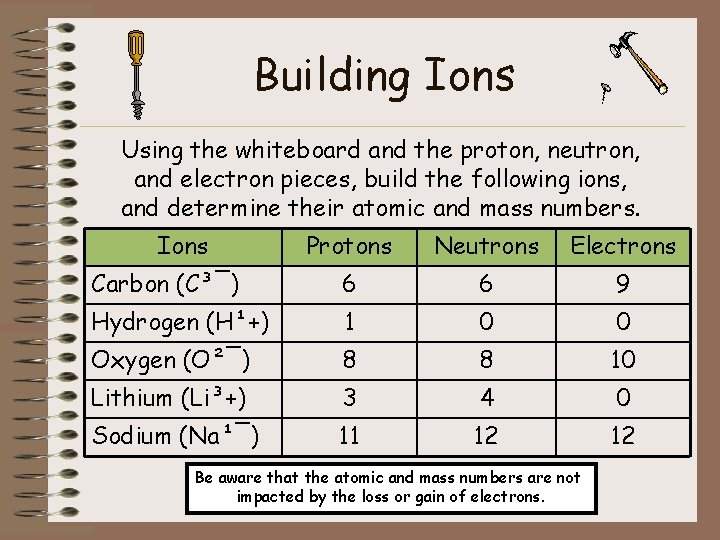
Building Ions Using the whiteboard and the proton, neutron, and electron pieces, build the following ions, and determine their atomic and mass numbers. Ions Protons Neutrons Electrons Carbon (C³¯) 6 6 9 Hydrogen (H¹+) 1 0 0 Oxygen (O²¯) 8 8 10 Lithium (Li³+) 3 4 0 Sodium (Na¹¯) 11 12 12 Be aware that the atomic and mass numbers are not impacted by the loss or gain of electrons.
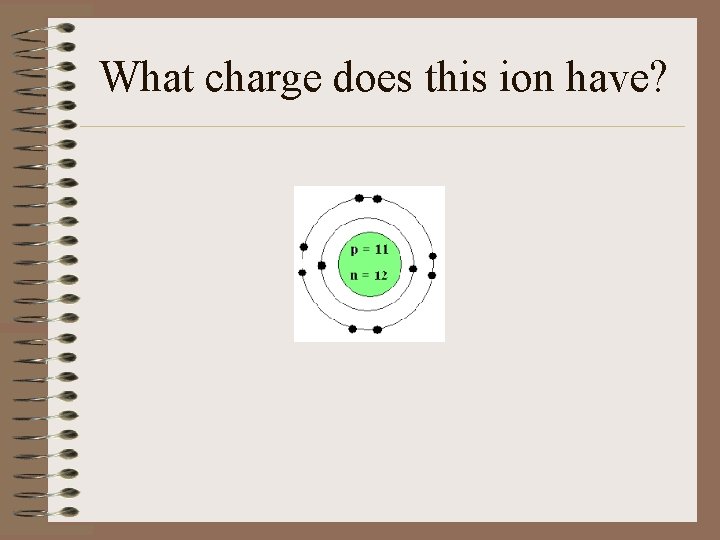
What charge does this ion have?
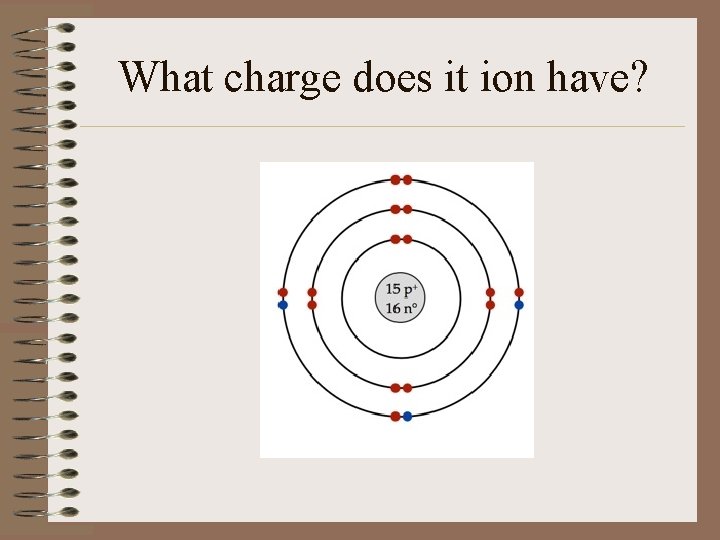
What charge does it ion have?
What does the 35 in chlorine-35 represent?
If an ion has 13 electrons and 12 protons, what charge does it have?
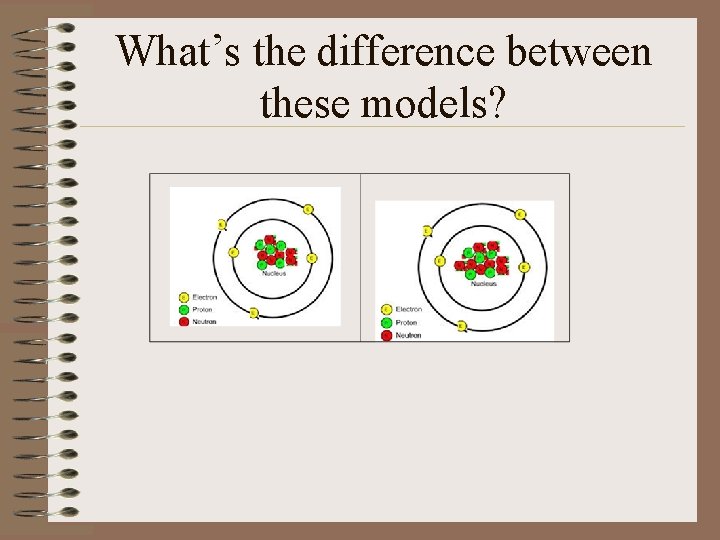
What’s the difference between these models?
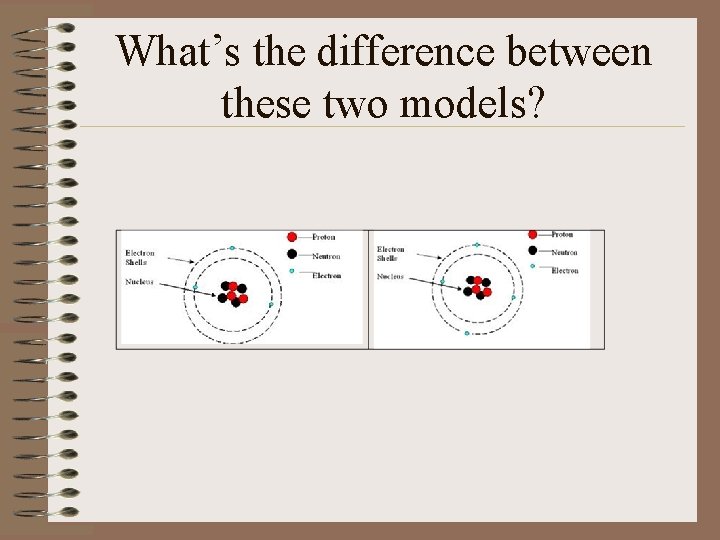
What’s the difference between these two models?
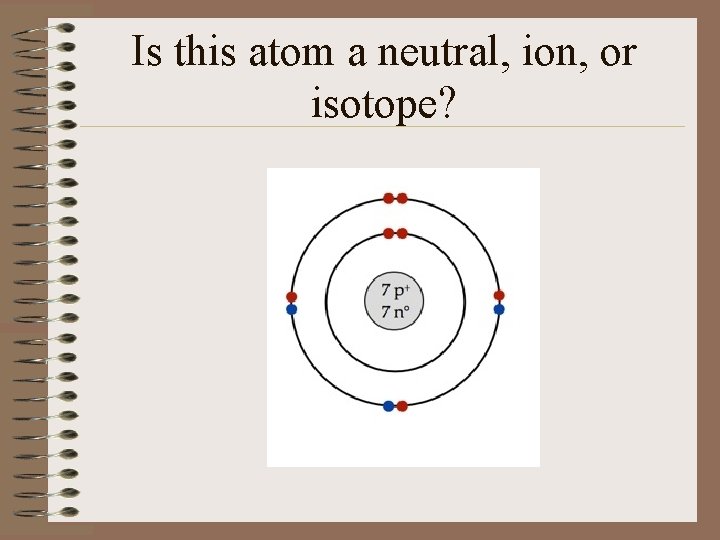
Is this atom a neutral, ion, or isotope?
- Slides: 30