
The breakdown of sugars proteins and fats converges
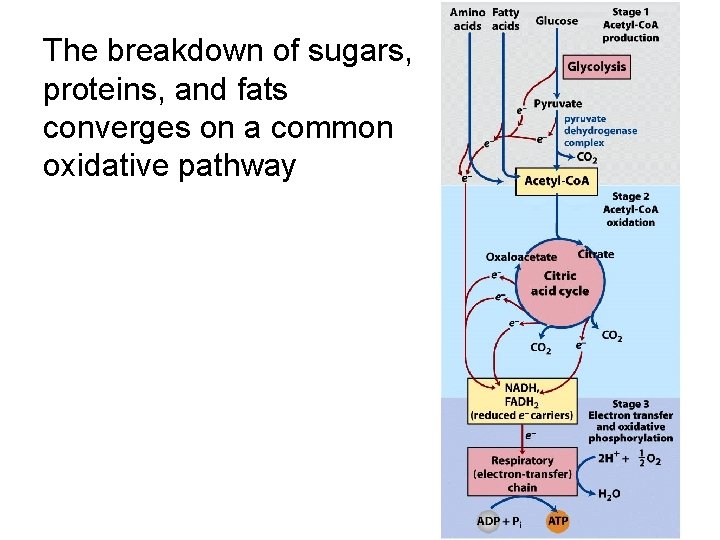
The breakdown of sugars, proteins, and fats converges on a common oxidative pathway
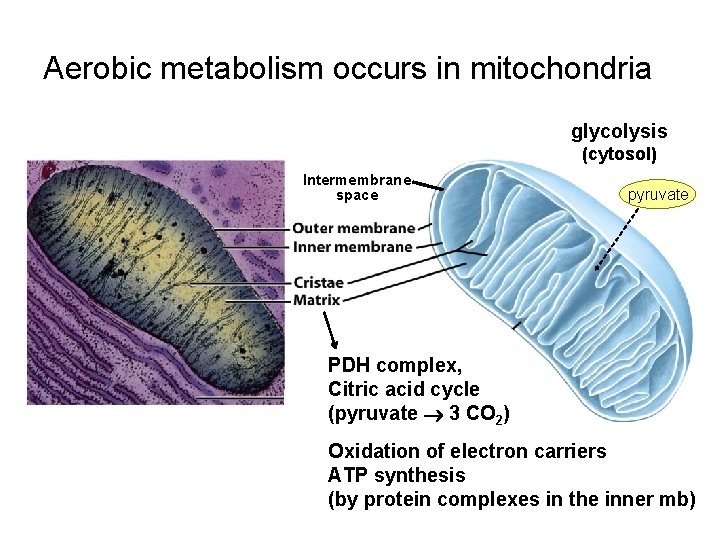
Aerobic metabolism occurs in mitochondria glycolysis (cytosol) Intermembrane space pyruvate PDH complex, Citric acid cycle (pyruvate 3 CO 2) Oxidation of electron carriers ATP synthesis (by protein complexes in the inner mb)
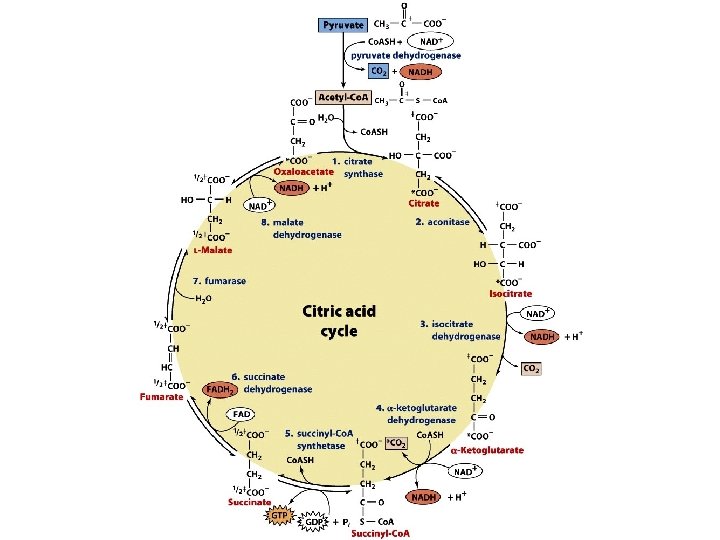
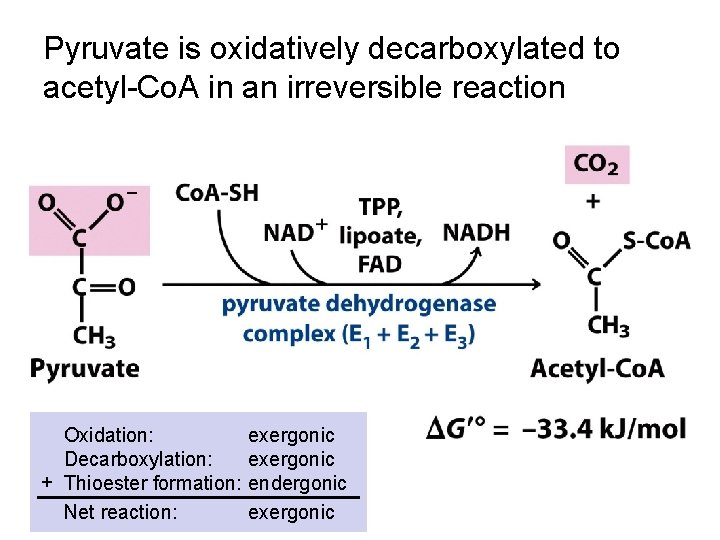
Pyruvate is oxidatively decarboxylated to acetyl-Co. A in an irreversible reaction Oxidation: Decarboxylation: + Thioester formation: Net reaction: exergonic endergonic exergonic

Pyruvate DH complex is a huge multienzyme structure, with dozens of subunits

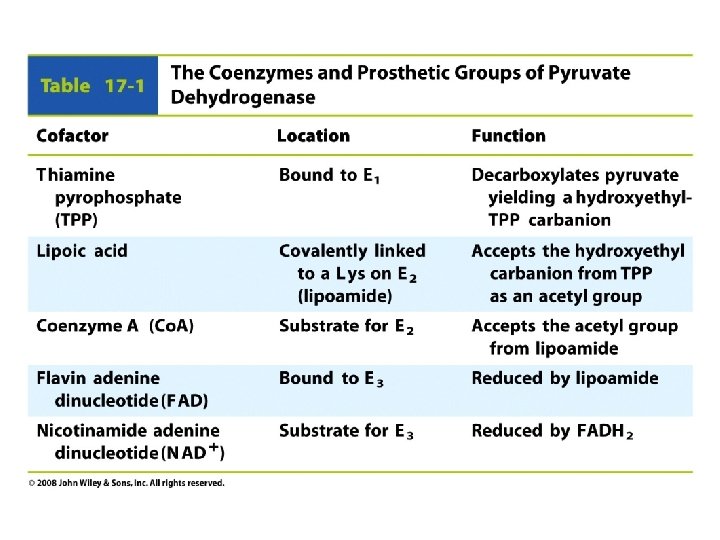
PDH complex is composed of three major enzymes Enzyme Name Cofactors # in E. coli # in mammals E 1 Pyruvate DH TPP 24 ~45 α 2β 2 tetramers E 2 Dihydrolipoyl transacetylase Lipoic acid, Coenzyme A 24 60 E 3 Dihydrolipoyl DH FAD, NAD 12 ~9 homodimers Arrangement in E. coli: E 1 E 2 E 3
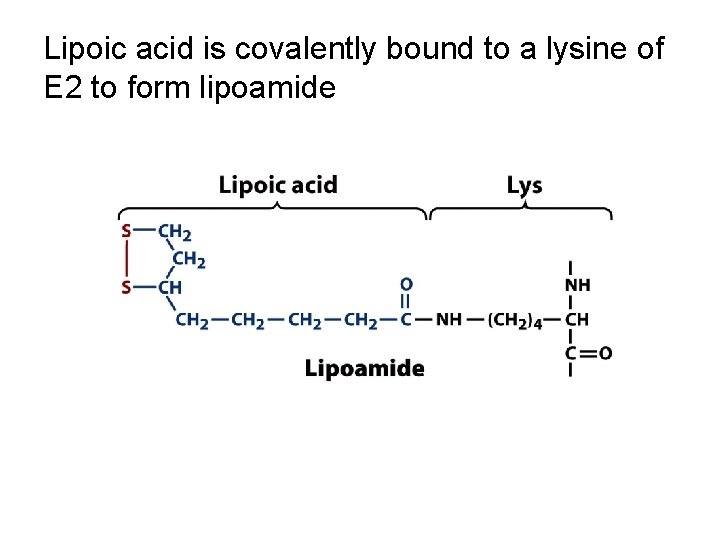
Lipoic acid is covalently bound to a lysine of E 2 to form lipoamide
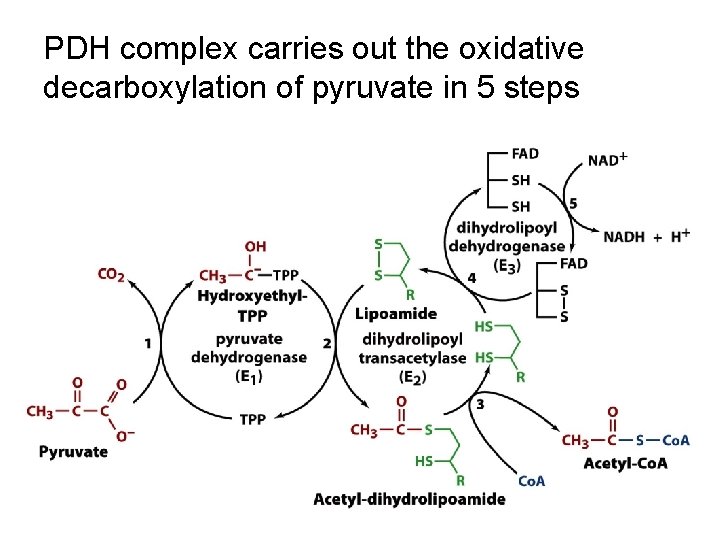
PDH complex carries out the oxidative decarboxylation of pyruvate in 5 steps
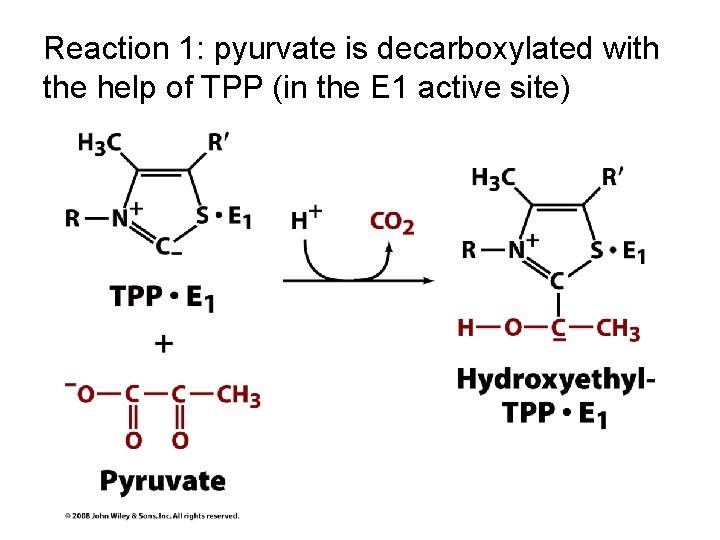
Reaction 1: pyurvate is decarboxylated with the help of TPP (in the E 1 active site)
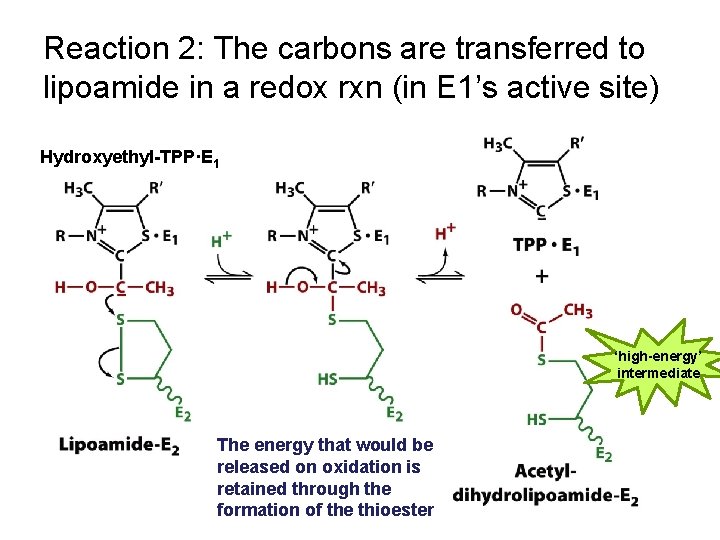
Reaction 2: The carbons are transferred to lipoamide in a redox rxn (in E 1’s active site) Hydroxyethyl-TPP·E 1 ‘high-energy’ intermediate The energy that would be released on oxidation is retained through the formation of the thioester
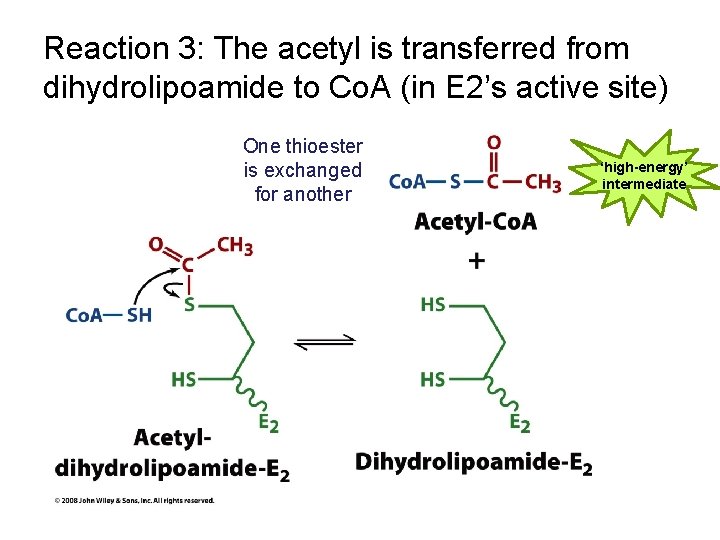
Reaction 3: The acetyl is transferred from dihydrolipoamide to Co. A (in E 2’s active site) One thioester is exchanged for another ‘high-energy’ intermediate
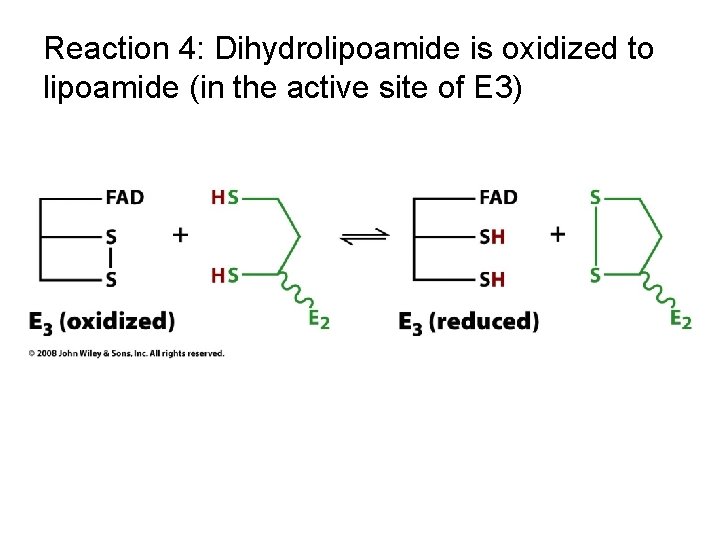
Reaction 4: Dihydrolipoamide is oxidized to lipoamide (in the active site of E 3)
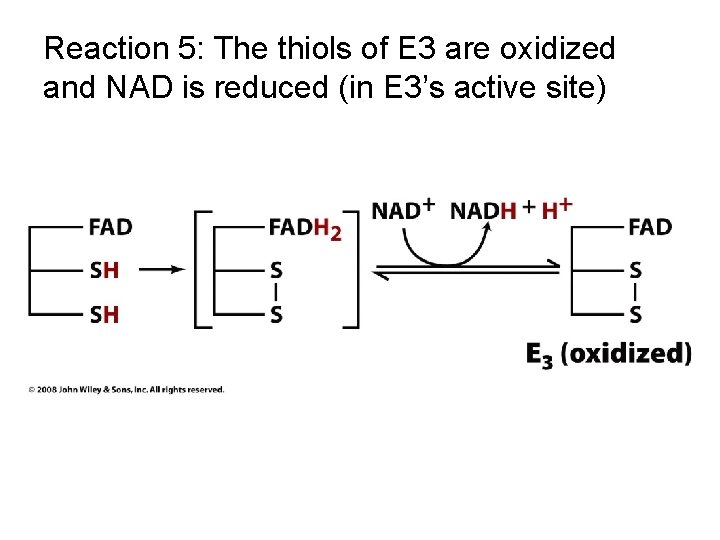
Reaction 5: The thiols of E 3 are oxidized and NAD is reduced (in E 3’s active site)
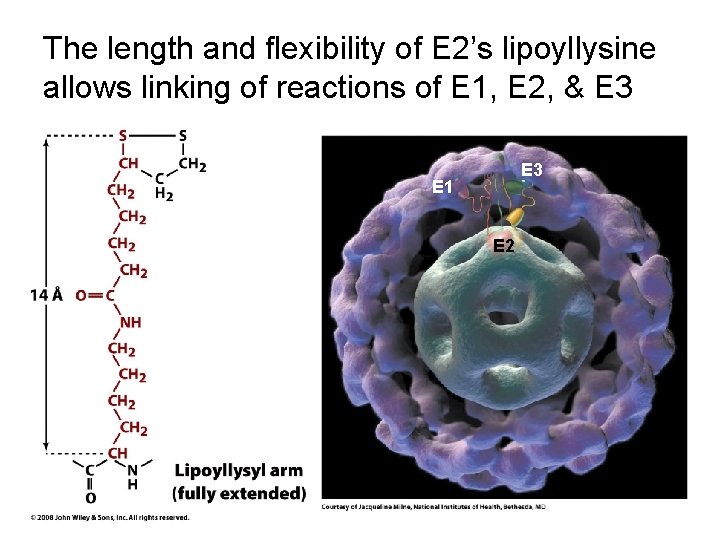
The length and flexibility of E 2’s lipoyllysine allows linking of reactions of E 1, E 2, & E 3 E 1 E 2
- Slides: 15